A strange looking creature from the sea stuns locals with its unusual appearance after it washed up on a beach in Kien Giang, southern Vietnam.

Video screencap
The footage shows the curious dark brown, alien-looking thing wriggling its hundreds of tentacles after the local tour guide, Du Nam Du, found it and put it on a green table to get a closer look.
"I don't know whether it's an animal, vegetation or something else," said Du Nam Du. Experts believe it is likely a piece of kelp reacting to the air, perhaps similar to how Japanese Katsuobushi shavings (bonito flakes) move as if it were alive when it is topped on steamy food.

Video screencap
The object was later released back to the ocean. Kim Tho, a local, said: "It’s a monster. One day it will come back out of the ocean. It’ll be ten times bigger."

Video screencap
BANGKOK (AP) — Lionel Rosenblatt, who as a U.S. Foreign Service Officer carried out an unauthorized evacuation of hundreds of Vietnamese citizens before the 1975 fall of Saigon, has died at age 82.
The episode set off a career as a high-profile advocate for refugee rights. Rosenblatt was president of the Washington-based Refugees International from 1990 to 2001, and he lobbied for more active humanitarian intervention in crisis spots such as Bosnia and Rwanda.
Rosenblatt died Saturday in the Washington area after a battle with cancer.
Refugees International President Jeremy Konyndyk recalled Rosenblatt as a “fierce, creative, passionate champion for refugees" who “helped to shape a generation of humanitarian leaders.”
Rosenblatt was especially devoted to helping refugees in Southeast Asia.
He served in Bangkok as the U.S. Embassy’s refugee coordinator in 1976-1981, dealing with Vietnamese “boat people” and Cambodians escaping famine after Vietnam ousted the murderous Khmer Rouge from power in 1979.
Born in New York in 1943, Rosenblatt joined the State Department in 1966 and had early postings in Sri Lanka, Vietnam, Thailand and Washington.
As communist forces swept toward South Vietnam’s capital Saigon in early 1975, Rosenblatt was among several State Department officials concerned about safely evacuating Vietnamese who had ties to the U.S. government and military.
Stymied by U.S. Ambassador Graham Martin’s reluctance to act decisively, Rosenblatt and colleague Craig Johnstone defied regulations to launch a rescue mission, taking personal leave and traveling privately to Saigon. They arranged flights out of the country for 200–400 at-risk Vietnamese.
According to Rosenblatt, on their return to Washington, Secretary of State Henry Kissinger gave them an in-person pro-forma scolding accompanied by warm personal compliments, and they suffered no official consequences.
Rosenblatt displayed special empathy for ethnic minorities whose fates were largely regarded as collateral damage.
These included the Hmong hill-tribe minority in Laos, who served as proxy soldiers for the U.S. in its " Secret War ” to support a pro-Western government against the communist Pathet Lao.
Expecting retribution after the Pathet Lao triumphed in 1975, tens of thousands of Hmong fled to Thailand. Recognizing that the tribal Hmong faced significant prejudice and poor resettlement prospects in the U.S., Rosenblatt and his team obscured their ethnic status on official paperwork to ensure their acceptance.
“It was always a mystery to me why they were good enough to fight for us but not good enough to consider for resettlement," Rosenblatt said in a 2022 television interview.
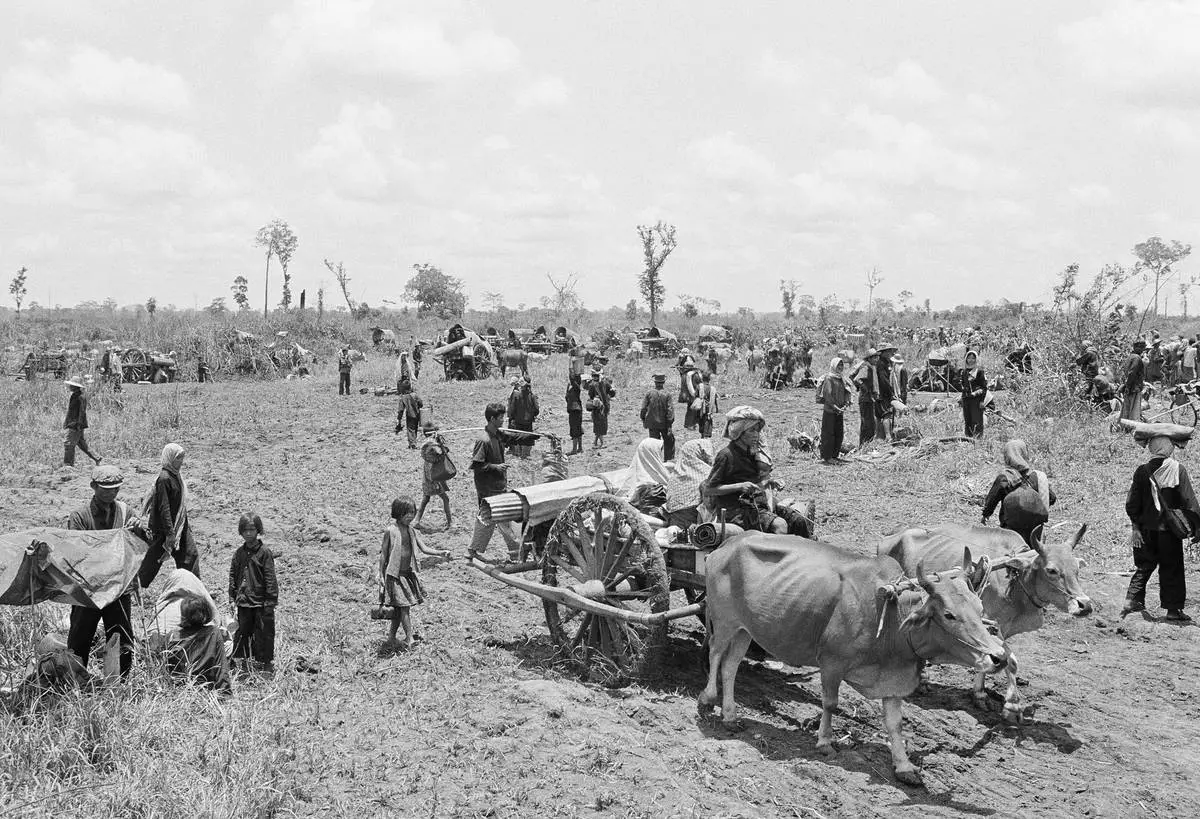
FILE - Fleeing Cambodians encamp on a scorching hot Thai farm field at Kud Pai Village near the countries' common border on April 27, 1979 in Thailand. Tens of thousands of Khmers, many of them soldiers loyal to be the government of ousted Premier Pol Pot, fled into Thailand recently to escape advancing Vietnamese forces. They were later forced to return to Cambodia. (AP Photo, File)
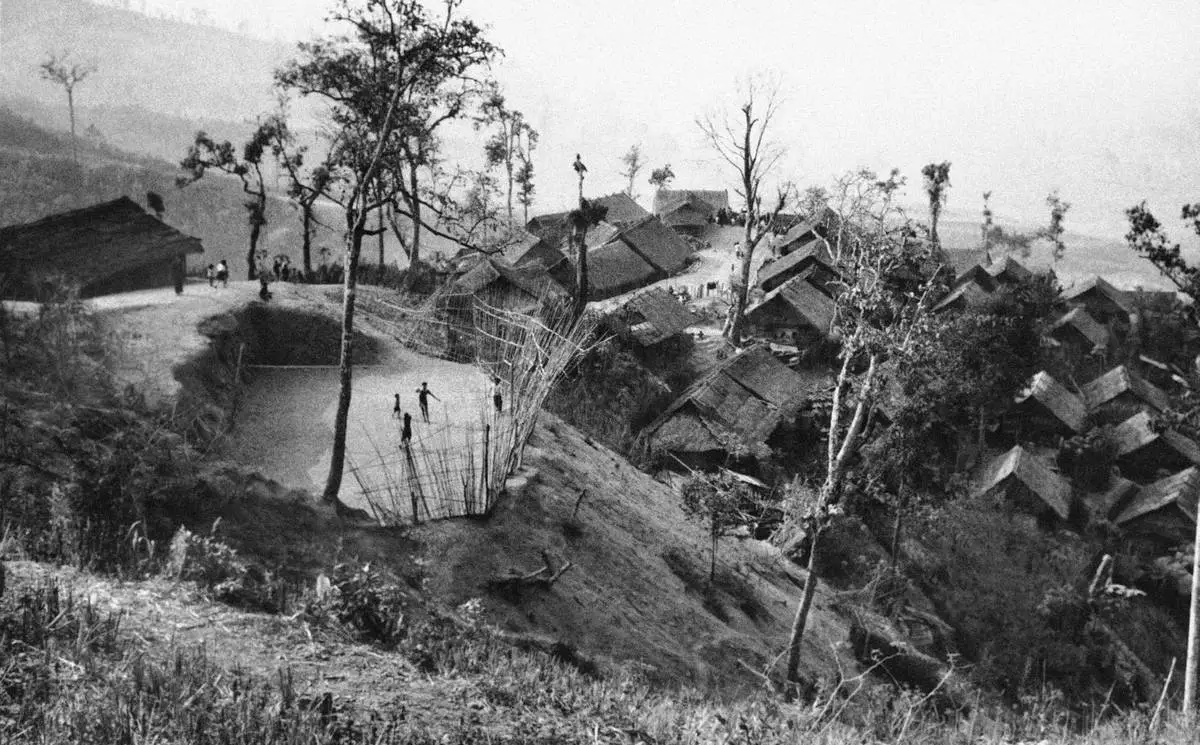
FILE - General view of a refugee camp located about 25 miles from Nan, Thailand, near the Laos border, about 500 kilometers north of Bangkok, April 20, 1979. There are 11,000 refugees in this camp - ninety percent of them are Hmong people. (AP Photo/Eddie Adams, File)
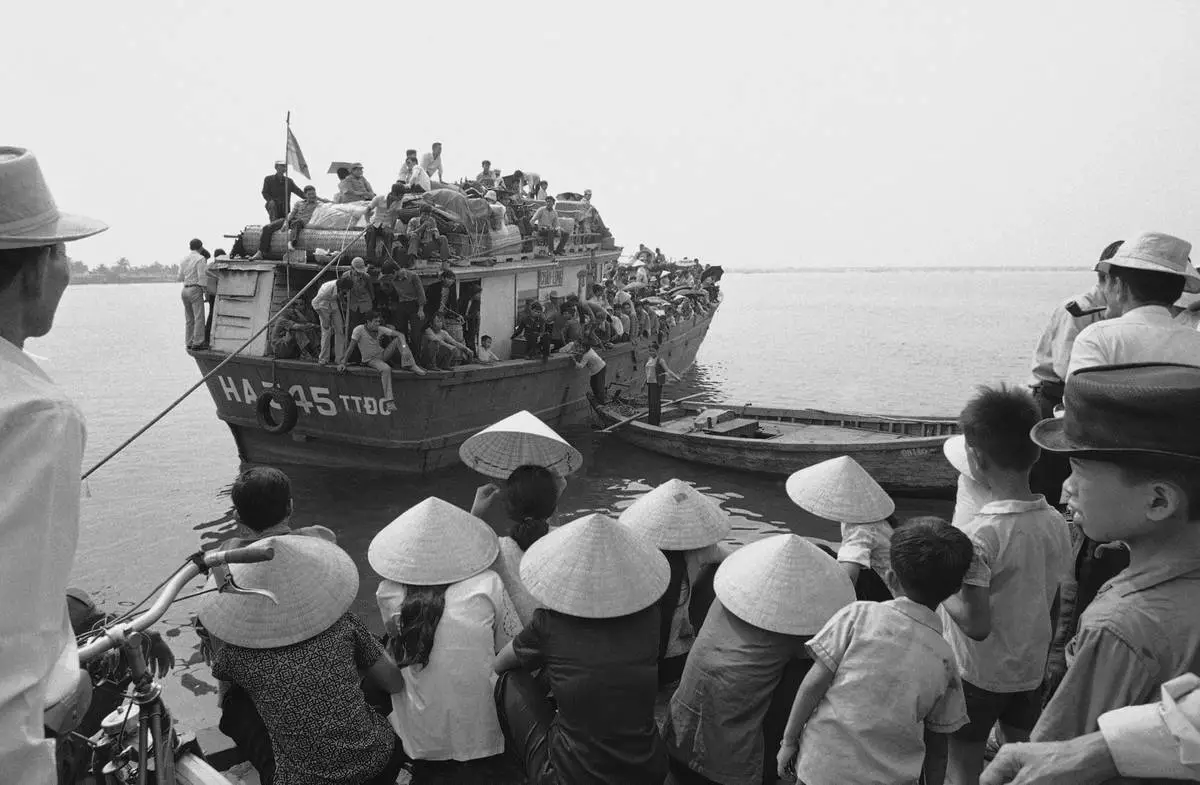
FILE - South Vietnamese refugees, foreground, who arrived on Friday, March 28, 1975 at the port city of Da Nang, South Vietnam, watch hopefully, as a boat loaded with refugees approaches the dock. The helter Skelter flight from advancing North Vietnamese resulted in the separation of navy families. Refugees already in the city Jam docks looking for their relatives to arrive. (AP Photo, File)