Skip to Content Facebook Feature Image

Family of student who died in her sleep from epilepsy to drive to Turkey in a tuk tuk in her memory

News

Family of student who died in her sleep from epilepsy to drive to Turkey in a tuk tuk in her memory
News

News

Family of student who died in her sleep from epilepsy to drive to Turkey in a tuk tuk in her memory

2018-08-18 13:15 Last Updated At:13:15

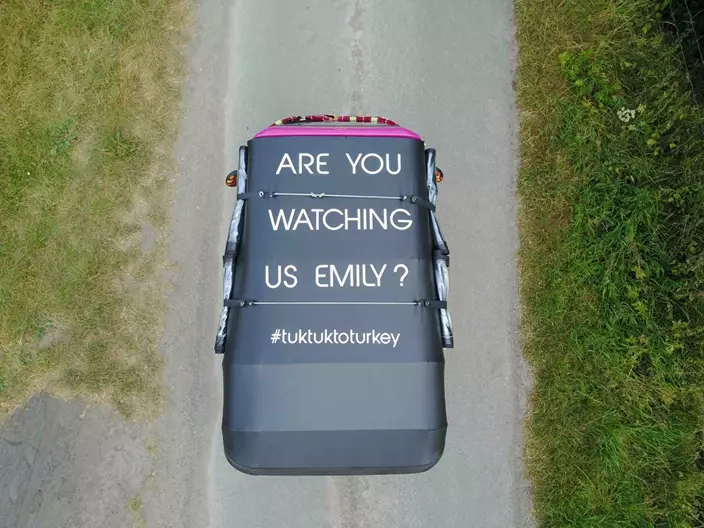
With ‘Are you watching us, Emily?’ written on the tuk-tuk’s roof, the trip is bound to be an emotional one.

The sister of a promising student who died suddenly in her sleep from epilepsy has told how her heartbroken family are planning to raise £100,000 for research and awareness by travelling from London to Turkey in an Indian tuk tuk.

More Images
Bharat, Amy, Rachel and James (Collect/PA Real Life)
Bharat, Amy, Rachel and James (Collect/PA Real Life)

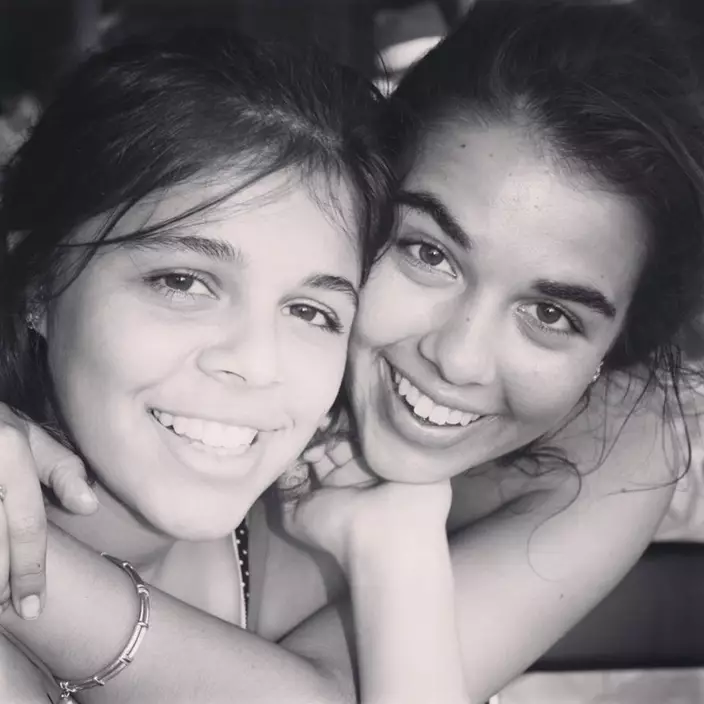
Emily, left, Amy, right (Collect/PA Real Life)
Emily, left, Amy, right (Collect/PA Real Life)

The poignant message on top of the tuk tuk (Collect/PA Real Life)
The poignant message on top of the tuk tuk (Collect/PA Real Life)

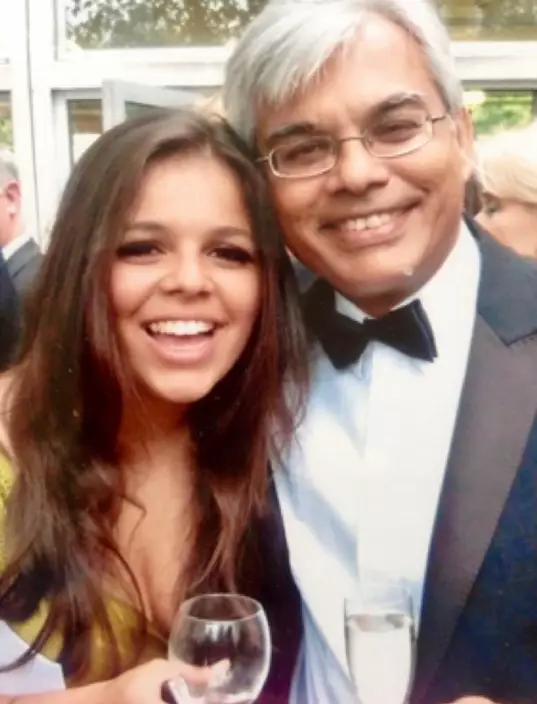
Emily and dad Bharat (Collect/PA Real Life)

Emily and dad Bharat (Collect/PA Real Life)

The tuk tuk (Collect/PA Real Life)
The tuk tuk (Collect/PA Real Life)

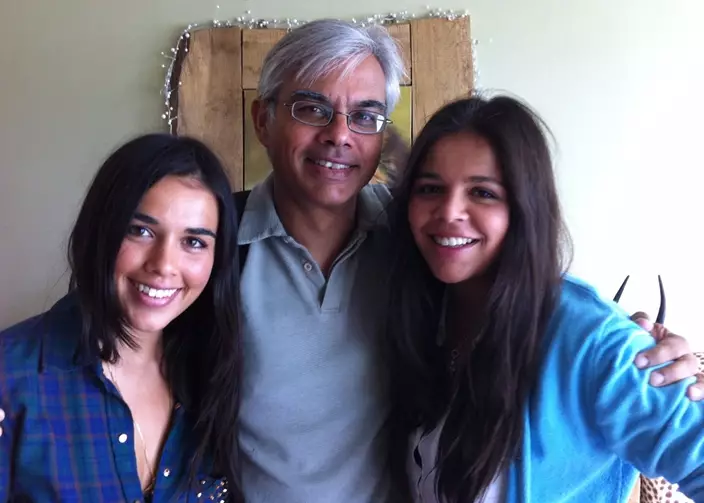
L-R Amy, Bharat, Emily (Collect/PA Real Life)

L-R Amy, Bharat, Emily (Collect/PA Real Life)

Amy and boyfriend James (Collect/PA Real Life)

Amy and boyfriend James (Collect/PA Real Life)

Emily, left, Amy, right (Collect/PA Real Life)

Emily, left, Amy, right (Collect/PA Real Life)

The tuk tuk (Collect/PA Real Life)

The tuk tuk (Collect/PA Real Life)

Emily as a child (Collect/PA Real Life)

Emily as a child (Collect/PA Real Life)

The tuk tuk (Collect/PA Real Life)
The tuk tuk (Collect/PA Real Life)

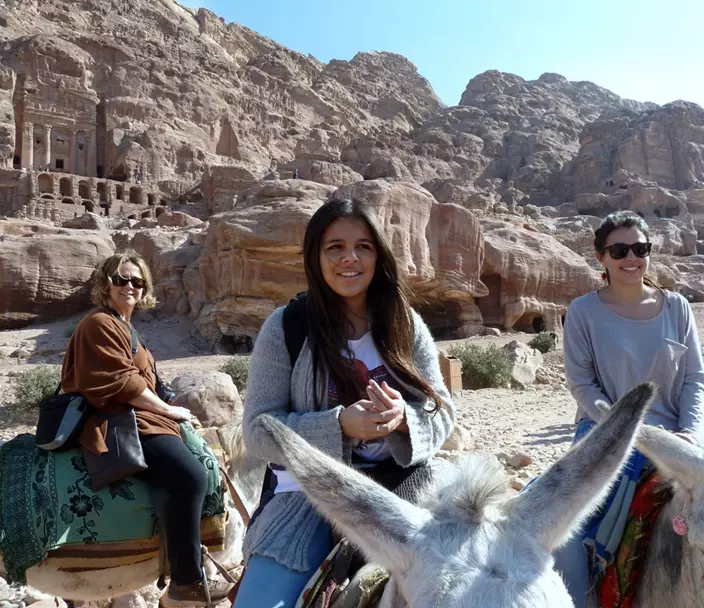
L-R Rachel, Emily, Amy in Petra, Jordan (Collect/PA Real Life)

L-R Rachel, Emily, Amy in Petra, Jordan (Collect/PA Real Life)

Amy Sumaria’s 19-year-old sister Emily who controlled her epilepsy problem-free for years was found dead in bed just three weeks before Christmas in 2012.

But it was only four months later that they discovered Sudden Unexpected Death in Epilepsy (SUDEP), where an epilepsy sufferer dies suddenly, prematurely and without reason, was the cause.

Bharat, Amy, Rachel and James (Collect/PA Real Life)

Bharat, Amy, Rachel and James (Collect/PA Real Life)

Now, determined to ensure more is known about SUDEP, which kills around 500 people every year, Amy, 27, and parents Rachel and Bharat, both 57, from Hawling, in the Cotswolds, have vowed to fund research and raise awareness around the devastating killer with their epic 4,000 mile road trip from London to Turkey.

Amy, a trainee solicitor, said: “We never imagined in our worst nightmares that Emily’s epilepsy would kill her.

“She had it under control and was a happy and gregarious sister who loved life.

“I wish we had known there was a chance she would be taken from us so cruelly, and I now we want others with epilepsy to know the risks too.”

Emily, left, Amy, right (Collect/PA Real Life)

Emily, left, Amy, right (Collect/PA Real Life)

Determined to find some positives in their grief, her family are planning to drive the automated rickshaw across 21 countries – one for each person killed by epilepsy each week – together with Amy’s boyfriend James Hewitt, also 27.

With ‘Are you watching us, Emily?’ written on the tuk-tuk’s roof, mum-of-two Rachel admits it will be an emotional trip, adding: “Life without Emily is empty.

“We really want to try and do something positive in her memory, to make her life count.

The poignant message on top of the tuk tuk (Collect/PA Real Life)

The poignant message on top of the tuk tuk (Collect/PA Real Life)

“We want to increase awareness of epilepsy and SUDEP, raise as much as we can for the incredible charity SUDEP Action and also, have a mad adventure that Emily can be proud of.”

When Emily died on December 4, 2012, her family were left grief-stricken and confused.

Emily had managed her epilepsy with medication since being diagnosed aged 14.

“It seemed like Emily’s epilepsy was under control, so we never, ever, imagined she could die from it,” said Amy, who lives in Ladbroke Grove, West London.”

She continued: “She had had a few seizures, but the condition never really seemed to affect her.

“She was still happy and just got on with her life. So I don’t think anyone really understood the severity of the situation and how deadly epilepsy can be.”

Emily and dad Bharat (Collect/PA Real Life)

Emily and dad Bharat (Collect/PA Real Life)

The tragedy unfolded on December 4, 2012.

With Emily at her student house in Leeds, where she was studying Geography at the University of Leeds, and Amy in London after graduating from Oxford University a few months earlier, their parents Rachel, a former accountant, and Bharat, a retired safari tour company director, were away travelling in America before meeting the sisters for Christmas in Cuba on December 22.

The night before her death, Emily and Amy were messaging on Facebook about their upcoming trip away. Amy says she remembers joking around with her younger sibling about any last-minute diets they could do.

The tuk tuk (Collect/PA Real Life)

The tuk tuk (Collect/PA Real Life)

“It was just a regular sister-to-sister chat about losing weight, getting student cards and generally having a catch up,” she said.

“We finished speaking at 10.56pm that night, not ending our messaging with anything poignant, as it was just another night, I had no idea the next morning, she would be dead.

But it wasn’t until the following evening, whilst Amy was wrapping Christmas presents, that her world was turned upside down.

A friend, whose sister knew Emily, arrived at Amy’s home and told her to put the wrapping paper and scissors down.

Amy tearfully recalled: “She looked at me then said ‘Emily is dead.’

“I actually said ‘Emily who?’ as never in my worst nightmares did I imagine my sister would die from epilepsy, it just wasn’t something we ever imagined being possible.”

Emily’s housemates became concerned on the afternoon of December 4 when they had not heard from her all day, when they entered her bedroom they had found the 19-year-old lifeless in her bed.

In a state of shock, Amy tried to contact her parents to break the devastating news.

But mid-flight, they were unreachable for another eight hours.

“It was the most heart-wrenching time waiting for them to land in Hawaii and get a phone signal to pick up my endless voicemails and texts,” Amy said.

She continued: “When my dad rang me back, I had to tell him that Emily had died. And to this day, that was the hardest thing I have ever had to do.

L-R Amy, Bharat, Emily (Collect/PA Real Life)

L-R Amy, Bharat, Emily (Collect/PA Real Life)

“My mum said: ‘it’s Emily, isn’t it?’ as soon as dad picked up all my messages and calls. It must have been a mother’s instinct. They got on a flight straight away and came back to the UK.”

In the weeks that followed, the Sumarias still had no idea how Emily had died.

Over 200 mourners attended her funeral at Cheltenham Crematorium on December 17 but it was only at her inquest four months after her death that the family heard the words Sudden Unexpected Death in Epilepsy (SUDEP) for the first time.

“We had never heard of it before and never knew it could be a risk to Emily,”

Amy said. “But the experts at her inquest said it was most likely to be her cause of death.”

Amy and boyfriend James (Collect/PA Real Life)

Amy and boyfriend James (Collect/PA Real Life)

Simply, it is when a person with epilepsy dies suddenly and prematurely and no reason for death is found.

“We couldn’t believe she could die from something we didn’t even know was fatal.”

There are at least 1,000 epilepsy related deaths each year in the UK, with half of these related to SUDEP.

And, according to charity SUDEP Action, whilst there is already a lot being done to understand what causes SUDEP, more research is needed.

“The uncertainty surrounding it, coupled with the fact that it is a difficult subject to broach, meaning that often those with epilepsy are never told about it by their doctors, despite SUDEP posing a risk to anyone with epilepsy,” Amy said.

“There are ways to minimise the risk of SUDEP, and the 600,000 people in the UK with epilepsy deserve to know about it.”

Emily, left, Amy, right (Collect/PA Real Life)

Emily, left, Amy, right (Collect/PA Real Life)

It was during a family holiday in Athens, Greece in May 2017, that the idea of a tuk tuk odyssey was born.

Amy said: “It’s only now that we can do this because we have all been so griefstricken for so long. Our whole family have grieved in different ways, but now we feel ready.”

Driving from London to Istanbul in a rickety vehicle – with Emily’s Fiat 500 support vehicle carrying camping equipment and luggage – Amy, Rachel, James, an asset manager, from South London, and Bharat will cover almost 4,000 miles, at a top speed of 40mph.

Leaving on September 8 for the six-week journey, the family have secured sponsors across their route which takes in spots including Dunkirk, Brussels, Lake Bled, Dubrovnik, Vienna and Istanbul.

“Our tuk-tuk, which was loaned by Tuk Tuk UK for the trip, has ‘Are you watching us, Emily?’ written on the roof, which we hope Emily will see from her place in the sky. It’s Indian as our dad has Indian heritage.”

Having already raised an incredible £79,000 for SUDEP Action through fundraisers and generous donors, they hope to increase their funds even more to hit the £100,000 mark.

Amy added: “We wanted to do something positive in her memory. Something that suited Emily’s mad and creative personality, which will hopefully raise a lot of money and awareness too”

The tuk tuk (Collect/PA Real Life)

The tuk tuk (Collect/PA Real Life)

SUDEP Action deputy chief executive Samantha Ashby added: “It’s often the case that people with epilepsy, and their families, are left unaware of the risks they face, and what they can do to reduce them.

Emily as a child (Collect/PA Real Life)

Emily as a child (Collect/PA Real Life)

“Clinicians must talk openly about these serious epilepsy risks with their patients, as they already do with many other long-term conditions. Such simple conversations mean they access the right information, treatments, and can make informed choices that could help prevent these tragic deaths.”

To donate visit www.justgiving.com/fundraising/tuktuktoturkey, to visit the blog go to www.tuktuktoturkey.com and use the hashtag #tuktuktoturkey.

For more information and free resources on how to manage your epilepsy and keep safe, visit SUDEP Action website – www.sudep.org

The tuk tuk (Collect/PA Real Life)

The tuk tuk (Collect/PA Real Life)

L-R Rachel, Emily, Amy in Petra, Jordan (Collect/PA Real Life)

L-R Rachel, Emily, Amy in Petra, Jordan (Collect/PA Real Life)

DUBAI, United Arab Emirates (AP) — Israel said Tuesday it killed two senior Iranian security officials in overnight strikes in a major blow to the country’s leadership. Iran, which did not immediately confirm either death, fired salvos of missiles and drones at its Gulf Arab neighbors and Israel in a war that showed no signs of abating.

Ali Larijani, secretary of Iran’s Supreme National Security Council, and Gen. Gholam Reza Soleimani, the head of the Revolutionary Guard’s all-volunteer Basij force, were “eliminated last night," Israeli Defense Minister Israel Katz said. Larijani was considered one of the most powerful figures in the country since Supreme Leader Ayatollah Ali Khamenei was killed in an airstrike on the first day of the war.

Both men were key to Iran’s violent crackdown on protests in January that challenged the theocracy’s 47-year rule. The killings would strip Iran of important leaders during a war that presents that greatest test for the Islamic Republic in recent decades.

With concerns growing about a global energy crisis, Iran launched fresh attacks against several of its Gulf Arab neighbors and oil infrastructure throughout the region. Dubai, a major transit hub for international travel, briefly shut its airspace, the second disruption to flights in the city in as many days. An Iranian official said Tehran had no intention of relinquishing its tight grip on shipping through the Strait of Hormuz, a crucial waterway for oil.

On Tuesday, President Donald Trump said NATO and most other allies have rejected his calls to help secure the strait.

The Israeli military said it had begun a “wide-scale wave of strikes” across Iran’s capital and was stepping up strikes on Iran-backed Hezbollah militants in Lebanon.

Larijani, a former parliamentary speaker and senior policy adviser, advised the late Khamenei on strategy in nuclear talks with the Trump administration. He was sanctioned by the U.S. Treasury in January for his role in “coordinating” Iran's violent suppression nationwide protests.

Soleimani was also sanctioned by the U.S., as well as by the European Union and other nations, over his role in helping suppress dissent for years through the Basij.

Israeli Prime Minister Benjamin Netanyahu said the killings were aimed at weakening Iran's government. “We are undermining this regime to give the Iranian people the opportunity to remove it,” he said.

There have been no signs of anti-government protests since the war began, as many Iranians are sheltering from the American and Israeli strikes.

The reported killings of Larijani and Soleimani came on the eve of “Chaharshanbe Souri,” or the Festival of Fire, shortly before the Persian new year. Authorities have sent threatening text messages to the public, urging them not to take part in the festival.

State media aired footage Tuesday of pro-government demonstrations, including images of some men in plainclothes branding assault rifles and shotguns on the back of motorcycles — a sign of the government wanting to prevent renewed protests against the theocracy.

Iran kept up the pressure on its neighbors and energy infrastructure around the region, hitting an oil facility in Fujairah, an emirate in the United Arab Emirates that has been repeatedly targeted. A man was killed by the debris of a missile intercepted over Abu Dhabi, the eighth person to die in the UAE since the start of the war, authorities said.

Saudi Arabia said it intercepted drones, while air defenses could be heard targeting incoming fire over Qatar’s capital, Doha. Attacks from Iran-linked proxy forces continued in Iraq, where the U.S. Embassy in Baghdad was hit with shrapnel from intercepted drones.

Iran’s attacks on Gulf nations and its grip on the Strait of Hormuz, through which a fifth of the world’s oil is transported, have sparked increasing concerns of a global energy crisis and are unnerving the world economy.

A handful of ships have crossed through the strait, and Iran has said the waterway technically remains open — just not for the United States, Israel and their allies. About 20 vessels have been struck since the war began.

With oil prices rising, Trump said he had demanded that roughly a half-dozen countries send warships to ensure ships can pass through the strait. But his appeals brought no immediate commitments, with many saying they are hesitant to get involved in a war with no defined exit plan.

Trump fumed Tuesday that the U.S. is not getting support “despite the fact that almost every country strongly agreed with what we are doing, and that Iran cannot” be allowed to secure a nuclear weapon.

The European Union’s top diplomat says the 27-nation bloc does not want to be dragged into the U.S.-Israel war with Iran. “This is not Europe's war,” EU foreign policy chief Kaja Kallas told EU lawmakers on Tuesday. "We were not consulted.”

French President Emmanuel Macron earlier reaffirmed that France is ready to help secure the strait, but only after heavy bombing has stopped.

The Israeli military early Tuesday said it had launched new attacks across Tehran and targeted Hezbollah militants in the Lebanese capital. Hezbollah began firing rockets into the northern Israel after the U.S. and Israel attacked Iran last month.

In Iran, it said it hit command centers, missile launch sites and air defense systems. There was no immediate confirmation from Iran, where little information has been coming out due to internet outages, round-the-clock airstrikes and tight restrictions on journalists.

More than 1,300 people have been killed in Iran since the start of the conflict, according to the Iranian Red Crescent.

Israel did not immediately release details of its attacks on Lebanon, but the Lebanese army said that three soldiers were killed. The Lebanese Health Ministry said that an airstrike near Beirut’s international airport killed one person and wounded nine, according to the Lebanese Health Ministry.

Israel’s strikes have displaced more than 1 million Lebanese — or roughly 20% of the population — according to the Lebanese government, which says 912 people have been killed since the outbreak of a new Israel-Hezbollah war two weeks ago.

In Israel, 12 people have been killed by Iranian missile fire. At least 13 U.S. military members have been killed.

A top U.S. counterterrorism official resigned Tuesday, citing concerns about the justification for military strikes in Iran. Joe Kent, the director of the National Counterterrorism Center, said he “cannot in good conscience” back the Trump administration’s war.

His resignation reflects unease about the war within Trump’s political base just as midterm election races start to heat up. Trump’s MAGA coalition is splintering over what it sees as the president’s failure to keep his “America First” campaign promise by leading the U.S. into a war that is driving up gas prices.

Speaking to reporters in the Oval Office, Trump said that he always thought Kent — the president's pick to lead the counterterrorism center — was “weak on security” and that if someone in his government did not believe Iran was a threat, “we don’t want those people.”

Rising reported from Bangkok, Corder from The Hague, Netherlands, and Magdy from Cairo. Associated Press writers Qassim Abdul-Zahra in Baghdad; and Bassem Mroue in Beirut contributed to this report.

Fire and plumes of smoke rise after a drone struck a fuel tank forcing the temporary suspension of flights. near Dubai International Airport, in United Arab Emirates, early Monday, March 16, 2026. (AP Photo)

Fire and plumes of smoke rise after a drone struck a fuel tank forcing the temporary suspension of flights. near Dubai International Airport, in United Arab Emirates, early Monday, March 16, 2026. (AP Photo)

FILE - Ali Larijani, center, head of Iran's National Security Council, gestures as Hezbollah supporters throw rice to welcome him outside Rafik Hariri International Airport in Beirut, Lebanon, Wednesday, Aug. 13, 2025. (AP Photo/Bilal Hussein, File)

FILE - Ali Larijani, center, head of Iran's National Security Council, gestures as Hezbollah supporters throw rice to welcome him outside Rafik Hariri International Airport in Beirut, Lebanon, Wednesday, Aug. 13, 2025. (AP Photo/Bilal Hussein, File)

FILE -Iranian Secretary of Supreme National Security Council Ali Larijani, speaks during a press conference after his meeting with the Lebanese parliament speaker Nabih Berri, in Beirut, Lebanon, Aug. 13, 2025. (AP Photo/Bilal Hussein, File)

FILE -Iranian Secretary of Supreme National Security Council Ali Larijani, speaks during a press conference after his meeting with the Lebanese parliament speaker Nabih Berri, in Beirut, Lebanon, Aug. 13, 2025. (AP Photo/Bilal Hussein, File)

FILE - Commander of Iran's Basij paramilitary force, Gen. Gholam Reza Soleimani, gives a press conference in Tehran, Iran, Nov. 18, 2019. (AP Photo/Ebrahim Noroozi, File)

FILE - Commander of Iran's Basij paramilitary force, Gen. Gholam Reza Soleimani, gives a press conference in Tehran, Iran, Nov. 18, 2019. (AP Photo/Ebrahim Noroozi, File)

A view of a building damaged in an Israeli airstrike, in Dahiyeh, Beirut's southern suburbs, Beirut's southern suburbs, Lebanon, Monday, March 16, 2026. (AP Photo/Bilal Hussein)

A view of a building damaged in an Israeli airstrike, in Dahiyeh, Beirut's southern suburbs, Beirut's southern suburbs, Lebanon, Monday, March 16, 2026. (AP Photo/Bilal Hussein)

Two men ride their motorbike past a billboard of the Iranian Supreme Leader Ayatollah Mojtaba Khamenei in downtown Tehran, Iran, Saturday, March 14, 2026. (AP Photo/Vahid Salemi)

Two men ride their motorbike past a billboard of the Iranian Supreme Leader Ayatollah Mojtaba Khamenei in downtown Tehran, Iran, Saturday, March 14, 2026. (AP Photo/Vahid Salemi)

U.S. Embassy is seen across the Tigris River in Baghdad, Tuesday, March 17, 2026. (AP Photo/Hadi Mizban)

U.S. Embassy is seen across the Tigris River in Baghdad, Tuesday, March 17, 2026. (AP Photo/Hadi Mizban)

Fire and plumes of smoke rises after a drone struck a fuel tank forcing the temporary suspension of flights. near Dubai International Airport, in United Arab Emirates, early Monday, March 16, 2026. (AP Photo)

Fire and plumes of smoke rises after a drone struck a fuel tank forcing the temporary suspension of flights. near Dubai International Airport, in United Arab Emirates, early Monday, March 16, 2026. (AP Photo)

Volunteers clean debris from a residential building damaged when a nearby police station was hit Friday in a U.S.-Israeli strike in Tehran, Iran, Sunday, March 15, 2026. (AP Photo/Vahid Salemi)

Volunteers clean debris from a residential building damaged when a nearby police station was hit Friday in a U.S.-Israeli strike in Tehran, Iran, Sunday, March 15, 2026. (AP Photo/Vahid Salemi)

Recommended Articles