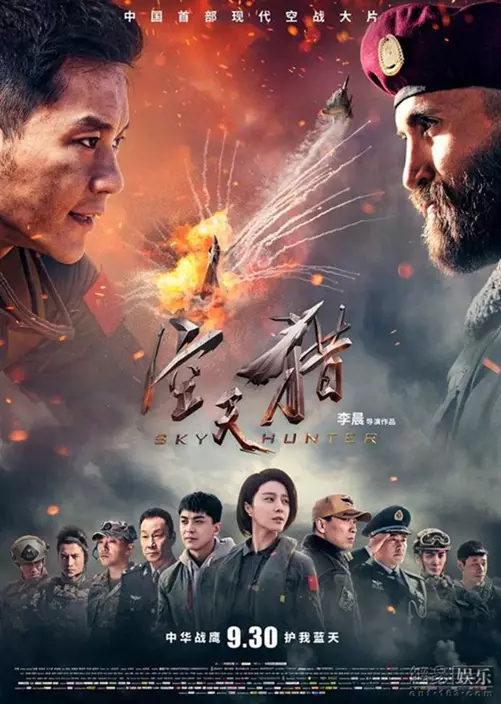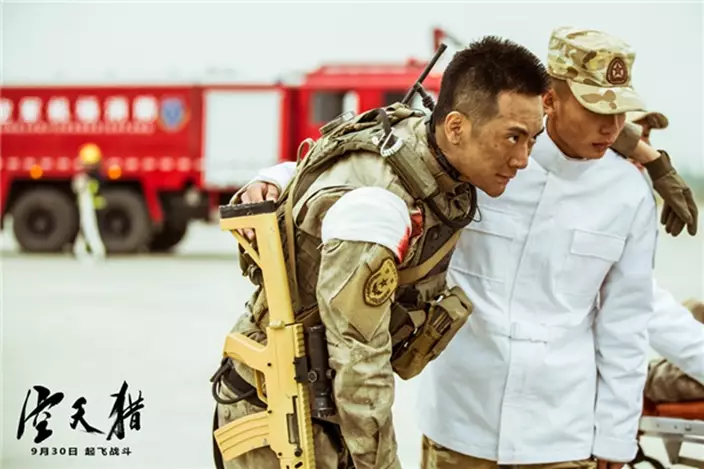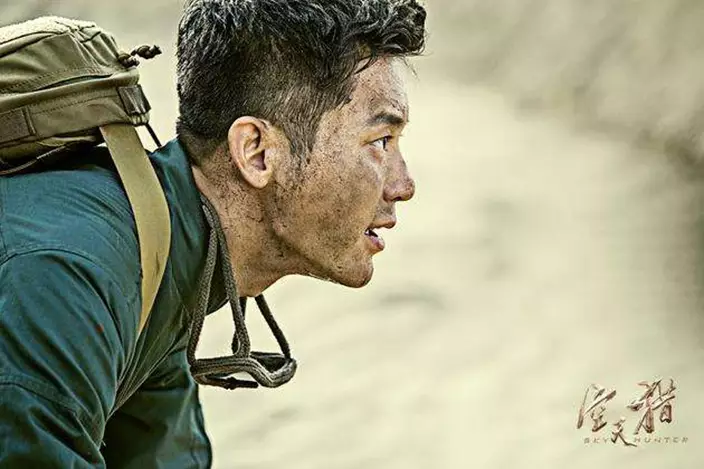
Chinese J-20 Stealth fighter jet, which is yet to be commissioned into air force service, is set to feature in a commercial movie, "Sky Hunter" scheduled for released during September this year.
The Chinese Air Force has reportedly agreed to feature its J-20 stealth twin jet fifth-generation fighter; the Y-20, large military transport aircraft; the J-10C lightweight multi-role fighter; and the J-11B single-seat twin-engine jet fighter. Previously such aircraft were only displayed at military parades and domestic air shows.
Online Photo
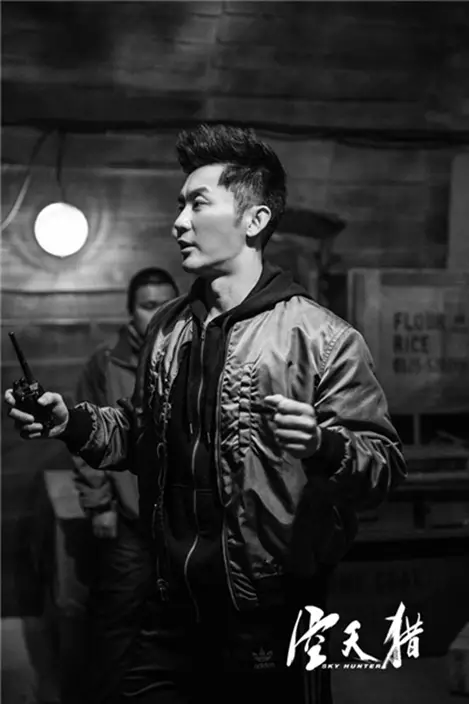
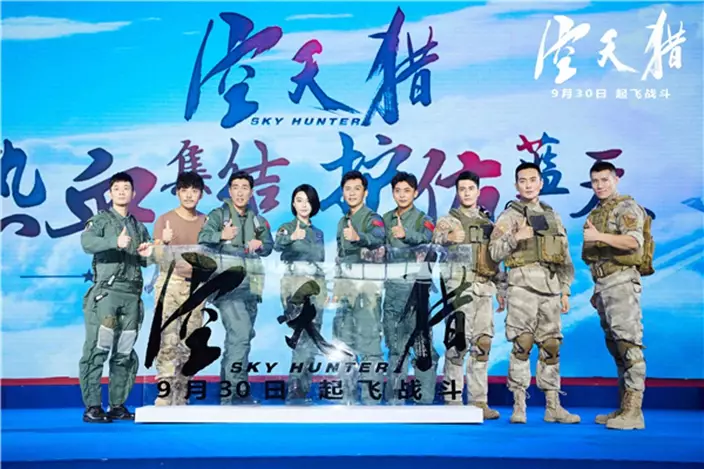
"Sky Hunter," directed by actor Li Chen has a cast including himself, Fan Bingbing, Wang Qianyuan and Li Jiahang, held its first press conference at the China Aviation Museum in the Beijing suburbs last Wednesday, with guests and collaborators from Chinese air force attending.
Online Photo
Online Photo
The 200 million-Yuan (US$29.9 billion) budget film got full support from the Chinese air force, including sending dozens of its own experts, equipment and trainers to assist the film crew, China Mil reported today.
Online Photo
Online Photo
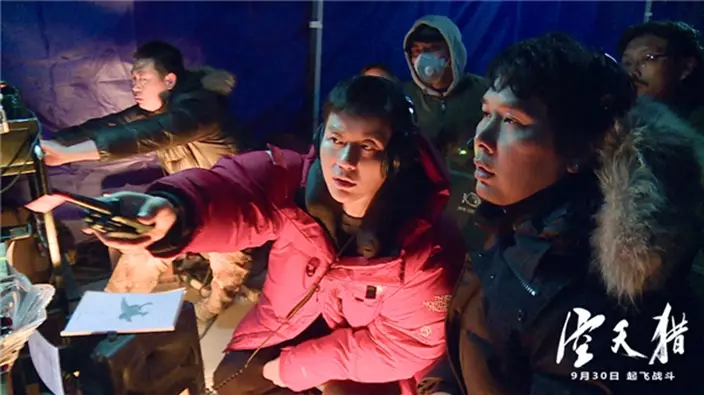
To help the film obtain firsthand and real images and pictures of what the Chinese air force is like today, the military authorities opened several of its bases to the film crew to shoot various scenes.
Online Photo
To fully hold down the cost, Li Chen and his girlfriend, China's A-list actress Fan Bingbing, were even willing to accept no remuneration for the film, said producer Lyu Jianmin, chairman of Chunqiu Time Culture Co. Ltd.
Online Photo
"I didn't have money to hire any other actress," Li Chen told the press conference, "so I asked Bingbing to help for free, because most of the film's budget should be spent on production and special effects."
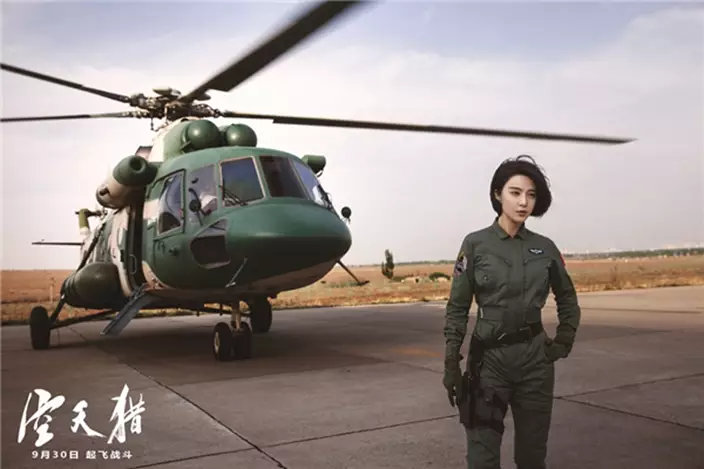
Fan Bingbing, playing a military helicopter pilot, said she agreed to help her boyfriend to fulfill his military dream; however, later she found she had been "cheated" a little.
Online Photo
She explained: "I thought my role might only involve two scenes and I was just making a cameo appearance; actually I was recruited as the leading role."
Online Photo
The "Sky Hunter" screen writer and military film producer, air force Lieutenant Colonel Zhang Li, said the film grew out of the air force's front line combat readiness training and showed the recent years of developing new weapons, as well as the achievements of the 400,000 air force soldiers and officers. “This film certainly represents a milestone," he said.
Online Photo
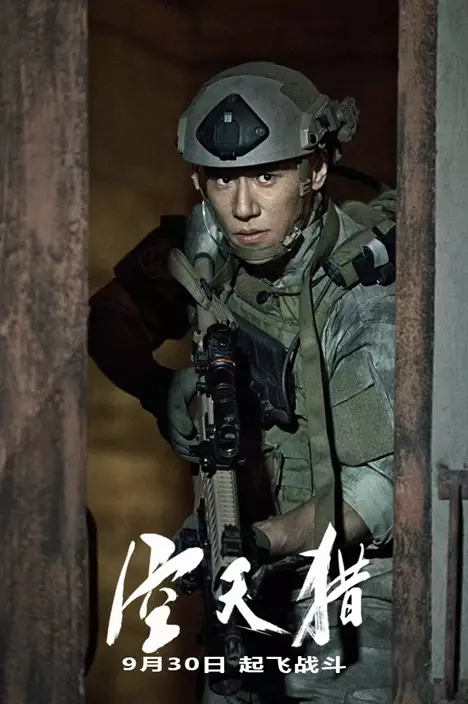
The film tells the story of how the elite Chinese air force destroys a terrorist plot and resolves a hostage crisis. Shooting took more than a year in dozens of places in China and Kazakhstan and will "present the visual images of Chinese modern air force that people have never seen before," according to its press release.
SEOUL, South Korea (AP) — Ahn Sung-ki, one of South Korean cinema’s biggest stars whose prolific 60-year career and positive, gentle public image earned him the nickname “The Nation’s Actor,” died Monday. He was 74.
Ahn, who had suffered blood cancer for years, was pronounced dead at Seoul's Soonchunhyang University Hospital, his agency, the Artist Company, and hospital officials said.
“We feel deep sorrow at the sudden, sad news, pray for the eternal rest of the deceased and offer our heartfelt condolences to his bereaved family members," the Artist Company said in a statement.
President Lee Jae Myung issued a condolence message saying Ahn provided many people with comfort, joy and time for reflection. “I already miss his warm smile and gentle voice,” Lee wrote on Facebook.
Born to a filmmaker in the southeastern city of Daegu in 1952, Ahn made his debut as a child actor in the movie “The Twilight Train” in 1957. He subsequently appeared in about 70 movies as a child actor before he left the film industry to live an ordinary life.
In 1970, Ahn entered Seoul’s Hankuk University of Foreign Studies as a Vietnamese major. Ahn said he graduated with top honors but failed to land jobs at big companies, who likely saw his Vietnamese major largely useless after a communist victory in the Vietnam War in 1975.
Ahn returned to the film industry in 1977 believing he could still excel in acting. In 1980, he rose to fame for his lead role in Lee Jang-ho’s “Good, Windy Days,” a hit coming-of-age movie about the struggle of working-class men from rural areas during the country’s rapid rise. Ahn won the best new actor award in the prestigious Grand Bell Awards, the Korean version of the Academy Awards.
He later starred in a series of highly successful and critically acclaimed movies, sweeping best actor awards and becoming arguably the country’s most popular actor in much of the 1980-90s.
Some of his memorable roles included a Buddhist monk in 1981’s “Mandara,” a beggar in 1984’s “Whale Hunting,” a Vietnam War veteran-turned-novelist in 1992’s “White Badge,” a corrupt police officer in 1993’s “Two Cops,” a murderer in 1999’s “No Where To Hide,” a special forces trainer in 2003’s “Silmido” and a devoted celebrity manager in 2006’s “Radio Star.”
Ahn had collected dozens of trophies in major movie awards in South Korea, including winning the Grand Bell Awards for best actor five times, an achievement no other South Korean actors have matched yet.
Ahn built up an image as a humble, trustworthy and family-oriented celebrity who avoided major scandals and maintained a quiet, stable personal life. Past public surveys chose Ahn as South Korea’s most beloved actor and deserving of the nickname “The Nation’s Actor.”
Ahn said he earlier felt confined with his “The Nation's Actor” labeling but eventually thought that led him down the right path. In recent years, local media has given other stars similar honorable nicknames, but Ahn was apparently the first South Korean actor who was dubbed “The Nation's Actor.”
“I felt I should do something that could match that title. But I think that has eventually guided me on a good direction,” Ahn said in an interview with Yonhap news agency in 2023.
In media interviews, Ahn couldn’t choose what his favorite movie was, but said that his role as a dedicated, hardworking manger for a washed-up rock singer played by Park Jung-hoon resembled himself in real life the most.
Ahn was also known for his reluctance to do love scenes. He said said he was too shy to act romantic scenes and sometimes asked directors to skip steamy scenes if they were only meant to add spice to movies.
“I don’t do well on acting like looking at someone who I don’t love with loving eyes and kissing really romantically. I feel shy and can’t express such emotions well,” Ahn said in an interview with the Shindonga magazine in 2007. “Simply, I’m clumsy on that. So I couldn’t star in such movies a lot. But ultimately, that was a right choice for me.”
Ahn is survived by his wife and their two sons. A mourning station at a Seoul hospital was to run until Friday.
FILE - South Korean actor Ahn Sung-ki smiles for a photo on the red carpet at the 56th Daejong Film Awards ceremony in Seoul, South Korea, June 3, 2020. (AP Photo/Ahn Young-joon, File)
FILE - South Korean actor Ahn Sung-ki attends an event as part of the 11th Pusan International Film Festival in Busan, South Korea, Oct. 13, 2006. (AP Photo/Kin Cheung, File)