Skip to Content Facebook Feature Image

Microsoft dives deeper into 'mixed reality' with VR devices

TECH

Microsoft dives deeper into 'mixed reality' with VR devices
TECH

TECH

Microsoft dives deeper into 'mixed reality' with VR devices

2017-10-04 13:02 Last Updated At:13:02

Microsoft is counting on virtual reality headsets made by other companies to help establish personal computers running on its Windows 10 operating system as the best way to explore artificial worlds.

The devices unveiled Tuesday include a Samsung headset called the HMD Odyssey. The headset requires a connection to a PC running on a Windows 10 update being released Oct. 17. That's unlike Samsung's less expensive Gear VR headset, which is designed to run on smartphones powered by Google's Android operating system.
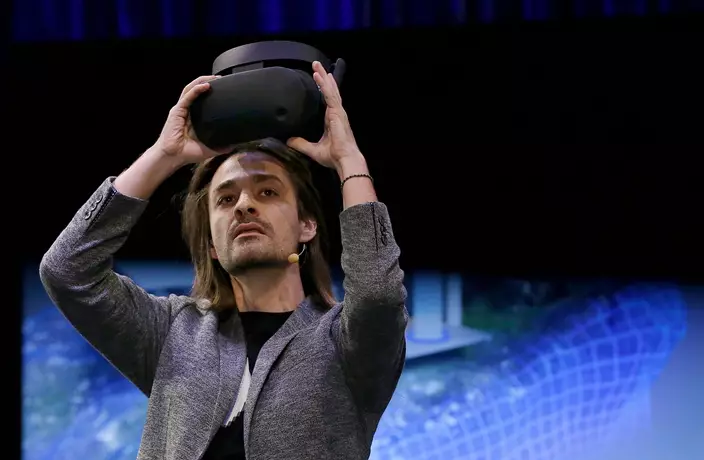
Microsoft Technical Fellow Alex Kipman holds an HMD Odyssey virtual reality headset, Tuesday, Oct. 3, 2017, in San Francisco. Microsoft is touting virtual reality headsets made by other companies in hopes of establishing personal computers running on its Windows 10 operating system as the best way for people to experience artificial worlds. The devices unveiled on Tuesday include a Samsung headset called the HMD Odyssey. The $500 headset requires a connection to a PC running on a Windows 10 update being released Oct. 17. (AP Photo/Ben Margot)

Microsoft Technical Fellow Alex Kipman holds an HMD Odyssey virtual reality headset, Tuesday, Oct. 3, 2017, in San Francisco. Microsoft is touting virtual reality headsets made by other companies in hopes of establishing personal computers running on its Windows 10 operating system as the best way for people to experience artificial worlds. The devices unveiled on Tuesday include a Samsung headset called the HMD Odyssey. The $500 headset requires a connection to a PC running on a Windows 10 update being released Oct. 17. (AP Photo/Ben Margot)

Samsung's HMD Odyssey will cost $500 and begin shipping early next month. The Gear VR sells for $40 to $130.

PC makers Dell, HP, Acer and Lenovo also will be making VR headsets designed to work with Windows 10 machines. The prices for those headsets start at about $400.

Microsoft also disclosed it's buying a startup called AltspaceVR to develop technology for holding business meetings in VR.

The PC-driven headsets that Microsoft is embracing illuminate the dividing lines among some of the world's most powerful technology companies as they all try to hook consumers and businesses on products and applications that blend the real world with digital versions of it.

Both Apple and Google are focused on bringing a slightly different format called "augmented reality" to smartphones running on their software. Augmented reality, or AR, projects digital images into real-life scenes usually viewed through a camera lens.

VR, on the other hand, completely immerses people into fake worlds, and usually requires wearing a headset that blocks out everything else.
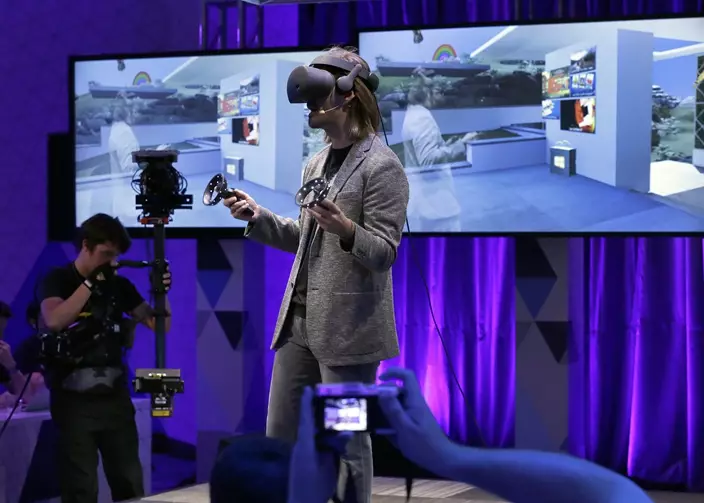
Microsoft Technical Fellow Alex Kipman demonstrates an HMD Odyssey virtual reality headset during a media conference, Tuesday, Oct. 3, 2017, in San Francisco. Microsoft is touting virtual reality headsets made by other companies in hopes of establishing personal computers running on its Windows 10 operating system as the best way for people to experience artificial worlds. The devices unveiled on Tuesday include a Samsung headset called the HMD Odyssey. The $500 headset requires a connection to a PC running on a Windows 10 update being released Oct. 17. (AP Photo/Ben Margot)

Microsoft Technical Fellow Alex Kipman demonstrates an HMD Odyssey virtual reality headset during a media conference, Tuesday, Oct. 3, 2017, in San Francisco. Microsoft is touting virtual reality headsets made by other companies in hopes of establishing personal computers running on its Windows 10 operating system as the best way for people to experience artificial worlds. The devices unveiled on Tuesday include a Samsung headset called the HMD Odyssey. The $500 headset requires a connection to a PC running on a Windows 10 update being released Oct. 17. (AP Photo/Ben Margot)

Microsoft Corp. is trying to develop technology that straddles both VR and AR, prompting the company to label its approach as "mixed reality." It began its push into the area two years ago with an expensive headset called the HoloLens that so far has primarily been used inside companies.

Now, Microsoft is trying to broaden its mixed-reality strategy by working with PC makers to design and sell headsets that work with the upcoming Windows 10 update. The Redmond, Washington, company's emphasis on its PC operating system isn't surprising, given that its own attempts to expand into smartphones have flopped so far.

Facebook, another company without its own smartphone operating system, also is betting on VR that works on standalones headsets build by its Oculus subsidiary. The Oculus headset also requires a connection to a high-powered PC. Oculus is expected to reveal the latest updates to its VR products at a conference next week.

Google, meanwhile, is expected to unveil the next generation of its Daydream VR headsets for Android-powered phones at a showcase Wednesday.
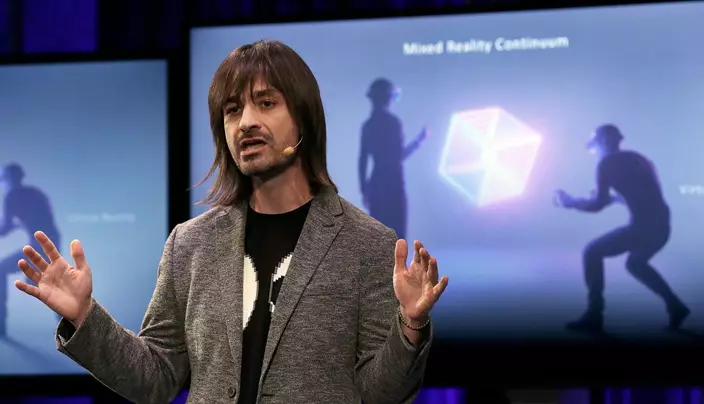
Microsoft Technical Fellow Alex Kipman speaks during a media conference, Tuesday, Oct. 3, 2017, in San Francisco. Microsoft is touting virtual reality headsets made by other companies in hopes of establishing personal computers running on its Windows 10 operating system as the best way for people to experience artificial worlds. The devices unveiled on Tuesday include a Samsung headset called the HMD Odyssey. The $500 headset requires a connection to a PC running on a Windows 10 update being released Oct. 17. (AP Photo/Ben Margot)

Microsoft Technical Fellow Alex Kipman speaks during a media conference, Tuesday, Oct. 3, 2017, in San Francisco. Microsoft is touting virtual reality headsets made by other companies in hopes of establishing personal computers running on its Windows 10 operating system as the best way for people to experience artificial worlds. The devices unveiled on Tuesday include a Samsung headset called the HMD Odyssey. The $500 headset requires a connection to a PC running on a Windows 10 update being released Oct. 17. (AP Photo/Ben Margot)

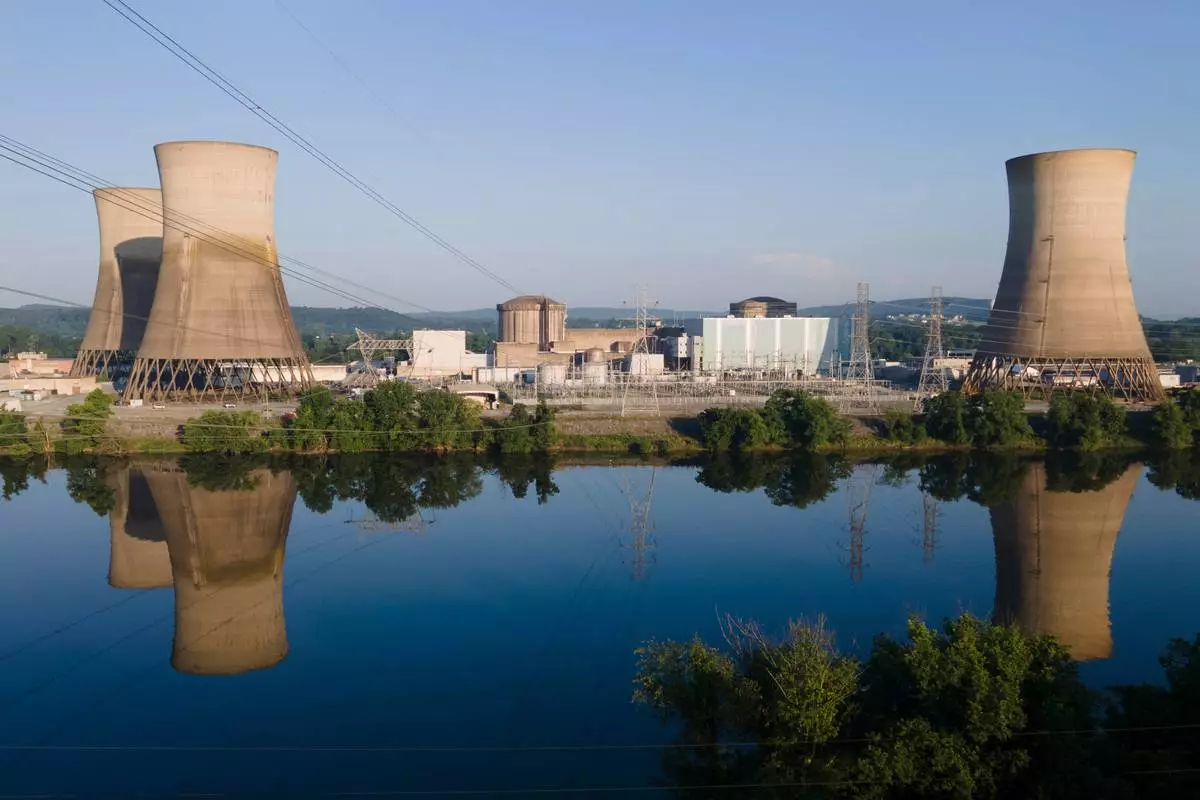
HARRISBURG, Pa. (AP) — The U.S. Department of Energy said Tuesday that it will loan $1 billion to help finance the restart of the nuclear power plant on Pennsylvania's Three Mile Island that is under contract to supply power to data centers for tech giant Microsoft.

The loan is in line with the priorities of President Donald Trump's administration, including bolstering nuclear power and artificial intelligence.

For Constellation Energy, which owns Three Mile Island's lone functioning nuclear power reactor, the federal loan will lower its financing cost to get the mothballed plant up and running again. The 835-megawatt reactor can power the equivalent of approximately 800,000 homes, the Department of Energy said.

The reactor had been out of operation for five years when Constellation Energy announced last year that it would spend $1.6 billion to restart it under a 20-year agreement with Microsoft to buy the power for its data centers.

Constellation Energy renamed the functioning unit the Crane Clean Energy Center as it works to restore equipment including the turbine, generator, main power transformer and cooling and control systems. It hopes to bring the plant back online in 2027.

The loan is being issued under an existing $250 billion energy infrastructure program initially authorized by Congress in 2022. Neither the department nor Constellation released terms of the loan.

The plant, on an island in the Susquehanna River just outside Harrisburg, was the site of the nation’s worst commercial nuclear power accident, in 1979. The accident destroyed one reactor, Unit 2, and left the plant with one functioning reactor, Unit 1.

In 2019, Constellation Energy's then-parent company Exelon shut down the functioning reactor, saying it was losing money and Pennsylvania lawmakers had refused to subsidize it to keep it running.

The plan to restart the reactor comes amid something of a renaissance for nuclear power, as policymakers are increasingly looking to it to shore up the nation's power supply, help avoid the worst effects of climate change and meet rising power demand driven by data centers.

Follow Marc Levy at http://twitter.com/timelywriter.

FILE - At Constellation's nuclear power plant on Three Mile Island, called the Crane Clean Energy Center, near Middletown, Pa., the cooling towers are reflected in the Susquehanna River at sunrise, June 25, 2025. (AP Photo/Ted Shaffrey, File)

FILE - At Constellation's nuclear power plant on Three Mile Island, called the Crane Clean Energy Center, near Middletown, Pa., the cooling towers are reflected in the Susquehanna River at sunrise, June 25, 2025. (AP Photo/Ted Shaffrey, File)

Recommended Articles