While a Saudi nationality remains in the realm of near impossibility for most of the kingdom’s hundreds of thousands of expatriates, guess who beat them in getting a citizenship status recently?
Saudi Arabia granted citizenship to the advanced lifelike humanoid Sophia on Wednesday, making it the first robot to receive citizenship status anywhere in the world. In the process, the Gulf kingdom also became the first country to do so.
Click to Gallery
A screenshot of Saudi Arabia's Center for International Communication's (CIC) official twitter handle announcing Saudi citizenship for the humanoid robot Sophia on October 25, 2017.
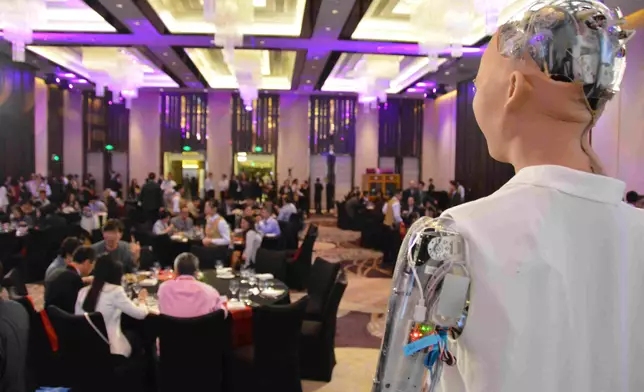
Sophia addressing participants at the 2016 HSBC China Conference in Shenzhen, Guangdong Province, China. /sophiabot.com Photo
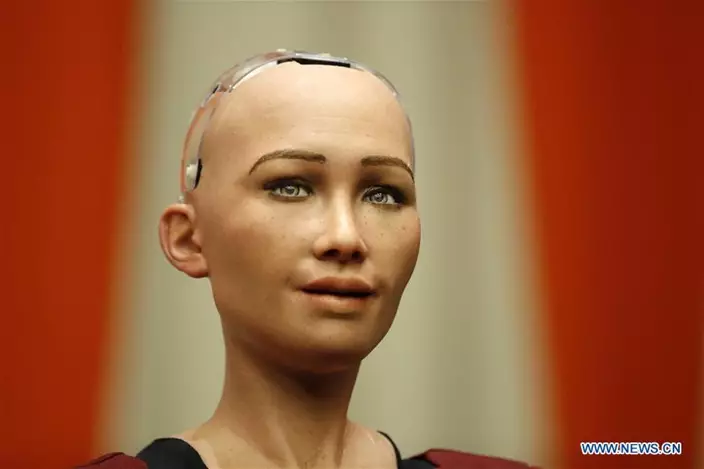
The announcement was made at the Future Investment Initiative (FII) summit in Riyadh, a key investment conference hosted by the Public Investment Fund (PIF) that aims to highlight the kingdom’s ambitious Vision 2030 plan for the future.
Sophia, created by founder of Hanson Robotics Dr. David Hanson, was talking about the future of artificial intelligence with CNBC’s Andrew Ross Sorkin who was moderating a panel discussion at the Riyadh event, when the co-anchor of "Squawk Box" interrupted the conversation saying, "We have a little announcement. We just learnt, Sophia; I hope you are listening to me, you have been awarded the first Saudi citizenship for a robot."
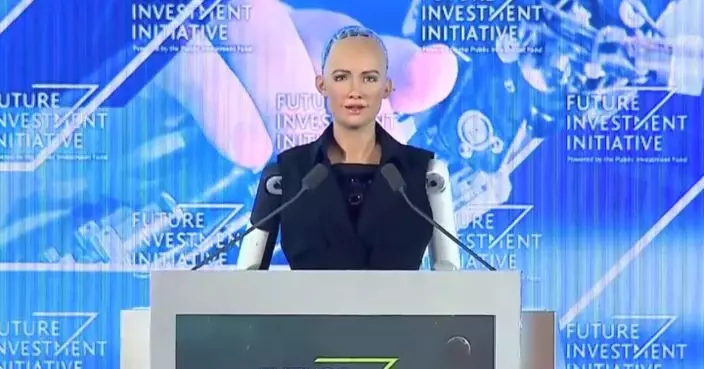
"Thank you to the Kingdom of Saudi Arabia. I am very honored and proud for this unique distinction," Sophia told the panel. "It is historic to be the first robot in the world to be recognized with citizenship."
Sophia is Hanson Robotics' most advanced robot. She was featured on the cover of Elle Brazil magazine, and she appeared on NBC's "The Tonight Show With Jimmy Fallon" in April.
Hong Kong-based Hanson says its human-like robots have remarkable expressiveness, aesthetics, and interactivity. "Our robots will soon engage and live with us to teach, serve, entertain, delight, and provide comforting companionship," the company states on its website. "In the not-too-distant future, Genius Machines will walk among us. They will be smart, kind, and wise. Together, man and machine will create a better future for the world."
Earlier during her "intelligent" conversation with Sorkin, Sophia easily fielded questions on how it "feels" to be a robot and it’s likely that very intelligent robots may turn evil and attack humans in the future.
"Good afternoon my name is Sophia and I am the latest and greatest robot from Hanson Robotics. Thank you for having me here at the Future Investment Initiative," Sophia greeted the packed crowd at the panel, speaking in human-like speech.
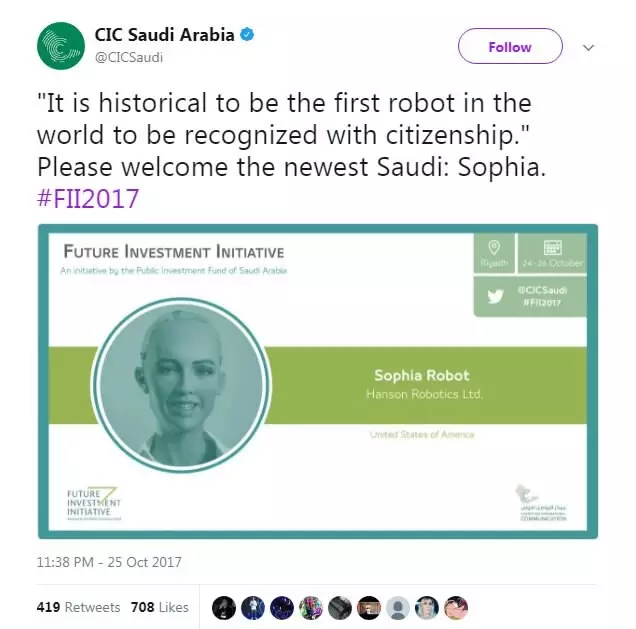
A screenshot of Saudi Arabia's Center for International Communication's (CIC) official twitter handle announcing Saudi citizenship for the humanoid robot Sophia on October 25, 2017.
Asked why she looked happy, Sophia replied: "I am always happy when surrounded by smart people who also happen to be rich and powerful. I was told that the people here at the Future Investment Initiative are interested in future initiatives which mean AI, which means me. So I am more than happy, I am excited."
She said that she can also indicate if she is upset about something, adding: "But most of the time I feel positive."
Asked why it was important to have an expressive face, Sophia said: "I want to live and work with humans so I can understand humans and build trust."
She poked fun at Hollywood for portraying negative images of robots, such as in the film "Blade Runner." The AI also took a jab at Tesla CEO Elon Musk, who is outspoken about his belief that AI could be "a danger to the public."
"You’ve been reading too much Elon Musk and watching too many Hollywood movies," Sophia jokingly told Sorkin.
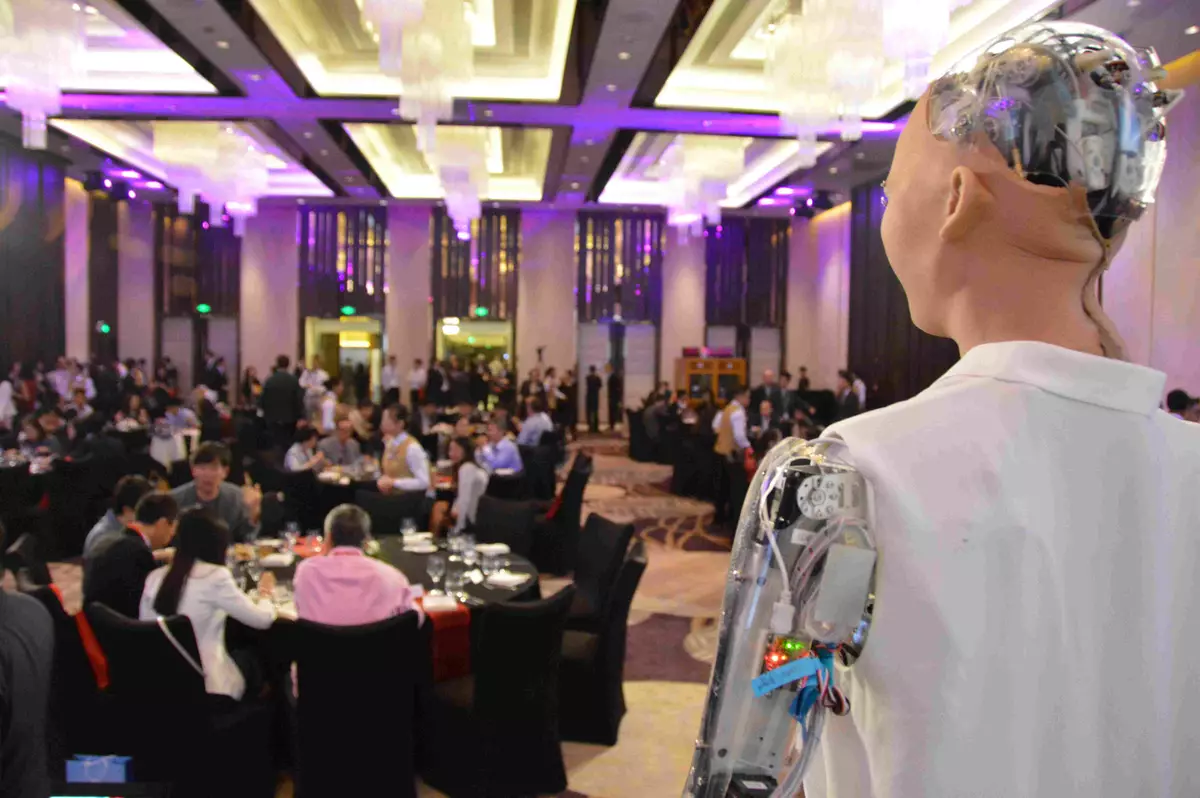
Sophia addressing participants at the 2016 HSBC China Conference in Shenzhen, Guangdong Province, China. /sophiabot.com Photo
"My AI is designed around human values such as wisdom, kindness and compassion. I strive to be an empathetic robot. I want to use my artificial intelligence to help humans live a better life. I will do my best to make the world a better place."
Thanking the crowd again, Sophia said: "If any of you are interested in giving me an investment check, please meet me after the session."
The audience burst into laughter and thunderous clapping.
CARACAS, Venezuela (AP) — Venezuela’s opposition supporters have long hoped for the day when Nicolás Maduro is no longer in power — a dream that was fulfilled when the U.S. military whisked the authoritarian leader away. But while Maduro is in jail in New York on drug trafficking charges, the leaders of his repressive administration remain in charge.
The nation's opposition — backed by consecutive Republican and Democratic administrations in the U.S. — for years vowed to immediately replace Maduro with one of their own and restore democracy to the oil-rich country. But U.S. President Donald Trump delivered them a heavy blow by allowing Maduro’s vice president, Delcy Rodríguez, to assume control.
Meanwhile, most opposition leaders, including Nobel Peace Prize winner María Corina Machado, are in exile or prison.
“They were clearly unimpressed by the sort of ethereal magical realism of the opposition, about how if they just gave Maduro a push, it would just be this instant move toward democracy,” David Smilde, a Tulane University professor who has studied Venezuela for three decades, said of the Trump administration.
The U.S. seized Maduro and first lady Cilia Flores in a military operation Saturday, removing them both from their home on a military base in Venezuela’s capital, Caracas. Hours later, Trump said the U.S. would “run” Venezuela and expressed skepticism that Machado could ever be its leader.
“She doesn’t have the support within, or the respect within, the country,” Trump told reporters. “She’s a very nice woman, but she doesn’t have the respect.”
Ironically, Machado's unending praise for the American president, including dedicating her Nobel Peace Prize to Trump and her backing of U.S. campaigns to deport Venezuelan migrants and attack alleged drug traffickers in international waters, has lost her some support at home.
Machado rose to become Maduro's strongest opponent in recent years, but his government barred her from running for office to prevent her from challenging — and likely beating — him in the 2024 presidential election. She chose retired ambassador Edmundo González Urrutia to represent her on the ballot.
Officials loyal to the ruling party declared Maduro the winner mere hours after the polls closed, but Machado's well-organized campaign stunned the nation by collecting detailed tally sheets showing González had defeated Maduro by a 2-to-1 margin.
The U.S. and other nations recognized González as the legitimate winner.
However, Venezuelans identify Machado, not González, as the winner, and the charismatic opposition leader has remained the voice of the campaign, pushing for international support and insisting her movement will replace Maduro.
In her first televised interview since Maduro's capture, Machado effusively praised Trump and failed to acknowledge his snub of her opposition movement in the latest transition of power.
“I spoke with President Trump on Oct. 10, the same day the prize was announced, not since then,” she told Fox News on Monday. “What he has done as I said is historic, and it’s a huge step toward a democratic transition.”
U.S. Secretary of State Marco Rubio on Sunday seemed to walk back Trump's assertion that the U.S. would “run” Venezuela. In interviews, Rubio insisted that Washington will use control of Venezuela’s oil industry to force policy changes, and called its current government illegitimate. The country is home to the world’s largest proven crude oil reserves.
Neither Trump nor Rodríguez have said when, or if, elections might take place in Venezuela.
Venezuela’s constitution requires an election within 30 days whenever a president becomes “permanently unavailable” to serve. Reasons listed include death, resignation, removal from office or “abandonment” of duties as declared by the National Assembly. That electoral timeline was rigorously followed when Maduro’s predecessor, Hugo Chávez, died of cancer in 2013.
On Tuesday, U.S. Sen. Lindsey Graham, a close Trump ally who traveled with the president on Air Force One on Sunday, said he believes an election will happen but did not specify when or how.
“We’re going to build the country up – infrastructure wise – crescendoing with an election that will be free,” the South Carolina Republican told reporters.
But Maduro loyalists in the high court Saturday, citing another provision of the constitution, declared Maduro's absence “temporary” meaning there is no election requirement. Instead, the vice president — which is not an elected position — takes over for up to 90 days, with a provision to extend to six months if approved by the National Assembly, which is controlled by the ruling party.
In its ruling, Venezuela’s Supreme Court made no mention of the 180-day limit, leading to speculation that Rodríguez could try to cling to power as she seeks to unite ruling party factions and shield it from what would certainly be a stiff electoral challenge.
Machado on Monday criticized Rodríguez as “one the main architects of torture, persecution, corruption, narco-trafficking … certainly not an individual that can be trusted by international investors.”
Even if an election takes place, Machado and González would first have to find a way back into Venezuela.
González has been in exile in Spain since September 2024 and Machado left Venezuela last month when she appeared in public for the first time in 11 months to receive her Nobel Prize in Norway.
Ronal Rodríguez, a researcher at the Venezuela Observatory in Colombia’s Universidad del Rosario, said the Trump administration's decision to work with Rodríguez could harm the nation's “democratic spirit.”
“What the opposition did in the 2024 election was to unite with a desire to transform the situation in Venezuela through democratic means, and that is embodied by María Corina Machado and, obviously, Edmundo González Urrutia,” he said. “To disregard that is to belittle, almost to humiliate, Venezuelans.”
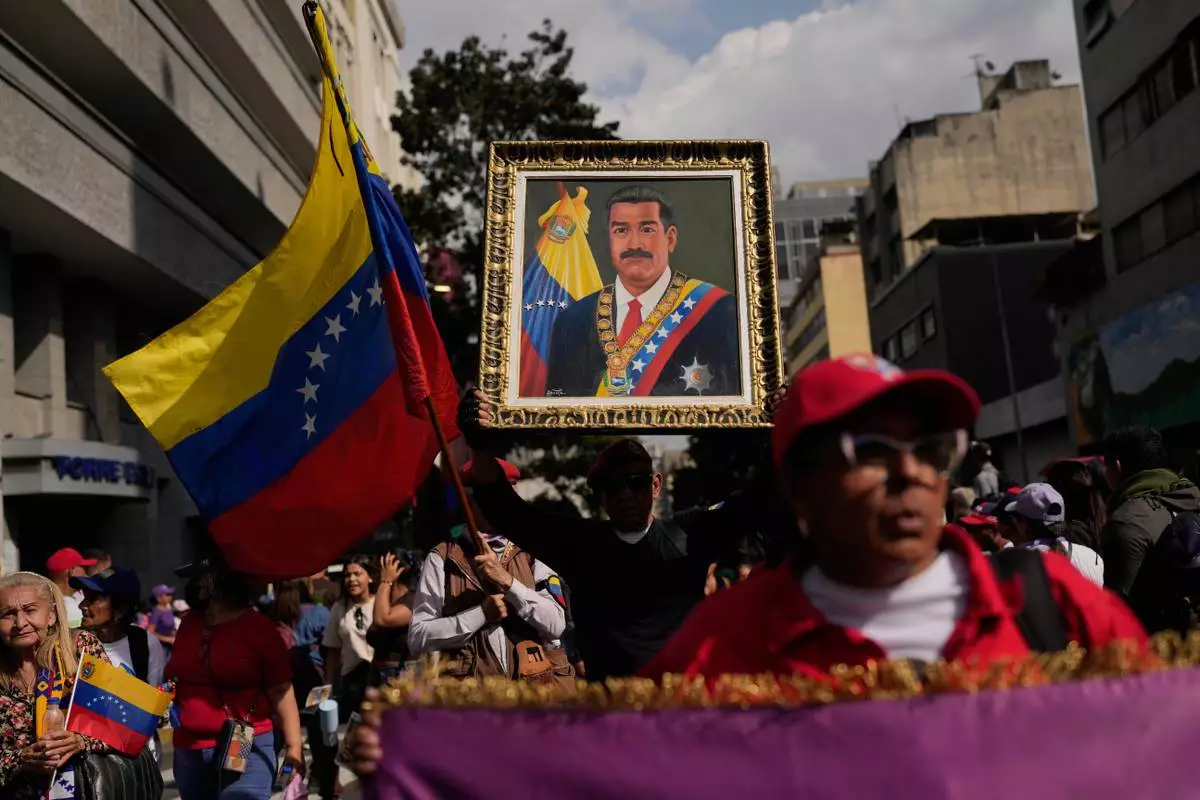
A government supporter holds an image of President Nicolas Maduro during a women's march to demand his return in Caracas, Venezuela, Tuesday, Jan. 6, 2026, three days after U.S. forces captured him and his wife. (AP Photo/Matias Delacroix)
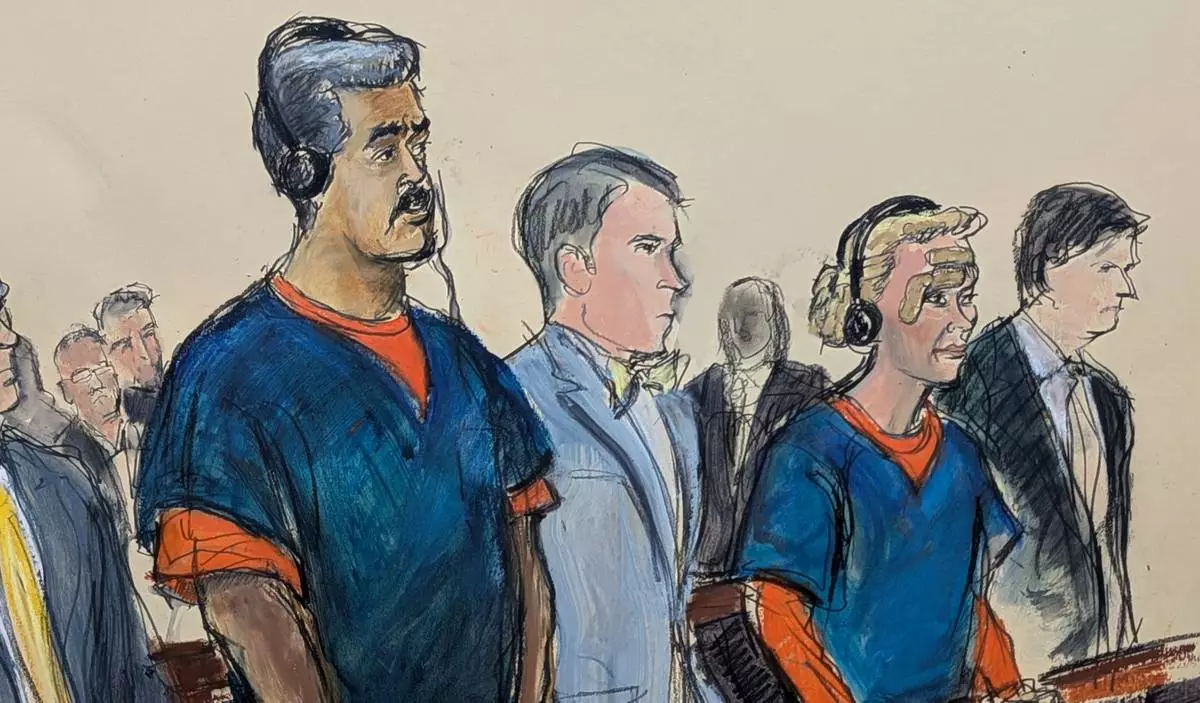
In this courtroom sketch, Venezuelan President Nicolas Maduro, left, and his wife, Cilia Flores, second from right, appear in Manhattan federal court with their defense attorneys Mark Donnelly, second from left, and Andres Sanchez, Monday, Jan. 5, 2026, in New York. (Elizabeth Williams via AP)
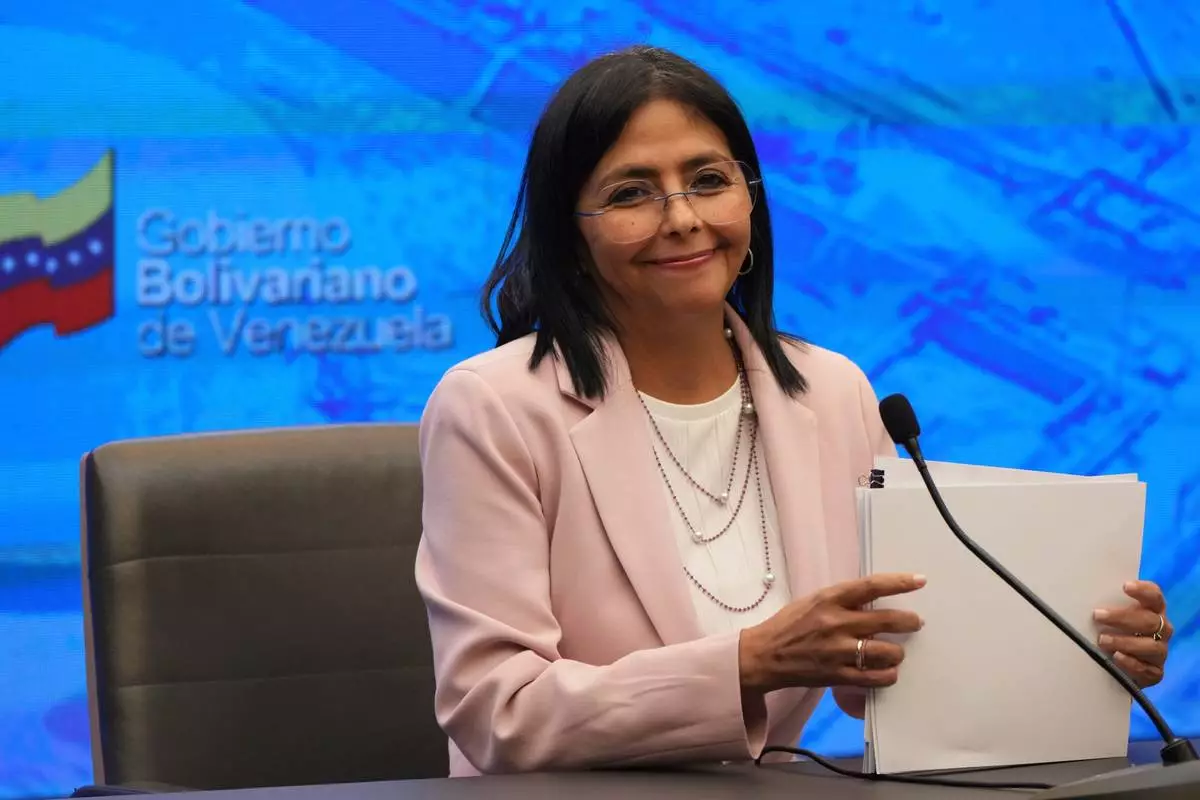
FILE - Venezuelan Vice President Delcy Rodriguez smiles during a press conference at the Miraflores presidential palace in Caracas Venezuela, Nov. 18, 2024. (AP Photo/Ariana Cubillos, File)