Skip to Content Facebook Feature Image

Rohingya desperate to flee Myanmar are turning to swimming

News

News

News

Rohingya desperate to flee Myanmar are turning to swimming

2017-11-14 13:07 Last Updated At:13:07

Nabi Hussain owes his life to a yellow plastic oil container.
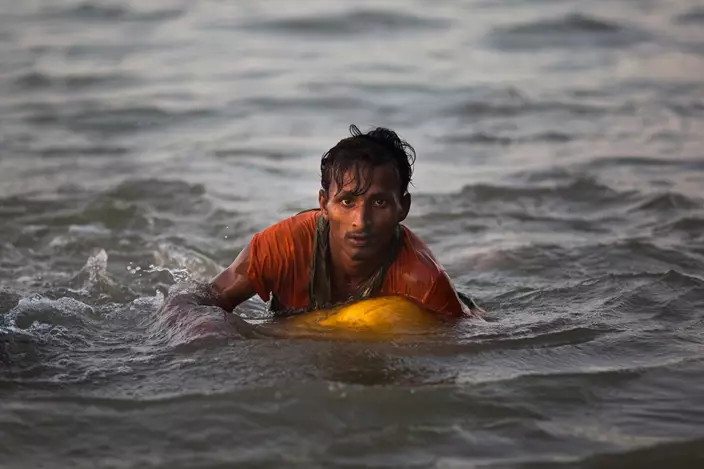
In this Nov. 4, 2017, photo, Rohingya Muslim Abdul Karim, 19, uses a yellow plastic oil container as a flotation device as he swims the Naf river while crossing the Myanmar-Bangladesh border in Shah Porir Dwip, Bangladesh. (AP Photo/Bernat Armangue)
In this Nov. 4, 2017, photo, Rohingya Muslim Abdul Karim, 19, uses a yellow plastic oil container as a flotation device as he swims the Naf river while crossing the Myanmar-Bangladesh border in Shah Porir Dwip, Bangladesh. (AP Photo/Bernat Armangue)

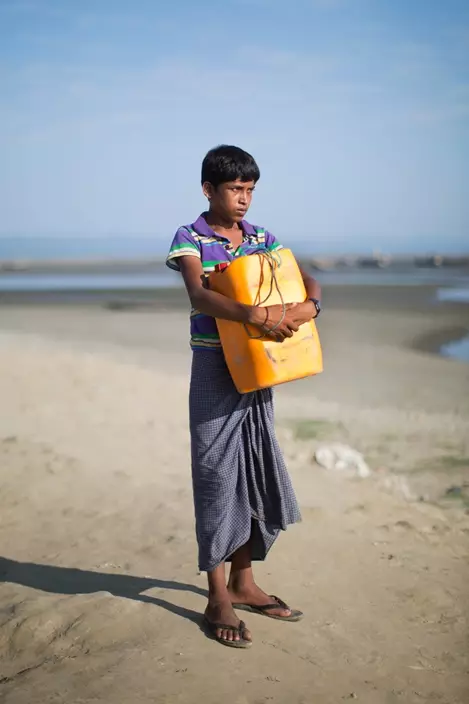
The 13-year-old Rohingya boy couldn't swim, and had never even seen the sea before fleeing his village in Myanmar. But he clung to the empty container and struggled across the water with it for about 2 1/2 miles, all the way to Bangladesh.

More Images
In this Nov. 4, 2017, photo, Rohingya Muslim Abdul Karim, 19, uses a yellow plastic oil container as a flotation device as he swims the Naf river while crossing the Myanmar-Bangladesh border in Shah Porir Dwip, Bangladesh. (AP Photo/Bernat Armangue)

In this Nov. 4, 2017, photo, Rohingya Muslim Abdul Karim, 19, uses a yellow plastic oil container as a flotation device as he swims the Naf river while crossing the Myanmar-Bangladesh border in Shah Porir Dwip, Bangladesh. (AP Photo/Bernat Armangue)

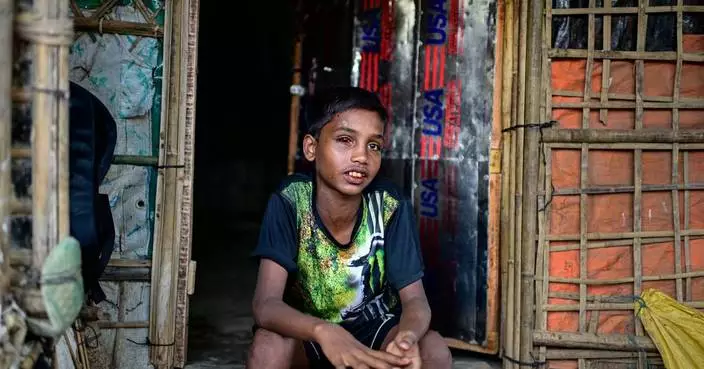
In this Nov. 4, 2017, photo, Rohingya Muslim Nabi Hussain, 13, poses for a portrait with the yellow plastic drum he used as a flotation device while crossing the Naf river in Shar Porir Dwip, south Cox's Bazar, Bangladesh. (AP Photo/Bernat Armangue)
In this Nov. 4, 2017, photo, Rohingya Muslim Nabi Hussain, 13, poses for a portrait with the yellow plastic drum he used as a flotation device while crossing the Naf river in Shar Porir Dwip, south Cox's Bazar, Bangladesh. (AP Photo/Bernat Armangue)

In this Nov. 4, 2017, photo, Rohingya Muslims use yellow plastic drums as flotation devices as they arrive at Shah Porir Dwip, Bangladesh, after swimming the Naf river.  (AP Photo/Bernat Armangue)
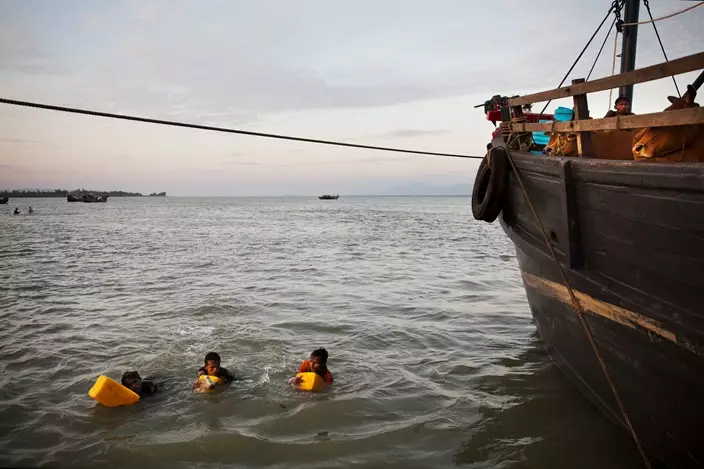
In this Nov. 4, 2017, photo, Rohingya Muslims use yellow plastic drums as flotation devices as they arrive at Shah Porir Dwip, Bangladesh, after swimming the Naf river.  (AP Photo/Bernat Armangue)

In this Nov. 4, 2017, photo, newly arrived Rohingya Muslims with yellow plastic drums they used to aid flotation while crossing the Naf river wait in Shah Porir Dwip to be transferred to a refugee camp in Cox's Bazar, Bangladesh. (AP Photo/Bernat Armangue)
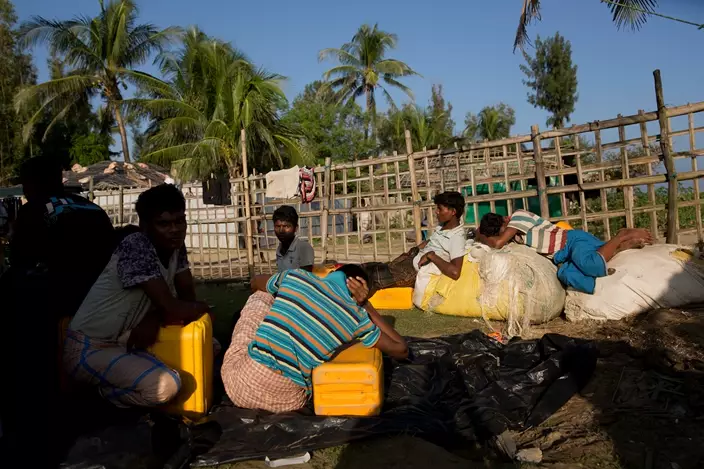
In this Nov. 4, 2017, photo, newly arrived Rohingya Muslims with yellow plastic drums they used to aid flotation while crossing the Naf river wait in Shah Porir Dwip to be transferred to a refugee camp in Cox's Bazar, Bangladesh. (AP Photo/Bernat Armangue)

In this Nov. 4, 2017, photo, newly arrived Rohingya Muslims sit with yellow plastic drums they used as a flotation aid while crossing the Naf river, as they wait in Shah Porir Dwip to be transferred on a refugee camp in Cox's Bazar, Bangladesh. (AP Photo/Bernat Armangue)
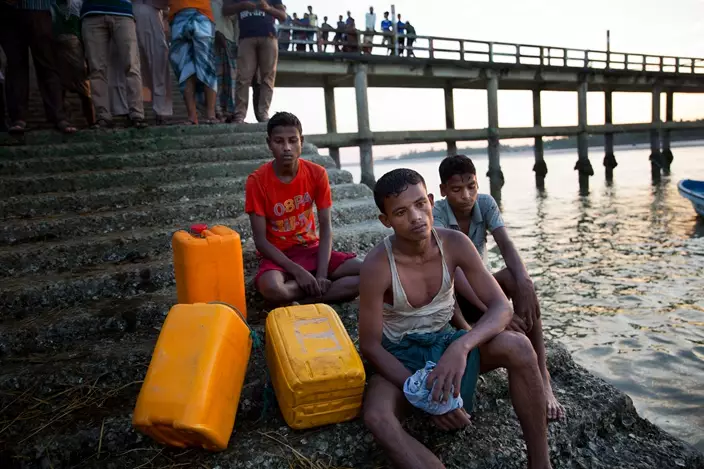
In this Nov. 4, 2017, photo, newly arrived Rohingya Muslims sit with yellow plastic drums they used as a flotation aid while crossing the Naf river, as they wait in Shah Porir Dwip to be transferred on a refugee camp in Cox's Bazar, Bangladesh. (AP Photo/Bernat Armangue)

In this Nov. 4, 2017, photo, from left to right: Rohingya Muslims Belal Hussain, 15; Kamal Hussain, 18; and Robiul Hassan, 15; rest after swimming the Naf river in Shah Porir Dwip, Bangladesh. (AP Photo/Bernat Armangue)
In this Nov. 4, 2017, photo, from left to right: Rohingya Muslims Belal Hussain, 15; Kamal Hussain, 18; and Robiul Hassan, 15; rest after swimming the Naf river in Shah Porir Dwip, Bangladesh. (AP Photo/Bernat Armangue)

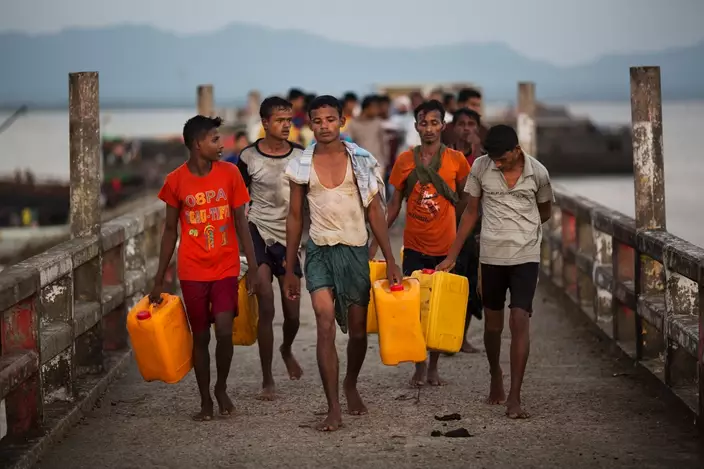
In this Nov. 4, 2017, photo, Rohingya Muslims carrying yellow plastic drums they used as flotation devices walk down the Shah Porir Dwip dock after reaching Bangladesh. (AP Photo/Bernat Armangue)
In this Nov. 4, 2017, photo, Rohingya Muslims carrying yellow plastic drums they used as flotation devices walk down the Shah Porir Dwip dock after reaching Bangladesh. (AP Photo/Bernat Armangue)

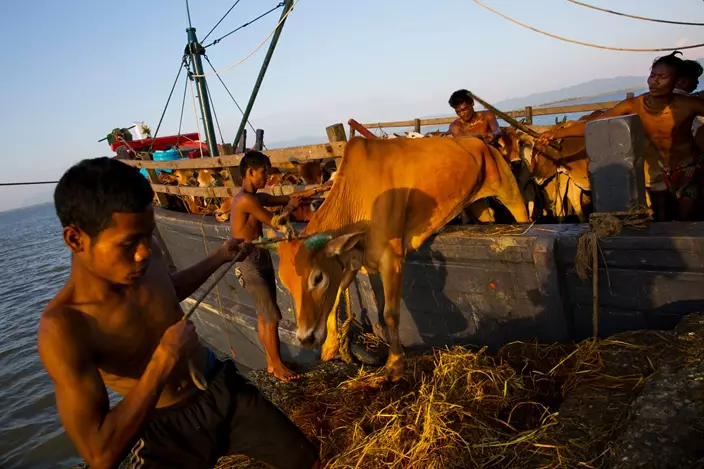
In this Nov. 4, 2017, photo, Myanmar cattle traders unload cows at Shah Porir Dwip dock, Bangladesh. (AP Photo/Bernat Armangue)
In this Nov. 4, 2017, photo, Myanmar cattle traders unload cows at Shah Porir Dwip dock, Bangladesh. (AP Photo/Bernat Armangue)

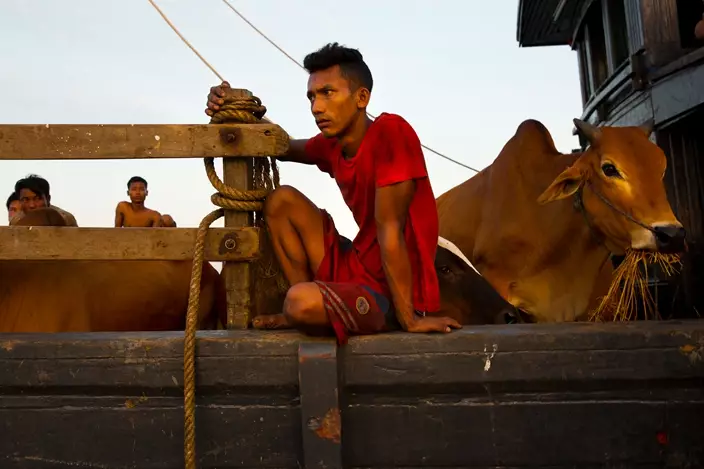
In this Nov. 4, 2017, photo, a Myanmar cattle trader watches Rohingya Muslims swimming with the help of plastic drums across the Naf river and into Bangladesh at Shah Porir Dwip dock.  (AP Photo/Bernat Armangue)
In this Nov. 4, 2017, photo, a Myanmar cattle trader watches Rohingya Muslims swimming with the help of plastic drums across the Naf river and into Bangladesh at Shah Porir Dwip dock.  (AP Photo/Bernat Armangue)

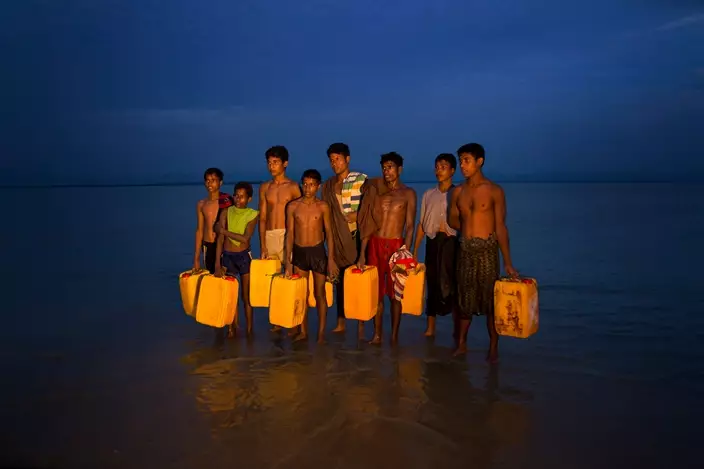
In this Nov. 5, 2017, photo, newly arrived Rohingya Muslims carry yellow plastic drums they used as flotation aids and listen to Bangladeshi authorities, not pictured, after swimming across the Naf river at Shah Porir Dwip, Bangladesh.  (AP Photo/Bernat Armangue)
In this Nov. 5, 2017, photo, newly arrived Rohingya Muslims carry yellow plastic drums they used as flotation aids and listen to Bangladeshi authorities, not pictured, after swimming across the Naf river at Shah Porir Dwip, Bangladesh.  (AP Photo/Bernat Armangue)

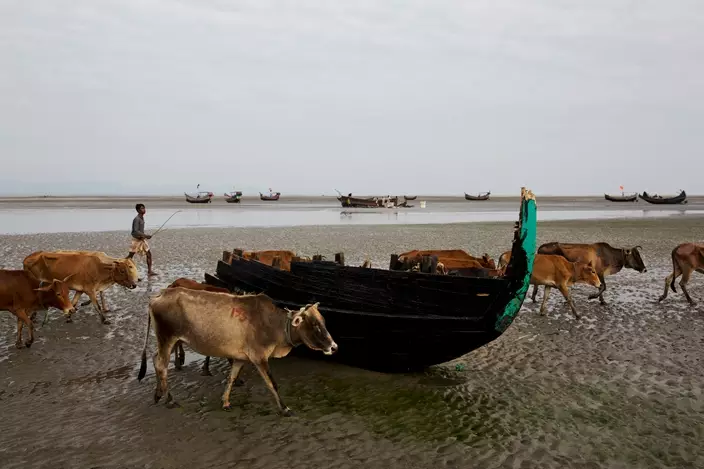
In this Nov. 5, 2017, photo, cows walk past a broken wooden boat, previously used by Rohingya Muslims, at Shah Porir Dwip, Bangladesh. (AP Photo/Bernat Armangue)
In this Nov. 5, 2017, photo, cows walk past a broken wooden boat, previously used by Rohingya Muslims, at Shah Porir Dwip, Bangladesh. (AP Photo/Bernat Armangue)

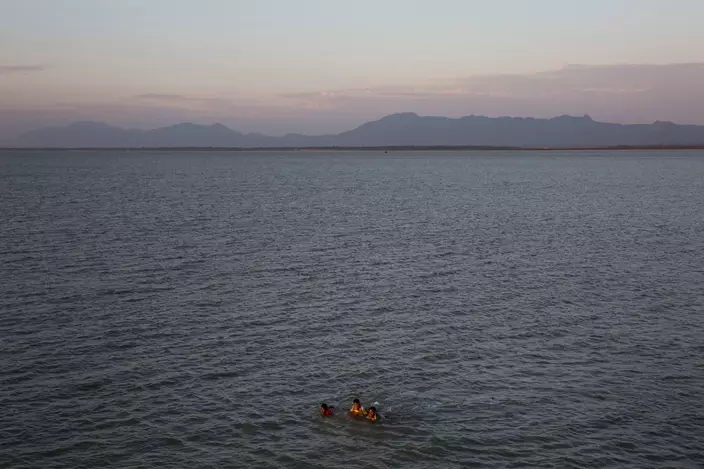
In this Nov. 4, 2017, photo, three Rohingya Muslims swim the Naf river while crossing the Myanmar-Bangladesh border in Shah Porir Dwip, Bangladesh.  (AP Photo/Bernat Armangue)
In this Nov. 4, 2017, photo, three Rohingya Muslims swim the Naf river while crossing the Myanmar-Bangladesh border in Shah Porir Dwip, Bangladesh.  (AP Photo/Bernat Armangue)

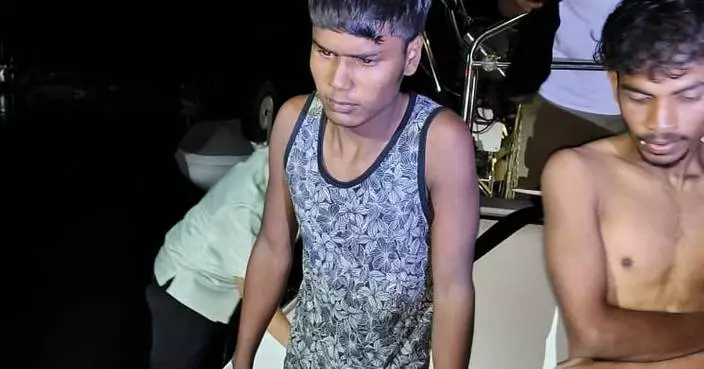
In this Nov. 5, 2017, photo, newly arrived Rohingya Muslim Aman Ullah, 18, left, Abdul Karim, 19, second left, Mohammed Sadek, 14, third left and Robiul Hassan, 15, right, wait in Shah Porir Dwip, Bangladesh to be transferred to a refugee camp in Cox's Bazar, Bangladesh.(AP Photo/Bernat Armangue)
In this Nov. 5, 2017, photo, newly arrived Rohingya Muslim Aman Ullah, 18, left, Abdul Karim, 19, second left, Mohammed Sadek, 14, third left and Robiul Hassan, 15, right, wait in Shah Porir Dwip, Bangladesh to be transferred to a refugee camp in Cox's Bazar, Bangladesh.(AP Photo/Bernat Armangue)
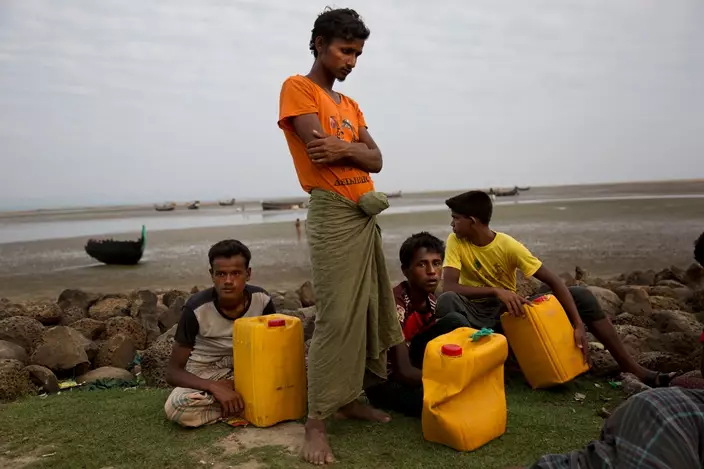
In this Nov. 4, 2017, photo, Rohingya Muslim Nabi Hussain, 13, poses for a portrait with the yellow plastic drum he used as a flotation device while crossing the Naf river in Shar Porir Dwip, south Cox's Bazar, Bangladesh. (AP Photo/Bernat Armangue)

In this Nov. 4, 2017, photo, Rohingya Muslim Nabi Hussain, 13, poses for a portrait with the yellow plastic drum he used as a flotation device while crossing the Naf river in Shar Porir Dwip, south Cox's Bazar, Bangladesh. (AP Photo/Bernat Armangue)

In this Nov. 4, 2017, photo, Rohingya Muslims use yellow plastic drums as flotation devices as they arrive at Shah Porir Dwip, Bangladesh, after swimming the Naf river.  (AP Photo/Bernat Armangue)

In this Nov. 4, 2017, photo, Rohingya Muslims use yellow plastic drums as flotation devices as they arrive at Shah Porir Dwip, Bangladesh, after swimming the Naf river.  (AP Photo/Bernat Armangue)

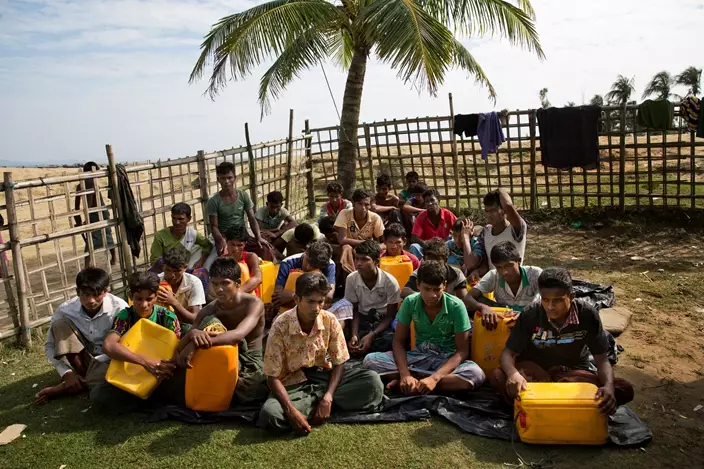
Rohingya Muslims escaping the violence in their homeland of Myanmar are now so desperate that some are trying to swim to safety in neighboring Bangladesh. In just a week, more than three dozen boys and young men used cooking oil containers like life rafts to swim across the mouth of the Naf River and wash up ashore in Shah Porir Dwip, a fishing town and cattle trade spot.

"I was so scared of dying," said Nabi, a lanky boy in a striped polo shirt and checkered dhoti. "I thought it was going to be my last day."

In this Nov. 4, 2017, photo, newly arrived Rohingya Muslims with yellow plastic drums they used to aid flotation while crossing the Naf river wait in Shah Porir Dwip to be transferred to a refugee camp in Cox's Bazar, Bangladesh. (AP Photo/Bernat Armangue)

In this Nov. 4, 2017, photo, newly arrived Rohingya Muslims with yellow plastic drums they used to aid flotation while crossing the Naf river wait in Shah Porir Dwip to be transferred to a refugee camp in Cox's Bazar, Bangladesh. (AP Photo/Bernat Armangue)

In this Nov. 4, 2017, photo, newly arrived Rohingya Muslims sit with yellow plastic drums they used as a flotation aid while crossing the Naf river, as they wait in Shah Porir Dwip to be transferred on a refugee camp in Cox's Bazar, Bangladesh. (AP Photo/Bernat Armangue)

In this Nov. 4, 2017, photo, newly arrived Rohingya Muslims sit with yellow plastic drums they used as a flotation aid while crossing the Naf river, as they wait in Shah Porir Dwip to be transferred on a refugee camp in Cox's Bazar, Bangladesh. (AP Photo/Bernat Armangue)

Although Rohingya Muslims have lived in Myanmar for decades, the country's Buddhist majority still sees them as invaders from Bangladesh. The government denies them basic rights, and the United Nations has called them the most persecuted minority in the world. Just since August, after their homes were torched by Buddhist mobs and soldiers, more than 600,000 Rohingya have risked the trip to Bangladesh.

"We had a lot of suffering, so we thought drowning in the water was a better option," said Kamal Hussain, 18, who also swam to Bangladesh with an oil container.

In this Nov. 4, 2017, photo, from left to right: Rohingya Muslims Belal Hussain, 15; Kamal Hussain, 18; and Robiul Hassan, 15; rest after swimming the Naf river in Shah Porir Dwip, Bangladesh. (AP Photo/Bernat Armangue)

In this Nov. 4, 2017, photo, from left to right: Rohingya Muslims Belal Hussain, 15; Kamal Hussain, 18; and Robiul Hassan, 15; rest after swimming the Naf river in Shah Porir Dwip, Bangladesh. (AP Photo/Bernat Armangue)

In this Nov. 4, 2017, photo, Rohingya Muslims carrying yellow plastic drums they used as flotation devices walk down the Shah Porir Dwip dock after reaching Bangladesh. (AP Photo/Bernat Armangue)

In this Nov. 4, 2017, photo, Rohingya Muslims carrying yellow plastic drums they used as flotation devices walk down the Shah Porir Dwip dock after reaching Bangladesh. (AP Photo/Bernat Armangue)

Nabi knows almost no one in this new country, and his parents back in Myanmar don't know that he is alive. He doesn't smile and rarely maintains eye contact.

Nabi grew up in the mountains of Myanmar, the fourth of nine children of a farmer who grows paan, the betel leaf used as chewing tobacco. He never went to school.

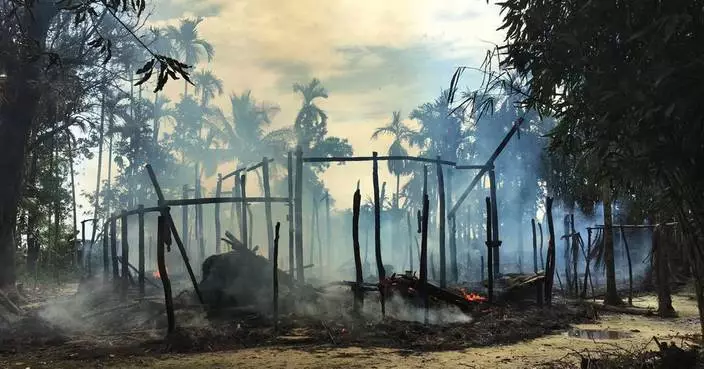
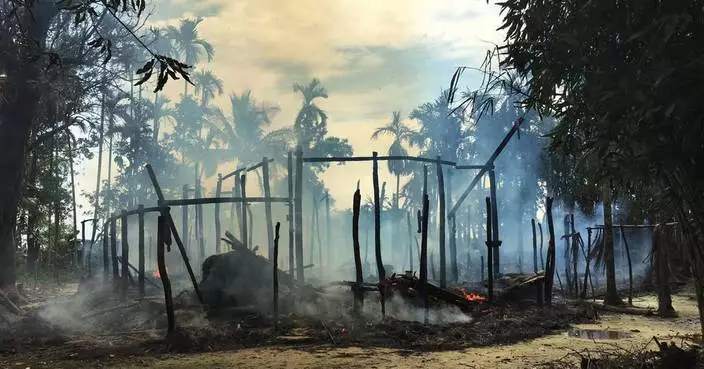
The trouble started two months ago when Rohingya insurgents attacked Myanmar security forces. The Myanmar military responded with a brutal crackdown, killing men, raping women and burning homes and property. The last Nabi saw of his village, all the homes were on fire.

In this Nov. 4, 2017, photo, Myanmar cattle traders unload cows at Shah Porir Dwip dock, Bangladesh. (AP Photo/Bernat Armangue)

In this Nov. 4, 2017, photo, Myanmar cattle traders unload cows at Shah Porir Dwip dock, Bangladesh. (AP Photo/Bernat Armangue)

In this Nov. 4, 2017, photo, a Myanmar cattle trader watches Rohingya Muslims swimming with the help of plastic drums across the Naf river and into Bangladesh at Shah Porir Dwip dock.  (AP Photo/Bernat Armangue)

In this Nov. 4, 2017, photo, a Myanmar cattle trader watches Rohingya Muslims swimming with the help of plastic drums across the Naf river and into Bangladesh at Shah Porir Dwip dock.  (AP Photo/Bernat Armangue)

Nabi's family fled, heading toward the coast, passing dead bodies. But when they arrived at the coast with a flood of other Rohingya refugees, they had no money for a boat and a smuggler.

Every day, there was less food. So after four days, Nabi told his parents he wanted to swim the delta to reach the thin line of land he could see in the distance — Shah Porir Dwip.

His parents didn't want him to go. One of his older brothers had left for Bangladesh two months ago, and they had no idea what had happened to him. They knew the strong currents could carry Nabi into the ocean.

In this Nov. 5, 2017, photo, newly arrived Rohingya Muslims carry yellow plastic drums they used as flotation aids and listen to Bangladeshi authorities, not pictured, after swimming across the Naf river at Shah Porir Dwip, Bangladesh.  (AP Photo/Bernat Armangue)

In this Nov. 5, 2017, photo, newly arrived Rohingya Muslims carry yellow plastic drums they used as flotation aids and listen to Bangladeshi authorities, not pictured, after swimming across the Naf river at Shah Porir Dwip, Bangladesh.  (AP Photo/Bernat Armangue)

Eventually, though, they agreed, on the condition that he not go alone. So on the afternoon of Nov. 3, Nabi joined a group of 23 other young men, and his family came to see him off.

"Please keep me in your prayers," he told his mother, while everyone around him wept.

Nabi and the others strapped the cooking oil containers to their chests as floats, and stepped into the water just as the current started to shift toward Bangladesh. The men stayed in groups of three, tied together with ropes. Nabi was in the middle, because he was young and didn't know how to swim.

Nabi remembers swallowing water, in part because of the waves and in part to quench his thirst. The water was salty. His legs ached. But he never looked behind him.

Just after sundown, the group reached Shah Porir Dwip, exhausted, hungry and dehydrated.

In this Nov. 5, 2017, photo, cows walk past a broken wooden boat, previously used by Rohingya Muslims, at Shah Porir Dwip, Bangladesh. (AP Photo/Bernat Armangue)

In this Nov. 5, 2017, photo, cows walk past a broken wooden boat, previously used by Rohingya Muslims, at Shah Porir Dwip, Bangladesh. (AP Photo/Bernat Armangue)

Nabi is now alone, one of an estimated 40,000 unaccompanied Rohingya Muslim children living in Bangladesh. He looks down as he speaks, just a few feet from the water, and murmurs his biggest wish:

"I want my parents and peace."

In this Nov. 4, 2017, photo, three Rohingya Muslims swim the Naf river while crossing the Myanmar-Bangladesh border in Shah Porir Dwip, Bangladesh.  (AP Photo/Bernat Armangue)

In this Nov. 4, 2017, photo, three Rohingya Muslims swim the Naf river while crossing the Myanmar-Bangladesh border in Shah Porir Dwip, Bangladesh.  (AP Photo/Bernat Armangue)

Late afternoon on the next day, authorities spotted a few dots in the middle of the water. It was another group of Rohingya swimming to Bangladesh with yellow plastic containers. They arrived at the same time as a pack of cattle — except that the cows came by boat.

In this Nov. 5, 2017, photo, newly arrived Rohingya Muslim Aman Ullah, 18, left, Abdul Karim, 19, second left, Mohammed Sadek, 14, third left and Robiul Hassan, 15, right, wait in Shah Porir Dwip, Bangladesh to be transferred to a refugee camp in Cox's Bazar, Bangladesh.(AP Photo/Bernat Armangue)
In this Nov. 5, 2017, photo, newly arrived Rohingya Muslim Aman Ullah, 18, left, Abdul Karim, 19, second left, Mohammed Sadek, 14, third left and Robiul Hassan, 15, right, wait in Shah Porir Dwip, Bangladesh to be transferred to a refugee camp in Cox's Bazar, Bangladesh.(AP Photo/Bernat Armangue)
DHAKA, Bangladesh (AP) — At least 250 people, including Rohingya refugees and Bangladeshi nationals, were either feared dead or missing after a boat capsized in the Andaman Sea recently on the way to Malaysia, according to the U.N. refugee and migration agencies.

While details remained sketchy, Bangladesh Coast Guard spokesperson Lt. Cmdr. Sabbir Alam Suzan told The Associated Press on Wednesday that nine people, including three Rohingya and six Bangladeshis, were rescued on April 9. Suzan said that the Bangladesh flag carrier M.T. Meghna Pride rescued the nine people when the crew found them floating at sea after the capsizing.

The status of any search on Wednesday or when the boat sank weren't immediately clear.

UNHCR, the U.N. refugee agency, and the International Organization for Migration, or IOM, said in a joint statement on Tuesday that the trawler departed from Teknaf in the southern Bangladeshi district of Cox’s Bazar carrying a large number of passengers to Malaysia.

The IOM said Wednesday in a new statement that the boat reportedly sank on April 9.

Overcrowding, strong winds and rough seas caused the vessel to lose control and sink, the agencies said.

A Rohingya woman who survived the capsizing and was rescued narrated her ordeal on Wednesday. The survivor said that she set out for Malaysia on April 4, and about 20 women were on board when the boat sank.

“I drifted in the sea for two days and one night," said Rahela Begum, who was brought to a refugee camp. "There were many people on the trawler, but after it sank, I have no idea what happened to them or where they went,"

“After drifting in the sea for two days and one night, the piece of wood I was holding onto also flipped over and I lost it. At that point, I lost consciousness. When I regained consciousness, I saw that Allah had sent a ship. The ship rescued me," she said.

Shari Nijman, a UNHCR communication officer in Cox’s Bazar, said Wednesday that the agency had no other updates.

Another coast guard media official told the AP by phone Wednesday that the rescued people, eight men and one woman, were all safe, after being handed over to the coast guard, which brought them to the police in Teknaf.

The official said that the rescue wasn't part of any official search operation, because the area is outside Bangladeshi territory, and that the crew of the M.T. Meghna Pride saved the people while it was on its way to Indonesia from Bangladesh's Chittagong.

The official spoke by phone on condition of anonymity in line with official policy.

UNHCR and IOM said that the disappearance reflected the protracted displacement of Rohingya people and the absence of durable solutions.

They said that ongoing violence in Myanmar’s Rakhine state has made the Rohingya’s safe return to Myanmar uncertain, while limited humanitarian assistance, as well as restricted access to education and employment in refugee camps, continue to push vulnerable Rohingya refugees to choose risky sea journeys, often based on false promises of higher wages and better opportunities abroad.

“This incident is a stark reminder of the grave risks people continue to face when undertaking dangerous sea journeys in search of safety and better opportunities,” IOM spokesperson Mohammedali Abunajela said in a statement on Wednesday. “No one should have to choose between remaining in situations of profound hardship or embarking on a journey that may cost them their lives.”

UNHCR and IOM urged the international community to strengthen funding and solidarity to ensure lifesaving assistance for Rohingya refugees in Bangladesh, which has sheltered more than 1 million Rohingya from Myanmar.

In 2025, more than 6,500 Rohingya refugees embarked on dangerous maritime journeys from Bangladesh and Myanmar, almost 900 of whom lost their lives, the IOM said. On the Andaman Sea and the Bay of Bengal specifically, deaths and disappearances increased by more than 40% compared with 2024 figures, the U.N. organization said.

Suzauddin Rubel reported from Cox's Bazar.

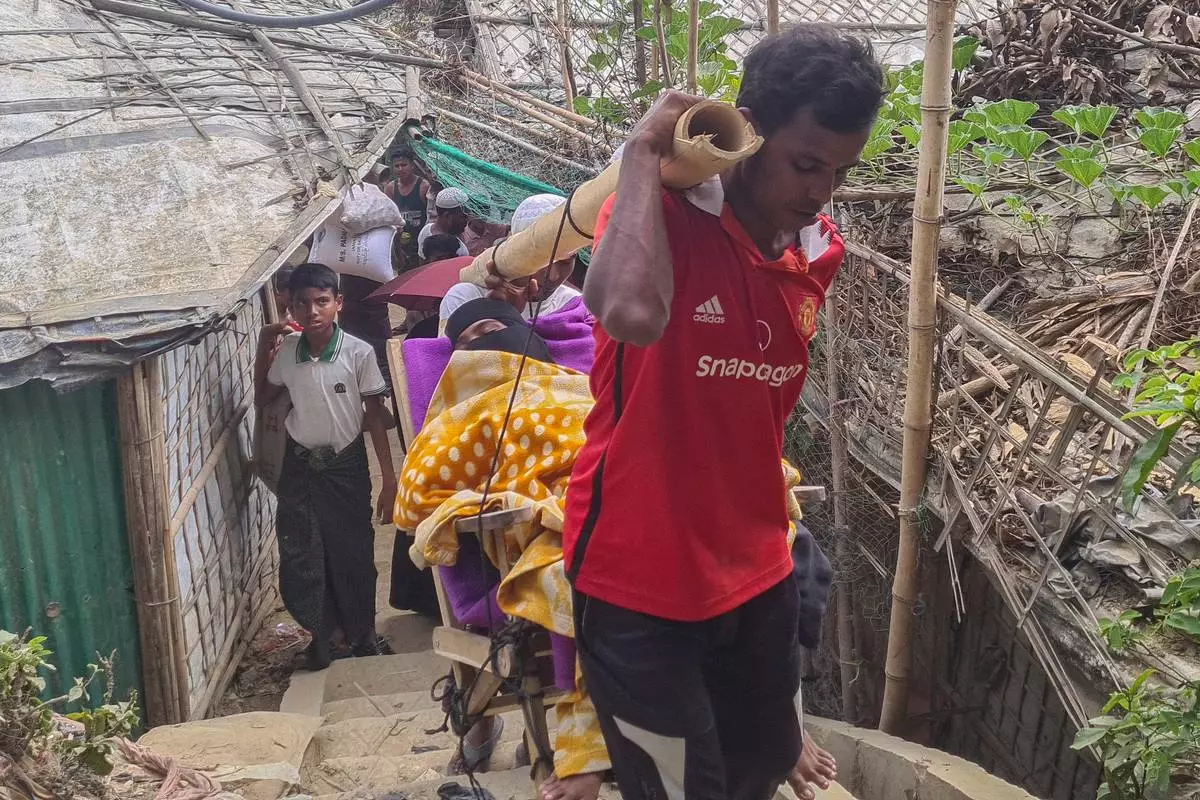
Rahela Begum, a Rohingya survivor, is carried on a bamboo stretcher to a hospital after being rescued on April 9, 2026 from a capsized boat, at a refugee camp in Cox's Bazar, Wednesday, April 15, 2026. (AP Photo/Suzauddin Rubel)

Rahela Begum, a Rohingya survivor, is carried on a bamboo stretcher to a hospital after being rescued on April 9, 2026 from a capsized boat, at a refugee camp in Cox's Bazar, Wednesday, April 15, 2026. (AP Photo/Suzauddin Rubel)

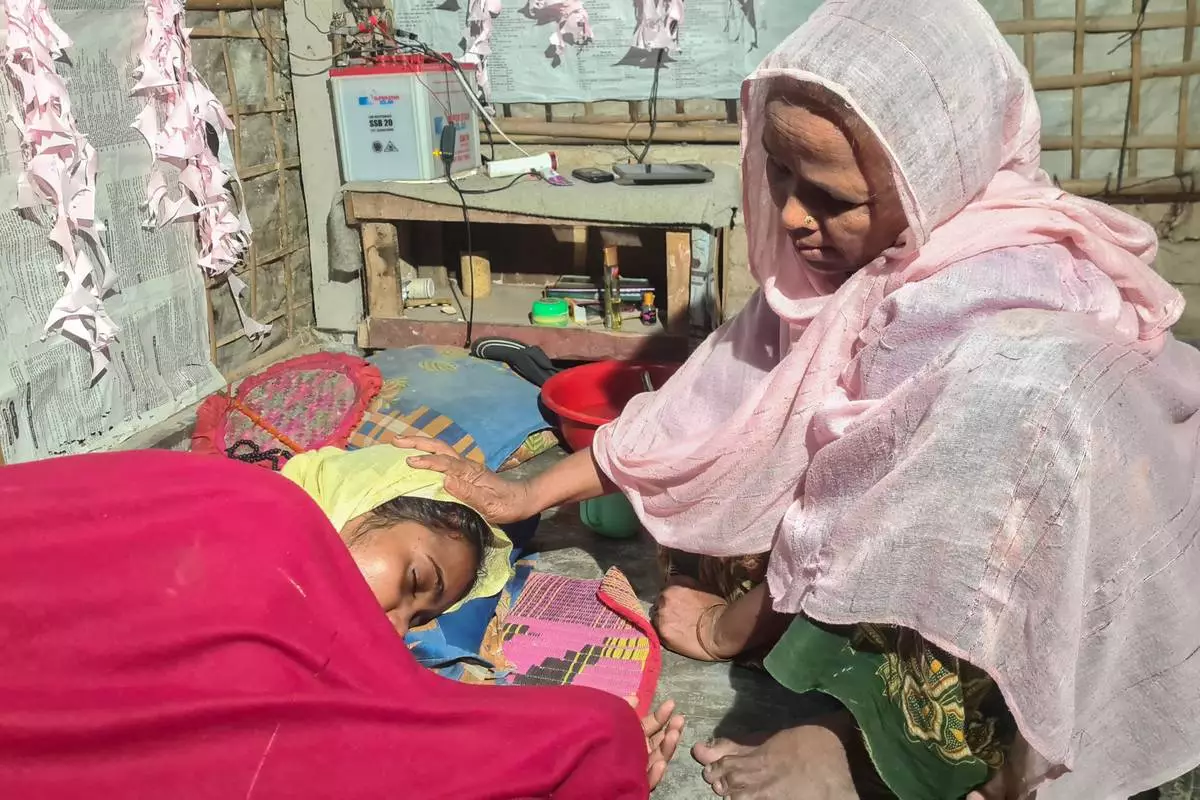
Majuma Khatun, the mother of Rahela Begum, a Rohingya survivor, comforts her at their shelter after she was rescued on April 9, 2026 from a capsized boat, at a refugee camp in Cox's Bazar, Bangladesh, Wednesday, April 15, 2026. (AP Photo/Suzauddin Rubel)

Majuma Khatun, the mother of Rahela Begum, a Rohingya survivor, comforts her at their shelter after she was rescued on April 9, 2026 from a capsized boat, at a refugee camp in Cox's Bazar, Bangladesh, Wednesday, April 15, 2026. (AP Photo/Suzauddin Rubel)

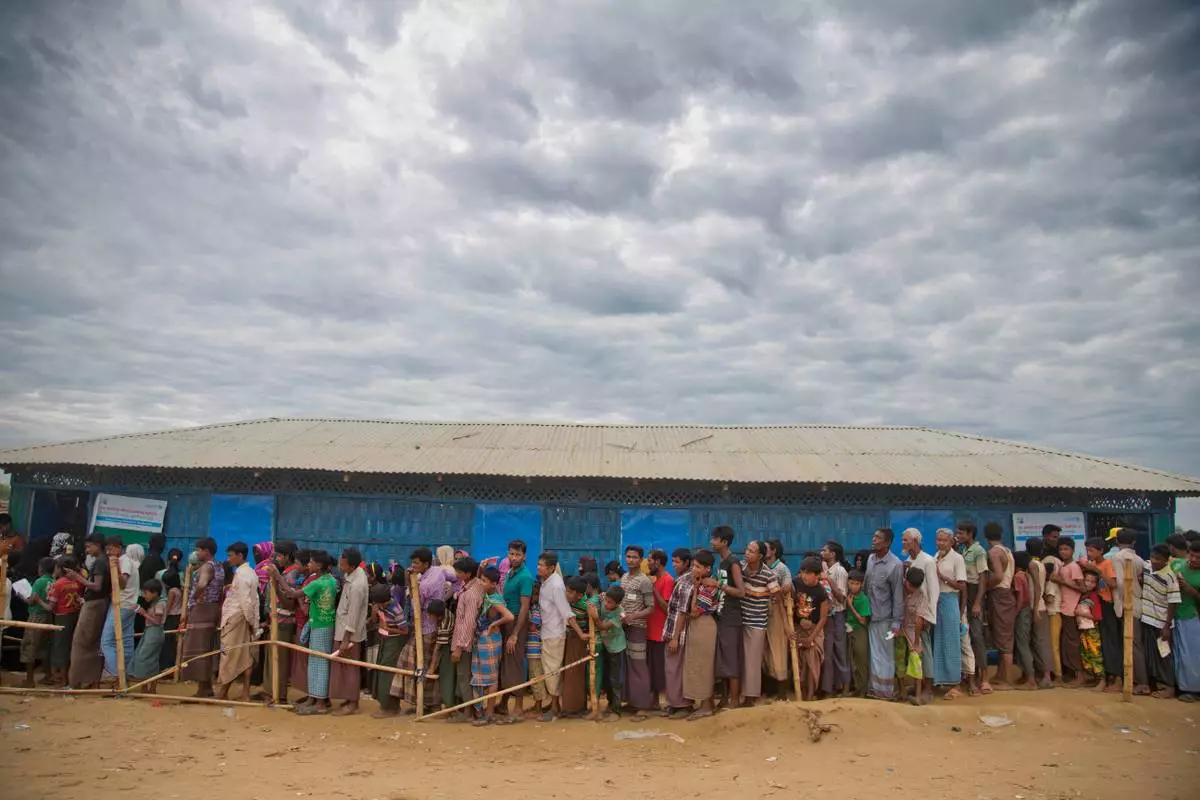
FILE -Rohingya Muslims, who crossed over from Myanmar into Bangladesh, wait in queues to receive aid at Kutupalong refugee camp in Ukhiya, Bangladesh, Nov. 15, 2017. (AP Photo/A.M. Ahad, File)

FILE -Rohingya Muslims, who crossed over from Myanmar into Bangladesh, wait in queues to receive aid at Kutupalong refugee camp in Ukhiya, Bangladesh, Nov. 15, 2017. (AP Photo/A.M. Ahad, File)

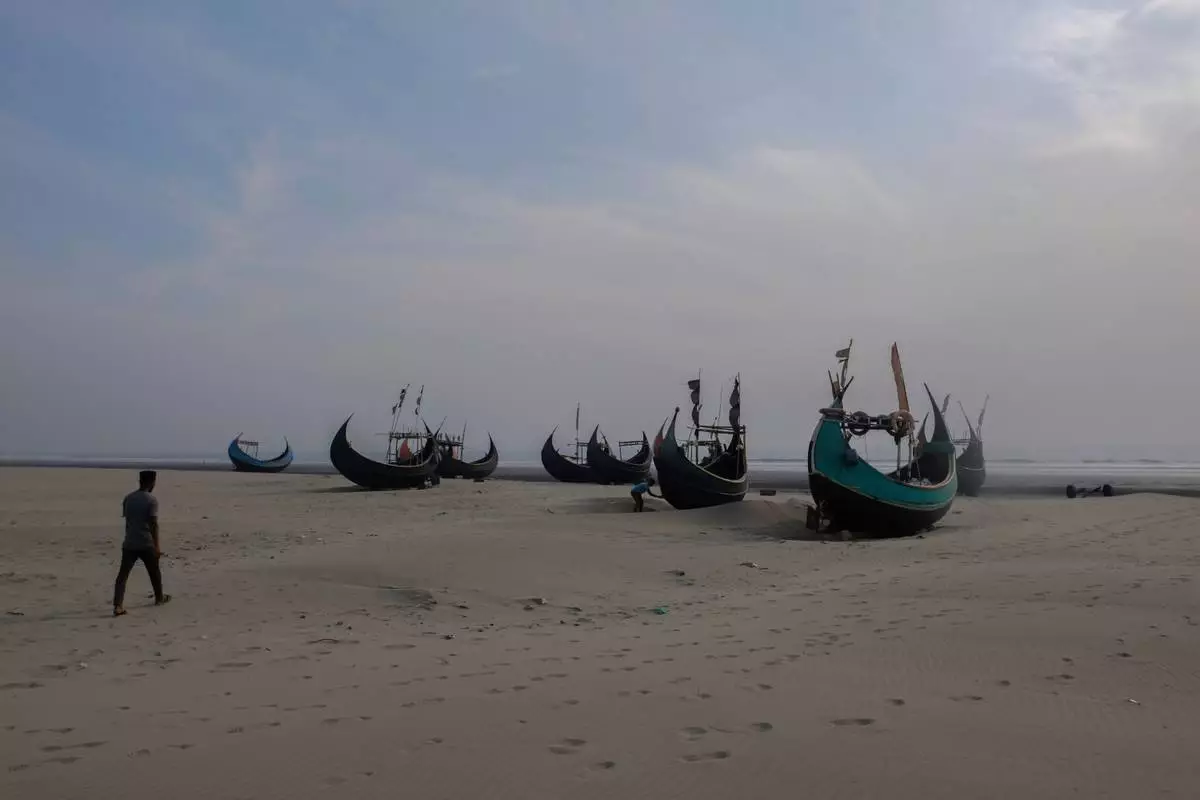
FILE- Fishing boats sit on a beach in Teknaf, Bangladesh, on March 9, 2023. (AP Photo/Mahmud Hossain Opu, File)

FILE- Fishing boats sit on a beach in Teknaf, Bangladesh, on March 9, 2023. (AP Photo/Mahmud Hossain Opu, File)

Recommended Articles