Iris Chang, author of "The Rape of Nanking", ended her life with a pistol on November 9, 2004. She was 36. She had suffered from years of depression and constant sleep deprivation since her bestseller – full title "The Rape of Nanking: The Forgotten Holocaust of World War Two" – was published in 1997. It may be true that Iris Chang committed suicide. But I still have to ask: Who killed Iris Chang?
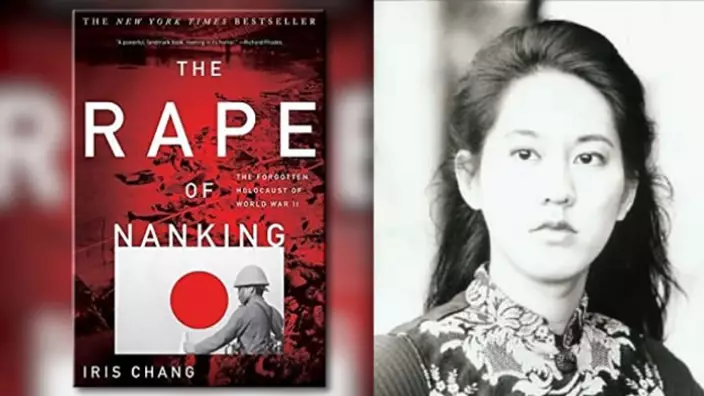
Iris Chang /CCTV Photo
The daughter of two professors, Iris loved writing and telling stories from an early age and began to pen articles in her college years. She would have lived a peaceful life or become a renowned writer if she didn’t start work on her book on the atrocities committed by Japanese troops in 1937 in the city of Nanjing, where over 300,000 Chinese civilians and unarmed soldiers were killed.
Click to Gallery
Iris Chang /CCTV Photo

Iris Chang poses with her book, "The Rape of Nanking: The Forgotten Holocaust of World War Two". /CCTV Photo
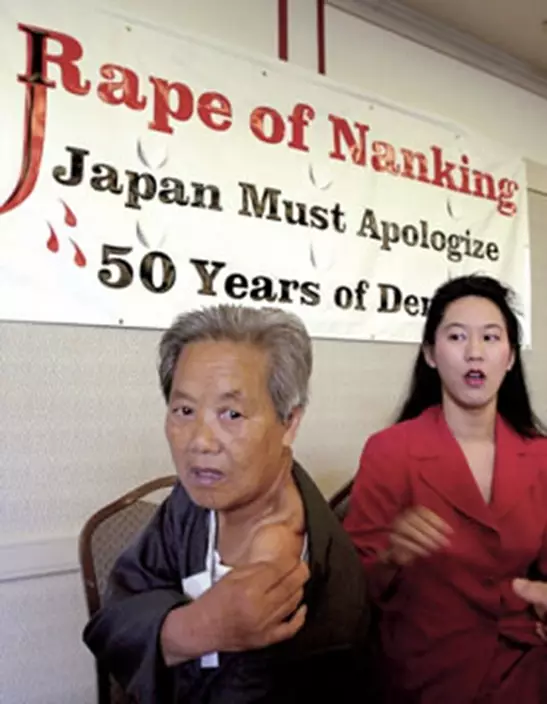
Cuiping Ni, 75, shows off her scar as Iris Chang (R), author of "The Rape of Nanking," looks on during the opening of the conference, "50 Years of Denial: Japan and Its Wartime Responsibilities," in San Francisco, Sept. 7, 2001. /AP Photo

Iris Chang with her books. /CCTV Photo
In three years of collecting materials, interviewing witnesses and doing research from archives, she was horrified by what she discovered. Crimes and cruelty such as beheading, bayoneting, burying alive, burning to death, drowning, disemboweling, killing contests and rape haunted her from then on. She was outraged at what the Japanese troops had done to the city and its people.
Iris Chang poses with her book, "The Rape of Nanking: The Forgotten Holocaust of World War Two". /CCTV Photo
Chang was even more outraged that there was not only no official apology from Japan, but also the attempt by the country to try to deny the facts and to wipe out that dark chapter of history. Not only have right-wing politicians and people in Japan tried to cover it up, but also the Japanese government is trying to brush aside the atrocities in its invasion of China and other Asian countries.
Iris Chang once confronted the Japanese ambassador to the United States in a television show after they accused her of a "very wrong description". Of course, she received frequent harassment and threats from some Japanese after her book was published.
These threats and the denials of the Japanese officials must have left Chang infuriated. Why would people want to deny the facts, and how could they do that? Why after so many years, was justice not done? It's like a man who has killed a neighbor and was caught red handed. But the killer denies all the crimes he has committed. Not only that, he constantly harasses and threatens the families and neighbors of the victim as if justice is in the hands of the killer. And his neighbors don’t know when the killer might kill again.
Cuiping Ni, 75, shows off her scar as Iris Chang (R), author of "The Rape of Nanking," looks on during the opening of the conference, "50 Years of Denial: Japan and Its Wartime Responsibilities," in San Francisco, Sept. 7, 2001. /AP Photo
As a writer, Iris Chang was a loner trying to unveil the truth to the world. As hard as she tried, she couldn’t let the whole world know about the atrocities. The Nanjing Massacre remains unknown to most people, especially people outside East Asia. Chang might have thought that once she published her book, the crimes of war would be immediately known to the whole world and that the Japanese government would change its attitude.
But to her disappointment, the Nanjing Massacre remains forgotten by most people, especially in the West, unlike the Nazi holocaust which has had ubiquitous promotion. Meanwhile, the Japanese government and some Japanese members of the public are stepping up their efforts to cover up the Nanjing Massacre.
At the grave of Iris Chang, a stone was carved with the words "The Power of One". It stands as a testament of how much an individual has done to seek truth in history. I am sad to say that I think the power of one person is very limited. Chang must have felt helpless that she could not single-handedly change perceptions.
Iris Chang with her books. /CCTV Photo
For a young lady, Iris Chang shouldered a heavy burden of telling the truth to the whole world. As a conscientious writer, she felt a duty to reveal facts and correct lies. As a sensitive woman, she couldn't shake off the haunting images of the atrocities by the Japanese soldiers. She also felt so immersed in the grievances of the Chinese that justice can’t be done. She was very much depressed, couldn’t sleep and relied heavily on pills. And in the end, she picked up a pistol.
So, did she kill herself? Or was she killed by the horrific scenes of atrocities by Japanese troops? Was she killed by the threats and harassment of right-wing Japanese? Was she killed by the covering up and denials? Was she killed by the injustices? Was she even killed by the indifference of many people? I have to say that Iris was one of the last victims of the Nanjing Massacre and if justice is not done, more people will suffer from the agonies and pains.
In his eulogy, reporter Richard Rongstad said, "Iris Chang lit a flame and passed it to others and we should not allow that flame to be extinguished."