


Twists and turns lead us towards the ancient kiln in Yixing. Through the rain, along this remote path, we eventually saw the sign for the 'Qianshu Ancient Dragon Kiln'. Despite being shielded by other buildings, we firmly believed that the Dragon Kiln was there. Why? Because we could almost feel the aura exuded by this mysterious Dragon Kiln.
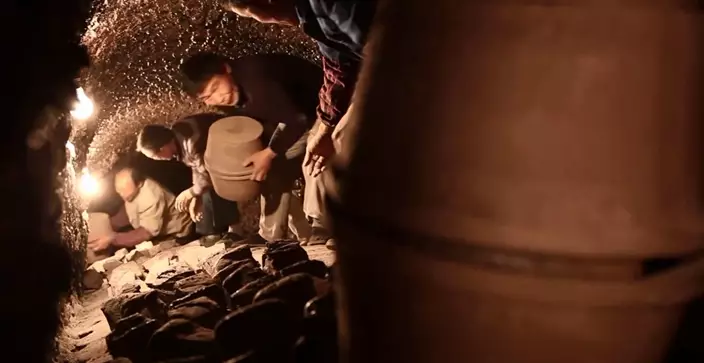
Photo via BON TV
The ancient kiln here is known as the "Dragon Kiln" in the local area as it resembles a dragon. Before we came to the ancient Dragon Kiln, we hadn't seen it before, apart from as a model in a museum. We didn't know whether it would still be working, nor did we know whether we would be allowed to go inside or not.
Click to Gallery
Photo via BON TV
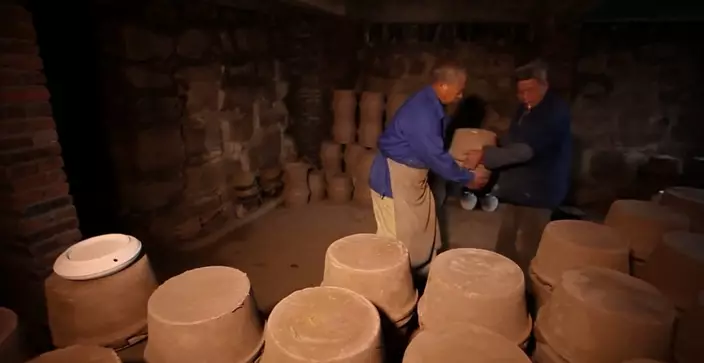
Photo via BON TV
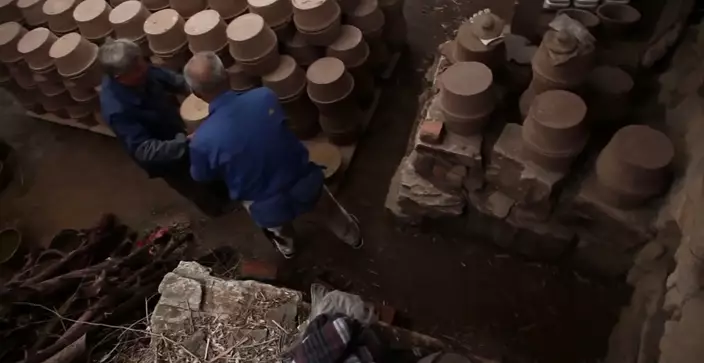
Photo via BON TV
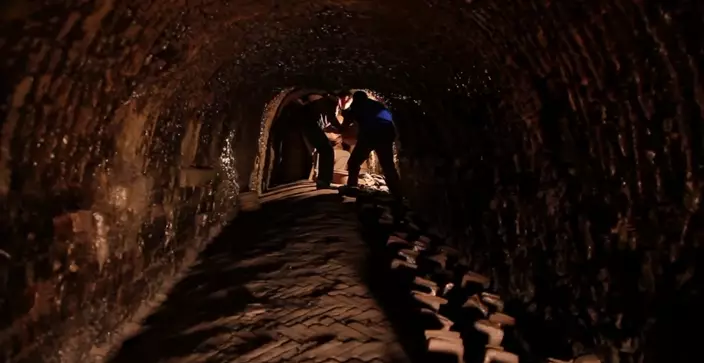
Photo via BON TV
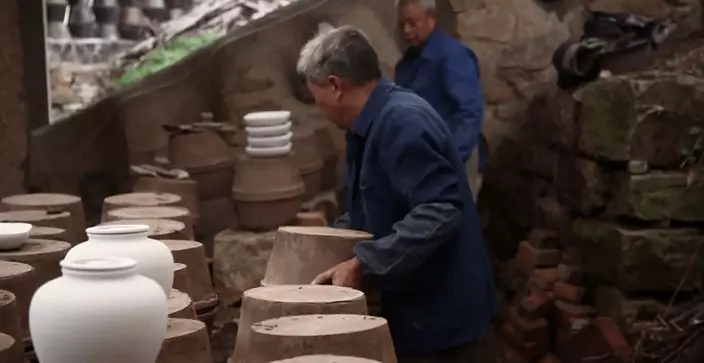
Photo via BON TV
When we got to the site, some workers were transporting pieces placed outside into the cave. To show that we meant no harm, we turned on our camera lights for them. The person in charge saw that we weren't going to disrupt or disturb their work, so he allowed us to shoot in there. I got the impression that we weren't the first crew to film there.
Photo via BON TV
They went about their work very efficiently, clearly experienced and skilled. All the earthenware, placed in piles outside, was transported in just half an hour after we arrived. However, when we tried to approach its entrance, the person in charge stopped us. So we of course respected this. We felt satisfied though as we had seen the Ancient Dragon Kiln opening and operating. We had already heard that the Dragon Kiln rarely operates, so to see it working was lucky. Once the fire is lit in the kiln, it lasts for three days and three nights.
When we looked around, we were surprised to see another small and unattended alcove in the kiln. After it was confirmed that the kiln wouldn't be fired up, our curiosity was finally satisfied and we were allowed in. And we certainly weren't disappointed.
The interior of the kiln was covered with a thick layer of a hardened, oil-like substance. There were people placing pottery in the kiln, with one sitting on a small stool and carefully positioning each piece handed to him. The whole space would be filled with pieces ready to be fired.
Photo via BON TV
Nowadays, purple-sand pottery from Yixing is usually made in electronic kilns which are easy to use with their temperature gauges. But these can't compare with the traditions and ancient heritage of the fire-powered Ancient Dragon Kiln. Here, instead of relying on modern technology, the experts use their skills and experience to lovingly create each piece. Technology may speed up the process, but it also means that the traditional ancient processes are fading away. The Qianshu Dragon Kiln is the only preserved ancient dragon kiln in Yixing. The site and its workers are respected and admired by locals. On top of the Dragon Kiln is a small, uninhabited house with simple electrics, and a cable running through the yard. The cable is used as a pulley to load goods from the bottom of the hill, a method that has clearly been used for many years.
Photo via BON TV
Most of the work that we witnessed here involved the transportation of pottery into the kiln when the fire is lit. And how we still don't know. When it started to rain again, we decided to leave. We were grateful that we were lucky enough to have seen the kiln open. We also hope that this ancient production method will be preserved and continue to be used for many years to come.
Photo via BON TV