Skip to Content Facebook Feature Image

Researcher captures striking Antarctic video of minke whale

Researcher captures striking Antarctic video of minke whale

Researcher captures striking Antarctic video of minke whale

2018-03-22 10:18 Last Updated At:10:33

Marine mammal expert Dr. Regina Eisert thought minke whales were a little boring until she captured some striking footage of one swimming underwater near Antarctica. Now she thinks they're beautiful.

More Images
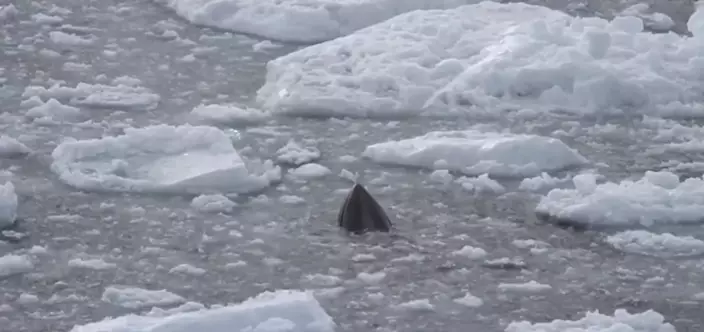
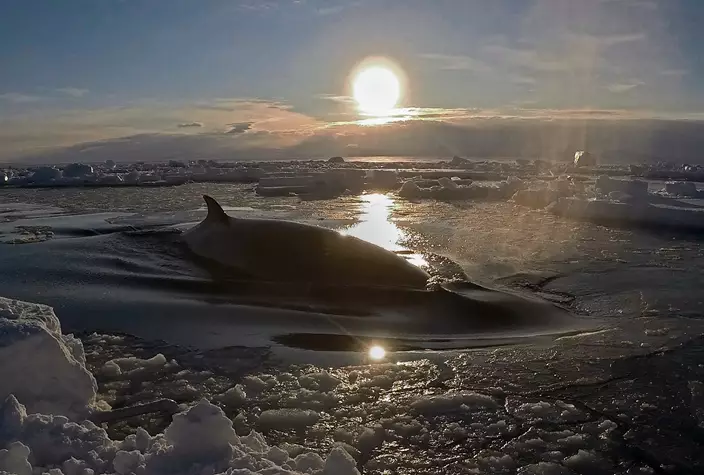
In this Jan. 31, 2018, image supplied by Dr Regina Eisert of the University of Canterbury a minke whale floats to the surface through the ice in McMurdo Sound, Antarctica. (Regina Eisert/University of Canterbury via AP)
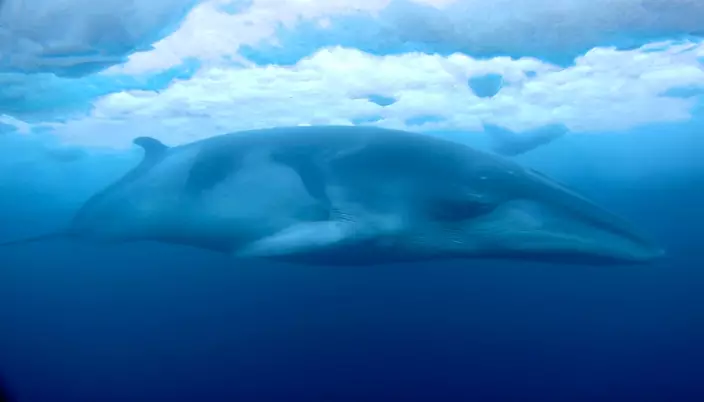
In this Jan. 31, 2018, image supplied by Dr Regina Eisert of the University of Canterbury a minke whale floats to the surface through the ice in McMurdo Sound, Antarctica. (Regina Eisert/University of Canterbury via AP)

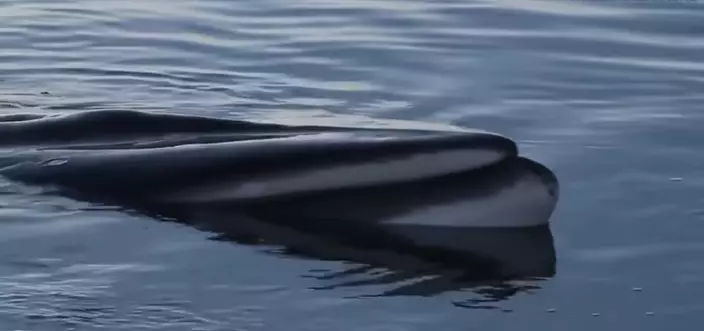
In this Feb. 1, 2018, images made from video and supplied by Dr Regina Eisert and Anthony Powell of the University of Canterbury a minke whale glides under the ice in McMurdo Sound, Antarctica. (Regina Eisert/Anthony Powell /University of Canterbury via AP)

In this Feb. 1, 2018, images made from video and supplied by Dr Regina Eisert and Anthony Powell of the University of Canterbury a minke whale glides under the ice in McMurdo Sound, Antarctica. (Regina Eisert/Anthony Powell /University of Canterbury via AP)

Eisert said the whales look similar from the surface but that she gained a new appreciation for their individuality after seeing the markings on one up close. She said her team got the underwater video by luck. They'd planned to film underwater for two weeks but managed to get just 90 minutes of footage before running into technical problems.

In this Jan. 31, 2018, image supplied by Dr Regina Eisert of the University of Canterbury a minke whale floats to the surface through the ice in McMurdo Sound, Antarctica. (Regina Eisert/University of Canterbury via AP)

In this Jan. 31, 2018, image supplied by Dr Regina Eisert of the University of Canterbury a minke whale floats to the surface through the ice in McMurdo Sound, Antarctica. (Regina Eisert/University of Canterbury via AP)

A researcher at the University of Canterbury, Eisert said they were in Antarctica earlier this year mainly to research orcas in the Ross Sea. But she said their observations of minke whales could shed new light on their feeding patterns.

"Baleen whales are an important part of the ecosystem, but they're grossly understudied," she said.

The conventional thinking has been that minke whales mainly chase krill, Eisert said. But she couldn't see any krill where the whales were swimming, so she thinks they may have been chasing small schools of fish.

In this Feb. 1, 2018, images made from video and supplied by Dr Regina Eisert and Anthony Powell of the University of Canterbury a minke whale glides under the ice in McMurdo Sound, Antarctica. (Regina Eisert/Anthony Powell /University of Canterbury via AP)

In this Feb. 1, 2018, images made from video and supplied by Dr Regina Eisert and Anthony Powell of the University of Canterbury a minke whale glides under the ice in McMurdo Sound, Antarctica. (Regina Eisert/Anthony Powell /University of Canterbury via AP)

She hopes they will be able to find out more about what the whales eat after taking a tiny amount of skin and blubber from the minke whales using a modified tranquilizer gun.

Eisert and her team got their footage after being dropped by helicopter on sea ice not far from two research stations, New Zealand's Scott Base and the American base McMurdo Station. The U.S. Coast Guard icebreaker Polar Star had earlier cut a channel through the ice to allow the stations to be resupplied, which Eisert said also provided a kind of highway for the whales.

She said there had been very little study of minke whales in the Ross Sea region, despite there being over 100,000 in the area. The cost and difficulty of studying them in such a remote and inhospitable place had been a deterrent, she said.

Eisert's research, sponsored by The Pew Charitable Trusts, will examine the effect of a new marine protected area on the Ross Sea ecosystem.
As storm chaser Ashton Lemley picked his way through a tornado-ravaged Mississippi trailer park, he heard the unmistakable meow of a kitten pierce the predawn darkness.

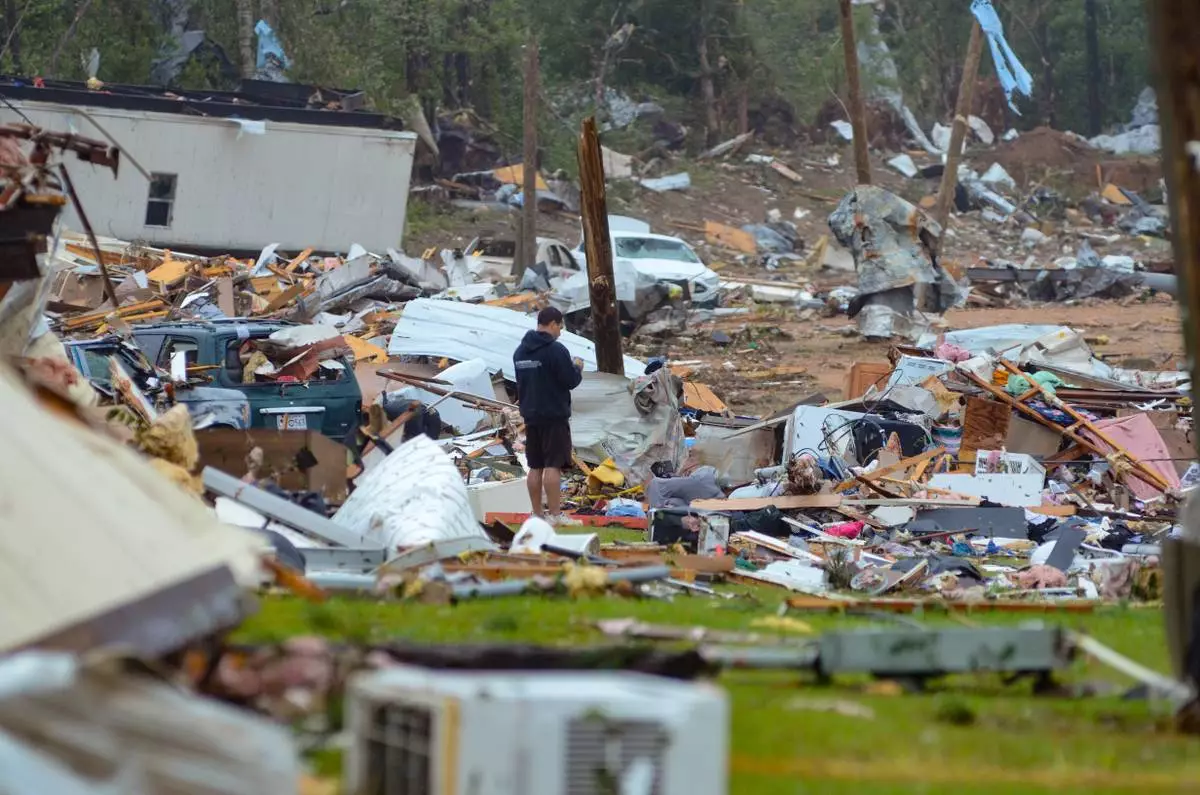
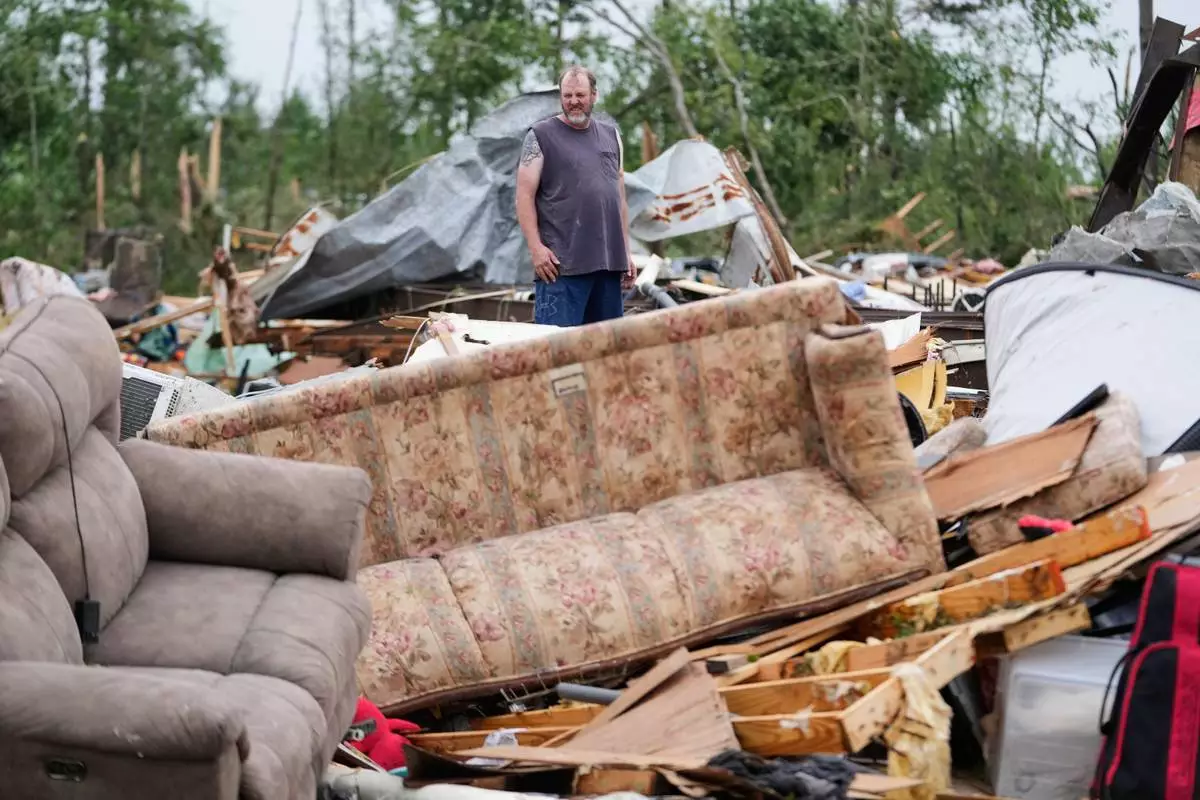
The homes were flattened just hours earlier as storms spawned at least three tornadoes across the bottom half of Mississippi, injuring a dozen at the trailer park in the rural community of Bogue Chitto.

Lemley had no idea where the kitten was, but he was determined to find it. After a few minutes, the meowing stopped, and Lemley feared the worst.

Then, five minutes later, he heard it again.

“I said, ‘Oh, he’s still alive!’” Lemley told The Associated Press on Thursday.

Lemley quickly dug under insulation from a flattened wall until his flashlight beam found the kitten — wet, scared and hiding between two wooden posts.

Lemley captured the moment on video: “Oh my goodness, I found him!" he says to the camera. "Are you OK? Come here – it’s OK. … We’ll get you cleaned up, baby. Don’t you worry.”

Lemley held the kitten in his arms for a few minutes before handing it off to the commander of the United Cajun Navy, a volunteer disaster-response group, who dried it off and took it to safety. Lemley marveled that it didn’t appear to be injured.

“I’ve been in these situations so many times,” said Lemley, who has been chasing storms since 2010. “I don’t try to get overly emotional. But it is very heartbreaking to see any type of animal or human go through something like that.”

Lemley says there’s already a lot of interest from people who want to adopt the kitten if its owners are not located. Some, he said, want to name it Tornado.

It won’t be coming home with him, though: Lemley is allergic to cats.

A man looks at the destruction left at Gene’s Mobile Home Supply, a trailer park in Bogue Chitto, Miss., on Thursday, May 7, 2026, after a tornado cut across the state. (Matt WIlliamson/Enterprise-Journal via AP)

A man looks at the destruction left at Gene’s Mobile Home Supply, a trailer park in Bogue Chitto, Miss., on Thursday, May 7, 2026, after a tornado cut across the state. (Matt WIlliamson/Enterprise-Journal via AP)

A man stands among debris at Gene's Mobile Home Supply, a trailer park in Bogue Chitto, Miss., Thursday, May, 7, 2026, after a tornado cut across the state. (AP Photo/Gerald Herbert)

A man stands among debris at Gene's Mobile Home Supply, a trailer park in Bogue Chitto, Miss., Thursday, May, 7, 2026, after a tornado cut across the state. (AP Photo/Gerald Herbert)

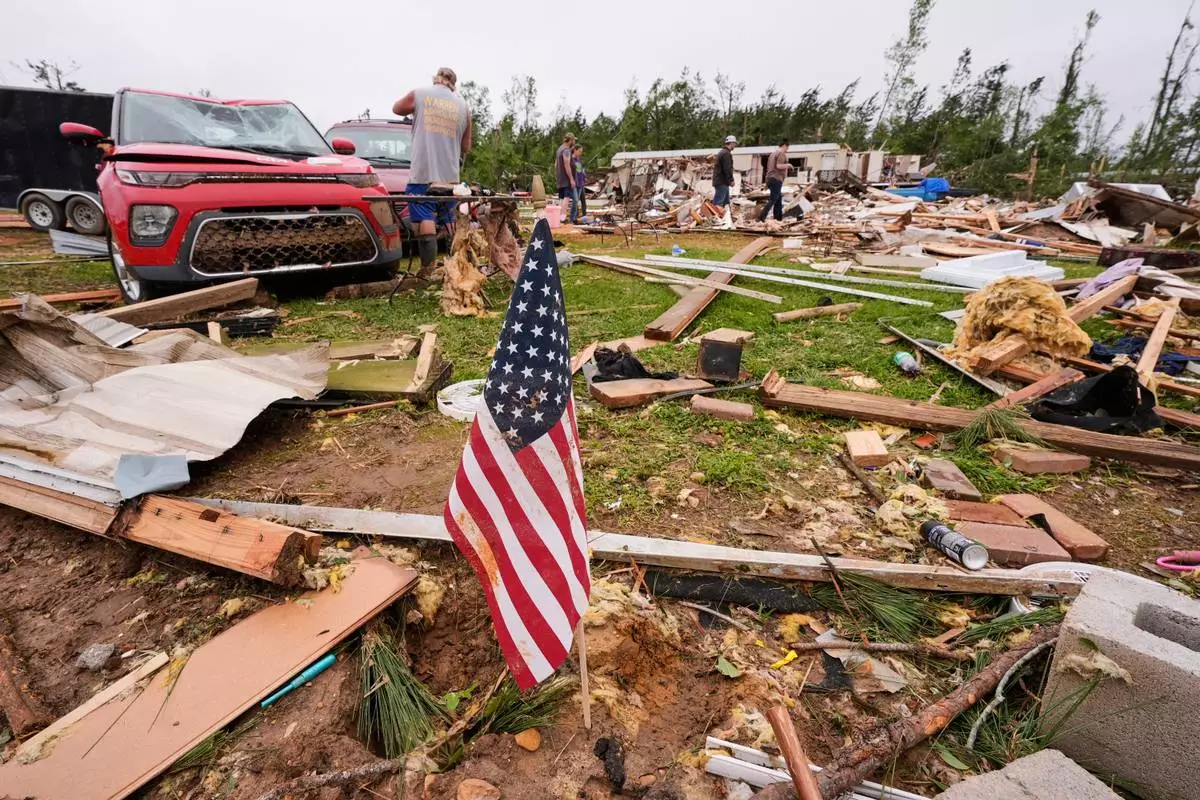
An American flag is seen as people walk among debris at Gene's Mobile Home Supply, a trailer park in Bogue Chitto, Miss., Thursday, May, 7, 2026, after a tornado cut across the state. (AP Photo/Gerald Herbert)

An American flag is seen as people walk among debris at Gene's Mobile Home Supply, a trailer park in Bogue Chitto, Miss., Thursday, May, 7, 2026, after a tornado cut across the state. (AP Photo/Gerald Herbert)

Recommended Articles