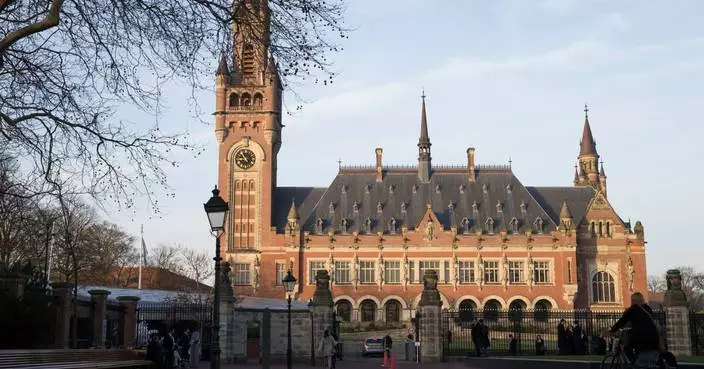
Italy's populist, anti-migrant interior minister said Friday that Malta should allow a Dutch-flagged rescue ship carrying hundreds of migrants rescued from rubber dinghies off the Libyan coast to make port there because the ship is now in Maltese waters.
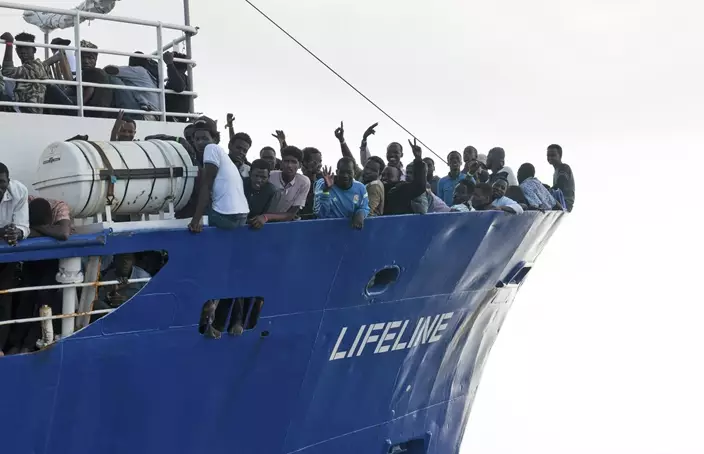
In this photo taken on Thursday, June 21, 2018, migrants wave from aboard ship operated by the German NGO Mission Lifeline. (Hermine Poschmann/Mission Lifeline via AP)
"We ask humanly and politically that Malta finally opens one of its ports and lets these desperate people disembark," and then seize the ship, Matteo Salvini said.
Click to Gallery
In this photo taken on Thursday, June 21, 2018, migrants wave from aboard ship operated by the German NGO Mission Lifeline. (Hermine Poschmann/Mission Lifeline via AP)
In this photo taken on Thursday, June 21, 2018, the ship operated by the German NGO Mission Lifeline rescues migrants from a rubber boat in the Mediterranean Sea in front of the Libyan coast. (Hermine Poschmann/Mission Lifeline via AP)
In this photo taken on Thursday, June 21, 2018, migrants on a rubber boat are being rescued by the ship operated by the German NGO Mission Lifeline in the Mediterranean Sea in front of the Libyan coast. (Hermine Poschmann/Mission Lifeline via AP)
In this photo taken on Thursday, June 21, 2018, the ship operated by the German NGO Mission Lifeline is reached by a Libyan Coast Guard boat after they rescued migrants from a rubber boat in the Mediterranean Sea in front of the Libyan coast. (Hermine Poschmann/Mission Lifeline via AP)
Malta responded that it would "act according to the laws and applicable conventions," without further explanation. International law states that Malta must respond if they are the nearest safe port at rescue or if requested by the ship's captain.
The dynamic is similar to the standoff over the Aquarius, operated by French aid groups, which eventually sailed an additional 1,500 kilometers (900 miles) last week to deliver 630 migrants to Spain after both Malta and Italy refused to let the rescue ship access their ports. Salvini is making good on an election promise to go after rescue ships run by aid groups, which he has likened to taxi services that help the migrant smugglers.
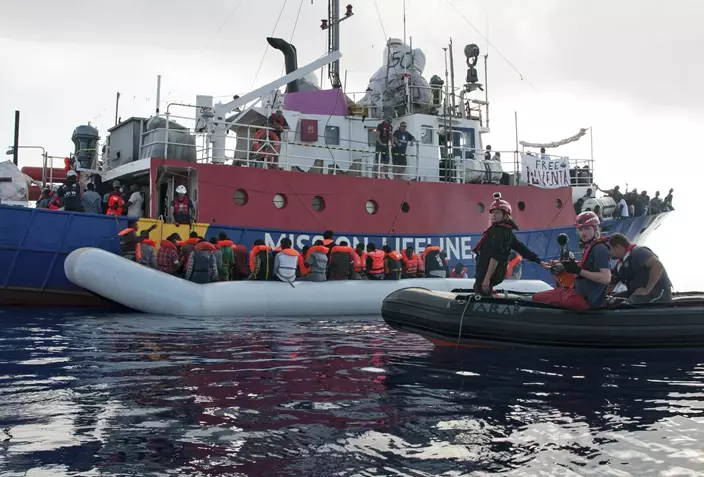
In this photo taken on Thursday, June 21, 2018, the ship operated by the German NGO Mission Lifeline rescues migrants from a rubber boat in the Mediterranean Sea in front of the Libyan coast. (Hermine Poschmann/Mission Lifeline via AP)
Salvini on Thursday said he would not allow the ship operated by the German NGO Mission Lifeline to enter Italian ports, saying that it had acted improperly by taking on board the 224 migrants that the Italian coast guard had assigned to the Libyan coast guard to rescue. Salvini said the rescue was in Libyan waters, which Lifeline denies.
Mission Lifeline said Friday that it still has not been assigned a port, despite its requests. It said it picked up additional migrant passengers during another rescue overnight, and currently was heading north with 234 on board. It said it had responded to a request for help by a merchant vessel to help rescue 113 people.
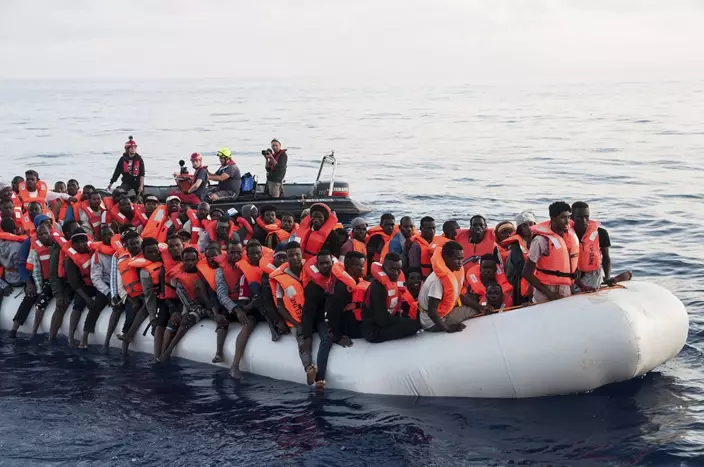
In this photo taken on Thursday, June 21, 2018, migrants on a rubber boat are being rescued by the ship operated by the German NGO Mission Lifeline in the Mediterranean Sea in front of the Libyan coast. (Hermine Poschmann/Mission Lifeline via AP)
Lifeline referred to reports that as many as 220 people were missing at sea and presumed drowned, according to survivor statements to the U.N. Refugee agency.
"The latest drownings show how important our sea rescue efforts are, and that not a single rescue ship can be missed," said Mission Lifeline founder Axel Steier. "The rescue of human lives must be prioritized before border control."
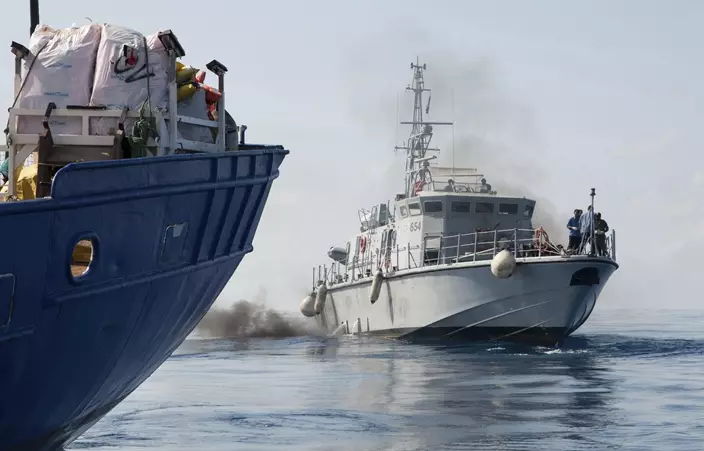
In this photo taken on Thursday, June 21, 2018, the ship operated by the German NGO Mission Lifeline is reached by a Libyan Coast Guard boat after they rescued migrants from a rubber boat in the Mediterranean Sea in front of the Libyan coast. (Hermine Poschmann/Mission Lifeline via AP)
More than 640,000 migrants have arrived in Italy since 2014, many of whom made their way northward to join family or to countries perceived as providing more assistance until Italy's neighbors enacted stricter border controls. Arrivals are down some 80 percent this year to around 14,500, as migrants have turned to other routes.
BARCELONA, Spain (AP) — Pope Leo XIV is delving into the hotly contested issue of migration by visiting two flashpoints — Spain’s Canary Islands in the Atlantic next week, and Italy’s Lampedusa island in the Mediterranean in early July.
These rocky, remote outposts of Europe have struggled with the arrival of tens of thousands of mostly African migrants through some of the world's deadliest migration routes. Even as numbers decreased this year, especially in the Canaries, the issue continues to roil politics in these historically Catholic countries.
Many Catholics and migrants hope the upcoming papal trips will refocus attention on solidarity and support — and away from divisive political debate that is splitting the right in addition to pitting it against the left.
“Stuck in the middle are the migrants,” said the Most Rev. José Mazuelos, the bishop of Canarias, whose diocese includes several of the islands. “So the church says, ‘Let’s give them a face, because we’re talking about people, not numbers.’"
Among them is Eslim Jallow, 27. Dreaming of a more prosperous future, Jallow and his younger brother left Gambia and landed in the Canary Islands in 2023. At first, Jallow struggled to adapt, but he quickly learned Spanish, took courses and now earns a living as a programmer and web developer in Las Palmas de Gran Canaria.
“Perhaps the pope will change the way in which people here look at immigrants,” Jallow said. “Immigrants should be treated with dignity and respect, not ignored.”
Like most migrants arriving in the islands, he isn’t Catholic. But he feels that Leo “speaks for us, he reminds the world we are also human beings.”
Advocating for migrants globally was a priority for Pope Francis. He went to Lampedusa in 2013 on his first pastoral visit outside Rome and, three years later on the Greek island of Lesbos, he brought back with him a dozen Syrian Muslim refugees.
Under Leo, the Catholic Church has continued to call for their humane treatment around the world, including decrying mass deportations in his home country, the United States.
“Pope Leo is signaling how important immigration is to him by doing these two trips early in his papacy,” said Michele Pistone, a Villanova University professor who leads its new center on immigration.
In the Canaries, Leo is expected at the port of Arguineguín, on the island of Gran Canaria, on June 11 to pay homage to thousands of migrants who died or disappeared en route. The next day, he will meet migrants at a camp on the island of Tenerife.
The archipelago has been the epicenter of a humanitarian crisis that in 2024 saw the arrival of nearly 47,000 migrants from North and West Africa, including several thousand unaccompanied minors.
Like Jallow, half of them landed in El Hierro island — nearly triple its population, said the Most Rev. Eloy Santiago, bishop of Tenerife, whose diocese includes that smaller island. Its resources were strained to a breaking point, even though most migrants only stayed a few days.
“If a boat arrives, the couple of local doctors have to go out running to take care of them, and then the local residents who had their medical appointments can’t have them,” Santiago said.
Catholic organizations are among those that aid migrants from the moment they step out of rickety, overcrowded boats.
Arrivals have slowed dramatically this year, in part due to stricter controls along the African coast. But the most challenging task remains — how to help those who arrived as minors, were entrusted to state care, and are thrown out into the streets when they turn 18, often with no job prospects and no support.
Caya Suárez, secretary-general for the Catholic charity Caritas in the Canaries, has seen firsthand how migrants coming of age on the islands are the most vulnerable.
“That’s a very bad moment, even though they’d been waiting for it with hope, because they see they are still stuck without alternatives,” she said.
Caritas tries to help the young adults find housing and jobs, she added. It’s also relocated a few young migrants to Madrid, a small village in the largely rural region of Galicia, and elsewhere on the mainland, with the help of parishes there even as the governments of other Spanish regions have been reluctant to take on underage migrants.
Many residents in the Canaries feel like they’ve been abandoned to cope with an unsolvable problem — how to stretch even farther resources for migrants who thought they’d be within reach of economic prosperity and free to travel across the European Union, and instead end up on the street, struggling to send remittances home but also to leave.
Compounded with the perception that national and European political institutions tend to see it as an exclusively “island problem,” the situation is generating a growing malaise even among generous islanders who have long been accustomed to migration to and from Latin America, the Canaries’ bishops said.
“The pope’s word can help so that in the middle of this fatigue, people can buck up again because they see they are supported,” said Santiago, who was born and ordained a priest on the islands.
At the national level, Spain’s Catholic Church also backed a new measure giving temporary residency permits to potentially more than half a million foreigners in the country illegally, many from Latin America.
They often work in hospitality, agriculture and eldercare, boosting the economy, according to the socialist government of Prime Minister Pedro Sánchez — and to the church.
“In the matter of immigration, the church’s position gets into a head-on collision with the position of the right,” said Pablo Simón, a political science professor at University Carlos III in Madrid.
That has created a rift between the church and far-right parties, like Vox in Spain, which has criticized the church on immigration, despite often couching its anti-migrant rhetoric in religious terms.
Days before she is expected to meet Leo, Isabel Díaz Ayuso, the firebrand Popular Party conservative regional leader of Madrid, described the migrant legalization push as “importing mass poverty.”
The Rev. Fernando Redondo, who leads the migration department of the Spanish bishops’ conference, said the church’s stance is in line with the Christian mandate to welcome the stranger. But he added it needs better understanding among the many faithful who believe migrants come to steal jobs or live off welfare.
“We have a big challenge, which is raising awareness among our faithful … that from the viewpoint of faith, to welcome a migrant person is to welcome Christ himself,” Redondo said. “Then, of course, there needs to be ways, proper social and political ways, so that migration doesn’t become a total mess.”
In the Canaries, ordinary people have been on the front lines of that often life-endangering chaos — fishermen who hand out drinking water to migrants on ramshackle rafts, sunbathers who run into the sea to help landing migrants, the volunteers who greet them in more than a dozen languages.
But they have also seen that integration can work, as in a small mountain village that was emptying out until a center for three dozen migrant children was opened, creating jobs and filling up the school — and the local church’s annual feast day procession.
That’s why many look forward to Leo bringing a simple but crucial message of reconciliation that focuses on the people impacted, not on the politics.
“The pope doesn’t support this slogan of ‘let’s go, open doors for the whole world here.’ Nobody supports that,” Mazuelos said. “When here comes a gentleman in a wooden boat after five days in the Atlantic, what are we supposed to do, kick him back? We’ve got to find a way to welcome him.”
Dell'Orto reported from Minneapolis.
Associated Press religion coverage receives support through the AP’s collaboration with The Conversation US, with funding from Lilly Endowment Inc. The AP is solely responsible for this content.
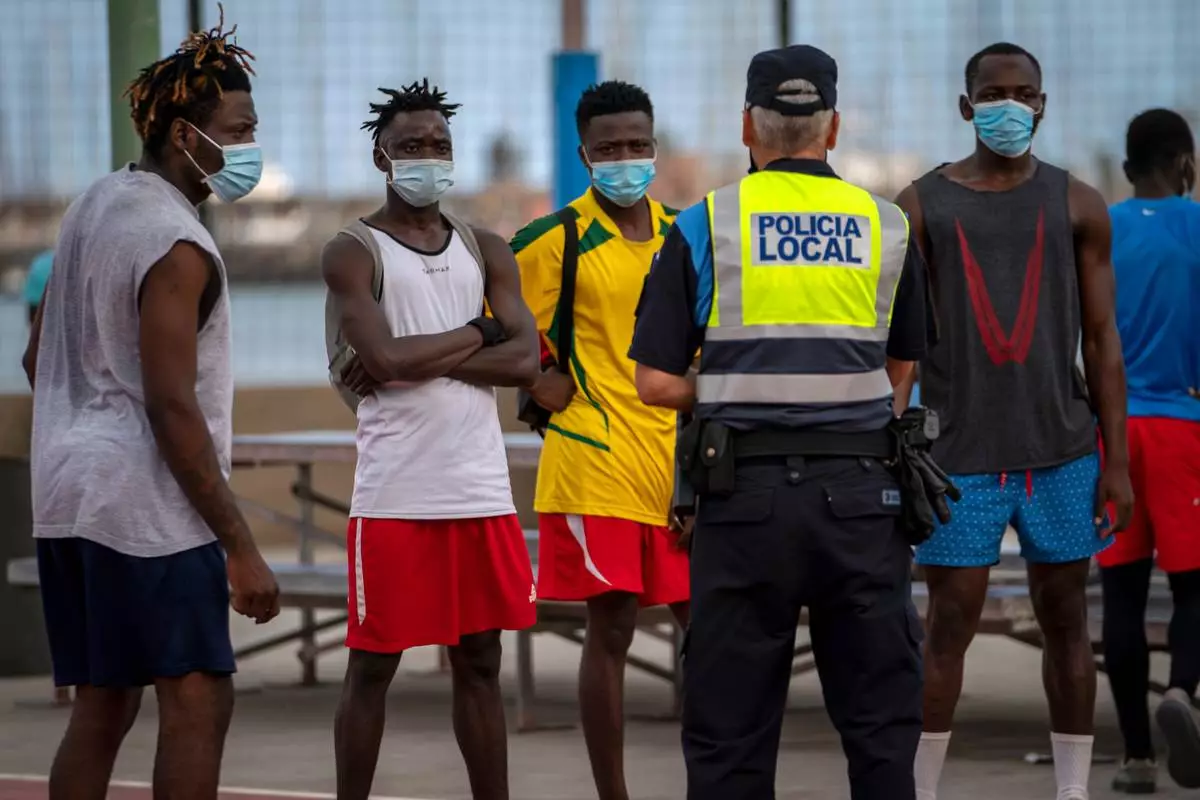
FILE - A police officer speaks with migrants and asylum-seekers in Gran Canaria island, Spain, Tuesday, Aug. 18, 2020. (AP Photo/Emilio Morenatti, File)
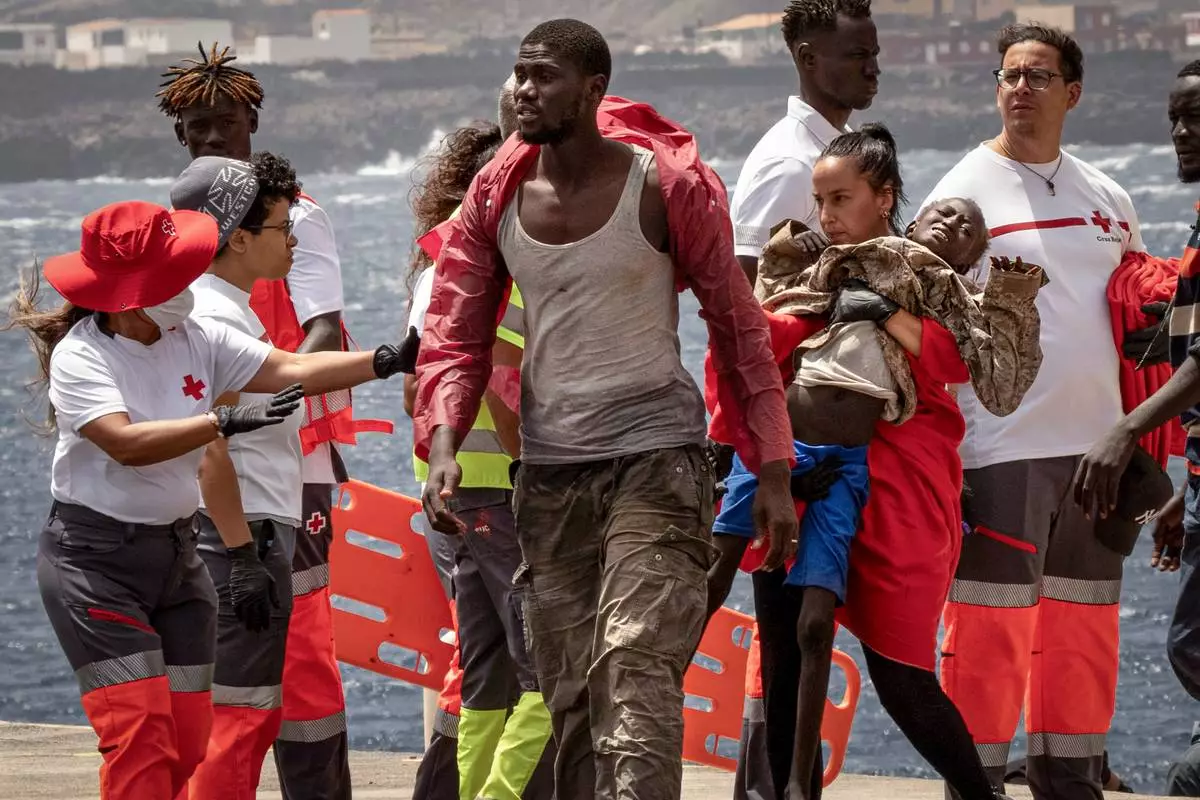
FILE - Migrants disembark at the port of "La Estaca" in Valverde on the Canary island of El Hierro, Spain, Aug. 26, 2024. Emergency services said the migrants arrived by boat after a 13-day voyage from Senegal. (AP Photo/Maria Ximena, File)
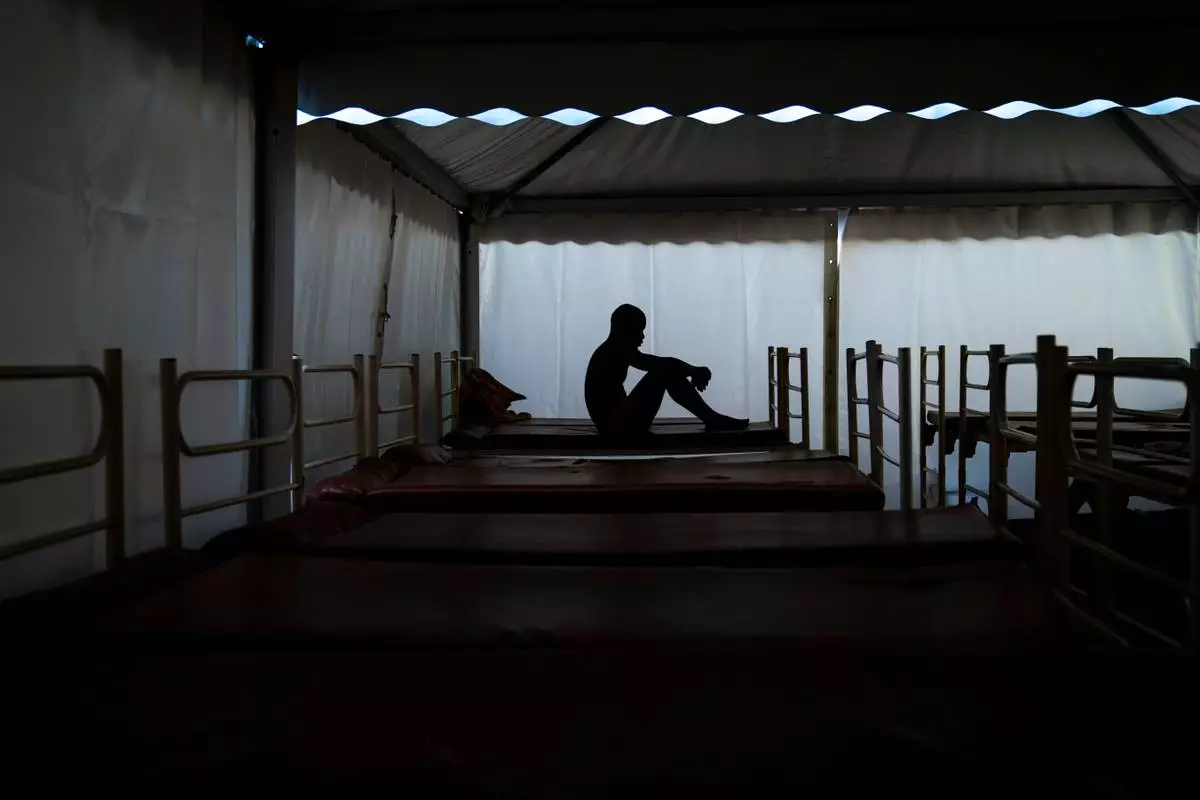
FILE - Mamadou Patherazi, from Guinea, sits on a bench at the Modern Christian Mission church in Fuerteventura, Canary Islands, Spain, on Aug. 22, 2020. (AP Photo/Emilio Morenatti, File)
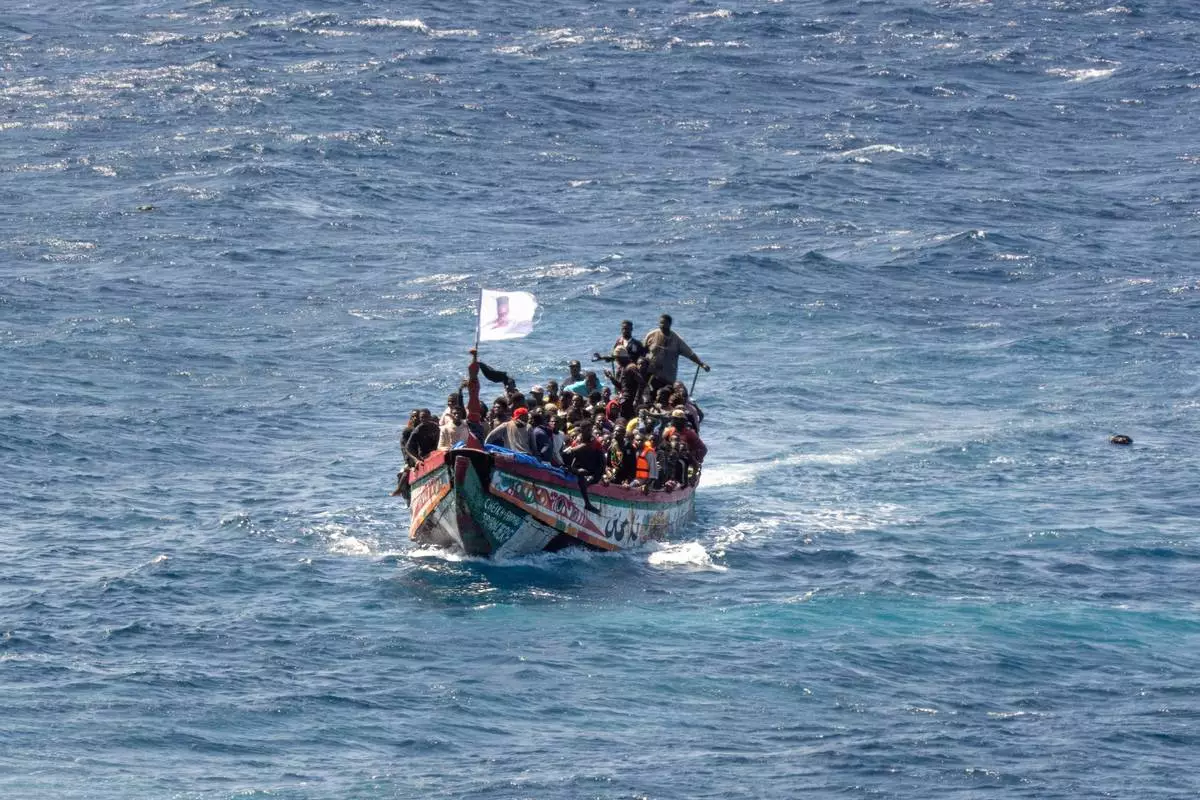
FILE - Migrants crowd a wooden boat as they sail to the port in La Restinga on the Canary island of El Hierro, Spain, Sunday, Aug. 18, 2024. (AP Photo/Maria Ximena, File)
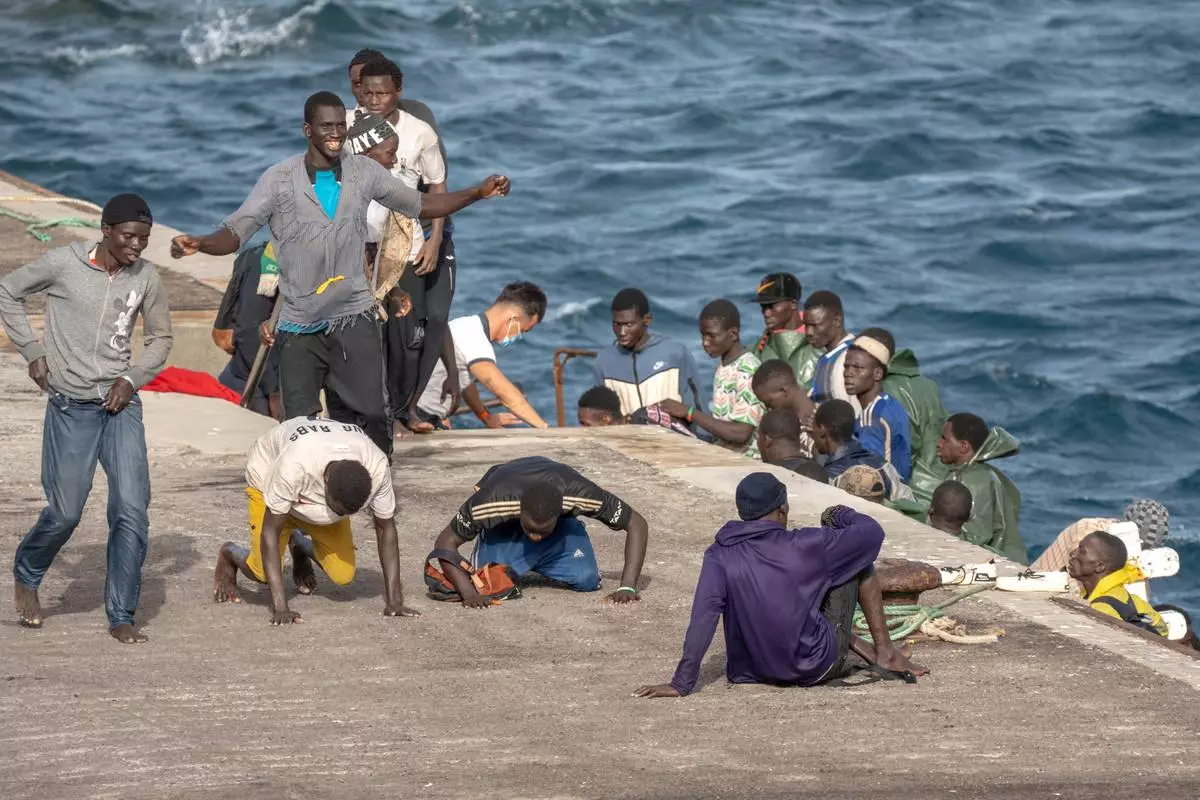
FILE - Migrants react as they arrive at the port in La Restinga on the Canary island of El Hierro, Spain, on, Aug. 19, 2024. (AP Photo/Maria Ximena, File)