In North Korea, summer is not a good time to be a dog.
In the sizzling heat, North Korea's biggest brewery is pumping out twice as much beer as usual, Pyongyang residents are lining up to get their "bingsu" — a syrupy treat made with shaved ice — and restaurants are serving up bowl after bowl of the season's biggest culinary attraction: spicy dog meat soup.
Euphemistically known as "dangogi," or sweet meat, dog has long been believed to be a stamina food in North and South Korea and is traditionally eaten during the hottest time of the year, giving a sad twist to the old saying "dog days of summer."
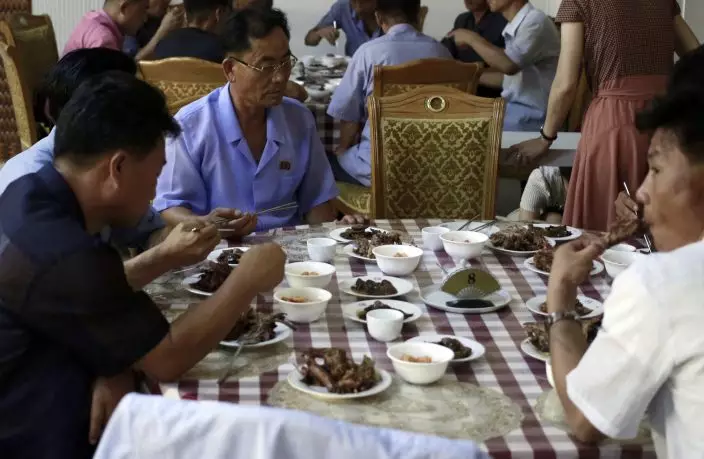
Food are served on a table during the lunch time at Pyongyang House of Sweet Meat, a restaurant specialized in dishes made of dog meat, in Pyongyang, North Korea, Wednesday, July 25, 2018. Euphemistically known as "dangogi," or sweet meat, dog has long been believed to be a stamina food in North and South Korea and is traditionally eaten during the hottest time of the year, giving a sad twist to old saying "dog days of summer." (AP PhotoDita Alangkara)
The dates are fixed according to the lunar calendar and dog meat consumption centers around the "sambok," or three hottest days — July 17 and 27, and Aug. 16 this year. Demand appears to be especially high this year because of a heatwave in East Asia. Temperatures in the North have been among the highest ever recorded, hovering near 40 degree Celsius (104 Fahrenheit) in several cities.
As is the case with almost everything, good statistics are not available for how much dog is eaten in the North.
But in South Korea, where even President Moon Jae-in has dogs as pets, at least 2 million canines are slaughtered and eaten each year even though its popularity as food is waning. While many older South Koreans believe dog meat aids virility, younger people generally are either against the practice or indifferent to it and there has been increasing pressure to ban it altogether.
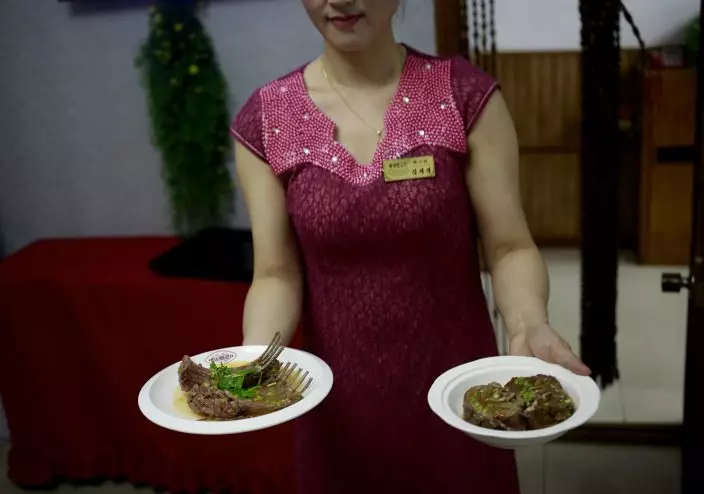
A waitress shows dishes made of dog meat at at Pyongyang House of Sweet Meat, a dog specialty restaurant in Pyongyang, North Korea, Wednesday, July 25, 2018. Euphemistically known as "dangogi," or sweet meat, dog has long been believed to be a stamina food in North and South Korea and is traditionally eaten during the hottest time of the year, giving a sad twist to old saying "dog days of summer." (AP PhotoDita Alangkara)
On both sides of the Demilitarized Zone, dogs used for their meat are raised on farms for that express purpose.
"It's been our national food since olden times," explained Kim Ae Kyong, a waitress at the Pyongyang House of Sweet Meat, the largest dog specialty restaurant in the North Korean capital. "People believe that heat cures heat, so they eat dog meat and spicy dog soup on the hottest days. It's healthier than other kinds of meat."
The restaurant's menu lists more than a dozen dog dishes, including ribs, hind legs and boiled dog skin.
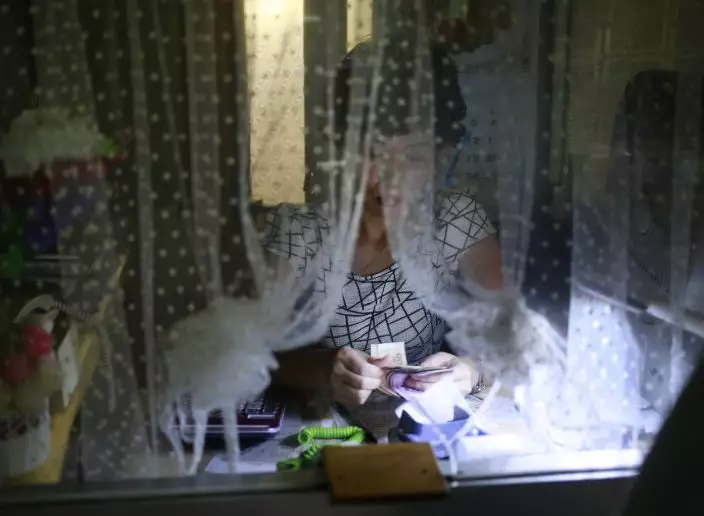
A cashier counts money at at Pyongyang House of Sweet Meat, a restaurant specialized in dishes made of dog meat, in Pyongyang, North Korea, Wednesday, July 25, 2018. Euphemistically known as "dangogi," or sweet meat, dog has long been believed to be a stamina food in North and South Korea and is traditionally eaten during the hottest time of the year, giving a sad twist to old saying "dog days of summer." (AP PhotoDita Alangkara)
Like their neighbors to the South, North Korean attitudes toward dogs are changing.
It is increasingly common to see people walking their dogs on leashes in Pyongyang and other cities in the North, a trend that seems to have just begun to catch on over the past few years. Feral dogs are common in the countryside, however, and left to fend for themselves.
How leader Kim Jong Un feels about all this isn't known.
But in January he made a point of donating 30 pet dogs of seven breeds — including a bulldog — to Pyongyang's newly renovated Central Zoo, where dogs are put on display much like the wild animals. The canine center at the zoo is, in fact, one of its most popular attractions, and posters near the cages explain how to properly care for and feed — not eat — canine companions.
MADRID (AP) — Álvaro Arbeloa got off to a dismal start as the new coach of Real Madrid, seeing his team lose to second-division club Albacete 3-2 and drop out of the Copa del Rey in the round of 16 on Wednesday.
Jefté Betancor scored the game-winning goal four minutes into stoppage time to send Albacete to the quarterfinals. Gonzalo García had also scored in added time for Madrid to even the match at 2-2.
Madrid struggled from the start in the debut of Arbeloa, the club's former B-team coach who on Monday was picked to replace Xabi Alonso following a tumultuous eight-month stint at the helm.
“At this club, even a draw is bad, a tragedy, imagine a defeat like this, especially against a lower-division opponent," Arbeloa said. "If anyone is responsible, it’s me, as I’m the one who made the decisions regarding the lineup, how we wanted to play, and the substitutions. I can only thank the players for the welcome they gave me and help them recover physically and mentally.”
Arbeloa used a few B-team players as expected, but he drew some criticism for resting many of his top stars, including Kylian Mbappé, Jude Bellingham, Thibaut Courtois and Rodrygo. Vinícius Júnior started, but was mostly ineffective as Madrid had difficulty creating scoring opportunities.
Arbeloa said he had “no regrets” about his squad choice.
“I was convinced that the squad was the right one," Arbeloa said. “It was a great team, the starting lineup and the bench. I have a very talented squad and it’s not easy for them to do everything I’ve asked of them in just one day with a new coach. I feel ultimately responsible.”
Veteran defender Dani Carvajal, who entered the game in the second half, said Madrid fans deserved an apology after the team's performance.
“We are not going through our best moment,” he said. “Everyone has to give a lot more.”
Albacete sits in 17th-place in the 22-team second-division standings. It hadn't won in five consecutive games in all competitions.
The hosts had gotten on the board first with Javier Villar scoring with a header off a corner kick in the 42nd and Franco Mastantuono equalized from close range three minutes into first-half stoppage time. Betancor put Albacete back in front in the 82nd with a shot from inside the area after the Madrid defense failed to fully clear a cross into the box.
“It’s the greatest thing in football and it happened today," Betancor said. "I’m so happy for my team, everyone worked like crazy. I’m very, very happy.”
Madrid was coming off a 3-2 loss to Barcelona in the final of the Spanish Super Cup in Saudi Arabia. It trails Barcelona by four points at the halfway point in the Spanish league, and sits in seventh place in the league phase of the Champions League. Madrid's next match is at home on Saturday against Levante in the Spanish league.
Like Alonso, the 42-year-old Arbeloa played several years for Madrid. He has been with the club for 20 years, having coached many of its youth squads.
As a player, Arbeloa helped Madrid win eight titles from 2009-16, including two European Cups and one Spanish league. He also helped Spain win the 2010 World Cup and the 2008 and 2012 European Championships.
In other meetings between first-division clubs, Rayo Vallecano lost 2-0 at Alaves and Real Betis beat Elche 2-1 at home.
Rayo played with 10 men from the 69th as Isi Palazón was sent off. Ezequiel Ávila scored twice, including an 80th-minute winner, as Betis rallied from behind against Elche.
On Tuesday, Atletico Madrid beat second-division club Deportivo La Coruña 1-0.
Barcelona visits Racing Santander — the second-tier leader — on Thursday.
The round of 16 is played in single elimination games.
AP soccer: https://apnews.com/hub/soccer
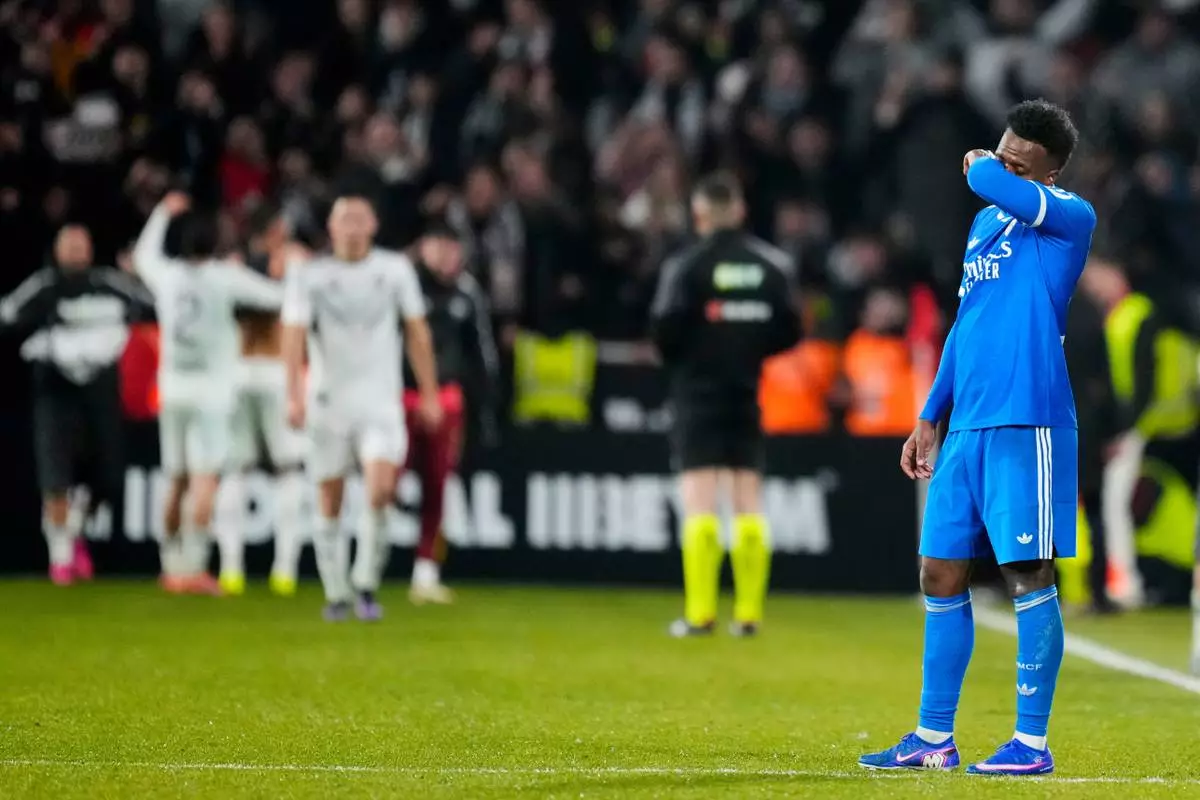
Real Madrid's Vinicius Junior reacts at the end of the Copa del Rey round of 16 soccer match between Albacete and Real Madrid, in Albacete, Spain, Wednesday, Jan. 14, 2026. (AP Photo/Jose Breton)
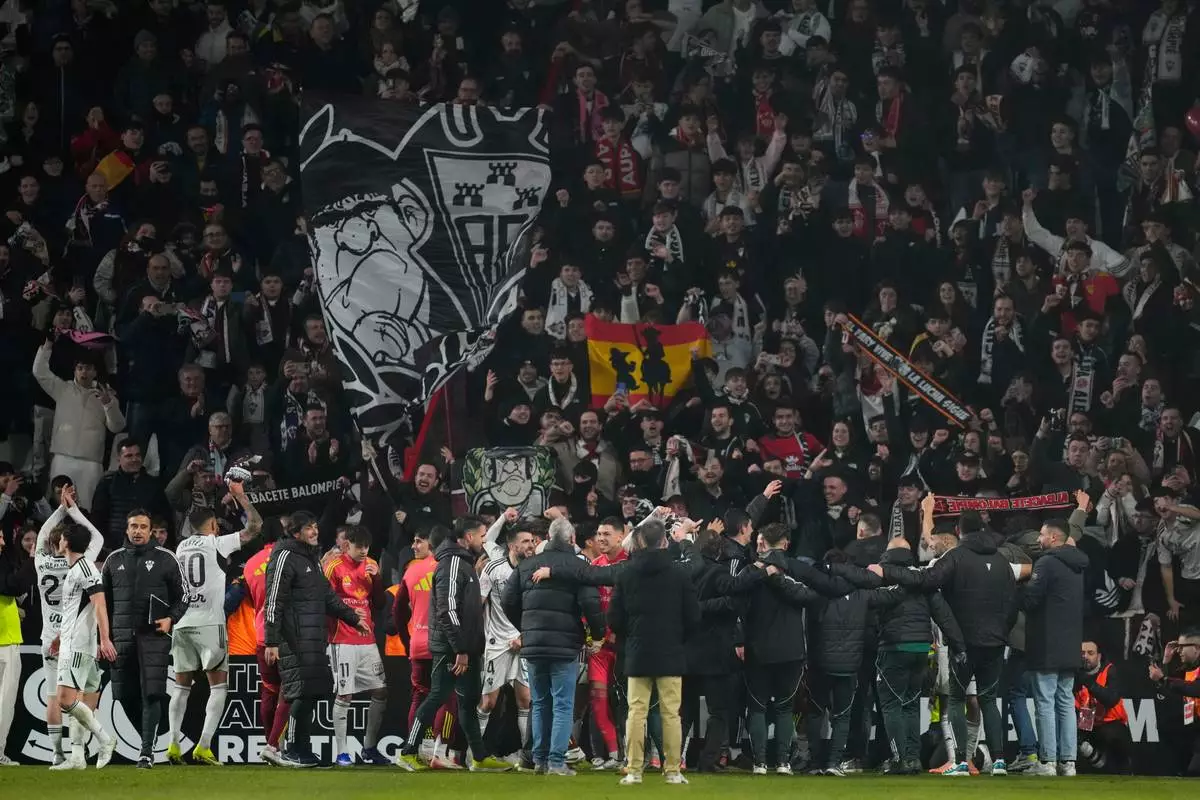
Albacete's players celebrate their team victory at the end the Copa del Rey round of 16 soccer match between Albacete and Real Madrid, in Albacete, Spain, Wednesday, Jan. 14, 2026. (AP Photo/Jose Breton)
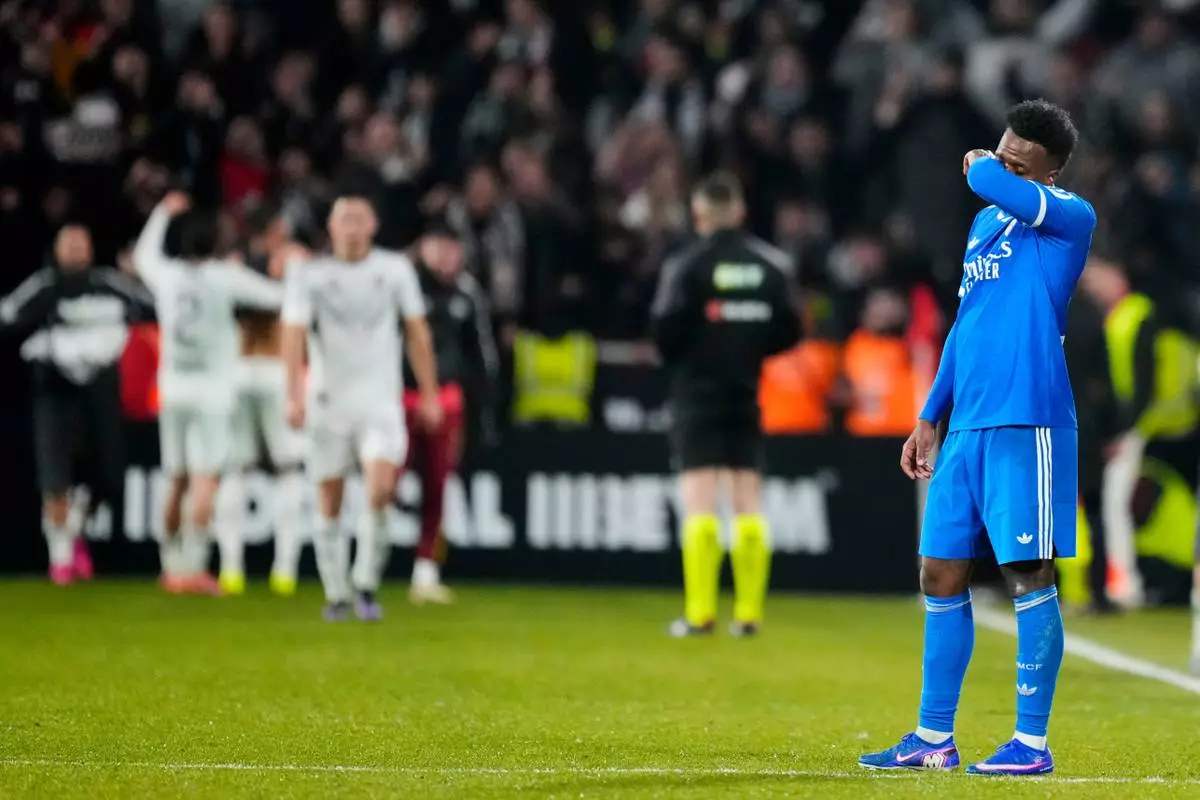
Real Madrid's Vinicius Junior reacts at the end of the Copa del Rey round of 16 soccer match between Albacete and Real Madrid, in Albacete, Spain, Wednesday, Jan. 14, 2026. (AP Photo/Jose Breton)

Real Madrid's Vinicius Junior argues with Albacete's players during the Copa del Rey round of 16 soccer match between Albacete and Real Madrid, in Albacete, Spain, Wednesday, Jan. 14, 2026. (AP Photo/Jose Breton)
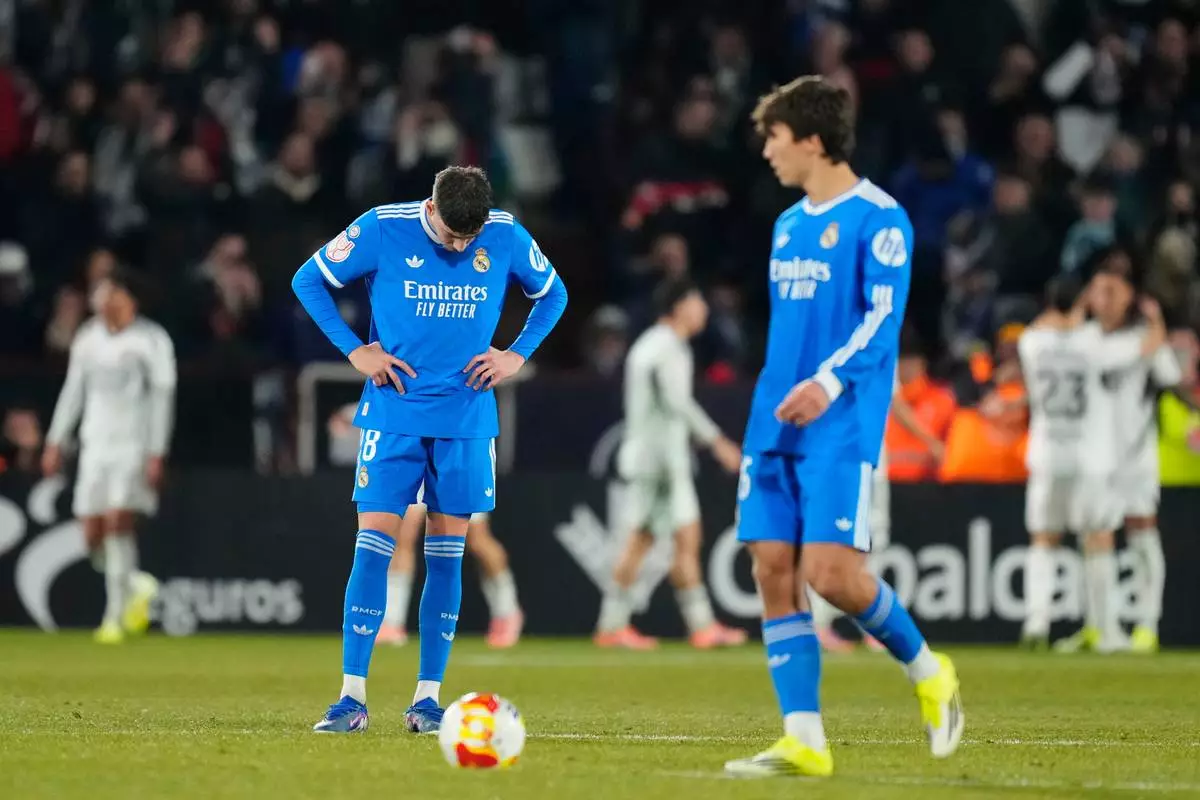
Real Madrid players react after Albacete scored its second goal during the Copa del Rey round-of-16 soccer match between Albacete and Real Madrid, in Albacete, Spain, Wednesday, Jan. 14, 2026. (AP Photo/Jose Breton)
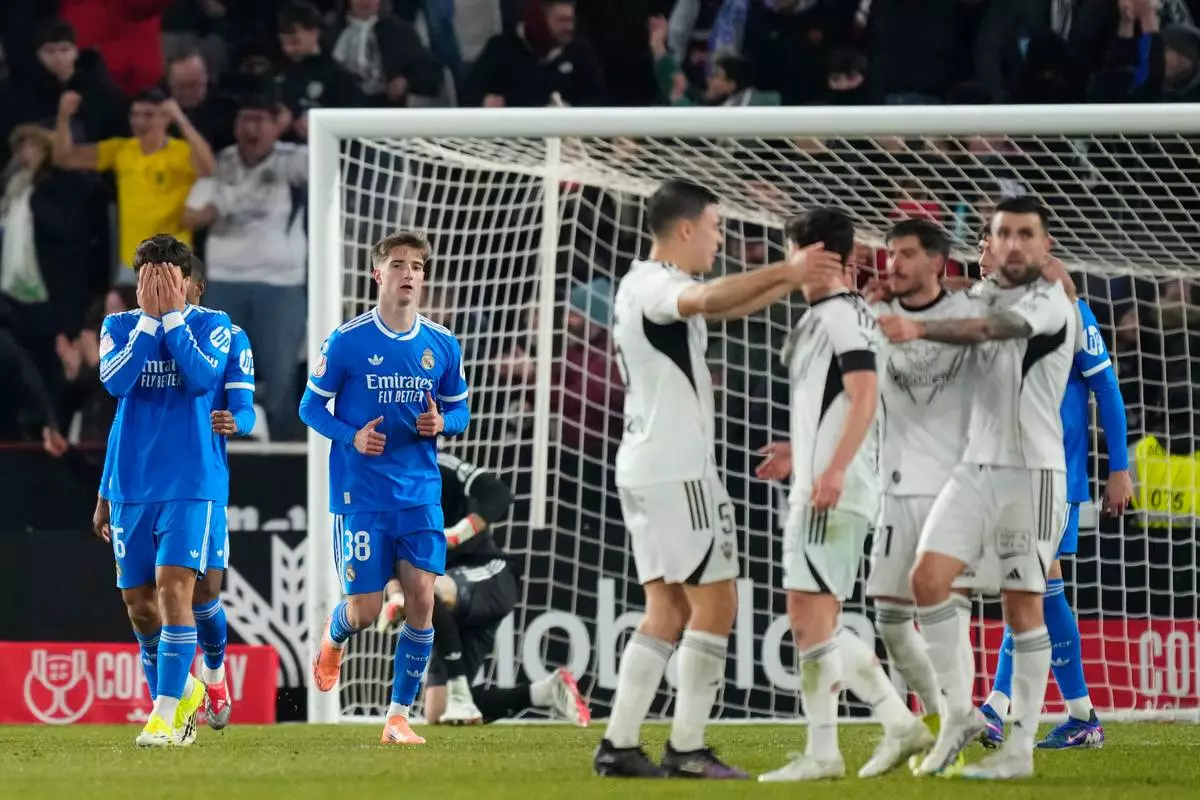
Real Madrid players react after Albacete scored its second goal during the Copa del Rey round of 16 soccer match between Albacete and Real Madrid, in Albacete, Spain, Wednesday, Jan. 14, 2026. (AP Photo/Jose Breton)
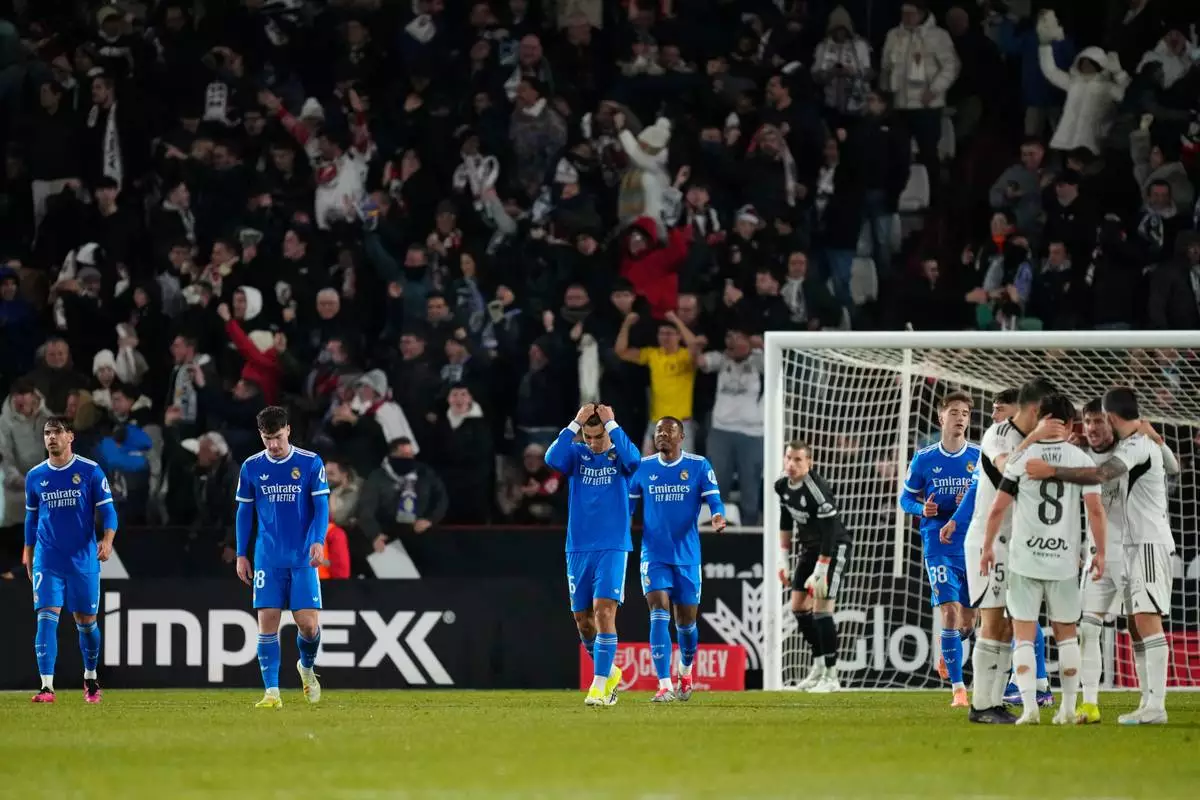
Real Madrid players react after Albacete scored its second goal during the Copa del Rey round of 16 soccer match between Albacete and Real Madrid, in Albacete, Spain, Wednesday, Jan. 14, 2026. (AP Photo/Jose Breton)
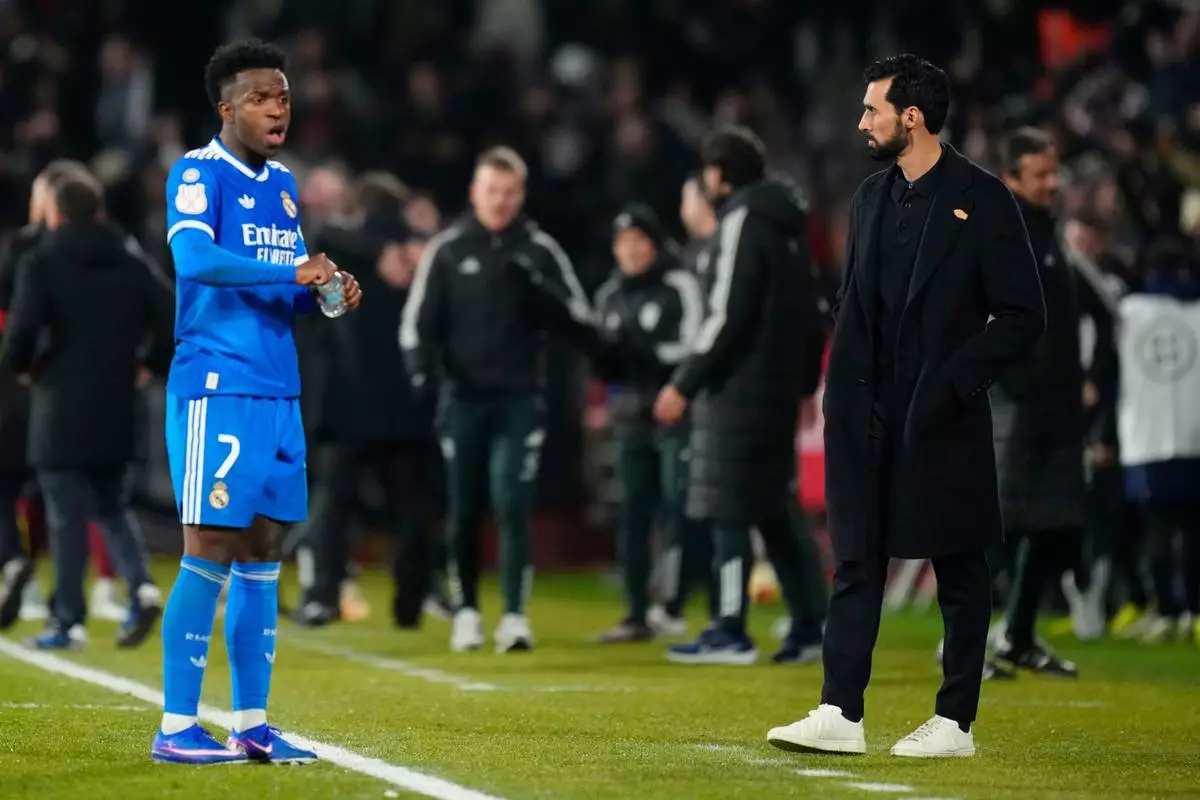
Real Madrid's Vinicius Junior, left, and Real Madrid's head coach Alvaro Arbeloa during the Copa del Rey round of 16 soccer match between Albacete and Real Madrid, in Albacete, Spain, Wednesday, Jan. 14, 2026. (AP Photo/Jose Breton)