Gay-rights activists are cautiously raising their profile in Haiti — even as their community faces pervasive hostility.
Two proposed anti-LGBT laws are pending in Parliament. The major churches are firm in their condemnation of homosexuality. Police remain unsympathetic to victims of anti-gay violence.
Click to Gallery

Yaisah Val, 46, right, a transgender woman walks with her husband Richecarde Val, 28, in a street market in Port-au-Prince, Haiti, on July 12, 2018. Richecarde experienced religious disapproval firsthand. When he told his father, a Protestant pastor, that he planned to marry a transgender woman, his father replied, "You know that's the devil." (AP PhotoDieu Nalio Chery)
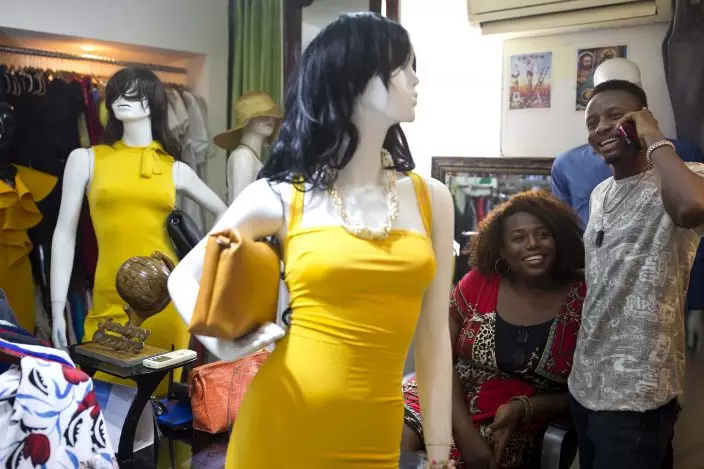
Yaisah Val, 46, left, a transgender woman, sits next to her husband, Richecarde Val, 28, in the clothing store they own with a friend in Port-au-Prince, Haiti, on July 13, 2018. Her situation is indicative of the struggle for LGBT rights in Caribbean nations like Haiti, where incremental progress toward acceptance is seen as a major step in the face of deep-rooted cultural opposition to gays. (AP PhotoDieu Nalio Chery)
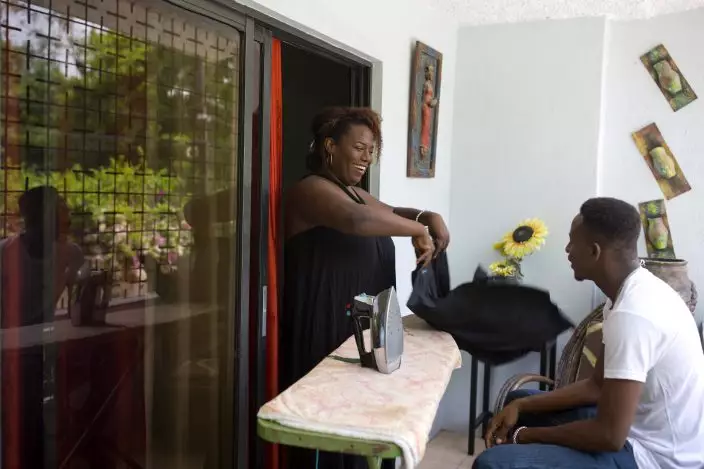
Yaisah Val, 46, left, a transgender woman, talks with her husband, Richecarde Val, 28, as she irons his shirt at their home in Port-au-Prince, Haiti, on July 12, 2018. Val started her gender transition at age 29 in Haiti and completed it five years later with sex-reassignment surgery in Philadelphia. (AP PhotoDieu Nalio Chery)

Yaisah Val, 46, a transgender woman, talks with her husband, Richecarde, 28, at their home in Port-au-Prince, Haiti, on July 12, 2018. She and her husband are seeking to raise funds to open a first-of-its-kind shelter for transgender Haitians that would help them pursue an education and get appropriate health care. (AP PhotoDieu Nalio Chery)
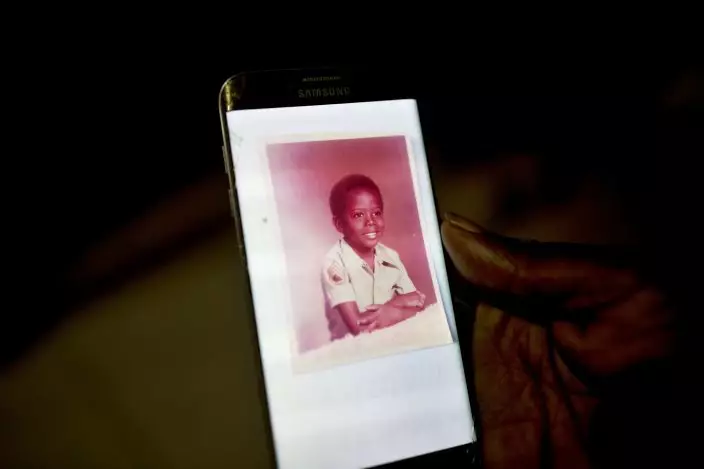
Yaisah Val, 46, a transgender woman, holds her cellphone displaying a picture when she was a five-year-old boy, at her home in Port-au-Prince, Haiti, on July 14, 2018. Val started her gender transition at age 29 in Haiti and completed it five years later with sex-reassignment surgery in Philadelphia. (AP PhotoDieu Nalio Chery)
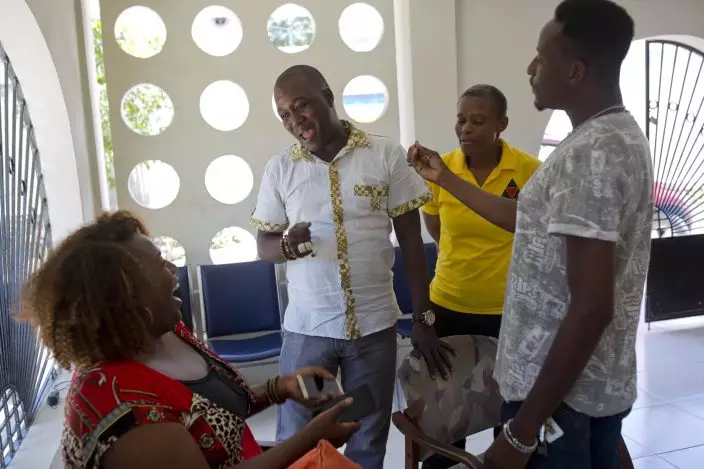
Yaisah Val, 46, left, a transgender woman, laughs with Charlot Jeudy, center, president of Kouraj, Haiti's leading LGBT-rights group, at their office in Port-au-Prince, Haiti, on July 13, 2018. At right is her husband, Richecarde Val, 28. Jeudy founded the group in 2011, seeking to counter anti-gay sentiment that intensified after the previous year's devastating earthquake. "More and more young people, bringing their skills, are getting engaged in our fight," he says. (AP PhotoDieu Nalio Chery)
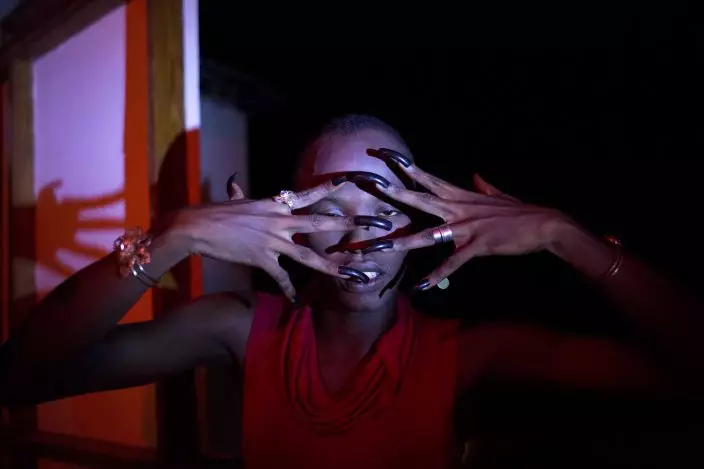
In this Nov. 14, 2015 photo, "Rihana" poses for a picture before the start of a gay beauty contest in Grand Goave, Haiti. Among the 1,089 respondents in a 2017 survey commissioned by Haiti's Health Ministry, 90 percent rejected the idea of equal rights for LGBT people and 75 percent said Haiti should ban gays and lesbians from entering the country. (AP PhotoDieu Nalio Chery)
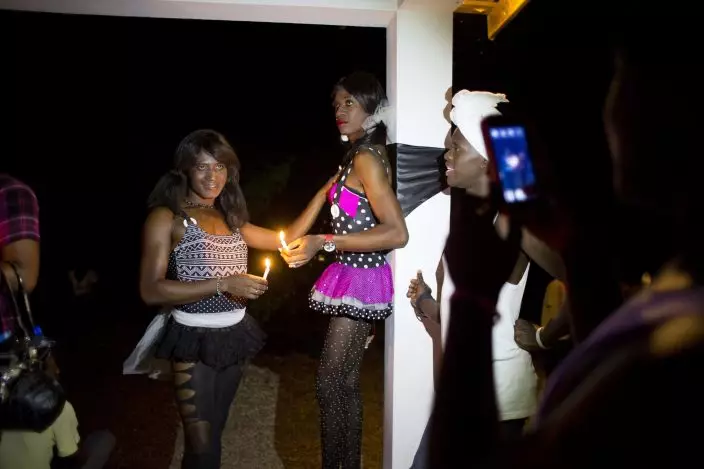
In this Nov. 14, 2015 photo, before the start of a gay beauty contest, people hold candles in memory of fellow LGBT community members who were victims of violence, in Grand Goave, Haiti. In 2017, Haiti's Senate passed two bills targeting LGBT Haitians. One would formalize a ban on same-sex marriage, and prohibit public demonstrations in favor of LGBT rights. The other would include gays among categories of people who could be denied a "certificate of good standing" _ a document required as part of many job applications. (AP PhotoDieu Nalio Chery)
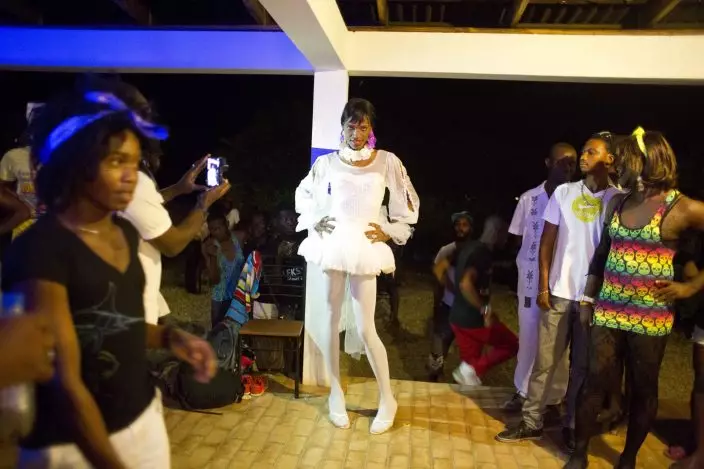
In this Nov. 15, 2015 photo, "Francesca" competes in a gay beauty contest in Grand Goave, Haiti. Among the 1,089 respondents in a 2017 survey commissioned by Haiti's Health Ministry, 90 percent rejected the idea of equal rights for LGBT people and 75 percent said Haiti should ban gays and lesbians from entering the country. (AP PhotoDieu Nalio Chery)

In this Nov. 23, 2015 photo, Jean Richardson Joubert 32, foreground, poses for a photo with his partner, Stanley Desire 28, inside his bedroom in Port-au-Prince, Haiti. In 2017, Haiti's Senate passed two bills targeting LGBT Haitians. One would formalize a ban on same-sex marriage, and prohibit public demonstrations in favor of LGBT rights. The other would include gays among categories of people who could be denied a "certificate of good standing" _ a document required as part of many job applications. (AP PhotoDieu Nalio Chery)

Yaisah Val, 46, a transgender woman, watches a movie with her husband, Richecarde Val, 28, in their home in Port-au-Prince, Haiti, on July 14, 2018. Val recently came out publicly as a transgender woman on YouTube, a potentially risky move in a country like Haiti where LGBT residents face pervasive hostility in most spheres of public life. (AP PhotoDieu Nalio Chery)
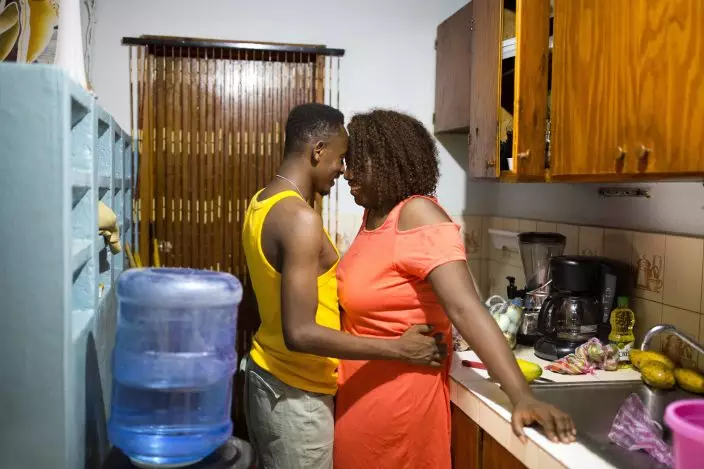
Richecarde Val, 28, embraces his wife, Yaisah Val, 46, a transgender woman, in their home in Port-au-Prince, Haiti, on July 14, 2018. Val says she's developed a supportive fan base _ many of them straight people and mothers who gratefully view her as a role model for their transgender daughters. (AP PhotoDieu Nalio Chery)
At the same time, activists say there has been incremental progress. Their organizations have become more ambitious in lobbying for greater equality and against discrimination. And they have been welcomed into some broader civil-society initiatives, including events supported by Haiti's first lady.
Yaisah Val, 46, right, a transgender woman walks with her husband Richecarde Val, 28, in a street market in Port-au-Prince, Haiti, on July 12, 2018. Richecarde experienced religious disapproval firsthand. When he told his father, a Protestant pastor, that he planned to marry a transgender woman, his father replied, "You know that's the devil." (AP PhotoDieu Nalio Chery)
Yaisah Val, 46, left, a transgender woman, sits next to her husband, Richecarde Val, 28, in the clothing store they own with a friend in Port-au-Prince, Haiti, on July 13, 2018. Her situation is indicative of the struggle for LGBT rights in Caribbean nations like Haiti, where incremental progress toward acceptance is seen as a major step in the face of deep-rooted cultural opposition to gays. (AP PhotoDieu Nalio Chery)
Yaisah Val, 46, left, a transgender woman, talks with her husband, Richecarde Val, 28, as she irons his shirt at their home in Port-au-Prince, Haiti, on July 12, 2018. Val started her gender transition at age 29 in Haiti and completed it five years later with sex-reassignment surgery in Philadelphia. (AP PhotoDieu Nalio Chery)
Yaisah Val, 46, a transgender woman, talks with her husband, Richecarde, 28, at their home in Port-au-Prince, Haiti, on July 12, 2018. She and her husband are seeking to raise funds to open a first-of-its-kind shelter for transgender Haitians that would help them pursue an education and get appropriate health care. (AP PhotoDieu Nalio Chery)
Yaisah Val, 46, a transgender woman, holds her cellphone displaying a picture when she was a five-year-old boy, at her home in Port-au-Prince, Haiti, on July 14, 2018. Val started her gender transition at age 29 in Haiti and completed it five years later with sex-reassignment surgery in Philadelphia. (AP PhotoDieu Nalio Chery)
Yaisah Val, 46, left, a transgender woman, laughs with Charlot Jeudy, center, president of Kouraj, Haiti's leading LGBT-rights group, at their office in Port-au-Prince, Haiti, on July 13, 2018. At right is her husband, Richecarde Val, 28. Jeudy founded the group in 2011, seeking to counter anti-gay sentiment that intensified after the previous year's devastating earthquake. "More and more young people, bringing their skills, are getting engaged in our fight," he says. (AP PhotoDieu Nalio Chery)
In this Nov. 14, 2015 photo, "Rihana" poses for a picture before the start of a gay beauty contest in Grand Goave, Haiti. Among the 1,089 respondents in a 2017 survey commissioned by Haiti's Health Ministry, 90 percent rejected the idea of equal rights for LGBT people and 75 percent said Haiti should ban gays and lesbians from entering the country. (AP PhotoDieu Nalio Chery)
In this Nov. 14, 2015 photo, before the start of a gay beauty contest, people hold candles in memory of fellow LGBT community members who were victims of violence, in Grand Goave, Haiti. In 2017, Haiti's Senate passed two bills targeting LGBT Haitians. One would formalize a ban on same-sex marriage, and prohibit public demonstrations in favor of LGBT rights. The other would include gays among categories of people who could be denied a "certificate of good standing" _ a document required as part of many job applications. (AP PhotoDieu Nalio Chery)
In this Nov. 15, 2015 photo, "Francesca" competes in a gay beauty contest in Grand Goave, Haiti. Among the 1,089 respondents in a 2017 survey commissioned by Haiti's Health Ministry, 90 percent rejected the idea of equal rights for LGBT people and 75 percent said Haiti should ban gays and lesbians from entering the country. (AP PhotoDieu Nalio Chery)
In this Nov. 23, 2015 photo, Jean Richardson Joubert 32, foreground, poses for a photo with his partner, Stanley Desire 28, inside his bedroom in Port-au-Prince, Haiti. In 2017, Haiti's Senate passed two bills targeting LGBT Haitians. One would formalize a ban on same-sex marriage, and prohibit public demonstrations in favor of LGBT rights. The other would include gays among categories of people who could be denied a "certificate of good standing" _ a document required as part of many job applications. (AP PhotoDieu Nalio Chery)
Yaisah Val, 46, a transgender woman, watches a movie with her husband, Richecarde Val, 28, in their home in Port-au-Prince, Haiti, on July 14, 2018. Val recently came out publicly as a transgender woman on YouTube, a potentially risky move in a country like Haiti where LGBT residents face pervasive hostility in most spheres of public life. (AP PhotoDieu Nalio Chery)
Richecarde Val, 28, embraces his wife, Yaisah Val, 46, a transgender woman, in their home in Port-au-Prince, Haiti, on July 14, 2018. Val says she's developed a supportive fan base _ many of them straight people and mothers who gratefully view her as a role model for their transgender daughters. (AP PhotoDieu Nalio Chery)