The deaths of two young Saudi sisters, whose bodies washed up along the New York City waterfront last month, have shined a light on the often secretive and risky journeys Saudi women take to flee their homes, both within the kingdom and abroad.
Tala Farea, 16, and Rotana Farea, 23, ran away from home in Fairfax, Virginia before being placed in a shelter amid allegations they were abused at home. They then made their way to New York City, staying in high-end hotels and eventually maxing out the older sister's credit card.
What happened next is still under investigation. Their bodies, fully clothed and showing no obvious signs of trauma, were found Oct. 24 along the rocky banks of the Hudson River wrapped together with tape.
New York City Police Chief of Detectives Dermot Shea said people who knew the Farea sisters in Virginia told investigators that they made statements within the last year indicating "that they would rather inflict harm on themselves — commit suicide — than return to Saudi Arabia."
That may be because in Saudi Arabia, women who try and flee have few good options. Under the kingdom's guardianship system women must have the approval of a male relative — such as a father, husband, brother, or even a son — to marry, obtain a passport or travel.
"The fact that they continue to be subjected to the guardianship system ... to the more sort of sinister issues which include physical or sexual abuse that they face at home, we've seen women in all these cases attempt to flee," said Human Rights Watch researcher Adam Coogle.
Coogle said there are also women being pressured into marriages against their will. He did not specifically discuss the Farea sisters as their case is still under investigation.
In other instances, women are being barred by their guardians from marrying or their salaries are being confiscated.
If women who run away are caught, they can be pressured to return home or placed in shelters where often the only way out is to escape again. Others are jailed and only a male guardian can sign for their release.
Last year, Saudi women's rights activist Mariam al-Otaibi spent more than 100 days in the women's section of al-Malaz prison in Riyadh after her father filed a complaint to police against her for leaving home. She'd moved from the ultraconservative province of Qassim to the capital, where supporters helped her rent an apartment and find work.
She was released after her case attracted the attention of activists and rights groups.
Also last year, a plea for help by a 24-year-old Saudi woman triggered a firestorm on social media with people seeking details about her disappearance. In an online video, Dina Ali Lasloom said her passport was confiscated at an airport in the Philippines on her way to Australia where she planned to seek asylum.
Women's rights advocates in Saudi Arabia said Lasloom was ultimately forced to board a plane to the kingdom with two of her uncles, who flew from Riyadh to stop her. They said authorities then took her to a women's shelter because of the attention around her case. A Saudi woman who tried to meet Lasloom at the airport in Riyadh to assist her was detained for several days by authorities.
A group of Saudi women's rights activists had raised money locally for runaways and were planning to start a non-governmental organization to shelter abused women. But in May, authorities arrested at least nine of them and three of their male supporters. They remain detained on vague charges related to national security.
For runaway Saudi women, fleeing can be a matter of life and death, and they are almost always doing so to escape male relatives.
It's a problem Saudi society is grappling with. State-aligned newspapers report when women flee shelters and articles question the level of care and support women receive at such facilities.
The shelters have been described by Saudi activists as prison-like. Women inside cannot freely access the internet or mobile phones, their movements are restricted and often the only way to leave is with the signature of a male guardian. The shelters say they offer women psychiatric care and therapy, but do not take in women who, for example, are pregnant out of wedlock. Premarital sex can lead to criminal prosecution in Saudi Arabia and other Muslim countries.
The most recent statistics from the Ministry of Labor and Social Development show that 577 Saudi women tried to flee their homes in 2015. That figure is likely to be much higher in reality because many families don't report runaways due to social stigma.
The Farea sisters had moved to the U.S. from Saudi Arabia with their mother and two brothers in 2015. The father spent time between the two countries, according to Arab News, which spoke to a relative.
Investigators say they believe the Farea sisters had filed for asylum. One of the problems women face in seeking asylum, though, is proving abuse.
"You have to have evidence for it and unless you have a threatening text (message), you may not have a very good asylum case," said Coogle of Human Rights Watch.
After the Farea sisters died, witness called police with something he said had been "haunting" him. He'd seen the sisters standing apart at Riverside Park in New York, with their heads bowed into their hands praying loudly hours before their bodies were found. Investigators have stopped short of saying the sisters killed themselves, but say they have "no credible information that any crime took place."
The sisters' bodies were returned to Saudi Arabia on Nov. 3 and they were buried the same day in Medina — home to one of Islam's holiest sites where the Prophet Muhammad is buried.
"This is a tragedy all the way around," said Shea, the chief of detectives in New York.
Follow Aya Batrawy on Twitter at https://twitter.com/ayaelb .
The Trump administration denounced CNN on Thursday for airing a portion of the new Iranian supreme leader's public statement, the second time in three days that he's targeted the network for reporting on how the regime is responding to the American attacks.
The attack illustrated the care news outlets must take in reporting during wartime, and the responsibilities of American journalists to report the perspective of countries its government views as enemies. It also exposed inconsistencies. The message of Supreme Leader Ayatollah Mojtaba Khamenei during his first public statement since he succeeded his father, who was killed in an Israeli air strike, was widely available elsewhere.
The White House said on social media that “fake news CNN just aired four straight minutes of uninterrupted Iranian state TV, run by the same psychotic and murderous regime that prided itself on brutally slaughtering Americans for 47 years.”
Two days earlier, White House communications director Steven Cheung took issue with CNN anchor Erin Burnett's interview with Seyed Hossein Mousavian, a former Iranian nuclear negotiator. Burnett asked Mousavian what he had been hearing about the Iranian government's interest in having talks with the United States. There wasn't much, he said.
“Ever notice how CNN just regurgitates quotes and unverified information from Iranian terrorists?” Cheung wrote on X. “Total disgrace. They have become the murderous Iranian Regime's version of Pravda,” he said, referring to the official newspaper of the former Soviet Union.
CNN did not address Cheung's statement but did respond to the White House attack on Thursday. It noted that CNN, Sky News and Al Jazeera also showed portions of the ayatollah's statement live.
“The world is watching with anticipation which direction this war will take,” CNN said. “Purported remarks from Iran's new supreme leader are a critical component in helping audiences understand where this conflict is heading and were aired for their obvious news value.”
Other news outlets, including The Associated Press, sent out alerts on what Khamenei said. His vow to keep up attacks on other Arab countries in the region and plans to choke off the world's oil supply were headlines. The New York Times led its website with a story on the speech in its immediate aftermath, later writing that the speech “was an early indication of how the new supreme leader would approach the war, as well as how he would lead the country.”
CNN has long been a favored target of President Donald Trump, dating back to his first term. It's a particularly vulnerable time for the network with Paramount Global's agreement to purchase CNN's parent company, Warner Bros. Discovery, raising questions about its future editorial independence.
CNN showed a news anchor reading a portion of Khameini's remarks in Farsi, with an English translation. It did not air them in full. After the speech, correspondent Nick Paton Walsh gave a debrief to anchor Kate Bolduan, noting how the non-appearance of the leader — reportedly injured in an air attack — was as important as what he said.
“We were waiting to see the face of the man to have proof of his health and survival,” Walsh said, “and they've not met that moment. Instead, a handwritten message, it seems, that mostly reiterates things we kind of already knew.”
The Tech Transparency Project has reported that several Iranian leaders and institutions maintain verified accounts on X, formerly Twitter, owned by Trump ally Elon Musk. CNBC said Thursday that Khamenei has one of them, and an X account with his portrait posted the text of his remarks, available in Farsi and in an English translation.
Even though Khamenei's father is dead, an account with his portrait was active on Thursday, mainly reposting messages from his son. “The revenge we have in mind is not just because of the martyrdom of the illustrious Leader of the Revolution,” read one message posted Thursday. “Every member of the nation martyred by the enemy is a separate case that demands we seek revenge.”
X is officially blocked in Iran, though many use a virtual private network to bypass restrictions. A message sent to the platform on Thursday was not immediately returned.
There's a long history of journalists seeking interviews with world leaders, even when they are regarded as enemies of the United States. Most notable was “60 Minutes” correspondent Mike Wallace's interview with Iran's Ayatollah Ruhollah Khomeini in 1979, when that country was holding Americans hostage.
Thursday's remarks by Iran's new supreme leader were absolutely newsworthy and legitimate for CNN to air them, said Jane Ferguson, a veteran international correspondent and founder of the journalism platform Noosphere. It's not the job of government leaders to pick apart what CNN is reporting, she said.
“We've always faced this,” she said, about when reporters interview leaders or other figures hostile to American interests. “This has been a bit of low-hanging fruit for awhile.”
Historian Douglas Brinkley of Rice University said that it's unfair for CNN to be singled out in this instance. He, too, believes it is newsworthy to learn what leaders of an adversary are thinking, but it's important to make sure that journalists are careful.
“You have to be leery of being used as a propaganda tool by the Iranian regime,” he said. “On the other hand, knowing what the enemy is saying and looking for a sign of a peace offering or a nuance is important ... It's a difficult balance.”
AP correspondent Barbara Ortutay in San Francisco contributed to this report. David Bauder writes about the intersection of media and entertainment for the AP. Follow him at http://x.com/dbauder and https://bsky.app/profile/dbauder.bsky.social.
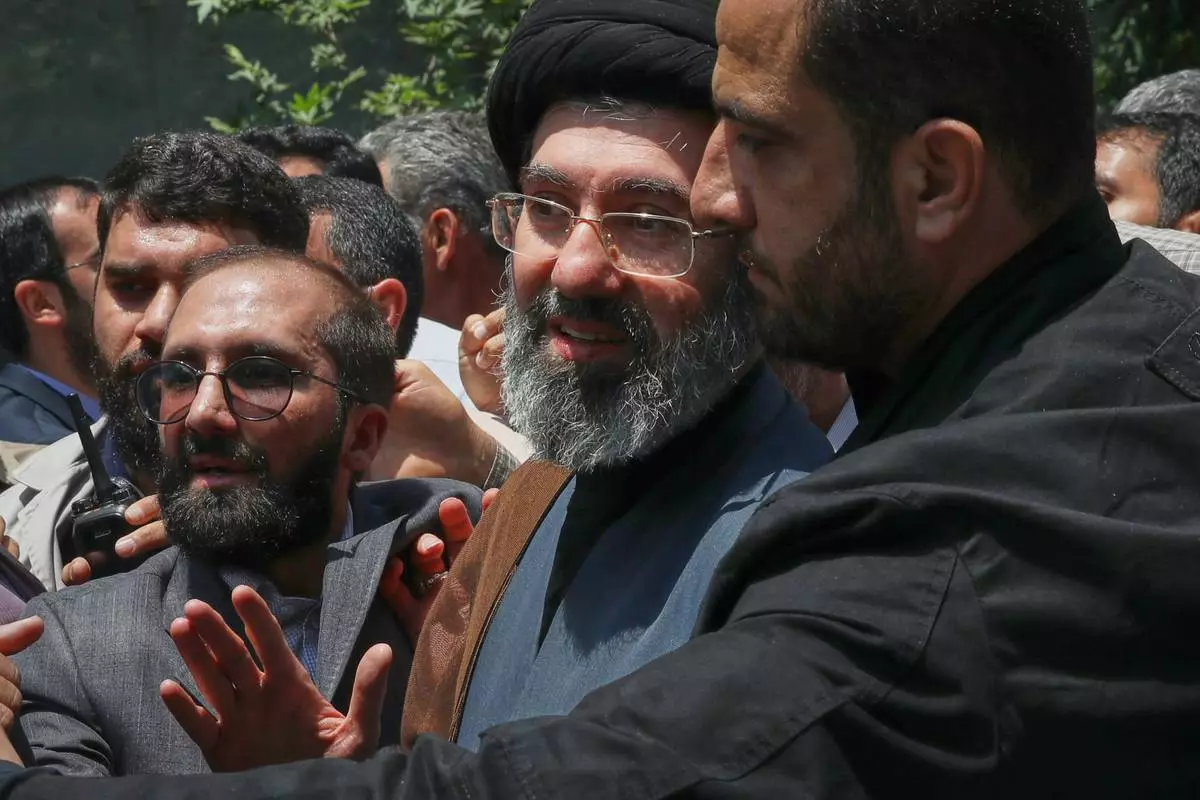
Mojtaba Khamenei, the son of Iran's Supreme Leader, Ayatollah Ali Khamenei, center, attends the annual Quds, or Jerusalem Day, rally in Tehran, Iran, May 31, 2019. (AP Photo/Vahid Salemi)
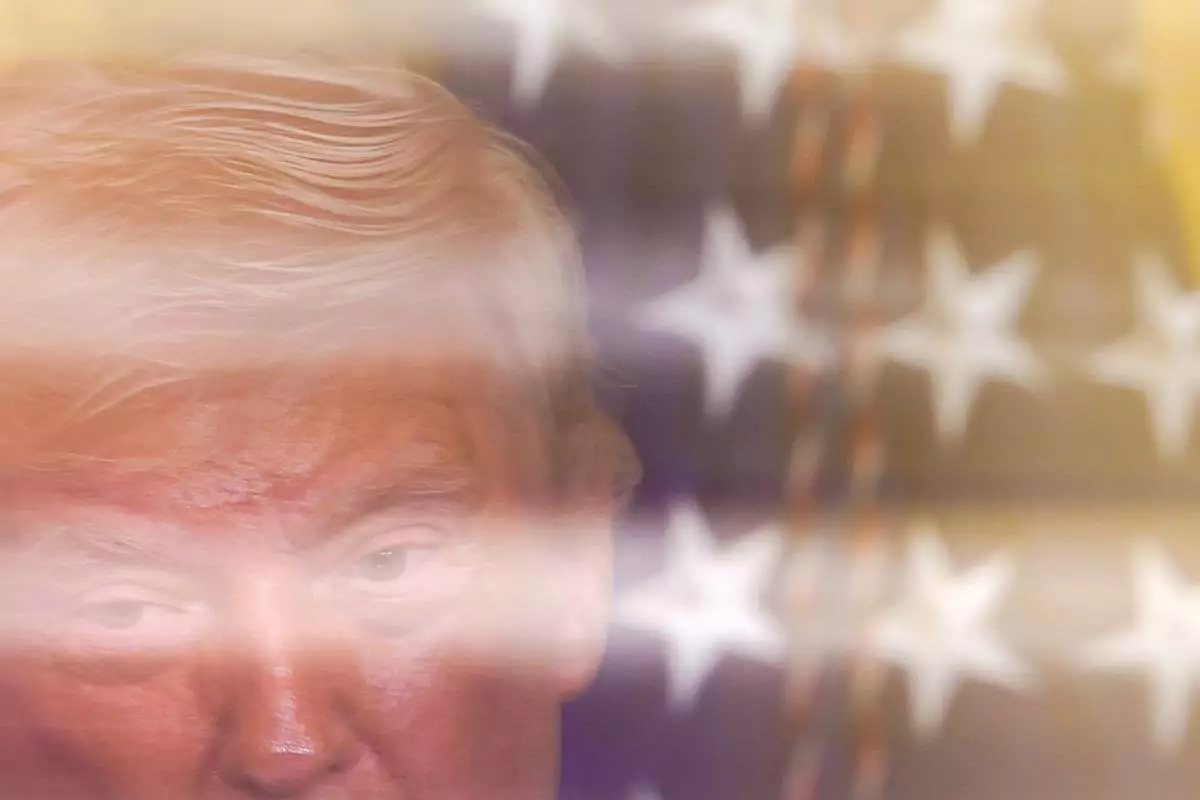
In this image taken with a slow shutter speed, President Donald Trump speaks during a women's history month event in the East Room of the White House, Thursday, March 12, 2026, in Washington. (AP Photo/Julia Demaree Nikhinson)