

President Donald Trump can't seem to get his facts straight when it comes to the Russia investigation.
Facing pressure as his former advisers are caught lying by special counsel Robert Mueller, Trump is launching fresh attacks on the probe as politically biased and Mueller as hopelessly "conflicted." This runs counter to ethics experts in Trump's Justice Department who concluded that Mueller — a Republican — could fairly lead the probe into possible coordination between the Trump campaign and Russia during the 2016 election.
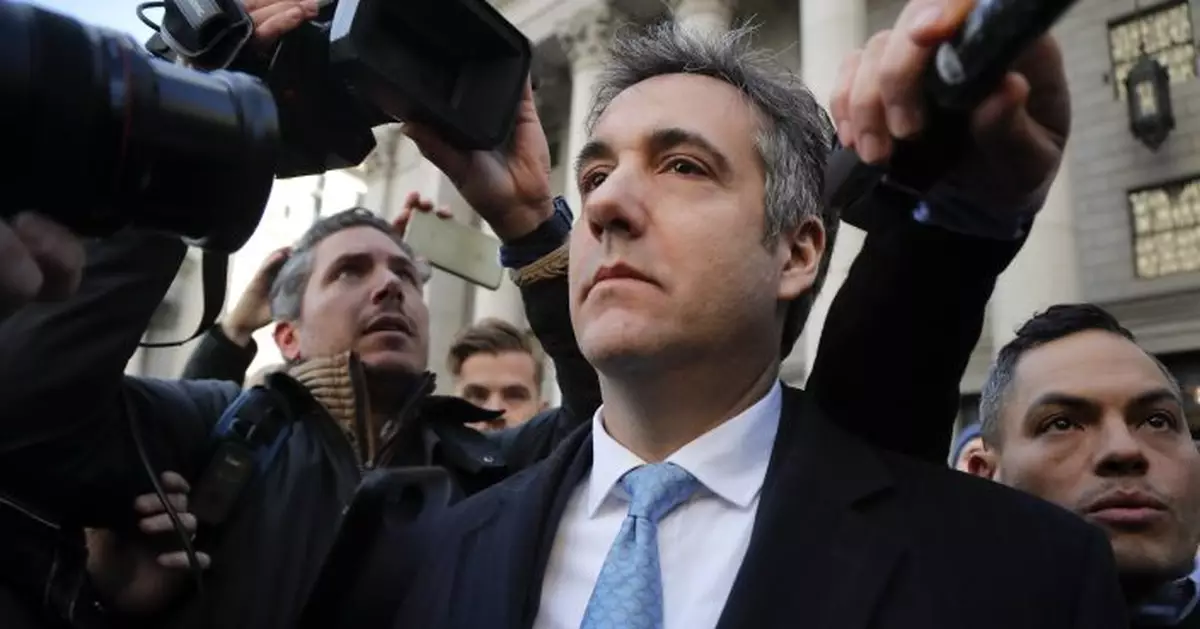
Trump also suggests that the crimes of his longtime lawyer, Michael Cohen, have "nothing" to do with him. That's also wrong. Cohen was the first to implicate the president in open court of a crime. Last week, Cohen also pleaded guilty to lying to Congress about his efforts during the 2016 campaign to line up a Trump Tower Moscow project, saying he did so to align with Trump's "political messaging."
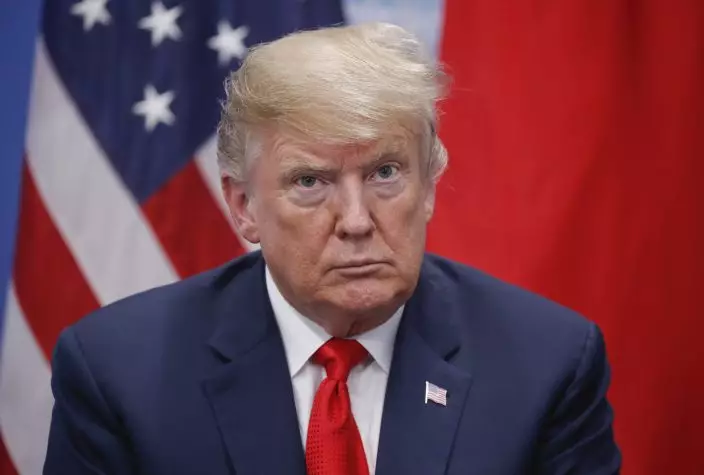
President Donald Trump listens to Japan's Prime Minister Shinzo Abe speak during their meeting, Friday, Nov. 30, 2018 in Buenos Aires, Argentina. (AP PhotoPablo Martinez Monsivais)
Meanwhile, Trump displayed a slippery grasp of the environment as well as trade policy. He also spread around to his millions of Twitter followers a wildly false claim that people in the country illegally get more aid from the federal government than Americans get in Social Security benefits.
A look at his statements and the reality:
RUSSIA INVESTIGATION
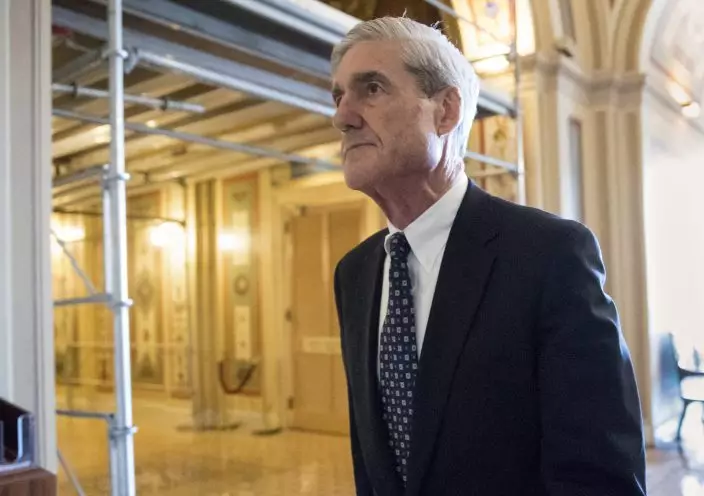
FILE - In this June 21, 2017, file photo, special counsel Robert Mueller departs after a meeting on Capitol Hill in Washington. Mueller is back. After a quiet few months in the run-up to the midterm elections, the special counsel’s Russia investigation is heating up again with a string of tantalizing new details emerging this week.(AP PhotoJ. Scott Applewhite, File)
TRUMP, on Cohen: "He was convicted with a fairly long-term sentence on things totally unrelated to the Trump Organization — having to do with mortgages, and having to do with cheating the IRS perhaps. A lot of different things. I don't know exactly, but he was convicted of various things unrelated to us. ...So, very simply, Michael Cohen is lying and he's trying to get a reduced sentence for things that have nothing to do with me." — remarks to reporters Thursday.
THE FACTS: Cohen definitely was in trouble for what he did for Trump. He pleaded guilty in August to several criminal charges and stated in open court that Trump directed him to arrange payments of hush money to porn actress Stormy Daniels and former Playboy model Karen McDougal to fend off damage to Trump's White House bid.
Cohen said one payment was made "in coordination and at the direction of a candidate for federal office," and the other was made "under direction of the same candidate."
The Justice Department says the hush money payments were unreported campaign contributions meant to influence the outcome of the election. That assertion makes the payments subject to campaign finance laws, which restrict how much people can donate to a campaign and bar corporations from making direct contributions.
It is true that Cohen did not identify Trump, but there was no ambiguity in court documents or in his statement.
Cohen's extraordinary statement at his August plea hearing marked the first time any Trump associate, in open court, has implicated the president himself in a crime.
Cohen's guilty plea last week, meanwhile, featured Trump and conversations he and his family had with Cohen about a possible Russian business deal during the 2016 campaign at a level greater than previously known.
Trump is, however, correct that other previous charges which Cohen admitted to didn't involve the candidate or the campaign and were for tax deception.
TRUMP: "The Phony Witch Hunt continues, but Mueller and his gang of Angry Dems are only looking at one side, not the other. ...Mueller is a conflicted prosecutor gone rogue." — tweet Tuesday.
THE FACTS: Trump makes a baseless charge that Mueller is a "conflicted" prosecutor whose team is a bunch of "angry" Democrats.
Mueller, a longtime Republican, was cleared by the Justice Department to lead the Russia investigation. The department said in May 2017 that its ethics experts "determined that Mr. Mueller's participation in the matters assigned to him is appropriate." The issue had come up because of his former position at the WilmerHale law firm, which represented some key players in the probe.
Some on Mueller's team owe their jobs largely to Republican presidents, while some others have indeed given money to Democratic candidates over the years. But Mueller could not have barred them from serving on that basis because regulations prohibit the consideration of political affiliation for personnel actions involving career attorneys. Mueller was appointed as special counsel by Deputy Attorney General Rod Rosenstein, a Trump appointee.
THE FIRST BUSH PRESIDENT
TRUMP, on the passing of former President George H.W. Bush: "As a young man, he captained the Yale baseball team, and then went on to serve as the youngest aviator in the United States Navy during the Second World War." — statement Saturday.
THE FACTS: Trump mixes up Bush's timeline, in which he put off college to enlist in the Navy after the U.S. entered World War II. Bush joined the Navy in 1942 upon graduating from Phillips Academy in Andover, Massachusetts, at age 18, six months after the December 1941 bombing of Pearl Harbor. He was the youngest pilot in the Navy at the time.
Bush received an honorable discharge in 1945 and enrolled at Yale, where he was captain of the baseball team. "A lot of us on the team were veterans and we had come back from the war, so maybe that made it a little less apprehensive," Bush told The Associated Press in 2007. "On the other hand, it didn't deduct from our enthusiasm and our desire to win, which we did not do."
TRADE
TRUMP: "Billions of Dollars are pouring into the coffers of the U.S.A. because of the Tariffs being charged to China, and there is a long way to go. If companies don't want to pay Tariffs, build in the U.S.A. Otherwise, lets (sic) just make our Country richer than ever before." — tweet Thursday.
THE FACTS: That's not how it works. Yes, money from tariffs is going into the federal treasury, but it's coming from U.S. businesses, not from overseas. Tariffs are paid by the importer, not the exporter or government in another country.
Beyond that, tariffs paid by U.S. companies tend to result in higher prices for consumers. So a tariff is a transfer of wealth from business to government, and sometimes from consumers to government as well. It is not a foreign payment to the U.S.
TRUMP, on the U.S.-Mexico-Canada Trade Agreement: "The USMCA is the largest, most significant, modern and balanced trade agreement in history. All of our countries will benefit greatly. It is probably the largest trade deal ever made, also." — signing ceremony Friday.
THE FACTS: It's not the largest trade deal ever made. It covers the same three countries as its predecessor, NAFTA. In contrast, the Uruguay Round of trade negotiations concluded in 1994 created the World Trade Organization and was signed by 123 countries. The Federal Reserve Bank of Boston found the following year that the WTO's initial membership accounted for more than 90 percent of global economic output.
TRUMP, on the pact with Canada and Mexico: "This is a model agreement that changes the trade landscape forever." He also referred to the pact as a "landmark agreement." — ceremony Friday.
THE FACTS: Actually, the pact preserves the structure and substance of NAFTA, which was unquestionably a landmark, whether for better or worse.
In one new feature, the deal requires that 40 percent of cars' contents eventually be made in countries that pay autoworkers at least $16 an hour — that is, in the United States and Canada and not in Mexico — to qualify for duty-free treatment. It also requires Mexico to pursue an overhaul of labor law to encourage independent unions that will bargain for higher wages and better working conditions for Mexicans.
But the agreement is largely an incremental revision of NAFTA. Philip Levy, senior fellow at the Chicago Council on Global Affairs and a trade official in Republican President George W. Bush's White House, says: "President Trump has seriously overhyped this agreement."
MANUFACTURING
TRUMP: "Remember the previous administration said, oh, manufacturing jobs, that will never happen. I kept saying, what's he talking about? Manufacturing, we got to make things, right? They said manufacturing jobs would never come back. You'd need a magic wand. Well, we found the magic wand. And they're great jobs. They're high-paying jobs. They're brilliant jobs. They're important jobs." — Biloxi, Mississippi, rally on Nov. 26.
THE FACTS: No magic wand has swept across manufacturing.
Yes, manufacturing jobs have been added under Trump, but the sector is nowhere close to its old glory.
As of October, the Bureau of Labor Statistics shows that 8.53 percent of the 149.8 million U.S. jobs were in manufacturing. Back in October 2008, 9.65 percent of U.S. jobs were in manufacturing. Even if factories keep hiring workers, factories are unlikely to return to the prominence of Trump's childhood because so many other segments of the U.S. economy — such as health care — have grown.
In 1946, the year Trump was born, nearly a third of U.S. workers had manufacturing jobs.
Growth in manufacturing employment began in President Barack Obama's second term, when 386,000 jobs were added, and accelerated under Trump, with 416,000 more jobs in his first 21 months.
TRUMP: "Our steel industry a year ago was dead, and now it's one of the most vibrant anywhere in the world, because we stopped the steel dumping and we put a big tax on. When they steel dump, they can dump all they want, but they pay 25 percent on everything they dump, and our steel now is doing great. Our industry has come back." — Mississippi rally.
TRUMP: "Big Steel is opening and renovating plants all over the country." — tweet Thursday.
THE FACTS: He's exaggerating the recovery of the steel industry.
As of October, there were 381,700 jobs in the manufacturing of primary metals such as steel. That figure seesaws based off commodity prices and global economic performance. But it's clearly trended downward since 2000 when the sector had 621,800 jobs.
It's difficult to know just how many jobs will be added by newly planned mills. But construction spending on factories has yet to take off significantly after having been in decline between 2016 and much of 2018. Still, the spending has rebounded in recent months. Construction spending on factories has increased 4.3 percent in the past year, according to the Census Bureau.
A year ago, the steel industry employed 141,200 people, says the Labor Department. Now, 145,100. That's a gain of 3,900 jobs during a period when the overall economy added 2.5 million jobs.
Steel wasn't at death's door a year ago and it isn't "back" in any historic sense.
AUTOS
TRUMP: "General Motors is very counter to what other auto, and other companies are doing. Big Steel is opening and renovating plants all over the country. Auto companies are pouring into the U.S., including BMW, which just announced a major new plant. The U.S.A. is booming!" — tweet Thursday.
THE FACTS: This auto industry boom doesn't exist.
Automakers have been steadily hiring since 2010 when Obama was president. But the pace of job gains has slowed considerably since Trump took office, according to the Labor Department. That's probably a reflection of slowing sales rather than any policy changes by Trump.
U.S. auto sales are down 0.2 percent through October largely because of a 13 percent plunge in car sales. Truck and SUV sales are up 8 percent. All the factories GM wants to close make slow-selling cars.
The Labor Department found that automakers added 30,600 jobs during Obama's last year in office. That fell to 8,200 in 2017 after Trump became president. Automakers were on pace before the GM layoffs to add 8,660 jobs this year.
Despite the job growth in recent years, auto companies employ far fewer workers than they did in 2000. More than 1.3 million people held auto jobs in 2000, a total that now stands at roughly 970,000.
General Motors Co. is not alone in cutting workers. Crosstown rival Ford Motor Co. is just starting to restructure its white-collar workforce, and thousands are expected to be let go by the middle of next year.
Also, BMW didn't announce a major new plant. Its CEO said Tuesday the company is considering a new U.S. engine factory to supply assembly plants in South Carolina and Mexico. The German automaker now imports engines and transmissions from Europe for SUVs made in the U.S., and it's building a new factory in Mexico.
ENVIRONMENT
TRUMP: "You look at our air and our water and it's right now at a record clean." — interview Tuesday with The Washington Post.
THE FACTS: No, the air isn't the cleanest ever. The air generally has been getting cleaner since the 1970s, but the downward trend in pollution has made a bit of a U-turn since Trump took office.
His Environmental Protection Agency released data that showed traditional air pollution — soot and smog — increased in 2017 and that the air is not the cleanest it has ever been.
The days with an unhealthy number of small pollution particles, often called soot and linked to heart and lung problems and deaths, jumped from 2016 to 2017 in 35 major metropolitan areas. In 2017, there were 179 unhealthy soot days, up 85 percent from 97 in 2016. Last year had the most unhealthy soot days since 2011.
The number of days with unhealthy smog levels was down from 2016, but higher than 2015, 2014 and 2013.
The number of days when the air quality index was unhealthy was 729 in 2017. The number of days is higher than a year because it counts each city's unhealthy reading on a certain day as one and there are numerous cities involved.
Last year's level was the highest since 2012 and a 21 percent increase over the cleanest air in 2014.
TRUMP: "I mean, we take thousands of tons of garbage off our beaches all the time that comes over from Asia. It just flows right down the Pacific, it flows, and we say where does this come from?" — Post interview.
THE FACTS: Singling out Asia for America's dirty Pacific beaches is an evasion.
Pacific currents do bring some trash from Asia, most noticeably during the 2011 tsunami, but it is rare that scientists can trace trash to a specific geographic location, said oceanographer Kara Lavender Law at the Sea Education Association, who said Trump's "statement is not supported by the data."
Americans dirty their own coastlines because "we produce double more trash per person than most of the people living in Southeast Asia," said Jenna Jambeck, a University of Georgia environmental engineering expert who studies marine debris.
SARAH HUCKABEE SANDERS, on Trump rejecting a dire White House report's conclusion on the economic costs of climate change: "This report is based on the most extreme modeled scenario, which contradicts long-established trends. ...This is the most extreme version and it's not based on facts." — press briefing Tuesday.
THE FACTS: She's wrong. The 29-chapter report actually lays out various scenarios that the United Nations' climate assessments use. Economists say the cost estimates are credible and may even understate the economic impact.
The National Climate Assessment report considers three scenarios in estimating future costs. One is the business-as-usual scenario, which scientists say is closest to the current situation. That is the worst case of the three scenarios. Another would envision modest reductions in heat-trapping gases, and the third would involve severe cuts in carbon dioxide pollution.
For example, under the business-as-usual scenario in which emissions of heat-trapping gasses continue at current levels, labor costs in outdoor industries during heat waves could cost $155 billion in lost wages per year by 2090. Modest reductions in carbon pollution would cut that to $75 billion a year, the report said.
The report talks of hundreds of billions of dollars in economic losses in several spots. In one graphic, it shows the worst-case business-as-usual scenario of economic costs reaching 10 percent of gross domestic product when Earth is about a dozen degrees warmer than now with no specific date.
Economist Ray Kopp, a vice president at the think tank Resources For the Future and who wasn't part of the assessment, said the economics and the science in the report were sound.
Yale economist William Nordhaus, who won the 2018 Nobel prize for economics for his work on climate change, told The Associated Press that his calculations show climate change would cost the United States an even higher $4 trillion a year at the end of the century with a reasonable projection of warming. He said the White House report's economic conclusions used standard economic modeling.
IMMIGRATION
TRUMP's retweet: "Illegals can get up to $3,874 a month under Federal Assistance program. Our social security checks are on average $1200 a month. RT (retweet) if you agree: If you weren't born in the United States, you should receive $0 assistance." — posted Wednesday.
THE FACTS: Wrong country, wrong numbers, wrong description of legal status of the recipients. Besides that, immigrants who are in the U.S. illegally do not qualify for most federal benefits, even when they're paying taxes, and those with legal status make up a small portion of those who use public benefits.
The $3,874 refers to a payment made in Canada, not the U.S., to a legally admitted family of refugees. It was largely a one-time resettlement payment under Canada's refugee program, not monthly assistance in perpetuity, the fact-checking site Snopes found a year ago in debunking a Facebook post that misrepresented Canada's policy. A document cited in the Facebook post, showing aid for food, transportation and other basics needs, applied to a family of five.
Apart from confusing Canada with the United States, the tweet distributed by the president misstated how much Americans get from Social Security on average — $1,419 a month for retired workers, not $1,200.
Overall, low-income immigrants who are not yet U.S. citizens use Medicaid, food aid, cash assistance and Supplemental Security Income aid at a lower rate than comparable U.S.-born adults, according to an Associated Press analysis of census data. Non-citizen immigrants make up only 6.5 percent of all those participating in Medicaid, for example.
Despite that, the administration wants to redefine the rules for immigrants to further restrict who can receive benefits and for how long.
Associated Press writers Eric Tucker, Paul Wiseman, Josh Boak, Christopher Rugaber, Seth Borenstein and Colleen Long in Washington and Tom Krisher in Detroit contributed to this report.
Find AP Fact Checks at http://apne.ws/2kbx8bd
Follow @APFactCheck on Twitter: https://twitter.com/APFactCheck