Skip to Content Facebook Feature Image

Africa's solid waste is growing, posing a climate threat

News

Africa's solid waste is growing, posing a climate threat
News

News

Africa's solid waste is growing, posing a climate threat

2018-12-08 17:17 Last Updated At:12-09 00:08

No one would envy a life of scavenging in Kenya's biggest landfill, but Daniel Kiarie says he would never leave it.

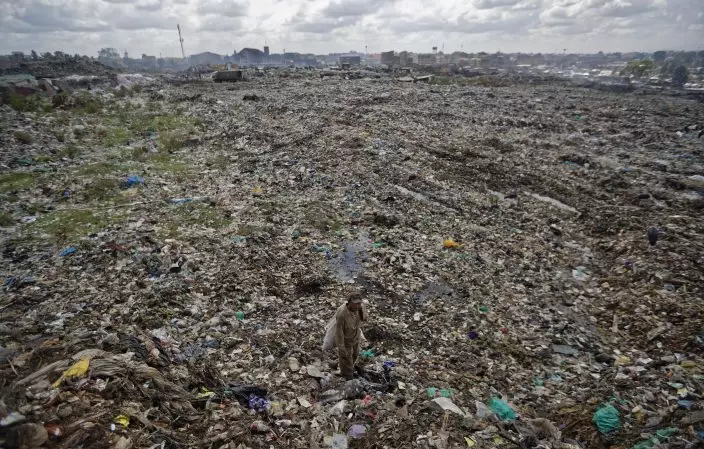
Birds circle overhead and dogs scuffle as the 35-year-old and around 600 people who work here move through the filth of Nairobi, all of them intent on useful finds. Ground-up garbage, from used hospital needles to battered toys, crunches under his feet. Thirty pungent acres stretch out before him at the center of the city's poorest slums.

More Images
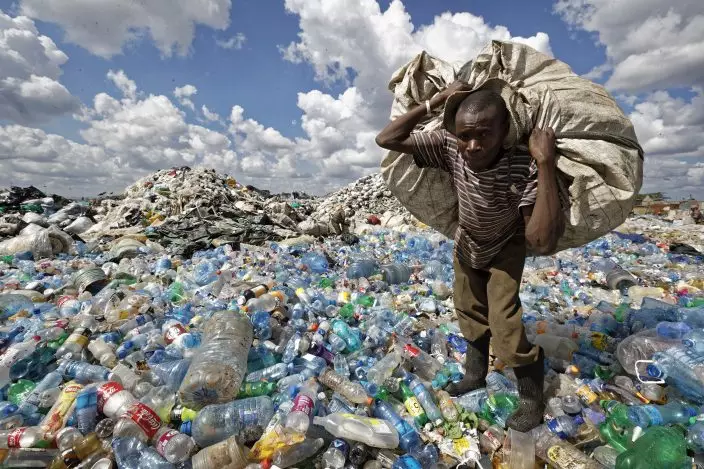
In this photo taken Wednesday, Dec. 5, 2018, a man walks on a mountain of plastic bottles as he carries a sack of them to be sold for recycling after weighing them at the dump in the Dandora slum of Nairobi, Kenya. As the world meets again to tackle the growing threat of climate change, how the continent tackles the growing solid waste produced by its more than 1.2 billion residents, many of them eager consumers in growing economies, is a major question in the fight against climate change. (AP PhotoBen Curtis)
In this photo taken Wednesday, Dec. 5, 2018, a man walks on a mountain of plastic bottles as he carries a sack of them to be sold for recycling after weighing them at the dump in the Dandora slum of Nairobi, Kenya. As the world meets again to tackle the growing threat of climate change, how the continent tackles the growing solid waste produced by its more than 1.2 billion residents, many of them eager consumers in growing economies, is a major question in the fight against climate change. (AP PhotoBen Curtis)
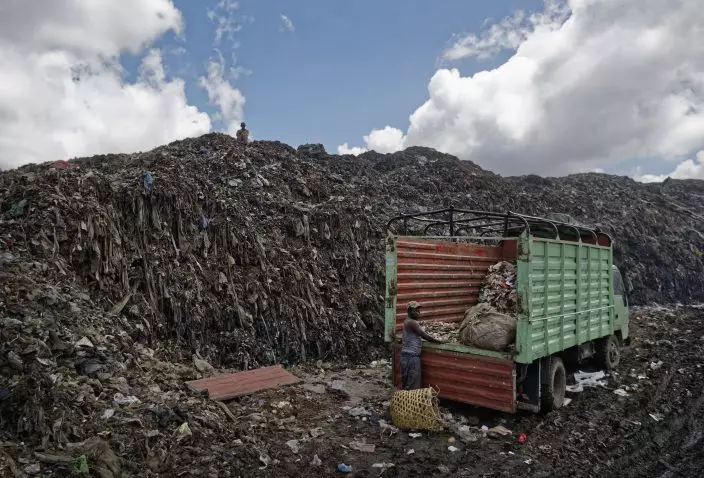
In this photo taken Wednesday, Dec. 5, 2018, a man removes trash from a dump truck while another, who scavenges for recyclable materials for a living, looks down from on top of a mountain of garbage at the dump in the Dandora slum of Nairobi, Kenya. As the world meets again to tackle the growing threat of climate change, how the continent tackles the growing solid waste produced by its more than 1.2 billion residents, many of them eager consumers in growing economies, is a major question in the fight against climate change. (AP PhotoBen Curtis)
In this photo taken Wednesday, Dec. 5, 2018, a man removes trash from a dump truck while another, who scavenges for recyclable materials for a living, looks down from on top of a mountain of garbage at the dump in the Dandora slum of Nairobi, Kenya. As the world meets again to tackle the growing threat of climate change, how the continent tackles the growing solid waste produced by its more than 1.2 billion residents, many of them eager consumers in growing economies, is a major question in the fight against climate change. (AP PhotoBen Curtis)
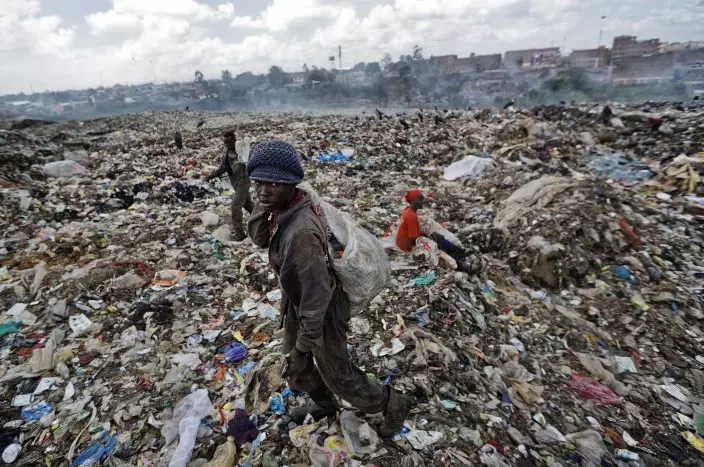
In this photo taken Wednesday, Dec. 5, 2018, Peter, 12, right, scavenges pieces of paper and card from garbage for a living from amongst the garbage at the dump in the Dandora slum of Nairobi, Kenya. As the world meets again to tackle the growing threat of climate change, how the continent tackles the growing solid waste produced by its more than 1.2 billion residents, many of them eager consumers in growing economies, is a major question in the fight against climate change. (AP PhotoBen Curtis)
In this photo taken Wednesday, Dec. 5, 2018, Peter, 12, right, scavenges pieces of paper and card from garbage for a living from amongst the garbage at the dump in the Dandora slum of Nairobi, Kenya. As the world meets again to tackle the growing threat of climate change, how the continent tackles the growing solid waste produced by its more than 1.2 billion residents, many of them eager consumers in growing economies, is a major question in the fight against climate change. (AP PhotoBen Curtis)
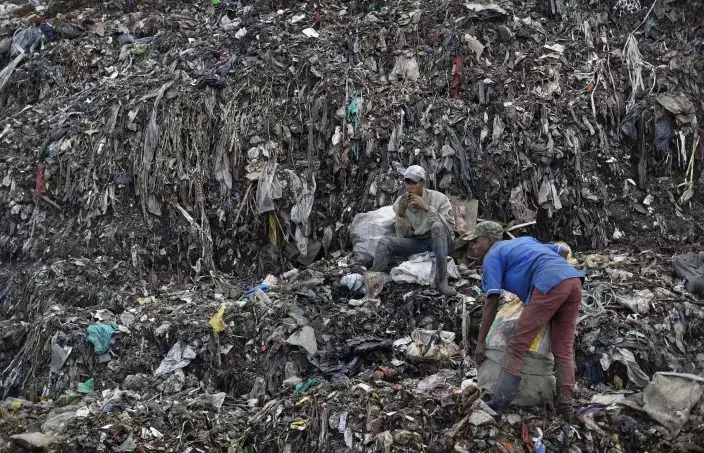
In this photo taken Wednesday, Dec. 5, 2018, a man who scavenges recyclable materials from garbage for a living takes a break to eat a piece of roasted corn as his friend, right, continues working at the dump in the Dandora slum of Nairobi, Kenya. As the world meets again to tackle the growing threat of climate change, how the continent tackles the growing solid waste produced by its more than 1.2 billion residents, many of them eager consumers in growing economies, is a major question in the fight against climate change. (AP PhotoBen Curtis)
In this photo taken Wednesday, Dec. 5, 2018, a man who scavenges recyclable materials from garbage for a living takes a break to eat a piece of roasted corn as his friend, right, continues working at the dump in the Dandora slum of Nairobi, Kenya. As the world meets again to tackle the growing threat of climate change, how the continent tackles the growing solid waste produced by its more than 1.2 billion residents, many of them eager consumers in growing economies, is a major question in the fight against climate change. (AP PhotoBen Curtis)
In this photo taken Wednesday, Dec. 5, 2018, a man who scavenges for pieces of plastic for a living walks across a mountain of garbage at the dump in the Dandora slum of Nairobi, Kenya. As the world meets again to tackle the growing threat of climate change, how the continent tackles the growing solid waste produced by its more than 1.2 billion residents, many of them eager consumers in growing economies, is a major question in the fight against climate change. (AP PhotoBen Curtis)
In this photo taken Wednesday, Dec. 5, 2018, a man who scavenges for pieces of plastic for a living walks across a mountain of garbage at the dump in the Dandora slum of Nairobi, Kenya. As the world meets again to tackle the growing threat of climate change, how the continent tackles the growing solid waste produced by its more than 1.2 billion residents, many of them eager consumers in growing economies, is a major question in the fight against climate change. (AP PhotoBen Curtis)
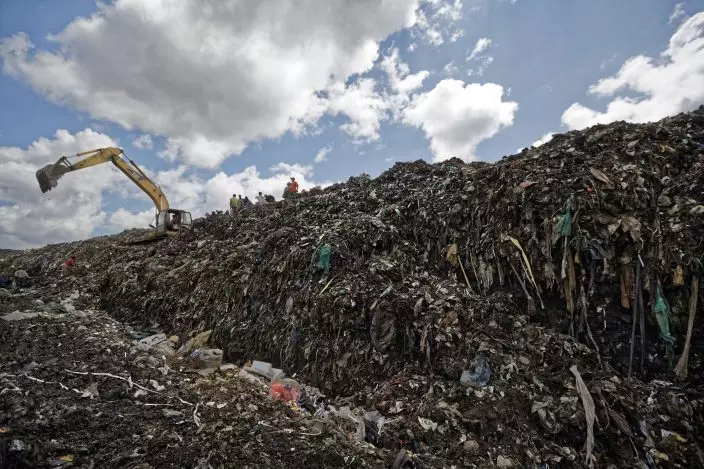
In this photo taken Wednesday, Dec. 5, 2018, people who scavenge recyclable materials for a living stand next to a mechanical digger as it adds newly-dumped trash on top of a mountain of garbage at the dump in the Dandora slum of Nairobi, Kenya. As the world meets again to tackle the growing threat of climate change, how the continent tackles the growing solid waste produced by its more than 1.2 billion residents, many of them eager consumers in growing economies, is a major question in the fight against climate change. (AP PhotoBen Curtis)
In this photo taken Wednesday, Dec. 5, 2018, people who scavenge recyclable materials for a living stand next to a mechanical digger as it adds newly-dumped trash on top of a mountain of garbage at the dump in the Dandora slum of Nairobi, Kenya. As the world meets again to tackle the growing threat of climate change, how the continent tackles the growing solid waste produced by its more than 1.2 billion residents, many of them eager consumers in growing economies, is a major question in the fight against climate change. (AP PhotoBen Curtis)
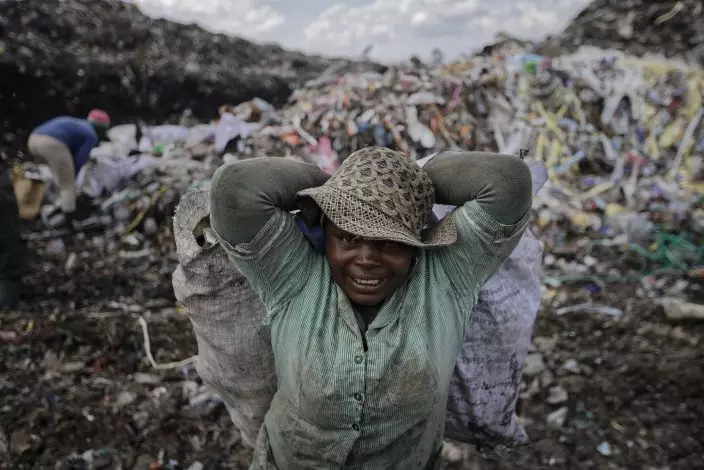
In this photo taken Wednesday, Dec. 5, 2018, a woman who scavenges recyclable materials from garbage for a living carries a sack at the dump in the Dandora slum of Nairobi, Kenya. As the world meets again to tackle the growing threat of climate change, how the continent tackles the growing solid waste produced by its more than 1.2 billion residents, many of them eager consumers in growing economies, is a major question in the fight against climate change. (AP PhotoBen Curtis)
In this photo taken Wednesday, Dec. 5, 2018, a woman who scavenges recyclable materials from garbage for a living carries a sack at the dump in the Dandora slum of Nairobi, Kenya. As the world meets again to tackle the growing threat of climate change, how the continent tackles the growing solid waste produced by its more than 1.2 billion residents, many of them eager consumers in growing economies, is a major question in the fight against climate change. (AP PhotoBen Curtis)
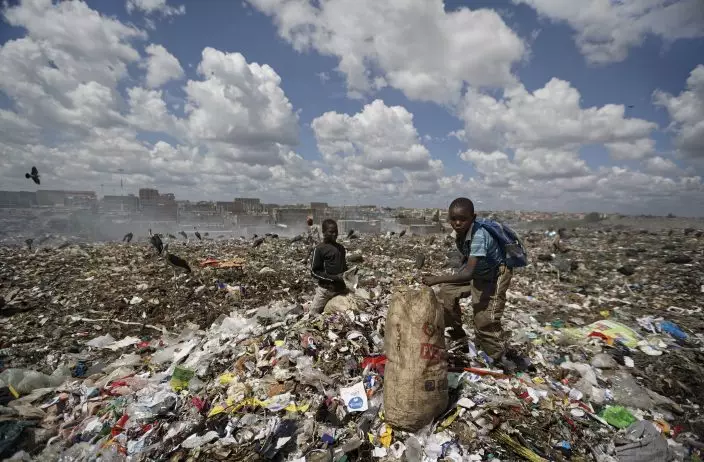
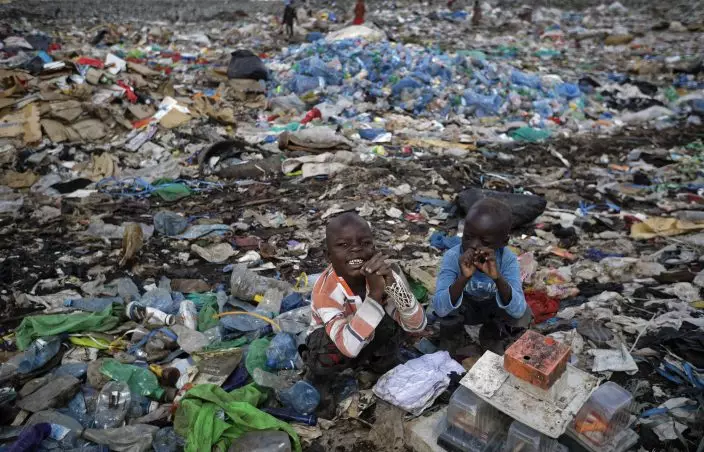
In this photo taken Wednesday, Dec. 5, 2018, two young boys build a small tower from plastic containers in the trash as a game, while their parents work to scavenge recyclable materials, at the dump in the Dandora slum of Nairobi, Kenya. As the world meets again to tackle the growing threat of climate change, how the continent tackles the growing solid waste produced by its more than 1.2 billion residents, many of them eager consumers in growing economies, is a major question in the fight against climate change. (AP PhotoBen Curtis)
In this photo taken Wednesday, Dec. 5, 2018, two young boys build a small tower from plastic containers in the trash as a game, while their parents work to scavenge recyclable materials, at the dump in the Dandora slum of Nairobi, Kenya. As the world meets again to tackle the growing threat of climate change, how the continent tackles the growing solid waste produced by its more than 1.2 billion residents, many of them eager consumers in growing economies, is a major question in the fight against climate change. (AP PhotoBen Curtis)
In this photo taken Wednesday, Dec. 5, 2018, a man who scavenges for recyclable materials for a living walks across a sea of garbage at the dump in the Dandora slum of Nairobi, Kenya. As the world meets again to tackle the growing threat of climate change, how the continent tackles the growing solid waste produced by its more than 1.2 billion residents, many of them eager consumers in growing economies, is a major question in the fight against climate change. (AP PhotoBen Curtis)

In this photo taken Wednesday, Dec. 5, 2018, a man who scavenges for recyclable materials for a living walks across a sea of garbage at the dump in the Dandora slum of Nairobi, Kenya. As the world meets again to tackle the growing threat of climate change, how the continent tackles the growing solid waste produced by its more than 1.2 billion residents, many of them eager consumers in growing economies, is a major question in the fight against climate change. (AP PhotoBen Curtis)
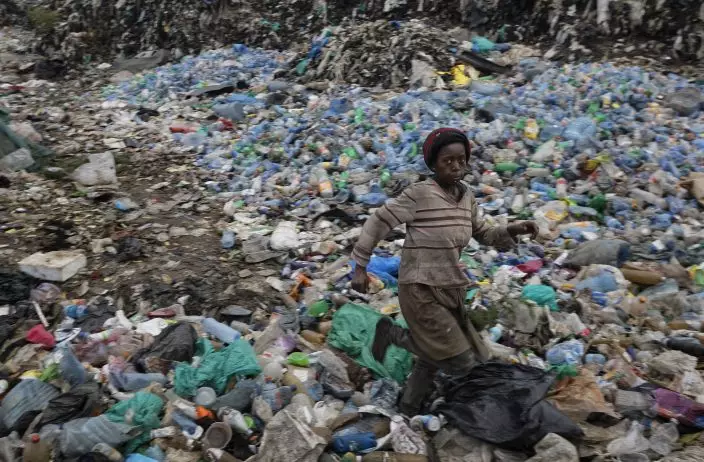
In this photo taken Wednesday, Dec. 5, 2018, a young girl who scavenges for recyclable materials for a living runs through a mound of sorted plastic bottles at the dump in the Dandora slum of Nairobi, Kenya. As the world meets again to tackle the growing threat of climate change, how the continent tackles the growing solid waste produced by its more than 1.2 billion residents, many of them eager consumers in growing economies, is a major question in the fight against climate change. (AP PhotoBen Curtis)

In this photo taken Wednesday, Dec. 5, 2018, a young girl who scavenges for recyclable materials for a living runs through a mound of sorted plastic bottles at the dump in the Dandora slum of Nairobi, Kenya. As the world meets again to tackle the growing threat of climate change, how the continent tackles the growing solid waste produced by its more than 1.2 billion residents, many of them eager consumers in growing economies, is a major question in the fight against climate change. (AP PhotoBen Curtis)

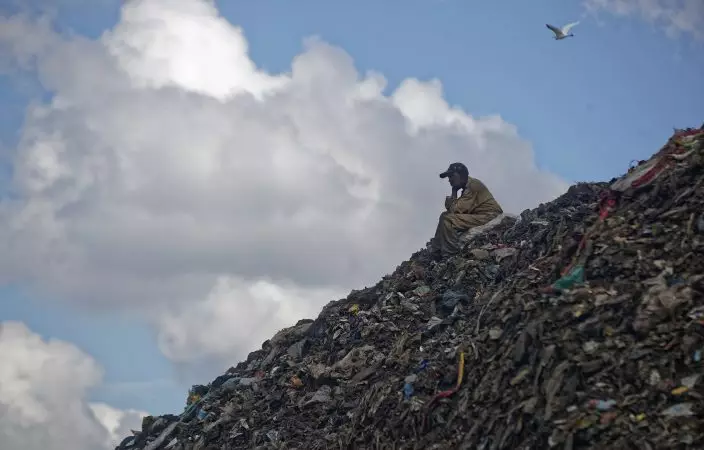
In this photo taken Wednesday, Dec. 5, 2018, a man who scavenges for recyclable materials for a living takes a break on top of a hill of garbage at the dump in the Dandora slum of Nairobi, Kenya. As the world meets again to tackle the growing threat of climate change, how the continent tackles the growing solid waste produced by its more than 1.2 billion residents, many of them eager consumers in growing economies, is a major question in the fight against climate change. (AP PhotoBen Curtis)

In this photo taken Wednesday, Dec. 5, 2018, a man who scavenges for recyclable materials for a living takes a break on top of a hill of garbage at the dump in the Dandora slum of Nairobi, Kenya. As the world meets again to tackle the growing threat of climate change, how the continent tackles the growing solid waste produced by its more than 1.2 billion residents, many of them eager consumers in growing economies, is a major question in the fight against climate change. (AP PhotoBen Curtis)

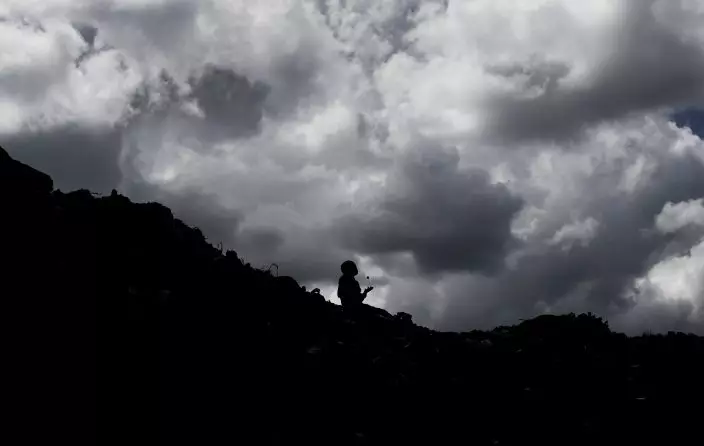
In this photo taken Wednesday, Dec. 5, 2018, a young boy who scavenges for recyclable materials for a living throws a rock in the air to pass the time as he takes a break while sitting on top of a mountain of garbage at the dump in the Dandora slum of Nairobi, Kenya. As the world meets again to tackle the growing threat of climate change, how the continent tackles the growing solid waste produced by its more than 1.2 billion residents, many of them eager consumers in growing economies, is a major question in the fight against climate change. (AP PhotoBen Curtis)

In this photo taken Wednesday, Dec. 5, 2018, a young boy who scavenges for recyclable materials for a living throws a rock in the air to pass the time as he takes a break while sitting on top of a mountain of garbage at the dump in the Dandora slum of Nairobi, Kenya. As the world meets again to tackle the growing threat of climate change, how the continent tackles the growing solid waste produced by its more than 1.2 billion residents, many of them eager consumers in growing economies, is a major question in the fight against climate change. (AP PhotoBen Curtis)

"This is like any other job," Kiarie said. "I would not leave it for a cozy office." In blue overalls, he oversees a hill of plastics he has salvaged to sell to recycling companies. "And I am not mad."

In this photo taken Wednesday, Dec. 5, 2018, a man walks on a mountain of plastic bottles as he carries a sack of them to be sold for recycling after weighing them at the dump in the Dandora slum of Nairobi, Kenya. As the world meets again to tackle the growing threat of climate change, how the continent tackles the growing solid waste produced by its more than 1.2 billion residents, many of them eager consumers in growing economies, is a major question in the fight against climate change. (AP PhotoBen Curtis)

In this photo taken Wednesday, Dec. 5, 2018, a man walks on a mountain of plastic bottles as he carries a sack of them to be sold for recycling after weighing them at the dump in the Dandora slum of Nairobi, Kenya. As the world meets again to tackle the growing threat of climate change, how the continent tackles the growing solid waste produced by its more than 1.2 billion residents, many of them eager consumers in growing economies, is a major question in the fight against climate change. (AP PhotoBen Curtis)

As the world meets again to tackle the growing threat of climate change, Africa expects to suffer the most from rising temperatures. And it is least equipped to fight back.

How the continent will tackle the solid waste produced by its more than 1.2 billion residents, many of them eager consumers in growing economies, is a major question for environmentalists and governments alike.

Most African countries lack the resources needed to process the growing amount of solid waste, said Maria Leonor Sales, a consultant with the African Development Bank. Nineteen of the world's 50 biggest dumpsites are on the continent, according to the Environmental Justice Atlas.

In this photo taken Wednesday, Dec. 5, 2018, a man removes trash from a dump truck while another, who scavenges for recyclable materials for a living, looks down from on top of a mountain of garbage at the dump in the Dandora slum of Nairobi, Kenya. As the world meets again to tackle the growing threat of climate change, how the continent tackles the growing solid waste produced by its more than 1.2 billion residents, many of them eager consumers in growing economies, is a major question in the fight against climate change. (AP PhotoBen Curtis)

In this photo taken Wednesday, Dec. 5, 2018, a man removes trash from a dump truck while another, who scavenges for recyclable materials for a living, looks down from on top of a mountain of garbage at the dump in the Dandora slum of Nairobi, Kenya. As the world meets again to tackle the growing threat of climate change, how the continent tackles the growing solid waste produced by its more than 1.2 billion residents, many of them eager consumers in growing economies, is a major question in the fight against climate change. (AP PhotoBen Curtis)

The fastest-growing regions for waste generation are sub-Saharan Africa and South Asia, where it is expected to triple and double, respectively, by 2050, the World Bank said in a September report. By then, the regions will be producing 35 percent of the world's trash.

Much of the waste in low-income countries, about 90 percent, is openly dumped or burned. That contributes to worsening air quality while the poor are most affected, the World Bank said.

The burning of waste is a key contributor to climate change. In 2016, 5 percent of global emissions were generated from solid waste management, excluding transportation, the bank's report said.

In this photo taken Wednesday, Dec. 5, 2018, Peter, 12, right, scavenges pieces of paper and card from garbage for a living from amongst the garbage at the dump in the Dandora slum of Nairobi, Kenya. As the world meets again to tackle the growing threat of climate change, how the continent tackles the growing solid waste produced by its more than 1.2 billion residents, many of them eager consumers in growing economies, is a major question in the fight against climate change. (AP PhotoBen Curtis)

In this photo taken Wednesday, Dec. 5, 2018, Peter, 12, right, scavenges pieces of paper and card from garbage for a living from amongst the garbage at the dump in the Dandora slum of Nairobi, Kenya. As the world meets again to tackle the growing threat of climate change, how the continent tackles the growing solid waste produced by its more than 1.2 billion residents, many of them eager consumers in growing economies, is a major question in the fight against climate change. (AP PhotoBen Curtis)

Safe, sustainable solid waste management could be an engine for economic growth, Sales said. Recycling and innovative products could create jobs while addressing social and environmental issues.

But governments would have to sign on and recognize the value of landfill pickers like Kiarie.

"Perceptions are one of the main challenges as people do not view waste as a resource," said Catherina Schenck, a professor with the University of the Western Cape in South Africa who has researched waste pickers. "This includes the policymakers down to the consumers."

In this photo taken Wednesday, Dec. 5, 2018, a man who scavenges recyclable materials from garbage for a living takes a break to eat a piece of roasted corn as his friend, right, continues working at the dump in the Dandora slum of Nairobi, Kenya. As the world meets again to tackle the growing threat of climate change, how the continent tackles the growing solid waste produced by its more than 1.2 billion residents, many of them eager consumers in growing economies, is a major question in the fight against climate change. (AP PhotoBen Curtis)

In this photo taken Wednesday, Dec. 5, 2018, a man who scavenges recyclable materials from garbage for a living takes a break to eat a piece of roasted corn as his friend, right, continues working at the dump in the Dandora slum of Nairobi, Kenya. As the world meets again to tackle the growing threat of climate change, how the continent tackles the growing solid waste produced by its more than 1.2 billion residents, many of them eager consumers in growing economies, is a major question in the fight against climate change. (AP PhotoBen Curtis)

Transitioning to a greener economy and sustainable waste management will require informal workers like Kiare to become part of a recognized system, following health and environmental guidelines and receiving stable incomes and benefits in return.

Experts say recycling companies then can be more efficient and have a guaranteed supply of raw materials.

Africa has the opportunity to unlock at least $8 billion every year in resource value into the economy by changing the way we think about waste, said Professor Linda Godfrey, an expert on waste management with the South Africa-based Council for Scientific and Industrial Research.

In this photo taken Wednesday, Dec. 5, 2018, a man who scavenges for pieces of plastic for a living walks across a mountain of garbage at the dump in the Dandora slum of Nairobi, Kenya. As the world meets again to tackle the growing threat of climate change, how the continent tackles the growing solid waste produced by its more than 1.2 billion residents, many of them eager consumers in growing economies, is a major question in the fight against climate change. (AP PhotoBen Curtis)

In this photo taken Wednesday, Dec. 5, 2018, a man who scavenges for pieces of plastic for a living walks across a mountain of garbage at the dump in the Dandora slum of Nairobi, Kenya. As the world meets again to tackle the growing threat of climate change, how the continent tackles the growing solid waste produced by its more than 1.2 billion residents, many of them eager consumers in growing economies, is a major question in the fight against climate change. (AP PhotoBen Curtis)

The African Union has said member countries should divert 50 percent of the waste they produce to recycling, reuse and recovery by 2030. Currently, the continent recycles only 4 percent.

Unfortunately, investment in such projects in Africa is still seen as high-risk by the private sector, Godfrey said. She said strong political will is needed.

Kiarie knows the risks of his current work. Landslides in dumps can be deadly. The threat of injury or infection is high. The landfill where he roams, Dandora, was deemed full in 2001. Yet it continues to operate, supporting people from the bottom rungs of Nairobi's economy.

In this photo taken Wednesday, Dec. 5, 2018, people who scavenge recyclable materials for a living stand next to a mechanical digger as it adds newly-dumped trash on top of a mountain of garbage at the dump in the Dandora slum of Nairobi, Kenya. As the world meets again to tackle the growing threat of climate change, how the continent tackles the growing solid waste produced by its more than 1.2 billion residents, many of them eager consumers in growing economies, is a major question in the fight against climate change. (AP PhotoBen Curtis)

In this photo taken Wednesday, Dec. 5, 2018, people who scavenge recyclable materials for a living stand next to a mechanical digger as it adds newly-dumped trash on top of a mountain of garbage at the dump in the Dandora slum of Nairobi, Kenya. As the world meets again to tackle the growing threat of climate change, how the continent tackles the growing solid waste produced by its more than 1.2 billion residents, many of them eager consumers in growing economies, is a major question in the fight against climate change. (AP PhotoBen Curtis)

Kiare's previous job as a day laborer in construction paid him $5 but he would go without work for long periods, which almost got him evicted. Now he can take home between $10 and $50 a day from recycling. He has moved into a bigger house and is now married with three children.

Most Kenyans, who look down on those who work in the country's sprawling landfills, live below $2 a day.

"Nowadays I don't hear from the landlord," he said.

In this photo taken Wednesday, Dec. 5, 2018, a woman who scavenges recyclable materials from garbage for a living carries a sack at the dump in the Dandora slum of Nairobi, Kenya. As the world meets again to tackle the growing threat of climate change, how the continent tackles the growing solid waste produced by its more than 1.2 billion residents, many of them eager consumers in growing economies, is a major question in the fight against climate change. (AP PhotoBen Curtis)

In this photo taken Wednesday, Dec. 5, 2018, a woman who scavenges recyclable materials from garbage for a living carries a sack at the dump in the Dandora slum of Nairobi, Kenya. As the world meets again to tackle the growing threat of climate change, how the continent tackles the growing solid waste produced by its more than 1.2 billion residents, many of them eager consumers in growing economies, is a major question in the fight against climate change. (AP PhotoBen Curtis)

This version corrects consultant's last name to Sales.

Follow Africa news at https://twitter.com/AP_Africa

In this photo taken Wednesday, Dec. 5, 2018, two young boys build a small tower from plastic containers in the trash as a game, while their parents work to scavenge recyclable materials, at the dump in the Dandora slum of Nairobi, Kenya. As the world meets again to tackle the growing threat of climate change, how the continent tackles the growing solid waste produced by its more than 1.2 billion residents, many of them eager consumers in growing economies, is a major question in the fight against climate change. (AP PhotoBen Curtis)

In this photo taken Wednesday, Dec. 5, 2018, two young boys build a small tower from plastic containers in the trash as a game, while their parents work to scavenge recyclable materials, at the dump in the Dandora slum of Nairobi, Kenya. As the world meets again to tackle the growing threat of climate change, how the continent tackles the growing solid waste produced by its more than 1.2 billion residents, many of them eager consumers in growing economies, is a major question in the fight against climate change. (AP PhotoBen Curtis)

In this photo taken Wednesday, Dec. 5, 2018, a man who scavenges for recyclable materials for a living walks across a sea of garbage at the dump in the Dandora slum of Nairobi, Kenya. As the world meets again to tackle the growing threat of climate change, how the continent tackles the growing solid waste produced by its more than 1.2 billion residents, many of them eager consumers in growing economies, is a major question in the fight against climate change. (AP PhotoBen Curtis)

In this photo taken Wednesday, Dec. 5, 2018, a man who scavenges for recyclable materials for a living walks across a sea of garbage at the dump in the Dandora slum of Nairobi, Kenya. As the world meets again to tackle the growing threat of climate change, how the continent tackles the growing solid waste produced by its more than 1.2 billion residents, many of them eager consumers in growing economies, is a major question in the fight against climate change. (AP PhotoBen Curtis)

In this photo taken Wednesday, Dec. 5, 2018, a young girl who scavenges for recyclable materials for a living runs through a mound of sorted plastic bottles at the dump in the Dandora slum of Nairobi, Kenya. As the world meets again to tackle the growing threat of climate change, how the continent tackles the growing solid waste produced by its more than 1.2 billion residents, many of them eager consumers in growing economies, is a major question in the fight against climate change. (AP PhotoBen Curtis)

In this photo taken Wednesday, Dec. 5, 2018, a young girl who scavenges for recyclable materials for a living runs through a mound of sorted plastic bottles at the dump in the Dandora slum of Nairobi, Kenya. As the world meets again to tackle the growing threat of climate change, how the continent tackles the growing solid waste produced by its more than 1.2 billion residents, many of them eager consumers in growing economies, is a major question in the fight against climate change. (AP PhotoBen Curtis)

In this photo taken Wednesday, Dec. 5, 2018, a man who scavenges for recyclable materials for a living takes a break on top of a hill of garbage at the dump in the Dandora slum of Nairobi, Kenya. As the world meets again to tackle the growing threat of climate change, how the continent tackles the growing solid waste produced by its more than 1.2 billion residents, many of them eager consumers in growing economies, is a major question in the fight against climate change. (AP PhotoBen Curtis)

In this photo taken Wednesday, Dec. 5, 2018, a man who scavenges for recyclable materials for a living takes a break on top of a hill of garbage at the dump in the Dandora slum of Nairobi, Kenya. As the world meets again to tackle the growing threat of climate change, how the continent tackles the growing solid waste produced by its more than 1.2 billion residents, many of them eager consumers in growing economies, is a major question in the fight against climate change. (AP PhotoBen Curtis)

In this photo taken Wednesday, Dec. 5, 2018, a young boy who scavenges for recyclable materials for a living throws a rock in the air to pass the time as he takes a break while sitting on top of a mountain of garbage at the dump in the Dandora slum of Nairobi, Kenya. As the world meets again to tackle the growing threat of climate change, how the continent tackles the growing solid waste produced by its more than 1.2 billion residents, many of them eager consumers in growing economies, is a major question in the fight against climate change. (AP PhotoBen Curtis)

In this photo taken Wednesday, Dec. 5, 2018, a young boy who scavenges for recyclable materials for a living throws a rock in the air to pass the time as he takes a break while sitting on top of a mountain of garbage at the dump in the Dandora slum of Nairobi, Kenya. As the world meets again to tackle the growing threat of climate change, how the continent tackles the growing solid waste produced by its more than 1.2 billion residents, many of them eager consumers in growing economies, is a major question in the fight against climate change. (AP PhotoBen Curtis)

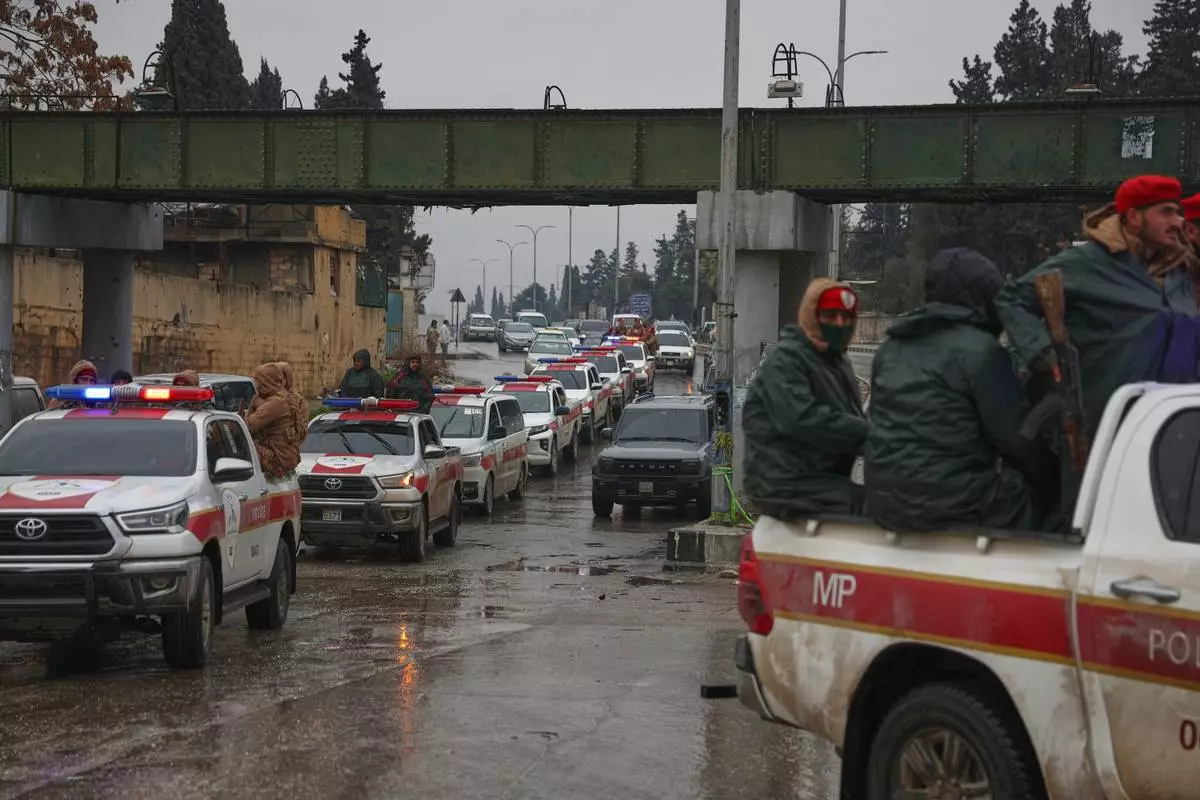
ALEPPO, Syria (AP) — First responders on Sunday entered a contested neighborhood in Syria’ s northern city of Aleppo after days of deadly clashes between government forces and Kurdish-led forces. Syrian state media said the military was deployed in large numbers.

The clashes broke out Tuesday in the predominantly Kurdish neighborhoods of Sheikh Maqsoud, Achrafieh and Bani Zaid after the government and the Syrian Democratic Forces, the main Kurdish-led force in the country, failed to make progress on how to merge the SDF into the national army. Security forces captured Achrafieh and Bani Zaid.

The fighting between the two sides was the most intense since the fall of then-President Bashar Assad to insurgents in December 2024. At least 23 people were killed in five days of clashes and more than 140,000 were displaced amid shelling and drone strikes.

The U.S.-backed SDF, which have played a key role in combating the Islamic State group in large swaths of eastern Syria, are the largest force yet to be absorbed into Syria's national army. Some of the factions that make up the army, however, were previously Turkish-backed insurgent groups that have a long history of clashing with Kurdish forces.

The Kurdish fighters have now evacuated from the Sheikh Maqsoud neighborhood to northeastern Syria, which is under the control of the SDF. However, they said in a statement they will continue to fight now that the wounded and civilians have been evacuated, in what they called a “partial ceasefire.”

The neighborhood appeared calm Sunday. The United Nations said it was trying to dispatch more convoys to the neighborhoods with food, fuel, blankets and other urgent supplies.

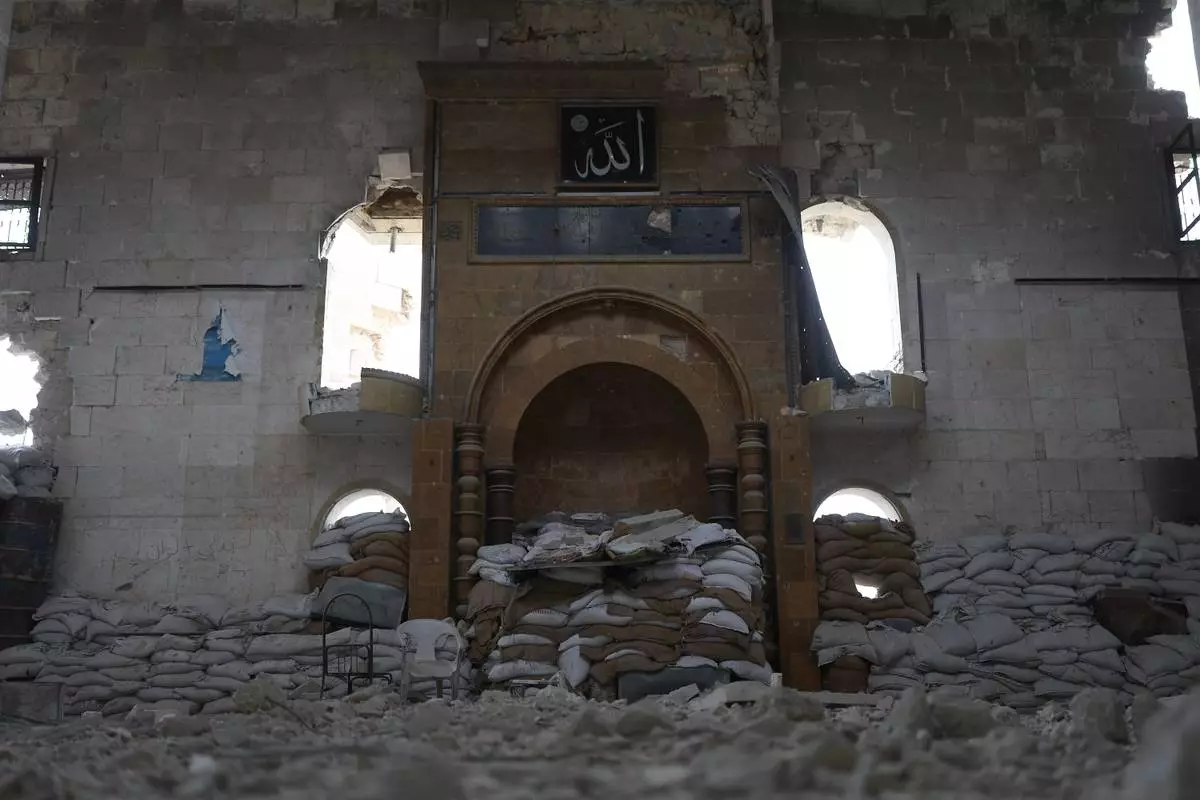
Government security forces brought journalists to tour the devastated area, showing them the damaged Khalid al-Fajer Hospital and a military position belonging to the SDF’s security forces that government forces had targeted.

The SDF statement accused the government of targeting the hospital “dozens of times” before patients were evacuated. Damascus accused the Kurdish-led group of using the hospital and other civilian facilities as military positions.

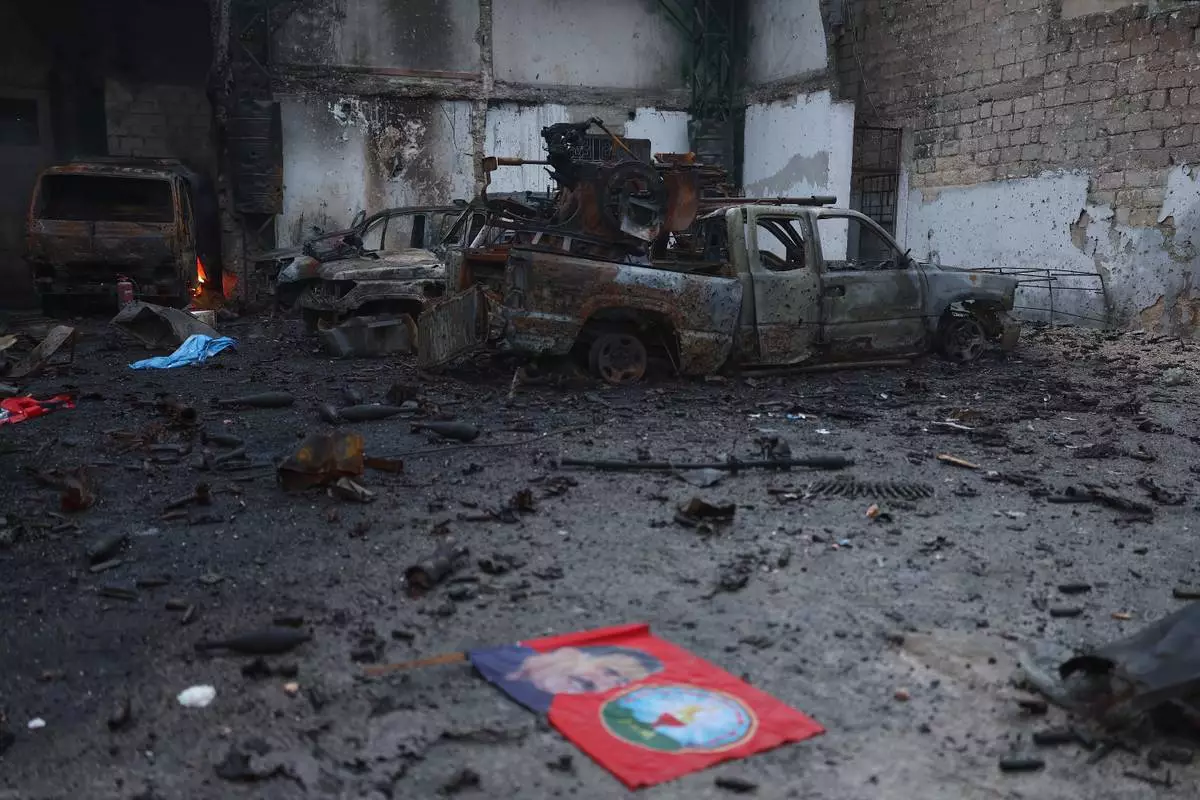
On one street, Syrian Red Crescent first responders spoke to a resident surrounded by charred cars and badly damaged residential buildings.

Some residents told The Associated Press that SDF forces did not allow their cars through checkpoints to leave.

“We lived a night of horror. I still cannot believe that I am right here standing on my own two feet,” said Ahmad Shaikho. “So far the situation has been calm. There hasn’t been any gunfire.”

Syrian Civil Defense first responders have been disarming improvised mines that they say were left by the Kurdish forces as booby traps.

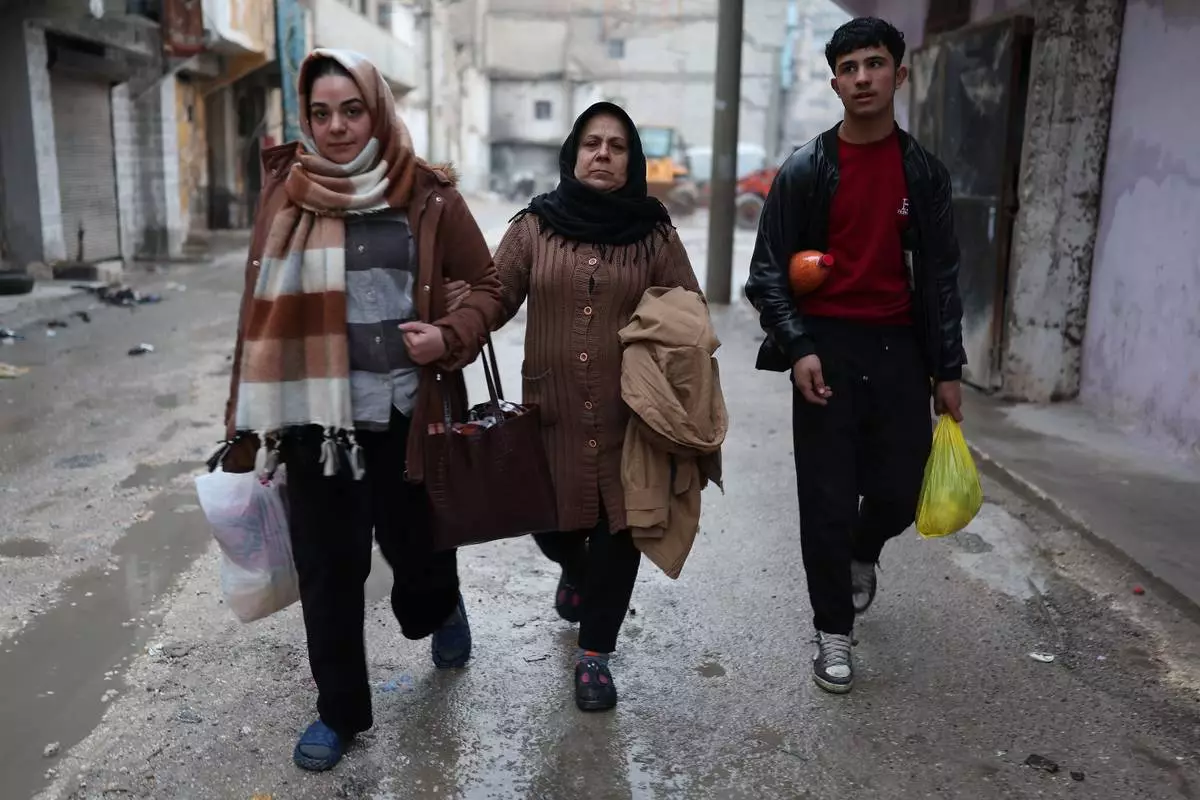
Residents who fled are not being allowed back into the neighborhood until all the mines are cleared. Some were reminded of the displacement during Syria’s long civil war.

“I want to go back to my home, I beg you,” said Hoda Alnasiri.

Associated Press journalist Kareem Chehayeb in Beirut contributed to this report.

Sandbag barriers used as fighting positions by Kurdish fighters, left inside a destroyed mosque in the Sheikh Maqsoud neighborhood, where clashes between government forces and Kurdish fighters have been taking place in the northern city of Aleppo, Syria, Sunday, Jan. 11, 2026. (AP Photo/Ghaith Alsayed)

Sandbag barriers used as fighting positions by Kurdish fighters, left inside a destroyed mosque in the Sheikh Maqsoud neighborhood, where clashes between government forces and Kurdish fighters have been taking place in the northern city of Aleppo, Syria, Sunday, Jan. 11, 2026. (AP Photo/Ghaith Alsayed)

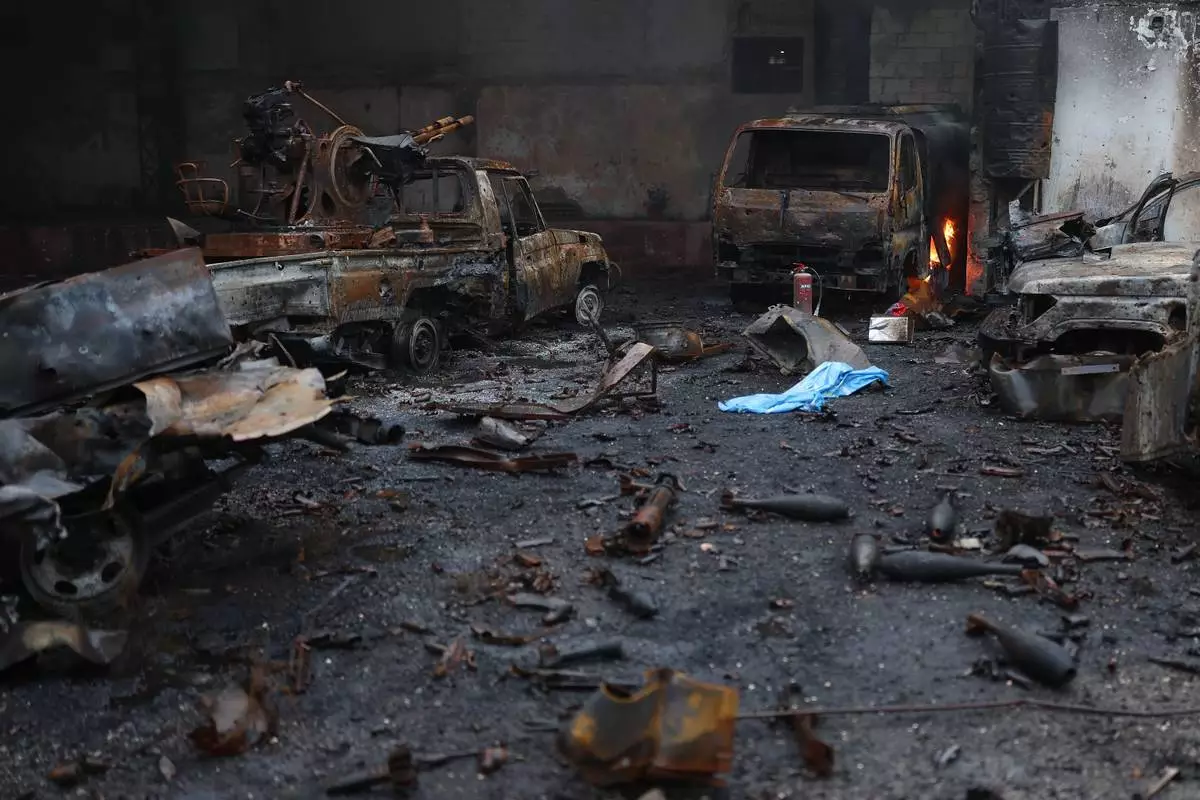
Burned vehicles at one of the Kurdish fighters positions at the Sheikh Maqsoud neighborhood, where clashes between government forces and Kurdish fighters have been taking place in the northern city of Aleppo, Syria, Sunday, Jan. 11, 2026. (AP Photo/Ghaith Alsayed)

Burned vehicles at one of the Kurdish fighters positions at the Sheikh Maqsoud neighborhood, where clashes between government forces and Kurdish fighters have been taking place in the northern city of Aleppo, Syria, Sunday, Jan. 11, 2026. (AP Photo/Ghaith Alsayed)

People flee the Sheikh Maqsoud neighborhood, where clashes between government forces and Kurdish fighters have been taking place in the northern city of Aleppo, Syria, Sunday, Jan. 11, 2026. (AP Photo/Ghaith Alsayed)

People flee the Sheikh Maqsoud neighborhood, where clashes between government forces and Kurdish fighters have been taking place in the northern city of Aleppo, Syria, Sunday, Jan. 11, 2026. (AP Photo/Ghaith Alsayed)

A Syrian military police convoy enters the Sheikh Maqsoud neighborhood, where clashes between government forces and Kurdish fighters have been taking place in the northern city of Aleppo, Syria, Sunday, Jan. 11, 2026. (AP Photo/Ghaith Alsayed)

A Syrian military police convoy enters the Sheikh Maqsoud neighborhood, where clashes between government forces and Kurdish fighters have been taking place in the northern city of Aleppo, Syria, Sunday, Jan. 11, 2026. (AP Photo/Ghaith Alsayed)

Burned vehicles and ammunitions left at one of the Kurdish fighters positions at the Sheikh Maqsoud neighborhood, where clashes between government forces and Kurdish fighters have been taking place in the northern city of Aleppo, Syria, Sunday, Jan. 11, 2026. (AP Photo/Ghaith Alsayed)

Burned vehicles and ammunitions left at one of the Kurdish fighters positions at the Sheikh Maqsoud neighborhood, where clashes between government forces and Kurdish fighters have been taking place in the northern city of Aleppo, Syria, Sunday, Jan. 11, 2026. (AP Photo/Ghaith Alsayed)

Recommended Articles