


The Sao Paulo Shimbun newspaper has printed its final edition, ending a 72-year run as a vital reference point and voice for Brazil's Japanese community - the largest in the world outside of Japan.
The Japanese-language newspaper, whose final edition rolled off the presses Jan. 1, was a victim of declining sales, an aging readership and the internet. Its owner, Helena Mizumoto, said an online version may be launched in the future.
Click to Gallery
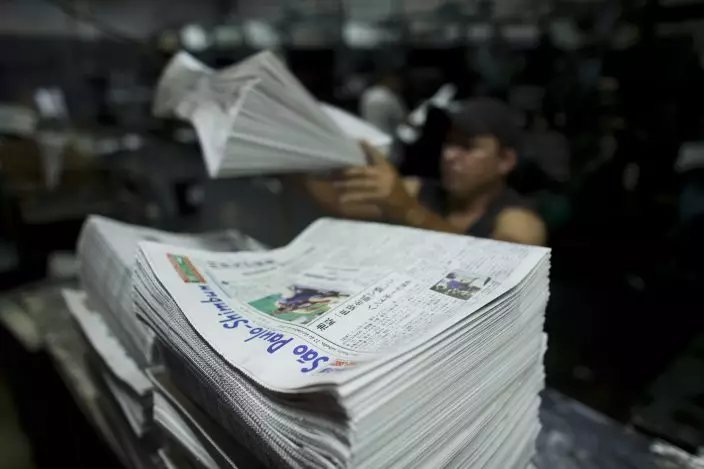
In this Dec. 21, 2018 photo, recently printed editions of the Sao Paulo Shimbun Japanese newspaper are stacked into piles before delivery in Sao Paulo, Brazil. For decades Sao Paulo Shimbun, which printed its last edition on Jan. 1, 2019, served as the main reference point for Japanese living in the South American country. (AP PhotoVictor R. Caivano)
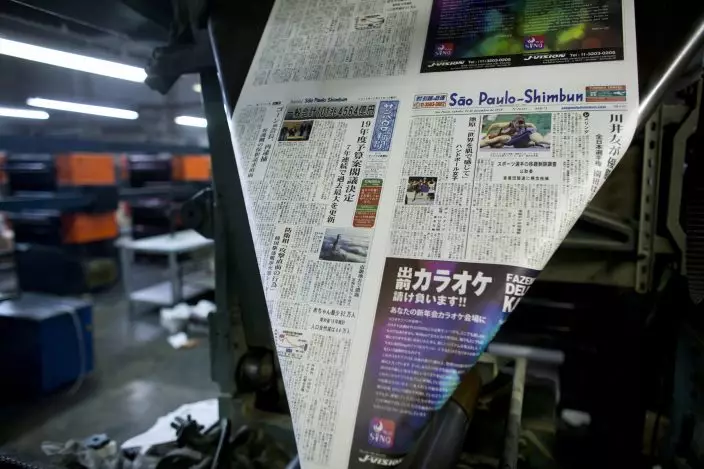
In this Dec. 21, 2018 photo, the Sao Paulo Shimbun Japanese newspaper is printed in Sao Paulo, Brazil. The Japanese-language newspaper, whose final edition rolled off the presses Jan. 1, 2019, was a victim of declining sales, an aging readership and the internet. (AP PhotoVictor R. Caivano)
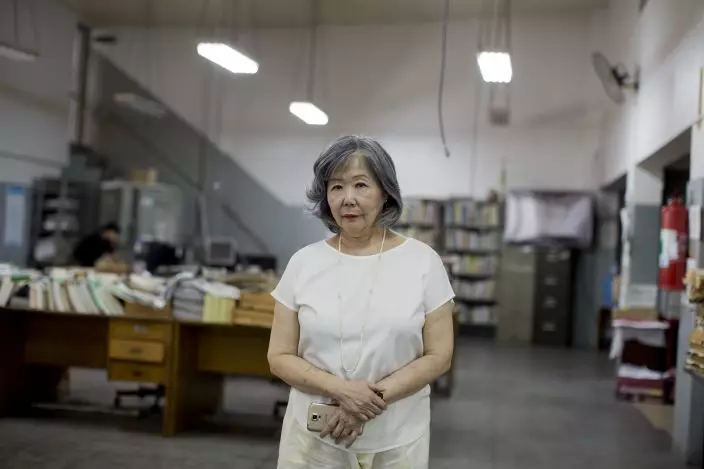
In this Dec. 26, 2018 photo, owner of the Sao Paulo Shimbun Japanese newspaper, Helena Mizumoto, poses for a portrait in her empty newsroom in Sao Paulo, Brazil, days before the final print edition on Jan. 1, 2019. Mizumoto said that before the internet and cable television, Japanese immigrants would call the newspaper to find out where they could find Japanese-owned business. "The Google of the community was here," Mizumoto said. (AP PhotoVictor R. Caivano)
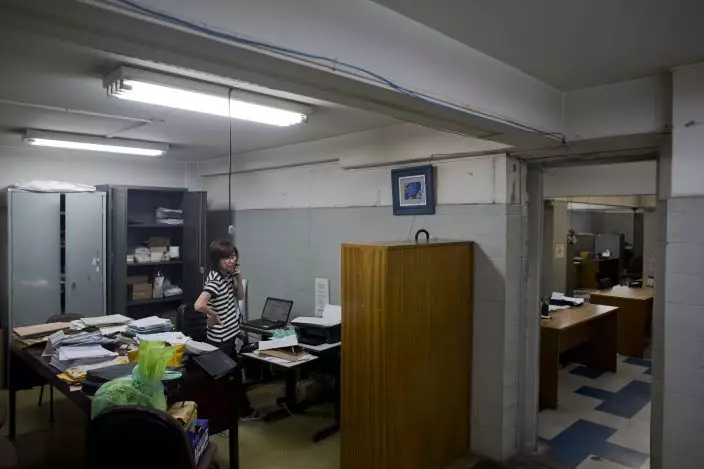
In this Dec. 26, 2018 photo, Nabuko Kojo, administrative director of the Japanese newspaper Sao Paulo Shimbun answers the phone as she empties her desk in Sao Paulo, Brazil. The Sao Paulo Shimbun printed its final edition on Jan. 1, 2019, decades after it was founded shortly after the end of World War II. (AP PhotoVictor R. Caivano)
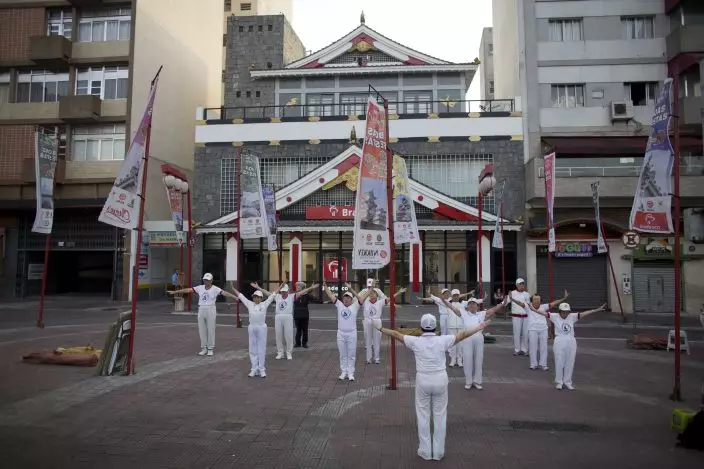
In this Dec. 22, 2018 photo, elderly Japanese immigrants practice radio taiso, a Japanese set of exercises, at the square in Sao Paulo's Asian neighborhood of Liberdade, Brazil. The newspaper that for more than 70 years has been influential in the largest Japanese community outside Japan, has ceased to be printed in Brazil where the first Japanese migrants arrived in 1908, spurring a wave of immigration that grew to about 2 million people. (AP PhotoVictor R. Caivano)
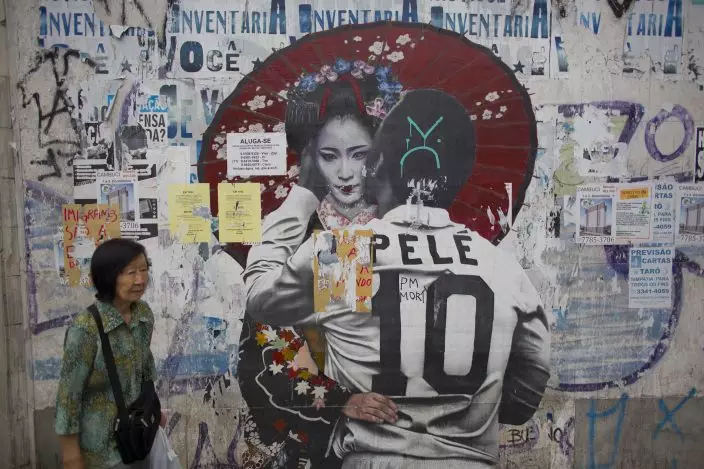
In this Dec. 27, 2018 photo, a woman walks by a mural of Brazilian soccer legend Pele hugging a Geisha in Sao Paulo, Brazil's Asian neighborhood of Liberdade, the area where an influential Japanese-language newspaper ran its last print edition on Jan. 1, 2019. The arrival of the first Japanese immigrants was the result of negotiations between Japan and Sao Paulo state, where most Japanese-Brazilians still live. (AP PhotoVictor R. Caivano)
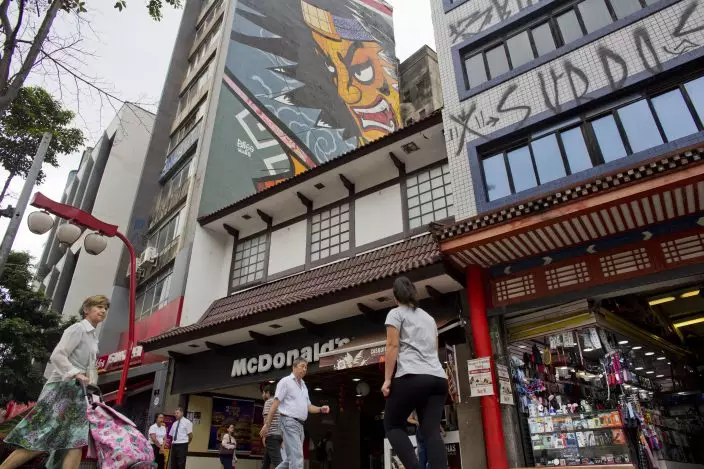
In this Dec. 27, 2018 photo, people walk under a mural of a Samurai in Sao Paulo, Brazil's Asian neighborhood of Liberdade, the area where an influential Japanese-language newspaper ran its last print edition on Jan. 1, 2019. Japanese immigrants introduced foods that changed Brazilian cuisine and farming techniques that helped turn Latin America's biggest country into an agricultural superpower. (AP PhotoVictor R. Caivano)
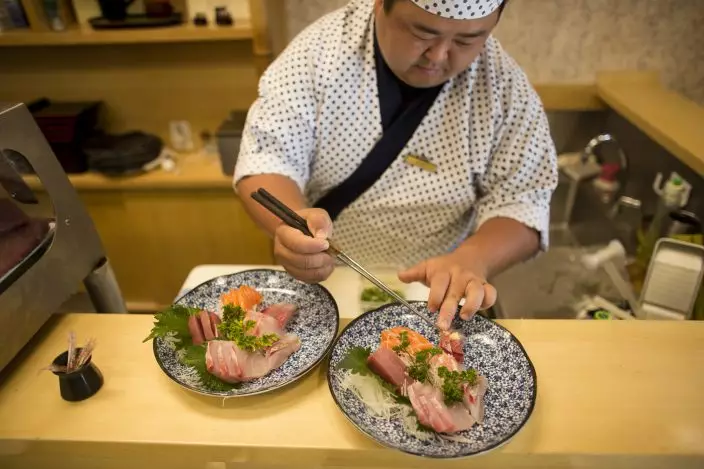
In this Dec. 27, 2018 photo, sushi chef Hiro Konno puts finishing touches on a sashimi plate at the Kenzo restaurant in Sao Paulo's Asian neighborhood of Liberdade, Brazil. "Those of us who have Japanese roots should do more to preserve them. For me, the closing of the newspaper is very sad," said Konno, after the Japanese newspaper Sao Paulo Shimbun ran its last edition, following a 72-year run. (AP PhotoVictor R. Caivano)
Sao Paulo Shimbun was founded in 1946, shortly after the end of World War II. Mizumoto said that before the internet and cable television, immigrants would call the newspaper to find out where they could find Japanese-owned business.
In this Dec. 21, 2018 photo, recently printed editions of the Sao Paulo Shimbun Japanese newspaper are stacked into piles before delivery in Sao Paulo, Brazil. For decades Sao Paulo Shimbun, which printed its last edition on Jan. 1, 2019, served as the main reference point for Japanese living in the South American country. (AP PhotoVictor R. Caivano)
"The Google of the community was here," Mizumoto said, adding that the newspaper was instrumental in letting expats know that Japan had lost the war.
For decades Sao Paulo Shimbun, from its offices in Sao Paulo's Asian neighborhood of Liberdade, served as the main reference point for Japanese living in the South American country. While mainly in Japanese, it printed a few pages in Portuguese as well.
Japanese expats got most of their national and international information from the Sao Paulo Shimbun up until the 1990s, but that "ended with internet and the NHK Japanese news channel," said Eduardo Nakashima, secretary general of the Brazil-Japan Cultural Alliance.
In this Dec. 21, 2018 photo, the Sao Paulo Shimbun Japanese newspaper is printed in Sao Paulo, Brazil. The Japanese-language newspaper, whose final edition rolled off the presses Jan. 1, 2019, was a victim of declining sales, an aging readership and the internet. (AP PhotoVictor R. Caivano)
In Liberdade, Nobukazu Kanomata, an 83-year-old massage therapist who was born in Japan and came to Brazil after the war, said the newspaper closed "because there are fewer people in the community able to read Japanese and the quality of its articles got worse."
Kanomata spoke in the main square of Liberdade where he goes every morning at 6 a.m. to practice radio taiso exercises with other elderly Japanese immigrants.
Businessman Yoshikatsu Yamashita said he only read the part of the newspaper printed in Portuguese "because the part in Japanese was a bit difficult."
In this Dec. 26, 2018 photo, owner of the Sao Paulo Shimbun Japanese newspaper, Helena Mizumoto, poses for a portrait in her empty newsroom in Sao Paulo, Brazil, days before the final print edition on Jan. 1, 2019. Mizumoto said that before the internet and cable television, Japanese immigrants would call the newspaper to find out where they could find Japanese-owned business. "The Google of the community was here," Mizumoto said. (AP PhotoVictor R. Caivano)
Brazil's first Japanese migrants arrived in the port of Santos aboard the steamship Kasato Maru on June 18, 1908, spurring a wave of immigration that grew to about 2 million people. They introduced foods that changed Brazilian cuisine and farming techniques that helped turn Latin America's biggest country into an agricultural superpower.
The arrival of the first immigrants was the result of negotiations between Japan and Sao Paulo state, where most Japanese-Brazilians still live. Japan needed an escape valve for poor farmers, who were left out of the country's rapid modernization beginning in the late 1800s. Meanwhile, Sao Paulo coffee growers needed more workers to tend to their coffee plantations.
Like many immigrant groups, the early settlers planned to return home in two to five years and start new lives with their earnings. But they quickly realized they would never save enough for a return ticket. Many eventually migrated to urban centers or to other rural areas.
In this Dec. 26, 2018 photo, Nabuko Kojo, administrative director of the Japanese newspaper Sao Paulo Shimbun answers the phone as she empties her desk in Sao Paulo, Brazil. The Sao Paulo Shimbun printed its final edition on Jan. 1, 2019, decades after it was founded shortly after the end of World War II. (AP PhotoVictor R. Caivano)
While slicing fish at a restaurant, sushi chef Hiro Konno said: "I don't think we should disconnect so much (from Japanese culture). Those of us who have Japanese roots should do more to preserve them. For me, the closing of the newspaper is very sad."
In this Dec. 22, 2018 photo, elderly Japanese immigrants practice radio taiso, a Japanese set of exercises, at the square in Sao Paulo's Asian neighborhood of Liberdade, Brazil. The newspaper that for more than 70 years has been influential in the largest Japanese community outside Japan, has ceased to be printed in Brazil where the first Japanese migrants arrived in 1908, spurring a wave of immigration that grew to about 2 million people. (AP PhotoVictor R. Caivano)
In this Dec. 27, 2018 photo, a woman walks by a mural of Brazilian soccer legend Pele hugging a Geisha in Sao Paulo, Brazil's Asian neighborhood of Liberdade, the area where an influential Japanese-language newspaper ran its last print edition on Jan. 1, 2019. The arrival of the first Japanese immigrants was the result of negotiations between Japan and Sao Paulo state, where most Japanese-Brazilians still live. (AP PhotoVictor R. Caivano)
In this Dec. 27, 2018 photo, people walk under a mural of a Samurai in Sao Paulo, Brazil's Asian neighborhood of Liberdade, the area where an influential Japanese-language newspaper ran its last print edition on Jan. 1, 2019. Japanese immigrants introduced foods that changed Brazilian cuisine and farming techniques that helped turn Latin America's biggest country into an agricultural superpower. (AP PhotoVictor R. Caivano)
In this Dec. 27, 2018 photo, sushi chef Hiro Konno puts finishing touches on a sashimi plate at the Kenzo restaurant in Sao Paulo's Asian neighborhood of Liberdade, Brazil. "Those of us who have Japanese roots should do more to preserve them. For me, the closing of the newspaper is very sad," said Konno, after the Japanese newspaper Sao Paulo Shimbun ran its last edition, following a 72-year run. (AP PhotoVictor R. Caivano)