From backstop to Brexiteer, Britain's decision to leave the European Union has spawned a baffling array of new terms.
The Associated Press deciphers some key words and phrases:
ARTICLE 50: Article 50 of the European Union's Lisbon Treaty sets out the procedure for a country wishing to leave the bloc and imposes a two-year countdown to that country's departure. Britain triggered the process on March 29, 2017, and was due to leave on March 29, 2019. Amid deadlock in Britain's Parliament the EU agreed a BREXTENSION until April 12, and the U.K. is now seeking a second delay.
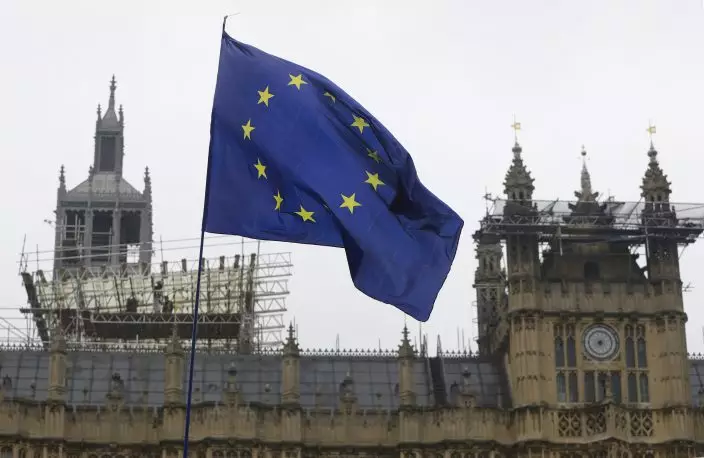
A European Union flag flies in front of Britain's parliament buildings as workmen carry out repairs, in London, Tuesday, April 9, 2019. Prime Minister Theresa May has brought her case for a further delay to Britain's departure from the European Union to Berlin, while German and French officials are insisting that any extension to the deadline must come with strings attached and assurances from London. (AP PhotoKirsty Wigglesworth)
BACKSTOP: The Brexit backstop is part of the withdrawal agreement between the EU and Britain. It's an insurance policy designed to ensure there are no customs checks or other border infrastructure between the U.K.'s Northern Ireland and EU member Ireland after Brexit. The backstop says if no other solution is found, Britain will remain in a customs union with the EU in order to keep the Irish border open. Opposition to the backstop from pro-Brexit British lawmakers is the main reason the deal has been defeated in Parliament
BREXHAUSTION: The state of anxious weariness felt by many U.K. citizens and politicians at the unresolved Brexit crisis, almost three years after Britain voted to leave the EU.
BREXIT: A contraction of "British exit," Brexit is Britain's departure from the European Union. The U.K. joined the bloc in 1973, and held a 2016 referendum on its membership that was won by the "leave" side.
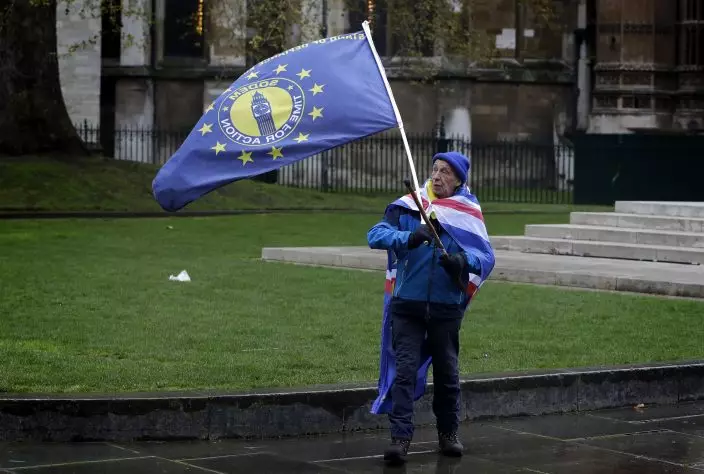
A n anti-Brexit campaigner controls his flag near parliament, in London, Tuesday, April 9, 2019. Prime Minister Theresa May has brought her case for a further delay to Britain's departure from the European Union to Berlin, while German and French officials are insisting that any extension to the deadline must come with strings attached and assurances from London. (AP PhotoKirsty Wigglesworth)
BREXITER/BREXITEER: A supporter of Britain's exit from the European Union.
BREXTREMIST: Pejorative term for a Brexit supporter.
BREXTENSION: Brexit extension, a delay to Britain's exit from the EU. The bloc has already granted one postponement, from March 29 to April 12, and Prime Minister Theresa May is seeking another delay to give Britain time to break its Brexit impasse. One possibility is a "flextension" (see below).
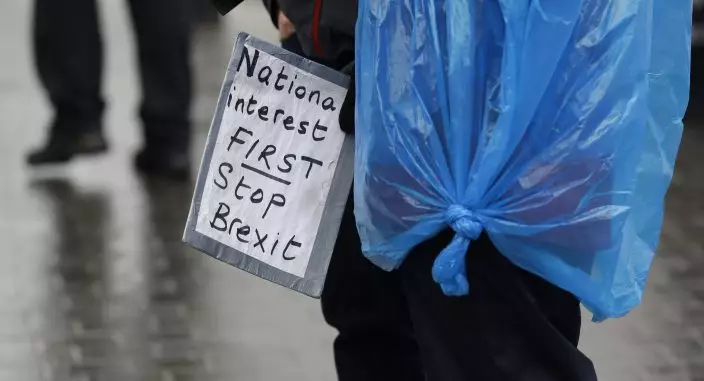
An anti-Brexit campaigner holds a banner as she shelters from the rain near parliament, in London, Tuesday, April 9, 2019. Prime Minister Theresa May has brought her case for a further delay to Britain's departure from the European Union to Berlin, while German and French officials are insisting that any extension to the deadline must come with strings attached and assurances from London. (AP PhotoKirsty Wigglesworth)
BRINO: An acronym that means "Brexit in name only." It's a pejorative term used by Brexiteers for a "soft Brexit" departure in which Britain retains close economic and regulatory ties with the European Union.
CONFIRMATORY VOTE: A new referendum in which voters would be asked whether to approve any Brexit deal passed by Parliament. The other option would be remaining in the EU, so this plan is mainly favored by those who hope Brexit can be stopped. Also known by its supporters as a "people's vote."
CUSTOMS UNION: The European Union customs union makes the 28-nation bloc a single customs territory, with no tariffs or border checks on goods moving between member states. It also has common tariffs on goods entering the bloc from the outside.
EUROPEAN UNION: Formed in 1957 as the European Economic Community by France, West Germany, Italy, Belgium, the Netherlands and Luxembourg, the group is now a 28-nation bloc of more than 500 million people with substantial powers over member nations' laws, economies and social policies.
FLEXTENSION: A form of Brexit delay that would give Britain a long extension to its departure date, but with the possibility of leaving earlier if Parliament approves a Brexit deal.
HARD BREXIT: A Brexit that sees the U.K. cut many of its ties with the EU, including leaving the EU's vast single market and customs union. Some supporters of the idea prefer the term "clean Brexit," and say it will enable Britain to forge its own trade deals around the world.
INDICATIVE VOTE: Britain's Parliament has held a series of non-binding "indicative votes" on various Brexit outcomes as a way of finding out whether any have majority support. Lawmakers rejected every option, from leaving the EU without a deal to holding a new referendum on whether to remain.
LEAVER: A Briton who voted to leave the European Union. See also Brexiteer.
NO-DEAL BREXIT: If Britain and the EU do not finalize a divorce deal, Britain will cease to be an EU without an agreement setting out what happens next. A no-deal Brexit would rip up the rules that govern ties between the U.K. Many businesses say that would cause economic chaos, and Parliament has voted to rule it out — though it remains the legal default option.
REMAINER: A Briton who voted to stay in the European Union.
REMOANER, REMAINIAC: Pejorative terms for people who want the U.K. to remain in the EU.
SINGLE MARKET: The EU's single market makes the bloc a common economic zone in which goods and services can move freely with no internal borders or barriers.
SOFT BREXIT: A Brexit that sees the U.K. retain its close economic ties with the EU, including membership in the bloc's single market and customs union.
WITHDRAWAL AGREEMENT/POLITICAL DECLARATION: In November 2018, Britain and the EU struck a two-part divorce agreement. It consists of a legally binding, 585-page withdrawal agreement setting out the terms of the U.K.'s departure, and a shorter, non-binding political declaration committing the two parties to close future ties. The agreement must be approved by the British and European parliaments to take effect, but Britain's Parliament has rejected it three times.
Follow AP's full coverage of Brexit at: https://www.apnews.com/Brexit
BRUSSELS (AP) — The European Union on Friday indefinitely froze Russia’s assets in Europe to ensure that Hungary and Slovakia, both with Moscow-friendly governments, can’t prevent the billions of euros from being used to support Ukraine.
Using a special procedure meant for economic emergencies, the EU blocked the assets until Russia gives up its war on Ukraine and compensates its neighbor for the heavy damage that it has inflicted for almost four years.
EU Council President António Costa said European leaders had committed in October “to keep Russian assets immobilized until Russia ends its war of aggression against Ukraine and compensates for the damage caused. Today we delivered on that commitment.”
It’s a key step that will allow EU leaders to work out at a summit next week how to use the tens of billions of euros in Russian Central Bank assets to underwrite a huge loan to help Ukraine meet its financial and military needs over the next two years.
“Next step: securing Ukraine’s financial needs for 2026–27,” added Costa, who will chair the Dec. 18 summit.
The move also prevents the assets, estimated to total around 210 billion euros ($247 billion), from being used in any negotiations to end the war without European approval.
A 28-point plan drafted by U.S. and Russian envoys stipulated that the EU would release the frozen assets for use by Ukraine, Russia and the United States. That plan, which surfaced last month, was rejected by Ukraine and its backers in Europe.
French Foreign Minister Jean-Noël Barrot wrote on X that the EU decision means that “no one will decide in place of the Europeans the use of these funds.”
The vast majority of the funds — around 193 billion euros ($225 billion) at the end of September — are held in Euroclear, a Belgian financial clearing house.
The money was frozen under sanctions that the EU imposed on Russia over the war it launched on Feb. 24, 2022, but these sanctions must be renewed every six months with the approval of all 27 member countries.
Hungary and Slovakia oppose providing more support to Ukraine, but Friday’s decision prevents them from blocking the sanctions rollover and make it easier to use the assets.
Hungarian Prime Minister Viktor Orbán – Russian President Vladimir Putin’s closest ally in Europe – said on social media that it means that “the rule of law in the European Union comes to an end, and Europe’s leaders are placing themselves above the rules.”
“The European Commission is systematically raping European law. It is doing this in order to continue the war in Ukraine, a war that clearly isn’t winnable,” he wrote. He said that Hungary “will do everything in its power to restore a lawful order.”
In a letter to Costa, Slovak Prime Minister Robert Fico said that he would refuse to back any move that “would include covering Ukraine’s military expenses for the coming years.”
He warned “that the use of frozen Russian assets could directly jeopardize U.S. peace efforts, which directly count on the use of these resources for the reconstruction of Ukraine.”
But the commission argues that the war has imposed heavy costs by hiking energy prices and stunting economic growth in the EU, which has already provided nearly 200 billion euros ($235 billion) in support to Ukraine.
Belgium, where Euroclear is based, is opposed to the “reparations loan” plan. It says that the plan “entails consequential economic, financial and legal risks,” and has called on other EU countries to share the risk.
Russia’s Central Bank, meanwhile, said on Friday that it has filed a lawsuit in Moscow against Euroclear for damages it says were caused when Moscow was barred from managing the assets. Euroclear declined to comment.
The Belgian clearing house has around 17 billion euros ($20 billion) in Russia and it’s unclear what would happen to that money if the legal challenge or others like it succeed.
In a separate statement, the Central Bank also described wider EU plans to use Russian assets to aid Ukraine as “illegal, contrary to international law,” arguing that they violated “the principles of sovereign immunity of assets.”
But EU Economy Commissioner Valdis Dombrovskis brushed off the suit, saying that the decision is “legally robust,” and that he expects Russia “to continue to launch speculative legal proceedings to prevent the EU from upholding international law.”
Chris Weafer, CEO of Macro-Advisory Ltd. Consultancy, said that the timing of the court action is “clearly linked” to the EU’s intention to use the frozen assets.
“The Russian Central Bank is making clear that it will respond with legal actions against all countries involved in the decision to take the Russian money,” he said.
Friday's EU decision came hours after Germany summoned the Russian ambassador in Berlin following allegations of sabotage, disinformation campaigns, cyberattacks and interference in its elections.
Associated Press journalists Karel Janicek in Prague, Sylvie Corbet in Paris, Katie Marie Davies in Manchester, England and Stefanie Dazio in Berlin contributed to this report.
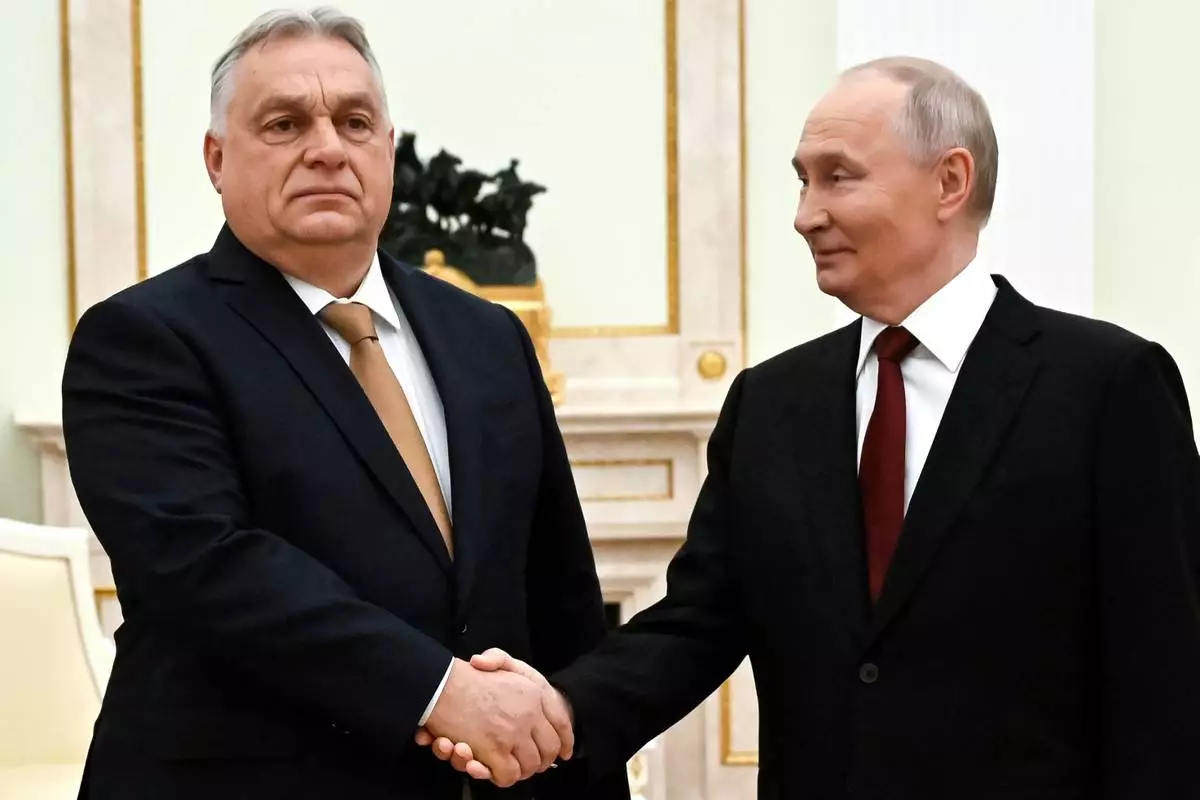
FILE - Russian President Vladimir Putin, right, and Hungarian Prime Minister Viktor Orban shake hands during their meeting at the Senate Palace of the Kremlin in Moscow, Russia, Nov. 28, 2025. (Alexander Nemenov/Pool Photo via AP, File)
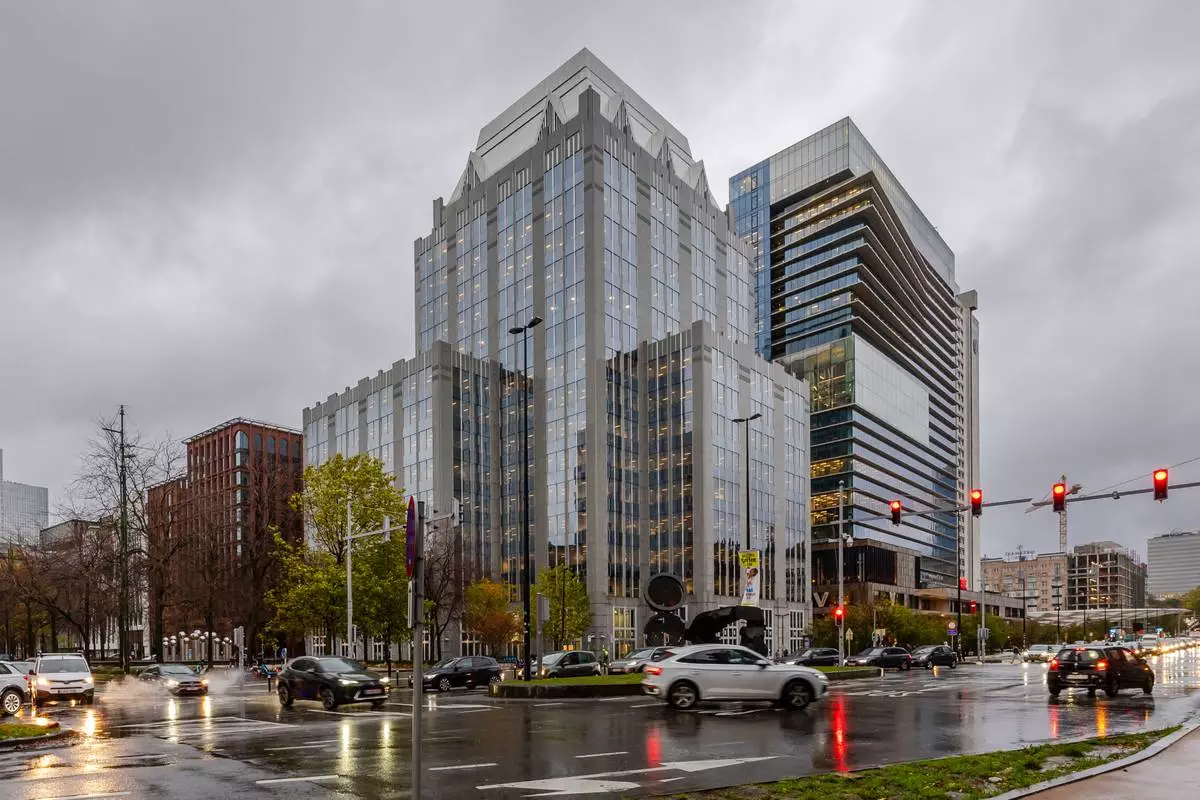
FILE - A view of the headquarters of Euroclear in Brussels, on Oct. 23, 2025. (AP Photo/Geert Vanden Wijngaert, File)
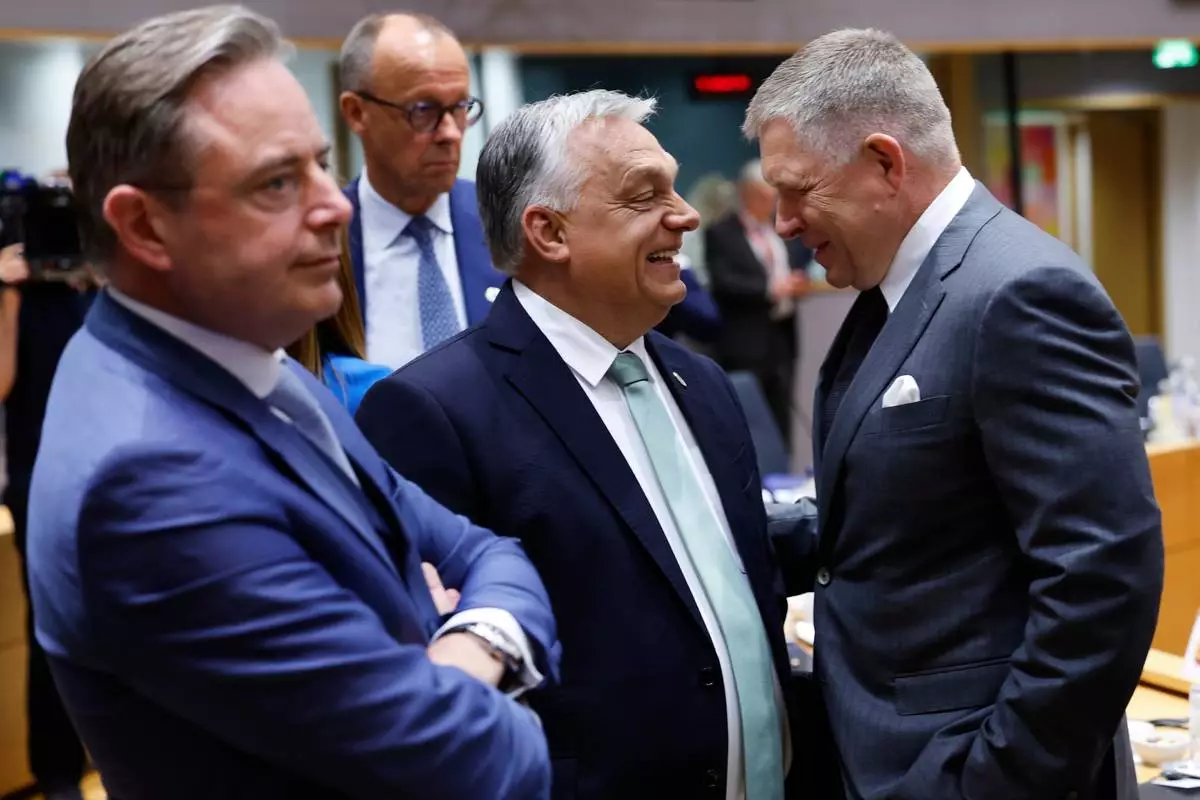
FILE - From left, Belgium's Prime Minister Bart De Wever, Germany's Chancellor Friedrich Merz, Hungary's Prime Minister Viktor Orban and Slovakia's Prime Minister Robert Fico attend a round table meeting at an EU summit in Brussels, Thursday, June 26, 2025. (AP Photo/Geert Vanden Wijngaert, File)
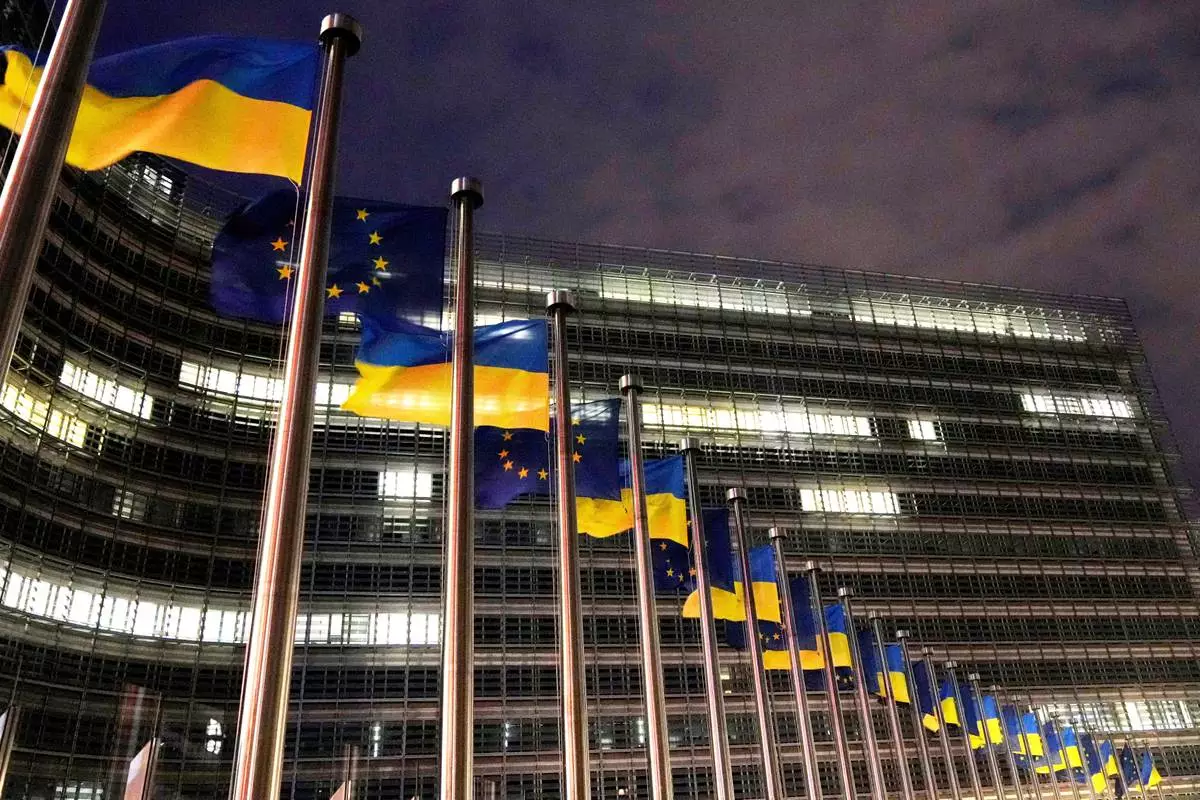
FILE - The European Union and Ukrainian flags flap in the wind to mark the third anniversary of Russia's full-scale invasion of Ukraine outside EU headquarters in Brussels, Feb. 24, 2025. (AP Photo/Virginia Mayo, File)

Cars drive past Euroclear headquarters in Brussels, Wednesday, Dec. 3, 2025. (AP Photo/Sylvain Plazy)
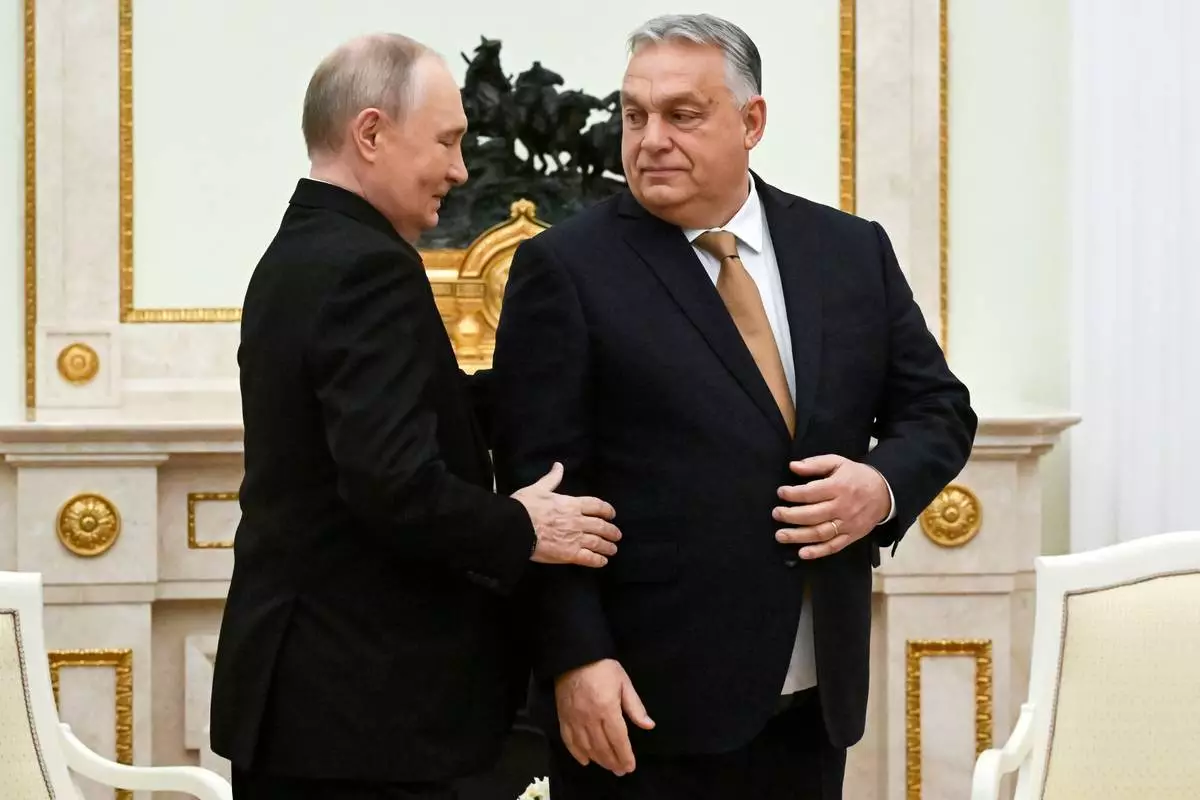
Russian President Vladimir Putin, left, speaks with Hungarian Prime Minister Viktor Orban during their meeting at the Senate Palace of the Kremlin in Moscow, Russia, Friday, Nov. 28, 2025. (Alexander Nemenov/Pool Photo via AP)
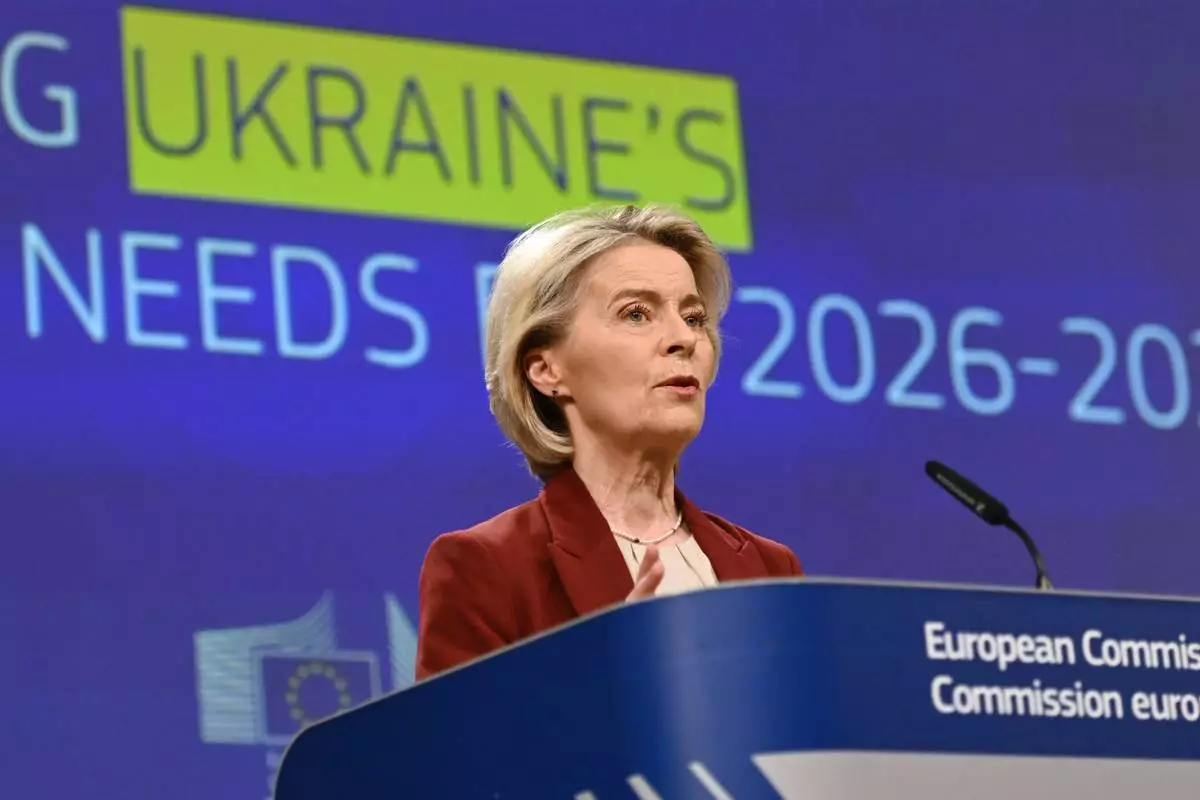
European Commission President Ursula von der Leyen speaks during a media conference regarding Ukraine's financing needs for 2026-2027 at EU headquarters in Brussels, Wednesday, Dec. 3, 2025. (AP Photo/Harry Nakos)