Two companies from Uruguay and Colombia will become the first in Latin America to export medical marijuana products to Europe under deals announced Wednesday.
Fotmer Life Sciences of Uruguay and Clever Leaves of Colombia will export cannabis extract and dried marijuana flowers to Germany, which they called the largest market in Europe, with an estimated 700,000 people using medicinal products derived from marijuana.
Uruguay in December 2013 became the first country in the world to legalize a national cannabis market from growing to purchase for personal use, and the government later legalized the export of medical marijuana products to countries where it is legal, a move that has brought a wave of investment. Colombia, which has decriminalized pot use, legalized medical marijuana products.
The announcements of the deals did not provide a dollar figure or start date.
"This puts Uruguay on the world map" of pharmaceutical cannabis, said Fotmer CEO Jordan Lewis, an American who moved to Uruguay to participate in the cannabis industry after its legalization.
In a press statement from Germany, Clever Leaves CEO Andrés Fajardo said the export deal shows "that the Colombian market can reach international standards and produce high quality medicinal cannabis."
The German company that will import the products, Cansativa GmbH, said it is the first time a European company is buying medicinal cannabis from Latin America. Benedikt Sons, co-founder and director of Cansativa, said in a statement the trade with Latin America will ensure better prices in Germany by expanding sources of supply beyond the Netherlands and Canada.
Fotmer, based in the small town of Nueva Helvecia, employs 80 people and is investing $7 million in laboratories and 10 tons of marijuana crops for the export market. It sells dried cannabis flowers.
Clever Leaves produces extracts oil from marijuana flowers that is used in pills, creams, ointments, patches and other products for the treatment of epilepsy and chronic pain, among other uses. It plans to produce 32 tons of dried marijuana flowers this year and increase that to 85 tons by 2020.
Follow AP's complete marijuana coverage: https://apnews.com/Marijuana
Five years ago, video images from a Minneapolis street showing a police officer kneeling on the neck of George Floyd as his life slipped away ignited a social movement.
Now, videos from another Minneapolis street showing the last moments of Renee Good's life are central to another debate about law enforcement in America. They've slipped out day by day since ICE agent Jonathan Ross shot Good last Wednesday in her maroon SUV. Yet compared to 2020, the story these pictures tell is murkier, subject to manipulation both within the image itself and the way it is interpreted.
This time, too, the Trump administration and its supporters went to work establishing their own public view of the event before the inevitable imagery appeared.
But half a decade later, so many things are not the same — from cultural attitudes to rapidly evolving technology around all kinds of imagery.
“We are in a different time,” said Francesca Dillman Carpentier, a University of North Carolina journalism professor and expert on the media's impact on audiences.
No one who saw the searing video of Minneapolis police officer Derek Chauvin with his knee on Floyd's neck for more than nine minutes on May 25, 2020, is likely to forget it — and Chauvin's impassive face Floyd insisted he couldn't breathe. United in revulsion, demonstrators began one of the nation's largest-ever social movements. Chauvin was convicted of murder.
The footage “caused many individuals to experience an epiphany about racism, specifically cultural racism, in the United States,” legal scholar Angela Onwuachi-Willig wrote in a Houston Law Review study that examined whether white Americans experienced a collective cultural trauma.
She eventually concluded that didn't happen and that the impact diminished with time. The rollback of diversity programs with the second Trump administration offers evidence for her argument.
“The people who are writing the cultural narrative of the Good shooting took notes from the Floyd killing and are managing this narrative differently,” said Kelly McBride, an expert on media ethics for the Poynter Institute.
Homeland Security Secretary Kristi Noem labeled Good, who was demonstrating in opposition to ICE enforcement of immigration laws, a domestic terrorist — an interpretation that Minneapolis Mayor Jacob Frey dismissed with an expletive. Both President Donald Trump and Vice President JD Vance suggested the shooting was justified because Good was trying to run Ross down with her vehicle.
On the night of the killing, White House border czar Tom Homan was cautious in an interview with the “CBS Evening News” when anchor Tony Dokoupil showed him the most widely distributed video of the incident, taken by a bystander and posted by a reporter for the Minnesota Reformer. The veteran law enforcement official said it would be unprofessional for him to prejudge before an investigation.
Later that evening, Homan issued a statement calling the shooting “another example of the results of the hateful rhetoric and violent attacks” against U.S. Immigration and Customs Enforcement and Border Patrol officers.
Video of the incident has been generally inconclusive about whether Good's vehicle actually hit Ross before he opened fire. Even if she did, many experts question whether that represented grounds for firing his weapon. Clearly, however, that would bolster public sympathy for the officer.
“These ICE videos do present irrefutable facts — a woman drove her car and then she was shot dead by an ICE agent,” said Duy Linh Tu, a documentarian and professor at the Columbia University journalism school. “What the videos can't show is the intent of the woman or the officer. And that's the tricky part.”
Good, obviously, can’t speak to what motivated her to put her SUV in drive and move on Portland Avenue South.
Several news organizations have carefully examined the forensic evidence that has emerged. The Associated Press wrote that it was unclear if Good's car made contact with Ross. The Washington Post wrote that “videos examined by The Post, including one shared on Truth Social by Trump, do not clearly show whether the agent is struck or how close the front of the vehicle comes to striking him.”
The New York Times said that “in one video, it looks like the agent is being struck by the SUV. But when we synchronize it with the first clip, we can see the agent is not being run over.”
Video that emerged Friday from the Minnesota site Alpha News showed the incident from Ross' perspective. It, too, left many questions and no shortage of people willing to answer them.
Vance linked to the video online and wrote: “Many of you have been told this law enforcement officer wasn't hit by a car, wasn't being harassed and murdered an innocent woman. The reality is that his life was endangered and he fired in self-defense.”
Senate Democratic leader Chuck Schumer wrote online that “how could anyone on the planet watch this video and conclude what JD Vance says?” Schumer said the administration “is lying to you.”
When one online commentator wrote that Good did not deserve to be shot in the face, conservative media figure Megyn Kelly responded, “Yes, she did. She hit and almost ran over a cop.”
Poynter’s McBride said the media has generally done a good and careful job outlining the evidence that is circulating around in the public. But the administration has also been effective in spreading its interpretation, she said.
There are more camera angles available now than there was with Floyd, but “I don't know if that adds clarity or more fog to this case,” Tu said. “I think that people will see what they want to see. Or, rather, they'll pick the angle that aligns with what they already believe.”
That nagging sense of uncertainty left by the videos leaves experts like Tu and Carpentier to conclude they will pale in impact compared to the Floyd case. With each passing year, the public is becoming more desensitized to images of violence — as the online spread of footage showing Republican activist Charlie Kirk illustrated, she said.
The spread of AI-enhanced fake images is also teaching the public to question what it sees, she said. Before Ross was identified, BBC Verify said false images were being spread online speculating about what the masked agent looked like, and fake video of a Minneapolis demonstration spread.
“Now you can't believe what you're seeing,” Carpentier said. “You don't know if what you're seeing is the real video or if it has been doctored. I don't think AI is being a friend in this case at all.”
David Bauder writes about the intersection of media and entertainment for the AP. Follow him at http://x.com/dbauder and https://bsky.app/profile/dbauder.bsky.social.
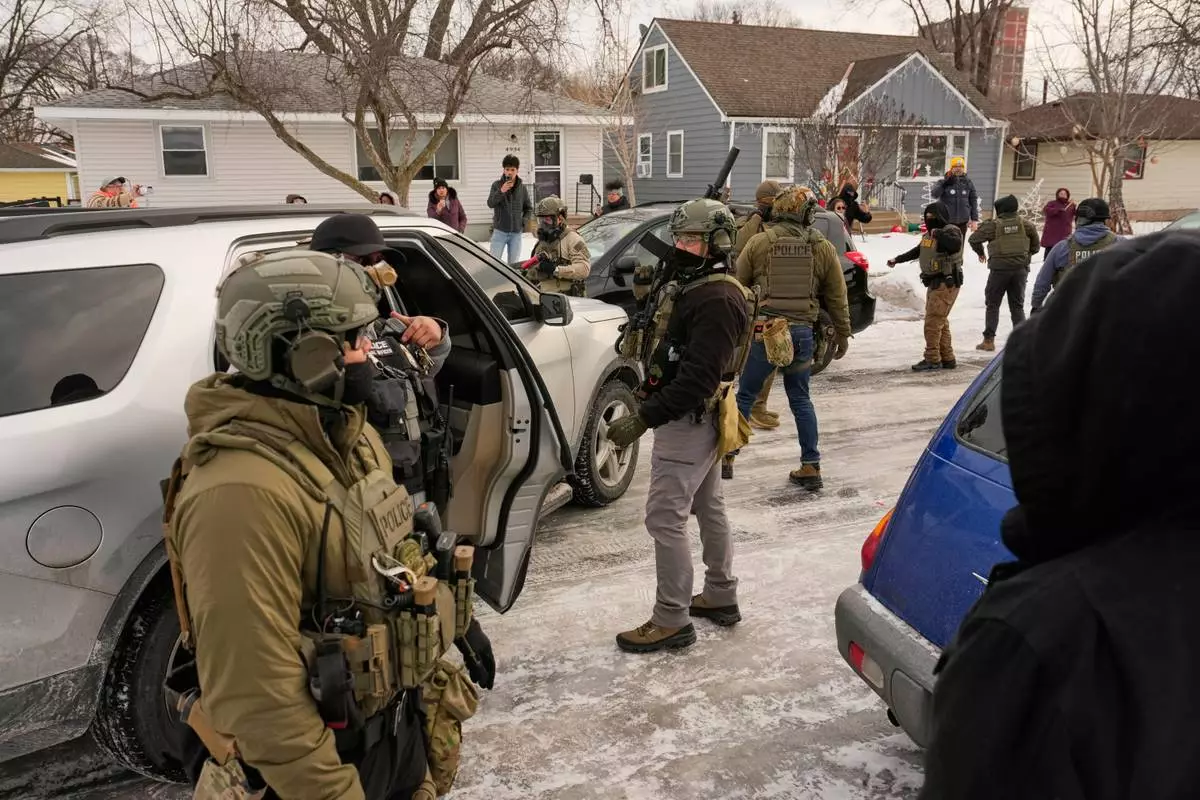
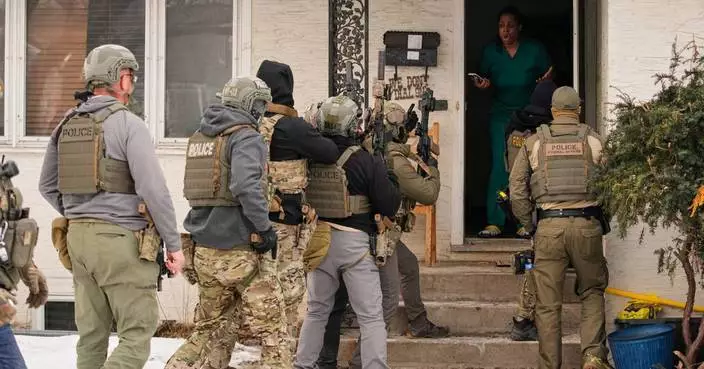
Federal immigration officers make an arrest as bystanders film the incident Sunday, Jan. 11, 2026, in Minneapolis. (AP Photo/John Locher)
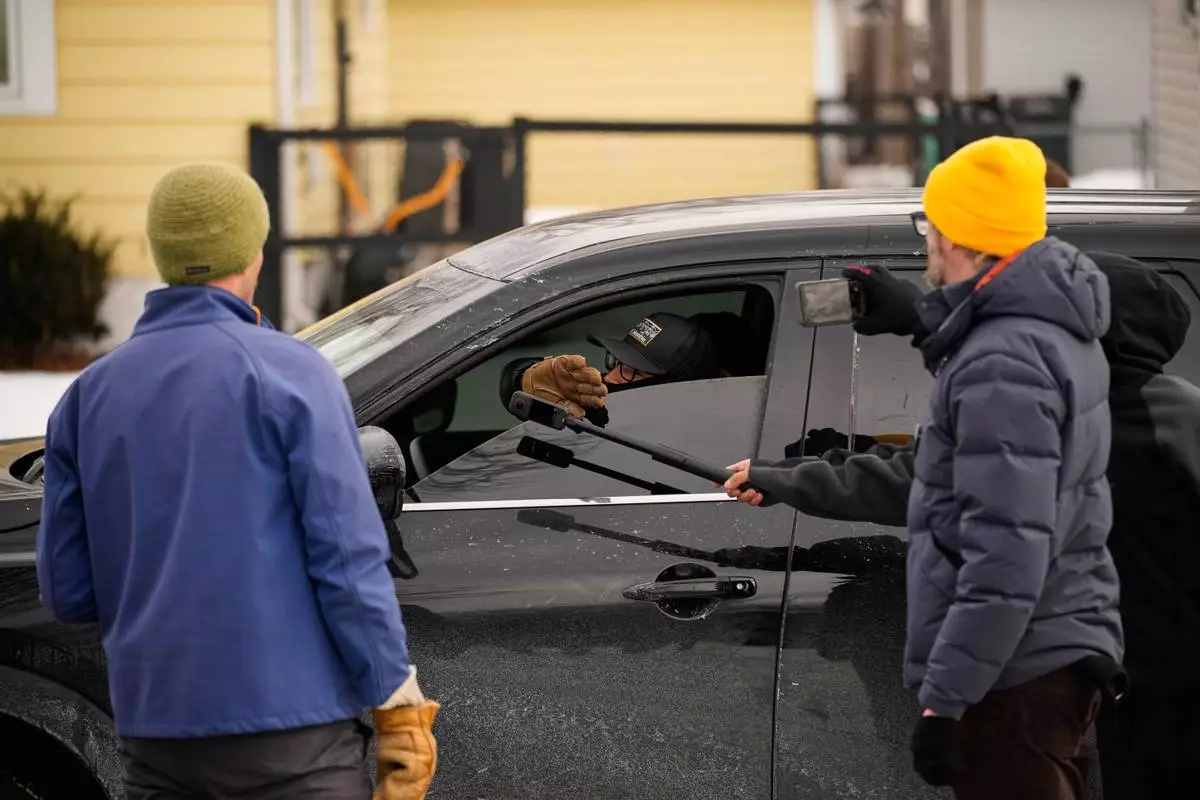
Bystanders film a federal immigration officer in their car Sunday, Jan. 11, 2026, in Minneapolis. (AP Photo/John Locher)