The Venezuelan government is seeking to ease the country's isolation, reopening borders with Aruba and Brazil after shutting off sea and land access in February to block the opposition from delivering humanitarian aid.
However, neighboring Colombia accused Venezuela of supporting terrorism by allegedly hosting Colombian rebels, and the United States warned of additional sanctions on figures in Venezuela's military and intelligence services as international efforts to oust President Nicolás Maduro increase.
In Venezuela, meanwhile, a court ordered Edgar Zambrano, vice president of the opposition-controlled National Assembly, to be jailed at a military facility following his detention for supporting an April 30 call by the opposition for a military uprising to overthrow Maduro. Opposition leader Juan Guaidó announced that more protests will be held on Saturday despite concerns that the government is widening a crackdown on members of the congress that he heads.

Children play outside a building occupied by squatters in Caracas, Venezuela, Thursday, May 9, 2019. In the fourth month of their standoff, Venezuela's President Nicolas Maduro and opposition leader Juan Guaidó are unable to deliver a knock-out blow as Venezuela spirals deeper into neglect, isolation and desperation. (AP PhotoRodrigo Abd)
Venezuela's land and sea links with Colombia and two other Dutch Caribbean islands remain shuttered despite the border reopenings with Aruba and Brazil, Industry Minister Tareck El Aissami said Friday.
El Aissami, who has denied U.S. allegations of his involvement in drug trafficking, said on state television that he hopes the two islands "avoid becoming instruments of aggression against the territory of the Bolivarian Republic of Venezuela."
The South American nation's socialist government ordered the borders with Aruba, Bonaire, Curacao, Brazil and Colombia closed three months ago as the opposition tried to deliver food and medical supplies.
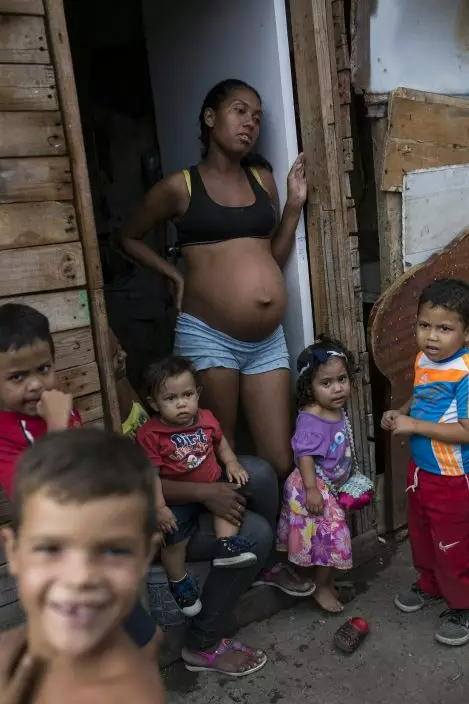
Families gather outside their homes in the "Aguerridos Liberator" shanty town in Caracas, Venezuela, Thursday, May 9, 2019. In the fourth month of their standoff, Venezuela's President Nicolas Maduro and opposition leader Juan Guaidó are unable to deliver a knock-out blow as Venezuela spirals deeper into neglect, isolation and desperation. (AP PhotoRodrigo Abd)
The aid was provided largely by the United States, a key ally of Guaidó, who is recognized by over 50 nations as Venezuela's rightful president. Maduro dismissed the aid push as an infringement on Venezuela's sovereignty and a U.S.-backed attempt to remove him from power.
The bulk of the assistance was stored in Colombia, while smaller amounts were held in Brazil and the Caribbean. Opposition leaders tried driving the aid across the land borders in trucks but were blocked by state security forces.
El Aissami said Maduro's government held talks with Aruba and Brazil and said they'd reached the "necessary agreement" to ensure that another attempt to force aid into Venezuela would not occur.
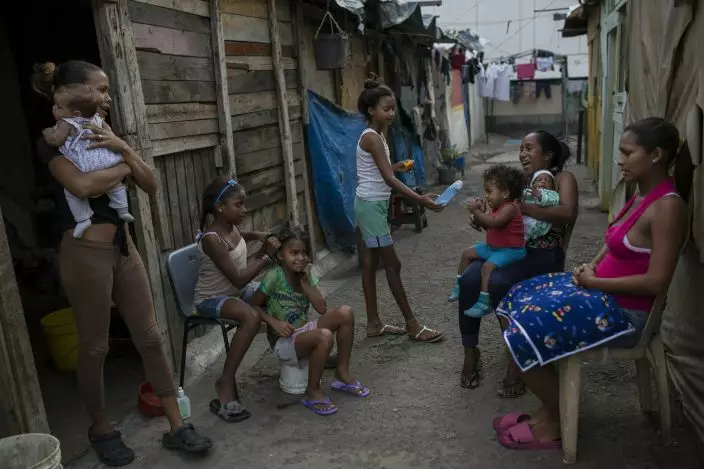
Families gather outside their home in the "Aguerridos Liberator" shanty town in Caracas, Venezuela, Thursday, May 9, 2019. In the fourth month of their standoff, Venezuela's President Nicolas Maduro and opposition leader Juan Guaidó are unable to deliver a knock-out blow as Venezuela spirals deeper into neglect, isolation and desperation. (AP PhotoRodrigo Abd)
He said that until the other two Dutch Caribbean islands and Colombia assure Venezuelan authorities that they will cease any attempts to destabilize Maduro's government, those borders will remain closed.
Relations between Venezuela and its neighbors have grown increasingly prickly as many leaders in the region have support Guaidó's claim to the presidency and efforts to remove Maduro from power.
The border closure has had an especially strong impact on tens of thousands of Venezuelans who typically cross into Colombia daily, searching for food, medicine or a new life outside the struggling nation. Many are now crossing illegally through dozens of illegal dirt pathways where criminal groups charge for passage and frequently rob or assault those trying to enter.
In Colombia, President Iván Duque on Friday accused the Venezuelan government of supporting terrorism by allegedly providing refuge to senior members of the National Liberation Army, a Colombian rebel group also known by its Spanish initials ELN. Maduro has provided weapons, money and other aid to the ELN for years in violation of international law, according to Duque. Venezuela has denied the allegations, saying Colombia is trying to divert attention from its domestic problems.
Also Friday, the U.S. Treasury Department said people in the defense and security sector of the Venezuelan economy could be subject to sanctions, in what it said was a response to the arrest of members of the opposition-controlled National Assembly in Venezuela. It also imposed sanctions on two companies — Monsoon Navigation Corporation and Serenity Maritime Limited — said to be operating in the Venezuelan oil industry.
Associated Press journalist Christine Armario contributed from Bogota, Colombia.
CARACAS, Venezuela (AP) — Venezuela’s acting President Delcy Rodriguez used her first state of the union address on Thursday to promote oil industry reforms that would attract foreign investment, an objective aggressively pushed by the Trump administration since it toppled the country’s longtime leader less than two weeks ago.
Rodríguez, who has been under pressure from the U.S. to fall in line with its vision for the oil-rich nation, said sales of Venezuelan oil would go to bolster crisis-stricken health services, economic development and other infrastructure projects.
While she sharply criticized the Trump administration and said there was a “stain on our relations,” the former vice president also outlined a distinct vision for the future between the two historic adversaries, straying from her predecessors, who have long railed against American intervention in Venezuela.
“Let us not be afraid of diplomacy” with the U.S., said Rodriguez, who must now navigate competing pressures from the Trump administration and a government loyal to former President Nicolás Maduro.
The speech, which was broadcast on a delay in Venezuela, came one day after Rodríguez said her government would continue releasing prisoners detained under Maduro in what she described as “a new political moment” since his ouster.
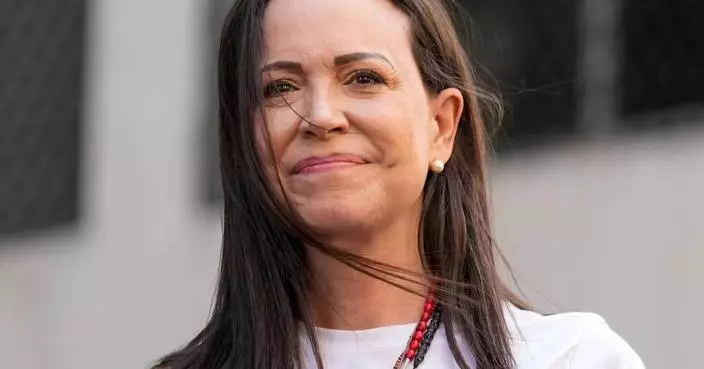
Trump on Thursday met at the White House with Venezuelan opposition leader María Corina Machado, whose political party is widely considered to have won 2024 elections rejected by Maduro. But in endorsing Rodríguez, who served as Maduro’s vice president since 2018, Trump has sidelined Machado.
In her speech, Rodríguez said money earned from foreign oil sales would go into two funds: one dedicated to social services for workers and the public health care system, and another to economic development and infrastructure projects.
Hospitals and other health care facilities across the country have long suffered. Patients are asked to provide practically all supplies needed for their care, from syringes to surgical screws. Economic turmoil, among other factors, has pushed millions of Venezuelans to migrate from the South American nation in recent years.
In moving forward, the acting president must walk a tightrope, balancing pressures from both Washington and top Venezuelan officials who hold sway over Venezuela's security forces and strongly oppose the U.S. Her recent public speeches reflect those tensions — vacillating from conciliatory calls for cooperation with the U.S., to defiant rants echoing the anti-imperialist rhetoric of her toppled predecessor.
American authorities have long railed against a government they describe as a “dictatorship,” while Venezuela’s government has built a powerful populist ethos sharply opposed to U.S. meddling in its affairs.
For the foreseeable future, Rodríguez's government has been effectively relieved of having to hold elections. That's because when Venezuela’s high court granted Rodríguez presidential powers on an acting basis, it cited a provision of the constitution that allows the vice president to take over for a renewable period of 90 days.
Trump enlisted Rodríguez to help secure U.S. control over Venezuela’s oil sales despite sanctioning her for human rights violations during his first term. To ensure she does his bidding, Trump threatened Rodríguez earlier this month with a “situation probably worse than Maduro.”
Maduro, who is being held in a Brooklyn jail, has pleaded not guilty to drug-trafficking charges.
Before Rodríguez’s speech on Thursday, a group of government supporters was allowed into the presidential palace, where they chanted for Maduro, who the government insists remains the country’s president. “Maduro, resist, the people are rising,” they shouted.
Follow AP’s coverage of Latin America and the Caribbean at https://apnews.com/hub/latin-america
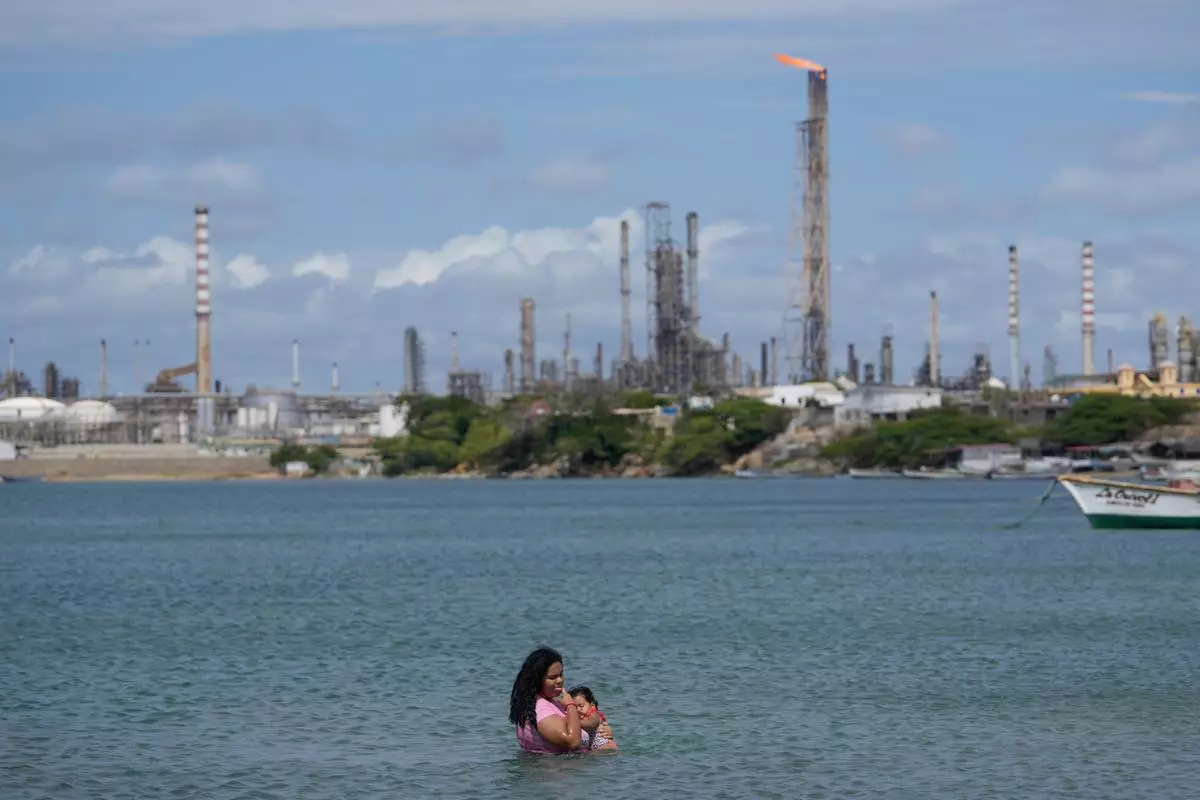
Ceylis Mendez and her daughter Zoe cool off in the Gulf of Venezuela in front of the Cardon oil refinery off the shore of Punta Cardon, Venezuela, Wednesday, Jan. 14, 2026. (AP Photo/Matias Delacroix)
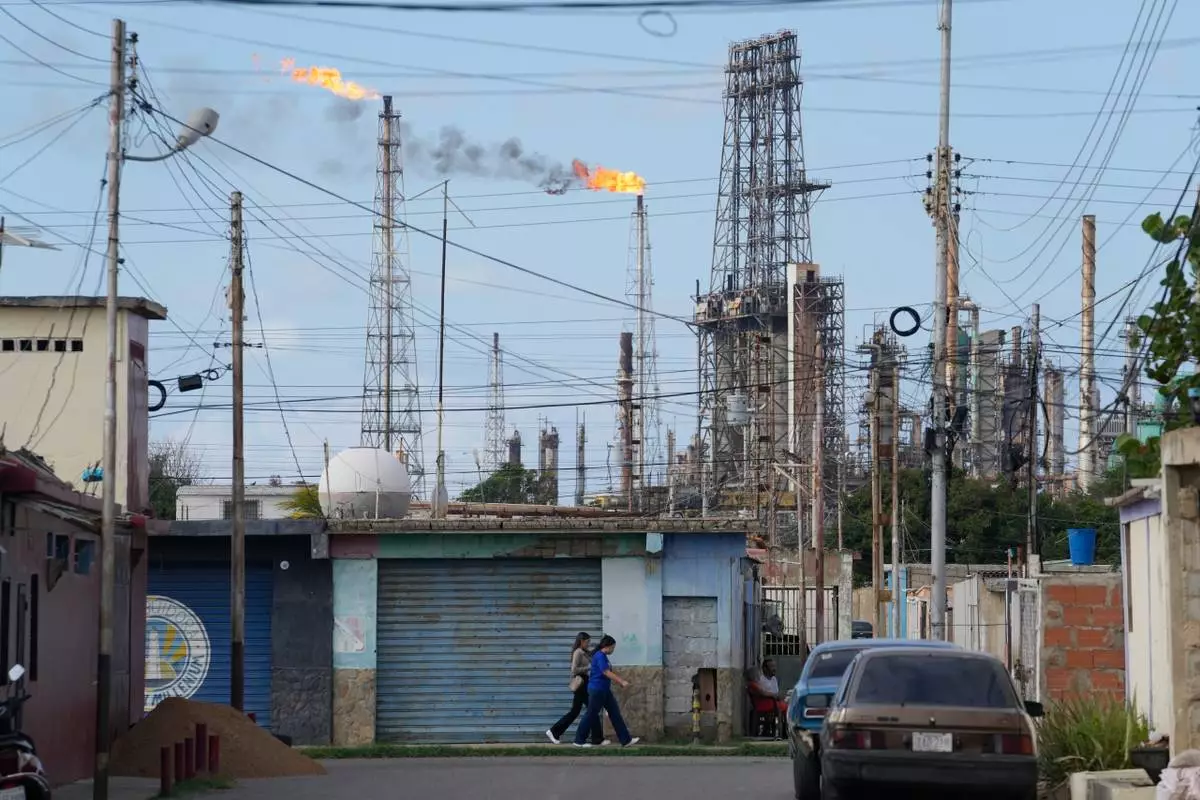
Flames rise from flare stacks at the Amuay refinery in Los Taques, Venezuela, Wednesday, Jan. 14, 2026. (AP Photo/Matias Delacroix)
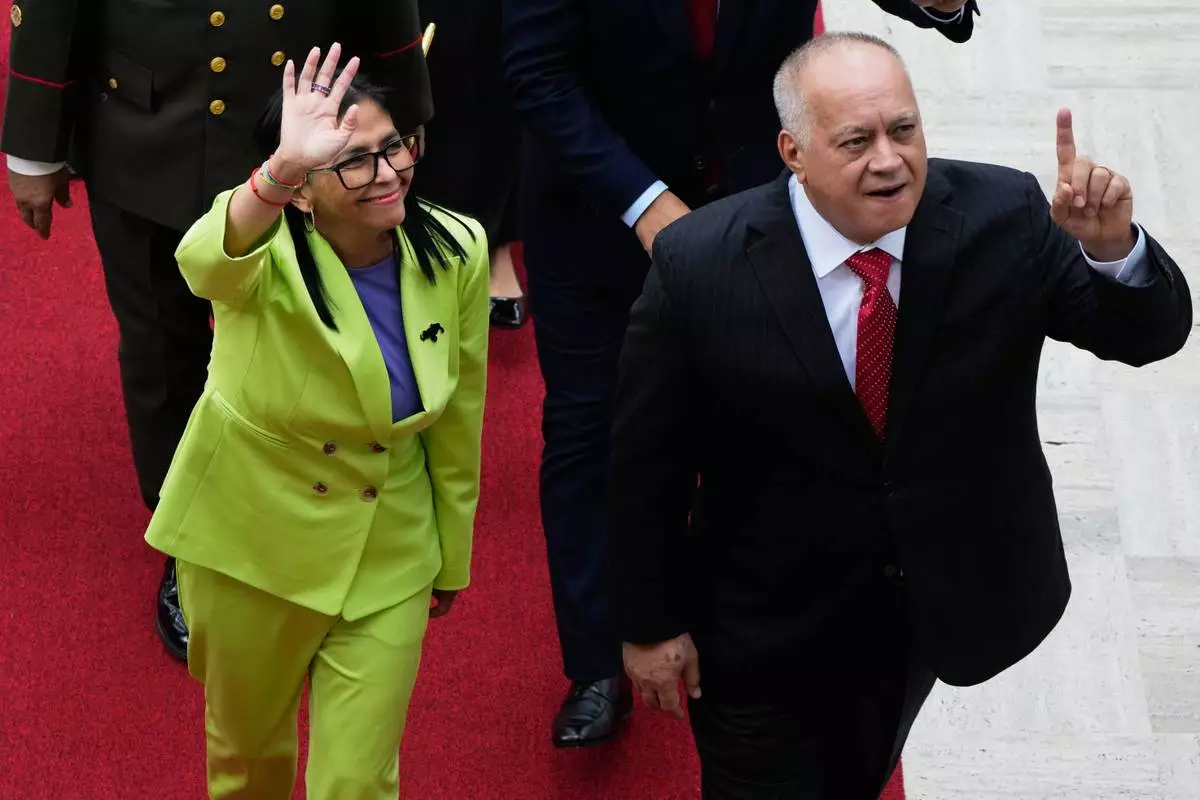
Venezuela's acting President Delcy Rodriguez, left, and Interior Minister Diosdado Cabello arrive at the National Assembly in Caracas, Venezuela, Thursday, Jan. 15, 2026. (AP Photo/Ariana Cubillos)
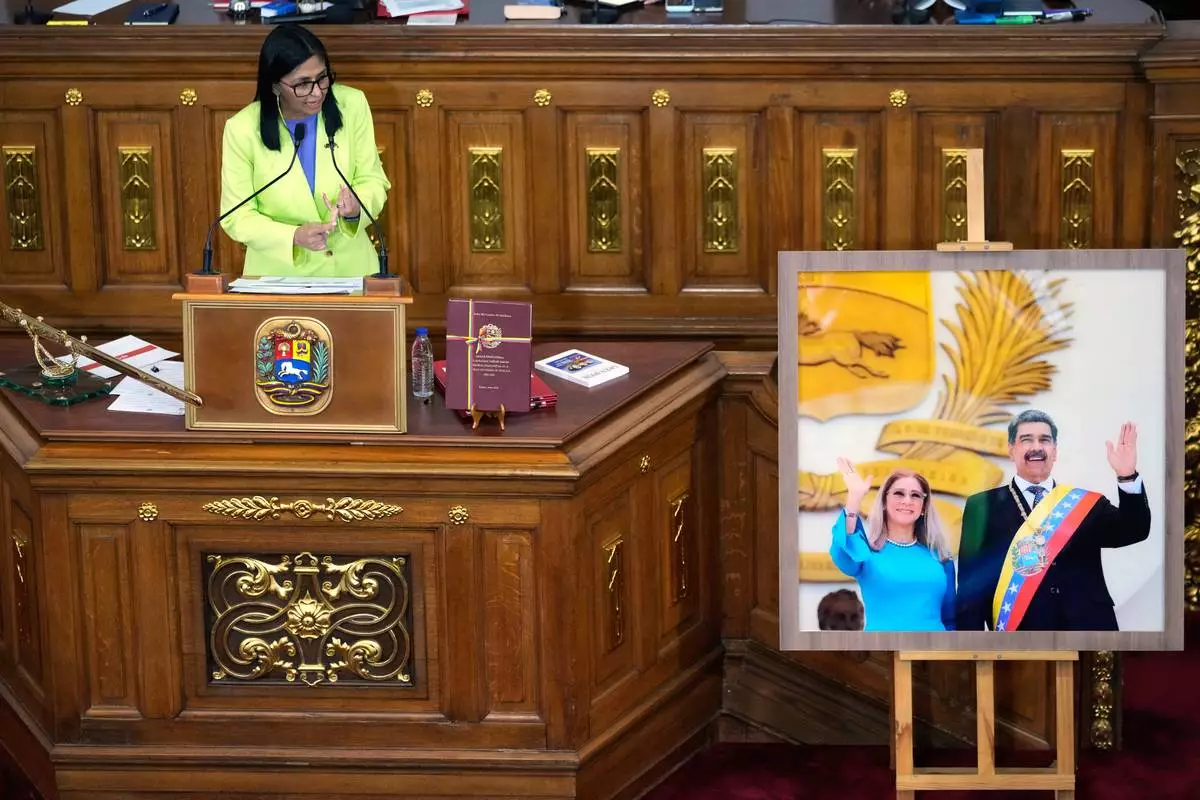
Venezuela's acting President Delcy Rodriguez addresses lawmakers next to a picture of former President Nicolas Maduro and his wife Cilia Flores, at the National Assembly in Caracas, Venezuela, Thursday, Jan. 15, 2026. (AP Photo/Ariana Cubillos)
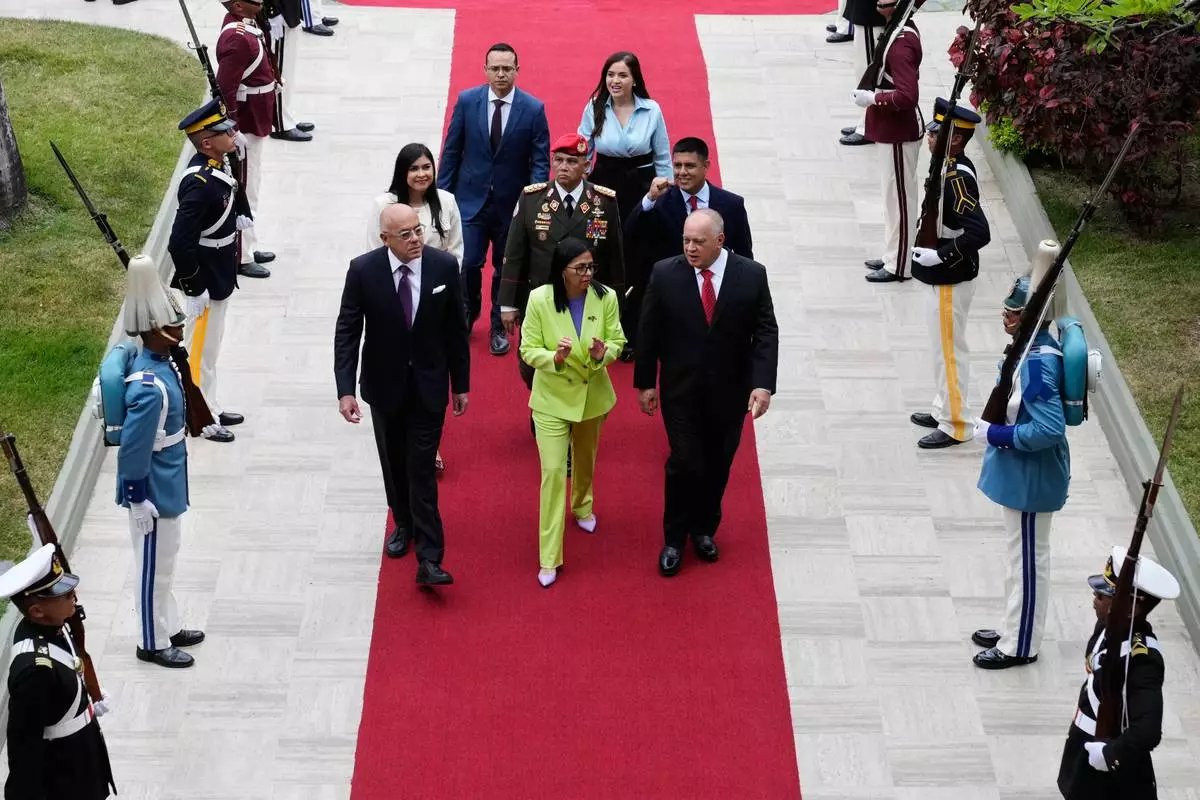
Venezuela's acting President Delcy Rodriguez, center, her brother National Assembly President, Jorge Rodriguez, left, and Interior Minister Diosdado Cabello arrive at the National Assembly in Caracas, Venezuela, Thursday, Jan. 15, 2026. (AP Photo/Ariana Cubillos)
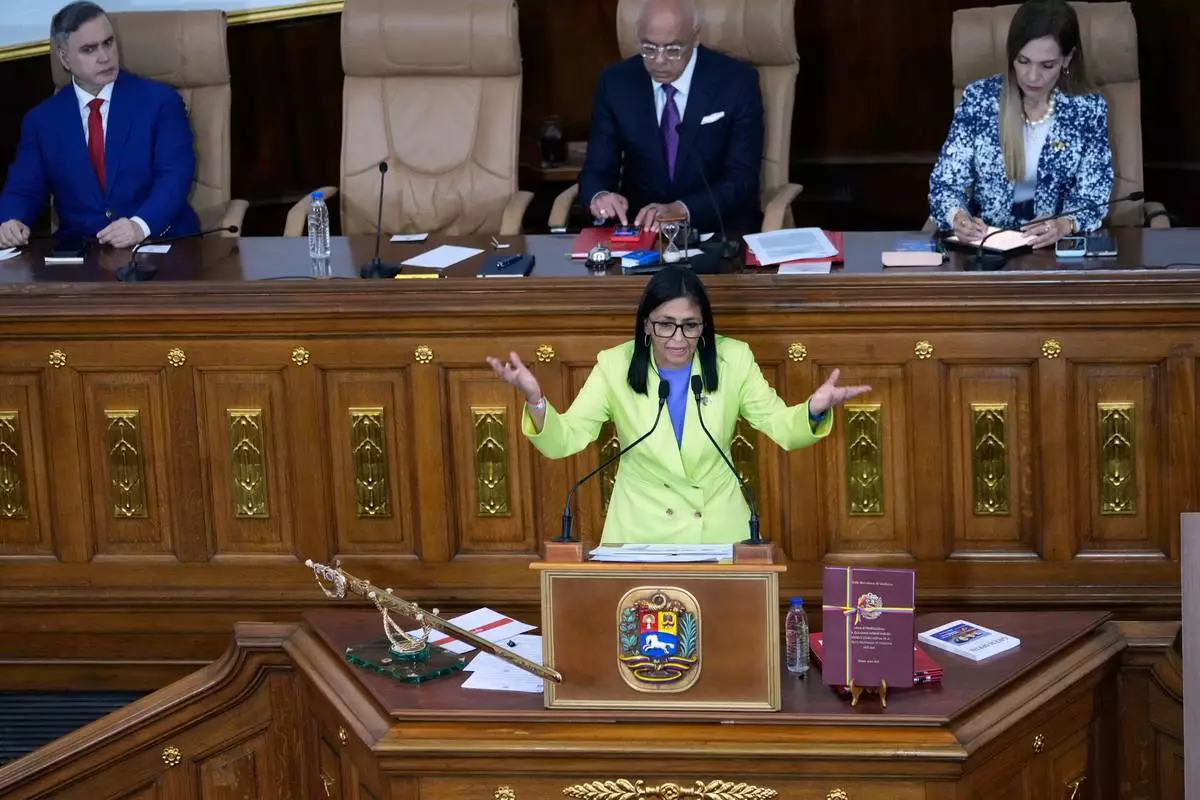
Venezuela's acting President Delcy Rodriguez addresses the National Assembly in Caracas, Venezuela, Thursday, Jan. 15, 2026. (AP Photo/Ariana Cubillos)
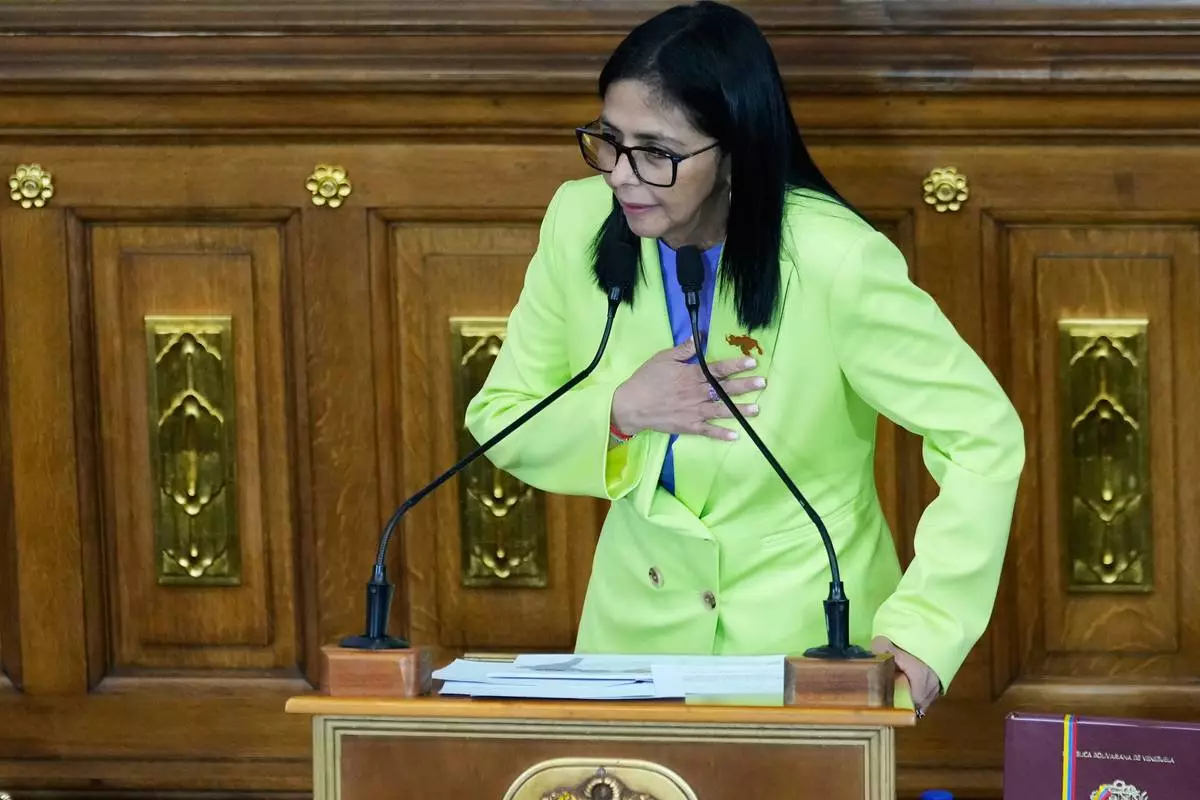
Venezuela's acting President Delcy Rodriguez addresses the National Assembly in Caracas, Venezuela, Thursday, Jan. 15, 2026. (AP Photo/Ariana Cubillos)
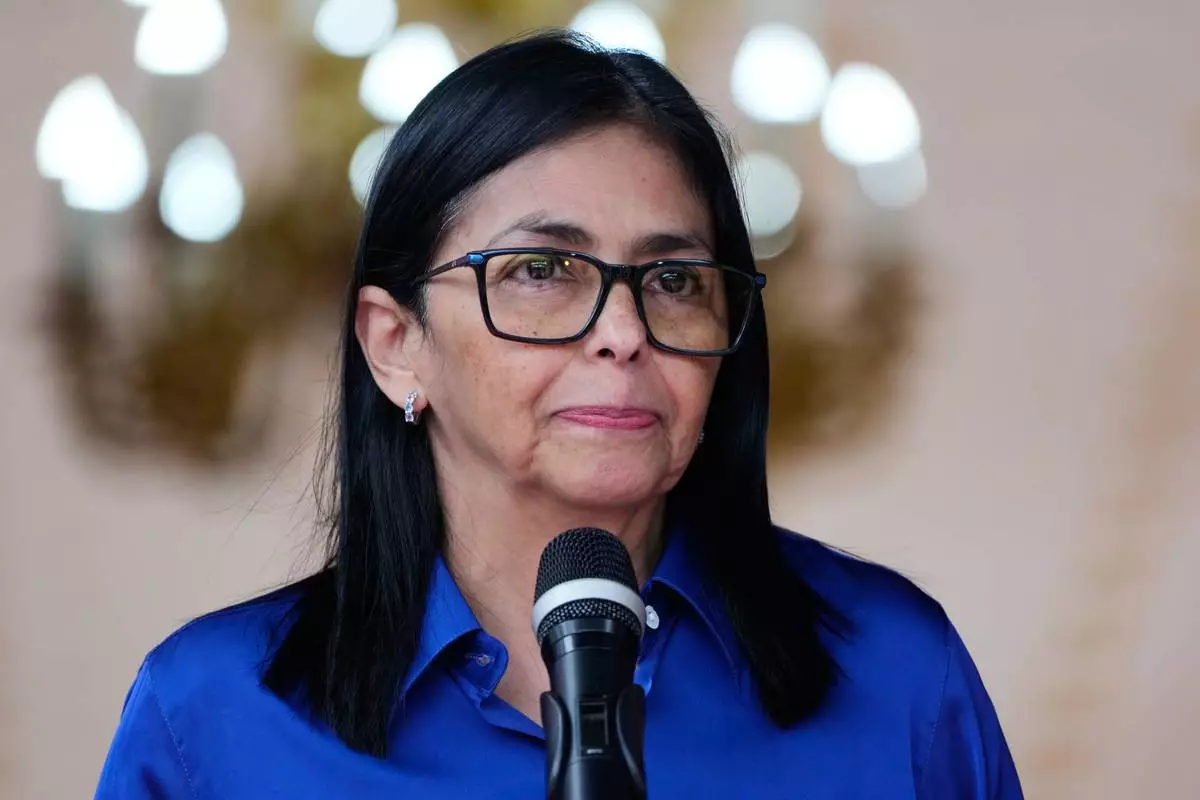
Venezuela's acting President Delcy Rodriguez makes a statement to the press at Miraflores presidential palace in Caracas, Venezuela, Wednesday, Jan. 14, 2026. (AP Photo/Ariana Cubillos)
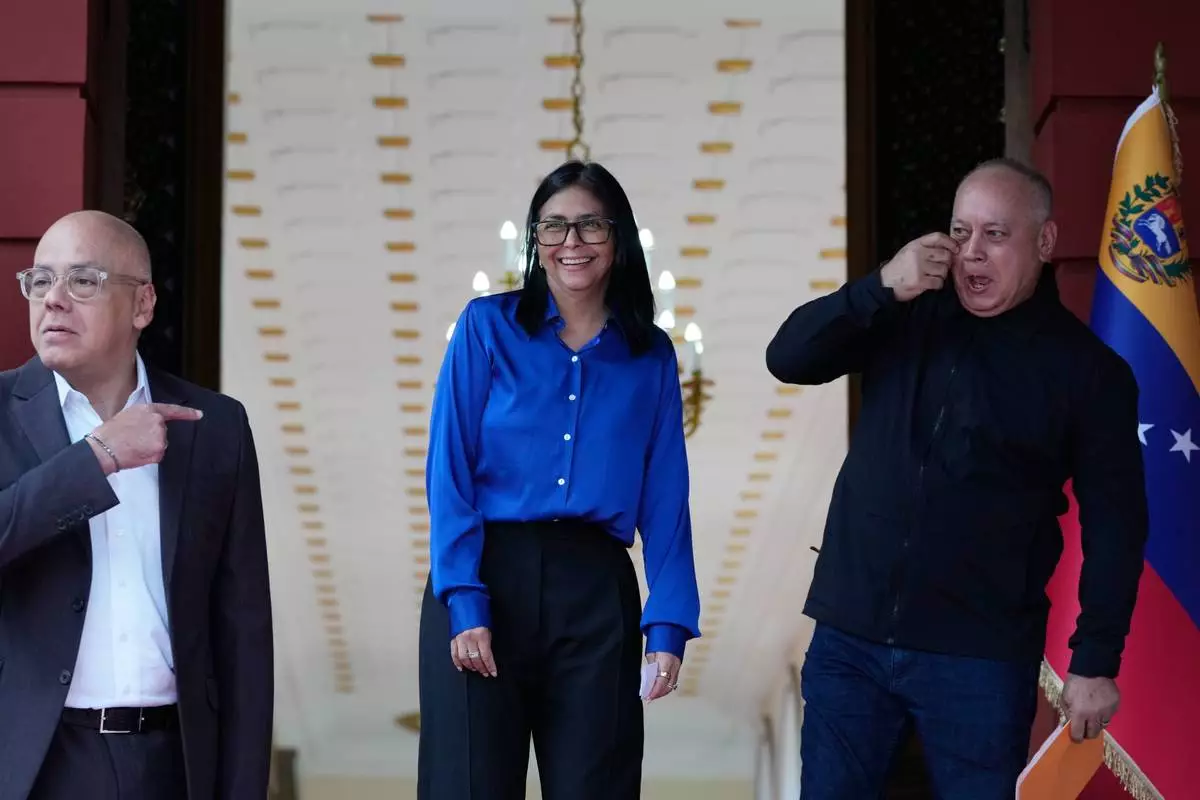
Venezuela's acting President Delcy Rodriguez, center, smiles flanked by Interior Minister Diosdado Cabello, right, and National Assembly President Jorge Rodriguez after making a statement to the press at Miraflores presidential palace in Caracas, Venezuela, Wednesday, Jan. 14, 2026. (AP Photo/Ariana Cubillos)