Baghdad's Green Zone has been a barometer for tension and conflict in Iraq for nearly two decades.
The 4-square mile (10-square kilometer) heavily guarded strip on the banks of the Tigris River was known as "Little America" following the 2003 U.S. invasion that toppled dictator Saddam Hussein. It then became a hated symbol of the country's inequality, fueling the perception among Iraqis that their government is out of touch.
Click to Gallery
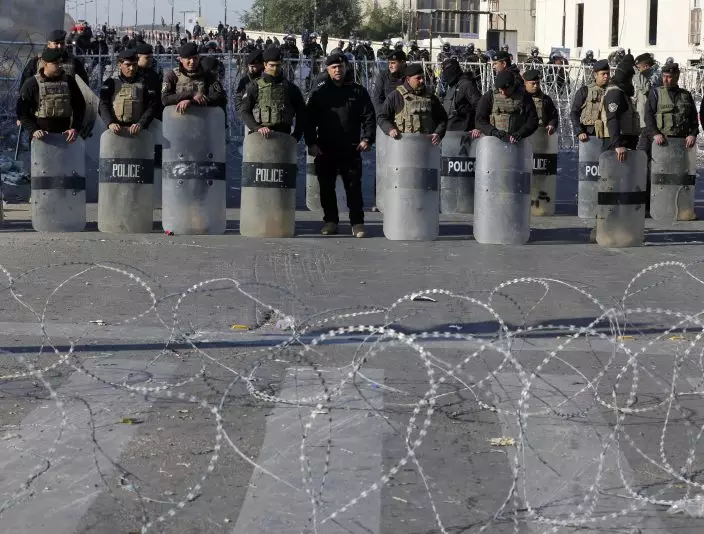
FILE - In this Feb. 11, 2017 file photo, Iraqi riot police close a bridge leading to the heavily guarded Green Zone during a demonstration of followers of Iraq's influential Shiite cleric Muqtada al-Sadr in Baghdad, Iraq. The 4-square mile (10-square kilometer), heavily guarded strip on the Tigris River was known as "Little America" following the 2003 U.S.-led invasion that toppled dictator Saddam Hussein. It then became a hated symbol of the country's inequality, fueling the perception among Iraqis that their government is out of touch. (AP PhotoKarim Kadim, File)
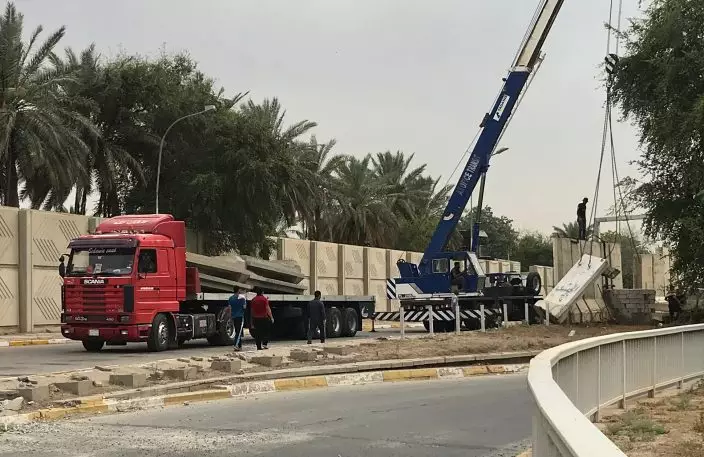
In this Tuesday, May 28, 2019 photo, Iraqi security forces remove concrete blast walls at the Green Zone in Baghdad, Iraq. The Green Zone has been a barometer for tension and conflict in Iraq for nearly two decades. The 4-square mile (10-square kilometer), heavily guarded strip on the Tigris River was known as "Little America" following the 2003 U.S.-led invasion that toppled dictator Saddam Hussein. It then became a hated symbol of the country's inequality, fueling the perception among Iraqis that their government is out of touch. (AP PhotoAli Abdul Hassan)
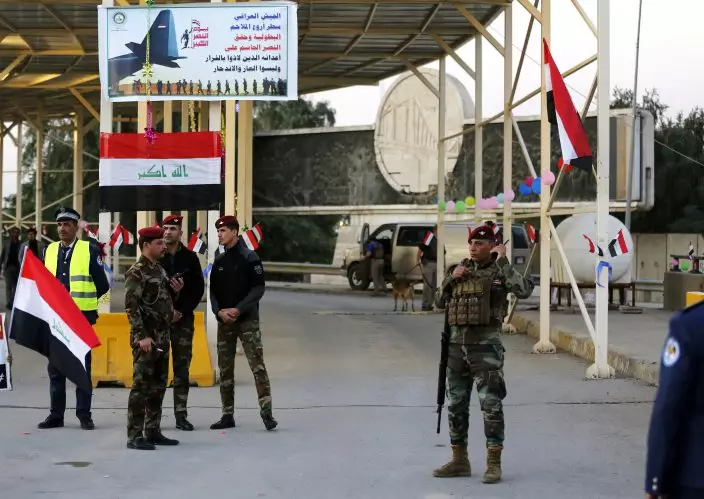
FILE - In this Dec. 10, 2018 file photo, Iraqi security forces stand guard as they check motorists entering the Green Zone, in Baghdad, Iraq. The Green Zone has been a barometer for tension and conflict in Iraq for nearly two decades. The 4-square mile (10-square kilometer), heavily guarded strip on the Tigris River was known as "Little America" following the 2003 U.S.-led invasion that toppled dictator Saddam Hussein. It then became a hated symbol of the country's inequality, fueling the perception among Iraqis that their government is out of touch. (AP PhotoKarim Kadim, File)
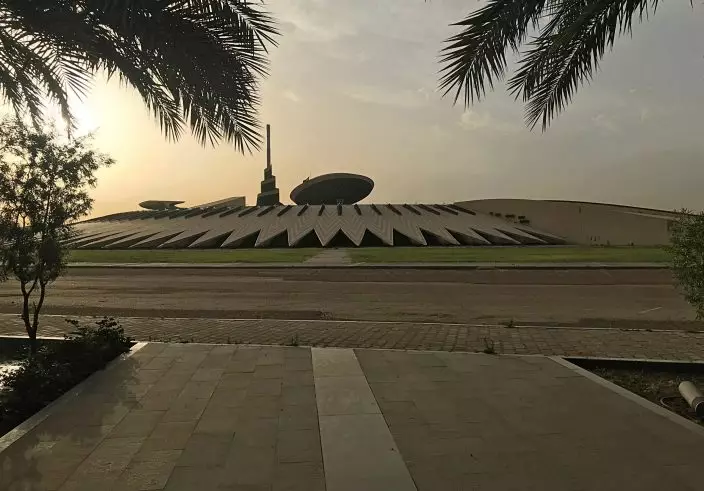
In this Tuesday, May 28, 2019 photo, the sun sets over the Monument of the Unknown Soldier, inside the Green Zone, in Baghdad, Iraq. The 4-square mile (10-square kilometer), heavily guarded strip on the Tigris River was known as "Little America" following the 2003 U.S.-led invasion that toppled dictator Saddam Hussein. It then became a hated symbol of the country's inequality, fueling the perception among Iraqis that their government is out of touch. (AP PhotoAli Abdul Hassan)
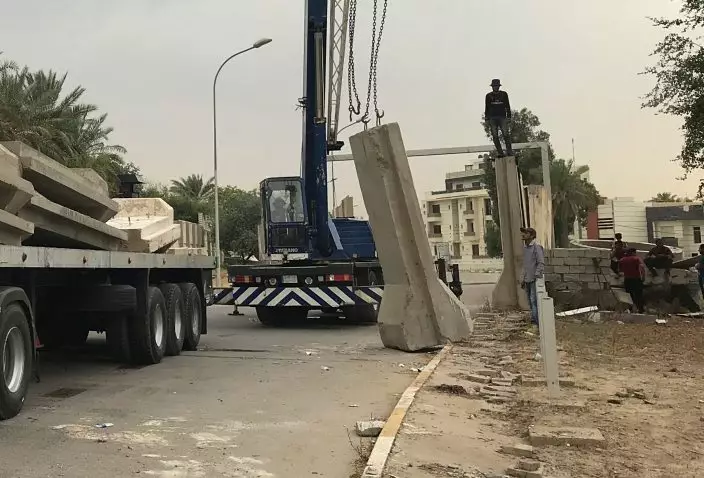
In this Tuesday, May 28, 2019 photo, Iraqi security forces remove concrete blast walls at the Green Zone in Baghdad, Iraq. The Green Zone has been a barometer for tension and conflict in Iraq for nearly two decades. The 4-square mile (10-square kilometer), heavily guarded strip on the Tigris River was known as "Little America" following the 2003 U.S.-led invasion that toppled dictator Saddam Hussein. It then became a hated symbol of the country's inequality, fueling the perception among Iraqis that their government is out of touch. (AP PhotoAli Abdul Hassan)
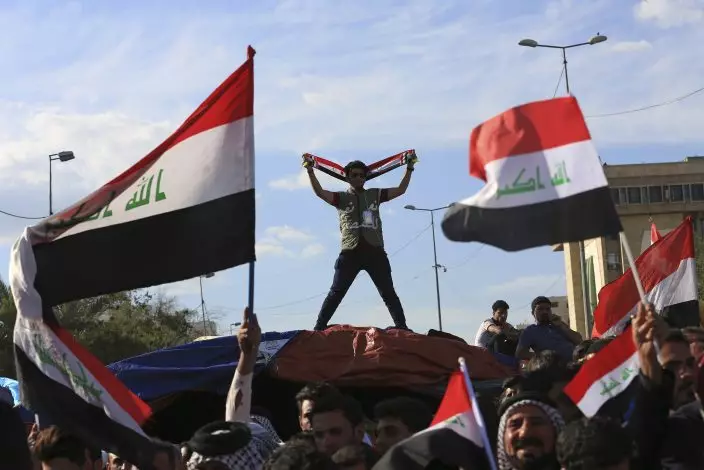
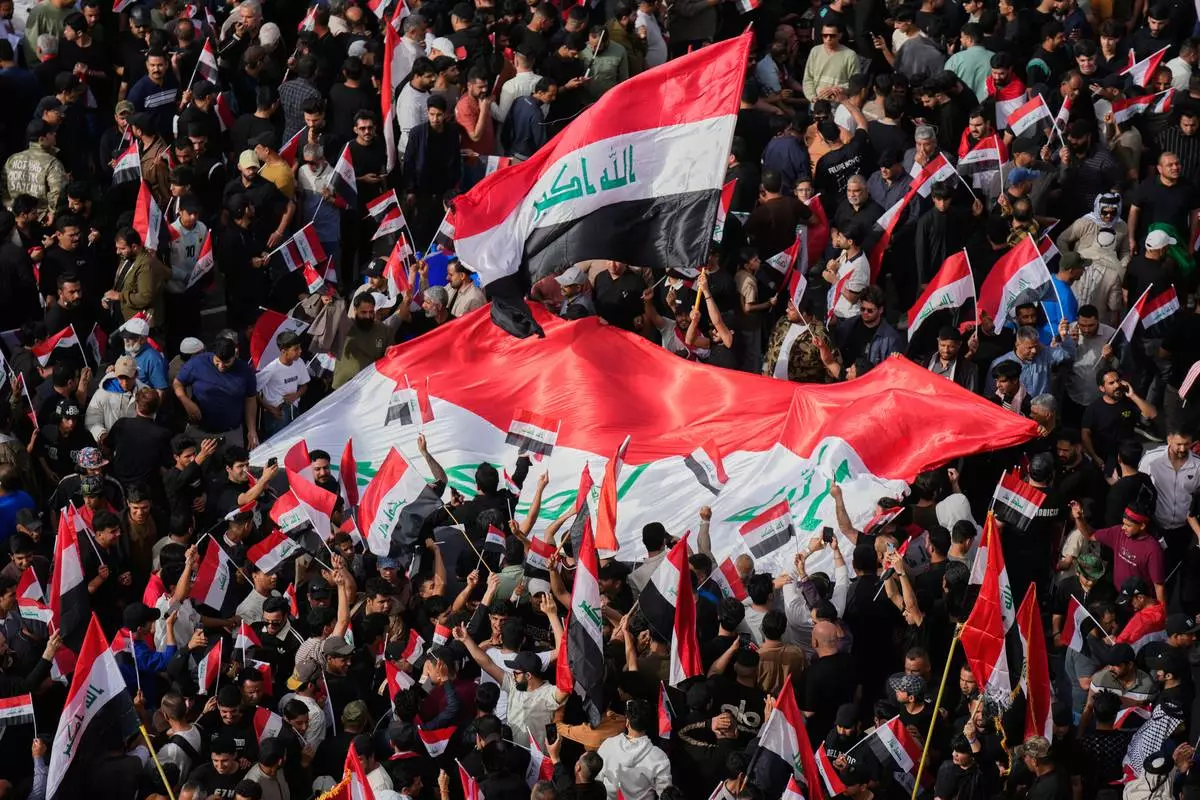
FILE - In this March 31, 2016 file photo, followers of Shiite cleric Muqtada al-Sadr wave national flags as they end their sit-in outside the heavily guarded Green Zone in Baghdad, Iraq. The zone has been a barometer for tension and conflict in Iraq for nearly two decades. The sealed-off area, with its palm trees and monuments, is home to the gigantic U.S. Embassy in Iraq, one of the largest diplomatic missions in the world. It has also been home to successive Iraqi governments and is off limits to most Iraqis. (AP PhotoKhalid Mohammed, File)
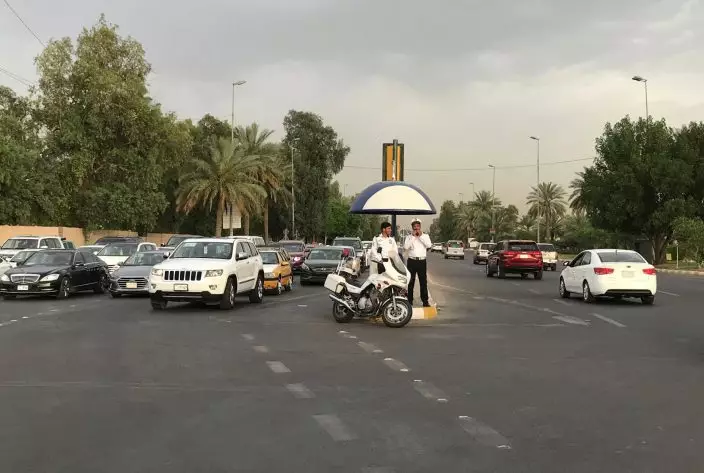
In this Tuesday, May 28, 2019 photo, Iraqi traffic police officers stand at a busy intersection inside the Green Zone in Baghdad, Iraq. The zone has been a barometer for tension and conflict in Iraq for nearly two decades. The sealed-off area, with its palm trees and monuments, is home to the gigantic U.S. Embassy in Iraq, one of the largest diplomatic missions in the world. It has also been home to successive Iraqi governments and is off limits to most Iraqis. (AP PhotoAli Abdul Hassan)
The sealed-off area, with its palm trees and monuments, is home to the gigantic U.S. Embassy in Iraq, one of the largest diplomatic missions in the world. It has also been home to successive Iraqi governments and is off limits to most Iraqis.
FILE - In this Feb. 11, 2017 file photo, Iraqi riot police close a bridge leading to the heavily guarded Green Zone during a demonstration of followers of Iraq's influential Shiite cleric Muqtada al-Sadr in Baghdad, Iraq. The 4-square mile (10-square kilometer), heavily guarded strip on the Tigris River was known as "Little America" following the 2003 U.S.-led invasion that toppled dictator Saddam Hussein. It then became a hated symbol of the country's inequality, fueling the perception among Iraqis that their government is out of touch. (AP PhotoKarim Kadim, File)
Various attempts and promises by the Iraqi government to open the area to traffic over the past years have failed to materialize, because of persistent security concerns.
Here's a look at the Green Zone, past and present:
BEFORE THE INVASION
In this Tuesday, May 28, 2019 photo, Iraqi security forces remove concrete blast walls at the Green Zone in Baghdad, Iraq. The Green Zone has been a barometer for tension and conflict in Iraq for nearly two decades. The 4-square mile (10-square kilometer), heavily guarded strip on the Tigris River was known as "Little America" following the 2003 U.S.-led invasion that toppled dictator Saddam Hussein. It then became a hated symbol of the country's inequality, fueling the perception among Iraqis that their government is out of touch. (AP PhotoAli Abdul Hassan)
Although not visible, security was always tight around the area, as Saddam Hussein's presidential palace complex was located inside. So were the homes of some of Iraq's top government officials. The road leading to the presidential palace had been closed for decades before the war.
The zone is also home to important Baghdad landmarks including the "Victory Arch" — a 40-meter (131-feet) tall arch of two swords held by bronze casts of Saddam's hands to commemorate the 1980-88 Iran-Iraq war. The area is also home to the Monument of the Unknown Soldier, Baghdad's famous clock tower and the renowned Rasheed Hotel, where entering guests had to tread over a mosaic of former U.S. President George Bush placed on the floor after the 1991 Gulf War.
Every year in July, Iraq's army held a massive parade marking the 1968 coup that brought Saddam's Arab Socialist Baath Party to power and ruled the country until the U.S. invasion in 2003.
FILE - In this Dec. 10, 2018 file photo, Iraqi security forces stand guard as they check motorists entering the Green Zone, in Baghdad, Iraq. The Green Zone has been a barometer for tension and conflict in Iraq for nearly two decades. The 4-square mile (10-square kilometer), heavily guarded strip on the Tigris River was known as "Little America" following the 2003 U.S.-led invasion that toppled dictator Saddam Hussein. It then became a hated symbol of the country's inequality, fueling the perception among Iraqis that their government is out of touch. (AP PhotoKarim Kadim, File)
The first strike by the U.S.-led coalition in the early hours of March 20, 2003 struck Saddam's Republican Palace inside what later came to be known as the Green Zone.
THE GREEN ZONE POST INVASION
The area was seized by U.S. military forces in April 2003 in some of the heaviest fighting as American troops swept into Baghdad. The neighborhood became home for the Coalition Provisional Authority, a transitional government established following the invasion.
In this Tuesday, May 28, 2019 photo, the sun sets over the Monument of the Unknown Soldier, inside the Green Zone, in Baghdad, Iraq. The 4-square mile (10-square kilometer), heavily guarded strip on the Tigris River was known as "Little America" following the 2003 U.S.-led invasion that toppled dictator Saddam Hussein. It then became a hated symbol of the country's inequality, fueling the perception among Iraqis that their government is out of touch. (AP PhotoAli Abdul Hassan)
The first step taken to set up the area was taken by Jay Garner, who at the time headed the reconstruction team and set up its headquarters at Saddam Hussein's main palace.
The official name under the interim government was the International Zone, but the name Green Zone, al-Mintaqa al-Khadraa in Arabic, was more commonly used, because the area was safer than the rest of Baghdad, where explosions, kidnappings, sectarian killings and shootings soon became common. Blast walls and checkpoints were soon set up, and only people with special cards could enter.
Despite the blast walls, Shiite militiamen in eastern neighborhoods of the city commonly fired rockets into the Green Zone. Suicide attacks repeatedly struck at its gates, killing hundreds of people, including Americans.
In this Tuesday, May 28, 2019 photo, Iraqi security forces remove concrete blast walls at the Green Zone in Baghdad, Iraq. The Green Zone has been a barometer for tension and conflict in Iraq for nearly two decades. The 4-square mile (10-square kilometer), heavily guarded strip on the Tigris River was known as "Little America" following the 2003 U.S.-led invasion that toppled dictator Saddam Hussein. It then became a hated symbol of the country's inequality, fueling the perception among Iraqis that their government is out of touch. (AP PhotoAli Abdul Hassan)
At the height of the attacks, men reaching the gates of the area had to open their jackets and raise their shirts so that the guards knew they were not wearing explosive belts. Vehicles were thoroughly searched and bomb-sniffing dogs deployed.
One of the biggest security breaches occurred in April 2007, when a suicide bomber detonated his explosives in the cafeteria of the parliament building, killing eight people including three legislators.
In April 2016, supporters of populist Shiite cleric Muqtada al-Sadr launched an anti-government protest, angrily scaling up the blast walls, tearing down some of the Green Zone's walls and stormed the parliament building in a major escalation of a political crisis that had simmered for months.
FILE - In this March 31, 2016 file photo, followers of Shiite cleric Muqtada al-Sadr wave national flags as they end their sit-in outside the heavily guarded Green Zone in Baghdad, Iraq. The zone has been a barometer for tension and conflict in Iraq for nearly two decades. The sealed-off area, with its palm trees and monuments, is home to the gigantic U.S. Embassy in Iraq, one of the largest diplomatic missions in the world. It has also been home to successive Iraqi governments and is off limits to most Iraqis. (AP PhotoKhalid Mohammed, File)
"LITTLE AMERICA"
During America's military occupation of Iraq, parts of the Green Zone were referred to by some as "little America" because of the U.S. troops deployed around it, and American brands available inside. At one point, the Green Zone had at least seven bars, including a Thursday night disco, a sports bar, a British pub, a rooftop bar run by General Electric and a bare-bones trailer-tavern operated by the contractor Bechtel.
Then, the plushest tavern was the CIA's watering hole, known as the "OGA bar." OGA stands for "Other Government Agency," the CIA's low-key moniker. The OGA bar had a dance floor with a revolving mirrored disco ball and a game room. It opened to outsiders by invitation only.
In this Tuesday, May 28, 2019 photo, Iraqi traffic police officers stand at a busy intersection inside the Green Zone in Baghdad, Iraq. The zone has been a barometer for tension and conflict in Iraq for nearly two decades. The sealed-off area, with its palm trees and monuments, is home to the gigantic U.S. Embassy in Iraq, one of the largest diplomatic missions in the world. It has also been home to successive Iraqi governments and is off limits to most Iraqis. (AP PhotoAli Abdul Hassan)
There was also the Green Zone Cafe, a tent erected in the parking lot of a former gas station. On a typical evening, one could see U.S. soldiers smoking from 4-foot-tall hookahs and security contractors laughing over beers, their machine guns by their sides.
A tiny back room at the cafe also held the green zone's chief liquor store, where bottles of whiskey, vodka and wine were sold at approximately double the price charged outside the green zone's blast walls.
The sealed-off zone also boasted gyms, a pizza parlor and a makeshift casino that had a glorified game room.
Its name was adapted for the 2010 Matt Damon action thriller "Green Zone," about a U.S. army officer hunting for weapons of mass destruction.
ALL IN THE PAST?
There has been talk for years that restrictions would be lifted in the Green Zone, first by then-Prime Minister Haider al-Abadi in 2015.
In March, Prime Minister Adel Abdul-Mahdi removed thousands of grey cement blast walls, easing the snarling traffic around Baghdad, and public access to the "Victory Arch" was restored.
The U.N. envoy to Iraq, Jeanine Hennis-Plasschaert, told a U.N. Security Council meeting earlier this month that "very soon the Green Zone will no longer exist."
Only a few days earlier, a rocket was fired into the Green Zone, landing less than a mile from the sprawling U.S. Embassy.
Eager to show the war-scarred nation is returning to normal, Abdul-Mahdi is now promising to open it to the public on the first day of Eid al-Fitr, the upcoming holiday marking the end of the Muslim holy month of Ramadan.
"Once the area is fully opened, all Iraq will be green," said Lt. Gen. Mohamed Hamid Kadhim.