Skip to Content Facebook Feature Image

Sun addict who shunned sunscreen has tip of nose cut off after pimple turned out to be skin cancer

News

Sun addict who shunned sunscreen has tip of nose cut off after pimple turned out to be skin cancer
News

News

Sun addict who shunned sunscreen has tip of nose cut off after pimple turned out to be skin cancer

2019-06-20 00:25 Last Updated At:00:25

Laure didn’t leave the house for a week after she had a live reconstructive flap pulled over her face to graft new skin onto her nose.

A tanning addict who admits to soaking up 30C rays without using protection for decades, told how she had the tip of her nose cut off, after a pink pimple on the end turned out to be sun-bathing induced skin cancer.

Left with an unsightly hole in her nose, which had to be covered using a radical technique known as a reconstructive skin flap, involving three operations in May and June, yoga teacher Laure Seguy, 35, who is married and has a daughter, Ayla-Rose, three, has now drastically overhauled her relationship with the sun.

Instead of exposing her bare skin to the 30C summer temperatures common where she lives in Toulouse in the South of France, Laure is now avoiding direct sunlight, saying:  “When I was younger, I never used to wear sun screen and I was in love with the look of having brown, tanned skin.”

She continued: “But now I am so careful about protecting myself from the sun and I wear factor 50 and a hat, because you really don’t realise how damaging the sun is, and I never want the same thing to happen ever again.”

When she first noticed a 5mm spot on the tip of her nose last summer, Laure, whose husband Tom, 33, is a sound engineer, thought little of it, assuming she had scratched it somehow.

Over the coming months, though, the small red mark remained, intermittently bleeding, then scabbing over again – a process that repeated itself several times.

Finally, in October 2018, she decided to tell her GP about it, recalling: “Initially, the doctor thought it might be bacterial and so put me on a course of anti-bacterial creams.

“When they did nothing though, the doctor told me I should see a dermatologist, so I rang up to book an appointment.

“They told me that the next free slot was not until the following February and asked me what was the problem.”

She continued: “I told them I had a spot on my nose that bled every now and then and had been there for five months.

“I remember hearing a blank on the other end of the line before the dermatologist said, ‘OK, we have an appointment for you in 15 days.’

“That’s when I knew it was really serious.”

A sun worshipper since childhood, Laure, who has naturally dark skin, rarely thought to wear sun cream on holiday or during the sizzling summers where she lives in the South of France.

“I don’t have freckles and I have quite tanned skin anyway, so I never really burn, only a little bit sometimes at the start of the summer,” she said.

But a biopsy of the pimple in November 2018 revealed that she had basal cell carcinoma – a slow-growing form  of non-melanoma skin cancer, making it more common, but less dangerous than melanoma skin cancer, which spreads more quickly to other parts of the body, according to the NHS.

Told she would require surgery to remove the cancerous cells, Laure decided to wait until the following May for her operation, as she was in the middle of doing a yoga teacher training course in Paris.

She explained: “I was obviously a bit concerned about leaving it so long, but the doctors said that because it was very slow growing it was OK to wait.”

When May arrived, Laure had the first of three procedures, cutting 11mm off the end of her nose,  removing both cancerous and healthy cells, to make sure all the carcinoma had gone.

A week later, having analysed the cells, surgeons were confident Laure was cancer free.

Next, a week later came the second two-hour surgical procedure to cut a piece of skin from her hairline and pull it down, attaching it to a hole in her nose, called a reconstructive skin flap.

Waking up groggy from the general anaesthetic, Laure recalled her shock at seeing her new face, which she said looked “utterly bizarre.”

Horribly self conscious about her strange appearance, she was reluctant to leave the house over the next few weeks, while the transferred skin knitted into her nose.

Then came her final operation, on 3 June – all her surgery taking place at specialist cancer hospital, the Oncopole de Toulouse – this time to remove the flap which had been feeding the skin graft, by keeping it connected to her bloodstream through a vein running from her forehead to her nose.

She will never forget the first time she left the house a week after the second operation, recalling: “I felt really uncomfortable, as for the first time in my life I experienced what it was like for people to stare at you in the street.”

She continued: “Strangers were coming up to me asking if I had been in a terrible accident, because my face was so mangled. I looked like a boxer who had been beaten up in the ring.”

Luckily, her appearance has now greatly improved, but Laure said her traumatic experience has made her completely reevaluate her attitude to the sun.

She said: “My face was swollen for a little while after my last procedure, but gradually it got back to normal.”

Laure continued: “My new nose is certainly much rounder than my old one at the tip and the texture and colour is different too.

“I also have scarring and a bump on my forehead where they pulled the skin flap down.

“It isn’t like my old nose, which was quite slim and narrow, but it’s a lot better than when I had a skin flap covering my face.”

She continued: “Still, my experience has completely changed my attitude to the sun, which I will have far greater respect for in future.”

Laure’s brush with disaster has also reaffirmed what really matters to her and she is now considering a change of career, so she can spend more time with the husband and daughter she loves.

She said: “It has reaffirmed the fact that life is short and currently, in my job as a yoga teacher, I usually work at the evening, which means I don’t see my family as much.”

She continued: “So now I want to change path and find work that lets me see my loved ones, because really that is all that matters.”

Dr Bav Shergill, consultant dermatologist and British Skin Foundation spokesperson,  warned against the danger of exposing unprotected skin to the sun.

He said: “Basal cell carcinoma is a non-melanoma skin cancer and it’s the most common type of skin cancer, accounting for over 80 per cent of all skin cancer cases in the UK.”

He continued: “The commonest cause is too much exposure to UV light from the sun or from sunbeds. BCC can occur anywhere on your body, but is most common on areas that are often exposed to the sun.

“It’s always important to protect your skin from the sun’s harmful UV rays. As many as four out of every five cases of skin cancer are preventable.”
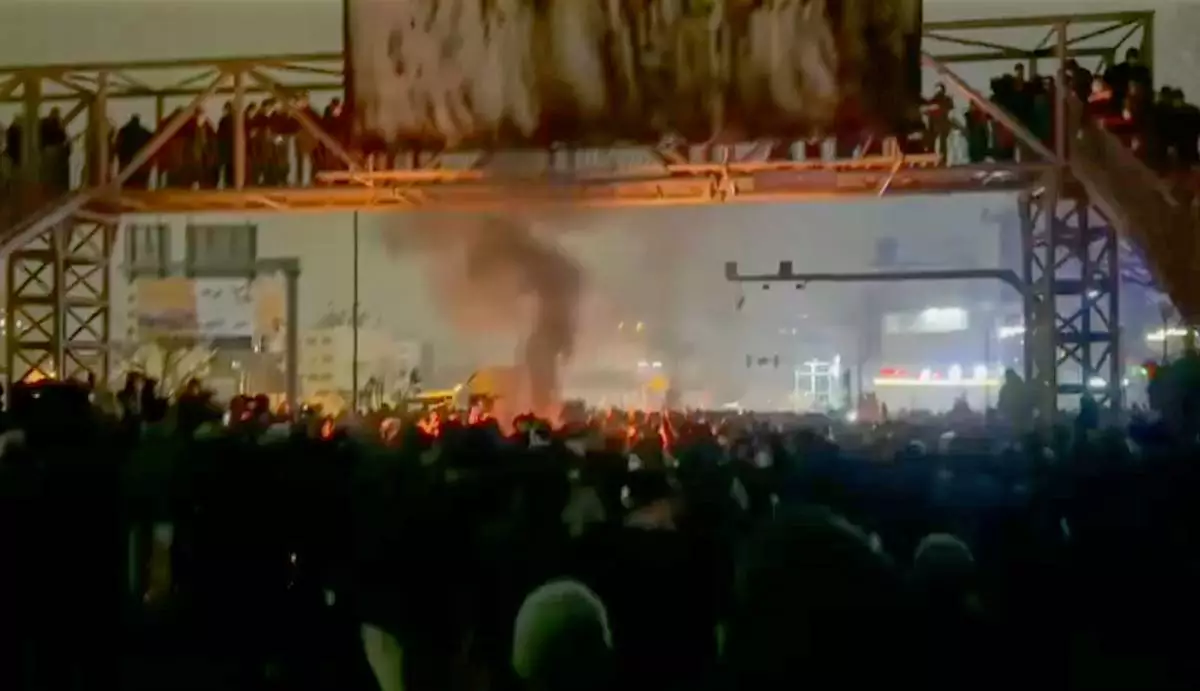
DUBAI, United Arab Emirates (AP) — U.S. President Donald Trump said Iran wants to negotiate with Washington after his threat to strike the Islamic Republic over its bloody crackdown on protesters, a move coming as activists said Monday the death toll in the nationwide demonstrations rose to at least 544.

Iran had no immediate reaction to the news, which came after the foreign minister of Oman — long an interlocutor between Washington and Tehran — traveled to Iran this weekend. It also remains unclear just what Iran could promise, particularly as Trump has set strict demands over its nuclear program and its ballistic missile arsenal, which Tehran insists is crucial for its national defense.

Iranian Foreign Minister Abbas Araghchi, speaking to foreign diplomats in Tehran, insisted “the situation has come under total control” in fiery remarks that blamed Israel and the U.S. for the violence, without offering evidence.

“That’s why the demonstrations turned violent and bloody to give an excuse to the American president to intervene,” Araghchi said, in comments carried by the Qatar-funded Al Jazeera satellite news network. Al Jazeera has been allowed to report from inside the country live despite the internet being shut off.

Meanwhile Monday, Iran called for pro-government demonstrators to head to the streets in support of the theocracy, a show of force after days of protests directly challenging the rule of 86-year-old Supreme Leader Ayatollah Ali Khamenei. Iranian state television aired chants from the crowd, who shouted “Death to America!” and “Death to Israel!”

Trump and his national security team have been weighing a range of potential responses against Iran including cyberattacks and direct strikes by the U.S. or Israel, according to two people familiar with internal White House discussions who were not authorized to comment publicly and spoke on condition of anonymity.

“The military is looking at it, and we’re looking at some very strong options,” Trump told reporters on Air Force One on Sunday night. Asked about Iran’s threats of retaliation, he said: “If they do that, we will hit them at levels that they’ve never been hit before.”

Trump said that his administration was in talks to set up a meeting with Tehran, but cautioned that he may have to act first as reports of the death toll in Iran mount and the government continues to arrest protesters.

“I think they’re tired of being beat up by the United States,” Trump said. “Iran wants to negotiate.”

He added: “The meeting is being set up, but we may have to act because of what’s happening before the meeting. But a meeting is being set up. Iran called, they want to negotiate.”

Iran through country's parliamentary speaker warned Sunday that the U.S. military and Israel would be “legitimate targets” if America uses force to protect demonstrators.

More than 10,600 people also have been detained over the two weeks of protests, said the U.S.-based Human Rights Activists News Agency, which has been accurate in previous unrest in recent years and gave the death toll. It relies on supporters in Iran crosschecking information. It said 496 of the dead were protesters and 48 were with security forces.

With the internet down in Iran and phone lines cut off, gauging the demonstrations from abroad has grown more difficult. The Associated Press has been unable to independently assess the toll. Iran’s government has not offered overall casualty figures.

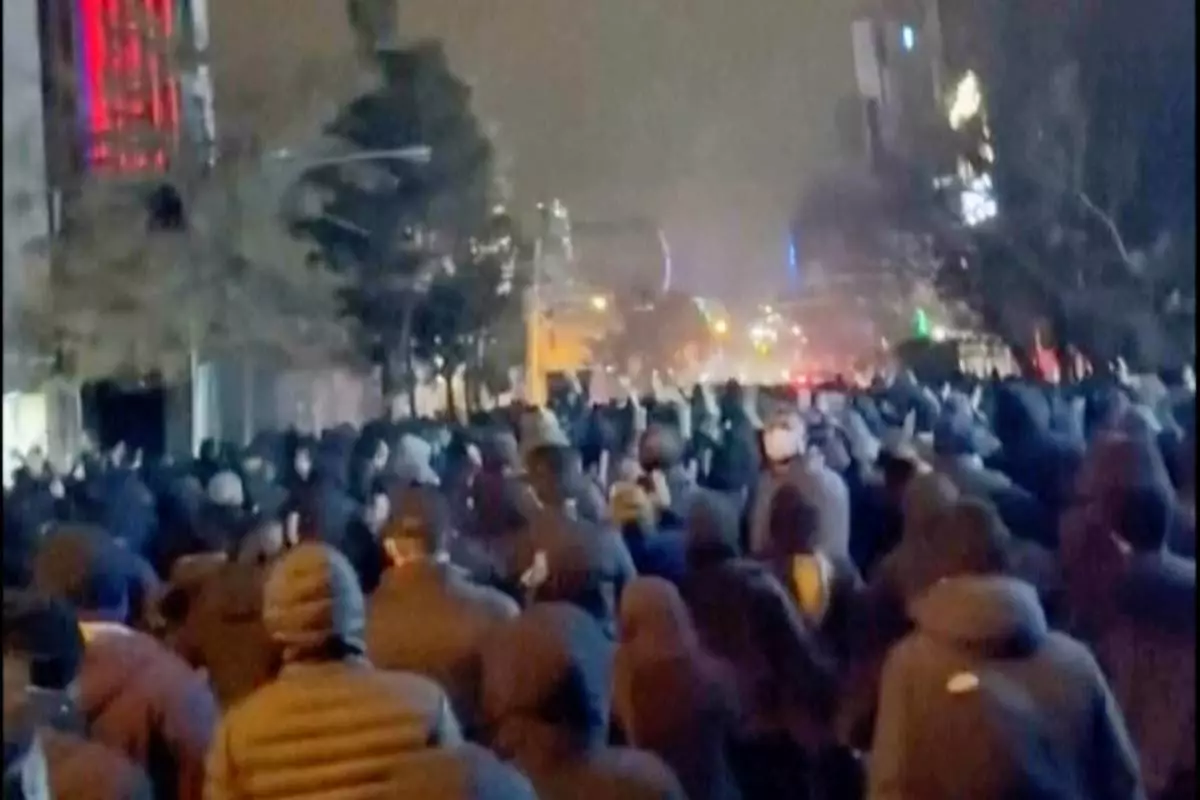
Those abroad fear the information blackout is emboldening hard-liners within Iran’s security services to launch a bloody crackdown. Protesters flooded the streets in the country’s capital and its second-largest city on Saturday night into Sunday morning. Online videos purported to show more demonstrations Sunday night into Monday, with a Tehran official acknowledging them in state media.

In Tehran, a witness told the AP that the streets of the capital empty at the sunset call to prayers each night. By the Isha, or nighttime prayer, the streets are deserted.

Part of that stems from the fear of getting caught in the crackdown. Police sent the public a text message that warned: “Given the presence of terrorist groups and armed individuals in some gatherings last night and their plans to cause death, and the firm decision to not tolerate any appeasement and to deal decisively with the rioters, families are strongly advised to take care of their youth and teenagers.”

Another text, which claimed to come from the intelligence arm of the paramilitary Revolutionary Guard, also directly warned people not to take part in demonstrations.

“Dear parents, in view of the enemy’s plan to increase the level of naked violence and the decision to kill people, ... refrain from being on the streets and gathering in places involved in violence, and inform your children about the consequences of cooperating with terrorist mercenaries, which is an example of treason against the country,” the text warned.

The witness spoke to the AP on condition of anonymity due to the ongoing crackdown.

The demonstrations began Dec. 28 over the collapse of the Iranian rial currency, which trades at over 1.4 million to $1, as the country’s economy is squeezed by international sanctions in part levied over its nuclear program. The protests intensified and grew into calls directly challenging Iran’s theocracy.

Nikhinson reported from aboard Air Force One.

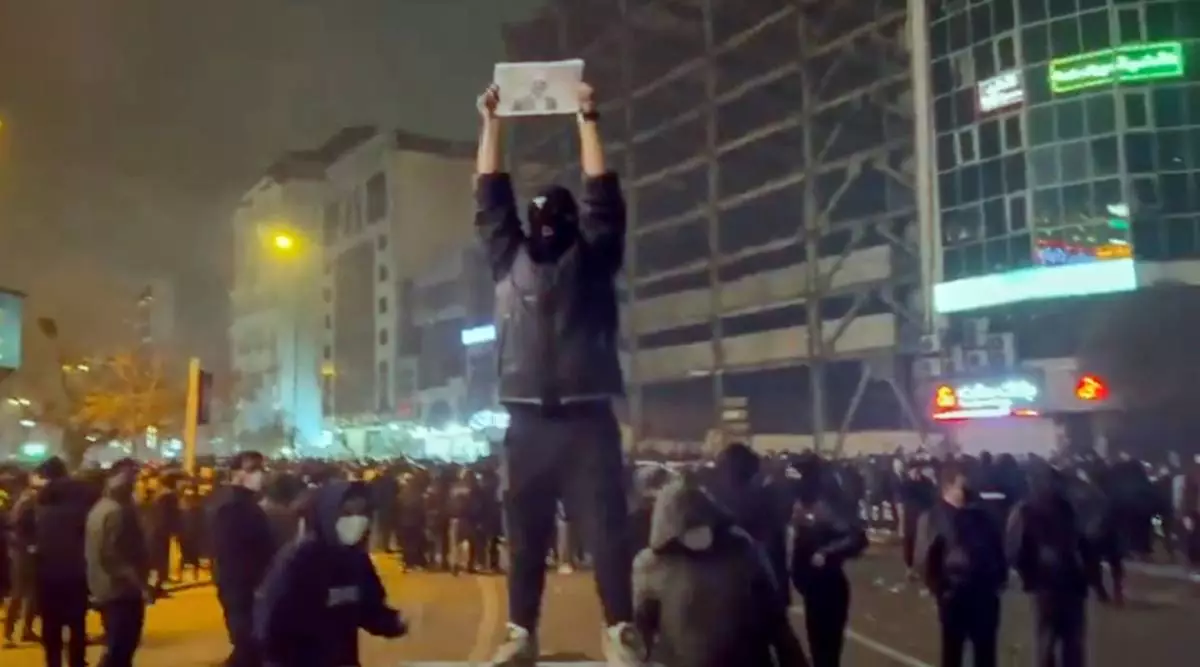
In this frame grab from video obtained by the AP outside Iran, a masked demonstrator holds a picture of Iran's Crown Prince Reza Pahlavi during a protest in Tehran, Iran, Friday, January. 9, 2026. (UGC via AP)

In this frame grab from video obtained by the AP outside Iran, a masked demonstrator holds a picture of Iran's Crown Prince Reza Pahlavi during a protest in Tehran, Iran, Friday, January. 9, 2026. (UGC via AP)

In this frame grab from footage circulating on social media from Iran shows protesters taking to the streets despite an intensifying crackdown as the Islamic Republic remains cut off from the rest of the world in Tehran, Iran, Friday, Jan. 9, 2026.(UGC via AP)

In this frame grab from footage circulating on social media from Iran shows protesters taking to the streets despite an intensifying crackdown as the Islamic Republic remains cut off from the rest of the world in Tehran, Iran, Friday, Jan. 9, 2026.(UGC via AP)

In this frame grab from footage circulating on social media from Iran showed protesters once again taking to the streets of Tehran despite an intensifying crackdown as the Islamic Republic remains cut off from the rest of the world in Tehran, Iran, Saturday Jan. 10, 2026. (UGC via AP)

In this frame grab from footage circulating on social media from Iran showed protesters once again taking to the streets of Tehran despite an intensifying crackdown as the Islamic Republic remains cut off from the rest of the world in Tehran, Iran, Saturday Jan. 10, 2026. (UGC via AP)

Recommended Articles