

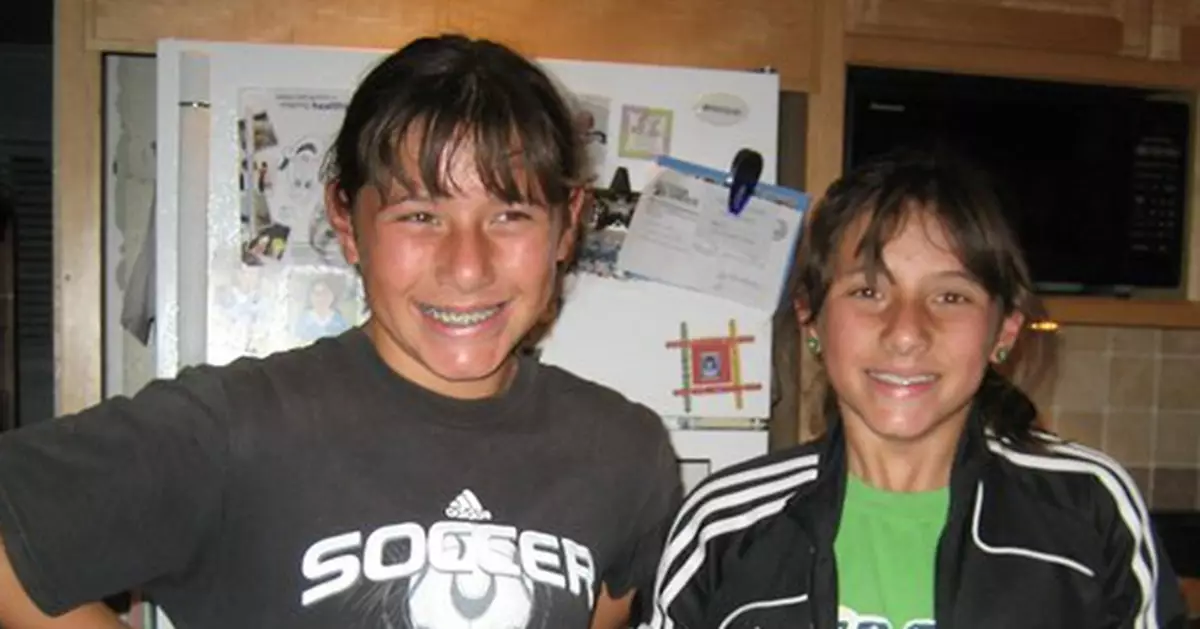
Shea and Kasey knew from an early age that they had been born into the wrong bodies.
Identical twins whose bond has become unbreakable thanks to them transitioning from female to male within two years of each other are telling their incredible story to encourage frank conversation about gender issues.
Click to Gallery




Born female and describing themselves as tomboys growing up, Kasey and Shea Opilla, now 20, felt they “did not belong.”
And while they did not openly discuss it, their almost telepathic relationship meant they knew they were battling similar demons.
A sex education class at school when they were around 11 filled the twins, from San Jose, California, USA, with dread at the prospect of going through puberty, growing breasts and starting their periods – confirming how unhappy they felt in their female bodies.
Confused – partly because gender issues were less openly discussed back then – initially, they did not realise they were transgender.
Instead, they came out as lesbians in 2013 – a decision supported by their family – with Kasey being the first, followed by Shea a few months later.
Kasey, who currently works in a restaurant, but will be going to university in the autumn to study psychology, explained: “Something in me, in the way I felt about who I was, was off.
“Socially, things were difficult. I didn’t feel like I quite belonged with the other girls, so I would gravitate towards boys, but didn’t fit in there either. Back then, I didn’t know about the concept of being transgender, or even the word, but I knew I was different.”
After coming out as lesbians, the pair continued to live in emotional turmoil.
Each recognising their need for support, they had one-on-one therapy, where they discussed their gender issues – although neither knew at the time that the other twin was having it.
Eventually, after having counselling, as well as watching YouTube videos and TV documentaries about people going through transitions, both twins concluded they were transgender – confiding their realisation to each other before telling anyone else.
Again, Kasey was the first to come out in 2015. He said: “Deep down, I knew who I was, but had no idea how to get there and knew I was trans, but had no idea how to say it out loud. Plus, where the differences between the two genders amplify with age, I was struggling more and more, socially.”
He continued: “I needed to talk to somebody that wasn’t in my direct circle about what I was going through, and so I decided to have counselling – a fact I kept to myself.
“In the end, I came out in 2015. Shea was the first person I told, and I had an idea that he would one day come out as trans too, but wasn’t ready then.”
Shea’s support was integral to every step of Kasey’s transition.
He said: “Throughout our journey, we have made sure we’re both there for all those big moments, like coming out to the rest of the family. That’s when you need comfort the most, and to have your whole self with you.”
He added: “As a twin, you’re never alone throughout your entire life – and we certainly weren’t going to let each other take on the hardest times alone.”
In 2016, a year after coming out, Kasey – who has not changed his name – began his physical transition from female to male, first by beginning to take hormones, then by having top surgery to remove his breasts.
He continued: “That was a real adjustment. Everybody is different, so you are never too sure how the hormones will affect you.”
Kasey continued: “You desperately want to see changes, and want to see them tomorrow – but know they will take time, so there were times when it all seemed too far away for me to be happy.
“When I first started taking hormones, I was still getting misgendered a lot and referred to as a female, which was very frustrating. At the time, as Shea wasn’t out, I didn’t know anybody else who was trans, so I did feel like I was going through it alone.
“My one regret is not reaching out to more people in the community then, as that would’ve helped – to talk to people who understood.”
Please pass our helpline number on to anyone who may need it:
FREEPHONE 0808 801 0400
Mermaids are here for any #transgender or gender-questioning young person looking for someone to listen, or for those who stand by them who may need support.
🖤EMBRACE🖤EMPOWER 🖤EDUCATE pic.twitter.com/atAXfffPCg
— Mermaids 🧜🏻♀️ (@Mermaids_Gender) May 26, 2019
As the hormones took effect, Kasey’s voice deepened and his body changed to a more masculine shape.
This stopped him from being misgendered and often meant that, when he met new people, he no longer needed to explain his past – which helped boost his confidence.
In the meantime, Shea, who is studying kinesiology – the science of movement – at university, was moving towards coming out as transgender, too.
Recalling the day when Kasey confided his desire to transition, Shea – who now goes by his middle name, but does not want to reveal his name as a female – said: “He’d been so depressed for so long, I was really happy he was finally out and able to be himself.
“I thought he was incredibly brave and wanted to support him, but knew I also had some thinking to do about how I was going to come out.”
Over the next two years – especially when Kasey began to change physically – there was a lot of for Shea also to acclimatise to, not least the fact they were non-identical for the first time.
He said: “Because we’d always identified as ‘the twins,’ in the two years that Kasey was out as transgender and I wasn’t, it felt almost strange that we weren’t identical anymore.
“When he came out, I remember thinking how incredibly brave he was – but there was also that hint of jealousy that he could be his true self, whereas I wasn’t quite ready.”
Looking back to the moment in the fifth grade – the US equivalent of Year 6 – during sex education when he and Kasey both knew they felt trapped in the wrong bodies, Shea recalled his intense discomfort.
He said: “They separated the class into boys and girls, so we could each learn about our own bodies. Sitting there, hearing it all, didn’t feel right. I realised I didn’t want all the changes that come with puberty, like periods and breasts. It felt like it shouldn’t be happening to me.”
And while it took him slightly longer than Kasey to get there, in 2017, Shea was ready to come out as transgender, too – happy in the knowledge he would be embarking on the journey with his twin.
He said: “The first person I told was Kasey. We were driving along and I just came out with it, then told him I was going to tell our parents. There are no words to describe how amazing it has been to go through this with the person closest to me in the world.”
Trans person or ally? 🏳️⚧️
This is how you can make yourself heard! https://t.co/UZv8bEPSza
— Stonewall (@stonewalluk) June 19, 2019
He added: “He made sure I picked a day where he’d be there too, for support. We are a really tight-knit family, and everybody was supportive, but they did naturally have questions and fears.
“Aside from Kasey, I have two other brothers, so back then, I felt like the last remaining daughter. I think parents can have these pre-conceived ideas of what their child’s life will be like depending on their gender – dads want to walk their daughters down the aisle, mums want to see them pregnant.
“I was scared I was taking that away from them, but had been told by my therapist to expect them to go through a period of grieving. After all, they were losing a daughter – but gaining a son.”
Like his brother, Shea soon began taking hormones, before also having top surgery 18 months ago.
But, in a stark contrast to Kasey’s rather solitary experience, he had a number of friends who were also transitioning, so was surrounded by others who knew exactly what he was going through.
He added: “Kasey had gone through a real unknown, whereas I knew what was coming. I always feel bad that he went ahead and paved the way. There must have been times when he felt really alone, while having him made my own transition smoother.”
Shea added: “Of course, I was there for him, but as I wasn’t out myself then – I didn’t know how he felt. When I went through it though, I had a number of trans friends that I could talk to and even make jokes with about how much puberty sucks the second time around.
“In the period where Kasey was transitioning and I wasn’t, it had been strange to not be identical anymore. For the first time, we looked and sounded different.
“But as my hormones began to take effect, we would joke all the time about how we were going to be the same again.”
Now, the remarkable brothers, who say their bond has been massively strengthened by going through their transition together, are speaking out to help normalise conversations about being transgender.
Both feeling mentally stronger than they have for years, they are filled with pride when they look back at the courage it took to come out.
Now, by sharing their story, they want to encourage others in their situation to find a network of trans people they can safely speak to, and for families of those transitioning to educate themselves and not to shy away from asking questions.
Kasey said: “There are so many misconceptions about gender issues that are making the community feel unsafe and misunderstood. It’s a combination of a lack of conversation and a lack of effort to understand, but if we talk more, we can normalise it and help people to open up.
“This has been a real journey for my mental health. There were times when the isolation I felt reminded me of being that little kid who didn’t belong all over again, but since Shea came out I couldn’t be happier.
“I never imagined this life for myself, and if I knew how it would all turn out I would go back and tell my younger self that it will all be okay.”
Shea, who has been with his girlfriend Savannah for a year, also stressed how important having his family on board had been during his transition.
He said: “A really essential part of healing for me was making sure my family understood exactly how I’d been feeling. Talking openly and honestly really lifted a burden.
“So, if anybody out there is struggling with a family who don’t understand, I would say to be patient and try to lead by example and answer questions. They can be frustrating, but they can also really help somebody understand what you have been going through.”
“With transitioning, there always seems to be some hoop to jump through, so this has taught me so much about patience and resilience,” Shea added.
“But now, with a future I really want for myself ahead of me, I can look back at the hardship and anxiety of the past and safely say it has all been worth it.”
Praising Savannah for her support, he continued: “She is truly amazing and understanding, especially on days where dysphoria creeps back and I feel uncomfortable in my body. She is always willing to help me through those times, and I think getting to that level of support and unconditional love has strengthened our relationship over this past year.”
Shea concluded: “For anyone out there who may be transgender and questioning whether it is possible to get that unconditional love from friends and family, and also for themselves, I want to say that it absolutely is.”
The twins’ mum Shannon, 49, added: “As their mum, I am extremely proud of both Kasey and Shea for being true to themselves. They are amazing people. Both are smart, fun to be with, and most importantly, they are kind and caring.”