When Hurricane Irma hit Puerto Rico in September 2017, Carlos Melendez couldn't contact the staffers or customers of his San Juan-based technology firm, Wovenware.
Melendez learned a lesson that would help his business during the next storm, that disaster preparedness includes being able to communicate with people when the emergency is over. He quickly signed up with an online messaging service — and got to use it two weeks later when Hurricane Maria decimated Puerto Rico.
Click to Gallery
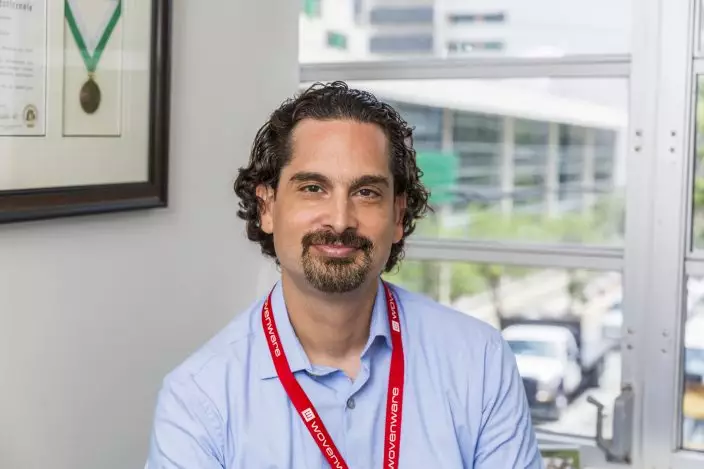
In this undated photo provided by Wovenware, Inc., Carlos Melendez, Wovenware Co-Founder and COO, poses for a photo at the Wovenware office in Santurce, San Juan, Puerto Rico. When Hurricane Irma hit Puerto Rico in September 2017, Melendez learned lessons that would help his business during the next storm. He got to use them two weeks later, when Hurricane Maria decimated the island, giving Melendez further instruction about the need to be prepared. (Jerry MonkmanWovenware, Inc. via AP)
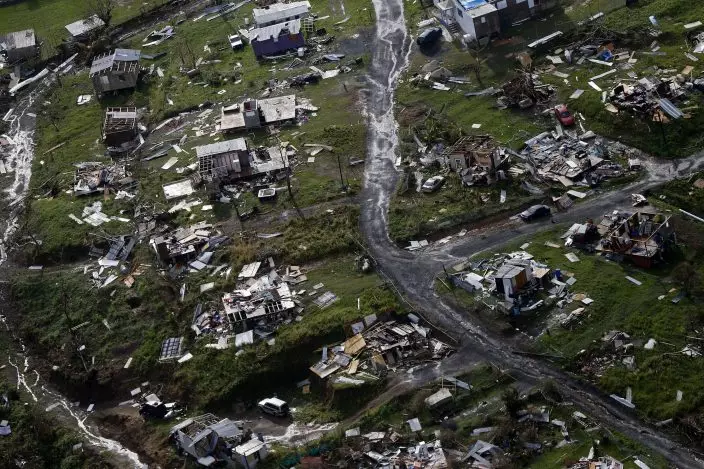
FILE - In this Sept. 28, 2017, file photo destroyed communities are seen in the aftermath of Hurricane Maria in Toa Alta, Puerto Rico. Despite the potential for hurricanes and other natural disasters, many small business owners don’t prepare for the worst, leaving them to learn during a crisis what they should have done differently. (AP PhotoGerald Herbert, File)
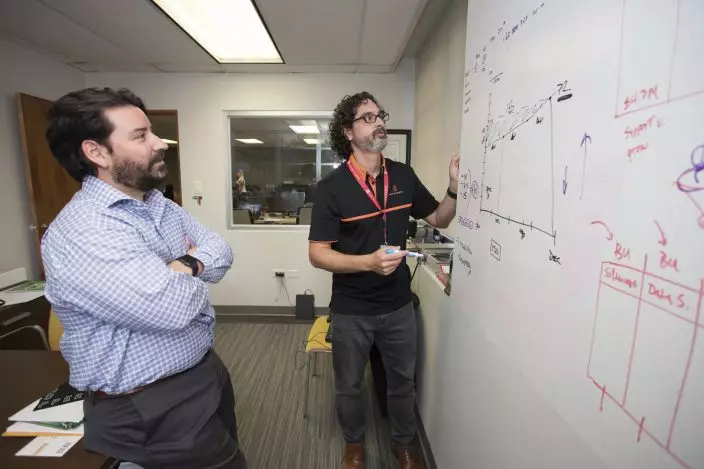
In this undated photo provided by Wovenware, Inc., Carlos Melendez, Wovenware Co-Founder and COO, right, talks with Christian Gonzalez, Wovenware Co-Founder and CEO, as they discuss the performance of a deep learning algorithm at the Wovenware office in Santurce, San Juan, Puerto Rico. When Hurricane Irma hit Puerto Rico in September 2017, Melendez learned lessons that would help his business during the next storm. He got to use them two weeks later, when Hurricane Maria decimated the island, giving Melendez further instruction about the need to be prepared. (Javier Vazquez RosadoWovenware, Inc. via AP)
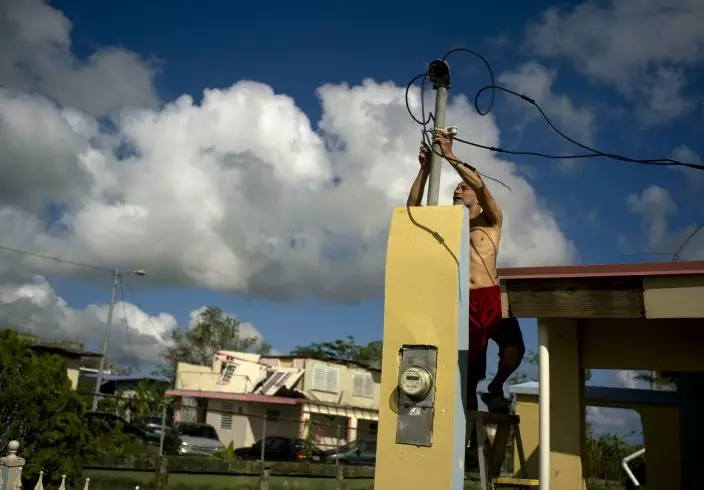
FILE - In this Oct. 13, 2017, file photo, a resident tries to connect electrical lines downed by Hurricane Maria in preparation for when electricity is restored in Toa Baja, Puerto Rico. Despite the potential for hurricanes and other natural disasters, many small business owners don’t prepare for the worst, leaving them to learn during a crisis what they should have done differently. (AP PhotoRamon Espinosa, File)
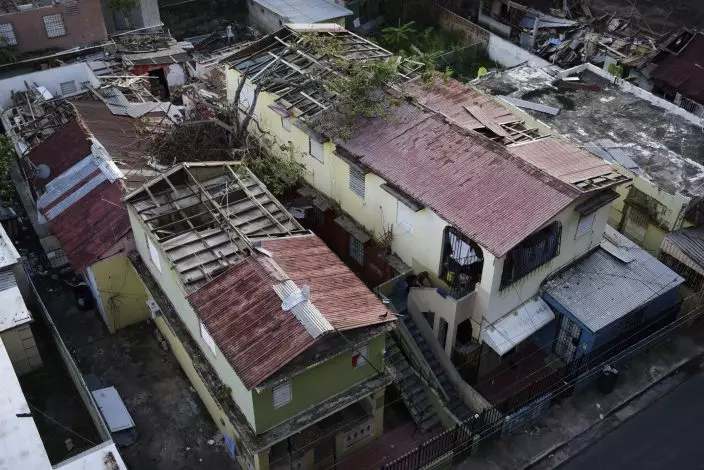
FILE - In this Nov. 15, 2017 photo, some roofs damaged by the whip of Hurricane Maria are shown still exposed to rainy weather conditions, in San Juan, Puerto Rico. Despite the potential for hurricanes and other natural disasters, many small business owners don’t prepare for the worst, leaving them to learn during a crisis what they should have done differently. (AP PhotoCarlos Giusti, File)
"The amount of damage was a situation we had never had before here on the island," Melendez says. But because he was now able to communicate with employees, he could determine how they were, arrange to meet with those able to get to the office and let customers know Wovenware was working despite the widespread devastation and lack of power and resources.
In this undated photo provided by Wovenware, Inc., Carlos Melendez, Wovenware Co-Founder and COO, poses for a photo at the Wovenware office in Santurce, San Juan, Puerto Rico. When Hurricane Irma hit Puerto Rico in September 2017, Melendez learned lessons that would help his business during the next storm. He got to use them two weeks later, when Hurricane Maria decimated the island, giving Melendez further instruction about the need to be prepared. (Jerry MonkmanWovenware, Inc. via AP)
Small businesses have already contended this summer with earthquakes in Southern California and Hurricane Barry in the Gulf Coast and Midwest, and the most intense portions of the Atlantic hurricane and Western wildfire seasons are still ahead. But many owners don't prepare for potentially devastating natural disasters, leaving them to learn during a crisis what they should have done differently. And even companies that do plan can be unprepared for the unique circumstances of a particular disaster — no owner in New Orleans could have predicted they'd be unable to operate for months, even years, after Hurricane Katrina turned the city and some of its suburbs into a ghost town in 2005.
Melendez also learned lessons from Hurricane Maria. His company had no power for two weeks, until the building's backup generator began working. But it broke down again, forcing Melendez to find work space for his staffers at other companies. Since then, Wovenware has brought in its own generators, moved its operations online and issued laptops to all staffers.
Sam Beasley learned businesses don't have to suffer catastrophic damage to be affected. Beasley owns Prevention Education Program, with counseling centers in Chico and Gridley, California, near the town of Paradise that was virtually destroyed in a massive wildfire last November. One of Beasley's offices was filled with smoke, but the business also suffered in other ways Beasley never expected.
FILE - In this Sept. 28, 2017, file photo destroyed communities are seen in the aftermath of Hurricane Maria in Toa Alta, Puerto Rico. Despite the potential for hurricanes and other natural disasters, many small business owners don’t prepare for the worst, leaving them to learn during a crisis what they should have done differently. (AP PhotoGerald Herbert, File)
"I was thinking I would continue to operate as always, but that's not true," Beasley says. He quickly discovered that his staffers were as traumatized by the devastation as people who lost their homes. There were more absences than usual, and those employees who came to work were struggling emotionally.
"Don't expect your staff, even in the mental health field, to bounce back quickly and fully in a natural disaster," Beasley learned. "All people in the region experience trauma if only from being in the presence of thousands of people who have lost everything."
Moreover, his income plunged. One office was closed for a week, then had no income for six more weeks. Clients had more immediate financial concerns, such as rebuilding their homes and lives, although many later returned. Beasley realized that he needed to pull together emergency funds going forward.
In this undated photo provided by Wovenware, Inc., Carlos Melendez, Wovenware Co-Founder and COO, right, talks with Christian Gonzalez, Wovenware Co-Founder and CEO, as they discuss the performance of a deep learning algorithm at the Wovenware office in Santurce, San Juan, Puerto Rico. When Hurricane Irma hit Puerto Rico in September 2017, Melendez learned lessons that would help his business during the next storm. He got to use them two weeks later, when Hurricane Maria decimated the island, giving Melendez further instruction about the need to be prepared. (Javier Vazquez RosadoWovenware, Inc. via AP)
Some companies change their entire operations in response to a disaster. When Hurricane Charley hit Florida, in 2004, Jimmy McMillan and his family evacuated. When the storm had passed, he realized that his Palm Coast-based insurance business was paralyzed.
"My office was without power for a week, our phones were down for the same amount of time, many of our records were on paper, and without those records I was completely flying blind," says McMillan, owner of Heart Life Insurance.
McMillan says he could have used technology available before the storm, scanning paper records and turning them into electronic documents, but hadn't done so. The lesson he learned was to get his company up to speed on business technology and reduce the risk of being shut down the next time a storm hit. The business is now paper-free and all staffers are able to work remotely. And, because of that capability, McMillan has been hiring people in distant cities like Jacksonville, Florida, and Roswell, Georgia, making it less likely he'd be completely shut down by a storm.
FILE - In this Oct. 13, 2017, file photo, a resident tries to connect electrical lines downed by Hurricane Maria in preparation for when electricity is restored in Toa Baja, Puerto Rico. Despite the potential for hurricanes and other natural disasters, many small business owners don’t prepare for the worst, leaving them to learn during a crisis what they should have done differently. (AP PhotoRamon Espinosa, File)
When Hurricane Harvey dumped more than 50 inches of rain in parts of the Gulf Coast in August 2017, Stewart Guss's Houston-based law firm lost power for nearly a week, knocking out its phone system that would have handled hundreds of calls from prospective clients. Guss and his fellow managers were able to create a workaround with their telecom provider, rerouting calls to cellphones. They distributed phones and laptops to key staffers and the firm kept its downtime to a minimum.
After the crisis ended, the firm developed a more concrete disaster operation and recovery plan. "One of the things that we did was, we played a game in which we tried to think about everything that could go wrong," Guss says.
The firm also transitioned from technology that was based in its office — the phones had been run by an onsite server — to one that uses the internet and therefore can be accessed from anywhere. And as the firm expands, its data is stored and accessed online, Guss says.
FILE - In this Nov. 15, 2017 photo, some roofs damaged by the whip of Hurricane Maria are shown still exposed to rainy weather conditions, in San Juan, Puerto Rico. Despite the potential for hurricanes and other natural disasters, many small business owners don’t prepare for the worst, leaving them to learn during a crisis what they should have done differently. (AP PhotoCarlos Giusti, File)
Earlier this year, the firm's new systems got a test run, when a freak winter storm in February made it impossible to get to the office. Guss and his staffers were able to work remotely.
"Most people didn't know we weren't in the office," he says.
Follow Joyce Rosenberg at www.twitter.com/JoyceMRosenberg . Her work can be found here: https://apnews.com