Former President Jimmy Carter's hometown makes a point of celebrating democracy. American flags wave outside stores selling old campaign buttons and vintage political posters, and tourists mill around the train depot that served as his 1976 campaign headquarters.
The rural Georgia county where tiny Plains is located is also the site of historic struggles for civil rights, and it could continue to offer lessons on the costly conflicts that may lie ahead nationwide when states redraw voting district lines after the 2020 Census.
Sumter County is embroiled in a court fight over voting rights and redistricting that challenges the composition and credibility of its school board.
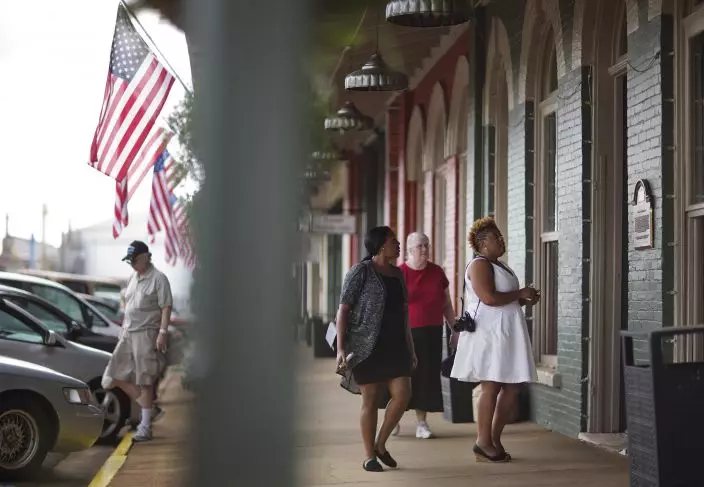
FILE-In this Sunday, Aug. 23, 2015 file photo, pedestrians walk down Main Street in the hometown of former President Jimmy Carter, in Plains, Ga. Former President Jimmy Carter's home county in rural south Georgia has been embroiled in a costly voting rights lawsuit that experts say could soon be replicated nationwide.(AP PhotoDavid Goldman, File)
In the midst of it is Kelvin Pless, whose election to the board nearly a decade ago shifted control toward an African American majority. Before then, a white-majority board had governed the district where black students constitute an overwhelming majority. It also unleashed what Pless said felt like a "race war" that returned control to whites after state lawmakers intervened.
"I don't like to use the term too much, but I think it was borne out of racism." said Pless. "It was almost like a very mild version of terrorism."
The board's white chairman, Michael Busman, said the election changes that reconstituted the board had "nothing to do with race." Instead, he called it the simplest path to shrinking the nine-member body, which he said was too large and costly for the small school district.
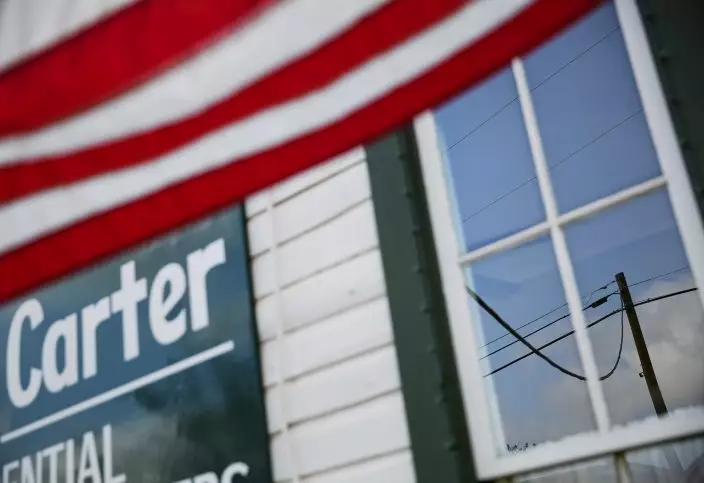
FILE-In this Wednesday, Feb. 8, 2017 file photo, a utility pole is reflected in the window of an old train depot that became a local campaign office for former President Jimmy Carter in his hometown of Plains, Ga. Former President Jimmy Carter's home county in rural south Georgia has been embroiled in a costly voting rights lawsuit that experts say could soon be replicated nationwide. (AP PhotoDavid Goldman, File)
With a population estimated around 30,000, Sumter County is about 53% black and 43% white. Like many other Southern communities, it was run by whites until courts overturned Jim Crow laws and ordered desegregation during the civil rights era.
The county saw large-scale civil rights demonstrations in the 1960s and drew national attention for imprisoning dozens of African American girls in a squalid stockade for months and charging four other activists with treason. The first students to integrate Sumter's schools faced violent white mobs. Their buses were pummeled by rocks and eggs, their notebooks ripped to pieces.
Today, the district — with 4,400 students — is 72% black, 14% white and 12% Hispanic. Many white families send children to private or public schools in neighboring counties with larger white populations.
"I come back now, and I see things virtually unchanged. It's a city that's still polarized, a school system that remains just as segregated today as it was decades ago," said Sam Mahone, a veteran of the county's civil rights movement.
Before entering state and national politics, Carter served on the school board in the 1950s.
Once a majority-black board was seated in 2011, Pless said agitated white residents crammed meetings in what felt "like a lynch mob." The local press disparaged the new 6-3 African American majority as the "gang of six," he said. At least two African American board members during that time say their employers received threatening letters, advocating they be fired.
Then the state legislature downsized the board, redrew its election districts and added two at-large seats. The motivation for the change remains contested, but the effect was clear. The board shifted to a 5-2 white majority, prompting the lawsuit that the American Civil Liberties Union later joined.
Two of the last four board elections were called off by judges, and two were held under the new plan, which a federal district judge ruled last year violated the 1965 Voting Rights Act by "diluting" African American voting strength. The judge also said decades of discrimination had hindered the black community's ability to exercise electoral power in at-large elections.
Under the Voting Rights Act, the county's plan previously would have been cleared in advance by the Justice Department to guarantee it didn't harm minorities. That process, called "preclearance," was effectively dismantled by a 2013 Supreme Court decision. That allowed Georgia to implement the plan without oversight.
With no more federal preclearance required, expensive court fights like the one in Carter's county could erupt nationwide over post-2020 Census redistricting.
"It's taken four years and probably millions of dollars just to litigate in this one tiny jurisdiction," said Leah Aden, deputy director of litigation at the NAACP Legal Defense Fund. "It's very concerning that there might be a need for many more of these types of cases across thousands of jurisdictions across our country in the coming years."
During such lawsuits, officials who may have been elected through an unfair process remain in office. In Sumter County, three of the seven sitting school board members are holdovers, their terms already expired. Still, they're making decisions about hiring district personnel and building a new $48 million high school.
"It's not like there aren't remaining tools to combat discrimination, but they keep the inertia on the side of those who would do harm," said Justin Levitt, a professor at Loyola Law School in Los Angeles.
Some African American leaders in Sumter County said they're disappointed that Carter, who's traveled worldwide to promote democracy, hasn't weighed in on the case unfolding in his hometown.
"He's all around the world talking about people having bad elections and he's got one right in his backyard and he hasn't opened his mouth," said John Marshall, publisher of the county's African American newspaper.
A representative of Carter didn't respond to emails and calls requesting comment.
The county argues on appeal that African American voters have the opportunity to elect candidates to at-large districts, noting the county voted for Democrat Stacey Abrams — an African American woman who narrowly lost 2018's high-profile gubernatorial race.
For now, the Sumter County case is back before a U.S. District Court judge who's overseeing the drawing of new districts for the 2020 election. Progress is slow.
"There's no end in sight," said attorney Bryan Sells, who represents plaintiff Mathis Kearse Wright Jr., the local NAACP president.
Alice Green, one of the two remaining African American board members, said she hopes the litigation ends soon.
"The community is divided, and the school system is only as good as the community," she said.
ISLAMABAD (AP) — As fears of a wider regional conflict escalate following U.S. and Israeli strikes on Iran that began in late February, Pakistan has emerged as an unexpected mediator, offering to help bring Washington and Tehran to the negotiating table.
Islamabad isn't often called on to act as an intermediary in high-stakes diplomacy, but it's stepped into the role this time for a number of reasons, both because it has relatively good ties with both Washington and Tehran and because it has a lot at stake in seeing the war resolved.
Pakistani government officials have said that their public peace effort follows weeks of quiet diplomacy, though they have provided few details. They have also said that Islamabad stands ready to host talks between representatives from the U.S. and Iran.
Here's what to know about Pakistan's mediation effort:
Pakistan’s role in Iran-U.S. negotiations surfaced only days ago following media reports. Officials in Islamabad later acknowledged that a U.S. proposal had been conveyed to Iran.
It remains unclear who has served as Iran’s point of contact in the indirect talks. Iran has maintained it has not held such talks and dismissed the U.S. proposal, but Tehran has acknowledged responding with its own proposals.
According to Pakistani officials, U.S. messages are being passed to Iran and Iranian responses relayed to Washington, though they did not specify how the process is being handled or who is directly communicating with whom. Pakistan's Foreign Minister Ishaq Dar said this week that Turkey and Egypt are also working behind the scenes to bring the sides to the negotiating table.
Abdullah Khan, managing director of the Pakistan Institute for Conflict and Security Studies, said that Pakistani’s mediation efforts may be contributing to relative restraint in the conflict. He noted that U.S. President Donald Trump has delayed his threats of large-scale attacks on Iran’s energy infrastructure citing diplomatic progress, and Iranian responses toward U.S. interests in the Gulf have been measured in what may be an effort to preserve space for diplomacy.
Previous US-Iran negotiations have been facilitated mainly by countries in the Middle East, including Oman and Qatar, but as they come under Iranian fire during the war Pakistan has stepped into the role.
Analysts say Pakistan’s geographic proximity to Iran — it’s one of its neighbors — coupled with its longstanding ties with the U.S., gives it a unique position at a time when direct communication between the two sides remains constrained.
Islamabad has good working relations with most of the key parties in the war, including both the U.S. and Iran. It has close strategic ties with Gulf states including Saudi Arabia, with which it signed a defense cooperation agreement last year. However, Pakistan has no diplomatic relations with Israel because of the lingering issue of Palestinian statehood.
Relations between the United States and Pakistan have improved since last year, with increased diplomatic engagement and expanding economic ties. Pakistan also joined Trump's Board of Peace, which aims to ensure peace in Gaza, despite opposition from Islamists at home.
Over the weekend, Trump spoke to the Pakistani army chief Field Marshal Asim Munir, whom the U.S. president has publicly described as his “favorite Field Marshal.” Analysts say he's a player who enjoys good ties with both the Iranian and U.S. militaries.
The conflict poses some of “the biggest economic and energy security challenges” in Pakistan’s history, said Islamabad-based security analyst Syed Mohammad Ali.
The country gets most of its oil and gas from the Middle East — and, he said, the five million Pakistanis working in the Arab world send home remittances each year roughly equal to the country’s total export earnings.
Rising tensions have already contributed to higher global oil prices, forcing Pakistan to increase fuel prices by about 20% and putting pressure on the government of Prime Minister Shehbaz Sharif.
The war is also adding to domestic turmoil, even as Pakistan has been grappling for months with its own conflict with neighboring Afghanistan. Islamabad has accused the country's Taliban government of tolerating militant groups that are behind attacks in Pakistan.
Earlier this month, protests erupted across the country following U.S. strikes on Iran, with demonstrators clashing with security forces in several cities.
A day after the United States and Israel attacked Iran, killing Supreme Leader Ayatollah Ali Khamenei, clashes erupted in Pakistan’s southern port city of Karachi and in parts of the north, leaving at least 22 people dead and more than 120 injured nationwide.
At least 12 people were killed in and around the U.S. Consulate in Karachi after a mob breached the compound and attempted to set it on fire.
Khamenei was a central religious and political figure for Shiites worldwide, including in Pakistan.
While Pakistan rarely serves as a mediator, its record does include playing a role in some very high-profile talks.
Pakistan’s then-President Gen. Yahya Khan facilitated backchannel contacts that led to U.S. President Richard Nixon’s historic 1972 visit to China. That paved the way for the establishment of diplomatic ties between Washington and Beijing in 1979.
Since then, Pakistan has played a role in several other complex regional conflicts, most notably during the 1988 Geneva Accords that paved the way for the Soviet withdrawal from Afghanistan. Acting as a frontline state and key interlocutor, Islamabad participated in U.N.-brokered negotiations while working closely with the United States and other stakeholders and helped increase pressure on Moscow to pull out its forces.
More recently, Pakistan facilitated contacts between the Afghan Taliban and Washington that led to talks in Doha that culminated in a 2020 agreement and set the stage for the withdrawal of U.S.-led NATO troops and the Taliban’s return to power in 2021.
Castillo reported from Beijing.
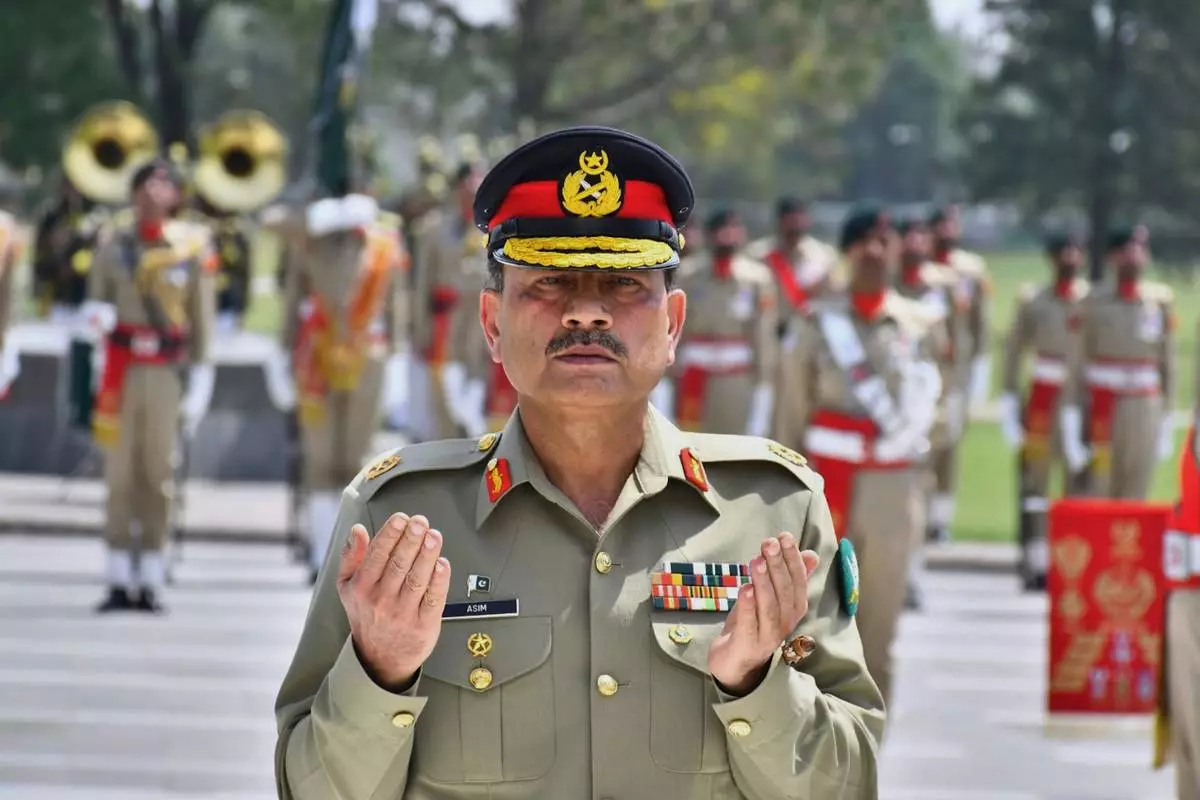
FILE - In this photo released by the Inter Services Public Relations, newly elevated Field Marshal General Asim Munir prays after laying wreath on the Martyrs monument during a special guard of honor ceremony at General Headquarters, in Rawalpindi, Pakistan, May 21, 2025. (Inter Services Public Relations via AP, File)
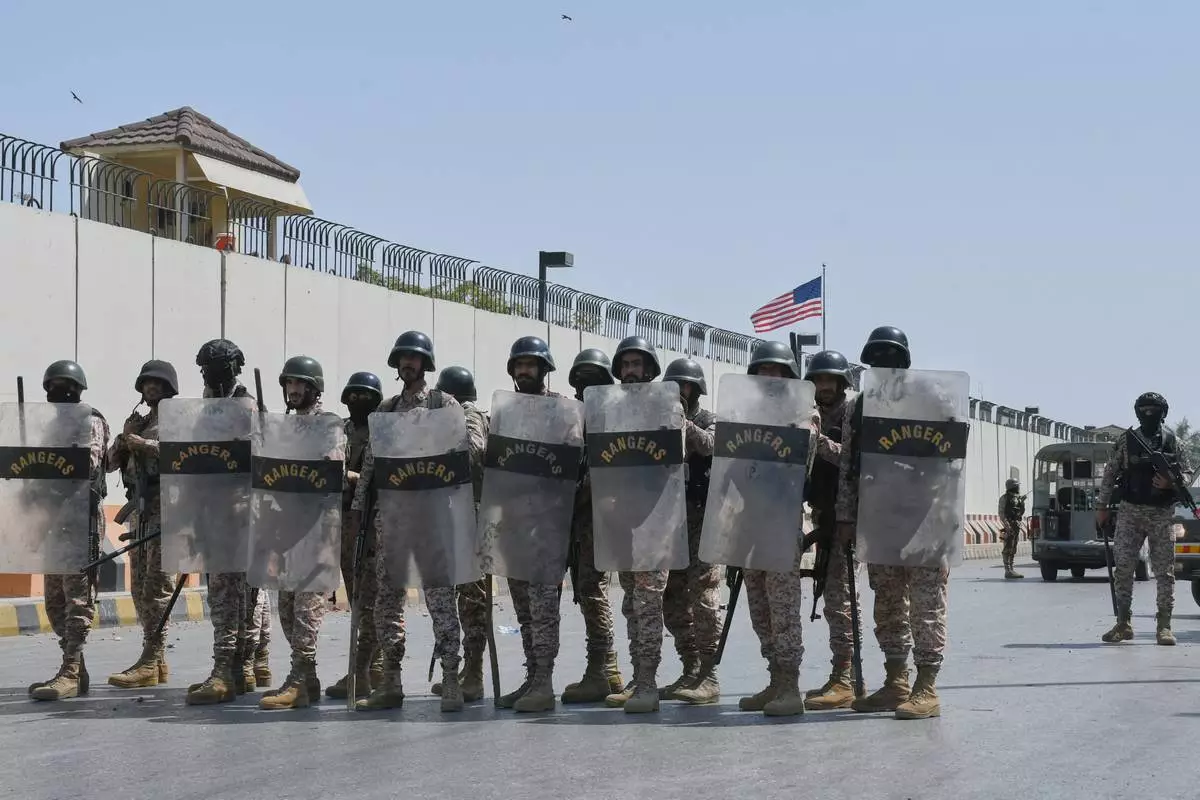
FILE - Paramilitary soldiers take positions at the U.S. Consulate after protesters stormed the building in Karachi, Pakistan, on March 1, 2026. (AP Photo/Ali Raza, File)
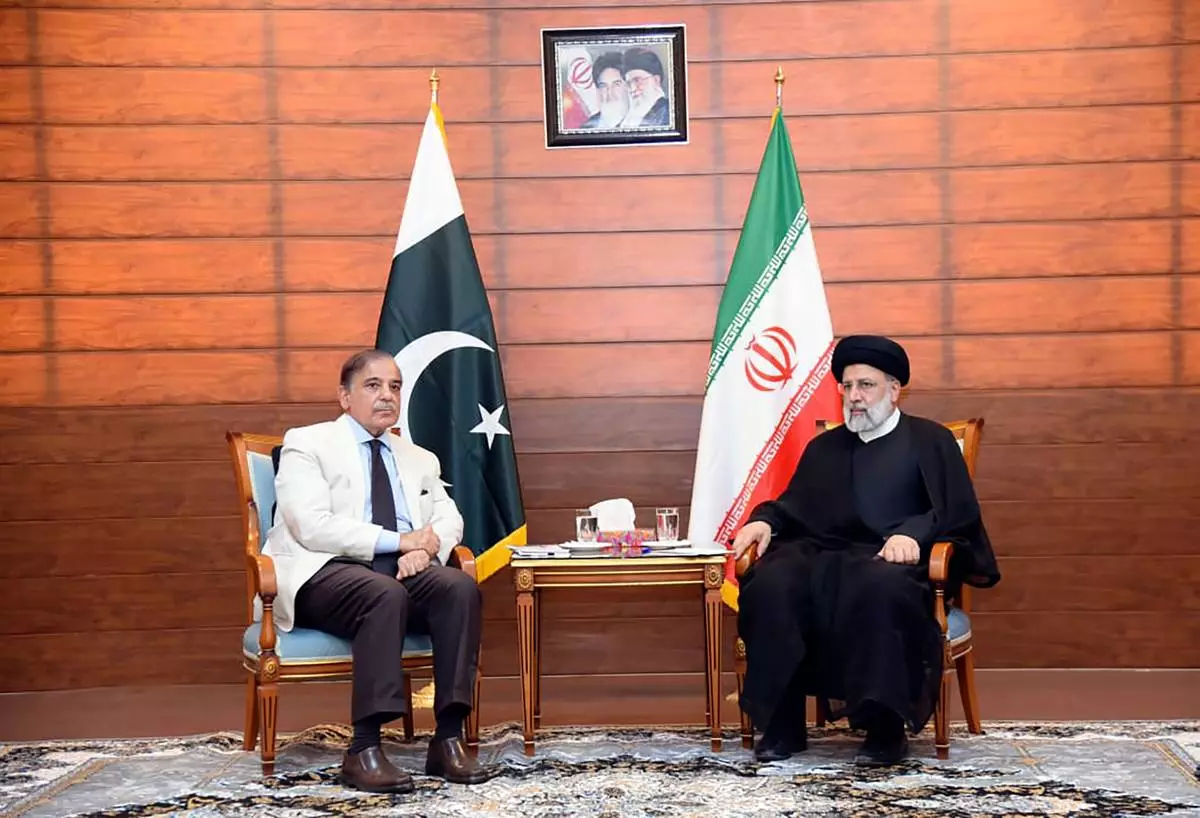
FILE - In this photo released by Pakistan Prime Minister Office, Pakistan's Prime Minister Shahbaz Sharif, left, and Iran's President Ebrahim Raisi meet during an inauguration of the Mand-Pishin border in Pishin, border of Pakistan-Iran, on May 18, 2023. (Pakistan Prime Minister Office via AP, File)
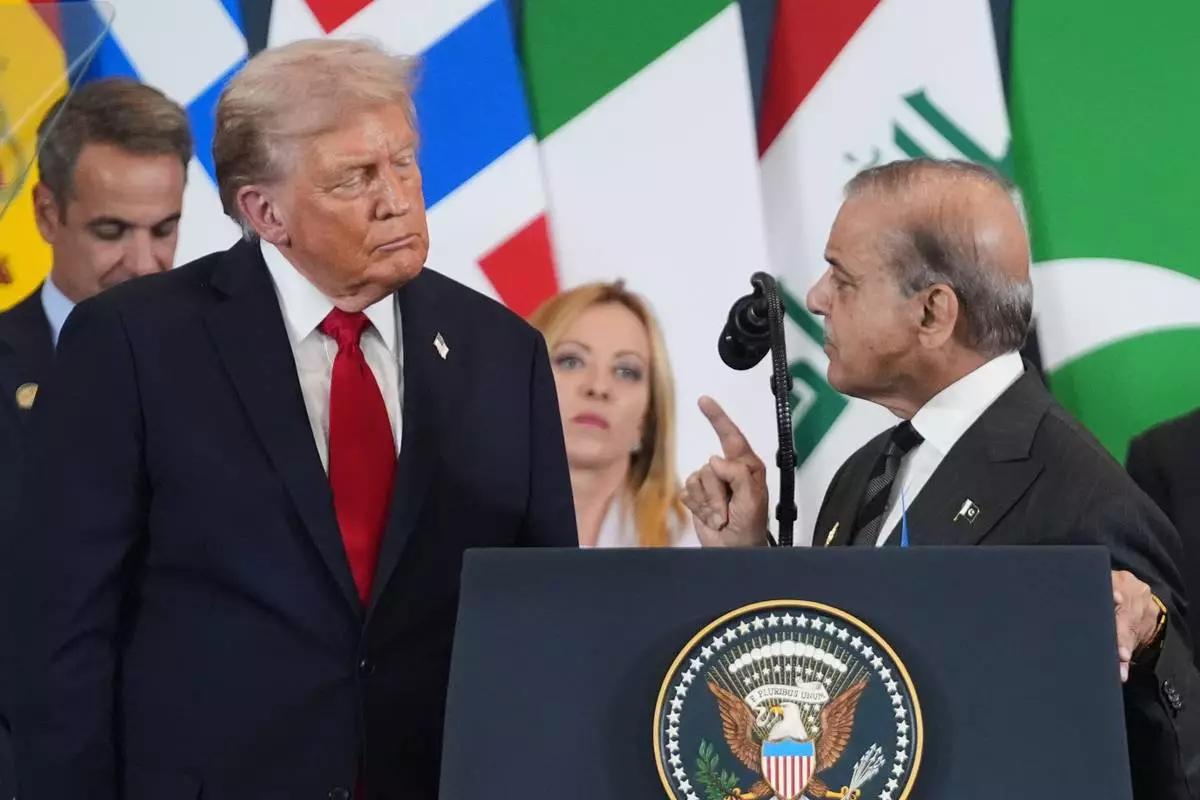
FILE - President Donald Trump, left, listens as Pakistan's Prime Minister Shehbaz Sharif speaks during a summit to support ending the more than two-year Israel-Hamas war in Gaza after a breakthrough ceasefire deal, on Oct. 13, 2025, in Sharm El Sheikh, Egypt. (AP Photo/Evan Vucci, File)