The Statue of Liberty is at the center of a national debate on immigration after a top Trump administration official offered the president's own interpretation of the famous inscription that has welcomed immigrants to the United States for more than a century.
The acting director of Citizenship and Immigration Services, Ken Cuccinelli, who is an immigration hardliner, said Tuesday that the poem by Emma Lazarus referred to "people coming from Europe" and that America is looking to receive migrants "who can stand on their own two feet."
Click to Gallery
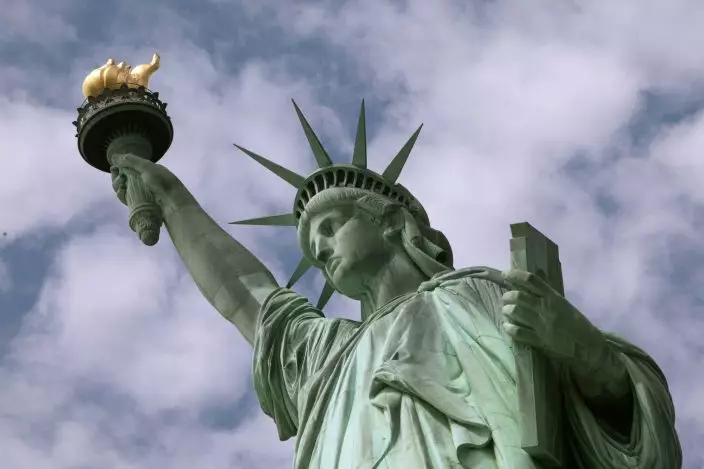
FILE - In this June 2, 2009, file photo, the Statue of Liberty stands in New York harbor. (AP PhotoRichard Drew, File)
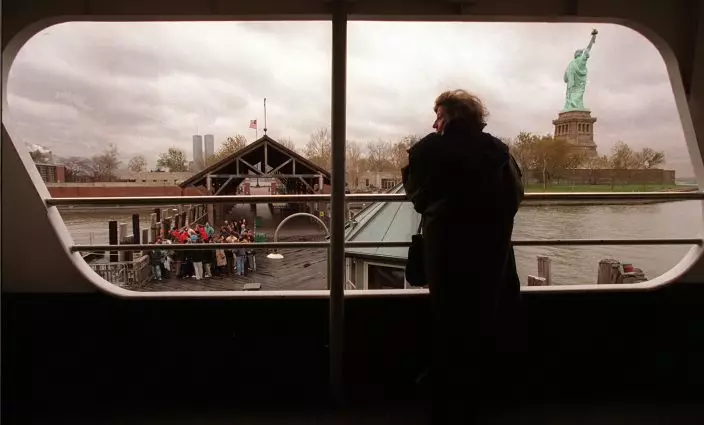
FILE - In this Nov. 14, 1995, file photo, Sonja Kuhnelt of Germany peers out a ferry window at the Statue of Liberty as a small group of visitors wait on the dock to board the vessel. (AP PhotoAdam Nadel, File)
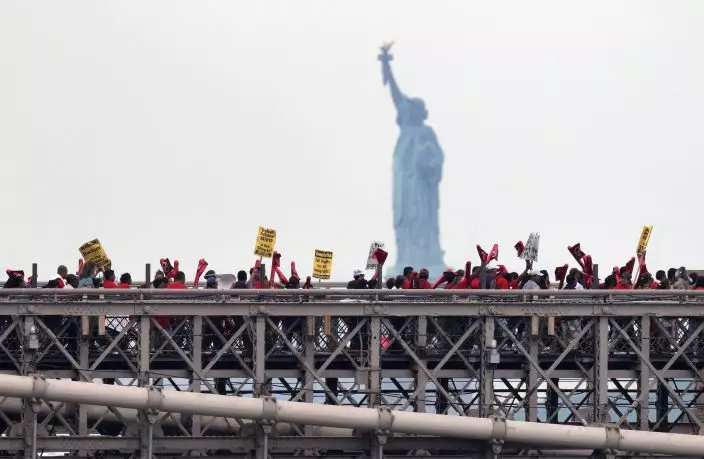
FILE - In this July 29, 2010, file photo, with the Statue of Liberty behind them, a coalition of immigrant groups and their supporters march across the Brooklyn Bridge in New York. (AP PhotoSeth Wenig, File)
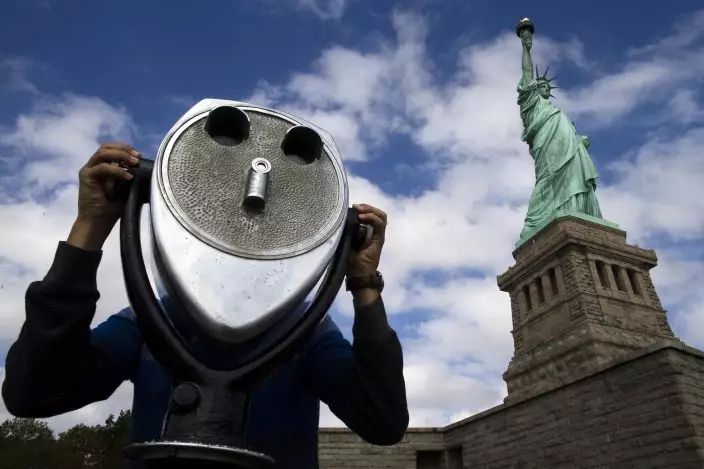
FILE - In this Oct. 13, 2013, file photo, the Statue of Liberty looms over a visitor as he uses binoculars to look out onto New York Harbor in New York. (AP PhotoJohn Minchillo, File)
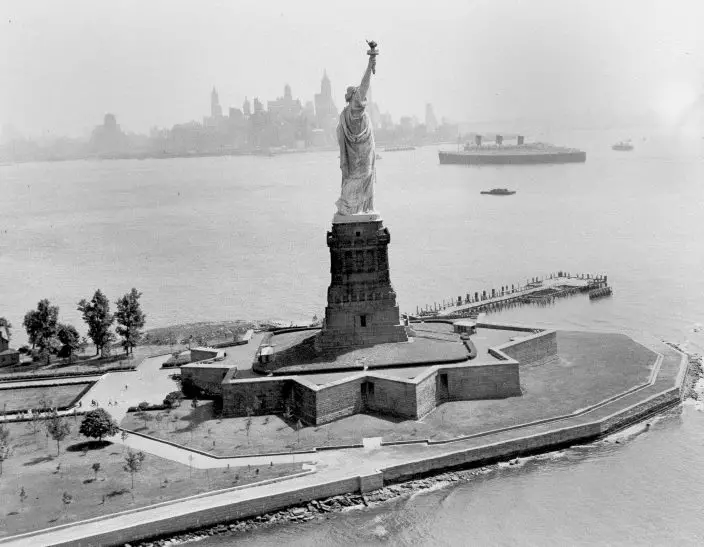
FILE - In this June 29, 1954, file photo, the Statue of Liberty stands in New York Harbor as the ocean liner Queen Mary goes past as seen from a U.S. Coast Guard helicopter. (AP PhotoFile)
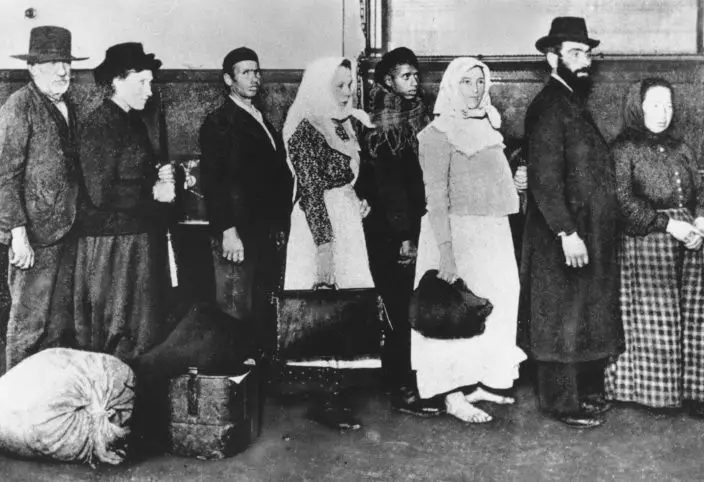
FILE - In this undated file photo, a group of immigrants who arrived at Ellis Island in New York wait in line to begin immigration proceedings. Ellis Island, the former immigration inspection station, is adjacent to the Statue of Liberty. (AP PhotoFile)
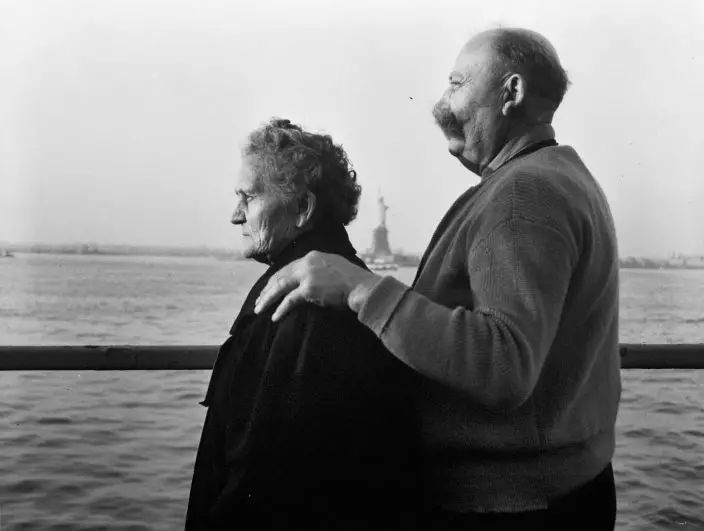
FILE - In this Oct. 28, 1956, file photo, Mr. and Mrs. Paul Roerich from Bavaria, Germany, look out from the stern of the USNS General Langfitt anchored in New York Harbor carrying over a 1,000 refugees from Europe. In the background is the Statue of Liberty. The couple planned to settle in Ohio. (AP PhotoFile)
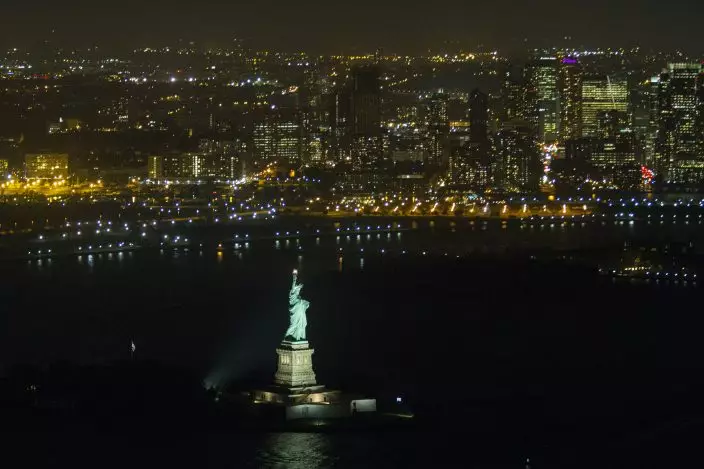
FILE - This Oct. 7, 2014, file photo, shows the Statue of Liberty during a visit by President Barack Obama, in New York. (AP PhotoEvan Vucci, File)
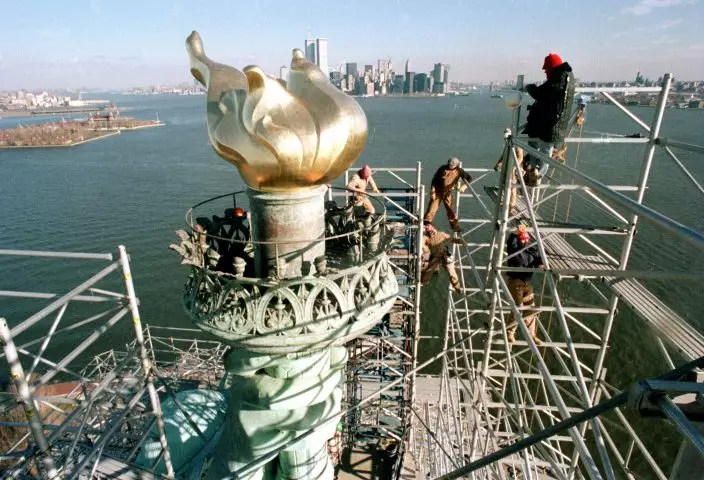
FILE - In this Dec. 17, 1985, file photo, workers remove scaffolding from the Statue of Liberty, in New York. (AP PhotoMario Cabrera, File)
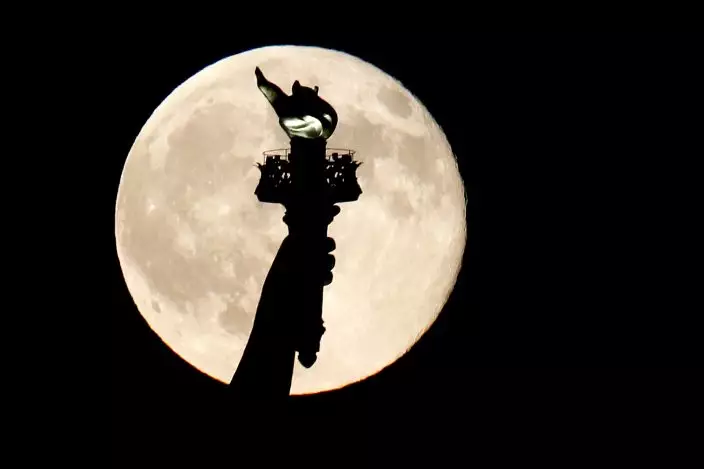
FILE - In this July 31, 2015, file photo, a blue moon rises behind the torch of the Statue of Liberty seen from Liberty State Park in Jersey City, N.J. A blue moon happens when the moon rises in its full stage twice during the same month. (AP PhotoJulio Cortez, File)
Lazarus' poem, written in 1883 to raise money to construct the Statue of Liberty's pedestal, was cast in bronze beneath the monument in 1903. The statue and the poem's words have served as a beacon to millions of immigrants as they first entered the nation in New York Harbor. It reads: "Give me your tired, your poor, Your huddled masses yearning to breathe free, The wretched refuse of your teeming shore."
FILE - In this June 2, 2009, file photo, the Statue of Liberty stands in New York harbor. (AP PhotoRichard Drew, File)
Cuccinelli's comments came as Democrats and immigrant-rights groups blasted a new Trump administration policy that could deny green cards to migrants who seek public assistance, saying the changes would scare immigrants away from asking for needed help.
President Donald Trump has spoken disparagingly about immigration from majority black and Hispanic countries, including calling Mexican immigrants rapists and criminals when he launched his 2016 campaign. Last year, he privately referred to Central American and African nations as "shithole" countries and suggested the U.S. take in more immigrants from European countries such as predominantly white Norway.
FILE - In this Nov. 14, 1995, file photo, Sonja Kuhnelt of Germany peers out a ferry window at the Statue of Liberty as a small group of visitors wait on the dock to board the vessel. (AP PhotoAdam Nadel, File)
FILE - In this July 29, 2010, file photo, with the Statue of Liberty behind them, a coalition of immigrant groups and their supporters march across the Brooklyn Bridge in New York. (AP PhotoSeth Wenig, File)
FILE - In this Oct. 13, 2013, file photo, the Statue of Liberty looms over a visitor as he uses binoculars to look out onto New York Harbor in New York. (AP PhotoJohn Minchillo, File)
FILE - In this June 29, 1954, file photo, the Statue of Liberty stands in New York Harbor as the ocean liner Queen Mary goes past as seen from a U.S. Coast Guard helicopter. (AP PhotoFile)
FILE - In this undated file photo, a group of immigrants who arrived at Ellis Island in New York wait in line to begin immigration proceedings. Ellis Island, the former immigration inspection station, is adjacent to the Statue of Liberty. (AP PhotoFile)
FILE - In this Oct. 28, 1956, file photo, Mr. and Mrs. Paul Roerich from Bavaria, Germany, look out from the stern of the USNS General Langfitt anchored in New York Harbor carrying over a 1,000 refugees from Europe. In the background is the Statue of Liberty. The couple planned to settle in Ohio. (AP PhotoFile)
FILE - This Oct. 7, 2014, file photo, shows the Statue of Liberty during a visit by President Barack Obama, in New York. (AP PhotoEvan Vucci, File)
FILE - In this Dec. 17, 1985, file photo, workers remove scaffolding from the Statue of Liberty, in New York. (AP PhotoMario Cabrera, File)
FILE - In this July 31, 2015, file photo, a blue moon rises behind the torch of the Statue of Liberty seen from Liberty State Park in Jersey City, N.J. A blue moon happens when the moon rises in its full stage twice during the same month. (AP PhotoJulio Cortez, File)