James Atlas, an author, editor and patron of literary biographies who broke thorough in his 20s by writing an acclaimed book on poet Delmore Schwartz and later oversaw releases on subjects ranging from St. Augustine to Elvis Presley, has died.
Fellow biographer Anne C. Heller told The Associated Press that Atlas died Wednesday at age 70. Atlas' daughter, the literary agent Molly Atlas, said that he had been battling a long-term lung condition that worsened in recent months.
Friends and fellow writers and biographers posted online tributes, praising him as a generous supporter of other people's work.

This undated image released by Pantheon Books shows author and editor James Atlas who died Wednesday, Sept. 4, 2019, at age 70. (Michael LionstarPantheon Books via AP)
"He was a friend to many biographers, including me, and one of the first to encourage me to write my book about Shirley Jackson," Ruth Franklin, whose Jackson biography won a National Book Critics Circle prize, wrote on her Facebook page.
Starting in 1977 with "Delmore Schwartz: The Life of an American Poet," Atlas was a singular champion of biographies, be it those he authored himself, the books he published through the Penguin Lives series he founded in 1999 or the books he later edited for HarperCollins and W.W. Norton & Company.
Atlas turned out dozens of brief works that were credited with reviving an art form dating back to ancient times and inspiring numerous publishers to launch similar imprints. His idea was to pair prominent contemporary writers with famous figures of the past: Irish writer Edna O'Brien on James Joyce, surgeon Sherwin Nuland on Leonard da Vinci, Southern writer Bobbie Ann Mason on Presley.
One Penguin Lives work, Garry Wills' biography of St. Augustine, was praised as a revelatory account of the Christian philosopher. Atlas was also proud of recruiting the bestselling travel writer and linguist Bill Bryson for a book on Shakespeare for HarperCollins' Eminent Lives series.
"We try to elicit enthusiasms," Atlas told The Associated Press in 2008. "I sent out these missives to writers I admire, sometimes into the Internet ether and sometimes by actual post. I sent some letters to Bill Bryson and sort of forgot about it until a few months later I got this letter from him. There's one word, followed by a question mark: 'Shakespeare?'"
Besides his daughter, he is survived by his wife, Dr. Anna Fels, his son William and a grandson, Otto.
Atlas was born in Evanston, Illinois, and became interested in Schwartz as a teenager after he learned of the famously tormented poet's 1966 death, at age 52.
He continued to read Schwartz while studying at Harvard University, where his mentors included Robert Lowell and Elizabeth Bishop, and an essay he wrote for a poetry journal in his mid-20s led to a book deal with Farrar, Straus & Giroux.
His Schwartz biography was a National Book Award finalist and Atlas' connection to the poet lasted through the following decades. In his 2017 book, "The Shadow in the Garden: A Biographer's Tale," he recalled suffering from acute depression and being "diagnosed with Delmore's main impairment, bipolarity."
Atlas' other books included the memoir "My Life in the Middle Ages" and an autobiographical novel, "The Great Pretender." The praise he received for his Schwartz biography led to his most contested work, a biography of Saul Bellow published in 2000. As Atlas recalled in the audio-only memoir "Remembering Roth," published in February, Philip Roth had sent Atlas an admiring letter after "Delmore Schwartz" came out and later suggested the book on Bellow. Working with Bellow's cooperation, Atlas spent a decade on the book and combined comprehensive research and insightful analysis with growing dismay over the author's private behavior, chastising him for misogyny and homophobia.
"If you know Bellow and aren't dead, Atlas will have talked to you. If you had an opinion but bought the farm, he's read your diaries, your F.B.I. dossier and maybe your genome," New York Times critic John Leonard wrote in 2000. "Alas, the deeper into the biography, the harder it is to recall what we admired so much in the fiction."
The book helped lead to a long estrangement with Roth, although they did reconnect before Roth's death in 2018. During their last meeting, Roth spoke of mortality, inquired about the Kindle e-book device and, because he had lost his wallet, asked Atlas to lend him money.
U.S. President Donald Trump said that he has demanded about seven countries send warships to keep the Strait of Hormuz open, as Iranian strikes continued to rain down on Gulf countries early Monday.
Dubai International Airport — the world's busiest — suspended operations after a drone struck a fuel tank, starting a fire. Authorities said it was quickly contained and no injuries were reported.
Tehran has accused the United States of using “ports, docks and hideouts” in the United Arab Emirates to launch strikes on Kharg Island, home to the main terminal handling Iran’s oil exports, without providing evidence, as oil prices soared.
Trump said the U.S. is negotiating with countries heavily reliant on Middle East crude to join a coalition to police the waterway where about one-fifth the world’s traded oil normally flows, but declined to name them.
Meanwhile, Israeli strikes have deepened Lebanon's humanitarian crisis, with more than 850 people killed and over 850,000 displaced.
Here is the latest:
Saudi Arabia says it intercepted three drones Monday morning over the capital Riyadh and the nation’s oil-rich western region.
The Saudi Defense Ministry says no casualties or damage were reported.
The ministry reports more than 60 drones attacked the Gulf country within a few hours.
United Arab Emirates officials say Dubai International Airport has gradually resumed some flights at hours after a drone strike.
Dubai Civil Aviation Authority announced flights are operating to selected destinations, according to the Dubai Media Office.
Emirates airline says limited operations have resumed at the airport.
A drone struck a fuel tank at the airport early Monday, causing a fire and forcing the temporary suspension of flights.
Brent crude oil is trading near the $105 per barrel level on Monday.
A barrel of Brent, the international standard, was up 1.6% at $104.73, dipping slightly after opening above $106 per barrel. It’s up more than 40% since the war began.
Share prices in Asia were mixed and U.S. futures advanced.
Hours after a drone strike sparked a fire at Dubai’s main airport, Emirates says in its latest update that all of its flights there “remain suspended until further notice.”
The airline says it is working with authorities to restart operations when possible. It urged passengers not to travel to the airport.
Dubai International Airport is the world’s busiest airport for international travel and a key hub for many routes linking the East and West.
The United Arab Emirates’ Defense Ministry said forces were intercepting Iranian missiles and drones Monday morning.
Earlier, a drone hit a fuel tank at the Dubai International Airport.
Trump is suggesting he may delay his much-anticipated visit to China at the end of the month as he seeks to ramp up the pressure on Beijing to help reopen the Strait of Hormuz and calm oil prices.
In an interview Sunday with the Financial Times, Trump said China’s reliance on oil from the Middle East means it ought to help with a new coalition he is trying to put together to get oil tanker traffic moving through the strait after Iran’s threats have throttled global flows of oil.
Trump said “we’d like to know” before the trip whether Beijing will help.
“We may delay,” Trump said in the interview.
Trump’s new comments came as U.S. Treasury Secretary Scott Bessent was meeting with Chinese Vice Premier He Lifeng on Monday in Paris for a new round of trade talks that were meant to pave the way for Trump’s Beijing trip.
Mohammed bin Salman and Mohamed bin Zayed Al Nahyan discussed the latest regional developments in a phone call, Saudi Arabia’s Foreign Ministry said in a statement early Monday.
The two leaders said the continued “Iranian attacks against Gulf Cooperation Council countries represent a dangerous escalation that threatens regional security and stability,” adding that GCC states will continue efforts to defend their countries
Emirati authorities have closed the main road and tunnel leading to Dubai International Airport.
Dubai Police urged drivers to use alternative roads.
Authorities said earlier a drone hit a fuel tank at the airport, causing fire with no casualties.
Saudi Arabia’s Defense Ministry said early Monday it downed an additional large barrage of 35 drones in the country’s eastern region, one of the kingdom’s least dense, close to Iran and home to major oil installations.
This brings the total number of drones intercepted to at least 60 in the last few hours.
The ministry did not immediately report casualties or damage.
The Australian government says a warship won’t be sent to the Middle East to keep the Strait of Hormuz open to international shipping.
U.S. President Donald Trump said that he has demanded about seven countries send warships to keep the Strait of Hormuz open, as Iranian strikes continued to rain down on Gulf countries.
Australia’s Transport Minister Catherine King told Australian Broadcasting Corp. on Monday she was not aware of Australia receiving such a request.
“We won’t be sending a ship to the Strait of Hormuz. We know how incredibly important that is, but that’s not something that we’ve been asked or that we’re contributing to,” King said.
Australia said last week it was providing the UAE with an air force surveillance jet and air-to-air missiles to defend against Iranian attacks.
But a government statement said Australia was “not taking offensive action against Iran.”
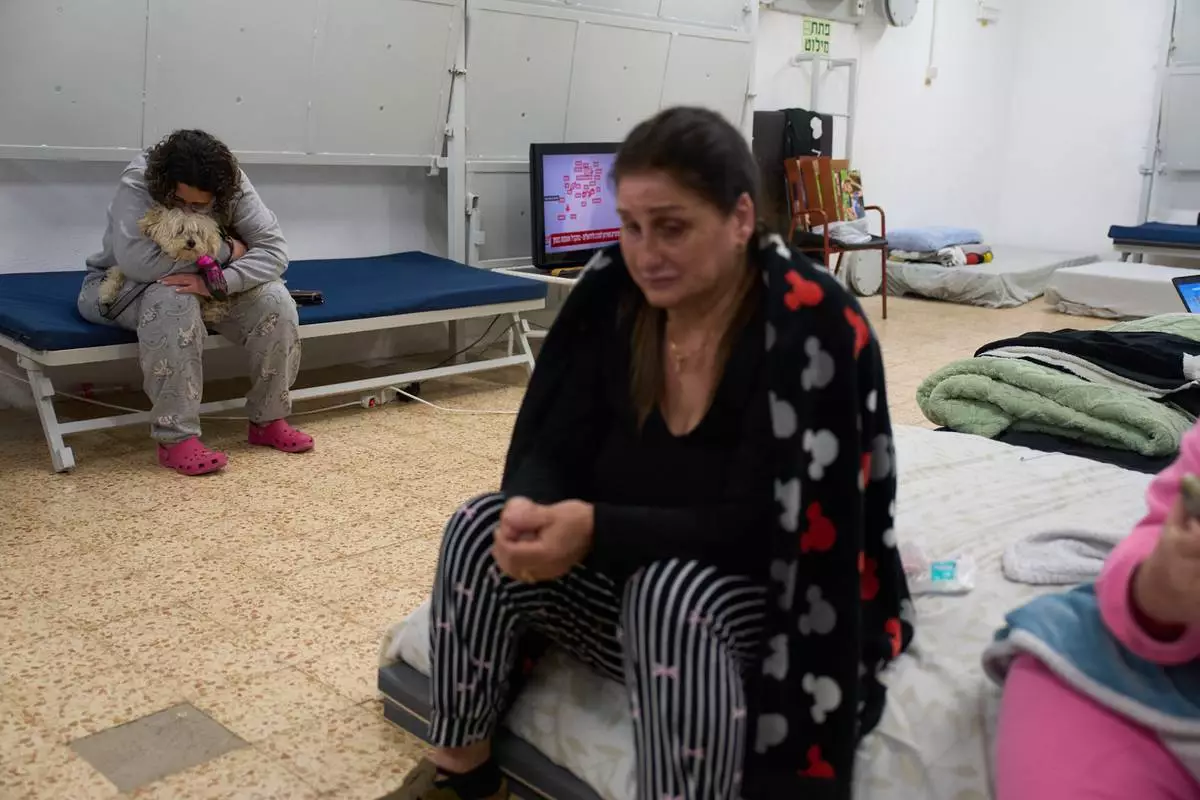
Nofar Eliash holds her dog as she takes shelter with others while air raid sirens warn of incoming Iranian and Hezbollah missile strikes in Kiryat Shmona, northern Israel, Monday, March 16, 2026. (AP Photo/Ariel Schalit)
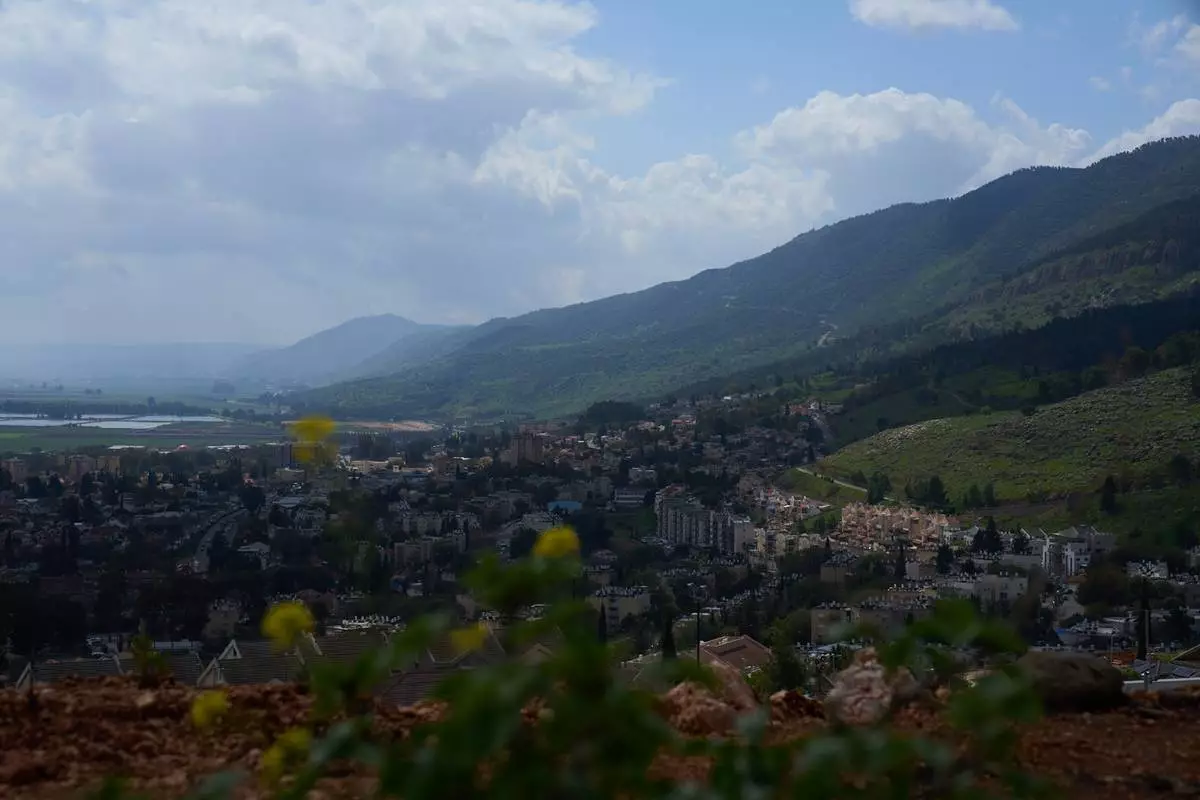
A view of Kiryat Shmona, northern Israel, and Lebanon border on the right,, Monday, March 16, 2026. (AP Photo/Ariel Schalit)
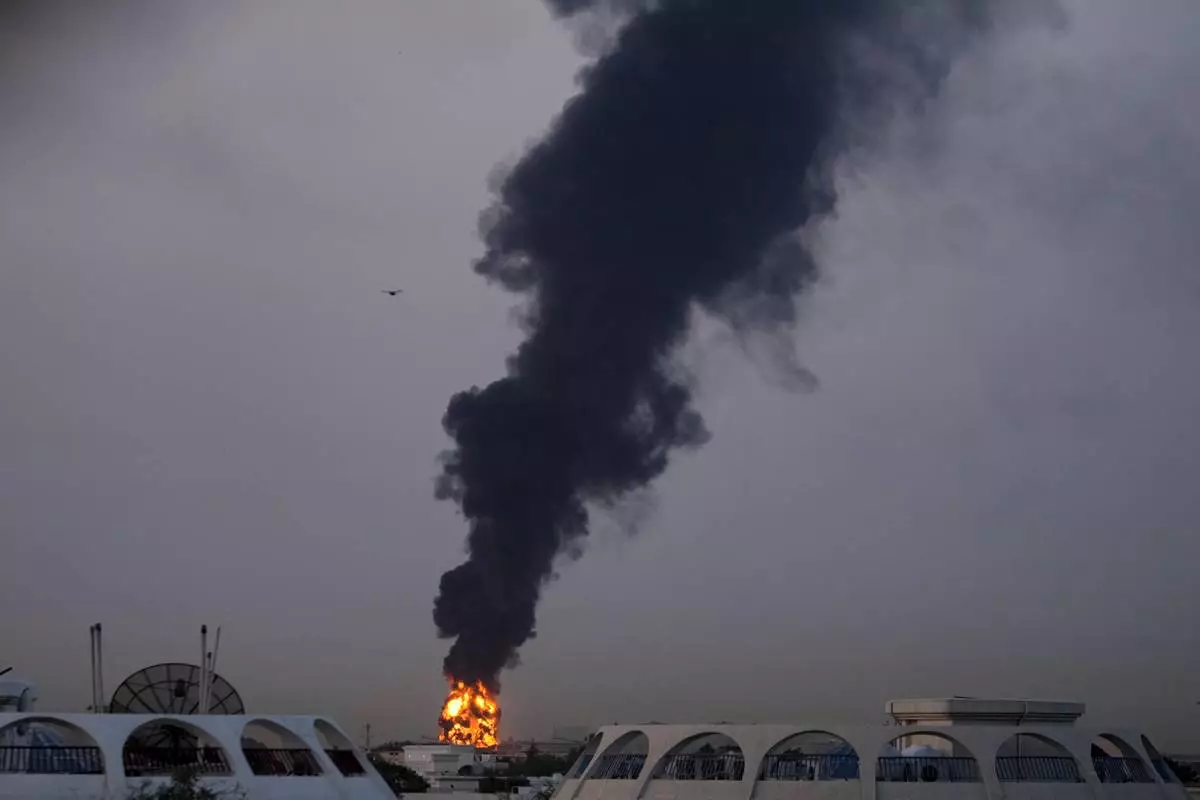
Fire and plumes of smoke rise after a drone struck a fuel tank forcing the temporary suspension of flights. near Dubai International Airport, in United Arab Emirates, early Monday, March 16, 2026. (AP Photo)

Israeli security forces inspect damage at the site of an Iranian missile strike in Holon, central Israel, Sunday, March 15, 2026. (AP Photo/Ohad Zwigenberg)

A bulldozer clears debris from the rubble of buildings destroyed in an Israeli airstrike in Dahiyeh, Beirut's southern suburbs, Lebanon, Sunday, March 15, 2026. (AP Photo/Hassan Ammar)
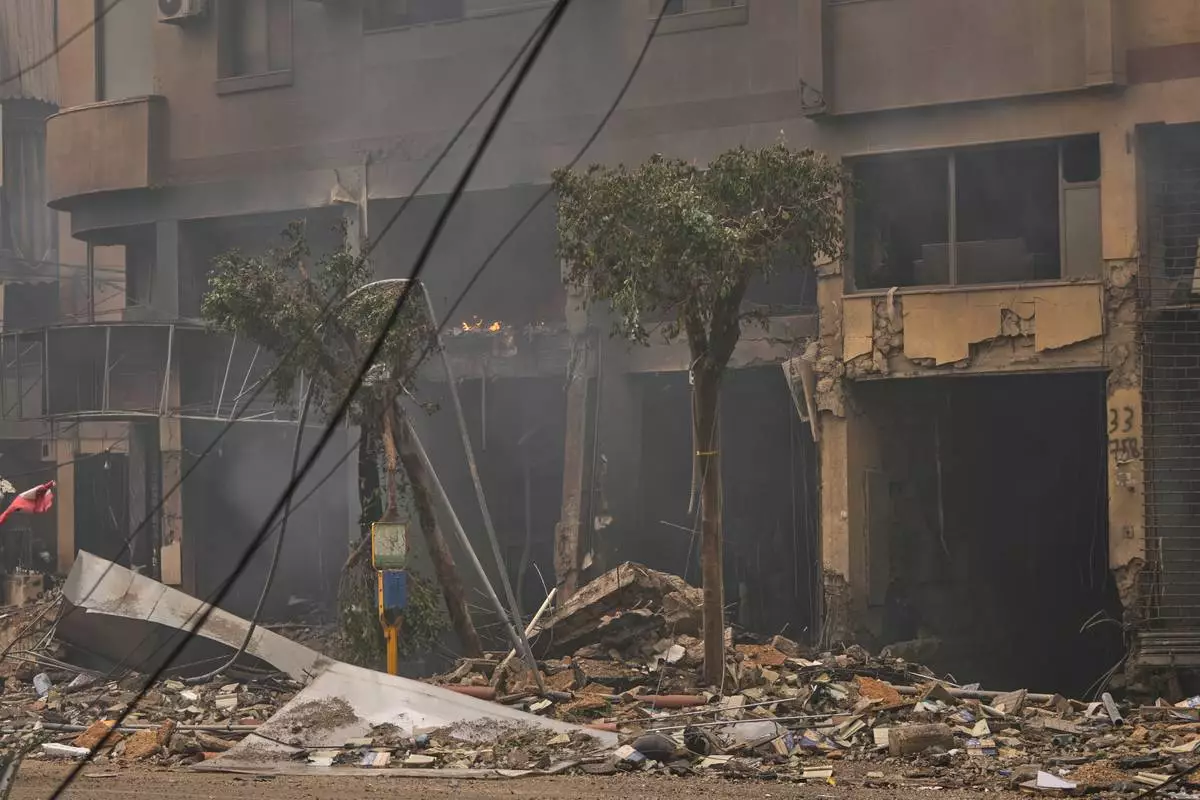
Debris litters the street as smoke rises from buildings damaged in an Israeli airstrike in Dahiyeh, Beirut's southern suburbs, Lebanon, Sunday, March 15, 2026. (AP Photo/Hassan Ammar)
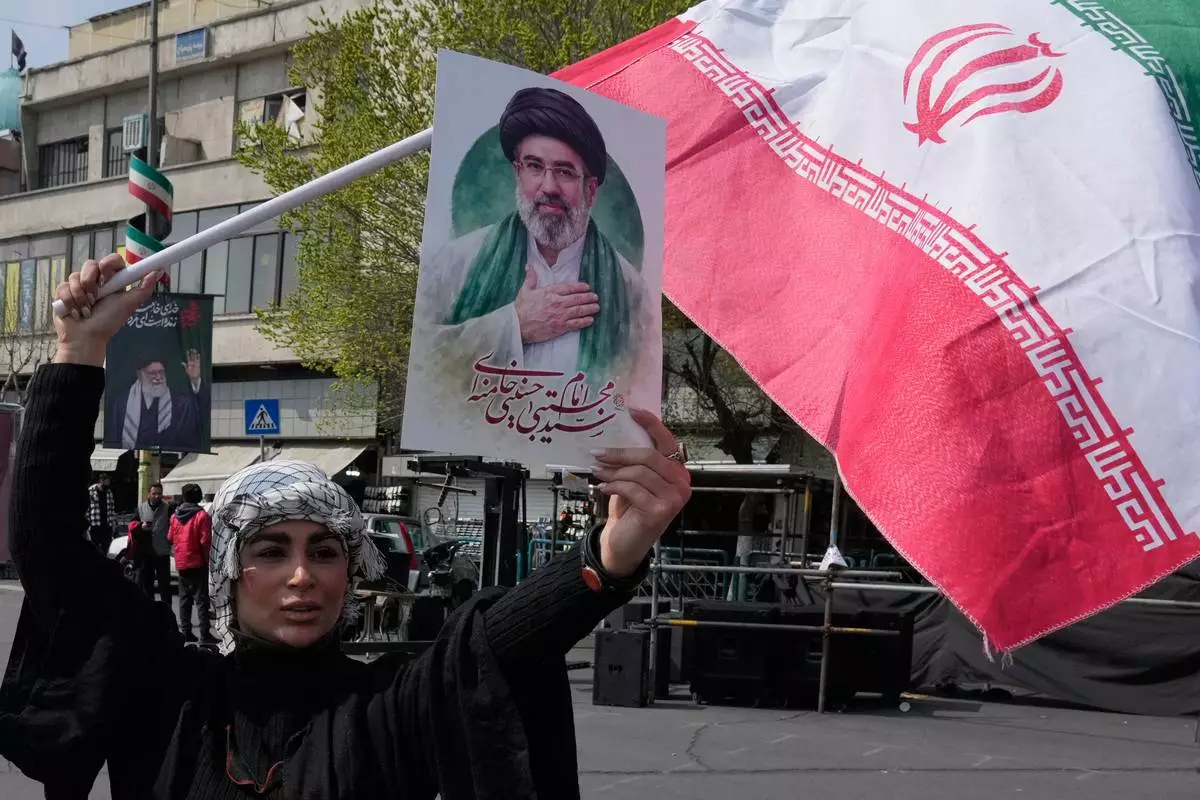
A woman displays a poster of the Iranian Supreme Leader Ayatollah Mojtaba Khamenei as she waves her country's flag during a campaign in support of the government at the Enqelab-e-Eslami, or Islamic Revolution, square in downtown Tehran, Iran, Saturday, March 14, 2026. (AP Photo/Vahid Salemi)
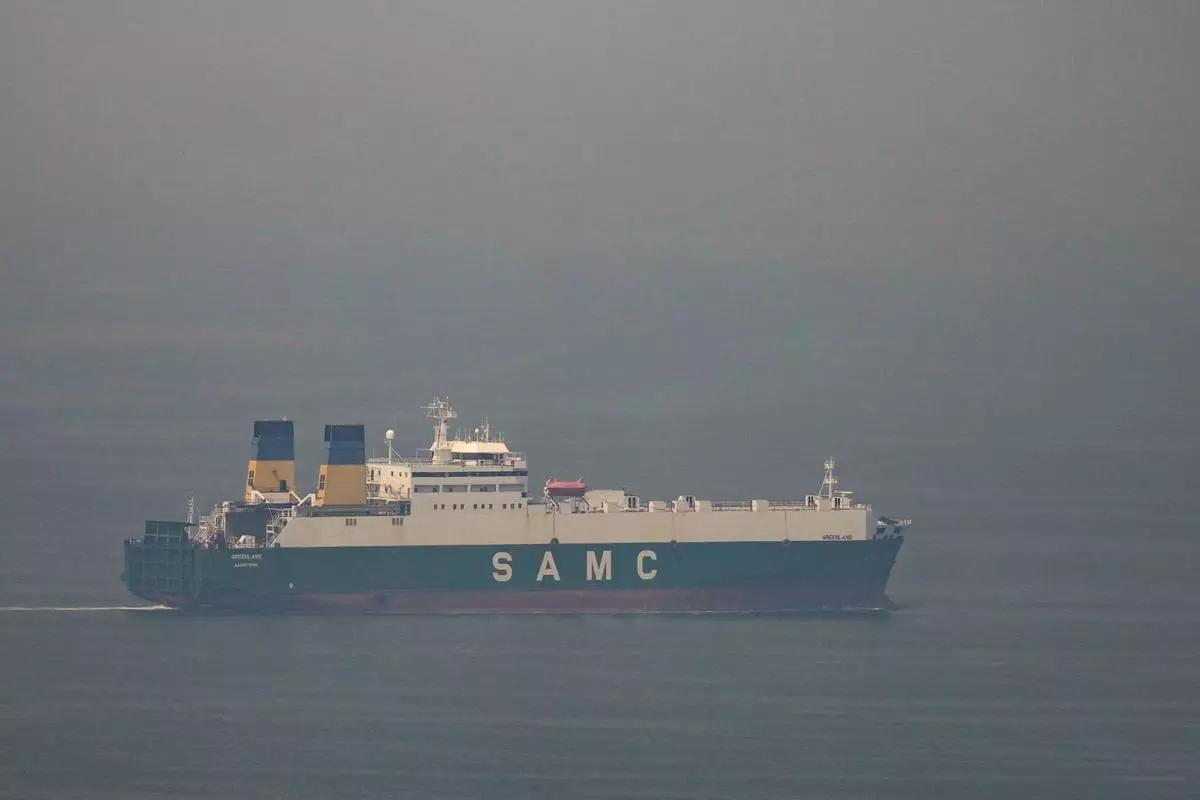
A cargo ship sails in the Arabian Gulf towards Strait of Hormuz in United Arab Emirates, Sunday, March 15, 2026. (AP Photo/Altaf Qadri)