Rafael Nadal staged another comeback to stay in contention for a semifinal spot at the ATP Finals.
The top-ranked Spaniard still needs help from Daniil Medvedev to avoid an early exit.
Nadal rallied to beat already-qualified Stefanos Tsitsipas 6-7 (4), 6-4, 7-5 on Friday for his second win of the round-robin stage. That still won’t be enough, though, if Alexander Zverev beats Medvedev in the last match of the group phase.
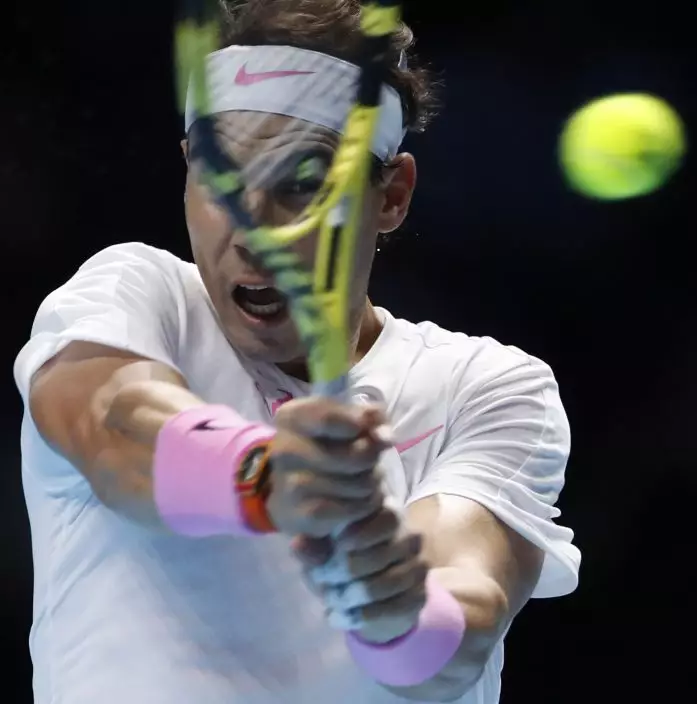
Spain's Rafael Nadal plays a return to Stefanos Tsitsipas of Greece during their ATP World Tours Finals singles tennis match at the O2 Arena in London, Friday, Nov. 15, 2019. (AP PhotoAlastair Grant)
That would leave Zverev, Nadal and Tsitispas with identical 2-1 records. But Nadal would finish third in the group based on the tournament’s tiebreaker rules.
If Nadal does advance, he’ll face Roger Federer in Saturday’s semifinals.
”I did all the things that I could today, I fought until the end two days ago and today,” Nadal said in an on-court interview. ”So if I am able to play in front of you tomorrow against Roger it would be a huge honor.”
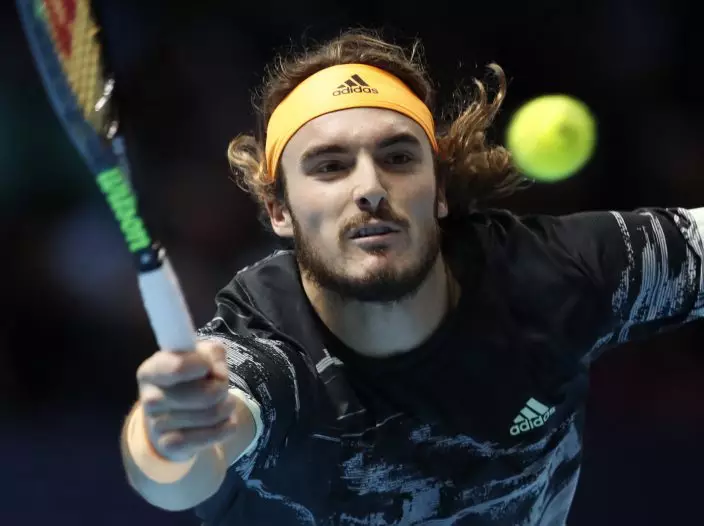
Stefanos Tsitsipas of Greece plays a return to Spain's Rafael Nadal during their ATP World Tours Finals singles tennis match at the O2 Arena in London, Friday, Nov. 15, 2019. (AP PhotoAlastair Grant)
The problem for Nadal is that his win ended Medvedev’s chances of advancing, meaning the Russian (0-2) has only pride to play for against Zverev.
Nadal lost his opening match to Zverev and saved a match point at 5-1 down in the third set against Medvedev on Wednesday before rallying to win.
The comeback against Tsitsipas wasn’t quite as dramatic. Nadal never faced a break point in the match but lost the last three points of the first-set tiebreaker to hand the Greek the lead.
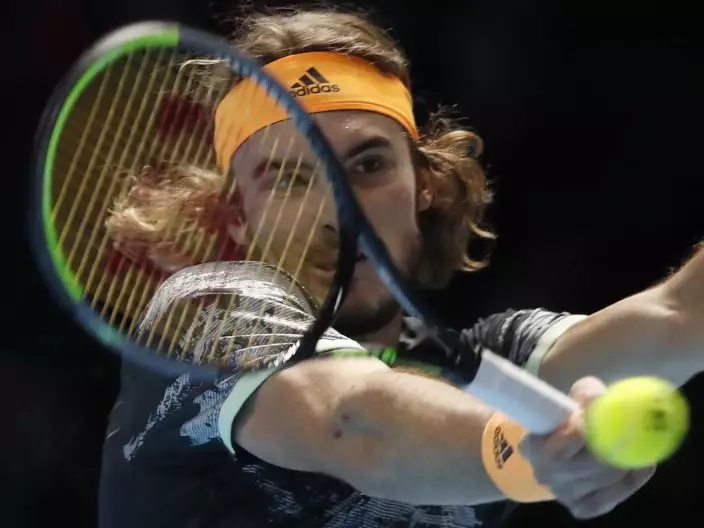
Stefanos Tsitsipas of Greece plays a return to Spain's Rafael Nadal during their ATP World Tours Finals singles tennis match at the O2 Arena in London, Friday, Nov. 15, 2019. (AP PhotoAlastair Grant)
But he broke for a 5-3 lead in the second set and again to make it 6-5 in the third, then converted his first match point when Tsitsipas netted a forehand.
After the match, Nadal was presented with a trophy on court for having secured the year-end No. 1 ranking.
Novak Djokovic’s chances of overtaking him ended when he was eliminated in the group stage on Thursday with a loss to Federer.
It’s the fifth time that the 19-time Grand Slam winner ends the year atop the rankings, tied for second on the all-time list with Djokovic, Federer and Jimmy Connors. Pete Sampras did it six times.
At 33, Nadal is the oldest man to finish the year as No. 1.
”Honestly, after all the things that I went through in my career in terms of injuries, I never thought that at the age of 33 1/2, I would have this trophy in my hands again,” Nadal said.
However, he has never won the ATP Finals despite qualifying for a 15th year in a row. He has had to pull out of the tournament on six occasions because of injuries and reached the final only twice, the last time in 2013.
More AP Tennis: https://www.apnews.com/apf-Tennis and https://twitter.com/AP_Sports
Indian skier Bhavani Thekkada's lower leg was a mess at a race weekend in Finland — think blisters and blood. She turned to “Team Avalanche” on WhatsApp in search of ointments.
“I couldn’t find anything in the shop, so I just put a message in the group and there was this guy who said, ‘Hey I’m in Ruka, I have antibiotic ointment with me,'" Thekkada explained. "Then he comes and gives me the medicine. That’s really nice.”
The WhatsApp group with the catchy name is comprised of cross-country skiers who spent the past year or so trying to qualify for the Milan Cortina Winter Olympics. They’re from non-traditional winter sports countries and mostly operate independently, so having a community to lean on can be helpful.
Trinidad and Tobago’s Nick Lau started it as a forum “for random tips and advice” for all the “small nation” athletes he kept meeting at ski races.
“For this sport, some of us, we had absolutely no upbringing in the culture, like a Norwegian would,” Lau said. “Some people have no idea what FIS (the governing body) is, and how does it relate to my being able to ski or not. What is a FIS license? Do I need a license to go to a race?”
It’s evolved into a place where athletes coordinate travel and training plans and join forces to defray costs, like for a waxing technician. There are more than 60 members and more than 40 countries are represented.
They might ask about crashing in a spare bedroom, as Thekkada did for a recent trip to Norway.
“I’m a self-funded athlete. Even five days of free stay was a lot of money I saved,” she said. “For me it’s like a family, it’s like a team.”
They’re from places including Mexico, Peru, Saudi Arabia, South Africa — some have qualified for Milan Cortina, others not.
They’re a smart bunch — working in fields including medicine, architecture, media, finance — and some have enough financial independence to help make it work. Some are dual nationals, many are in their 30s.
Regina Martinez of Mexico is an emergency doctor at a Miami hospital. The 45-year-old Lau is a former FIFA executive. Dylan Longridge of Ireland is a geophysicist specializing in the field of unexploded ordnance detection.
Matt C. Smith of South Africa is an entrepreneur and public speaker who has been chronicling his journey — and turning the spotlight on others, too — on his social media platforms.
“It’s a beautiful bunch of people who all support each other with various skill sets, and quite honestly are doing a great job to amplify the sport,” said Smith, who lives near Oslo.
“Everyone is intelligent, everyone is driven, everyone is trying to achieve things, because this is a very untypical, untraditional thing to do," the 35-year-old Smith added.
Mexico’s Allan Corona, who like his good friend Smith was doing triathlons before taking up skiing, moved to Norway during the COVID-19 pandemic — his wife is Norwegian and drives an ambulance.
“I did not know really what cross-country skiing was previously to moving here,” Corona said.
He took up Norway’s beloved sport as a change of pace, participated in a few races, and then got a call from Mexico’s ski federation telling him he's eligible to compete at the 2023 world championships. Corona described the race as “humbling” but motivating: “I got hooked at that event.”
Corona and Smith will compete in the 10-kilometer interval start at the Olympics next month.
Athletes had to satisfy two criteria to reach the Olympics: unlock a quota spot for their country — either the world championship in early 2025 or at a recent series of World Cup races; and maintain a good average score in sanctioned races through a complicated points system.
Lau said he and others in the Avalanche group successfully lobbied to get the World Cup races added as qualifying events — after what he described as limited opportunities in the pandemic-hit previous cycle.
“We escalated this quite a lot,” Lau said.
That doesn’t mean it’s easier. In fact, the points calculation has become tougher.
Smith said that in some past cycles, before he took up the sport, it was possible to “game the system” by competing in low-profile races in random spots like Kazakhstan to earn better points.
“Those days have come to an end. FIS are getting smarter with how they calculate points and make it more competitive,” Smith said.
Costs each season, Corona estimated, include 12,000 euros ($14,000) worth of skis and poles. Boots cost 1,000 euros and you need three pairs. Coaching runs at least 100 euros per hour in Norway. Traveling to a race will cost 1,000 euros per weekend for flights and other expenses, he added.
Smith estimates he’s spent about $100,000 of his own funds to achieve Olympic qualification.
“I’m quite proud to say that I’ve funded this myself, through my own work and my own businesses," he said. “I’ve never asked for financial help or sought after it.”
Smith has been dubbed a “ski-fluencer” in Norwegian media because of his podcasts and social media posts about skiing.
His exploits also got him hired by a professional club — Team Aker Dæhlie — which covers his travel and accommodation.
Lau, who grew up in Texas, advocates for easing some barriers to Olympic qualification. Like Thekkada, Lau didn't qualify for Milan Cortina.
“This is the irony. The IOC and the global sport community and even FIS, they are reaping the benefits of years of development,” Lau said. "The fact that you have people from the Caribbean, from Africa, from Asia now excited about skiing — you could view that as a success of development activities. But what are we doing now with all that energy?
“I think that’s where we’re a bit stuck and policy now need to be reviewed and strategies need to be adjusted.”
AP Olympics: https://apnews.com/hub/milan-cortina-2026-winter-olympics
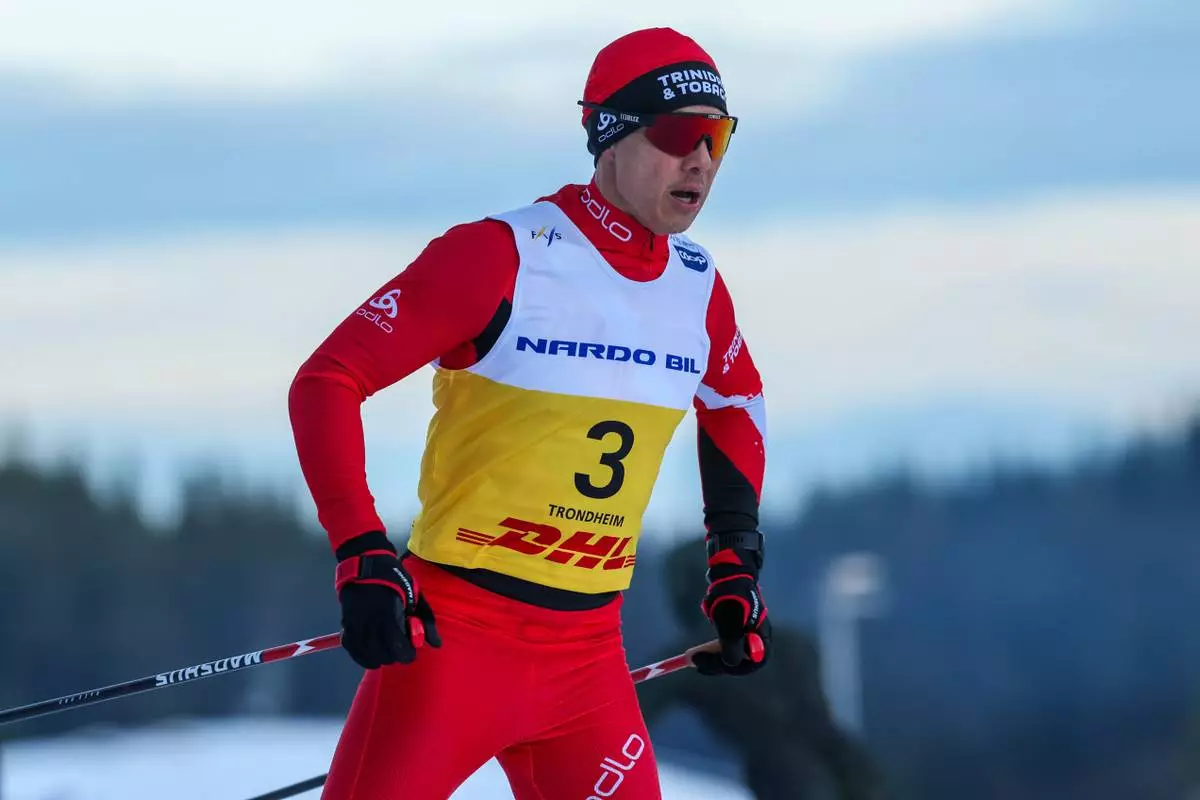
Nicholas Lau (TTO) in action during the World Cup 10 km freestyle race in Granåsen, Norway on Dec. 7, 2025. (Geir Olsen/NTB Scanpix via AP)
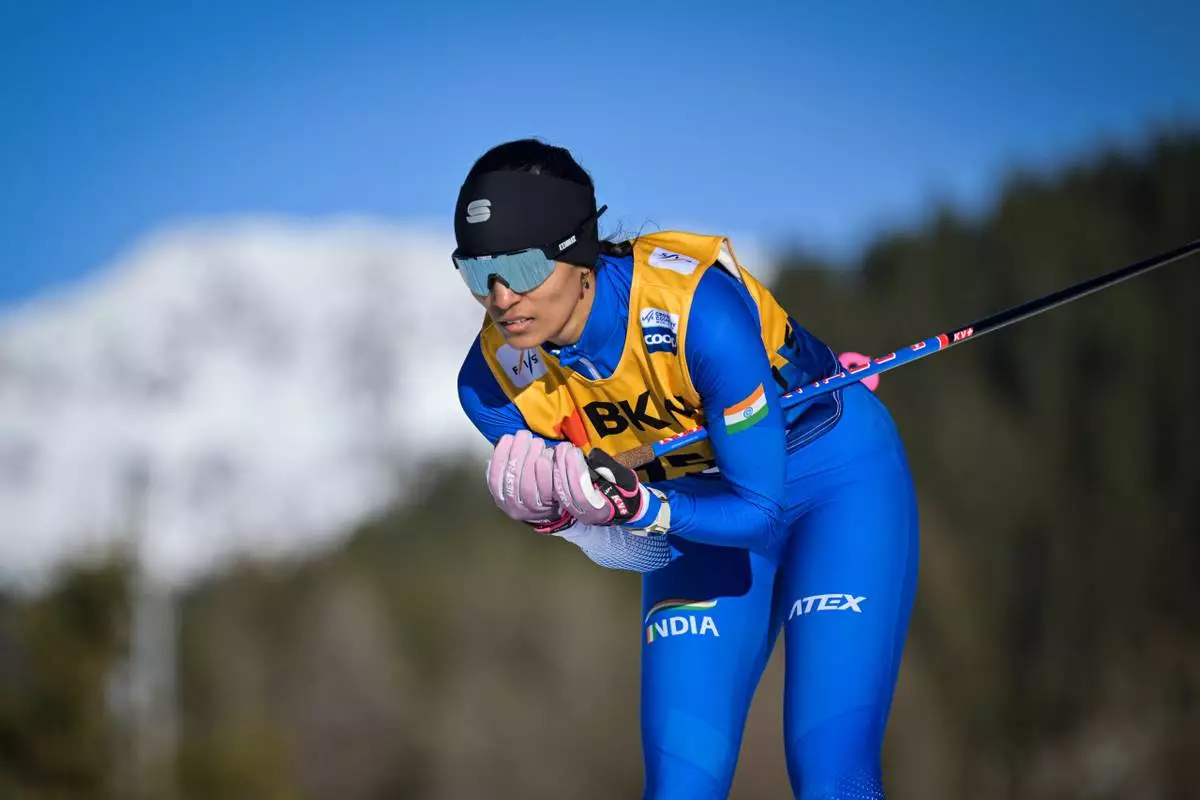
FILE - Bhavani Thekkada Nanjunda of India in action during qualifying of the sprint free competition at the Davos Nordic FIS Cross Country World Cup, in Davos, Switzerland, Saturday, Dec. 13, 2025. (Gian Ehrenzeller/Keystone via AP, File)
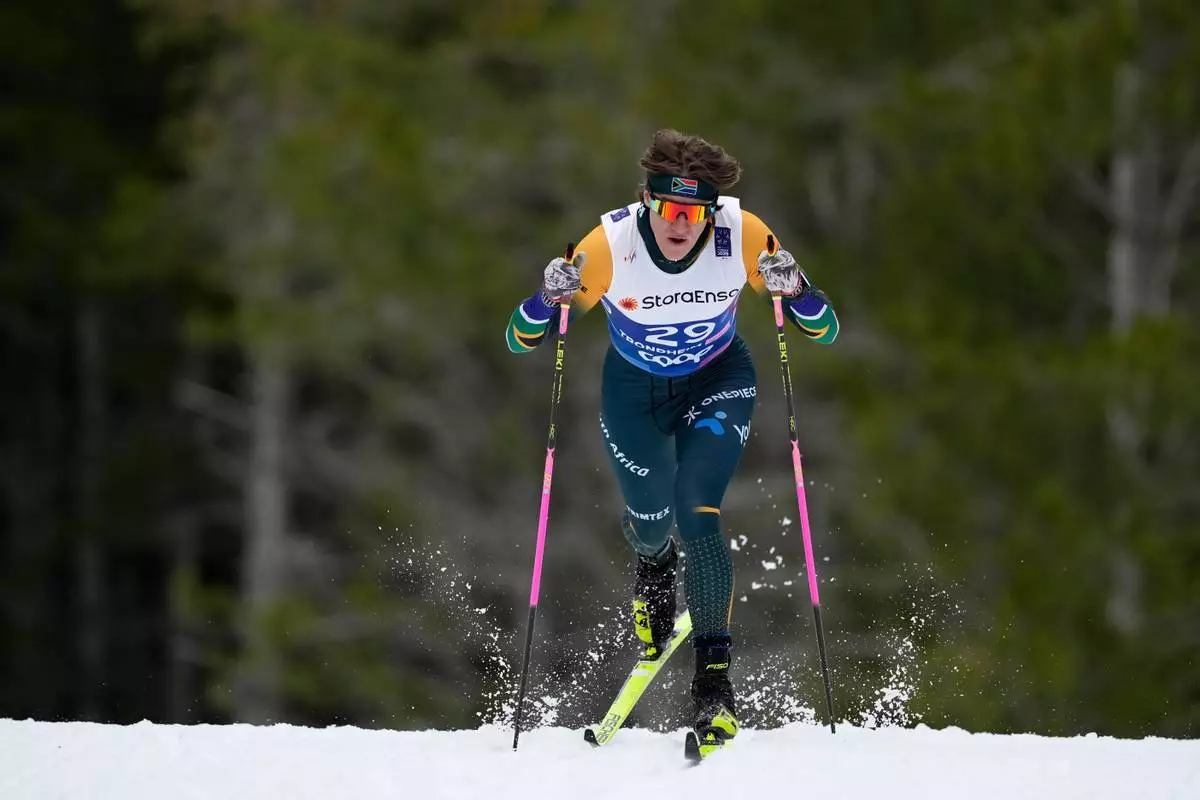
FILE - Matthew Smith, of South Africa, competes in the cross-country men's 7.5 km Interval Start Classic qualification race at the Nordic World Ski Championships in Trondheim, Norway, Wednesday, Feb. 26, 2025. (AP Photo/Matthias Schrader, File)