Skip to Content Facebook Feature Image

A tattoo at a time, Afghan woman takes on society’s taboos

News

A tattoo at a time, Afghan woman takes on society’s taboos
News

News

A tattoo at a time, Afghan woman takes on society’s taboos

2019-12-16 13:58 Last Updated At:14:11

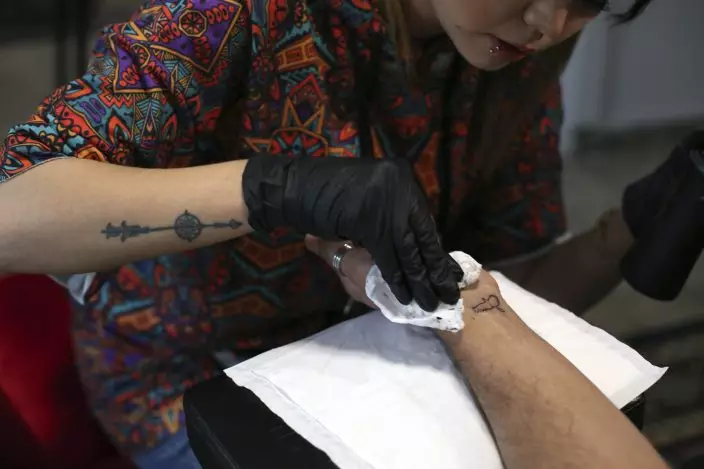
A female tattoo artist, a rarity in ultra-conservative Afghanistan, is taking a big risk with every customer she takes on.

It’s been 18 months since Suraya Shaheedi started her mobile tattoo shop in the capital, Kabul. She’s received death threats for taking on the taboo of the ink-on-skin drawings she does — as well as being a single woman willing to work with men.

More Images
In this Saturday, 9, 2019, photo, Suraya Shaheedi, 26, Tattoo artist, left, pierced tattoo to a male customer in Kabul, Afghanistan.  It’s been 18 months since  Shaheedi started her mobile tattoo shop in the capital, Kabul. She’s received death threats for taking on the taboo of the ink-on-skin drawings she does — as well as being a single woman willing to work with men. (AP PhotoRahmat Gul)
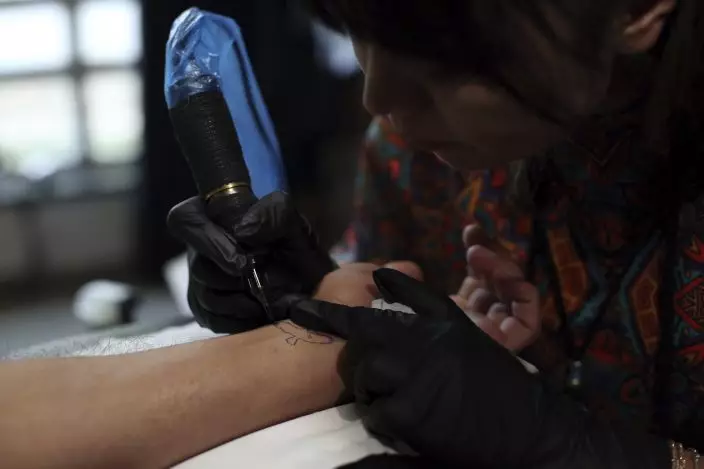
In this Saturday, 9, 2019, photo, Suraya Shaheedi, 26, Tattoo artist, left, pierced tattoo to a male customer in Kabul, Afghanistan. It’s been 18 months since Shaheedi started her mobile tattoo shop in the capital, Kabul. She’s received death threats for taking on the taboo of the ink-on-skin drawings she does — as well as being a single woman willing to work with men. (AP PhotoRahmat Gul)

In this Saturday, 9, 2019, photo, Suraya Shaheedi, 26, Tattoo artist, right, pierced tattoo to a male customer in Kabul, Afghanistan.  It’s been 18 months since  Shaheedi started her mobile tattoo shop in the capital, Kabul. She’s received death threats for taking on the taboo of the ink-on-skin drawings she does — as well as being a single woman willing to work with men.(AP PhotoRahmat Gul)
In this Saturday, 9, 2019, photo, Suraya Shaheedi, 26, Tattoo artist, right, pierced tattoo to a male customer in Kabul, Afghanistan. It’s been 18 months since Shaheedi started her mobile tattoo shop in the capital, Kabul. She’s received death threats for taking on the taboo of the ink-on-skin drawings she does — as well as being a single woman willing to work with men.(AP PhotoRahmat Gul)
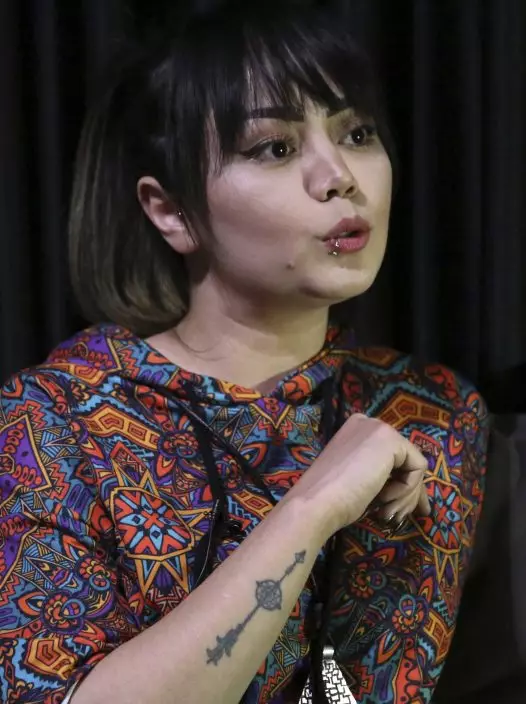
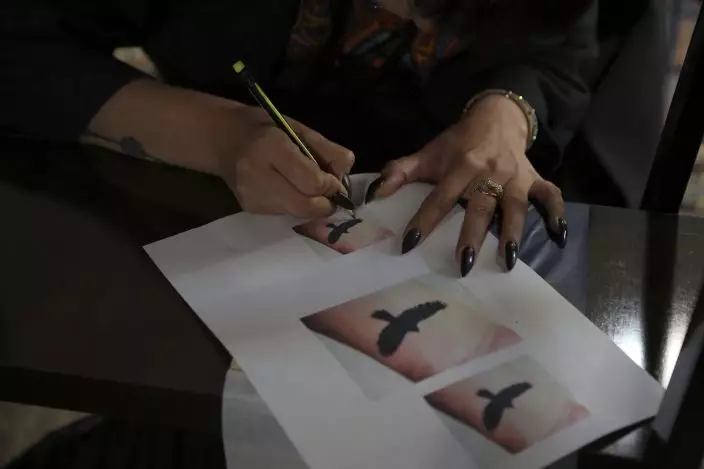
In this Saturday, 9, 2019, photo, Suraya Shaheedi, 26, Tattoo artist, takes a copy of tatto before a pierced tattoo to her male customer in Kabul, Afghanistan. It’s been 18 months since Shaheedi started her mobile tattoo shop in the capital, Kabul. She’s received death threats for taking on the taboo of the ink-on-skin drawings she does — as well as being a single woman willing to work with men.(AP PhotoRahmat Gul)

In this Saturday, 9, 2019, photo, Suraya Shaheedi, 26, Tattoo artist, takes a copy of tatto before a pierced tattoo to her male customer in Kabul, Afghanistan. It’s been 18 months since Shaheedi started her mobile tattoo shop in the capital, Kabul. She’s received death threats for taking on the taboo of the ink-on-skin drawings she does — as well as being a single woman willing to work with men.(AP PhotoRahmat Gul)

In this Saturday, 9, 2019, photo, Suraya Shaheedi, 26, Tattoo artist, speaks during an interview to The Associated Press after pierced tattoo to her male customer in Kabul, Afghanistan. It’s been 18 months since Shaheedi started her mobile tattoo shop in the capital, Kabul. She’s received death threats for taking on the taboo of the ink-on-skin drawings she does — as well as being a single woman willing to work with men. (AP PhotoRahmat Gul)
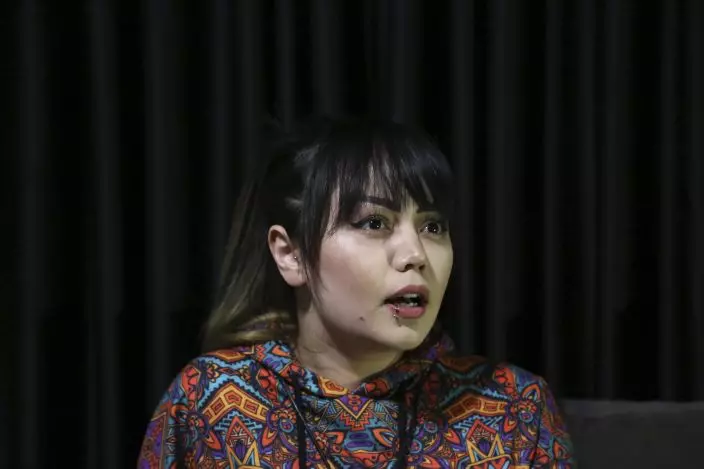
In this Saturday, 9, 2019, photo, Suraya Shaheedi, 26, Tattoo artist, speaks during an interview to The Associated Press after pierced tattoo to her male customer in Kabul, Afghanistan. It’s been 18 months since Shaheedi started her mobile tattoo shop in the capital, Kabul. She’s received death threats for taking on the taboo of the ink-on-skin drawings she does — as well as being a single woman willing to work with men. (AP PhotoRahmat Gul)
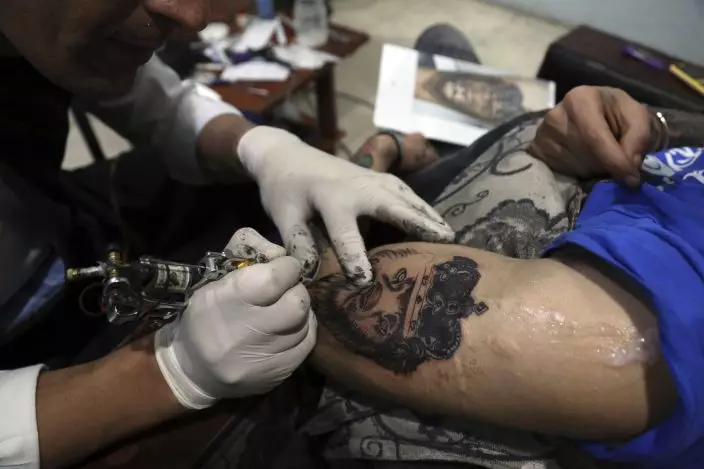
In this Saturday, 9, 2019, photo, Suraya Shaheedi, 26, Tattoo artist, speaks during an interview to The Associated Press after pierced tattoo to her male customer in Kabul, Afghanistan. It’s been 18 months since Shaheedi started her mobile tattoo shop in the capital, Kabul. She’s received death threats for taking on the taboo of the ink-on-skin drawings she does — as well as being a single woman willing to work with men. (AP PhotoRahmat Gul)

In this Saturday, 9, 2019, photo, Suraya Shaheedi, 26, Tattoo artist, speaks during an interview to The Associated Press after pierced tattoo to her male customer in Kabul, Afghanistan. It’s been 18 months since Shaheedi started her mobile tattoo shop in the capital, Kabul. She’s received death threats for taking on the taboo of the ink-on-skin drawings she does — as well as being a single woman willing to work with men. (AP PhotoRahmat Gul)

In this Wednesday, Nov. 20, 2019, photo, Omid Noori, 23, right, gets a lion tattoo on his left arm by Nazeer Mosawi, a tattoo artist in Kabul, Afghanistan.  Mosawi, 42, fought for seven years in Afghanistan’s civil war with the Islamic insurgents. He says he is still fighting the war, but this time his battle is against society’s conservatism, with his tattoo machine as his weapon.(AP PhotoRahmat Gul)
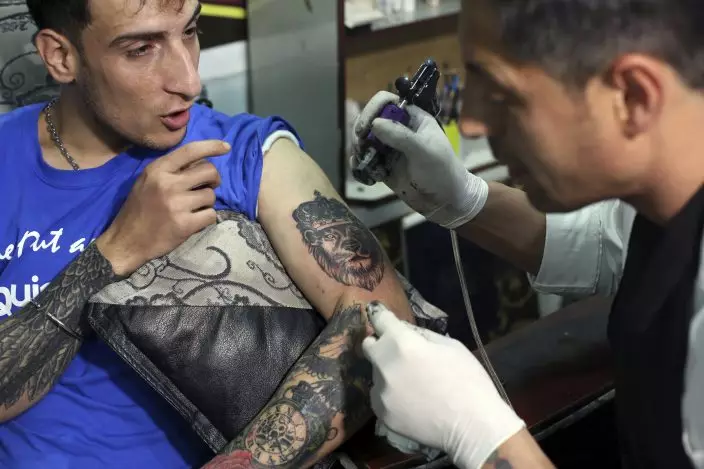
In this Wednesday, Nov. 20, 2019, photo, Omid Noori, 23, right, gets a lion tattoo on his left arm by Nazeer Mosawi, a tattoo artist in Kabul, Afghanistan. Mosawi, 42, fought for seven years in Afghanistan’s civil war with the Islamic insurgents. He says he is still fighting the war, but this time his battle is against society’s conservatism, with his tattoo machine as his weapon.(AP PhotoRahmat Gul)

In this Wednesday, Nov. 20, 2019, photo, Omid Noori, 23, left, gets a lion tattoo on his left arm by Nazeer Mosawi, a tattoo artist in Kabul, Afghanistan. Mosawi, 42, fought for seven years in Afghanistan’s civil war with the Islamic insurgents. He says he is still fighting the war, but this time his battle is against society’s conservatism, with his tattoo machine as his weapon. (AP PhotoRahmat Gul)
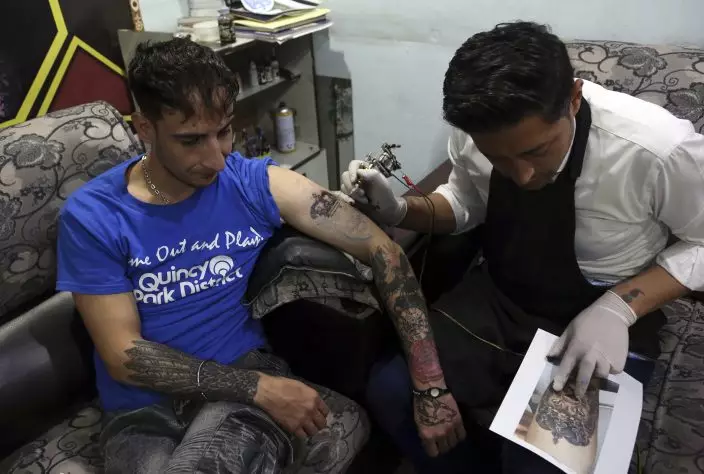
In this Wednesday, Nov. 20, 2019, photo, Omid Noori, 23, left, gets a lion tattoo on his left arm by Nazeer Mosawi, a tattoo artist in Kabul, Afghanistan. Mosawi, 42, fought for seven years in Afghanistan’s civil war with the Islamic insurgents. He says he is still fighting the war, but this time his battle is against society’s conservatism, with his tattoo machine as his weapon. (AP PhotoRahmat Gul)
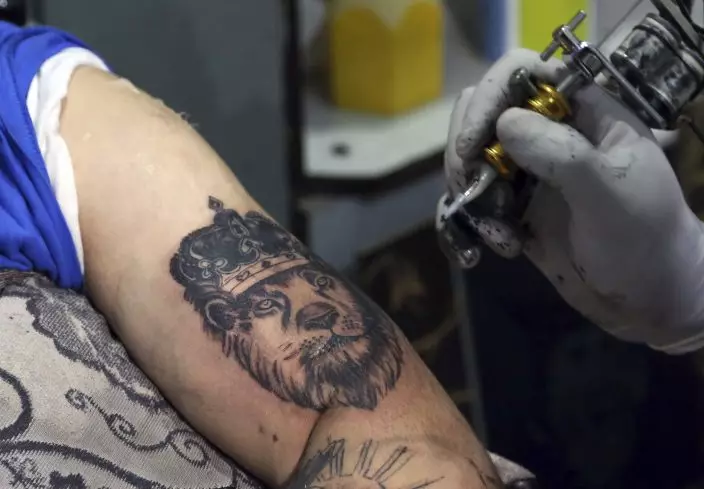
In this Wednesday, Nov. 20, 2019, photo, Omid Noori, 23, left, gets a lion tattoo on his left arm by Nazeer Mosawi, a tattoo artist in Kabul, Afghanistan, Mosawi, 42, fought for seven years in Afghanistan’s civil war with the Islamic insurgents. He says he is still fighting the war, but this time his battle is against society’s conservatism, with his tattoo machine as his weapon.  (AP PhotoRahmat Gul)

In this Wednesday, Nov. 20, 2019, photo, Omid Noori, 23, left, gets a lion tattoo on his left arm by Nazeer Mosawi, a tattoo artist in Kabul, Afghanistan, Mosawi, 42, fought for seven years in Afghanistan’s civil war with the Islamic insurgents. He says he is still fighting the war, but this time his battle is against society’s conservatism, with his tattoo machine as his weapon. (AP PhotoRahmat Gul)

In this Wednesday, Nov. 20, 2019, photo, Omid Noori, 23, left, gets a lion tattoo on his left arm by Nazeer Mosawi, a tattoo artist in Kabul, Afghanistan.  Mosawi, 42, fought for seven years in Afghanistan’s civil war with the Islamic insurgents. He says he is still fighting the war, but this time his battle is against society’s conservatism, with his tattoo machine as his weapon.(AP PhotoRahmat Gul)
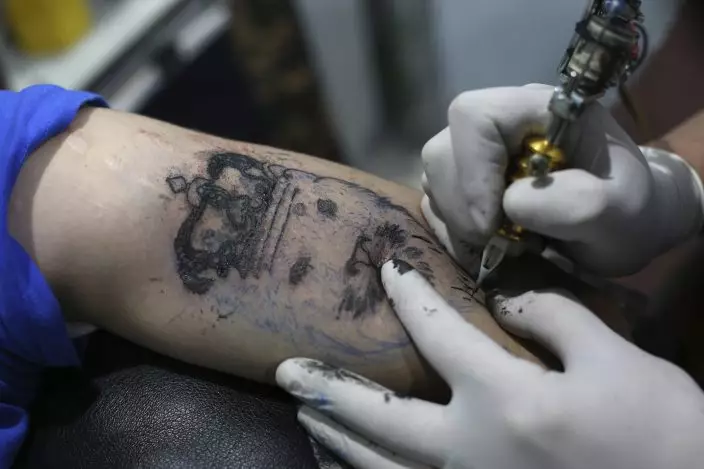
In this Wednesday, Nov. 20, 2019, photo, Omid Noori, 23, left, gets a lion tattoo on his left arm by Nazeer Mosawi, a tattoo artist in Kabul, Afghanistan. Mosawi, 42, fought for seven years in Afghanistan’s civil war with the Islamic insurgents. He says he is still fighting the war, but this time his battle is against society’s conservatism, with his tattoo machine as his weapon.(AP PhotoRahmat Gul)

In this Wednesday, Nov. 20, 2019, photo, Omid Noori, 23, left, gets a lion tattoo on his left arm by Nazeer Mosawi, a tattoo artist in Kabul, Afghanistan.  Mosawi, 42, fought for seven years in Afghanistan’s civil war with the Islamic insurgents. He says he is still fighting the war, but this time his battle is against society’s conservatism, with his tattoo machine as his weapon. (AP PhotoRahmat Gul)
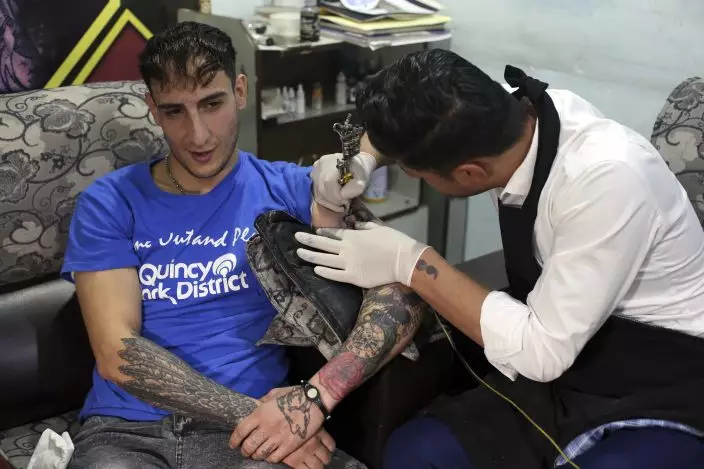
In this Wednesday, Nov. 20, 2019, photo, Omid Noori, 23, left, gets a lion tattoo on his left arm by Nazeer Mosawi, a tattoo artist in Kabul, Afghanistan. Mosawi, 42, fought for seven years in Afghanistan’s civil war with the Islamic insurgents. He says he is still fighting the war, but this time his battle is against society’s conservatism, with his tattoo machine as his weapon. (AP PhotoRahmat Gul)
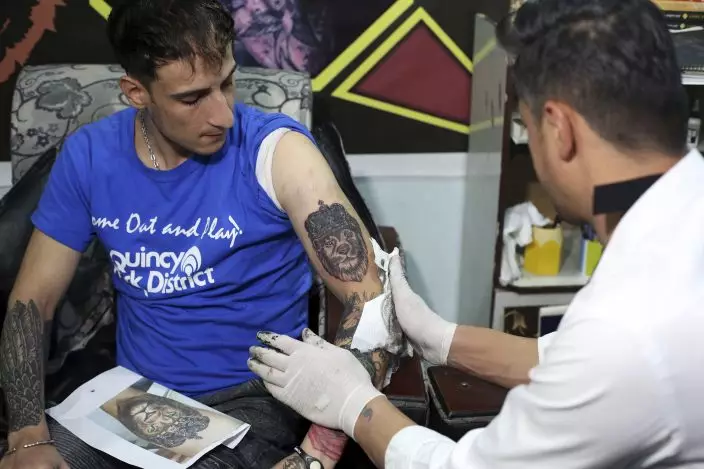
In this Wednesday, Nov. 20, 2019, photo, Omid Noori, 23, left, gets a lion tattoo on his left arm by Nazeer Mosawi, a tattoo artist in Kabul, Afghanistan.  Mosawi, 42, fought for seven years in Afghanistan’s civil war with the Islamic insurgents. He says he is still fighting the war, but this time his battle is against society’s conservatism, with his tattoo machine as his weapon. (AP PhotoRahmat Gul)
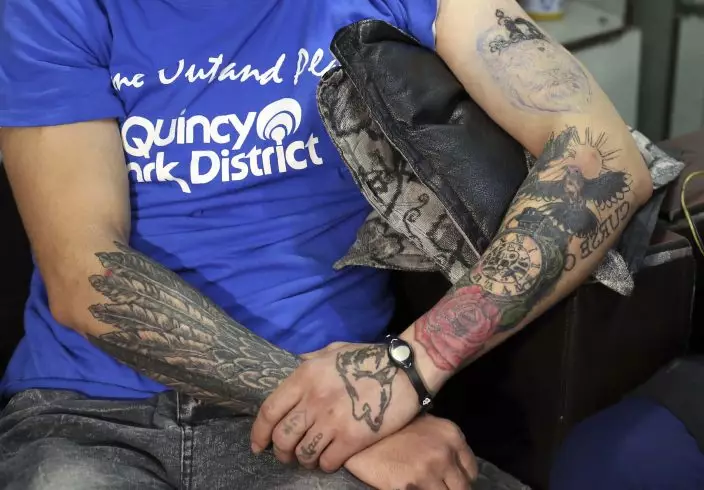
In this Wednesday, Nov. 20, 2019, photo, Omid Noori, 23, left, gets a lion tattoo on his left arm by Nazeer Mosawi, a tattoo artist in Kabul, Afghanistan. Mosawi, 42, fought for seven years in Afghanistan’s civil war with the Islamic insurgents. He says he is still fighting the war, but this time his battle is against society’s conservatism, with his tattoo machine as his weapon. (AP PhotoRahmat Gul)

In this Wednesday, Nov. 20, 2019, photo, Omid Noori, 23, left, gets a lion tattoo on his left arm by Nazeer Mosawi, a tattoo artist in Kabul, Afghanistan. Mosawi, 42, fought for seven years in Afghanistan’s civil war with the Islamic insurgents. He says he is still fighting the war, but this time his battle is against society’s conservatism, with his tattoo machine as his weapon. (AP PhotoRahmat Gul)

In this Wednesday, Nov. 20, 2019, photo, Omid Noori, 23, left, gets a lion tattoo on his left arm by Nazeer Mosawi, a tattoo artist in Kabul, Afghanistan. Mosawi, 42, fought for seven years in Afghanistan’s civil war with the Islamic insurgents. He says he is still fighting the war, but this time his battle is against society’s conservatism, with his tattoo machine as his weapon. (AP PhotoRahmat Gul)

In this Wednesday, Nov. 20, 2019, photo, Omid Noori, 23, speaks during an interview to The Associated Press, as he gets a lion tattoo on his left arm by Nazeer Mosawi, a tattoo artist in Kabul, Afghanistan.  Mosawi, 42, fought for seven years in Afghanistan’s civil war with the Islamic insurgents. He says he is still fighting the war, but this time his battle is against society’s conservatism, with his tattoo machine as his weapon.(AP PhotoRahmat Gul)
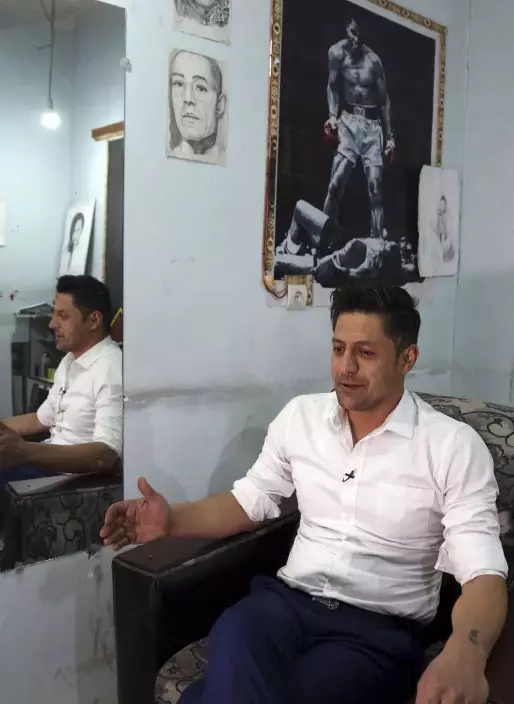
In this Wednesday, Nov. 20, 2019, photo, Omid Noori, 23, speaks during an interview to The Associated Press, as he gets a lion tattoo on his left arm by Nazeer Mosawi, a tattoo artist in Kabul, Afghanistan. Mosawi, 42, fought for seven years in Afghanistan’s civil war with the Islamic insurgents. He says he is still fighting the war, but this time his battle is against society’s conservatism, with his tattoo machine as his weapon.(AP PhotoRahmat Gul)

In this Wednesday, Nov. 20, 2019, photo, Nazeer Mosawi, 42, a tattoo artist speaks during an interview to The Associated Press, in Kabul, Afghanistan.  Mosawi, 42, fought for seven years in Afghanistan’s civil war with the Islamic insurgents. He says he is still fighting the war, but this time his battle is against society’s conservatism, with his tattoo machine as his weapon. (AP PhotoRahmat Gul)
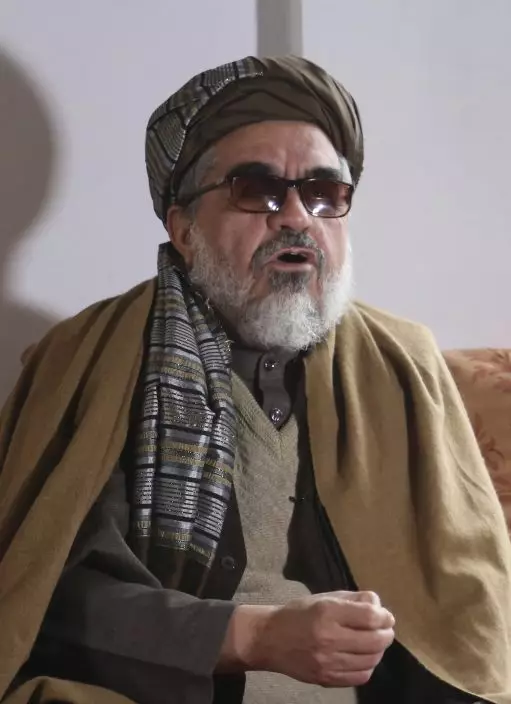
In this Wednesday, Nov. 20, 2019, photo, Nazeer Mosawi, 42, a tattoo artist speaks during an interview to The Associated Press, in Kabul, Afghanistan. Mosawi, 42, fought for seven years in Afghanistan’s civil war with the Islamic insurgents. He says he is still fighting the war, but this time his battle is against society’s conservatism, with his tattoo machine as his weapon. (AP PhotoRahmat Gul)

In this Friday, Nov. 22, 2019, photo, Enayatullah Baligh a member of Afghanistan scholars council, speaks during an interview to The Associated Press in Kabul, Afghanistan, (AP PhotoTamana Sarwary)
In this Friday, Nov. 22, 2019, photo, Enayatullah Baligh a member of Afghanistan scholars council, speaks during an interview to The Associated Press in Kabul, Afghanistan, (AP PhotoTamana Sarwary)
“I have struggled a lot, even been threatened with death, because people in Afghanistan think doing tattoos is haram,” she said, using the Arabic word meaning prohibited by religion.

In this Saturday, 9, 2019, photo, Suraya Shaheedi, 26, Tattoo artist, left, pierced tattoo to a male customer in Kabul, Afghanistan.  It’s been 18 months since  Shaheedi started her mobile tattoo shop in the capital, Kabul. She’s received death threats for taking on the taboo of the ink-on-skin drawings she does — as well as being a single woman willing to work with men. (AP PhotoRahmat Gul)

In this Saturday, 9, 2019, photo, Suraya Shaheedi, 26, Tattoo artist, left, pierced tattoo to a male customer in Kabul, Afghanistan. It’s been 18 months since Shaheedi started her mobile tattoo shop in the capital, Kabul. She’s received death threats for taking on the taboo of the ink-on-skin drawings she does — as well as being a single woman willing to work with men. (AP PhotoRahmat Gul)

“Whether my customers are men or women doesn’t matter to me. I do tattoos for both,” says Shaheedi, a 26-year-old, divorced single mother.

In a black curtained room, surrounded by his friends, a young customer shrieks in pain as the needle pierces and inks his skin.

“I can’t leave the profession I love,” Shaheedi adds.

In this Saturday, 9, 2019, photo, Suraya Shaheedi, 26, Tattoo artist, right, pierced tattoo to a male customer in Kabul, Afghanistan.  It’s been 18 months since  Shaheedi started her mobile tattoo shop in the capital, Kabul. She’s received death threats for taking on the taboo of the ink-on-skin drawings she does — as well as being a single woman willing to work with men.(AP PhotoRahmat Gul)

In this Saturday, 9, 2019, photo, Suraya Shaheedi, 26, Tattoo artist, right, pierced tattoo to a male customer in Kabul, Afghanistan. It’s been 18 months since Shaheedi started her mobile tattoo shop in the capital, Kabul. She’s received death threats for taking on the taboo of the ink-on-skin drawings she does — as well as being a single woman willing to work with men.(AP PhotoRahmat Gul)

She easily gets customers, whether men or women, as social attitudes toward tattoos loosen up and more ink parlors open. It’s the kind of small, but important change that Shaheedi feels a return of Taliban rule could threaten.

After decades of war, Afghans want peace. A big concern for many like Shaheedi is that U.S.-led peace talks with the Taliban will boost the militant group.

“I am happy if the Taliban return results in peace, but if they disagree with my work and impede the freedom and progress of women, then I will be the first to stand against them,” she vowed.

In this Saturday, 9, 2019, photo, Suraya Shaheedi, 26, Tattoo artist, takes a copy of tatto before a pierced tattoo to her male customer in Kabul, Afghanistan. It’s been 18 months since Shaheedi started her mobile tattoo shop in the capital, Kabul. She’s received death threats for taking on the taboo of the ink-on-skin drawings she does — as well as being a single woman willing to work with men.(AP PhotoRahmat Gul)

In this Saturday, 9, 2019, photo, Suraya Shaheedi, 26, Tattoo artist, takes a copy of tatto before a pierced tattoo to her male customer in Kabul, Afghanistan. It’s been 18 months since Shaheedi started her mobile tattoo shop in the capital, Kabul. She’s received death threats for taking on the taboo of the ink-on-skin drawings she does — as well as being a single woman willing to work with men.(AP PhotoRahmat Gul)

Women like Shaheedi have carved out a space for themselves in a society where custom heavily restricts women’s roles and education. Close to 40% of Afghanistan’s eligible girls are not allowed by their families to go to school, and almost 20% are forced by their families to leave school after grade six, according to a survey by the Asia Foundation released this year.

In areas under the Taliban, who now control or hold sway over roughly half of the country, women are not allowed to leave their homes without a male escort. The insurgent group ruled Afghanistan with a harsh version of Islamic law from 1996 to 2001, when the U.S. invaded.

Shaheedi divorced her husband eight years ago while she was pregnant. She and her son now live with her parents. Her father supports her work, even though Afghanistan’s patriarchal society often forbids a woman from touching a man to whom she is not related or married.

In this Saturday, 9, 2019, photo, Suraya Shaheedi, 26, Tattoo artist, speaks during an interview to The Associated Press after pierced tattoo to her male customer in Kabul, Afghanistan. It’s been 18 months since Shaheedi started her mobile tattoo shop in the capital, Kabul. She’s received death threats for taking on the taboo of the ink-on-skin drawings she does — as well as being a single woman willing to work with men. (AP PhotoRahmat Gul)

In this Saturday, 9, 2019, photo, Suraya Shaheedi, 26, Tattoo artist, speaks during an interview to The Associated Press after pierced tattoo to her male customer in Kabul, Afghanistan. It’s been 18 months since Shaheedi started her mobile tattoo shop in the capital, Kabul. She’s received death threats for taking on the taboo of the ink-on-skin drawings she does — as well as being a single woman willing to work with men. (AP PhotoRahmat Gul)

Her parents and elder brother persuaded her to become a tattoo artist, Shaheedi said, after she got her first tattoo while visiting Turkey — an arrow piercing the image of an eye on her right hand, which she says symbolizes overcoming adversity.

Shaheedi’s father, Hussain, 58, believes the strict customs controlling women in Afghanistan need to change. “I support my daughter in every way, and she makes me proud the way she’s stood against this taboo,” he said.

Shaheedi uses Instagram and other social media to find and meet customers. She prefers not to keep a parlor with a fixed address out of concerns for her safety.

In this Saturday, 9, 2019, photo, Suraya Shaheedi, 26, Tattoo artist, speaks during an interview to The Associated Press after pierced tattoo to her male customer in Kabul, Afghanistan. It’s been 18 months since Shaheedi started her mobile tattoo shop in the capital, Kabul. She’s received death threats for taking on the taboo of the ink-on-skin drawings she does — as well as being a single woman willing to work with men. (AP PhotoRahmat Gul)

In this Saturday, 9, 2019, photo, Suraya Shaheedi, 26, Tattoo artist, speaks during an interview to The Associated Press after pierced tattoo to her male customer in Kabul, Afghanistan. It’s been 18 months since Shaheedi started her mobile tattoo shop in the capital, Kabul. She’s received death threats for taking on the taboo of the ink-on-skin drawings she does — as well as being a single woman willing to work with men. (AP PhotoRahmat Gul)

She also does manicures and makeup. When she met one customer recently at a hair salon, the customer’s husband recognized her from her social media pages as being the tattoo artist “Ahoo,” the nickname she uses online. The husband threatened to kill Shaheedi if she kept posting images of her tattoo work on social media.

Tattoos were common in some of Afghanistan’s rural areas, especially among Pashtun and Hazara women, but the ink piercings were used sparingly, often as only a few green dots on the face.

Tattoo artists say demand among the younger generation has risen for more flamboyant and personal designs, and with it, the number of ink parlors increased in the capital.

In this Wednesday, Nov. 20, 2019, photo, Omid Noori, 23, right, gets a lion tattoo on his left arm by Nazeer Mosawi, a tattoo artist in Kabul, Afghanistan.  Mosawi, 42, fought for seven years in Afghanistan’s civil war with the Islamic insurgents. He says he is still fighting the war, but this time his battle is against society’s conservatism, with his tattoo machine as his weapon.(AP PhotoRahmat Gul)

In this Wednesday, Nov. 20, 2019, photo, Omid Noori, 23, right, gets a lion tattoo on his left arm by Nazeer Mosawi, a tattoo artist in Kabul, Afghanistan. Mosawi, 42, fought for seven years in Afghanistan’s civil war with the Islamic insurgents. He says he is still fighting the war, but this time his battle is against society’s conservatism, with his tattoo machine as his weapon.(AP PhotoRahmat Gul)

Omid Noori, 23, has 16 tattoos all over his body. He wants to add another on his left arm, showing the head of a lion with a crown and wreaths. But he only wants new designs on parts of his body that his clothing can hide, because he says he’s tired of hearing people’s negative comments about the ink piercings.

He also worries what would happen if Islamic militants caught him.

“I’m thinking that if the Taliban return, they’ll cut off my hands and legs,” he said.

In this Wednesday, Nov. 20, 2019, photo, Omid Noori, 23, left, gets a lion tattoo on his left arm by Nazeer Mosawi, a tattoo artist in Kabul, Afghanistan. Mosawi, 42, fought for seven years in Afghanistan’s civil war with the Islamic insurgents. He says he is still fighting the war, but this time his battle is against society’s conservatism, with his tattoo machine as his weapon. (AP PhotoRahmat Gul)

In this Wednesday, Nov. 20, 2019, photo, Omid Noori, 23, left, gets a lion tattoo on his left arm by Nazeer Mosawi, a tattoo artist in Kabul, Afghanistan. Mosawi, 42, fought for seven years in Afghanistan’s civil war with the Islamic insurgents. He says he is still fighting the war, but this time his battle is against society’s conservatism, with his tattoo machine as his weapon. (AP PhotoRahmat Gul)

He inked his last tattoos at a parlor belonging to a former Afghan army officer, Nazeer Mosawi.

Mosawi, 42, fought for seven years in Afghanistan’s civil war with the Islamic insurgents. He says he is still fighting the war, but this time his battle is against society’s conservatism, with his tattoo machine as his weapon.

Mosawi receives threatening phone and social media messages almost every day, demanding he close his tattoo business. “They even threaten to beat me, burn my shop,” he said. “There is no alternative: I tell them, OK, I can’t flee this country because of these threats. It’s my homeland.”

In this Wednesday, Nov. 20, 2019, photo, Omid Noori, 23, left, gets a lion tattoo on his left arm by Nazeer Mosawi, a tattoo artist in Kabul, Afghanistan, Mosawi, 42, fought for seven years in Afghanistan’s civil war with the Islamic insurgents. He says he is still fighting the war, but this time his battle is against society’s conservatism, with his tattoo machine as his weapon.  (AP PhotoRahmat Gul)

In this Wednesday, Nov. 20, 2019, photo, Omid Noori, 23, left, gets a lion tattoo on his left arm by Nazeer Mosawi, a tattoo artist in Kabul, Afghanistan, Mosawi, 42, fought for seven years in Afghanistan’s civil war with the Islamic insurgents. He says he is still fighting the war, but this time his battle is against society’s conservatism, with his tattoo machine as his weapon. (AP PhotoRahmat Gul)

But for every threat he gets, Mousawi said he gets several messages with positive feedback or people curious to learn more.

Shaheedi said she is also working to put her 8-year-old son, now in second grade, through school. She is also studying business management at a university in Kabul.

“Being a woman in Afghanistan requires guts,” she said. “I am proud of myself for having the guts.”

In this Wednesday, Nov. 20, 2019, photo, Omid Noori, 23, left, gets a lion tattoo on his left arm by Nazeer Mosawi, a tattoo artist in Kabul, Afghanistan.  Mosawi, 42, fought for seven years in Afghanistan’s civil war with the Islamic insurgents. He says he is still fighting the war, but this time his battle is against society’s conservatism, with his tattoo machine as his weapon.(AP PhotoRahmat Gul)

In this Wednesday, Nov. 20, 2019, photo, Omid Noori, 23, left, gets a lion tattoo on his left arm by Nazeer Mosawi, a tattoo artist in Kabul, Afghanistan. Mosawi, 42, fought for seven years in Afghanistan’s civil war with the Islamic insurgents. He says he is still fighting the war, but this time his battle is against society’s conservatism, with his tattoo machine as his weapon.(AP PhotoRahmat Gul)

In this Wednesday, Nov. 20, 2019, photo, Omid Noori, 23, left, gets a lion tattoo on his left arm by Nazeer Mosawi, a tattoo artist in Kabul, Afghanistan.  Mosawi, 42, fought for seven years in Afghanistan’s civil war with the Islamic insurgents. He says he is still fighting the war, but this time his battle is against society’s conservatism, with his tattoo machine as his weapon. (AP PhotoRahmat Gul)

In this Wednesday, Nov. 20, 2019, photo, Omid Noori, 23, left, gets a lion tattoo on his left arm by Nazeer Mosawi, a tattoo artist in Kabul, Afghanistan. Mosawi, 42, fought for seven years in Afghanistan’s civil war with the Islamic insurgents. He says he is still fighting the war, but this time his battle is against society’s conservatism, with his tattoo machine as his weapon. (AP PhotoRahmat Gul)

In this Wednesday, Nov. 20, 2019, photo, Omid Noori, 23, left, gets a lion tattoo on his left arm by Nazeer Mosawi, a tattoo artist in Kabul, Afghanistan.  Mosawi, 42, fought for seven years in Afghanistan’s civil war with the Islamic insurgents. He says he is still fighting the war, but this time his battle is against society’s conservatism, with his tattoo machine as his weapon. (AP PhotoRahmat Gul)

In this Wednesday, Nov. 20, 2019, photo, Omid Noori, 23, left, gets a lion tattoo on his left arm by Nazeer Mosawi, a tattoo artist in Kabul, Afghanistan. Mosawi, 42, fought for seven years in Afghanistan’s civil war with the Islamic insurgents. He says he is still fighting the war, but this time his battle is against society’s conservatism, with his tattoo machine as his weapon. (AP PhotoRahmat Gul)

In this Wednesday, Nov. 20, 2019, photo, Omid Noori, 23, left, gets a lion tattoo on his left arm by Nazeer Mosawi, a tattoo artist in Kabul, Afghanistan. Mosawi, 42, fought for seven years in Afghanistan’s civil war with the Islamic insurgents. He says he is still fighting the war, but this time his battle is against society’s conservatism, with his tattoo machine as his weapon. (AP PhotoRahmat Gul)

In this Wednesday, Nov. 20, 2019, photo, Omid Noori, 23, left, gets a lion tattoo on his left arm by Nazeer Mosawi, a tattoo artist in Kabul, Afghanistan. Mosawi, 42, fought for seven years in Afghanistan’s civil war with the Islamic insurgents. He says he is still fighting the war, but this time his battle is against society’s conservatism, with his tattoo machine as his weapon. (AP PhotoRahmat Gul)

In this Wednesday, Nov. 20, 2019, photo, Omid Noori, 23, speaks during an interview to The Associated Press, as he gets a lion tattoo on his left arm by Nazeer Mosawi, a tattoo artist in Kabul, Afghanistan.  Mosawi, 42, fought for seven years in Afghanistan’s civil war with the Islamic insurgents. He says he is still fighting the war, but this time his battle is against society’s conservatism, with his tattoo machine as his weapon.(AP PhotoRahmat Gul)

In this Wednesday, Nov. 20, 2019, photo, Omid Noori, 23, speaks during an interview to The Associated Press, as he gets a lion tattoo on his left arm by Nazeer Mosawi, a tattoo artist in Kabul, Afghanistan. Mosawi, 42, fought for seven years in Afghanistan’s civil war with the Islamic insurgents. He says he is still fighting the war, but this time his battle is against society’s conservatism, with his tattoo machine as his weapon.(AP PhotoRahmat Gul)

In this Wednesday, Nov. 20, 2019, photo, Nazeer Mosawi, 42, a tattoo artist speaks during an interview to The Associated Press, in Kabul, Afghanistan.  Mosawi, 42, fought for seven years in Afghanistan’s civil war with the Islamic insurgents. He says he is still fighting the war, but this time his battle is against society’s conservatism, with his tattoo machine as his weapon. (AP PhotoRahmat Gul)

In this Wednesday, Nov. 20, 2019, photo, Nazeer Mosawi, 42, a tattoo artist speaks during an interview to The Associated Press, in Kabul, Afghanistan. Mosawi, 42, fought for seven years in Afghanistan’s civil war with the Islamic insurgents. He says he is still fighting the war, but this time his battle is against society’s conservatism, with his tattoo machine as his weapon. (AP PhotoRahmat Gul)

In this Friday, Nov. 22, 2019, photo, Enayatullah Baligh a member of Afghanistan scholars council, speaks during an interview to The Associated Press in Kabul, Afghanistan, (AP PhotoTamana Sarwary)
In this Friday, Nov. 22, 2019, photo, Enayatullah Baligh a member of Afghanistan scholars council, speaks during an interview to The Associated Press in Kabul, Afghanistan, (AP PhotoTamana Sarwary)
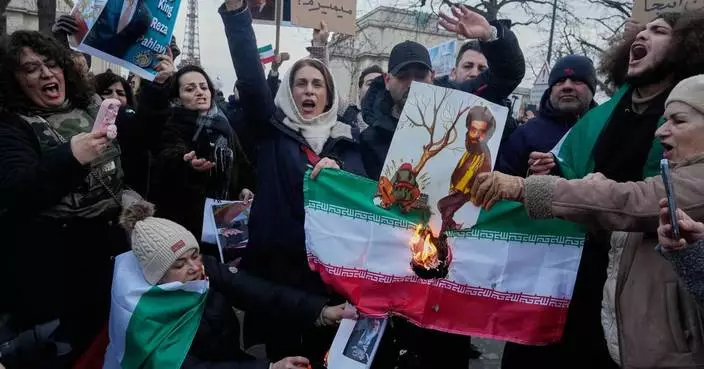
DUBAI, United Arab Emirates (AP) — U.S. President Donald Trump said Iran wants to negotiate with Washington after his threat to strike the Islamic Republic over its bloody crackdown on protesters, a move coming as activists said Monday the death toll in the nationwide demonstrations rose to at least 544.

Iran had no immediate reaction to the news, which came after the foreign minister of Oman — long an interlocutor between Washington and Tehran — traveled to Iran this weekend. It also remains unclear just what Iran could promise, particularly as Trump has set strict demands over its nuclear program and its ballistic missile arsenal, which Tehran insists is crucial for its national defense.

Meanwhile Monday, Iran called for pro-government demonstrators to head to the streets in support of the theocracy, a show of force after days of protests directly challenging the rule of 86-year-old Supreme Leader Ayatollah Ali Khamenei. Iranian state television aired chants from the crowd, who shouted “Death to America!” and “Death to Israel!”

Trump and his national security team have been weighing a range of potential responses against Iran including cyberattacks and direct strikes by the U.S. or Israel, according to two people familiar with internal White House discussions who were not authorized to comment publicly and spoke on condition of anonymity.

“The military is looking at it, and we’re looking at some very strong options,” Trump told reporters on Air Force One on Sunday night. Asked about Iran’s threats of retaliation, he said: “If they do that, we will hit them at levels that they’ve never been hit before.”

Trump said that his administration was in talks to set up a meeting with Tehran, but cautioned that he may have to act first as reports of the death toll in Iran mount and the government continues to arrest protesters.

“I think they’re tired of being beat up by the United States,” Trump said. “Iran wants to negotiate.”

He added: “The meeting is being set up, but we may have to act because of what’s happening before the meeting. But a meeting is being set up. Iran called, they want to negotiate.”

Iran through country's parliamentary speaker warned Sunday that the U.S. military and Israel would be “legitimate targets” if America uses force to protect demonstrators.

More than 10,600 people also have been detained over the two weeks of protests, said the U.S.-based Human Rights Activists News Agency, which has been accurate in previous unrest in recent years and gave the death toll. It relies on supporters in Iran crosschecking information. It said 496 of the dead were protesters and 48 were with security forces.

With the internet down in Iran and phone lines cut off, gauging the demonstrations from abroad has grown more difficult. The Associated Press has been unable to independently assess the toll. Iran’s government has not offered overall casualty figures.

Those abroad fear the information blackout is emboldening hard-liners within Iran’s security services to launch a bloody crackdown. Protesters flooded the streets in the country’s capital and its second-largest city on Saturday night into Sunday morning. Online videos purported to show more demonstrations Sunday night into Monday, with a Tehran official acknowledging them in state media.

In Tehran, a witness told the AP that the streets of the capital empty at the sunset call to prayers each night. By the Isha, or nighttime prayer, the streets are deserted.

Part of that stems from the fear of getting caught in the crackdown. Police sent the public a text message that warned: “Given the presence of terrorist groups and armed individuals in some gatherings last night and their plans to cause death, and the firm decision to not tolerate any appeasement and to deal decisively with the rioters, families are strongly advised to take care of their youth and teenagers.”

Another text, which claimed to come from the intelligence arm of the paramilitary Revolutionary Guard, also directly warned people not to take part in demonstrations.

“Dear parents, in view of the enemy’s plan to increase the level of naked violence and the decision to kill people, ... refrain from being on the streets and gathering in places involved in violence, and inform your children about the consequences of cooperating with terrorist mercenaries, which is an example of treason against the country,” the text warned.

The witness spoke to the AP on condition of anonymity due to the ongoing crackdown.

The demonstrations began Dec. 28 over the collapse of the Iranian rial currency, which trades at over 1.4 million to $1, as the country’s economy is squeezed by international sanctions in part levied over its nuclear program. The protests intensified and grew into calls directly challenging Iran’s theocracy.

Nikhinson reported from aboard Air Force One.

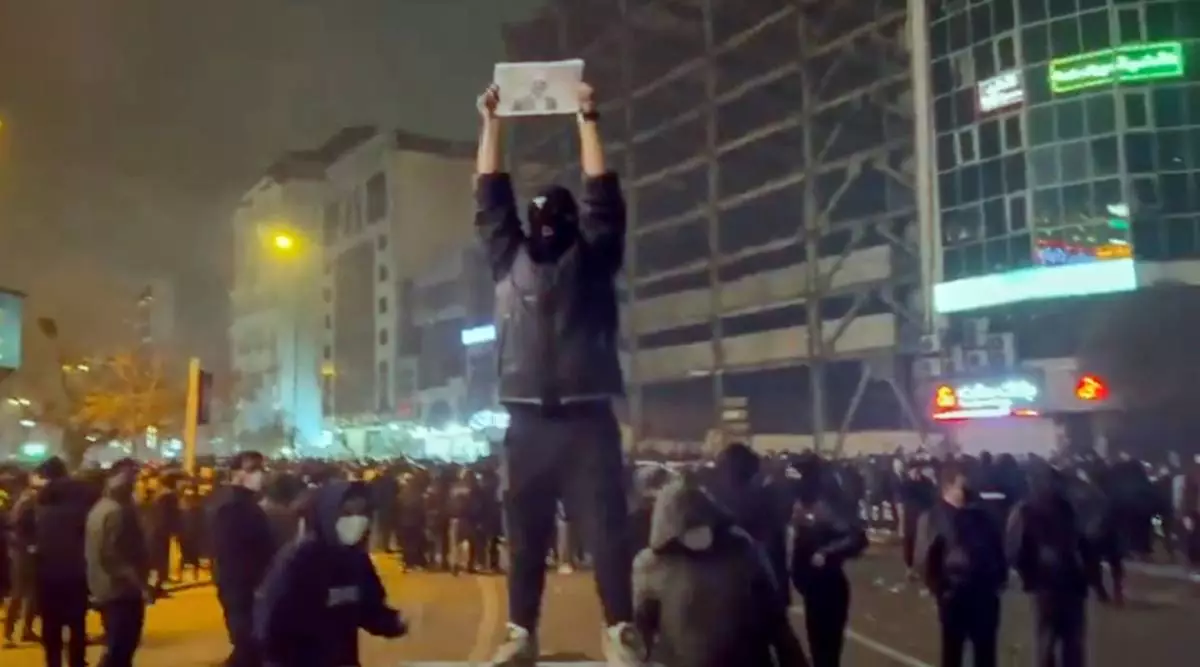
In this frame grab from video obtained by the AP outside Iran, a masked demonstrator holds a picture of Iran's Crown Prince Reza Pahlavi during a protest in Tehran, Iran, Friday, January. 9, 2026. (UGC via AP)

In this frame grab from video obtained by the AP outside Iran, a masked demonstrator holds a picture of Iran's Crown Prince Reza Pahlavi during a protest in Tehran, Iran, Friday, January. 9, 2026. (UGC via AP)

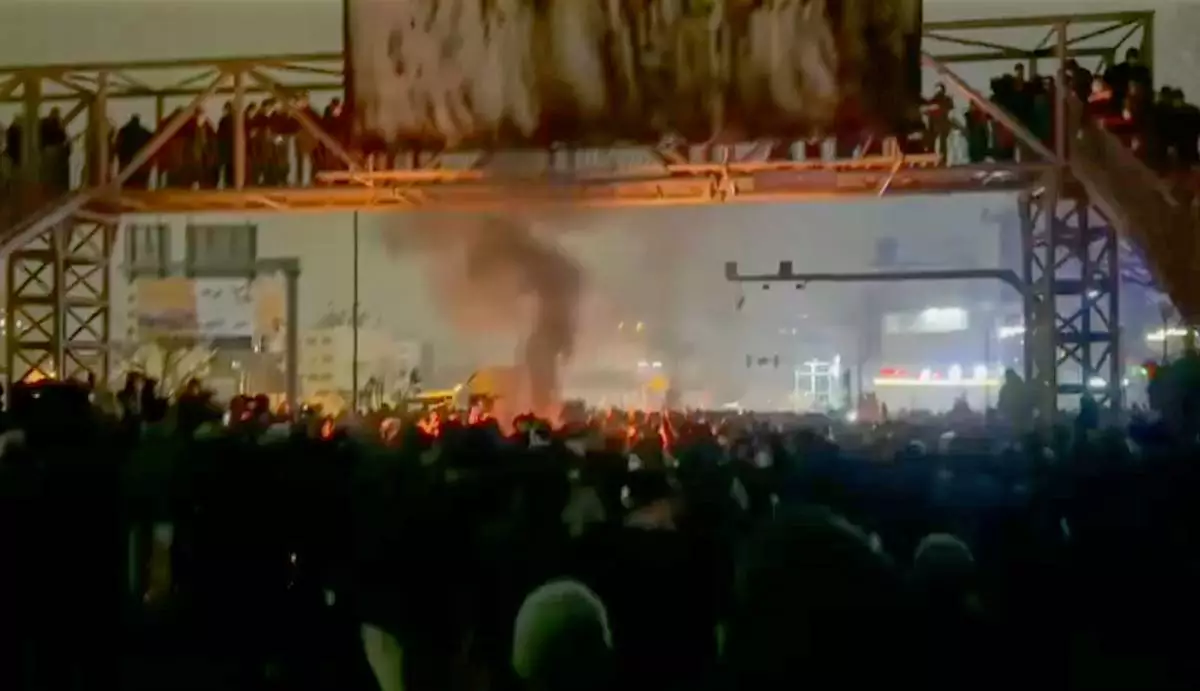
In this frame grab from footage circulating on social media from Iran shows protesters taking to the streets despite an intensifying crackdown as the Islamic Republic remains cut off from the rest of the world in Tehran, Iran, Friday, Jan. 9, 2026.(UGC via AP)

In this frame grab from footage circulating on social media from Iran shows protesters taking to the streets despite an intensifying crackdown as the Islamic Republic remains cut off from the rest of the world in Tehran, Iran, Friday, Jan. 9, 2026.(UGC via AP)

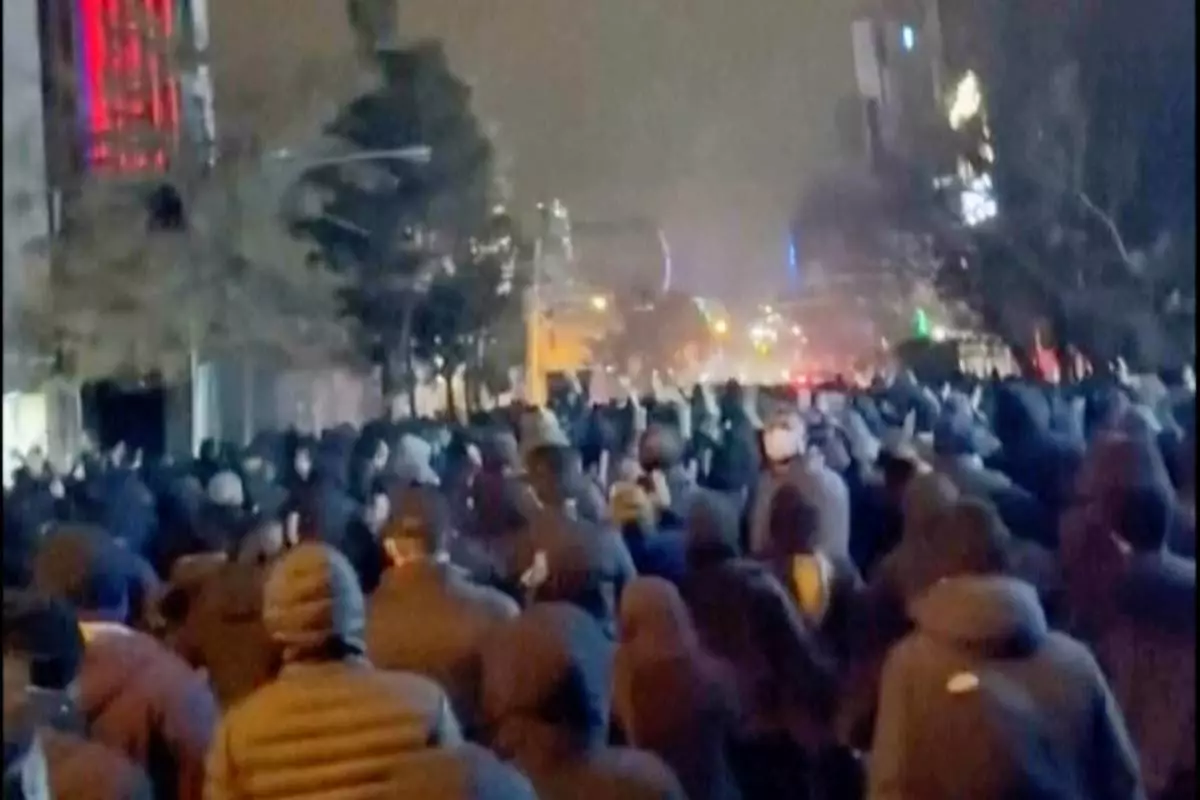
In this frame grab from footage circulating on social media from Iran showed protesters once again taking to the streets of Tehran despite an intensifying crackdown as the Islamic Republic remains cut off from the rest of the world in Tehran, Iran, Saturday Jan. 10, 2026. (UGC via AP)

In this frame grab from footage circulating on social media from Iran showed protesters once again taking to the streets of Tehran despite an intensifying crackdown as the Islamic Republic remains cut off from the rest of the world in Tehran, Iran, Saturday Jan. 10, 2026. (UGC via AP)

Recommended Articles