Japanese teenager Rika Kihira won the women's free skate on Saturday to capture the Four Continents figure skating title for the second consecutive year.
The 17-year-old Kihira, who was in first place after the short program, landed a triple axel as part of a combination jump and received 151.16 points for a total of 232.34. South Korea's You Young also had a triple axel in her routine and moved up to second place with a total of 223.23 points.
Click to Gallery
Japan's Rika Kihira performs during the ladies' single free skating competition in the ISU Four Continents Figure Skating Championships in Seoul, South Korea, Saturday, Feb. 8, 2020. (AP PhotoLee Jin-man)
Japan's Rika Kihira performs during the ladies' single free skating competition in the ISU Four Continents Figure Skating Championships in Seoul, South Korea, Saturday, Feb. 8, 2020. (AP PhotoLee Jin-man)
Japan's Rika Kihira performs during the ladies' single free skating competition in the ISU Four Continents Figure Skating Championships in Seoul, South Korea, Saturday, Feb. 8, 2020. (AP PhotoLee Jin-man)
Japan's Rika Kihira reacts after the ladies' single free skating competition in the ISU Four Continents Figure Skating Championships in Seoul, South Korea, Saturday, Feb. 8, 2020. (AP PhotoLee Jin-man)
Japan's Rika Kihira reacts to scoring after the ladies' single free skating competition in the ISU Four Continents Figure Skating Championships in Seoul, South Korea, Saturday, Feb. 8, 2020. (AP PhotoLee Jin-man)
You, 15, was skating in her first senior season and became the first South Korean medalist at this annual event since Yuna Kim in 2009
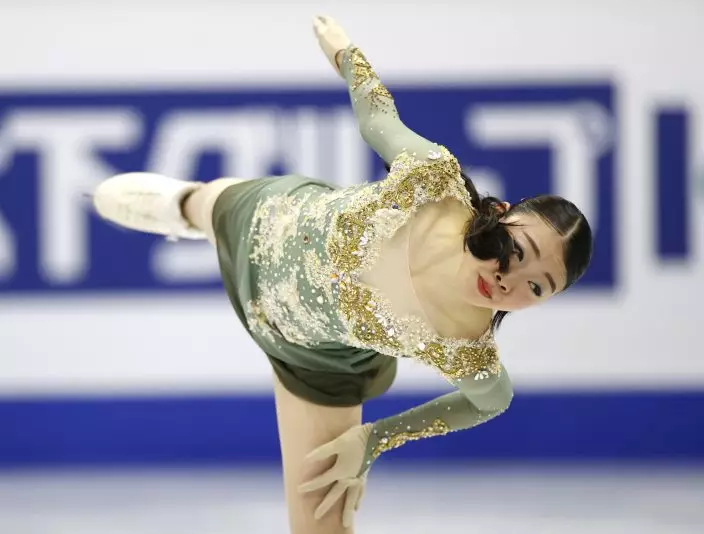
Japan's Rika Kihira performs during the ladies' single free skating competition in the ISU Four Continents Figure Skating Championships in Seoul, South Korea, Saturday, Feb. 8, 2020. (AP PhotoLee Jin-man)
Bradie Tennell of the United States, second after the short program, finished third with 222.97 points.
In addition to her triple axel, Kihira's routine included a triple salchow and a triple lutz.
Kihira won last year's Four Continents in Anaheim, California, and also won the 2018 Grand Prix Final in Vancouver, Canada. She is the first female skater to win back-to-back titles at the Four Continents.
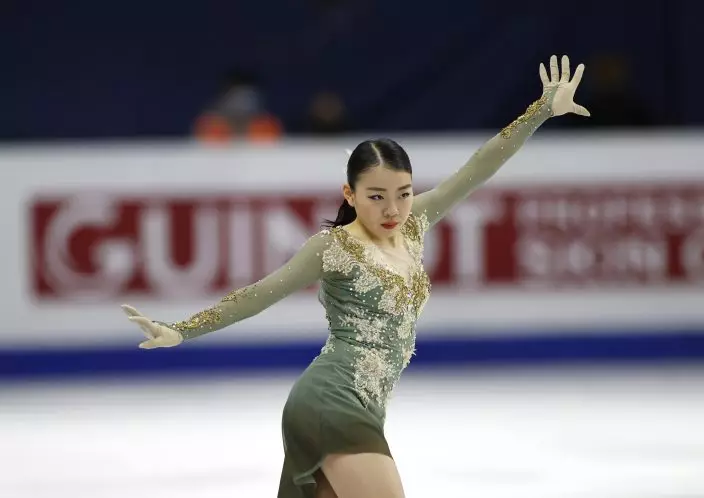
Japan's Rika Kihira performs during the ladies' single free skating competition in the ISU Four Continents Figure Skating Championships in Seoul, South Korea, Saturday, Feb. 8, 2020. (AP PhotoLee Jin-man)
Japanese skaters Wakaba Higuchi and Kaori Sakamoto were fourth and fifth respectively. South Korea's Yelim Kim was sixth followed by Karen Chen of the United States.
More AP sports: https://apnews.com/apf-sports and https://twitter.com/AP_Sports
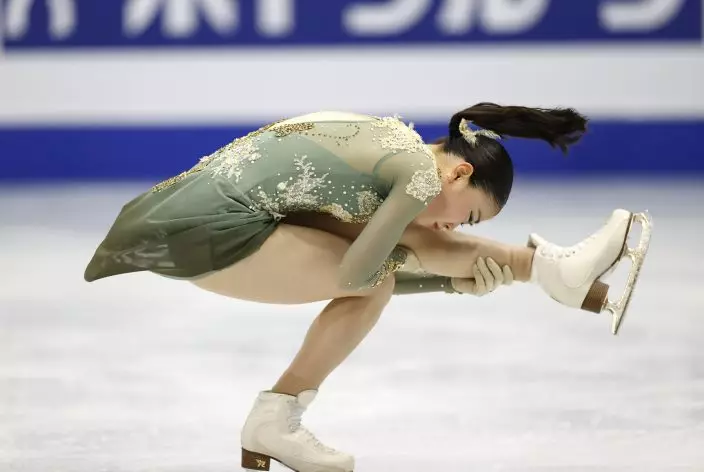
Japan's Rika Kihira performs during the ladies' single free skating competition in the ISU Four Continents Figure Skating Championships in Seoul, South Korea, Saturday, Feb. 8, 2020. (AP PhotoLee Jin-man)
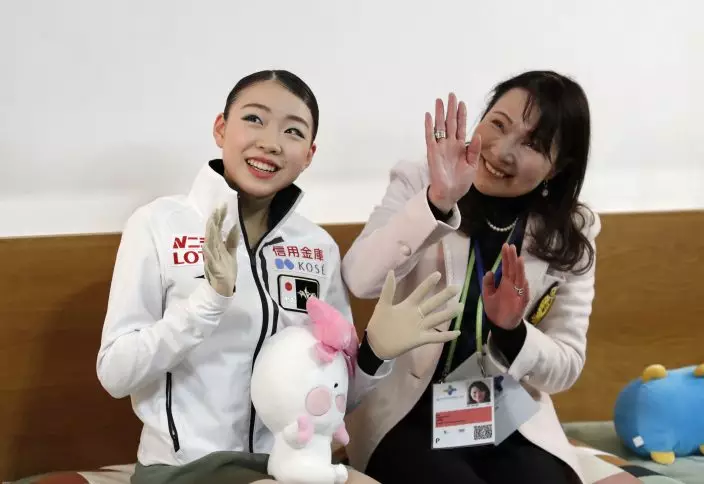
Japan's Rika Kihira reacts after the ladies' single free skating competition in the ISU Four Continents Figure Skating Championships in Seoul, South Korea, Saturday, Feb. 8, 2020. (AP PhotoLee Jin-man)
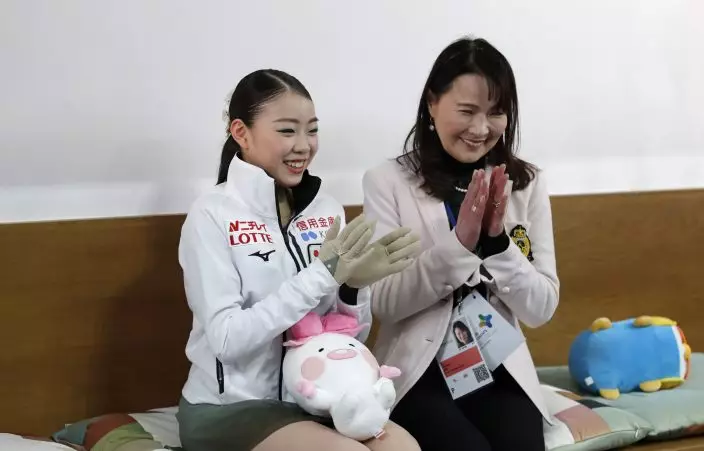
Japan's Rika Kihira reacts to scoring after the ladies' single free skating competition in the ISU Four Continents Figure Skating Championships in Seoul, South Korea, Saturday, Feb. 8, 2020. (AP PhotoLee Jin-man)
If winning gold medals were the only standard, almost all Olympic athletes would be considered failures.
A clinical psychologist with the United States Olympic and Paralympic Committee, Emily Clark's job when the Winter Games open in Italy on Feb. 6 is to help athletes interpret what it means to be successful.
Should gold medals be the only measure?
Part of a 15-member staff providing psychological services, Clark nurtures athletes accustomed to triumph but who invariably risk failure.
The staff deals with matters termed “mental health and mental performance." They include topics such as motivation, anger management, anxiety, eating disorders, family issues, trauma, depression, sleep, handling pressure, travel and so forth.
Clark's area includes stress management, the importance of sleep and getting high achievers to perform at their best and avoid the temptation of looking only at results.
“A lot of athletes these days are aware of the mental health component of, not just sport, but of life,” Clark said in an interview with The Associated Press. “This is an area where athletes can develop skills that can extend a career, or make it more enjoyable.”
The United States is expected to take about 235 athletes to the Winter Olympics, and about 70 more to the Paralympics. But here's the truth.
“Most of the athletes who come through Team USA will not win a gold medal," Clark said. "That’s the reality of elite sport."
Here are the numbers. The United States won gold medals in nine events in the last Winter Games in Beijing in 2022. According to Dr. Bill Mallon, an esteemed shoulder surgeon and Olympic historian, 70.8% of Winter and Summer Olympic athletes go to only one Olympics.
Few are famous and successful like swimmer Michael Phelps, or skiers Mikaela Shiffrin or Lindsey Vonn.
Clark said she often delivers the following message to Olympians and Paralympians: This is a once-in-a-lifetime chance. Focus on the process. Savor the moment.
“Your job is not to win a gold medal, your job is to do the thing and the gold medal is what happens when you do your job,” she said.
“Some of this might be realigning what success looks like," she added. “And some of this is developing resilience in the face of setbacks and failure.”
Clark preaches staying on task under pressure and improving through defeat.
“We get stronger by pushing ourselves to a limit where we're at our maximum capacity — and then recovering," she said. “When we get stressed, it impacts our attention. Staying on task or staying in line with what’s important is what we try to train for.”
Kendall Gretsch has won four gold medals at the Summer and Winter Paralympics. She credits some of her success to the USOPC’s mental health services, and she described the value this way.
“We have a sports psychologist who travels with us for most our season,” she said. “Just being able to touch base with them ... and getting that reminder of why are you here. What is that experience you’re looking for?”
American figure skater Alysa Liu is the 2025 world champion and was sixth in the 2022 Olympics. She’s a big believer in sports psychology and should be among the favorites in Italy.
“I work with a sport psychologist,” she said without giving a name. “She’s incredible — like the MVP.”
Of course, MVP stands — not for Most Valuable Person or Most Valuable Player — for “Most Valuable Psychologist.”
“I mean, she’s very helpful,” Liu added.
American downhill skier Vonn will race in Italy in her sixth Olympics. At 41, she's coming off nearly six years in retirement and will be racing on a knee made of titanium.
Two-time Olympic champion Michaela Dorfmeister has suggested in jest that Vonn “should see a psychologist” for attempting such a thing in a very dangerous sport where downhill skiers reach speeds of 80 mph (130 kph).
Vonn shrugged off the comments and joked a few months ago that she didn’t grow up using a sport psychologist. She said her counseling came from taping messages on the tips of her skis that read: “stay forward or hands up.”
“I just did it myself,” she said. “I do a lot of self-talk in the starting gate.”
“Sleep is an area where athletes tend to struggle for a number of reasons,” Clark said, listing issues such as travel schedules, late practices, injuries and life-related stress.
“We have a lot of athletes who are parents, and lot of sleep is going to be disrupted in the early stages of parenting,” she said. “We approach sleep as a real part of performance. But it can be something that gets de-prioritized when days get busy.”
Clark suggests the following for her athletes — and the rest of us: no caffeine after 3 p.m., mitigate stress before bedtime, schedule sleep at about the same time daily, sleep in a dark room and get 7-9 hours.
Dani Aravich is a two-time Paralympian — she’s been in both the Summer and Winter Games — will be skiing in the upcoming Paralympics. She said in a recent interview that she avails herself of many psychological services provided by the USOPC.
“I’ve started tracking my sleep,” she said, naming Clark as a counselor. “Especially being an athlete who has multiple jobs, sleep is going to be your No. 1 savior at all times. It’s the thing that — you know — helps mental clarity.”
Ditto Clark.
“Sleep is the cornerstone of healthy performance,” she added.
Follow AP’s Be Well coverage, focusing on all aspects of wellness, at https://apnews.com/hub/be-well
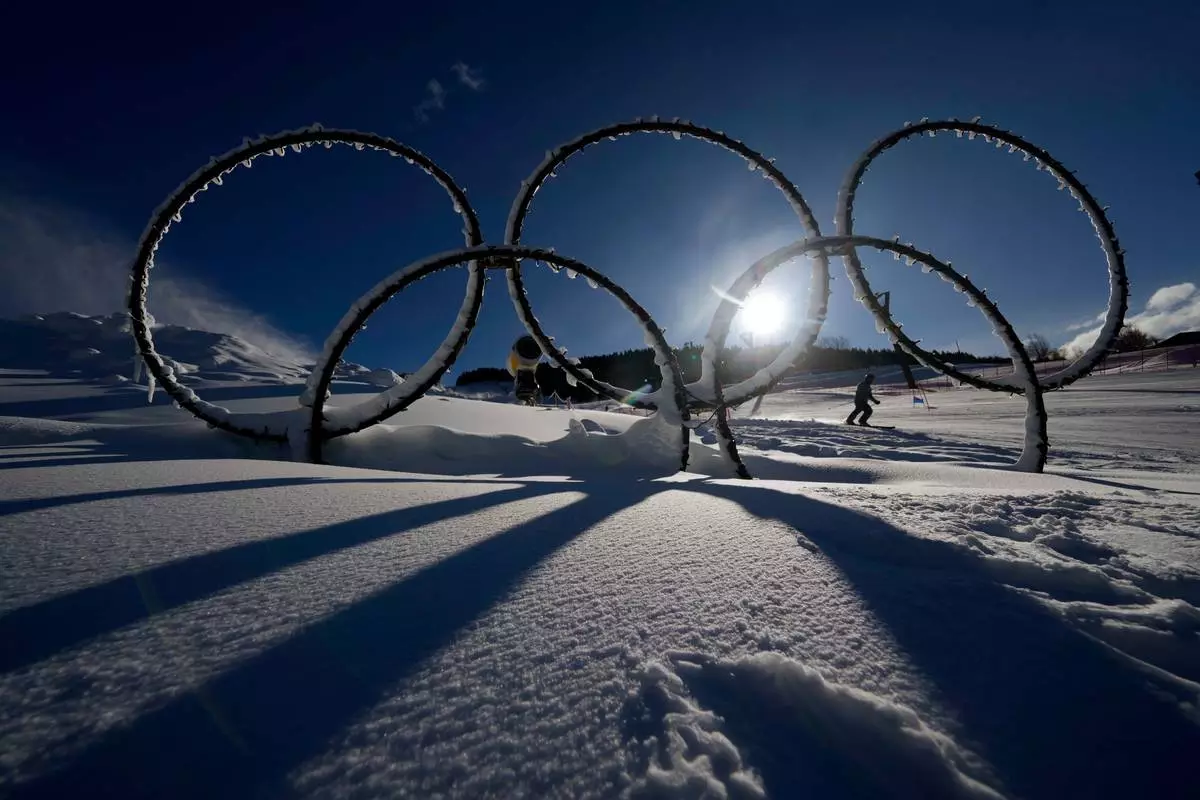
FILE Olympic rings are seen in the snow at the Stelvio Ski Center, venue for the alpine ski and ski mountaineering disciplines at the Milan Cortina 2026 Winter Olympics, in Bormio, Italy, Jan. 16, 2025. (AP Photo/Luca Bruno, File)