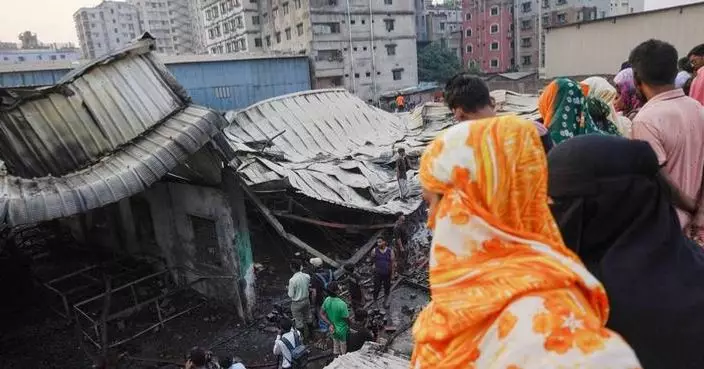
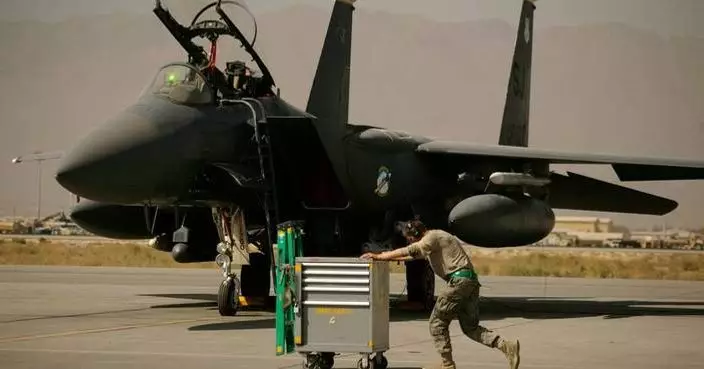
The search is on for one missing U.S. service member while another was rescued after two U.S. warplanes went down in separate incidents including the first shoot-down since the Iran war began nearly five weeks ago.
The incidents occurred just two days after President Donald Trump said in a national address that the U.S. has “beaten and completely decimated Iran.”
One fighter jet was shot down in Iran, officials said. A U.S. crew member from that plane was rescued, but a second was missing, and a U.S. military search-and-rescue operation was underway.
Separately, Iranian state media said a U.S. A-10 attack aircraft crashed in the Persian Gulf after being struck by Iranian defense forces. A U.S. official, speaking on condition of anonymity to discuss a sensitive military situation, said it was not clear if the aircraft crashed or was shot down.
The war now entering its sixth week is destabilizing economies around the world as Iran responds to the U.S. and Israeli attacks by targeting the Gulf region's energy infrastructure and tightening its grip on oil and natural gas shipments through the Strait of Hormuz.
Here is the latest:
Argentina’s Foreign Affairs Ministry said Saturday it had expelled Iran’s top diplomat as tensions increase between Iran’s theocratic regime and Argentina’s libertarian government, which is closely aligned with the Trump administration.
In a message on X, Argentina’s Foreign Affairs Minister Pablo Quirno said Iran’s Charge D’Affaires, Mohsen Soltani Tehrani, had left the country “in compliance” with a resolution issued Thursday that gave the Iranian diplomat 48 hours to leave the South American country.
Tensions between both nations intensified earlier this week after Argentina declared Iran’s Islamic Revolutionary Guard Corps a terrorist organization. The measure will enable the Argentine government to issue financial sanctions against those conducting business with that branch of Iran’s armed forces and seize any assets it could own in Argentina.
Iran’s Foreign Affairs Ministry replied to the terrorism designation with a statement which said Argentina’s actions amounted to an “unforgivable offense” influenced by the United States.
The U.S.-Israeli strikes also wounded others in the attack on the facilities in the Mahshahr Special Petrochemical Economic Zone in southwestern Iran, state media cited a provincial security official as saying.
The Israeli military claimed responsibility for the attack on the facilities earlier Saturday and Israeli Prime Minister Benjamin Netanyahu vowed in a video statement on X to press ahead with more attacks. He claimed the complex was “responsible for producing and exporting chemical materials to the regime’s armed forces” and that the targeted facilities were “used to produce materials for explosives, ballistic missile, and additional weaponry.”
As the clock ticks closer to the U.S. president’s Monday deadline for Iran to reopen the Strait of Hormuz, the White House says Trump is firmly at work.
“There has never been a President who has worked harder for the American people than President Trump,” Steven Cheung, the White House communications director, posted on X. “On this Easter weekend, he has been working nonstop in the White House and Oval Office. God Bless him.”
The president often travels to his Palm Beach, Florida, club on the weekends, but he’s staying in Washington for the Easter weekend. Since he delivered his prime-time address on Iran on Wednesday night, the president has held a series of closed-press meetings at the White House.
Italian Premier Giorgia Meloni said in a video message released by her office Saturday that her mission to the Gulf was aimed at showing solidarity with countries “that continue to suffer unjustified attacks by Iran,’’ while also addressing Italian security and energy interests.
Meloni is the first EU leader to travel to the Gulf since the U.S.-Israel war on Iran began, visiting Saudi Arabia, Qatar and the United Arab Emirates on a two-day visit.
“I think it is important for Italy in such a difficult moment to be present in the places where a fundamental part of our security is being decided, and also our economic future,’’ Meloni said in the video shot as she was being driven in the back of a car through Doha, Qatar. “Because when instability increases in the Gulf, not just the international balance is impacted, but also energy prices,’’ which affect companies’ cost and families’ purchasing power.
She noted Italy receives 10% of its natural gas from Qatar and the Gulf region supplies 15% of its petroleum needs.
“After we destroyed 70% of its ability to create steel, which is used as the raw material for the weapons used against us, today we attacked their petrochemical factories,” Israeli Prime Minister Benjamin Netanyahu said in a video statement posted on his X account.
The Israeli military said that earlier Saturday its air force struck a petrochemical complex in Mahshahr, in southwestern Iran. It alleged the complex was “responsible for producing and exporting chemical materials to the regime’s armed forces” and that the targeted facilities were “used to produce materials for explosives, ballistic missile, and additional weaponry.”
“I promised you that we will continue to crush the terrorist regime in Tehran, and that is exactly what we are doing,” Netanyahu said.
World food commodity prices rose for a second consecutive month in March, driven largely by increasing energy costs linked to the escalating conflict in the Middle East, the UN’s Food and Agriculture Organization reported Friday.
The latest FAO benchmark index, tracking monthly changes in the international prices of a basket of globally traded food commodities, rose 1% from a year ago, highlighting how geopolitical tensions are pushing up production and transportation expenses, adding renewed pressure on global food markets. Prices were up 2.4% from a month earlier.
Price surges have been relatively contained compared with after the start of the Ukraine war in 2022 because markets remain well-supplied following strong harvests in major growing regions, said David Laborde, the FAO agrifood economics director.
With a large portion of the world’s fuel and fertilizer moving through the Strait of Hormuz, he noted that a long-term closure will force farmers to make difficult planting decisions. That will affect the cost of producing the next harvest, as well as yields.
Iran’s joint military command spokesperson said in a statement in Arabic on Saturday that the restrictions imposed in the Strait of Hormuz “only apply to enemy countries.”
Addressing Iraqis, Ebrahim Zolfaghari said in a speech carried by state media that “you are a nation that bears the marks of American occupation on your chest, and your struggle against America is worthy of appreciation and praise.”
Iran-backed militias in Iraq have claimed responsibility for dozens of attacks on U.S. bases and other facilities in the country in solidarity with Tehran since the war began.
The Iran war, now its second month, has dealt a massive blow to Iraq’s economy. The country is heavily dependent on oil revenues for almost 90% of its budget and most of its oil is exported through the Strait of Hormuz, where cargo traffic has effectively been stopped by Iran during the conflict.
The attack triggered sirens across the Tel Aviv metropolitan area. There were no immediate reports of injuries.
The Houthis in Yemen have launched several missiles against Israel since joining the war last week in support of Iran.
The death brings the number of Israeli soldiers killed in Lebanon in the current war to 11.
A military official said the soldier was killed by friendly fire. He spoke anonymously in line with military regulations.
Italian Premier Giorgia Meloni concluded her two-day visit to three Gulf states in the United Arab Emirates on Saturday, discussing with the country’s leader additional investments by both countries in energy, defense and security, her office said in a statement.
Meloni is the first EU, G20 and NATO leader to visit the Gulf region since the start of the U.S.-Israel war on Iran. She began her two-day visit Friday in Saudi Arabia and visited Qatar earlier Saturday. The start of the mission was unannounced due to security concerns.
Meloni and UAE’s president, Sheikh Mohamed bin Zayed Al Nahyan, also discussed ways to bring an end to the conflict in the region and open the Strait of Hormuz, Meloni’s office said. The Italian leader also expressed her support for the country, which has suffered attacks from Iran following the launch of the war.
The Trump administration has revoked the green cards or U.S. visas of at least four Iranian nationals connected to the current or former Iranian government, including two who’ve been detained by immigration authorities and are to be deported.
The latest actions were taken just this week when U.S. Secretary of State Marco Rubio determined they were no longer eligible for either lawful permanent resident status, or to enter the United States. The steps follow a move late last year in which the visas of several diplomats and staffers at Iran’s mission to the United Nations were also revoked.
In a statement Saturday, the State Department said the niece and grand-niece of former Iranian Revolutionary Guard Corps chief Qassem Soleimani, who was killed in a U.S. airstrike near the Baghdad airport in 2020, had been arrested late Friday by immigration agents after Rubio revoked their green cards.
▶ Read more
Pakistan’s Foreign Ministry spokesperson Tahir Andrabi said Saturday there was no truth to speculation in local media that the mediation effort had stalled due to Iran’s refusal to send a delegation.
He dismissed reports suggesting an impasse in the regionally backed initiative, saying the peace efforts are right on track.
Iran’s Foreign Minister Abbas Araghchi, in a post on X also said Tehran had “never refused to go to Islamabad” but was seeking a “conclusive and lasting” end to the conflict. “We are deeply grateful to Pakistan for its efforts and have never refused to go to Islamabad,” Araghchi wrote.
He said “What we care about are the terms of a conclusive and lasting end to the illegal war that is imposed on us.”
Pakistan’s Foreign Minister Ishaq Dar welcomed Araghchi’s remarks, saying he appreciated the clarification.
Pakistan, with backing from regional partners, is still working to bring Washington and Tehran to the negotiations table. However, no dates have been set for the proposed talks and it remains unclear whether any such engagement would be direct or indirect.
It comes shortly after an attack that damaged buildings in East Jerusalem. Sirens were activated across northern Israel.
For the seventh time Saturday, missiles launched from Iran triggered sirens in multiple cities and towns in Israel.
Fire and Rescue services said their teams were treating two sites in East Jerusalem where buildings were damaged in the latest round. It wasn’t immediately clear if the impact was from parts of a missile or of an interceptor. No injuries were reported.
The military had said its defense systems were activated to try and intercept the missiles.
Hezbollah on Saturday also kept up its rocket fire on communities in northern Israel. Most were intercepted and there were no reports of injuries.
In a briefing Saturday, Iran’s joint military command spokesperson said it hit other enemy targets Friday, including the two helicopters.
The AP could not independently verify the claims. Some media outlets in the U.S. have reported the helicopters were hit.
Ebrahim Zolfaghari said in a statement carried by state media that it “must be called a black and humiliating Friday for the American and Zionist enemies.”
Iran had claimed the downing of two American warplanes Friday.
On Saturday, the U.S. military was pressing ahead with its search for a missing pilot over a remote area in southwestern Iran.
The airstrike on a civilian vehicle wounded two others, according to health officials at Al-Aqsa hospital, where the casualties arrived.
The Israeli military did not immediately respond to a request for comment.
The Gaza Strip has seen near-daily Israeli fire and strikes since a fragile ceasefire was reached in October, and nearly 713 Palestinians have been killed since then, according to figures from the Hamas-run Gaza Health Ministry.
Since the Iran war began over a month ago, Gaza militants have sat out the conflict and haven’t claimed any attacks against Israel.
Iran shooting down two American military jets marks an exceedingly rare assault for the U.S. that hasn’t happened in more than 20 years and shows the Islamic Republic’s continued ability to hit back despite President Trump asserting it has been “completely decimated.”
The attacks came five weeks after U.S. and Israeli strikes first pounded Iran, with Trump saying earlier this week that Tehran’s “ability to launch missiles and drones is dramatically curtailed.”
Iran shot down a U.S. F15-E Strike Eagle fighter jet Friday, with one service member getting rescued and the search still underway for a second, U.S. officials say. Iranian state media also said a U.S. A-10 attack aircraft crashed after being hit by Iranian defense forces.
The last time a U.S. warplane was shot down by enemy fire in combat was an A-10 Thunderbolt II during the 2003 U.S. invasion of Iraq, said retired Air Force Brig. Gen. Houston Cantwell, a former F-16 fighter pilot.
▶ Read more
In its daily briefing posted on X, the Kuwaiti army said Saturday that it had intercepted eight ballistic missiles and 19 drones over the last 24 hours.
Since the war began, Kuwaiti air forces have engaged with a total of 709 Iranian drones, 327 ballistic missiles and nine cruise missiles, according to the briefing.
The U.S. State Department says the niece and grand niece of Gen. Qassem Soleimani, who had lead the Iranian Islamic Revolutionary Guard Corps’ Quds Force, are now in ICE custody.
Hamideh Soleimani Afshar and her daughter were arrested after the State Department terminated their green cards.
The State Department said “as identified by both press reporting and her own social media commentary, Soleimani Afshar is an outspoken supporter of the totalitarian, terrorist regime in Iran.”
Afshar’s husband is also banned from entering the U.S.
The head of Russia’s state nuclear corporation Rosatom says 198 workers are being evacuated from Iran’s Russian-built nuclear power plant.
Alexei Likhachev told reporters this is “the main” and “the biggest evacuation wave.” He said it was planned and began Saturday morning, shortly after a strike hit the Bushehr plant, killing a security guard, who was an Iranian citizen.
Buses with the evacuated workers are on their way to the neighboring Armenia, Likhachev said, adding that Israel and the U.S. will be informed about the routes of their journey.
Russian news agency Interfax said Rosatom has already evacuated more than 400 workers from Bushehr.
Likhachev said the strike Saturday was “carried out effectively on the plant’s physical security perimeter” and that “the likelihood of damage, of a possible nuclear incident, is unfortunately only increasing by the day.”
Over the past 24 hours, Israeli strikes killed 54 people and wounded 156, the Lebanese health ministry said Saturday.
The ministry said the overall death toll includes 126 children and 93 women, since Israel launched intense airstrikes across Lebanon after the Hezbollah militant group fired rockets toward northern Israel in solidarity with Iran on March 2. The strikes have also wounded 4,294 others.
Among those killed are 54 health workers, while Israeli strikes have targeted 87 emergency medical service facilities, the health ministry said.
On Saturday, a wave of Israeli strikes hit multiple areas across southern Lebanon, one of them killed two children and wounded 22 others, according to the health ministry.
The Delaram Sina Hospital wasn’t directly hit, but a nearby explosion damaged parts of the building and blew out most of the windows. No casualties were reported at the 100-bed hospital that specializes in treating patients suffering from anxiety and post traumatic stress disorders.
“Electricity to the hospital was cut off,” hospital chief Mohammad Asgari told reporters Saturday. “All the glass, windows and doors were shattered, many walls collapsed, and the hospital was hit by multiple pieces of shrapnel.”
Asgari said that fortunately the ward close to the explosion site housed no patients at the time.
The explosion left the facility with shattered glass, damaged beds and broken equipment covered with dust, AP video showed.
The U.S. president on Saturday re-upped a previous April 6 deadline for Iran to open up the shipping channel or face devastating consequences.
“Remember when I gave Iran ten days to MAKE A DEAL or OPEN UP THE HORMUZ STRAIT,” Trump wrote on his social media account Saturday. “Time is running out — 48 hours before all Hell will reign down on them. Glory be to GOD!”
The president made his comment as he remained at the White House on Saturday morning. The Trump administration hasn’t made an official comment on the U.S. fighter jet shot down in Iran.
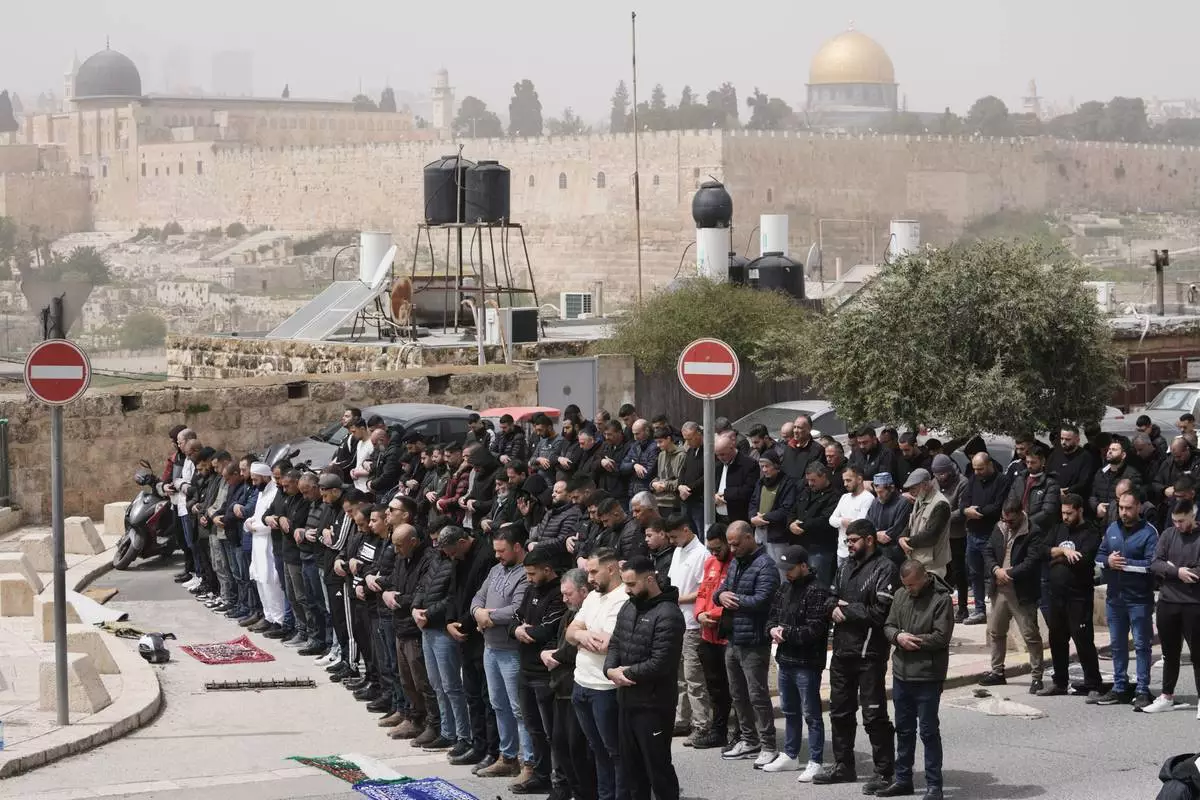
Palestinian Muslims attend Friday prayers outside Jerusalem's Old City due to restrictions linked to the Iran war, April 3, 2026. (AP Photo/Mahmoud Illean)
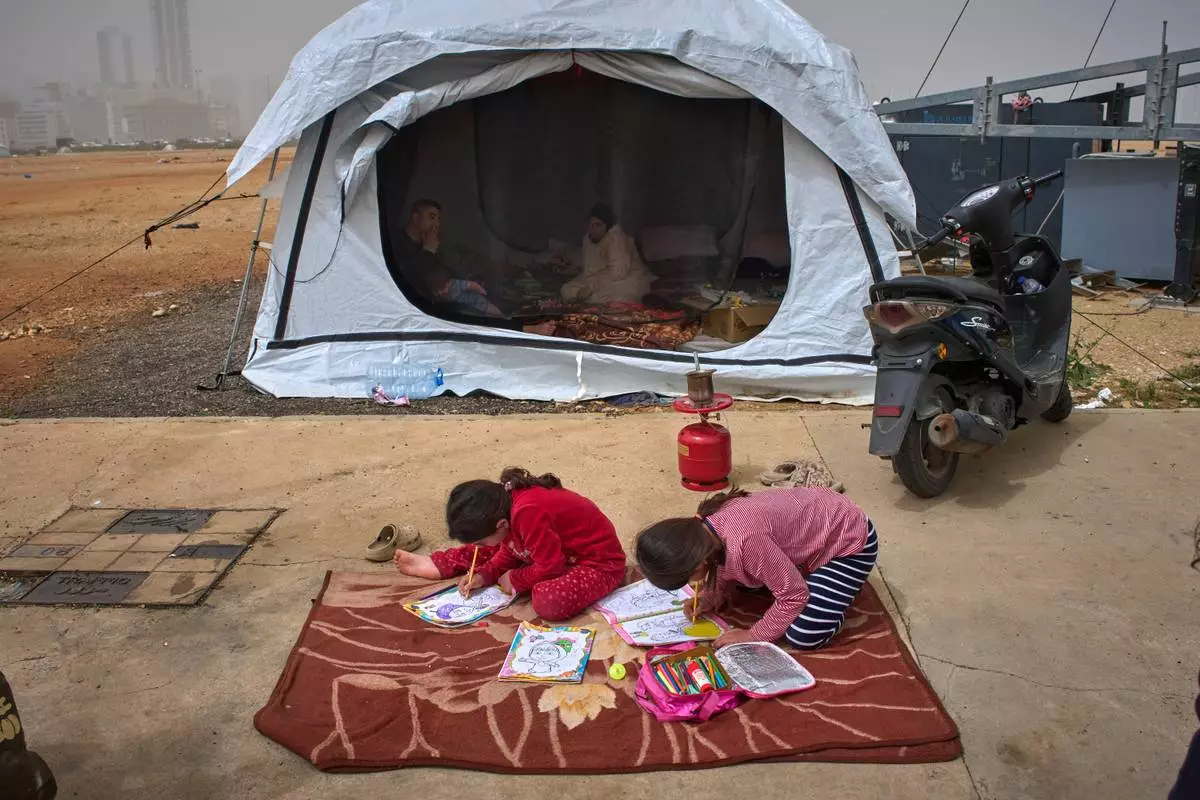
Tamara and her sister Amal color pictures on the floor as their parents, Sara and Ahmed, who fled their village of Khiyam in southern Lebanon due to Israeli bombardment, sit inside a tent used as a shelter in Beirut, Lebanon, Friday, April 3, 2026. (AP Photo/Emilio Morenatti)
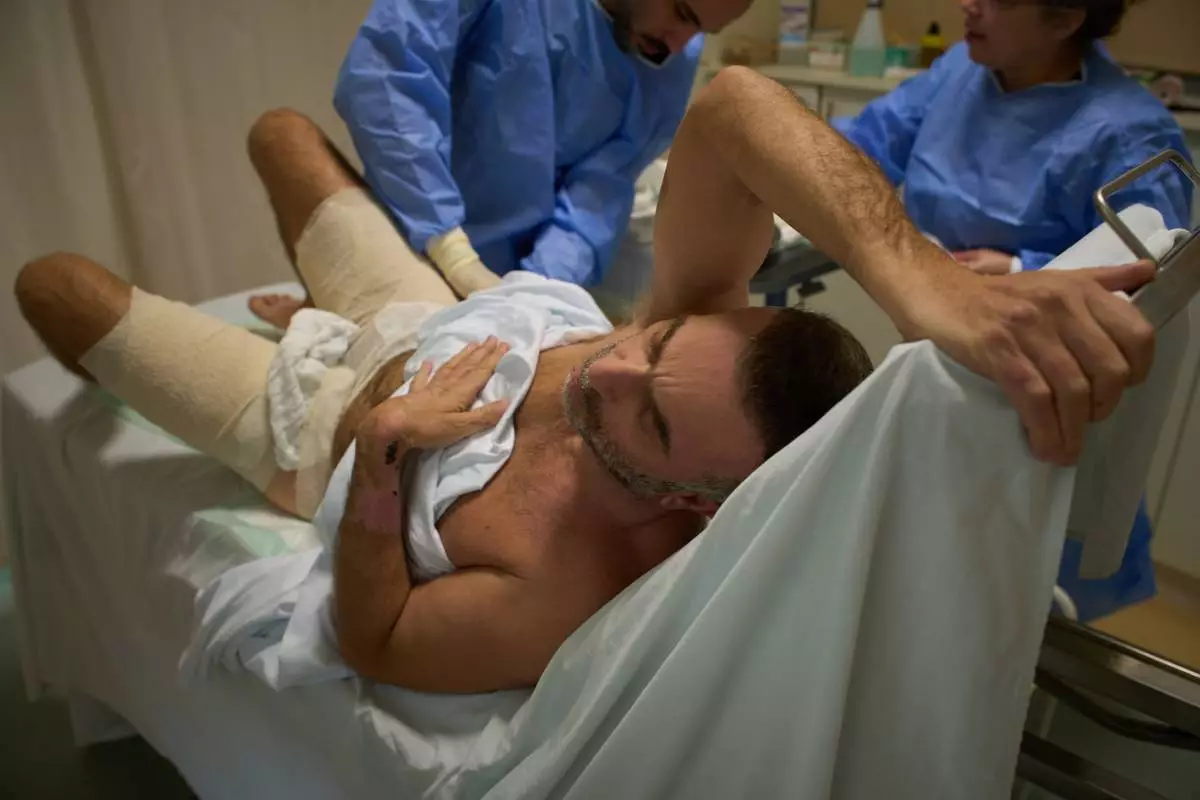
Mohammad Qubaisi, 53, with burn wounds from an Israeli airstrike on southern Lebanon undergoes surgery by Dr. Mohammed Ziara, left, and his team, at the Sidon Government Hospital in Sidon, Lebanon, Thursday, April 2, 2026. (AP Photo/Emilio Morenatti)
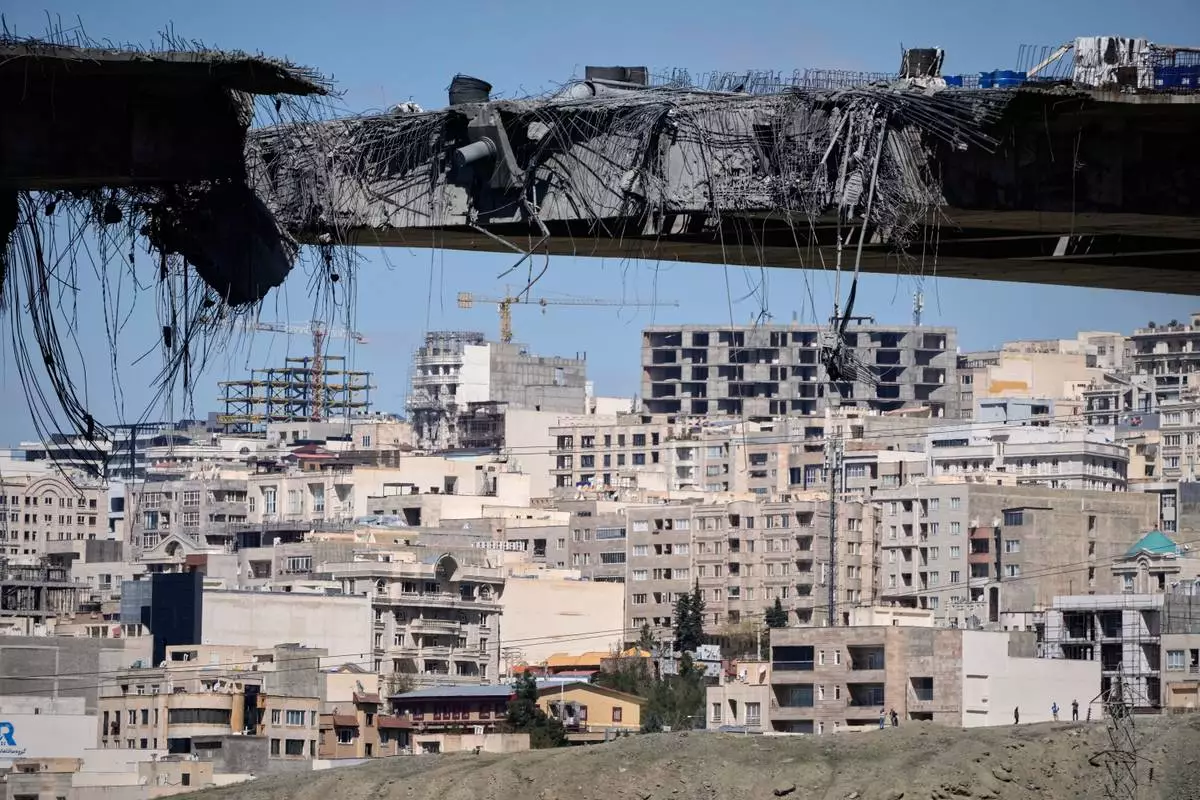
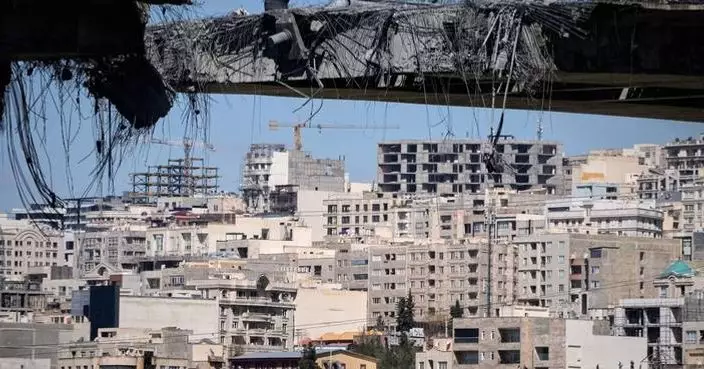
A bridge struck by U.S. airstrikes on Thursday is seen in the town of Karaj, west of Tehran, Iran, Friday, April 3, 2026. (AP Photo/Vahid Salemi)
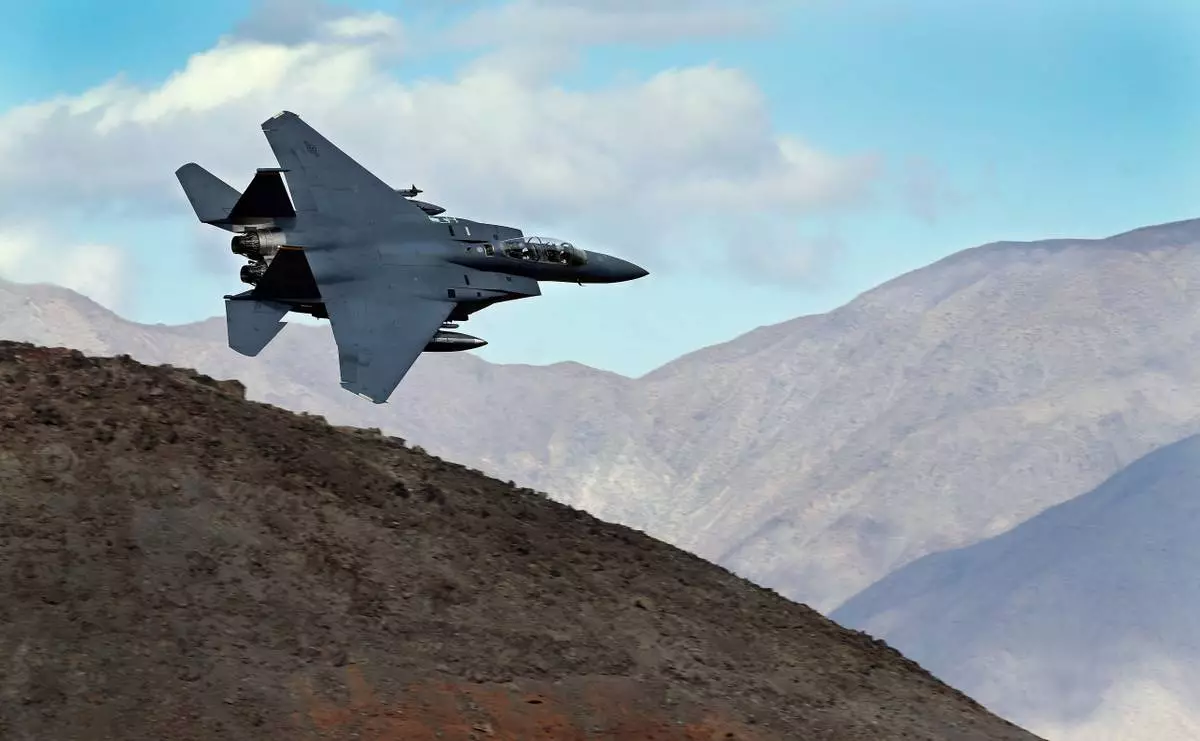
FILE - An F-15E Strike Eagle turns toward the Panamint range over Death Valley National Park, Calif., on Feb. 27, 2017. (AP Photo/Ben Margot, File)