Skip to Content Facebook Feature Image

AP Interview: Egypt says UN must stop Ethiopia on dam fill

News

AP Interview: Egypt says UN must stop Ethiopia on dam fill
News

News

AP Interview: Egypt says UN must stop Ethiopia on dam fill

2020-06-22 05:36 Last Updated At:05:50

Egypt wants the United Nations Security Council to “undertake its responsibilities” and prevent Ethiopia from starting to fill its massive, newly built hydroelectric dam on the Nile River next month amid a breakdown in negotiations, Egyptian Foreign Minister Sameh Shukry told The Associated Press on Sunday, accusing Ethiopian officials of stoking antagonism between the countries.

Ethiopia announced Friday that it would begin filling the dam’s reservoir in July even after the latest round of talks with Egypt and Sudan failed last week to reach a deal governing how the dam will be filled and operated.

More Images
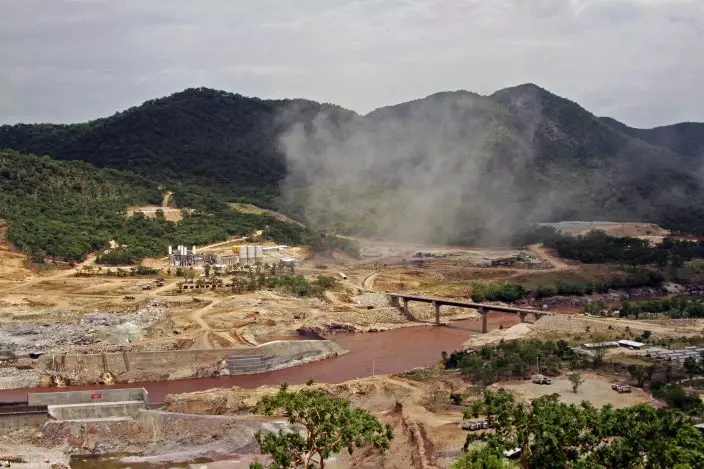
FILE - In this June 28, 2013 file photo, The Blue Nile river flows near the site of the planned Grand Ethiopian Renaissance Dam near Assosa in the Benishangul-Gumuz region of Ethiopia, near Sudan, some 800 kilometers (500 miles) from the capital Addis Ababa. Egypt wants the United Nations Security Council to "undertake its responsibilities" and prevent Ethiopia from starting to fill its massive, newly built hydroelectric dam on the Nile River next month amid a breakdown in negotiations, Egyptian Foreign Minister Sameh Shukry told The Associated Press on Sunday, June 21, 2020 accusing Ethiopian officials of stoking antagonism between the countries. (AP PhotoElias Asmare, File)
FILE - In this June 28, 2013 file photo, The Blue Nile river flows near the site of the planned Grand Ethiopian Renaissance Dam near Assosa in the Benishangul-Gumuz region of Ethiopia, near Sudan, some 800 kilometers (500 miles) from the capital Addis Ababa. Egypt wants the United Nations Security Council to "undertake its responsibilities" and prevent Ethiopia from starting to fill its massive, newly built hydroelectric dam on the Nile River next month amid a breakdown in negotiations, Egyptian Foreign Minister Sameh Shukry told The Associated Press on Sunday, June 21, 2020 accusing Ethiopian officials of stoking antagonism between the countries. (AP PhotoElias Asmare, File)

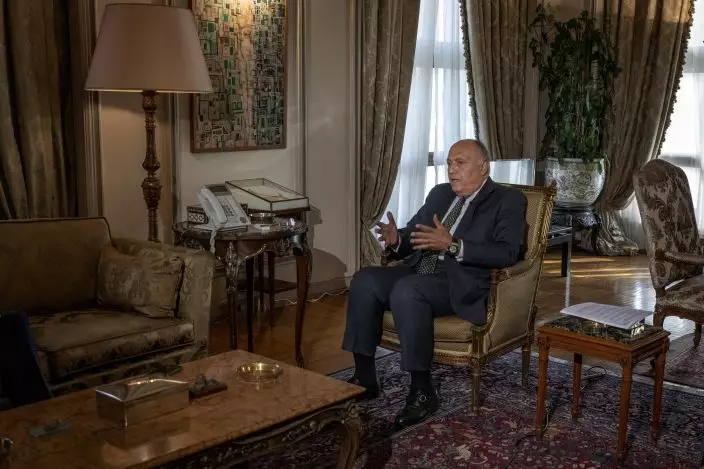
Egyptian Foreign Minister Sameh Shukry speaks during an interview with The Associated Press at his office, in Cairo, Egypt, Sunday, June 21, 2020. Egypt wants the United Nations Security Council to "undertake its responsibilities" and prevent Ethiopia from starting to fill its massive, newly built hydroelectric dam on the Nile River next month amid a breakdown in negotiations, Shukry told the AP on Sunday, accusing Ethiopian officials of stoking antagonism between the countries.(AP PhotoNariman El-Mofty)
Egyptian Foreign Minister Sameh Shukry speaks during an interview with The Associated Press at his office, in Cairo, Egypt, Sunday, June 21, 2020. Egypt wants the United Nations Security Council to "undertake its responsibilities" and prevent Ethiopia from starting to fill its massive, newly built hydroelectric dam on the Nile River next month amid a breakdown in negotiations, Shukry told the AP on Sunday, accusing Ethiopian officials of stoking antagonism between the countries.(AP PhotoNariman El-Mofty)

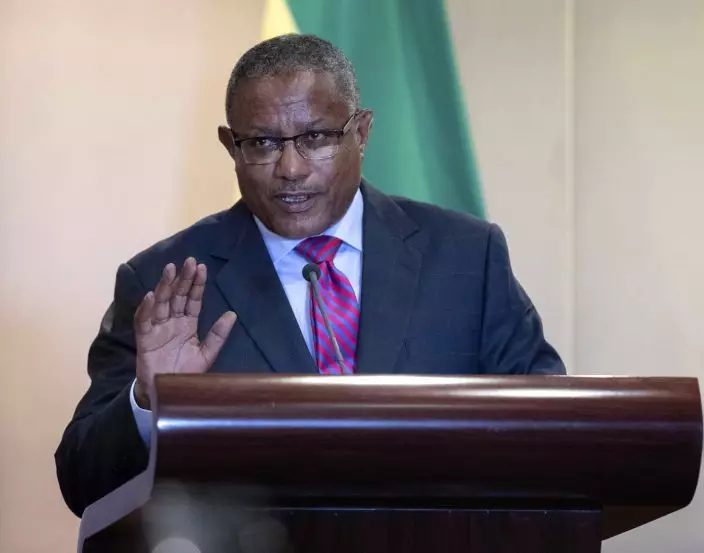
FILE - In this Feb. 18, 2020 file photo, Ethiopian Foreign Minister Gedu Andargachew speaks during a press conference, in Addis Ababa, Ethiopia. Egypt wants the United Nations Security Council to "undertake its responsibilities" and prevent Ethiopia from starting to fill its massive, newly built hydroelectric dam on the Nile River next month amid a breakdown in negotiations, Egyptian Foreign Minister Sameh Shukry told The Associated Press on Sunday, June 21, 2020 accusing Ethiopian officials of stoking antagonism between the countries. (AP Photo Mulugeta Ayene, File)
FILE - In this Feb. 18, 2020 file photo, Ethiopian Foreign Minister Gedu Andargachew speaks during a press conference, in Addis Ababa, Ethiopia. Egypt wants the United Nations Security Council to "undertake its responsibilities" and prevent Ethiopia from starting to fill its massive, newly built hydroelectric dam on the Nile River next month amid a breakdown in negotiations, Egyptian Foreign Minister Sameh Shukry told The Associated Press on Sunday, June 21, 2020 accusing Ethiopian officials of stoking antagonism between the countries. (AP Photo Mulugeta Ayene, File)

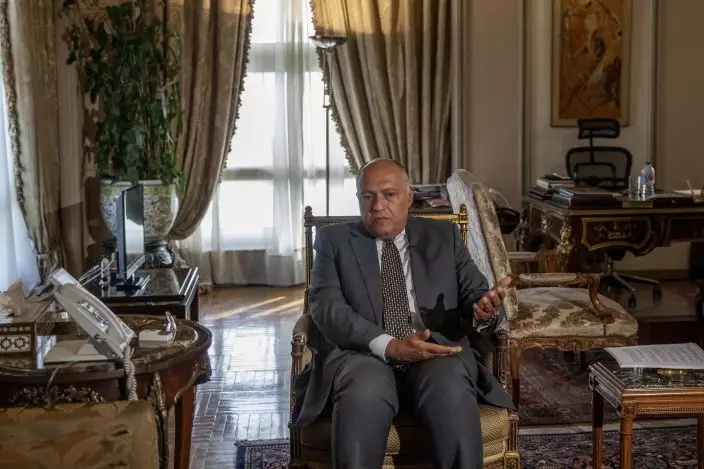
Egyptian Foreign Minister Sameh Shukry speaks during an interview with The Associated Press at his office, in Cairo, Egypt, Sunday, June 21, 2020. Egypt wants the United Nations Security Council to "undertake its responsibilities" and prevent Ethiopia from starting to fill its massive, newly built hydroelectric dam on the Nile River next month amid a breakdown in negotiations, Shukry told the AP on Sunday, accusing Ethiopian officials of stoking antagonism between the countries. (AP PhotoNariman El-Mofty)
Egyptian Foreign Minister Sameh Shukry speaks during an interview with The Associated Press at his office, in Cairo, Egypt, Sunday, June 21, 2020. Egypt wants the United Nations Security Council to "undertake its responsibilities" and prevent Ethiopia from starting to fill its massive, newly built hydroelectric dam on the Nile River next month amid a breakdown in negotiations, Shukry told the AP on Sunday, accusing Ethiopian officials of stoking antagonism between the countries. (AP PhotoNariman El-Mofty)

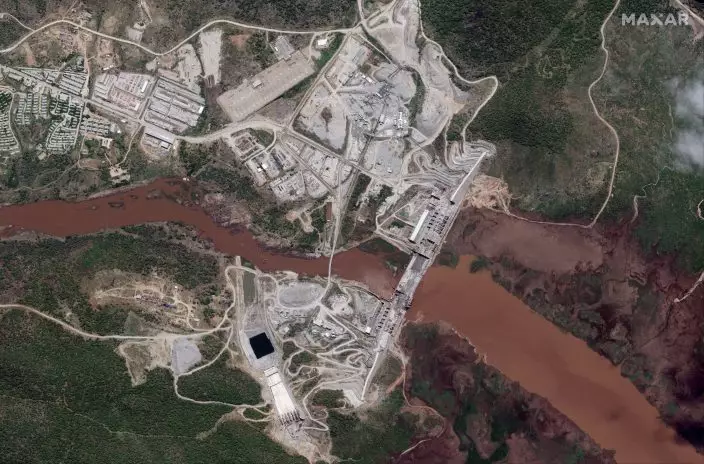
FILE - This satellite image taken Thursday, May 28, 2020, shows the Grand Ethiopian Renaissance Dam on the Blue Nile river in the Benishangul-Gumuz region of Ethiopia. Egypt wants the United Nations Security Council to "undertake its responsibilities" and prevent Ethiopia from starting to fill its massive, newly built hydroelectric dam on the Nile River next month amid a breakdown in negotiations, Egyptian Foreign Minister Sameh Shukry told The Associated Press on Sunday, June 21, 2020 accusing Ethiopian officials of stoking antagonism between the countries. (Maxar Technologies via AP, File)
FILE - This satellite image taken Thursday, May 28, 2020, shows the Grand Ethiopian Renaissance Dam on the Blue Nile river in the Benishangul-Gumuz region of Ethiopia. Egypt wants the United Nations Security Council to "undertake its responsibilities" and prevent Ethiopia from starting to fill its massive, newly built hydroelectric dam on the Nile River next month amid a breakdown in negotiations, Egyptian Foreign Minister Sameh Shukry told The Associated Press on Sunday, June 21, 2020 accusing Ethiopian officials of stoking antagonism between the countries. (Maxar Technologies via AP, File)
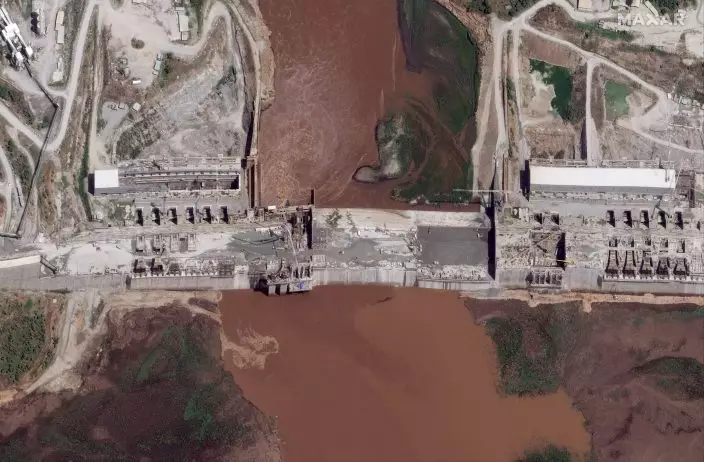
FILE - This satellite image taken Thursday, May 28, 2020, shows the Grand Ethiopian Renaissance Dam on the Blue Nile river in the Benishangul-Gumuz region of Ethiopia. Egypt wants the United Nations Security Council to "undertake its responsibilities" and prevent Ethiopia from starting to fill its massive, newly built hydroelectric dam on the Nile River next month amid a breakdown in negotiations, Egyptian Foreign Minister Sameh Shukry told The Associated Press on Sunday, June 21, 2020 accusing Ethiopian officials of stoking antagonism between the countries. (Maxar Technologies via AP, File)

FILE - This satellite image taken Thursday, May 28, 2020, shows the Grand Ethiopian Renaissance Dam on the Blue Nile river in the Benishangul-Gumuz region of Ethiopia. Egypt wants the United Nations Security Council to "undertake its responsibilities" and prevent Ethiopia from starting to fill its massive, newly built hydroelectric dam on the Nile River next month amid a breakdown in negotiations, Egyptian Foreign Minister Sameh Shukry told The Associated Press on Sunday, June 21, 2020 accusing Ethiopian officials of stoking antagonism between the countries. (Maxar Technologies via AP, File)

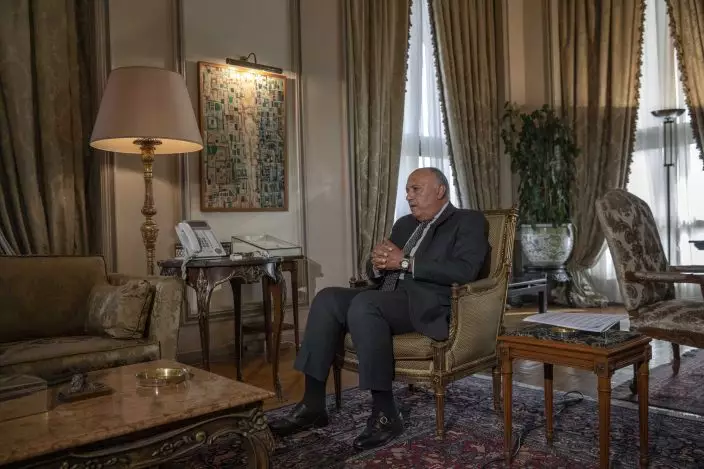
Egyptian Foreign Minister Sameh Shukry listens during an interview with The Associated Press at his office, in Cairo, Egypt, Sunday, June 21, 2020. Egypt wants the United Nations Security Council to "undertake its responsibilities" and prevent Ethiopia from starting to fill its massive, newly built hydroelectric dam on the Nile River next month amid a breakdown in negotiations, Shukry told the AP on Sunday, accusing Ethiopian officials of stoking antagonism between the countries. (AP PhotoNariman El-Mofty)
Egyptian Foreign Minister Sameh Shukry listens during an interview with The Associated Press at his office, in Cairo, Egypt, Sunday, June 21, 2020. Egypt wants the United Nations Security Council to "undertake its responsibilities" and prevent Ethiopia from starting to fill its massive, newly built hydroelectric dam on the Nile River next month amid a breakdown in negotiations, Shukry told the AP on Sunday, accusing Ethiopian officials of stoking antagonism between the countries. (AP PhotoNariman El-Mofty)

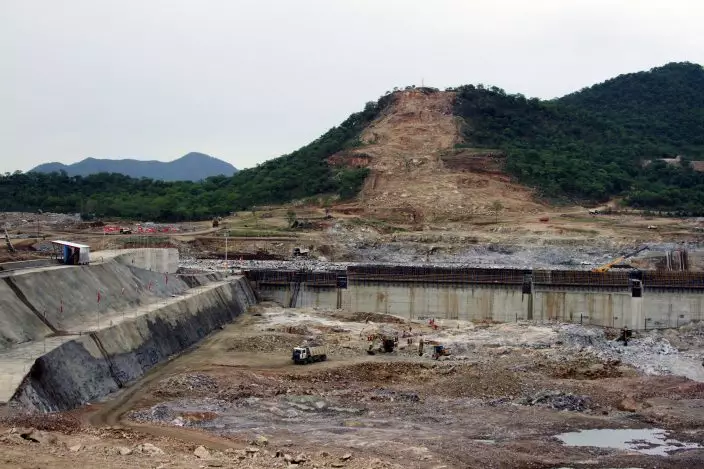
FILE - This June 28, 2013 file photo, shows construction work at the site of the planned Grand Ethiopian Renaissance Dam near Assosa in the Benishangul-Gumuz region of Ethiopia, near Sudan, some 800 kilometers (500 miles) from the capital Addis Ababa. Egypt wants the United Nations Security Council to "undertake its responsibilities" and prevent Ethiopia from starting to fill its massive, newly built hydroelectric dam on the Nile River next month amid a breakdown in negotiations, Egyptian Foreign Minister Sameh Shukry told The Associated Press on Sunday, June 21, 2020 accusing Ethiopian officials of stoking antagonism between the countries. (AP PhotoElias Asmare, File)

FILE - This June 28, 2013 file photo, shows construction work at the site of the planned Grand Ethiopian Renaissance Dam near Assosa in the Benishangul-Gumuz region of Ethiopia, near Sudan, some 800 kilometers (500 miles) from the capital Addis Ababa. Egypt wants the United Nations Security Council to "undertake its responsibilities" and prevent Ethiopia from starting to fill its massive, newly built hydroelectric dam on the Nile River next month amid a breakdown in negotiations, Egyptian Foreign Minister Sameh Shukry told The Associated Press on Sunday, June 21, 2020 accusing Ethiopian officials of stoking antagonism between the countries. (AP PhotoElias Asmare, File)
Egypt formally asked the Security Council to intervene in a letter the same day.

FILE - In this June 28, 2013 file photo, The Blue Nile river flows near the site of the planned Grand Ethiopian Renaissance Dam near Assosa in the Benishangul-Gumuz region of Ethiopia, near Sudan, some 800 kilometers (500 miles) from the capital Addis Ababa. Egypt wants the United Nations Security Council to "undertake its responsibilities" and prevent Ethiopia from starting to fill its massive, newly built hydroelectric dam on the Nile River next month amid a breakdown in negotiations, Egyptian Foreign Minister Sameh Shukry told The Associated Press on Sunday, June 21, 2020 accusing Ethiopian officials of stoking antagonism between the countries. (AP PhotoElias Asmare, File)
FILE - In this June 28, 2013 file photo, The Blue Nile river flows near the site of the planned Grand Ethiopian Renaissance Dam near Assosa in the Benishangul-Gumuz region of Ethiopia, near Sudan, some 800 kilometers (500 miles) from the capital Addis Ababa. Egypt wants the United Nations Security Council to "undertake its responsibilities" and prevent Ethiopia from starting to fill its massive, newly built hydroelectric dam on the Nile River next month amid a breakdown in negotiations, Egyptian Foreign Minister Sameh Shukry told The Associated Press on Sunday, June 21, 2020 accusing Ethiopian officials of stoking antagonism between the countries. (AP PhotoElias Asmare, File)

“The responsibility of the Security Council is to address a pertinent threat to international peace and security, and certainly the unilateral actions by Ethiopia in this regard would constitute such a threat,” Shukry said in an interview with the AP.

Filling the Grand Ethiopian Renaissance Dam would potentially bring the years-long dispute between Egypt, Sudan and Ethiopia over the $4.6 million mega-project to a critical juncture. Ethiopia said the electricity that will be generated by the dam is a crucial lifeline to bring millions out of poverty. With the start of the rainy season in July bringing more water to the Blue Nile, the Nile’s main tributary, Ethiopia wants to start filling the reservoir.

Egypt, which relies on the Nile for more than 90% of its water supplies, fears a devastating impact if the dam is operated without taking its needs into account. Sudan, which also largely depends on the Nile for water, has been caught between the competing interests.

Egyptian Foreign Minister Sameh Shukry speaks during an interview with The Associated Press at his office, in Cairo, Egypt, Sunday, June 21, 2020. Egypt wants the United Nations Security Council to "undertake its responsibilities" and prevent Ethiopia from starting to fill its massive, newly built hydroelectric dam on the Nile River next month amid a breakdown in negotiations, Shukry told the AP on Sunday, accusing Ethiopian officials of stoking antagonism between the countries.(AP PhotoNariman El-Mofty)

Egyptian Foreign Minister Sameh Shukry speaks during an interview with The Associated Press at his office, in Cairo, Egypt, Sunday, June 21, 2020. Egypt wants the United Nations Security Council to "undertake its responsibilities" and prevent Ethiopia from starting to fill its massive, newly built hydroelectric dam on the Nile River next month amid a breakdown in negotiations, Shukry told the AP on Sunday, accusing Ethiopian officials of stoking antagonism between the countries.(AP PhotoNariman El-Mofty)

The United States earlier this year tried to broker a deal, but Ethiopia did not attend the signing meeting in February and accused the Trump administration of siding with Egypt. Last week, the U.S. National Security Council tweeted that “257 million people in east Africa are relying on Ethiopia to show strong leadership, which means striking a fair deal.”

Shukry warned that filling the reservoir without an accord would violate the 2015 declaration of principles governing their talks — and rule out a return to negotiations.

“We are not seeking any coercive action by the Security Council,” he said. In a three-page letter to the council, Egypt asked it to call Ethiopia back into talks for a “fair and balanced solution” and to urge it refrain from unilateral acts, warning that filling the dam without a deal “constitutes a clear and present danger to Egypt” with repercussions that “threaten international peace and security.”

FILE - In this Feb. 18, 2020 file photo, Ethiopian Foreign Minister Gedu Andargachew speaks during a press conference, in Addis Ababa, Ethiopia. Egypt wants the United Nations Security Council to "undertake its responsibilities" and prevent Ethiopia from starting to fill its massive, newly built hydroelectric dam on the Nile River next month amid a breakdown in negotiations, Egyptian Foreign Minister Sameh Shukry told The Associated Press on Sunday, June 21, 2020 accusing Ethiopian officials of stoking antagonism between the countries. (AP Photo Mulugeta Ayene, File)

FILE - In this Feb. 18, 2020 file photo, Ethiopian Foreign Minister Gedu Andargachew speaks during a press conference, in Addis Ababa, Ethiopia. Egypt wants the United Nations Security Council to "undertake its responsibilities" and prevent Ethiopia from starting to fill its massive, newly built hydroelectric dam on the Nile River next month amid a breakdown in negotiations, Egyptian Foreign Minister Sameh Shukry told The Associated Press on Sunday, June 21, 2020 accusing Ethiopian officials of stoking antagonism between the countries. (AP Photo Mulugeta Ayene, File)

Hanging over the dispute has been the fear it could escalate into military conflict, especially as Egypt — facing what it calls an existential threat — repeatedly hits dead ends in its attempt to strike a deal. Commentators in Egypt’s pro-government media have often called for action to stop Ethiopia. One commentator, Moustafa al-Saeed said in a Facebook post that starting to fill the reservoir would be a “declaration of war” and urged the government to block Ethiopian traffic through the Suez Canal.

Shukry underlined that the Egyptian government has not threatened military action, has sought a political solution, and has worked to convince the Egyptian public that Ethiopia has a right to build the dam to meet its development goals.

“Egypt has never, never over the past six years even made an indirect reference to such possibilities,” he said of military action.

Egyptian Foreign Minister Sameh Shukry speaks during an interview with The Associated Press at his office, in Cairo, Egypt, Sunday, June 21, 2020. Egypt wants the United Nations Security Council to "undertake its responsibilities" and prevent Ethiopia from starting to fill its massive, newly built hydroelectric dam on the Nile River next month amid a breakdown in negotiations, Shukry told the AP on Sunday, accusing Ethiopian officials of stoking antagonism between the countries. (AP PhotoNariman El-Mofty)

Egyptian Foreign Minister Sameh Shukry speaks during an interview with The Associated Press at his office, in Cairo, Egypt, Sunday, June 21, 2020. Egypt wants the United Nations Security Council to "undertake its responsibilities" and prevent Ethiopia from starting to fill its massive, newly built hydroelectric dam on the Nile River next month amid a breakdown in negotiations, Shukry told the AP on Sunday, accusing Ethiopian officials of stoking antagonism between the countries. (AP PhotoNariman El-Mofty)

But, he said, if the Security Council cannot bring Ethiopia back into negotiations and filling begins, “we will find ourselves in a situation that we will have to deal with,” he said. “When that time is upon us, we will be very vocal and clear in what action we will take.”

He called on the U.S and other Security Council members, along with African nations, to help reach a deal that “takes into account the interests of all three countries.”

Sticking points in the talks have been how much water Ethiopia will release downstream from the dam if a multi-year drought occurs and how Ethiopia, Egypt and Sudan will resolve any future disputes.

FILE - This satellite image taken Thursday, May 28, 2020, shows the Grand Ethiopian Renaissance Dam on the Blue Nile river in the Benishangul-Gumuz region of Ethiopia. Egypt wants the United Nations Security Council to "undertake its responsibilities" and prevent Ethiopia from starting to fill its massive, newly built hydroelectric dam on the Nile River next month amid a breakdown in negotiations, Egyptian Foreign Minister Sameh Shukry told The Associated Press on Sunday, June 21, 2020 accusing Ethiopian officials of stoking antagonism between the countries. (Maxar Technologies via AP, File)

FILE - This satellite image taken Thursday, May 28, 2020, shows the Grand Ethiopian Renaissance Dam on the Blue Nile river in the Benishangul-Gumuz region of Ethiopia. Egypt wants the United Nations Security Council to "undertake its responsibilities" and prevent Ethiopia from starting to fill its massive, newly built hydroelectric dam on the Nile River next month amid a breakdown in negotiations, Egyptian Foreign Minister Sameh Shukry told The Associated Press on Sunday, June 21, 2020 accusing Ethiopian officials of stoking antagonism between the countries. (Maxar Technologies via AP, File)

This month, ministers from the three countries held seven days of negotiations by video conference, but talks ended Wednesday with no deal. No date was set for a return to the table.

Ethiopian Foreign Minister Gedu Andargachew told the AP on Friday that filling the dam would begin with the rainy season in July and dismissed the need for an agreement. He accused Egypt of trying to “dictate and control even future developments on our river.”

Egypt’s Shukry on Sunday countered that Ethiopia was backing out of previously agreed-upon points.

FILE - This satellite image taken Thursday, May 28, 2020, shows the Grand Ethiopian Renaissance Dam on the Blue Nile river in the Benishangul-Gumuz region of Ethiopia. Egypt wants the United Nations Security Council to "undertake its responsibilities" and prevent Ethiopia from starting to fill its massive, newly built hydroelectric dam on the Nile River next month amid a breakdown in negotiations, Egyptian Foreign Minister Sameh Shukry told The Associated Press on Sunday, June 21, 2020 accusing Ethiopian officials of stoking antagonism between the countries. (Maxar Technologies via AP, File)

FILE - This satellite image taken Thursday, May 28, 2020, shows the Grand Ethiopian Renaissance Dam on the Blue Nile river in the Benishangul-Gumuz region of Ethiopia. Egypt wants the United Nations Security Council to "undertake its responsibilities" and prevent Ethiopia from starting to fill its massive, newly built hydroelectric dam on the Nile River next month amid a breakdown in negotiations, Egyptian Foreign Minister Sameh Shukry told The Associated Press on Sunday, June 21, 2020 accusing Ethiopian officials of stoking antagonism between the countries. (Maxar Technologies via AP, File)

“We have on many occasions been flexible and been accommodating. But I can’t say that there is a similar political will on the side of Ethiopia,” he said.

He called Andargachew’s comments “disappointing,” pointing to “the escalation of antagonism that has been intentionally created.” Starting to fill the reservoir now, he said, would demonstrate “a desire to control the flow of the water and have effective sole determination” of the water that reaches Egypt and Sudan.

After the end of talks on Wednesday, Sudan’s irrigation minister said his country and Egypt rejected Ethiopia’s attempts to introduce articles on water sharing in the dam deal. Egypt has received the lion’s share of the Nile’s waters under decades-old agreements dating back to the British colonial era. Eighty-five percent of the Nile’s waters originate in Ethiopia from the Blue Nile.

Egyptian Foreign Minister Sameh Shukry listens during an interview with The Associated Press at his office, in Cairo, Egypt, Sunday, June 21, 2020. Egypt wants the United Nations Security Council to "undertake its responsibilities" and prevent Ethiopia from starting to fill its massive, newly built hydroelectric dam on the Nile River next month amid a breakdown in negotiations, Shukry told the AP on Sunday, accusing Ethiopian officials of stoking antagonism between the countries. (AP PhotoNariman El-Mofty)

Egyptian Foreign Minister Sameh Shukry listens during an interview with The Associated Press at his office, in Cairo, Egypt, Sunday, June 21, 2020. Egypt wants the United Nations Security Council to "undertake its responsibilities" and prevent Ethiopia from starting to fill its massive, newly built hydroelectric dam on the Nile River next month amid a breakdown in negotiations, Shukry told the AP on Sunday, accusing Ethiopian officials of stoking antagonism between the countries. (AP PhotoNariman El-Mofty)

Shukry said Egypt maintains that an agreement can be achieved, but that it “has to be negotiated in good faith.” He said any future deal on shares of the Nile’s water should take into account that Ethiopia has other water sources besides the Nile.

FILE - This June 28, 2013 file photo, shows construction work at the site of the planned Grand Ethiopian Renaissance Dam near Assosa in the Benishangul-Gumuz region of Ethiopia, near Sudan, some 800 kilometers (500 miles) from the capital Addis Ababa. Egypt wants the United Nations Security Council to "undertake its responsibilities" and prevent Ethiopia from starting to fill its massive, newly built hydroelectric dam on the Nile River next month amid a breakdown in negotiations, Egyptian Foreign Minister Sameh Shukry told The Associated Press on Sunday, June 21, 2020 accusing Ethiopian officials of stoking antagonism between the countries. (AP PhotoElias Asmare, File)
FILE - This June 28, 2013 file photo, shows construction work at the site of the planned Grand Ethiopian Renaissance Dam near Assosa in the Benishangul-Gumuz region of Ethiopia, near Sudan, some 800 kilometers (500 miles) from the capital Addis Ababa. Egypt wants the United Nations Security Council to "undertake its responsibilities" and prevent Ethiopia from starting to fill its massive, newly built hydroelectric dam on the Nile River next month amid a breakdown in negotiations, Egyptian Foreign Minister Sameh Shukry told The Associated Press on Sunday, June 21, 2020 accusing Ethiopian officials of stoking antagonism between the countries. (AP PhotoElias Asmare, File)
NEW YORK (AP) — Reviving a campaign pledge, President Donald Trump wants a one-year, 10% cap on credit card interest rates, a move that could save Americans tens of billions of dollars but drew immediate opposition from an industry that has been in his corner.

Trump was not clear in his social media post Friday night whether a cap might take effect through executive action or legislation, though one Republican senator said he had spoken with the president and would work on a bill with his “full support.” Trump said he hoped it would be in place Jan. 20, one year after he took office.

Strong opposition is certain from Wall Street in addition to the credit card companies, which donated heavily to his 2024 campaign and have supported Trump's second-term agenda. Banks are making the argument that such a plan would most hurt poor people, at a time of economic concern, by curtailing or eliminating credit lines, driving them to high-cost alternatives like payday loans or pawnshops.

“We will no longer let the American Public be ripped off by Credit Card Companies that are charging Interest Rates of 20 to 30%,” Trump wrote on his Truth Social platform.

Researchers who studied Trump’s campaign pledge after it was first announced found that Americans would save roughly $100 billion in interest a year if credit card rates were capped at 10%. The same researchers found that while the credit card industry would take a major hit, it would still be profitable, although credit card rewards and other perks might be scaled back.

About 195 million people in the United States had credit cards in 2024 and were assessed $160 billion in interest charges, the Consumer Financial Protection Bureau says. Americans are now carrying more credit card debt than ever, to the tune of about $1.23 trillion, according to figures from the New York Federal Reserve for the third quarter last year.

Further, Americans are paying, on average, between 19.65% and 21.5% in interest on credit cards according to the Federal Reserve and other industry tracking sources. That has come down in the past year as the central bank lowered benchmark rates, but is near the highs since federal regulators started tracking credit card rates in the mid-1990s. That’s significantly higher than a decade ago, when the average credit card interest rate was roughly 12%.

The Republican administration has proved particularly friendly until now to the credit card industry.

Capital One got little resistance from the White House when it finalized its purchase and merger with Discover Financial in early 2025, a deal that created the nation’s largest credit card company. The Consumer Financial Protection Bureau, which is largely tasked with going after credit card companies for alleged wrongdoing, has been largely nonfunctional since Trump took office.

In a joint statement, the banking industry was opposed to Trump's proposal.

“If enacted, this cap would only drive consumers toward less regulated, more costly alternatives," the American Bankers Association and allied groups said.

Bank lobbyists have long argued that lowering interest rates on their credit card products would require the banks to lend less to high-risk borrowers. When Congress enacted a cap on the fee that stores pay large banks when customers use a debit card, banks responded by removing all rewards and perks from those cards. Debit card rewards only recently have trickled back into consumers' hands. For example, United Airlines now has a debit card that gives miles with purchases.

The U.S. already places interest rate caps on some financial products and for some demographics. The Military Lending Act makes it illegal to charge active-duty service members more than 36% for any financial product. The national regulator for credit unions has capped interest rates on credit union credit cards at 18%.

Credit card companies earn three streams of revenue from their products: fees charged to merchants, fees charged to customers and the interest charged on balances. The argument from some researchers and left-leaning policymakers is that the banks earn enough revenue from merchants to keep them profitable if interest rates were capped.

"A 10% credit card interest cap would save Americans $100 billion a year without causing massive account closures, as banks claim. That’s because the few large banks that dominate the credit card market are making absolutely massive profits on customers at all income levels," said Brian Shearer, director of competition and regulatory policy at the Vanderbilt Policy Accelerator, who wrote the research on the industry's impact of Trump's proposal last year.

There are some historic examples that interest rate caps do cut off the less creditworthy to financial products because banks are not able to price risk correctly. Arkansas has a strictly enforced interest rate cap of 17% and evidence points to the poor and less creditworthy being cut out of consumer credit markets in the state. Shearer's research showed that an interest rate cap of 10% would likely result in banks lending less to those with credit scores below 600.

The White House did not respond to questions about how the president seeks to cap the rate or whether he has spoken with credit card companies about the idea.

Sen. Roger Marshall, R-Kan., who said he talked with Trump on Friday night, said the effort is meant to “lower costs for American families and to reign in greedy credit card companies who have been ripping off hardworking Americans for too long."

Legislation in both the House and the Senate would do what Trump is seeking.

Sens. Bernie Sanders, I-Vt., and Josh Hawley, R-Mo., released a plan in February that would immediately cap interest rates at 10% for five years, hoping to use Trump’s campaign promise to build momentum for their measure.

Hours before Trump's post, Sanders said that the president, rather than working to cap interest rates, had taken steps to deregulate big banks that allowed them to charge much higher credit card fees.

Reps. Alexandria Ocasio-Cortez, D-N.Y., and Anna Paulina Luna, R-Fla., have proposed similar legislation. Ocasio-Cortez is a frequent political target of Trump, while Luna is a close ally of the president.

Seung Min Kim reported from West Palm Beach, Fla.

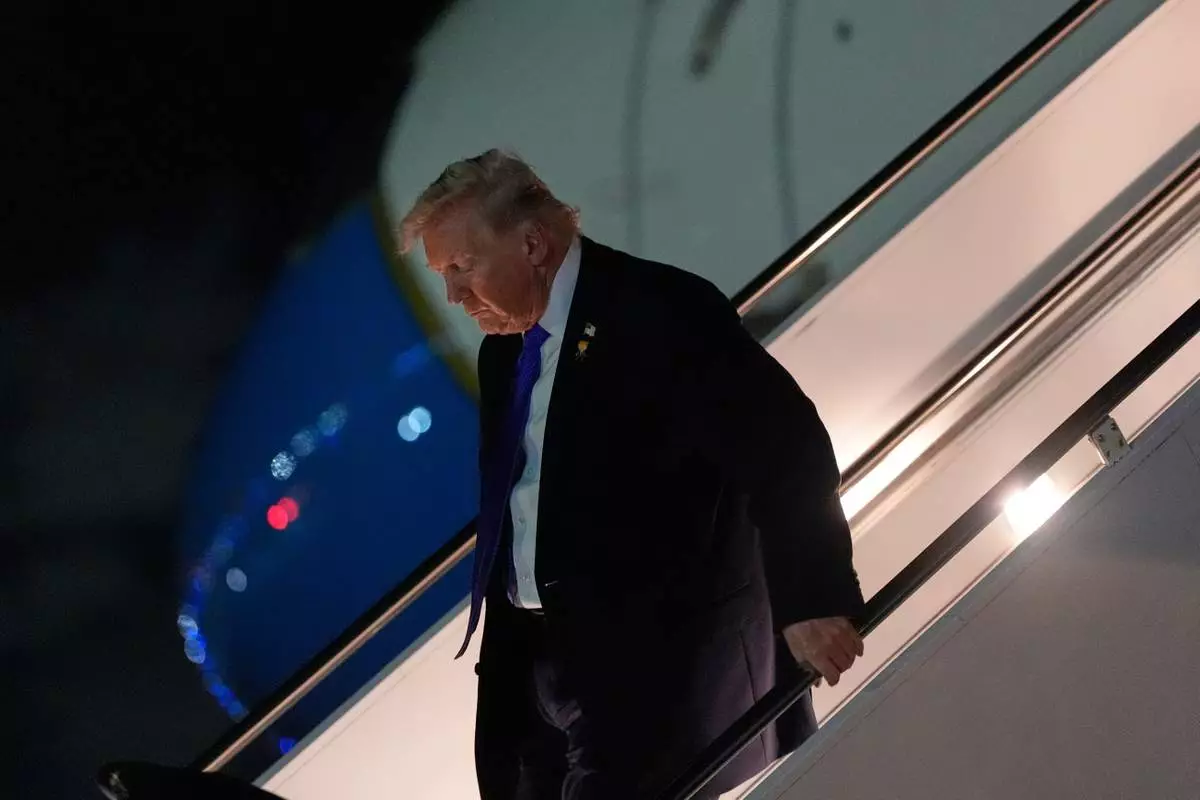
President Donald Trump arrives on Air Force One at Palm Beach International Airport, Friday, Jan. 9, 2025, in West Palm Beach, Fla. (AP Photo/Julia Demaree Nikhinson)

President Donald Trump arrives on Air Force One at Palm Beach International Airport, Friday, Jan. 9, 2025, in West Palm Beach, Fla. (AP Photo/Julia Demaree Nikhinson)

FILE - Visa and Mastercard credit cards are shown in Buffalo Grove, Ill., Feb. 8, 2024. (AP Photo/Nam Y. Huh, File)

FILE - Visa and Mastercard credit cards are shown in Buffalo Grove, Ill., Feb. 8, 2024. (AP Photo/Nam Y. Huh, File)

Recommended Articles