As their ethnic leaders gathered around a table outside Dayton, Ohio, to initial a U.S.-brokered peace deal a quarter-century ago, Edisa Sehic and Janko Samoukovic still were enemies in a war in Bosnia that killed over 100,000 people.
But the two, one an ethnic Bosniak woman and the other an ethnic Serb man, have often come together in recent years to visit schools and town halls where they talk about the futility of war from their first-hand experiences.
Click to Gallery
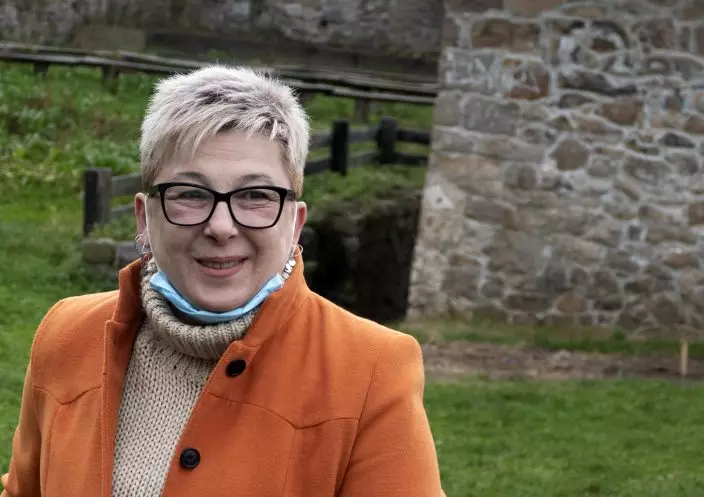
Edisa Sehic smiles during talks with her daughter Anisa in Maglaj, central Bosnia, Wednesday, Nov. 18, 2020. In recent years, Edisa Sehic and Janko Samoukovic have often jointly visited schools, town halls and other public venues throughout their still ethnically fragmented homeland to talk about the futility of war from first-hand experience. In 1995, when the Dayton peace agreement ended the war, Sehic was a soldier with the Bosnian government's army and Samoukovic fought with Bosnian Serb troops. (AP PhotoAlmir Alic)
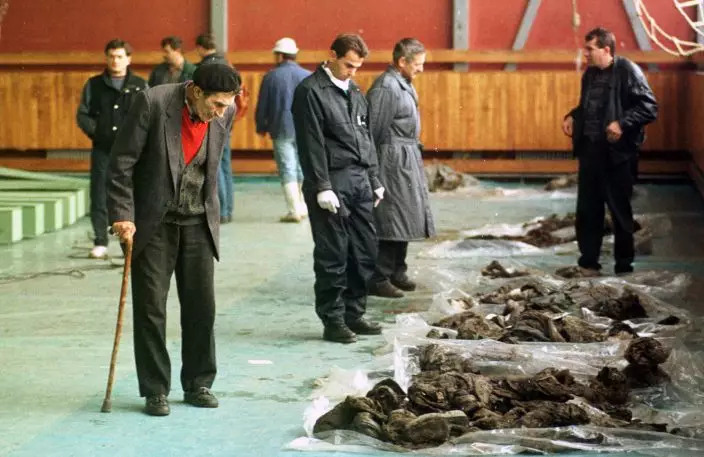
FILE - In this Oct. 9, 1996. file photo, Bosnian Muslims trying to recognize their relatives killed by Bosnian Serbs in 1992, inside a sport hall in Kljuc, 160 kms (100mls) north-west of Sarajevo, Bosnia. While it brought an end to the fighting, the Dayton peace agreement baked in the ethnic divisions, establishing a complicated and fragmented state structure with two semi-autonomous entities, Serb-run Republika Srpska and a Federation shared by Bosniak and Croats, linked by weak joint institutions. (AP PhotoDarko Bandic, File)
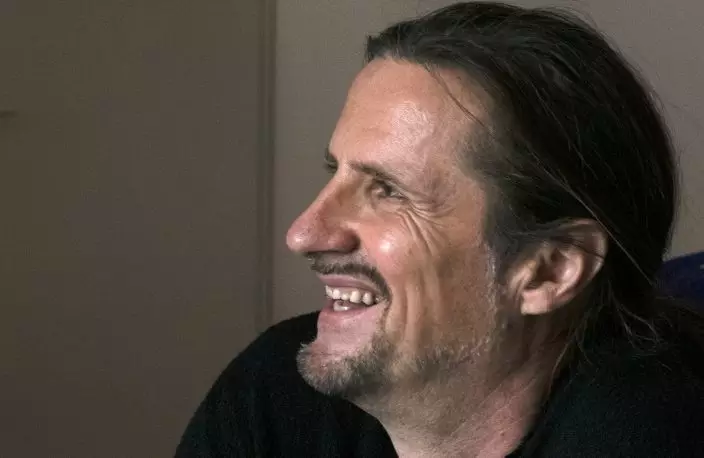
Janko Samoukovic smiles during talks with his son Konstantin in Visegrad, eastern Bosnia, Thursday, Nov. 19, 2020. In recent years, Edisa Sehic and Janko Samoukovic have often jointly visited schools, town halls and other public venues throughout their still ethnically fragmented homeland to talk about the futility of war from first-hand experience. In 1995, when the Dayton peace agreement ended the war, Sehic was a soldier with the Bosnian government's army and Samoukovic fought with Bosnian Serb troops. (AP PhotoAlmir Alic)
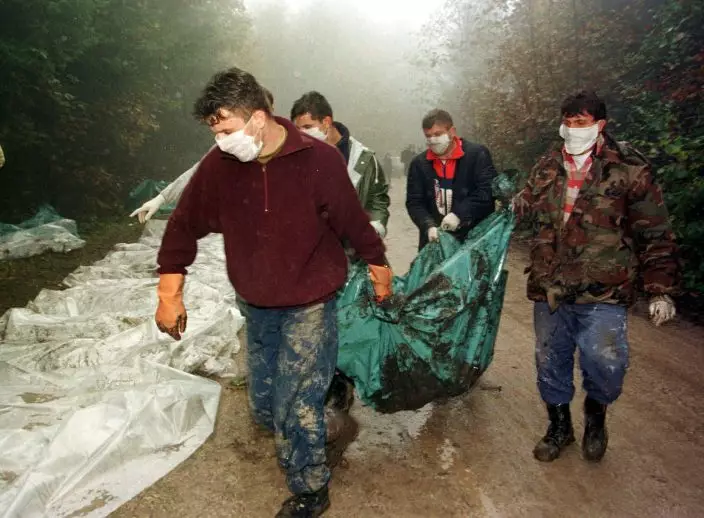
FILE - In this Oct. 9, 1996. file photo, Bosnian workmen carry the body of a Muslim allegedly killed by Bosnian Serbs in 1992, dug out from a cave together with seventy others, in Laniste, 170 kilometers (105 miles) northwest of Sarajevo, Bosnia. While it brought an end to the fighting, the Dayton peace agreement baked in the ethnic divisions, establishing a complicated and fragmented state structure with two semi-autonomous entities, Serb-run Republika Srpska and a Federation shared by Bosniak and Croats, linked by weak joint institutions. (AP PhotoDarko Bandic, File)
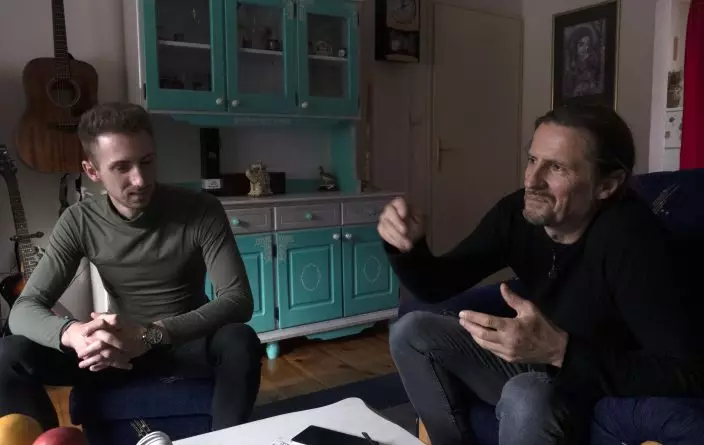
Janko Samoukovic, right, speaks with his son Konstantin in Visegrad, eastern Bosnia, Thursday, Nov. 19, 2020. In recent years, Edisa Sehic and Janko Samoukovic have often jointly visited schools, town halls and other public venues throughout their still ethnically fragmented homeland to talk about the futility of war from first-hand experience. In 1995, when the Dayton peace agreement ended the war, Sehic was a soldier with the Bosnian government's army and Samoukovic fought with Bosnian Serb troops. (AP PhotoAlmir Alic)
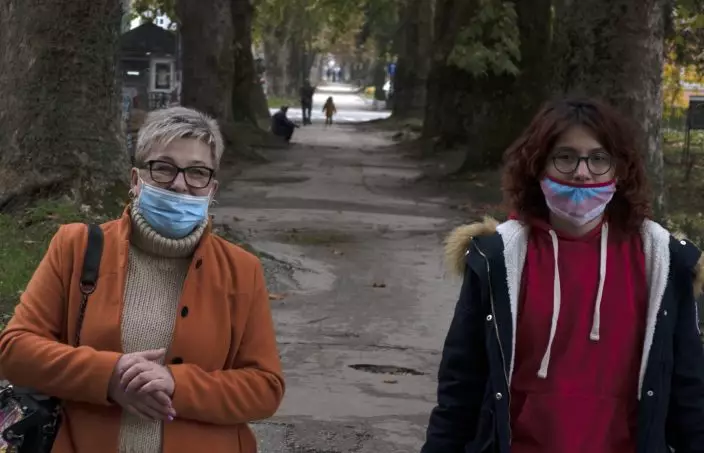
Edisa Sehic, left, walk with her daughter Anisa in Maglaj, central Bosnia, Wednesday, Nov. 18, 2020. In recent years, Edisa Sehic and Janko Samoukovic have often jointly visited schools, town halls and other public venues throughout their still ethnically fragmented homeland to talk about the futility of war from first-hand experience. In 1995, when the Dayton peace agreement ended the war, Sehic was a soldier with the Bosnian government's army and Samoukovic fought with Bosnian Serb troops. (AP PhotoAlmir Alic)
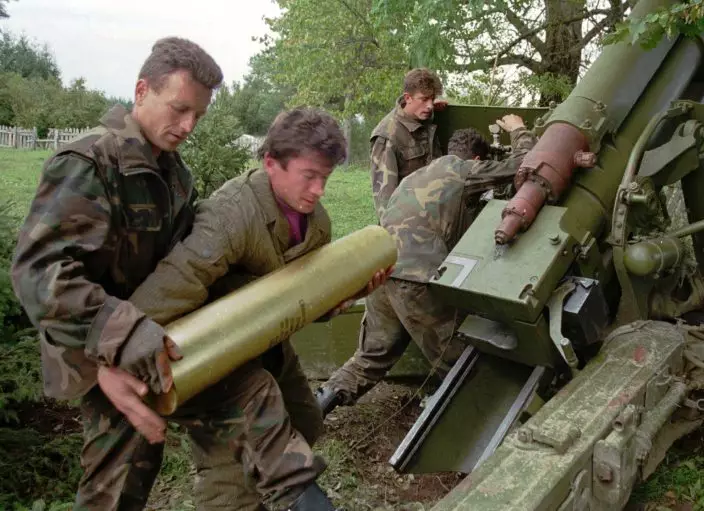
FILE - In this Oct. 4, 1995. file photo, Bosnian government soldiers load a 130mm howitzer with shells at their artillery position near the Serb-held town of Sanski Most, some 60 miles northwest of Sarajevo, Bosnia. While it brought an end to the fighting, the Dayton peace agreement baked in the ethnic divisions, establishing a complicated and fragmented state structure with two semi-autonomous entities, Serb-run Republika Srpska and a Federation shared by Bosniak and Croats, linked by weak joint institutions. (AP PhotoDarko Bandic, File)
In many ways, Bosnia today is a country at peace, a testament to the success of the Dayton Accords, which ended more than 3 1/2 years of bloodshed when they were endorsed 25 years ago on Saturday.
Edisa Sehic smiles during talks with her daughter Anisa in Maglaj, central Bosnia, Wednesday, Nov. 18, 2020. In recent years, Edisa Sehic and Janko Samoukovic have often jointly visited schools, town halls and other public venues throughout their still ethnically fragmented homeland to talk about the futility of war from first-hand experience. In 1995, when the Dayton peace agreement ended the war, Sehic was a soldier with the Bosnian government's army and Samoukovic fought with Bosnian Serb troops. (AP PhotoAlmir Alic)
But more than a generation after the shooting and shelling stopped, full peace still feels elusive in Bosnia, where the April 1992-Dec. 1995 war gave rise to an ethnic cleansing campaign and Europe's first genocide since World War II.
The country's three ethnic groups — Muslim Bosniaks, Orthodox Serbs and Catholic Croats — live in fear of renewed conflict as their nationalist leaders continue to stoke ethnic animosities for political gain.
Some Bosnians hope the election of Joe Biden as the next U.S. president will bolster change by renewing Western interest in the country, one of Europe's poorest. Biden visited Bosnia in 2009 as vice president, becoming the last key U.S. leader to do so.
FILE - In this Oct. 9, 1996. file photo, Bosnian Muslims trying to recognize their relatives killed by Bosnian Serbs in 1992, inside a sport hall in Kljuc, 160 kms (100mls) north-west of Sarajevo, Bosnia. While it brought an end to the fighting, the Dayton peace agreement baked in the ethnic divisions, establishing a complicated and fragmented state structure with two semi-autonomous entities, Serb-run Republika Srpska and a Federation shared by Bosniak and Croats, linked by weak joint institutions. (AP PhotoDarko Bandic, File)
When the Dayton peace agreement was reached in 1995, Sehic was a soldier with the Bosnian government army and Samoukovic was fighting with Bosnian Serb troops seeking to dismember the country and unite the territory they claimed for their own with neighboring Serbia.
The war was sparked by the break-up of Yugoslavia, which led Bosnia to declare its independence despite opposition from ethnic Serbs, who made up about one-third of its ethnically and religiously mixed population.
Armed and backed by neighboring Serbia, Bosnian Serbs conquered 60% of Bosnia’s territory in less than two months, committing atrocities against their Bosniak and Croat compatriots.
Janko Samoukovic smiles during talks with his son Konstantin in Visegrad, eastern Bosnia, Thursday, Nov. 19, 2020. In recent years, Edisa Sehic and Janko Samoukovic have often jointly visited schools, town halls and other public venues throughout their still ethnically fragmented homeland to talk about the futility of war from first-hand experience. In 1995, when the Dayton peace agreement ended the war, Sehic was a soldier with the Bosnian government's army and Samoukovic fought with Bosnian Serb troops. (AP PhotoAlmir Alic)
Before the war was over, some 100,000 people had been killed and upward of 2 million, or over a half of the country’s population, driven from their homes.
Samoukovic, a Bosnian Serb who, just like Sehic, was 23-years-old in 1992, did not crave war. He chose to not leave his home in Pazaric, a small town on the outskirts of Sarajevo. But he and his father were soon arrested by Bosniaks and taken to a makeshift internment camp where prisoners were beaten, used as forced labor and deprived of food.
Sehic, a Muslim, had taken up arms in the early days of the conflict after her older brother was severely injured while defending Maglaj, their hometown in central Bosnia, from the advancing Bosnian Serb forces.
FILE - In this Oct. 9, 1996. file photo, Bosnian workmen carry the body of a Muslim allegedly killed by Bosnian Serbs in 1992, dug out from a cave together with seventy others, in Laniste, 170 kilometers (105 miles) northwest of Sarajevo, Bosnia. While it brought an end to the fighting, the Dayton peace agreement baked in the ethnic divisions, establishing a complicated and fragmented state structure with two semi-autonomous entities, Serb-run Republika Srpska and a Federation shared by Bosniak and Croats, linked by weak joint institutions. (AP PhotoDarko Bandic, File)
She met her husband on the frontline and mourned his death in battle three months after giving birth to their daughter and six months before the war’s end.
Like most other parts of Bosnia, the towns where the two grew up had ethnically mixed populations before the war.
“When the (peace) agreement was reached, I was happy that there will be no more blood and death around us, hopeful that together we can start building a better future,” Sehic said. “But as time went by, I realized that the shooting had stopped, but little else had changed.”
Janko Samoukovic, right, speaks with his son Konstantin in Visegrad, eastern Bosnia, Thursday, Nov. 19, 2020. In recent years, Edisa Sehic and Janko Samoukovic have often jointly visited schools, town halls and other public venues throughout their still ethnically fragmented homeland to talk about the futility of war from first-hand experience. In 1995, when the Dayton peace agreement ended the war, Sehic was a soldier with the Bosnian government's army and Samoukovic fought with Bosnian Serb troops. (AP PhotoAlmir Alic)
While it brought an end to the fighting, the Dayton Accords formalized the ethnic divisions, establishing a complicated and fragmented state structure with two semi-autonomous entities, Serb-run Republika Srpska and a federation shared by Bosniaks and Croats, linked by weak joint institutions.
The deal “was essentially an armistice struck between a collection of warlords who are still present in the country, but had refashioned themselves as political leaders,” said Jasmin Mujanovic, a U.S.-based political scientist of Bosnian origin.
In the immediate post-war years, the international community kept Bosnia on a reform course, pressuring its leaders to accept painful compromises in return for financial and other support.
Edisa Sehic, left, walk with her daughter Anisa in Maglaj, central Bosnia, Wednesday, Nov. 18, 2020. In recent years, Edisa Sehic and Janko Samoukovic have often jointly visited schools, town halls and other public venues throughout their still ethnically fragmented homeland to talk about the futility of war from first-hand experience. In 1995, when the Dayton peace agreement ended the war, Sehic was a soldier with the Bosnian government's army and Samoukovic fought with Bosnian Serb troops. (AP PhotoAlmir Alic)
But over a decade ago, as the international focus shifted to other global crises, Bosnia was mostly left to its own devices, exposed to the growing influence of Russia, China and Turkey.
Increasingly employing divisive nationalist rhetoric as a smoke screen, the political elites of all ethnic stripes have taken control of all levers of government for the benefit of their partisan loyalists.
Their “criminal-political syndicates ... have been blocking significant democratic reforms for decades,” Mujanovic said.
FILE - In this Oct. 4, 1995. file photo, Bosnian government soldiers load a 130mm howitzer with shells at their artillery position near the Serb-held town of Sanski Most, some 60 miles northwest of Sarajevo, Bosnia. While it brought an end to the fighting, the Dayton peace agreement baked in the ethnic divisions, establishing a complicated and fragmented state structure with two semi-autonomous entities, Serb-run Republika Srpska and a Federation shared by Bosniak and Croats, linked by weak joint institutions. (AP PhotoDarko Bandic, File)
Facing the imminent danger of economic collapse, Bosnia is in dire need of constitutional reform, but the process “cannot even commence” without direct engagement of the United States, Mujanovic believes.
Some in Bosnia, where nearly half of the population lives under or close to the poverty line, hope that U.S. interest will increase under Biden.
“I hope that we shall be on the agenda of the Biden administration so that we can finally put behind what happened (during the war) and look into the future,” said Haris Silajdzic, Bosnia’s war-time foreign minister and a Bosniak member of its government's delegation in Dayton, Ohio, in 1995.
While agreeing that only the U.S. can help fix Bosnia’s broken constitution, Mujanovic said real change will also require “the will, the pressure and engagement” of the country’s citizens.
It is sometimes an uphill battle.
Samoukovic says his own son, now 26, was attracted by the lure of aggressive nationalist rhetoric when he was in high school but has since come to appreciate his father's embrace of reconciliation.
Bosnians could leave the war behind “if people listened to our stories instead of having politicians on the evening news constantly filling their ears with hate speech," Samoukovic said. "But most politicians don’t care about our happiness, they do whatever what works for them.”
Sehic, for her part, says she is driven by a sense or responsibility to make sure that neither her daughter "nor any other child will live through the same horrors as I did,”