Germany's next parliamentary election, which will determine the country's new leader after Chancellor Angela Merkel's long rule, will be held on Sept. 26, 2021.
President Frank-Walter Steinmeier's office said Wednesday that the head of state set the date in line with a recommendation from the government. It will be post-World War II Germany’s 20th parliamentary election
Germany holds elections every four years. The lower house of parliament, or Bundestag, elects the chancellor. That may not happen until well after the election, because the process of putting together a governing coalition can be lengthy. After the 2017 election, it was nearly six months before Merkel was sworn in for her fourth term — a record.
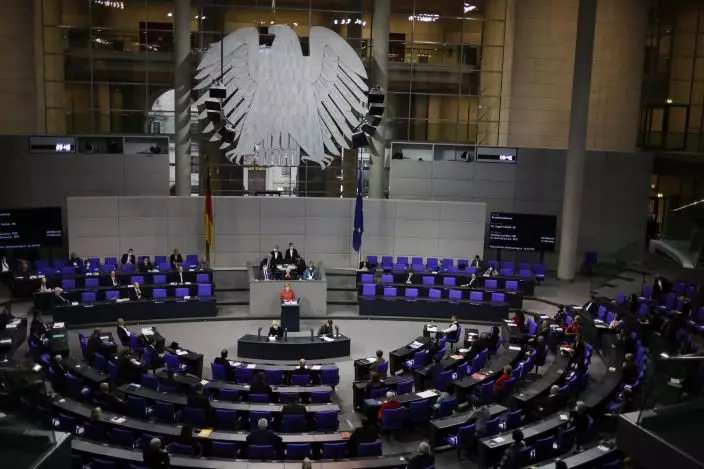
German Chancellor Angela Merkel, center in red dress, delivers her speech during the debate about Germany's budget 2021, at the parliament Bundestag in Berlin, Germany, Wednesday, Dec. 9, 2020. (AP PhotoMarkus Schreiber)
Merkel has been chancellor since 2005. She said more than two years ago that she wouldn't seek a fifth term, and has repeatedly made clear that she won't change her mind.
At present, it's hard to guess who will succeed her, and much will depend on whom the leading parties nominate as their candidates for chancellor.
Merkel's center-right Christian Democratic Union, part of a conservative bloc that is well ahead in polls thanks in part to positive reviews of her management of the coronavirus pandemic, plans to choose a new leader in January. That person will likely, but not necessarily, be nominated to run for chancellor.
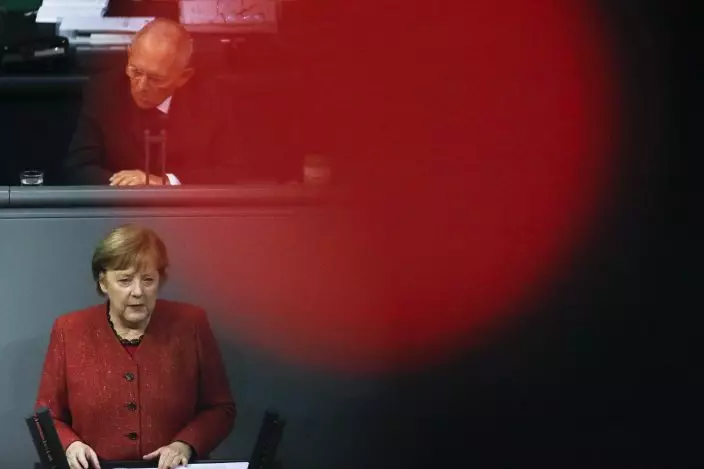
German Chancellor Angela Merkel delivers her speech during the debate about Germany's budget 2021, at the parliament Bundestag in Berlin, Germany, Wednesday, Dec. 9, 2020. (AP PhotoMarkus Schreiber)
The center-left Social Democrats, who provided three of Germany's eight post-war chancellors, have chosen Finance Minister Olaf Scholz as their candidate.
But the party, now the junior partner in Merkel's governing coalition, is currently very weak in polls. Its support is lower than that of the environmentalist Greens, who are likely to make their first run for the chancellery but have yet to nominate a contender.
Voters will elect at least 598 lawmakers to the Bundestag. The number may be considerably higher because of Germany's complex electoral system, which is based on proportional representation but also sees voters choose directly elected local representatives. The current Bundestag has 709 members.
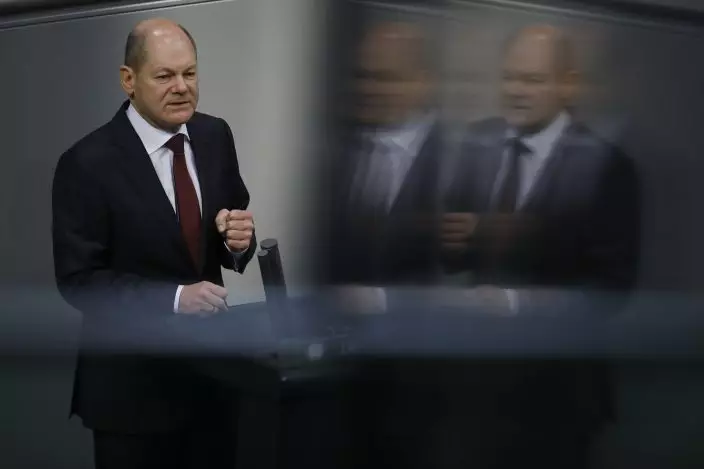
German Finance Minister Olaf Scholz delivers his speech during the debate about Germany's budget 2021, at the parliament Bundestag in Berlin, Germany, Tuesday, Dec. 8, 2020. (AP PhotoMarkus Schreiber)
SAN FRANCISCO--(BUSINESS WIRE)--Mar 24, 2026--
AviaGames today announced the opening of its Global Trust Center in Singapore, a dedicated hub for advancing security and data protection for players across its portfolio of skill-based, real-money games. Dr. Jan Wang, Chief Information Security Officer, AviaGames, will oversee the entity, bringing experience from security leadership roles at highly regulated organizations such as AWS (Amazon Web Services) to build a high-performance cybersecurity team and lead complex international regulatory engagements. The new center reinforces AviaGames’ commitment to safeguarding player data and digital assets while delivering a seamless, high-quality gaming experience.
This press release features multimedia. View the full release here: https://www.businesswire.com/news/home/20260325133262/en/
“Singapore serves as a strategic crossroads for global regulatory excellence,” said Vickie Chen, Founder and CEO, AviaGames. “We are confident in Dr. Jan Wang’s leadership as we take this major step in our global expansion and our efforts to ensure secure and trustworthy gaming experience to our players.”
The Global Trust Center is designed to strengthen AviaGames’ global cybersecurity infrastructure and unify data protection standards across jurisdictions. By synthesizing data sovereignty mandates within a cohesive security framework, AviaGames aims to protect its tens of millions of players worldwide while ensuring fair and reliable gameplay.
“We are pioneering the future of fully agentic cybersecurity and data compliance through our Global Trust Center,” said Dr. Jan Wang. “AviaGames can navigate complex global regulations with speed and precision to build an automated, agile infrastructure that minimizes operational disruptions and I look forward to working with local partners to strengthen player trust.”
AviaGames specializes in skill-based games, where outcomes are determined by a player’s precision and mastery, rather than chance, to create a fair and engaging environment. As AviaGames’ global player community continues to grow, the company continues to invest in security and advanced protections to ensure fast, accurate payouts. By ensuring robust protection of player data, transactions and in-game environments, AviaGames creates a foundation for a top-tier skill-based gameplay and seamless payout experience, allowing players to play with confidence.
AviaGames is hiring local talent in Singapore to support the Global Trust Center’s operations and strengthen global security capabilities. For more information on job openings and to apply to join the team, reach out to talent@aviagames.com. To learn more about AviaGames, visit aviagames.com.
About AviaGames
Avia is the go-to destination for casual mobile gaming entertainment and is the publisher of Pocket7Games, a unified gaming platform, and other individual top apps including "Solitaire Clash", "Bingo Tour'' and "8 Ball Strike". Quick to play and win, Avia mobile games are designed for players of all skill levels, from casual gamers to hardcore enthusiasts. Avia gaming offerings include 15+ unique, skill-based games linked to a single membership and joint account system, allowing players to seamlessly switch among casual puzzle, action, card and strategy games. Avia is committed to providing an inclusive platform for players to have fun playing their favorite titles.

Cybersecurity and privacy expert Dr. Jan Wang has been appointed to oversee the AviaGames Global Trust Center