Zoom’s astronomical growth is tapering off along with the pandemic, raising questions about whether the videoconferencing service’s immense popularity will fade as more people return to classrooms, offices and other places that have been off limits for the past year.
The deceleration emerged in an otherwise impressive quarterly earnings report released Monday. The stellar results capped a year in which Zoom’s name became synonymous with the way millions of people have been forced to gather in online video panels while being corralled at home.
Although Zoom continued to enjoy robust gains from November through January, its subscriber increases were significantly smaller than in each of the previous three quarters that unfolded during pandemic life.
Despite that widely anticipated slowdown, both Zoom's quarterly earnings and revenue easily topped analysts' projections, as did management's forecast for the February-April period and the upcoming year. Those numbers helped lift Zoom's stock price by 5% in Monday's extended trading, still leaving the shares well below their highs reached last autumn.
The deceleration in subscriber growth, which began late last summer, is causing some investors to fret that Zoom won’t be able to sustain its momentum as more people get vaccinated and life starts to revert to pre-pandemic patterns later this year.
Those concerns are the main reason Zoom’s once soaring stock price has dropped by about 30% from its peak reached last October. If the rally in Monday's extended trading is replicated in Tuesday's regular session, Zoom's stock will still be worth more than five times what it was at the end of 2019.
Zoom finished January with 467,100 customers with at least 10 employees that were paying for the subscription version of its service. That was an increase of 33,400 customers from the previous quarter ending in October, far below the gains ranging from 63,500 subscribers to 183,500 subscribers in the previous three quarters of operation during the pandemic.
“Zoom has had an amazing year, but all good things must come to an end," said Nucleus Research analyst Trevor White. “The fundamental problem remains, however: Zoom is not going to be able to keep up with the growth that it has seen."
Even so, Zoom is far larger, more profitable and better known than it was before the pandemic upended society and turned its videoconferencing into staple. The San Jose, California, company now has nearly six times more subscribers than it did a year ago while its annual revenue that has quadrupled to $2.65 billion during the past fiscal year.
In its most recent quarter, Zoom posted revenue of $882 million, more than quadrupling from the same time in the previous year. The company turned a profit of $260 million in the last quarter compared to $15 million during the same period in the prior year.
Realizing that the demand for videoconferencing won’t be as great after the pandemic is over, Zoom has been introducing other features such as an internet phone service for voice-only calls in hopes of bringing in more money. The company disclosed Monday that the phone service now has 10,700 customers, most of whom also subscribe to its videoconferencing service.
With $4.2 billion in cash and a still-valuable stock, Zoom also now has the wherewithal to expand into other areas through acquisitions, said Third Bridge analyst Scott Kessler.
Zoom also is counting on many businesses to hold on to their videoconferencing subscriptions even after their offices reopen so some employees can continue to work remotely part of the time
Even so, “it would seem offices will be used more and Zoom will be used less," Kessler said.
Zoom believes the success of videoconferencing during the pandemic will encourage companies to hold more meetings online instead of requiring employees to travel from different locations to convene in one physical location.
KYIV, Ukraine (AP) — Russian drones blasted apartment buildings and the power grid in the southern Ukraine city of Odesa in an overnight attack that injured six people, including a toddler and two other children, officials said Wednesday.
Russian President Vladimir Putin expressed confidence in his country's eventual victory in the nearly four-year war against its neighbor.
Four apartment buildings were damaged in the Odesa bombardment, according to regional military administration head Oleh Kiper. The DTEK power provider said two of its energy facilities had significant damage. The company said 10 substations that distribute electricity in the region have been damaged in December.
Russia has escalated attacks on urban areas of Ukraine. As its invasion approaches a four-year milestone in February, it has also intensified targeting of energy infrastructure, seeking to deny Ukrainians heat and running water in the bitter winter months.
Between January and November, more than 2,300 Ukrainian civilians were killed and more than 11,000 were injured, the United Nations said earlier in December. That was 26% higher than in the same period in 2024 and 70% higher than in 2023, it said.
There are renewed diplomatic efforts to stop the fighting.
U.S. President Donald Trump hosted Ukrainian President Volodymyr Zelenskyy on Sunday and announced that a settlement is “closer than ever before." The Ukrainian leader is due to hold talks next week with European leaders supporting his efforts to secure acceptable terms.
Despite progress in peace negotiations, which he didn't mention, Putin reaffirmed his belief in Russia’s eventual success in its invasion during his traditional New Year’s address.
He gave special praise to Russian troops deployed in Ukraine, describing them as heroes “fighting for your native land, truth and justice.”
“We believe in you and our victory,” Putin said, as cited by Russian state news agency Tass.
The Russian Defense Ministry said 86 Ukrainian drones were shot down overnight over Russian regions, the Black Sea and the illegally annexed Crimea peninsula.
Russia’s Defense Ministry released a video of a downed drone that it said was one of 91 Ukrainian drones involved in an alleged attack this week on a Putin residence in northwestern Russia, a claim Kyiv has denied as a “lie.”
The nighttime video showed a man in camouflage, a helmet and a Kevlar vest standing near a damaged drone lying in snow. The man, his face covered, talks about the drone. Neither the man nor the Defense Ministry provided any location or date.
The video and claims could not be independently verified, and there was no immediate comment from Ukrainian officials.
Ukrainian officials have denied the allegations of an attack on Putin’s lakeside country residence and called them a ruse to derail progress in peace negotiations.
Maj. Gen. Alexander Romanenkov of the Russian air force claimed that the drones took off from Ukraine’s Sumy and Chernihiv regions. At a briefing where no questions were allowed, he presented a map showing the drone flight routes before they allegedly were downed by Russian air defenses over the Bryansk, Tver, Smolensk and Novgorod regions.
The European Union’s foreign policy chief, Kaja Kallas, called the Russian allegations “a deliberate distraction” from peace talks.
Zelenskyy said Romania and Croatia are the latest countries to join a fund that buys weapons for Ukraine from the United States.
The financial arrangement, known as the Prioritized Ukraine Requirements List, or PURL, pools contributions from NATO members, except the United States, to purchase U.S. weapons, munitions and equipment.
Since it was established in August, 24 countries are now contributing to the fund, according to Zelenskyy. The fund has received $4.3 billion, with almost $1.5 billion coming in December, he said on social media.
Meanwhile, Ukraine’s Security Service carried out a drone strike on a major Russian fuel storage facility in the northwestern Yaroslavl region early Tuesday, according to a Ukrainian security official who was not authorized to speak publicly.
Long-range drones struck the Temp oil depot in the city of Rybinsk, part of Russia’s state fuel reserve system, the official told The Associated Press. Rybinsk is about 800 kilometers (500 miles) from the Ukrainian border.
A previous version of this story was corrected to give the timing of the alleged attack on Putin's residence as late Sunday and early Monday.
Katie Marie Davies in Leicester, England, contributed to this story.
Follow AP’s coverage of the war in Ukraine at https://apnews.com/hub/russia-ukraine
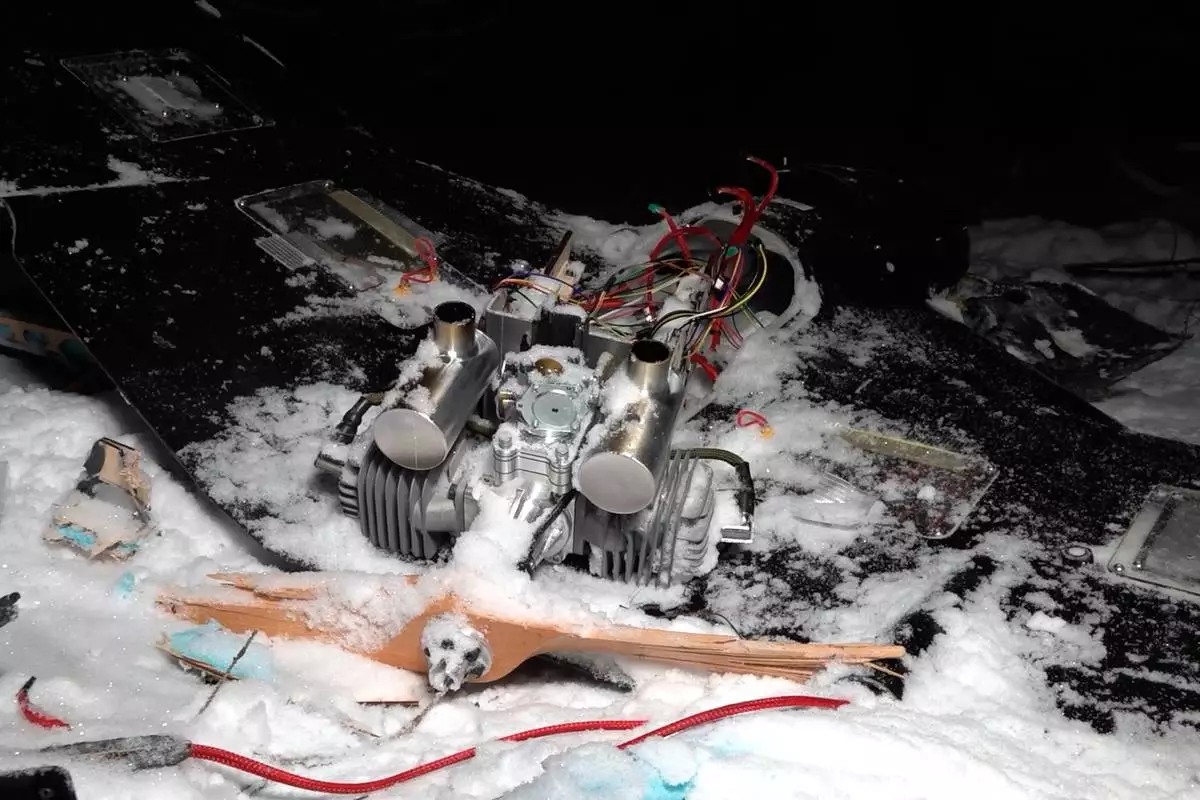
This image made from undated video provided by the Russian Defense Ministry Press Service on Wednesday, Dec. 31, 2025, shows a downed drone at an undisclosed location that it said was one of the Ukrainian drones involved in an alleged attack on a residence of President Vladimir Putin this week – a claim Kyiv has denied as a "lie". (Russian Defense Ministry Press Service via AP)
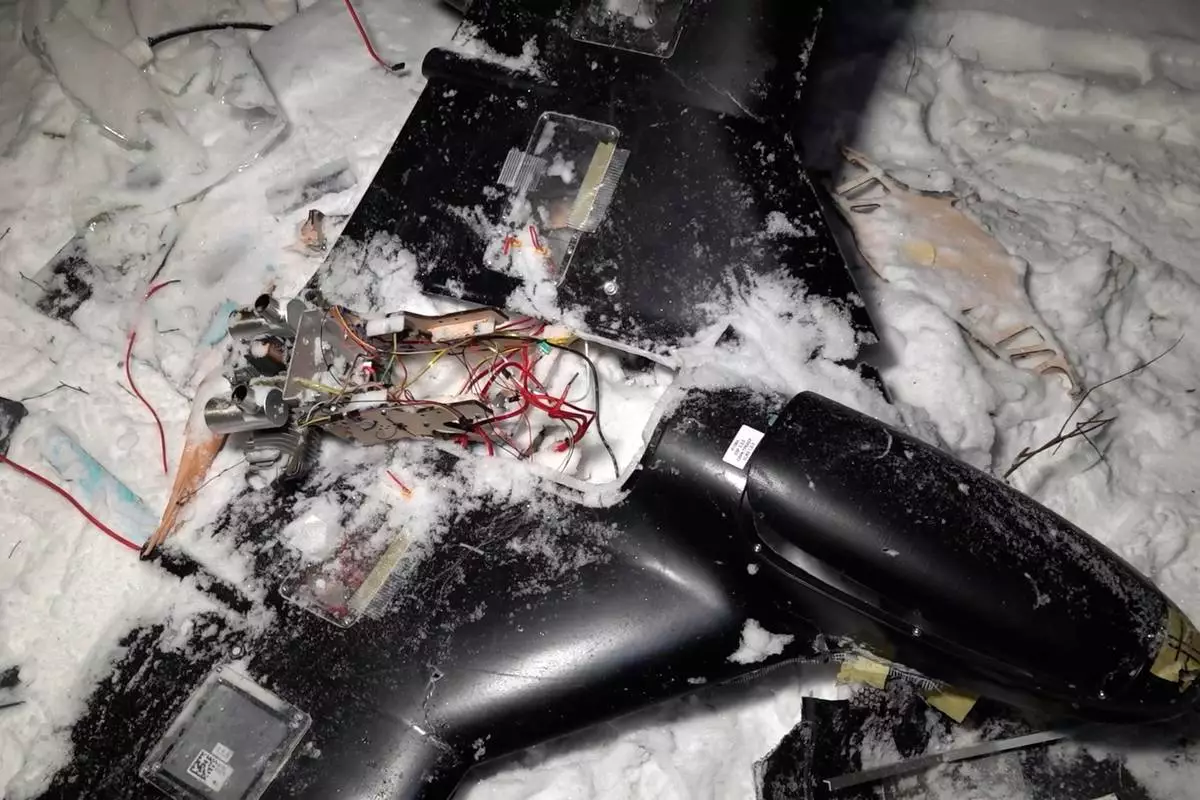
This image made from undated video provided by the Russian Defense Ministry Press Service on Wednesday, Dec. 31, 2025, shows a downed drone at an undisclosed location that it said was one of the Ukrainian drones involved in an alleged attack on a residence of President Vladimir Putin this week – a claim Kyiv has denied as a "lie". (Russian Defense Ministry Press Service via AP)
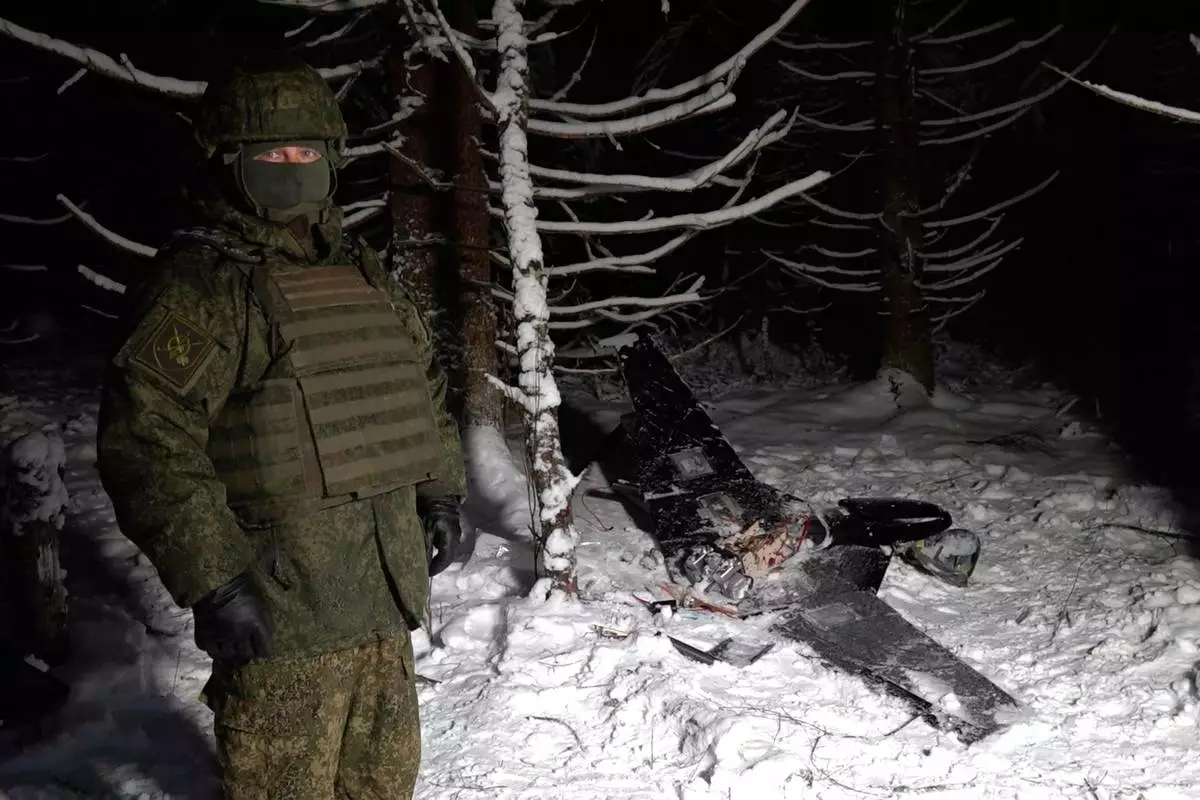
This image made from undated video provided by the Russian Defense Ministry Press Service on Wednesday, Dec. 31, 2025, shows a man in camouflage standing by a downed drone at an undisclosed location that it said was one of the Ukrainian drones involved in an alleged attack on a residence of President Vladimir Putin this week – a claim Kyiv has denied as a "lie". (Russian Defense Ministry Press Service via AP)
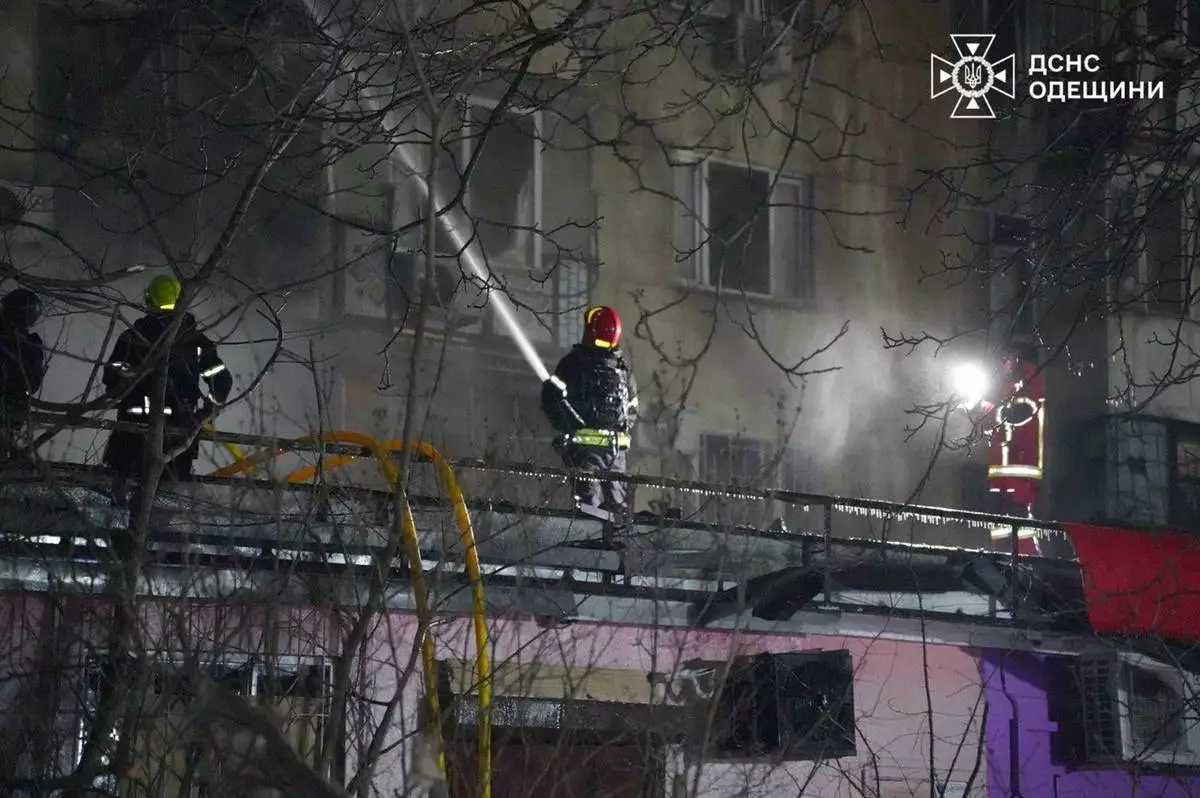
In this photo provided by the Ukrainian Emergency Service, emergency services personnel work to extinguish a fire following a Russian attack in Odesa, Ukraine, Wednesday, Dec. 31, 2025. (Ukrainian Emergency Service via AP)
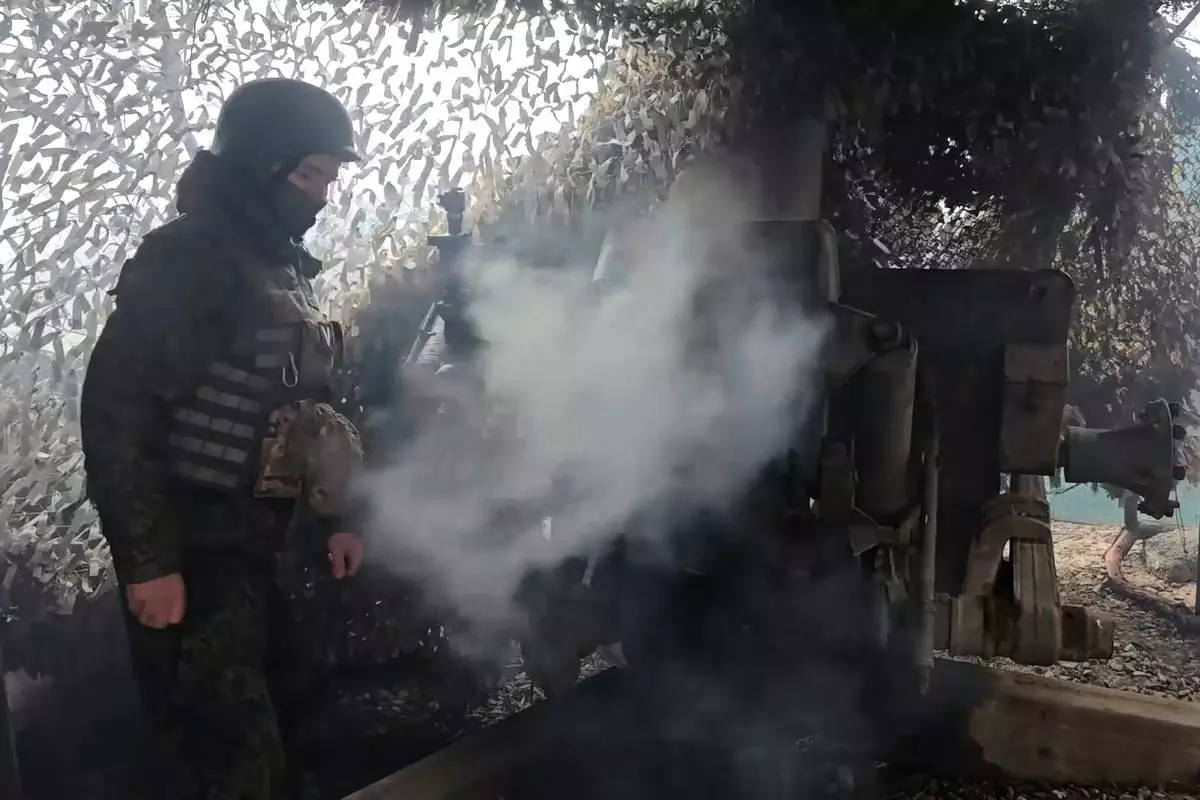
In this image made from video provided by the Russian Defense Ministry Press Service on Tuesday, Dec. 30, 2025, a Russian Army soldier fires from D-30 howitzer towards Ukrainian positions in an undisclosed location in Ukraine. (Russian Defense Ministry Press Service via AP)