Wang Ning, the founder of the famous toy company Pop Mart, said that they are willing to see and have been ready for more cooperation between China and France in the future after the sixth meeting of the China-France Business Council in Paris.
Visiting Chinese President Xi Jinping attended and addressed the closing ceremony of the sixth meeting of the China-France Business Council in Paris on Monday, calling for joint efforts to usher in a new era of China-France cooperation.
Looking to the future, China will work with France to enrich the economic and trade dimensions of the China-France comprehensive strategic partnership, Xi said, adding that China always views France as a priority and trustworthy partner of cooperation.
China is committed to expanding business relations with France in both width and depth by opening up new areas, creating new models and fostering new growth points, Xi said at the event.
"We can see from President Xi's speech that we are actively exploring more possibilities in opening up, exchanges, and cultural communication. We are very honored to be a part of this meeting, and we also hope to actively participate in China-France cooperation," said Wang Ning, founder of the POP MART International Group, a fast-growing Beijing-based designer toy company, after attending the meeting.

Chinese business runners ready for more China-France cooperation
Industry insiders warn that the deep integration of the North American automotive industry means U.S. tariff measures targeting Canadian vehicle products are poised to backfire, with businesses and consumers in the United States ultimately paying the price.
Trade tensions have been rising between the two North American neighbors in recent weeks, with the U.S. imposing a 50-percent tariff on about 20-billion-dollars' worth of Canadian goods last month, before Canada hit back with matching tariffs on an equivalent value of U.S. imports.
With concerns over the escalating dispute already on the rise, U.S. President Donald Trump has threatened a further 50-percent tariff on all Canadian automotive and steel imports beginning next year.
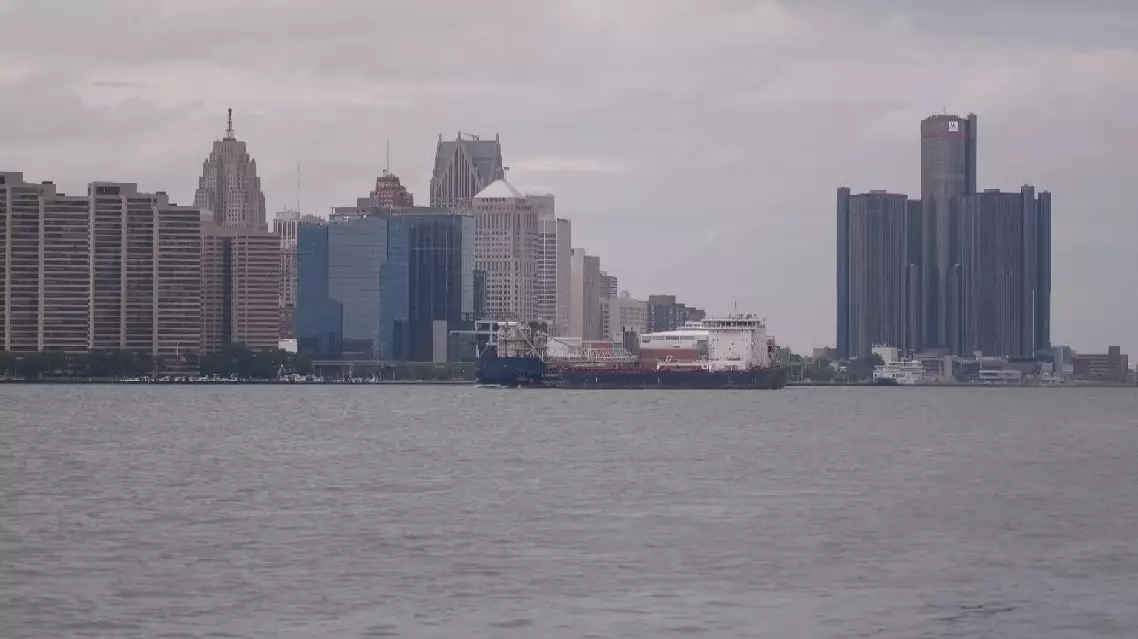
Sitting right across the river from Detroit, Windsor is widely recognized as Canada's auto capital and America's auto powerhouse. Since the signing of the Canada-U.S. Automotive Products Agreement in 1965, the automotive supply chains on both sides have been deeply integrated.
Boasting a highly concentrated industrial ecosystem, Windsor hosts hundreds of premium auto parts and mold suppliers, most of which directly serve American automakers. However, the tariff tensions between the two countries have cast a shadow over the border city that thrives on cross-border industrial cooperation.
"Some companies are definitely experiencing a slowdown in activity because of the tariffs. And probably the bigger reason is uncertainty. So a lot of product that they normally would make is not being made because their customers, the American customers, are uncertain of their costs," said Louis Jahn, president of the Canadian Tooling and Machining Association.
Industry insiders also note the relatively co-dependent nature of the Canadian and U.S. auto manufacturing sectors, where components for a single vehicle model are often produced alternately in factories of both countries, with some parts crossing the border seven or eight times before final assembly.
Constrained by limitations in cost, production capacity, manpower and equipment, many U.S. enterprises have no choice but to continue sourcing Canadian auto products even after the tariff hikes, which means the additional tariff costs will be fully passed on to American consumers.
"My American counterparts are complaining to me that the tariffs are impacting their business because when they go to buy equipment, they have to pay a 50-percent tariff on the new equipment going into their facility. So now their operating costs just went up by 50 percent, so they can't afford it. The net result could end up making American vehicles uncompetitive in the world market, because their costs are too high," said Jahn.
"The tariff is paid by the organization that imports the tariffed good, the thing that it has a tariff on, and they pass along the price increase to the consumers. So, when President Trump puts a tariff on something, the American consumer pays it," said Peter Frise, Professor of Mechanical, Automotive and Materials Engineering at the University of Windsor.
Many experts say that as the Canadian and U.S. automotive industries largely operate as an indivisible unified production line, imposing hefty tariffs on Canadian vehicles and auto parts will inevitably generate counterproductive costs and risks that hurt the U.S. domestic auto industry.
Integrated nature of North American auto industry means US tariffs will backfire: insiders