Dounan flower market in Kunming City, capital of southwest China's Yunnan Province, has seen a recent sales boom as flowers and plants with auspicious names and a subscription-based business model have found favor with consumers.
These days, the sales of flowers and plants that symbolize good luck and fortune surged in this Asia's largest fresh-cut flower trading market. For example, succulent plants dubbed "Jinyumantang" which literally means "abundant wealth" are very popular among consumers. "I bought flowers dubbed "Jinyumantang". I think they are really beautiful and cute," said a consumer.
A subscription-based flower delivery model is another factor that drives the boom of the floral market. By subscribing to a floral delivery service, consumers can have flowers delivered to their doorstep every week with just a few clicks.
This caters to the demands of consumers who want to have fresh flowers every week.
"Fresh flowers normally last no more than eight to 10 days. That's why we have this 'flower delivery weekly subscription' model to make sure that flower lovers can have new flowers before old ones wilt," said Guo Junxiong, procurement manager of an online flower shop.
The rise of such a new model could not have been possible had it not for the rapid development of the logistics industry and food preservation techniques in cold-chain logistics.
Nowadays, flowers sent from the Dounan flower market can be delivered to over 200 cities across China in just 48 hours by road, rail or air.
"These days are the peak season. We deliver about 4,000 to 6,000 small parcels a day these days compared with just 1,000 to 2,000 on normal days. The number of large parcels we deliver has been three times higher recently," said Li Yuliang, head of a logistics service station at the Dounan flower market.

Innovative business models contribute to flower market boom in Kunming
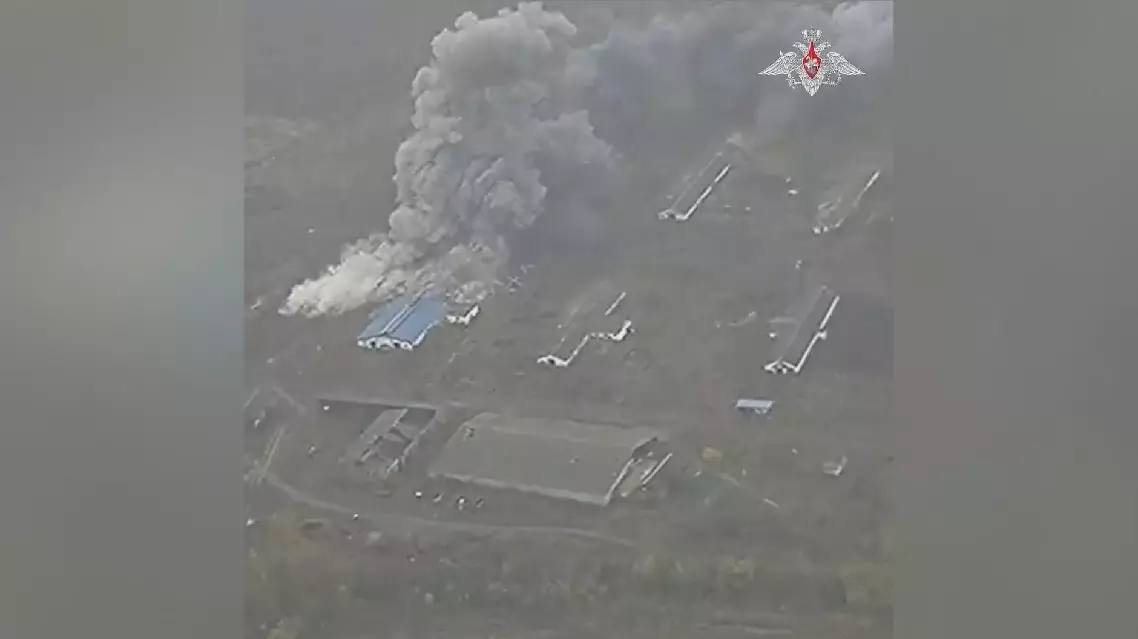
Russia said Sunday that its forces had hit Ukrainian military facilities, while Ukraine said on the same day that it shot down or neutralized 152 Russian drones and launched an attack on a Russian oil terminal.
In a daily report, the Russian Defense Ministry said that over the past 24 hours, the Russian forces struck Ukrainian transport infrastructure, depots for military-technical supplies, and facilities for drone assembly, storage and launch.
The ministry also said that the Russian forces conducted a precision strike on a large dry-cargo ship and destroyed an enemy uncrewed vessel in the Black Sea.
Meanwhile, St. Petersburg Governor Alexander Beglov said the city had been hit by a large-scale drone attack, leaving one person dead and five others injured.
The Ukrainian Air Force said it had shot down or neutralized 152 Russian drones between 18:00 Saturday and 08:00 Sunday. Ukrainian defense firm Fire Point also reported that Ukrainian forces had used drones to strike an oil terminal, an oil depot and a data center in St. Petersburg. Fires broke out at the oil depot and the terminal, while the data center sustained severe damage.
Meanwhile, Ukrainian President Volodymyr Zelenskyy said Russian forces had attacked electrical substations in several regions, including Vinnytsia and Zhytomyr, on Saturday night.
Zelenskyy also said he held a phone call with U.S. special envoys Steve Witkoff and Jared Kushner to discuss the outcomes of a meeting between Ukrainian and U.S. representatives held on Oct. 9 in Florida, as well as next steps.
He said the two sides had also discussed the possible provision of Patriot air defense systems to Ukraine. Zelenskyy added that the Russia-Ukraine conflict must end, emphasizing that the U.S. position is crucial to the process.
Russia reports strikes on Ukrainian facilities, Ukraine says it hit Russian oil terminal
Russia reports strikes on Ukrainian facilities, Ukraine says it hit Russian oil terminal