FORT WORTH, Texas (AP) — American Airlines has replaced the law firm that told a judge a 9-year-old girl was negligent in not noticing there was a camera phone taped to the seat in an airplane lavatory.
An airline spokesperson confirmed Friday that the Wilson Elser law firm is no longer defending American in a lawsuit filed by the girl's family.
American retained Kelly Hart & Hallman, a Fort Worth-based firm that has done extensive work for American in other matters.
The change in lawyers came after Wilson Elser said in a court document that any harm to the girl could be blamed on her “fault and negligence" for using the lavatory, "which she knew or should have known contained a visible and illuminated recording device.”
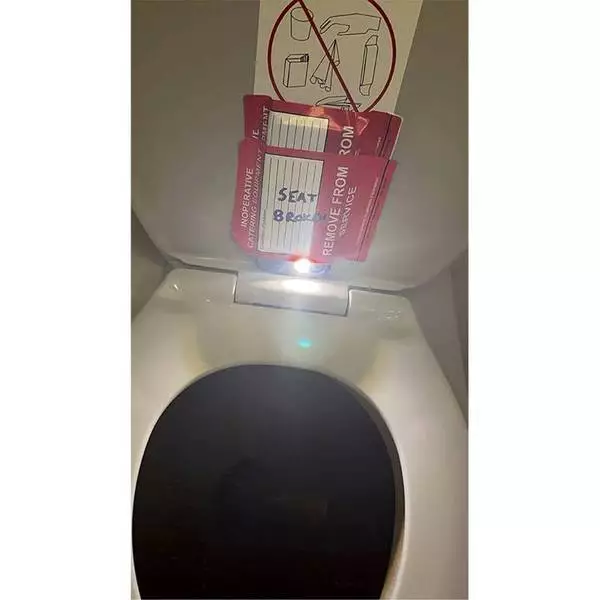
A former American flight attendant is accused of luring girls to use the lavatory after taping his iPhone to the toilet seat and explaining that the seat was broken. Estes Carter Thompson III, who was fired by American, pleaded not guilty this week to attempted sexual exploitation of children and possession of images of child sexual abuse.
The 9-year-old’s family sued American in state court in Austin, Texas, after the FBI told them that videos of the girl were found on the flight attendant’s phone.
“With the benefit of this new legal representation, we hope that American Airlines will now take a fresh look at the case and finally take some measure of responsibility for what happened to our client,” said Paul Llewellyn, a lawyer for the girl's family.
Llewellyn is also representing the family of a 14-year-old who is suing American in federal court in North Carolina over the same flight attendant's alleged acts.
Wilson Elser did not immediately respond to a request for comment.
American Airlines drops law firm that said a 9-year-old girl should have seen camera on toilet seat
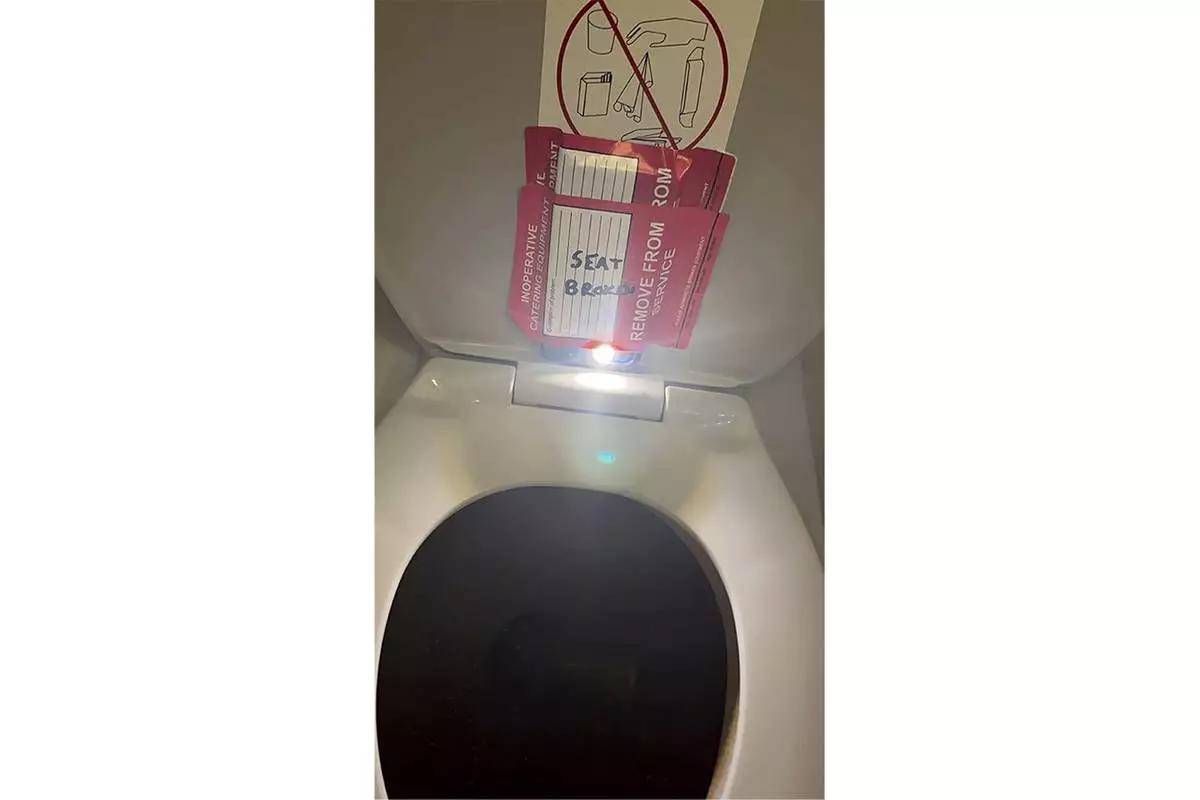
FILE - In this photo provided by the law firm Lewis & Llewellyn LLP, an iPhone is taped to the back of a toilet seat on an American Airlines flight from Charlotte, N.C., to Boston, Sept. 2, 2023. Estes Carter Thompson III, an American Airlines flight attendant, pleaded not guilty Monday, May 20, 2024, on charges of trying to secretly video record a 14-year-old female passenger using an airplane bathroom last September. Police have also alleged that Thompson had recordings of four other girls using lavatories on an aircraft where he worked. (Lewis & Llewellyn LLP via AP, File)

American Airlines drops law firm that said a 9-year-old girl should have seen camera on toilet seat
REYKJAVIK, Iceland (AP) — Iceland's voters rejected restarting negotiations to join the European Union in a referendum that pitted concerns about geopolitical stability against keeping national control of Iceland’s prized fisheries, officials said Sunday.
Opponents defeated the measure by a margin of 52.8% to 47.2%, the National Electoral Commission said. The result puts the divisive issue to rest for now — more than a decade after a euroskeptic government ended EU talks that had begun after the 2008 financial crisis.
The vote Saturday was held in the shadow of repeated threats by U.S. President Donald Trump to take control of nearby Greenland. Although Iceland is a NATO member, supporters said European solidarity would provide greater protection if Trump ever made similar threats toward the volcanic island.
Iceland’s left-leaning coalition government, elected in 2024, moved up the EU referendum it had planned for next year after Trump mistakenly named Iceland four times while speaking about his designs on Greenland.
Prime Minister Kristrún Frostadóttir said she did not see the loss as a setback for her coalition government but as a win for democracy as more than 82% of the eligible 270,000 voters cast ballots. She said she would respect the result but would not rule out a future attempt to reopen the issue.
“Things happened in the past couple of years, though, that I could not have predicted,” she said. “But this government will not go forward with it. And something big has to change in the next 24 months for this to be at the top of the agenda.”
Guðrún Hafsteinsdóttir, leader of the opposition Independence Party who opposed the measure, said the result is a blow to the government but not European relations.
“The best way to heal the wounds is for the government to listen to the conclusion and put this path aside,” she told RUV, the national broadcaster. “Because we want to remain in close contact with the European Union, Europe and as many other countries as possible, the nation is sending a clear message that we intend to steer that course ourselves.”
Voters faced a simple yes-or-no question: Should Iceland resume accession negotiations with the European Union?
The capital of Reykjavik was the only area in the island nation of 400,000 people where a majority supported the referendum.
The influential fishing industry led opposition to the referendum over fears the bloc’s common fisheries policy would open its waters to Spanish, Dutch and other trawlers.
Descendants of Vikings, Icelanders, who won their independence from Denmark in 1944, have lived off the sea for centuries, and fishing is central to their national identity. Iceland has a proud history of refusing to be pushed around by bigger and richer European nations, winning the so-called Cod Wars with Britain in the 1970s over the right to control its waters.
Opponents also rallied around the fact that Iceland already reaps benefits from being in the EU’s frictionless single market and the Schengen free-travel zone without the sovereignty compromises that come with full membership. They argued that Iceland’s voice would be muted in the large European Parliament and that it would be better off cutting its own trade deals, such as one with China.
Backers said EU membership would lower inflation and interest rates, and the euro would bring more stability than Iceland’s volatile króna currency. They said it was also in the nation’s interest to get closer to its European neighbors to tackle issues that don’t respect borders, such as climate change.
If the proposal had been approved, it would have been a preliminary step to revive the lengthy negotiating process with the EU’s executive branch, the European Commission, to discuss areas from the economy to human rights. Voters would have needed to approve any negotiated deal.
The result is sure to disappoint many in the European Union. As a wealthy, stable and democratic country with vast fishing grounds, Iceland could have joined the bloc relatively quickly. Croatia was the last country to join, in 2013.
Most of the other candidates waiting — including several countries in the Balkans, plus Moldova and conflict-torn Ukraine — must still undertake time-consuming reforms to bring their laws and standards into line with those of the EU.
Getting Iceland into Europe’s rich club, perhaps along with Montenegro and possibly Moldova, over the next two years could have helped to lay to rest the damage to the EU caused by the departure of Britain in 2020, even though London now appears willing to mend ties.
Voter Daniel Bjarkason, who opposed the measure, said Iceland should wait a decade or two before trying again to join the EU.
“For now we’re too divided and that’s not a good look,” he said. “It should be 70-30 Yes if we’re going to do it.”
Melley reported from London. Lorne Cook in Brussels contributed to this report.
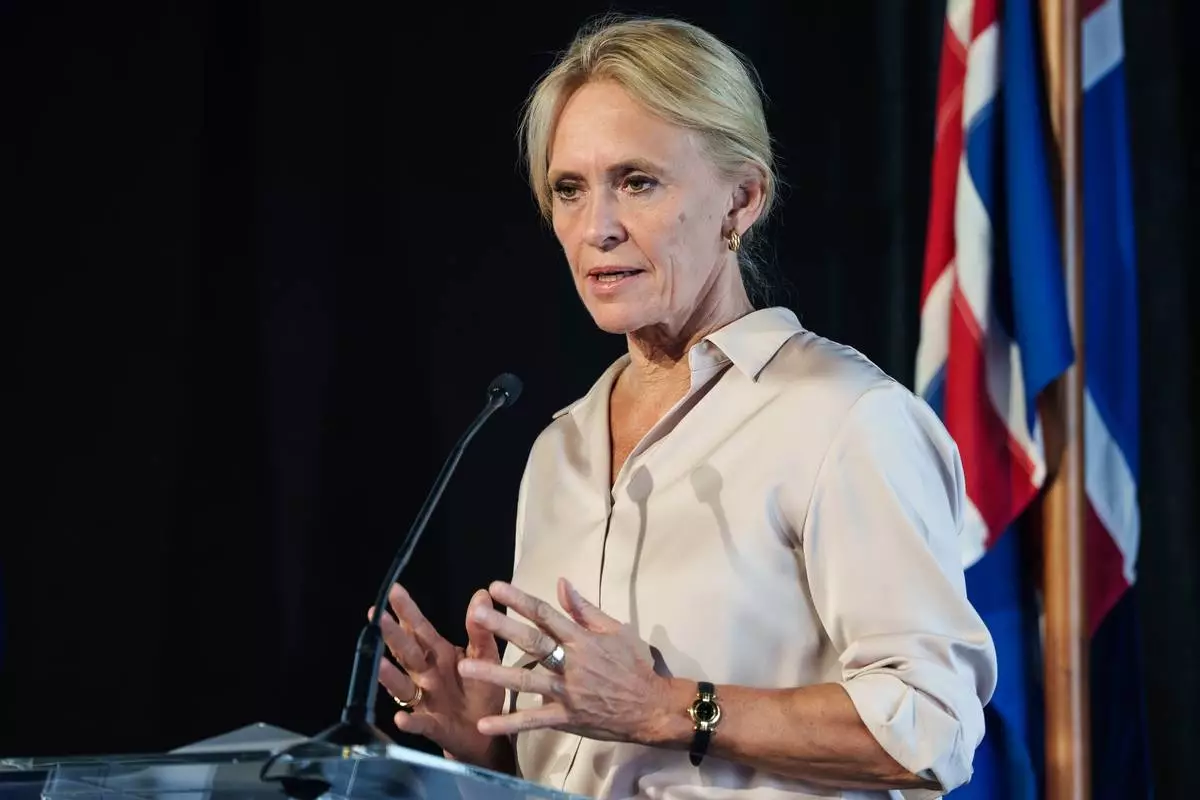
Icelandic Foreign Minister Þorgerður Katrín Gunnarsdóttir speaks during a government news conference at Harpa Concert Hall in Reykjavik, Iceland, Sunday, Aug. 30, 2026. (AP Photo/Marco Di Marco)
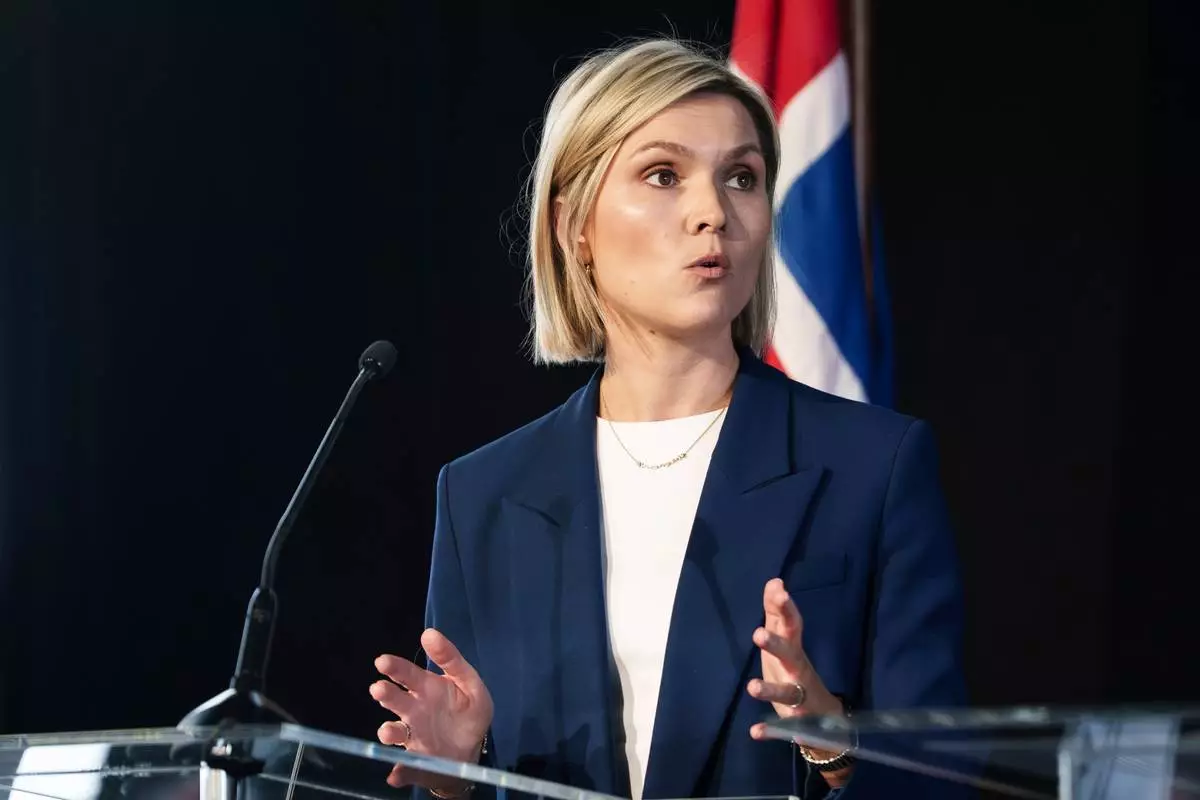
Icelandic Prime Minister Kristrún Frostadóttir speaks during a news conference at Harpa Concert Hall in Reykjavik, Iceland, Sunday, Aug. 30, 2026. (AP Photo/Marco Di Marco)

Supporters of the Yes campaign celebrate after Reykjavik results put their side into a narrow nationwide lead during an election-night gathering in Reykjavik, Iceland, Sunday, Aug. 30, 2026. (AP Photo/Marco Di Marco)
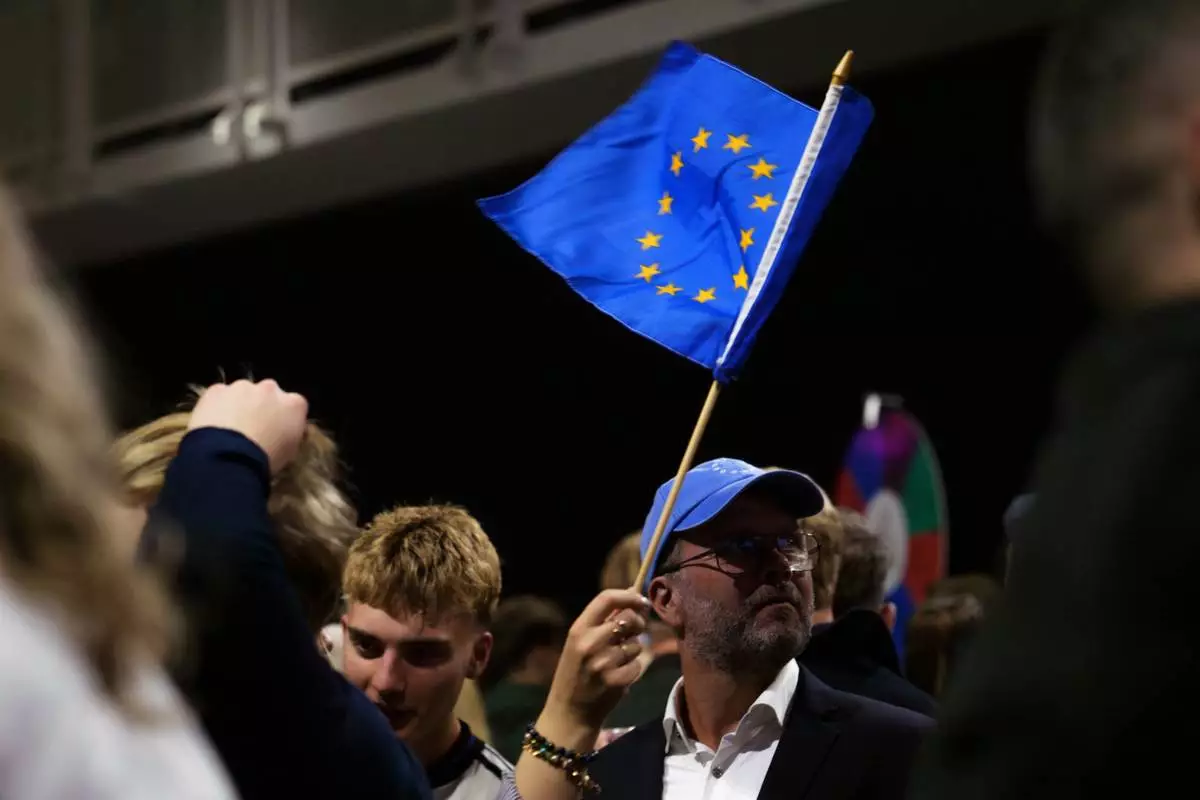
A supporter waves a European Union flag during an election-night gathering for the yes in Reykjavik, Iceland, Sunday, Aug. 30, 2026. (AP Photo/Marco Di Marco)

Former Icelandic Prime Minister and Centre Party leader Sigmundur Davíð Gunnlaugsson, left, Independence Party leader Guðrún Hafsteinsdóttir, center, and Progressive Party leader Lilja Dögg Alfreðsdóttir talk during a No campaign election-night gathering in Reykjavik, Iceland, Saturday, Aug. 29, 2026. (AP Photo/Marco Di Marco)

Leaders of the No campaign react as early results from rural Iceland put the No side ahead during an election-night gathering in Reykjavik, Iceland, Saturday, Aug. 29, 2026. (AP Photo/Marco Di Marco)