The Flaming Mountain scenic area in Turpan, a basin located in northwestern China's Xinjiang Uygur Autonomous Region, witnessed an astonishing temperature of 75 degrees Celsius on Tuesday.
Due to a new round of heatwave, Turpan embraced a high temperature of 40 degrees Celsius at the hottest time of the day.
However, the scorching heat failed to deter curious tourists from feeling the blistering emanating from the ground.
Armed with broad-brimmed hats, umbrellas, and sunglasses for added protection, tourists flocked to the Flaming Mountain, taking photos with 12-meter-tall thermometer that displayed a real-time surface temperature of 75 degrees Celsius and tasting hot sand-baked eggs.
A tourist, surnamed Cao from southeastern Chinese province of Jiangxi, expressed his awe at the searing heat.
"The surface temperature here is so high, which is extremely shocking. I have never had the feeling of being roasted in a 'furnace' like this before. It's an unforgettable experience," said Cao.
To ensure the well-being of visitors and enhance their overall experience, the scenic area has implemented several measures to prevent heatstroke and provide relief from the extreme temperatures.
"We've prepared outdoor cooling fans and ice packs in areas with high temperatures. We've also increased the supply of heatstroke prevention medicines in case that visitors have a heatstroke," said Lan Yunxia, marketing director of the Flaming Mountain scenic area.
The Turpan Meteorological Observatory predicted that this round of heatwave may last until Sunday, with temperatures in some places surpassing 43 degree Celsius.
The weather authorities also issued an orange alert for high temperatures, reminding residents and tourists to take precautions against heatstroke.

Temperature on Xinjiang's Flaming Mountain hits 75 degrees Celsius

Temperature on Xinjiang's Flaming Mountain hits 75 degrees Celsius
The ongoing China-ASEAN Expo serves as a bridge for China and the Association of Southeast Asian Nations (ASEAN) to boost trade flows, helping both sides reap shared development dividends.
Scheduled to run from Sept 17 to 21 in Nanning City of south China's Guangxi Zhuang Autonomous Region, the event draws more than 3,400 exhibitors from over 70 countries and regions.
This year, Timor-Leste is participating for the first time as a full ASEAN member and a co-host of the expo, with participants noting results have exceeded expectations, bolstered by China's vast market.
"I brought 60 packages of 250-gram coffee, which would be sold out in one day. Now I'm thinking that China market is open for everybody and it's very huge," said an exhibitor from Timor-Leste.
Participants also hailed the construction of China's Pinglu Canal, which officially opened to traffic on Wednesday.
The 134.2-km-long canal runs from Hengzhou, a county-level city in Guangxi, to the Beibu Gulf, the closest maritime outlet for much of southwest China.
The canal becomes a cost-competitive river-sea intermodal shortcut connecting ASEAN producers with the vast consumer market in southwest China, said the participants.
"In the past, shipments into the southwest China usually went by sea to Guangzhou and then overlands. Too many handover made it hard to keep products fresh. Losses were high and transit time was unreliable. Now that the canal is open, we can enter [the] Guangxi [Zhuang Autonomous Region] directly from the Beibu Gulf and move on to Yunnan, Guizhou and Sichuan restaurants, faster onto the supermarket shelves and tables in the southeast [part of China]," said an exhibitor from Vietnam.
With the formal signing of the China-ASEAN Free Trade Area (FTA) 3.0 Upgrade Protocol in Oct 2025, bilateral cooperation has expanded beyond economic and trade areas to emerging fields such as the digital economy and the green economy.
"I am looking for an investor to develop agriculture and integrated tourism with us in Malaysia," said an exhibitor from Malaysia.
Economic ties between China and ASEAN have continued to deepen. Bilateral trade topped 1 trillion U.S. dollars for the first time in 2025, totaling 1.05 trillion dollars, up 7.4 percent year on year. In the first seven months of 2026, trade between the two sides reached 744.41 billion dollars, an increase of 24.7 percent year on year and accounting for 21.8 percent of China's total foreign trade.
China has remained ASEAN's largest trading partner for 17 consecutive years, while ASEAN has been China's largest trading partner for six successive years.
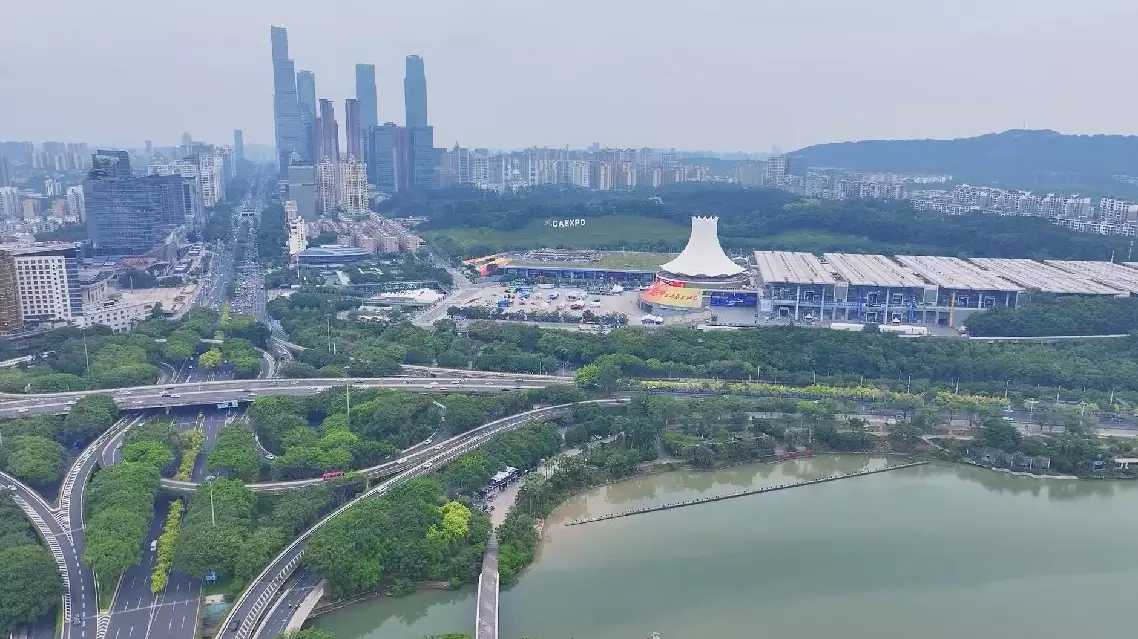
China-ASEAN Expo boosts bilateral cooperation, delivers shared dividends