As farmers in Chongqing and Hunan in southwest and central China are salvaging crops affected by torrential rains-triggered floods, authorities are ramping up relief efforts to minimize damage to grain production.
Pengshui County in Chongqing saw a fresh round of downpours from Thursday to Friday, with the maximum precipitation in 24 hours reaching 166.6 millimeters. Flash floods triggered by the heavy rains submerged swathes of crops.
The floods inundated corns and sweet potatoes in Ping'an Town of the county.
"The whole base is flooded. The water is 60 to 70 centimeters deep, somewhere up to one meter." said Chen Jigao, mayor of Ping'an Town.
The torrential rains damaged crops of corn, sweet potatoes and medicinal herbs in many parets of Pengshui. The local government has dispatched officials and heavy-duty machinery to carry out relief work.
Heavy rains have also affected Hunan Province in central China, one of the country's major rice-producing regions.
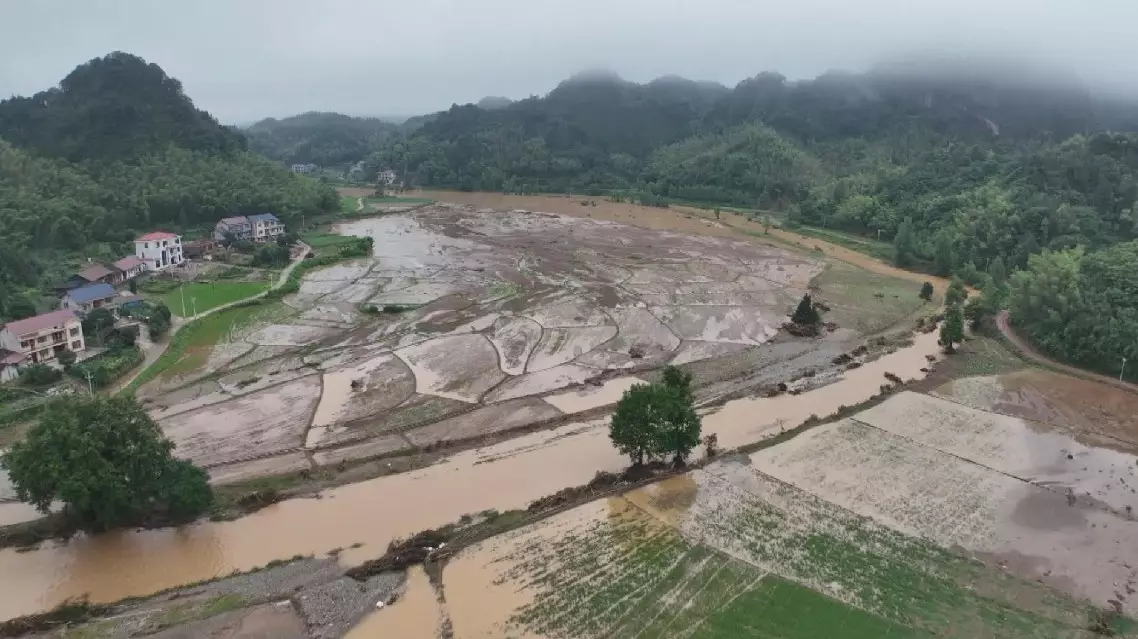
In Wuqiangxi Town, Yuanling County, farmlands in some villages have been inundated, seriously threatening the rice plants that are currently in a critical growth period.
Tangjiaping Village, with a flat terrain and close to the Yuanjiang River, is the leading single-season indica rice producer in Wuqiangxi Town, with its 73 hectares of rice to be harvested in late September or early October. The seedlings in the fields have grown to almost knee high, and now are in the tillering stage, when the plant is very sensitive to moisture.
Because of the flooding, the soil at Tangjiaping Village is extremely saturated.
Preliminary statistics show that some 27 hectares of the village's 73 hectares of paddy fields have been covered with mud and gravel brought by the torrents, with the silt reaching a meter deep at worst.
Local agricultural experts warned that receding floodwaters could easily drain the fertility in the fields, resulting in a decrease in grain production. They said the priority now is to clean the surface of the farmland, lift the fallen seedlings, promptly apply fertilizer or replace them with other crops.
The county agricultural bureau has also sent experts to the village to guide farmers to assess the affected farmland and find solutions.
Floods damage crops in Chongqing, Hunan
A new China Global Television Network (CGTN) documentary explores how the historic Long March spirit is driving modern innovation, as young Chinese researchers and engineers are channeling this relentless drive to overcome critical bottlenecks in the EV and AI industries.
Titled "The Source of AI: Not a Single Rock Goes to Waste", the documentary highlights the pioneering journeys of Zhong Yu and He Pengyu.
Two years ago, Zhong made a pivotal career shift, leaving a long-established automaker to return to China and join Farasis Energy, a homegrown battery manufacturer based in Ganzhou City of east China's Jiangxi Province.
Working around the clock, Zhong and his team are developing solid-state batteries. This next-generation technology promises higher energy density and enhanced safety, having the potential to completely disrupt the current automotive landscape.
Through his research, Zhong is determined to establish China as a global leader in the battery sector.
While Zhong focuses on the power sources of the future, He Pengyu is tackling the foundational raw materials required for the EV and AI boom.
The rapid expansion of these sectors has triggered a massive surge in demand for copper and rare earth elements. However, extracting and separating these valuable minerals from raw ore has long been a formidable technical hurdle.
Without advanced equipment, China's mining industry once relied on grueling, inefficient manual sorting.
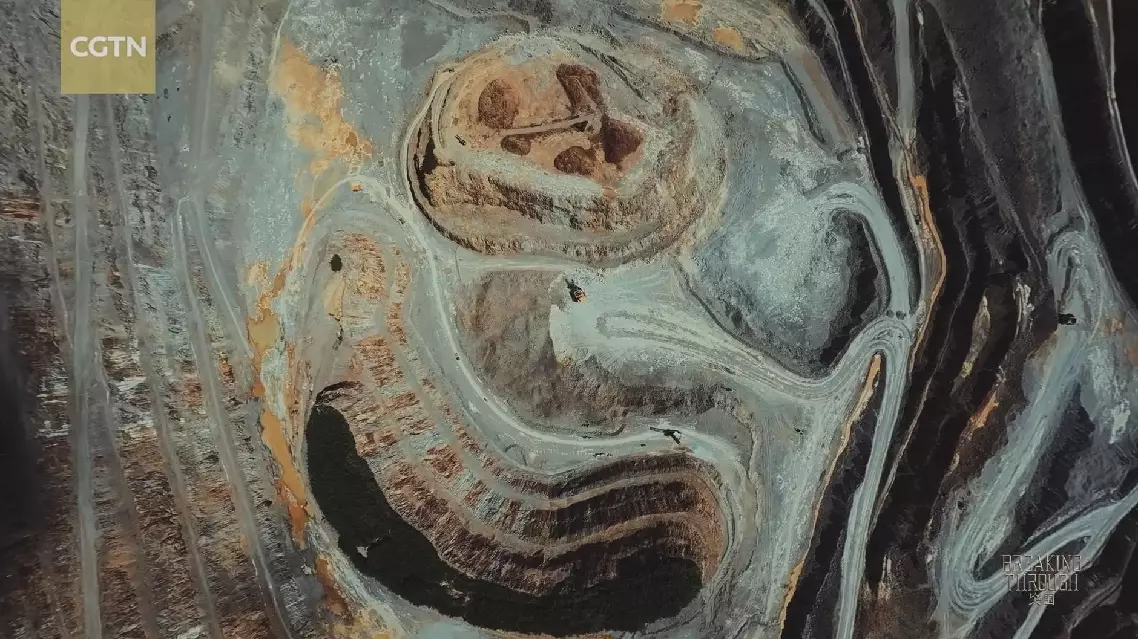
Determined to change this paradigm after returning from his studies in France, He founded HPY Sorting. The company has developed a revolutionary AI-driven optical ore sorting system capable of automatically separating waste rock from valuable ore.
Processing up to 300 tons of ore per hour, this intelligent sorting technology is now deployed in mines across the world, replacing tasks that once relied on human experience with precision-driven algorithms and automated machinery.
He Pengyu hopes that through his innovation, not a single rock goes to waste.
The documentary is part of CGTN's "Breaking Through" series, which traces China's journey from the historic Long March undertaken by the Red Army nine decades ago to its modern-day achievements, highlighting the resilience, ingenuity, and determination of its people.
Long March spirit drives critical breakthroughs in China's EV, AI industries: documentary