Skip to Content Facebook Feature Image

ICAC safeguards anti-corruption achievements, advances towards new milestone in year of fruitful endeavours and accomplishments

HK

ICAC safeguards anti-corruption achievements, advances towards new milestone in year of fruitful endeavours and accomplishments
HK

HK

ICAC safeguards anti-corruption achievements, advances towards new milestone in year of fruitful endeavours and accomplishments

2024-07-10 14:30 Last Updated At:19:42

ICAC Advances Towards Golden Jubilee with Fruitful Achievements in 2023, Maintaining Hong Kong's Clean Society and Global Anti-Corruption Collaboration

The following press release is issued on behalf of the Independent Commission Against Corruption:

The ICAC noted in its latest annual report issued today (July 10) that 2023 was "a year of fruitful endeavours and accomplishments" as the Commission advanced towards its golden jubilee. The ICAC sought to safeguard the remarkable achievements made in the past 50 years in combating corruption, contribute to the country's "Belt and Road" Initiative, the Guangdong-Hong Kong-Macao Greater Bay Area development strategy and the advancement of the global anti-corruption cause by synergising the tripartite partnership formed with the International Association of Anti-Corruption Authorities (IAACA) and the Hong Kong International Academy Against Corruption (HKIAAC).

Tabling the 2023 ICAC Annual Report at the Legislative Council today, the Chairman of the Advisory Committee on Corruption and legislator, Mr Martin Liao, commended and thanked ICAC officers for steadfastly carrying out the anti-corruption mission through the years, continuously bringing the anti-corruption work of Hong Kong to new heights.

Mr Liao noted that the fruitful achievements made by the ICAC in the past 50 years were reflected in the findings of ICAC Annual Surveys and continued recognitions from the international community.

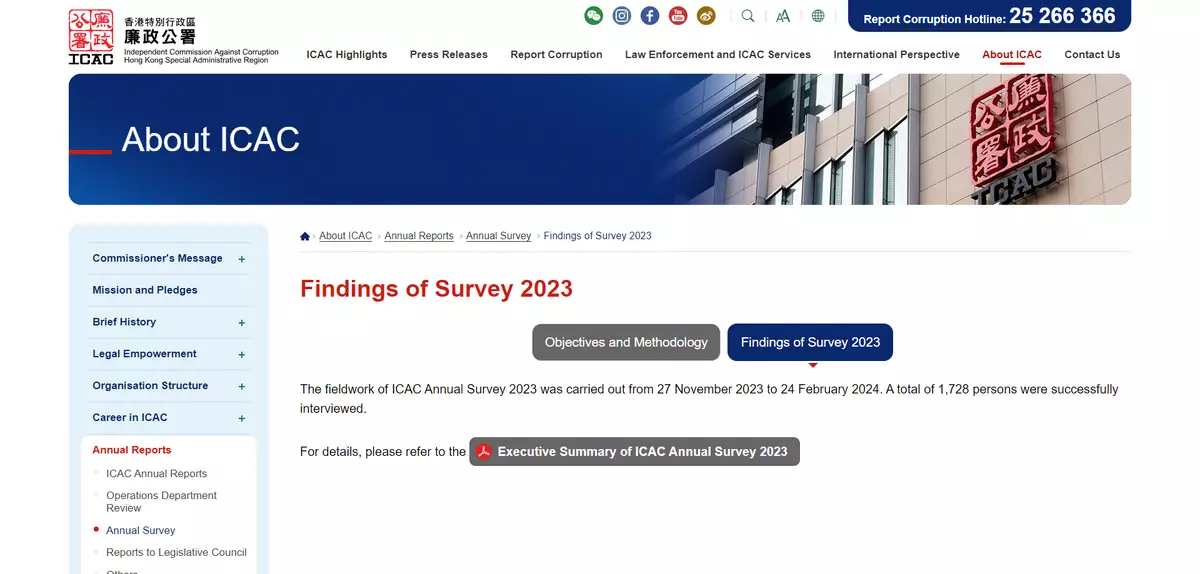
According to the newly published 2023 ICAC Annual Survey, members of the public continued to show zero tolerance to corruption. On a rating scale of 0 to 10, of which 0 represented total rejection and 10 total tolerance of corruption, the mean score for 2023 was 0.3. Meanwhile, the overwhelming majority (96.7 per cent) of respondents believed that integrity was important for Hong Kong's development, indicating that the core value of integrity was deeply rooted in Hong Kong.

In addition, 98.9 per cent of respondents said they had not personally encountered corruption in the past year. Similar findings were recorded in the past 10 years, reflecting that Hong Kong was a very clean society.

On the international front, Hong Kong ranked 14th out of 180 countries and territories rated in the Corruption Perceptions Index 2023 released by the Transparency International. In the World Justice Project's 2023 Rule of Law Index, Hong Kong ranked 9th under the factor of "absence of corruption" out of 142 countries/territories. These rankings not only reflected Hong Kong's effective anti-corruption work, but also the city's sound rule of law.

Meanwhile, in the newly issued World Competitiveness Yearbook 2024, Hong Kong's competitiveness improved by two places to 5th among 67 economies. Under the indicator "bribery and corruption do not exist", Hong Kong jumped six places to 4th from 10th last year, topping the Asia-Pacific region. The result reflected that enterprises and investors were confident of Hong Kong's business environment and anti-corruption work.

In the 2023 ICAC Annual Report, the ICAC Commissioner, Mr Woo Ying-ming, noted that the year was "a year of fruitful endeavours and accomplishments". The Commission leveraged Hong Kong's unique advantage of being "backed by the motherland and connected to the world" in fostering closer collaboration with anti-corruption counterparts worldwide and embarking on a new chapter in global graft fight.

Last year, the ICAC fostered a closer co-operation with the United Nations Office on Drugs and Crime (UNODC). Apart from hosting an anti-corruption workshop for members of the Global Operational Network of Anti-Corruption Law Enforcement Authorities (GlobE Network) in Vienna, the Commission also organised a training programme for GlobE Network in Hong Kong in February this year. The ICAC and UNODC also jointly developed the "Global Policy Guide for Strengthening Youth Engagement in Anti-Corruption Initiatives", which served as a practical reference for anti-graft agencies around the world to promote youth engagement in the fight against corruption.

To further contribute to the national and global anti-corruption cause, the HKIAAC was conceived last year and pilot courses were organised for a number of overseas anti-corruption agencies. Upon its official establishment this February, a robust tripartite partnership was formed amongst the ICAC, the HKIAAC and the IAACA, of which the ICAC Commissioner, Mr Woo Ying-ming, serves as President to promote global anti-corruption collaboration. Moreover, the ICAC maintained close liaison with the National Commission of Supervision and played an active role in promoting the integrity building in the Guangdong-Hong Kong-Macao Greater Bay Area.

"This new strategy will bring the ICAC's work to the next level, solidifying Hong Kong's reputation as a city of probity and providing solid support for Hong Kong's advancement from stability to prosperity whereby Hong Kong can make substantial contribution to the country's development and continue to tell the good stories of China, 'one country, two systems' and our city to the international community," Mr Woo noted.

ICAC's determination to forge ahead against all difficulties to combat corruption with its holistic "three-pronged" strategy has helped maintain Hong Kong as one of the cleanest places in the world. Last year, the corruption situation in Hong Kong continued to remain well under control. The Commission received 2 001 non-election related corruption complaints. Although the figure registered an increase of 9 per cent compared with 2022, the number represented a drop of 13 per cent when compared to the pre-pandemic period in 2019. The rise was mainly due to the gradual recovery of Hong Kong's economic activities after the pandemic, as evidenced in a corresponding increase of complaints concerning the private sector.

Building Management, Finance and Insurance, and the Construction Industry were the three private sector industries attracting most complaints. Last year, the ICAC smashed the largest corruption case over building maintenance and launched the new "Corruption Prevention Guide for Property Management Companies" to assist property management companies to effectively prevent corruption and enhance anti-graft capabilities.

To promote integrity management in the construction industry, the ICAC teamed up with the Development Bureau and the Construction Industry Council to launch an anti-corruption summit. The ICAC had also strengthened co-operation with regulatory agencies in the financial and insurance industries to leverage synergy and consolidate Hong Kong’s status as an international financial centre.

Civil service in the public sector remained clean. The ICAC would continue to collaborate with the Civil Service Bureau to implement the Ethical Leadership Programme. To deepen the integrity culture in government departments, the ICAC would also conduct exchanges with senior to directorate civil servants in courses organised by the Civil Service College. During the year, the ICAC conducted 65 assignment reports for government departments and public bodies to plug corruption loopholes.

The ICAC adopted an "all-embracing" education and publicity strategy to ensure the 2023 Rural Ordinary Election and the 2023 District Council Ordinary Elections were conducted in a fair, open and just manner.

"Over the past 50 years, the ICAC has been demonstrating its extraordinary strength by fighting corruption unwaveringly without fear or favour. As the Commission looks to the next 50 years, the organisation will continue to make relentless efforts, leaving no foothold for corruption and ensure that corruption has nowhere to run, and their illicit proceeds have no place to hide. The ICAC will continue to strive to keep Hong Kong prosperous, stable, clean and fair," Mr Woo noted.

2023 ICAC Annual Report: www.icac.org.hk/icac/annual-report/2023/

Findings of 2023 ICAC Annual Survey:www.icac.org.hk/en/about/report/survey/finding/index.html
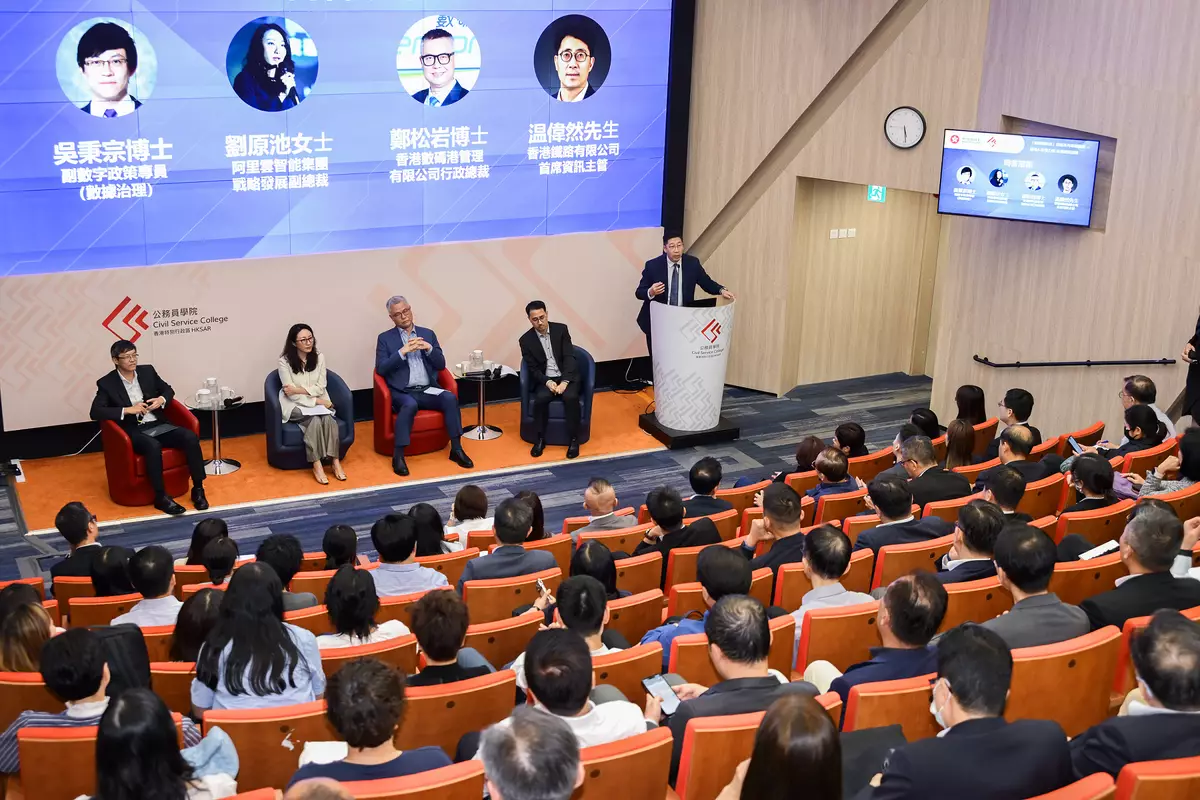
Speech by FS at CUHK EMBA Annual Conference

Following is the speech by the Financial Secretary, Mr Paul Chan, at the CUHK EMBA Annual Conference today (May 9):

Professor Dennis Lo (Vice-Chancellor and President, the Chinese University of Hong Kong (CUHK)), Professor Lin Zhou (Dean, CUHK Business School), Macy (Chairperson of Organizing Committee, Ms Macy Chan), Michael (Chairperson of Organizing Committee, Mr Michael Chan), CUHK EMBA alumni and students, business leaders, distinguished guests and friends,

Good evening.

Addressing a room full of Executive MBA students and graduates is both an honour and a privilege. There is a particular kind of ambition in this room — one that is not content with success alone, but driven to understand it more deeply, in the belief that better ideas lead to greater impact.

That kind of commitment — to learning, to growth, to asking harder questions — is precisely what today's conversation is about.

The theme of this conference, which focuses on innovation and agile leadership, could not be more timely. Most of us here have lived through the Internet age and the smartphone revolution, which made communication faster and more seamless than anyone had imagined.

Today, the rise of AI places us at a more fundamental tipping point. Technology is not merely changing the answers — it is redefining the questions themselves.

Consider what is already within reach. An AI assistant can learn your preferences, curate a personalised shortlist, and simply ask for your confirmation. We should even ask whether the smartphone and the search engine will remain our primary gateways to the digital world, or whether something altogether new is already taking shape.

To draw an analogy, the power of technology does not lie in drawing the old map with greater precision. It lies in revealing how much of that map remains uncharted — and in showing us that entirely new maps, with new co-ordinates, are being drawn.

This redefinition is unfolding across three dimensions simultaneously.

First, the redefinition of products. Products are no longer discrete, standalone objects. A smart car is a vehicle, but also a mobile platform for data. An insurance policy can be a contract, but equally a dynamic reflection of health data. Innovation today is born from cross-sector convergence and continuous evolution.

Second, the redefinition of services. Services are no longer delivered solely by enterprises. They emerge from collaborative networks of people and AI. But the more profound shift is in what customers now expect. In the past, good service meant reaching the right person quickly. Today, customers expect a solution that anticipates their needs before articulating them. This requires a new architecture of service delivery: human and machine, with AI handling the scale, the speed, and the personalisation that no human team alone could sustain.

Third, and most importantly, the redefinition of business models. In the past, we sought optimal solutions within established frameworks — when demand rose, we expanded capacity; when service needs grew, we opened more branches. Technology invites us to break out of those frameworks entirely. Intelligent manufacturing means that "economies of scale" is no longer the only answer; flexible supply chains have made customised, on-demand production the new normal.

These three redefinitions are opening a commercial frontier unlike anything we have seen before. But if the benefits of technology accrue only to a small circle, its power remains fundamentally constrained. This brings me to the second message I want to leave with you today: inclusivity.

Inclusivity is not charity. Yet it is the smartest business strategy available. The unmet needs of the broader public represent the largest and most underserved market opportunity in existence. When you make quality healthcare, education and financial services accessible and affordable to ordinary residents, you are not serving a group in need of handouts — you are unlocking a vast market that traditional business models have consistently overlooked.

Hong Kong has a distinctive role to play here. We can be a co-architect of standards, a hub for capital, and a bridge between innovation and real-world deployment — from clinical validation of smart healthcare, to green technology financing, to regulatory sandboxes for fintech. Our contribution draws not only on institutional strengths and international networks, but on our genuine commitment to broad-based participation.

Yet inclusive products and services are only the first step. The deeper dimension is empowerment.

History reminds us that the dividends of technological revolution need to be actively guided to reach the many. In the age of steam, and again in the Internet era, early gains concentrated among capital owners and top-tier talent. But today we have the opportunity to write a different story. AI, as an amplifier of human capability, is already enabling what was previously unimaginable: a solo entrepreneur, with the right tools and the right vision, can build a unicorn.

In other words, the unit of competitive advantage is shifting — from the size of your team to the skill with which you orchestrate your tools.

Our mission should be to make that shift available to everyone. To turn individual readiness into collective prosperity, and to ensure that the productivity gains of AI flow broadly across the society.

This is precisely why, in this year's Budget, I placed such emphasis on the "AI Training for All" initiative.

We are not trying to turn everyone into an engineer. We are ensuring that workers, managers, SME (small and medium-sized enterprise) owners, and ordinary residents become capable collaborators with AI: people who can access it, use it effectively, and put it to work as their assistant.

That may sound ambitious, but consider this: if AI can one day be as intuitive as the smartphone, then mass adoption is not difficult to imagine at all. Just as computers once migrated from specialist facilities into offices and homes, AI will find its way into everyone's daily work and life.

For business leaders, it may be tempting to think of AI as "digital employee" that can replace existing workers. But think of a different framing: equipping your workforce with powerful digital assistants can achieve productivity gains, while also freeing your people to do what humans do best — create, imagine and innovate.

Companies that take those extra steps, and think those extra moves ahead, will find that an empowered workforce is also a more innovative one.

All in all, the power of technology must ultimately be measured by its contribution to inclusive growth. And inclusive growth, in the end, depends on, yes, commercial acumen — but also empathy, compassion, and the conviction that a rising tide should lift all boats. I can see that those qualities live in this room.

I will close with this thought. Someone once joked that economists know the price of everything and the value of nothing. With AI, let us never fall into the same trap — in our race to price every efficiency gain, let us not lose sight of the deeper value we are trying to create: a society where the fruits of innovation are broadly shared, and where technology lifts not just the fortunate few, but everyone willing to reach for it.

So here is my ask: let us grow the pie together. And make sure we cut it well.

Thank you very much.

Source: AI-found images

Source: AI-found images

Speech by FS at CUHK EMBA Annual Conference  Source: HKSAR Government Press Releases

Speech by FS at CUHK EMBA Annual Conference Source: HKSAR Government Press Releases

Speech by FS at CUHK EMBA Annual Conference  Source: HKSAR Government Press Releases

Speech by FS at CUHK EMBA Annual Conference Source: HKSAR Government Press Releases

Source: AI-found images

Source: AI-found images

Recommended Articles