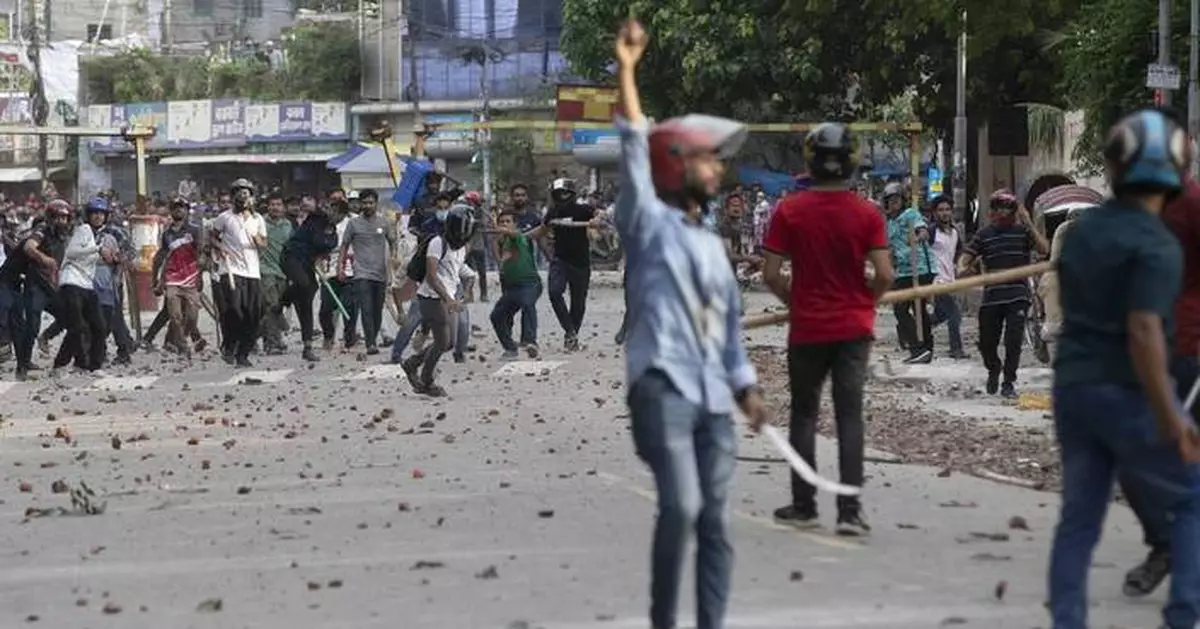
DHAKA, Banglades (AP) — At least 5 people were killed and dozens injured in two separate incidents in Bangladesh as violence continued Tuesday on university campuses in the nation's capital and elsewhere over a government jobs quota scheme local media reports said quoting officials.
At least three of the dead were students and one was a pedestrian, the media reports said. Another man who died in Dhaka remained unidentified.
Click to Gallery
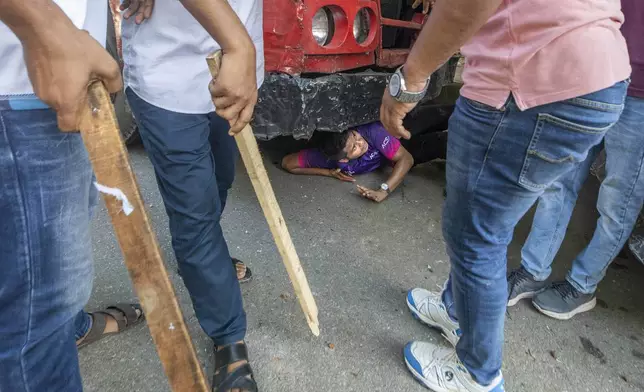
A student hides beneath a vechicle as students clash over quota system at Jahangir Nagar University at Savar outside Dhaka, Bangladesh, Monday, July 15, 2024. Police have fired tear gas and charged with batons overnight during violent clashes between a pro-government student body and student protesters, leaving dozens injured at a leading public university outside Bangladesh's capital over quota system in government jobs, police and students said Tuesday.(AP Photo/Abdul Goni)
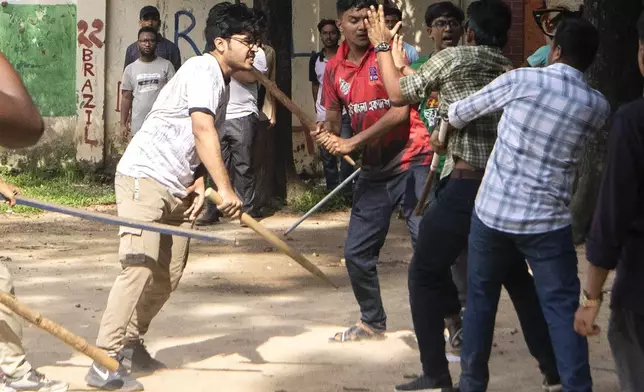
Students clash over quota system at Jahangir Nagar University at Savar outside Dhaka, Bangladesh, Monday, July 15, 2024. Police have fired tear gas and charged with batons overnight during violent clashes between a pro-government student body and student protesters, leaving dozens injured at a leading public university outside Bangladesh's capital over quota system in government jobs, police and students said Tuesday.(AP Photo/Abdul Goni)
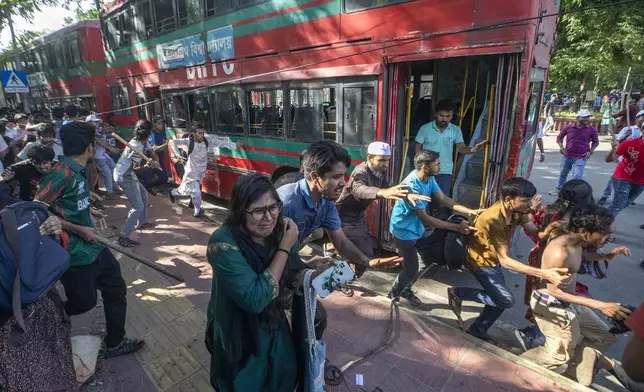
Students clash over quota system at Jahangir Nagar University at Savar outside Dhaka, Bangladesh, Monday, July 15, 2024. Police have fired tear gas and charged with batons overnight during violent clashes between a pro-government student body and student protesters, leaving dozens injured at a leading public university outside Bangladesh's capital over quota system in government jobs, police and students said Tuesday.(AP Photo/Abdul Goni)
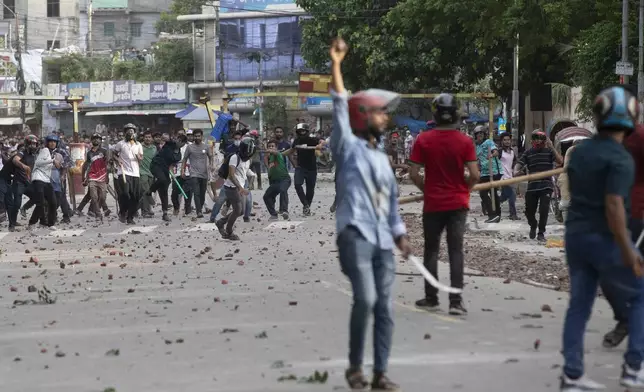
Students clash over quota system at Jahangir Nagar University at Savar outside Dhaka, Bangladesh, Monday, July 15, 2024. Police have fired tear gas and charged with batons overnight during violent clashes between a pro-government student body and student protesters, leaving dozens injured at a leading public university outside Bangladesh's capital over quota system in government jobs, police and students said Tuesday.(AP Photo/Abdul Goni)
The deaths were reported Tuesday after an overnight violence at a public university near Bangladesh’s capital, Dhaka. The violence involved members of a pro-government student body and other students, when police fired tear gas and charged the protesters with batons during the clashes which spread at Jahangir Nagar University in Savar, outside Dhaka, according to students and authorities.
Protesters have been demanding an end to a quota reserved for family members of veterans who fought in Bangladesh’s war of independence in 1971, which allows them to take up 30% of governmental jobs.
They argue that quota appointments are discriminatory and should be merit-based. Some even said the current system benefits groups supporting Prime Minister Sheikh Hasina. Some Cabinet ministers criticized the protesters, saying they played on students’ emotions.
Bengali-language Prothom Alo daily reported that one person died in Dhaka and three others, including a pedestrian, were killed after they suffered injuries during violence in Chattogram, a southeastern district, on Tuesday.
Prothom Alo and other media reports also said that a 22-year-old protester died in the northern district of Rangpur.
Details of the casualties could not be confirmed immediately.
While job opportunities have expanded in Bangladesh’s private sector, many find government jobs stable and lucrative. Each year, some 3,000 such jobs open up to nearly 400,000 graduates.
Hasina said Tuesday that war veterans — commonly known as “freedom fighters” — should receive the highest respect for their sacrifice in 1971 regardless of their current political ideologies.
“Abandoning the dream of their own life, leaving behind their families, parents and everything, they joined the war with whatever they had...,” she said during an event at her office in Dhaka.
Protesters gathered in front of the university’s official residence of the vice-chancellor early Tuesday when violence broke out. Demonstrators accused the Bangladesh Chhatra League, a student wing of Hasina’s ruling Awami League party, of attacking their “peaceful protests.” According to local media reports, police and the ruling party-backed student wing attacked the protesters.
But Abdullahil Kafi, a senior police official, told the country’s leading English-language newspaper Daily Star that they fired tear gas and “blank rounds” as protesters attacked the police. He said up to 15 police officers were injured.
More than 50 people were treated at Enam Medical College Hospital near Jahangir Nagar University as the violence continued for hours, said Ali Bin Solaiman, a medical officer of the hospital. He said at least 30 of them suffered pellet wounds.
On Monday, violence also spread at Dhaka University, the country’s leading public university, as clashes gripped the campus in the capital. More than 100 students were injured in the clashes, police said.
On Tuesday, protesters blocked railways and some highways across the country, and in Dhaka, they halted traffic in many areas as they vowed to continue demonstrating until the demands were met.
Local media said police forces were spread across the capital to safeguard the peace.
Swapon, a protester and student of Dhaka University who only gave his first name, said they only want the “rational reformation of the quota scheme.” He said after studying for six years, if he can't find a job, “it will cause me and my family to suffer.”
Protesters say they are apolitical, but leaders of the ruling parties accused the opposition of using the demonstrations for political gains.
A ruling party-backed student activist, who refused to give his name, told The Associated Press that the protesters with the help of “goons” of the opposition's Bangladesh Nationalist Party and Jamaat-e-Islami party vandalized their rooms at the student dormitories near the Curzon Hall of the Dhaka University.
The family of the veterans’ quota scheme was halted following a court order after mass student protests in 2018. But last month, Bangladesh’s High Court nulled the decision to reinstate the scheme once more, angering scores of students and triggering protests.
Last week, the Supreme Court suspended the High Court’s order for four weeks and the chief justice asked protesting students to return to their classes, saying the court would issue a decision in four weeks.
However, the protests have continued daily, halting traffic in Dhaka.
The quota scheme also reserves government jobs for women, disabled people and ethnic minority groups, but students have only protested against jobs reserved for veterans' families.
Prime Minister Hasina maintained power in an election in January that was again boycotted by the country’s main opposition party and its allies due to Hasina’s refusal to step down and hand over power to a caretaker government to oversee the election.
Her party favors keeping the quota for the families of the 1971 war heroes after her Awami League party, under the leadership of her father Sheikh Mujibur Rahman, led the independence war with the help of India. Rahman was assassinated along with most of his family members in a military coup in 1975.
In 1971, the Jamaat-e-Islami party, which shared power with the Bangladesh Nationalist Party led by Hasina’s archrival, former Prime Minister Khaleda Zia in 2001-2006, openly opposed the independence war and formed groups that helped the Pakistani military fight pro-independence forces. All the major political parties in Bangladesh have active student wings across the South Asian nation.
—
Associated Press video journalist AL Emrun Garjon contributed to the report.
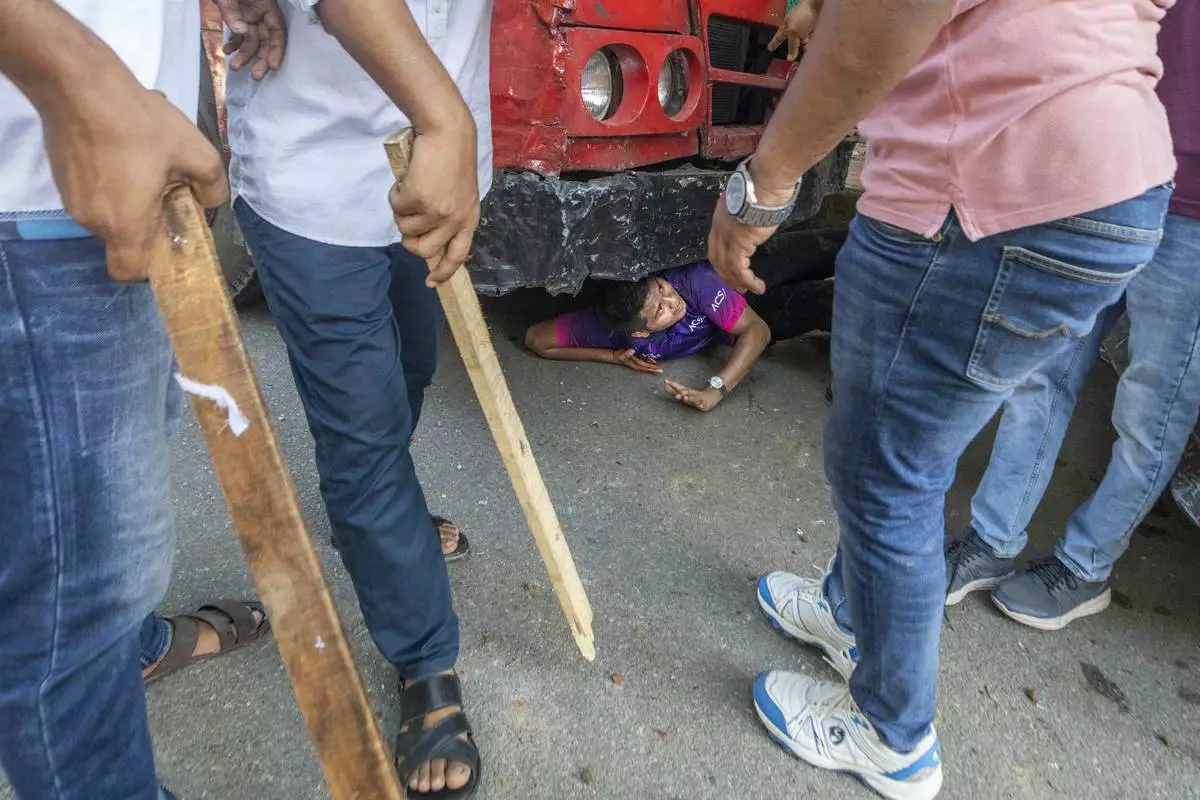
A student hides beneath a vechicle as students clash over quota system at Jahangir Nagar University at Savar outside Dhaka, Bangladesh, Monday, July 15, 2024. Police have fired tear gas and charged with batons overnight during violent clashes between a pro-government student body and student protesters, leaving dozens injured at a leading public university outside Bangladesh's capital over quota system in government jobs, police and students said Tuesday.(AP Photo/Abdul Goni)
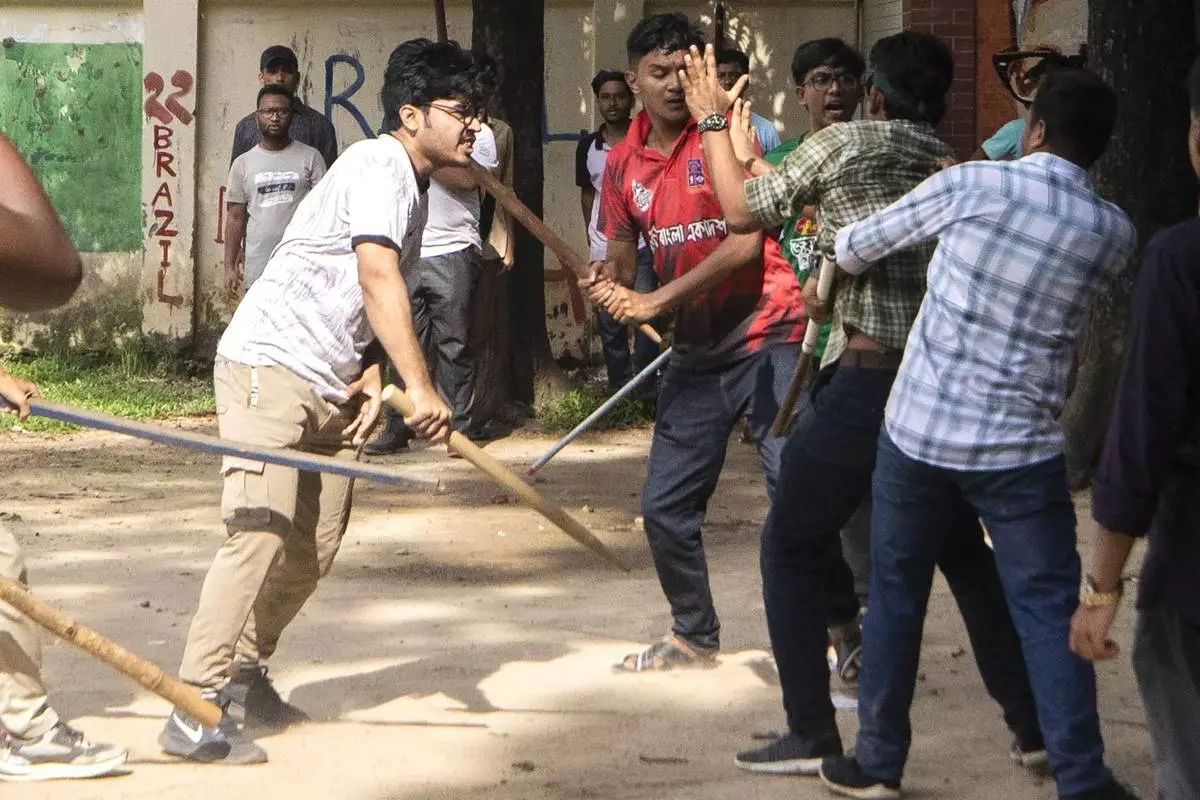
Students clash over quota system at Jahangir Nagar University at Savar outside Dhaka, Bangladesh, Monday, July 15, 2024. Police have fired tear gas and charged with batons overnight during violent clashes between a pro-government student body and student protesters, leaving dozens injured at a leading public university outside Bangladesh's capital over quota system in government jobs, police and students said Tuesday.(AP Photo/Abdul Goni)
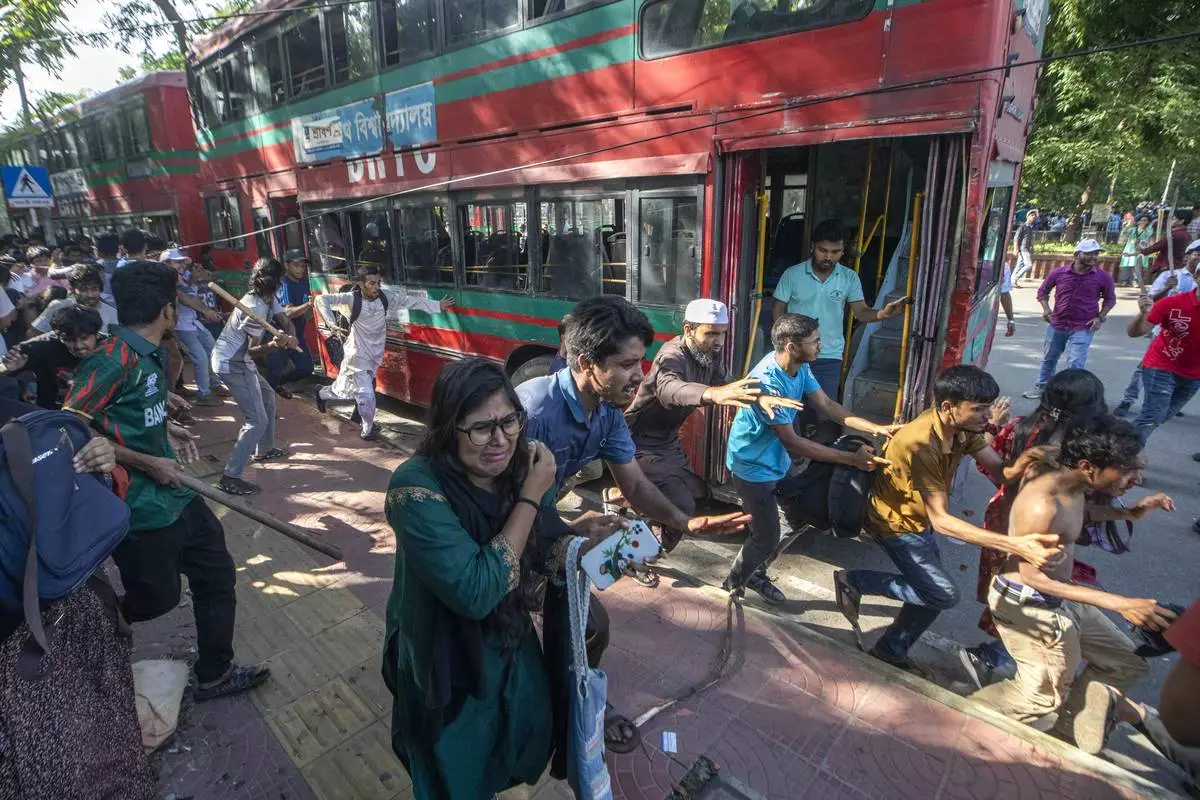
Students clash over quota system at Jahangir Nagar University at Savar outside Dhaka, Bangladesh, Monday, July 15, 2024. Police have fired tear gas and charged with batons overnight during violent clashes between a pro-government student body and student protesters, leaving dozens injured at a leading public university outside Bangladesh's capital over quota system in government jobs, police and students said Tuesday.(AP Photo/Abdul Goni)
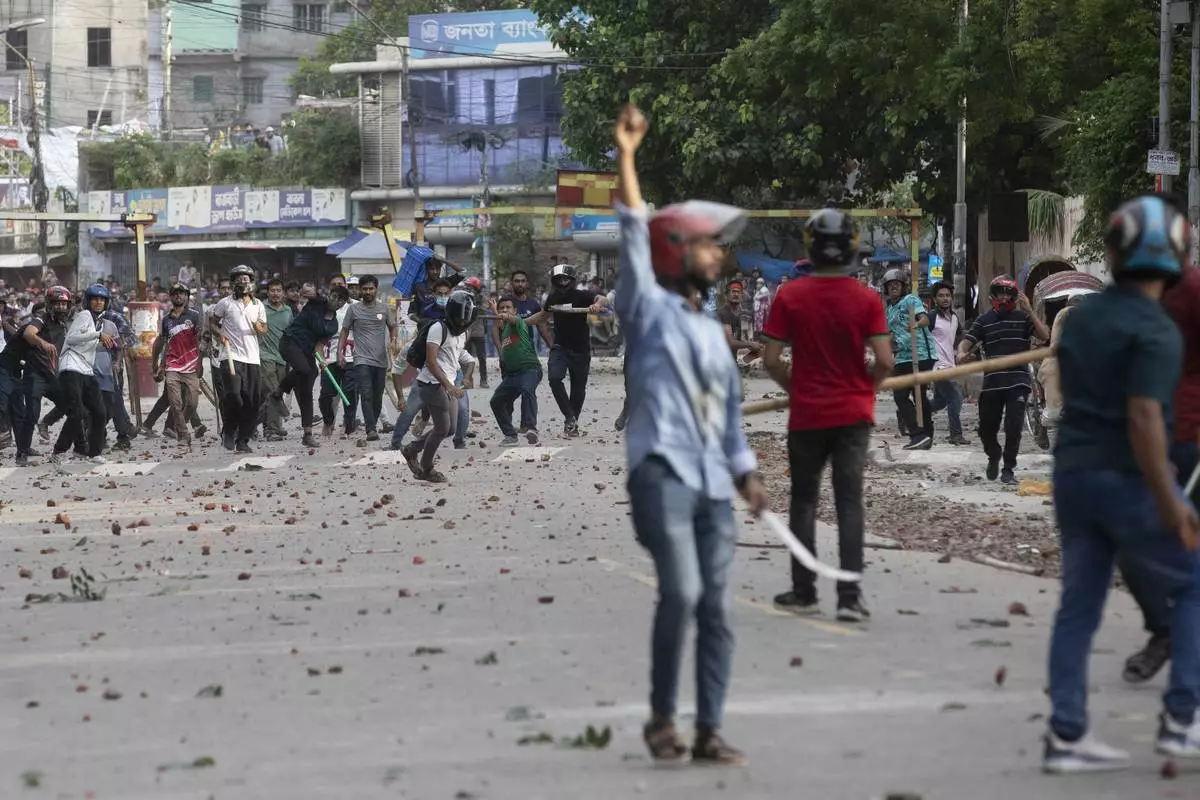
Students clash over quota system at Jahangir Nagar University at Savar outside Dhaka, Bangladesh, Monday, July 15, 2024. Police have fired tear gas and charged with batons overnight during violent clashes between a pro-government student body and student protesters, leaving dozens injured at a leading public university outside Bangladesh's capital over quota system in government jobs, police and students said Tuesday.(AP Photo/Abdul Goni)