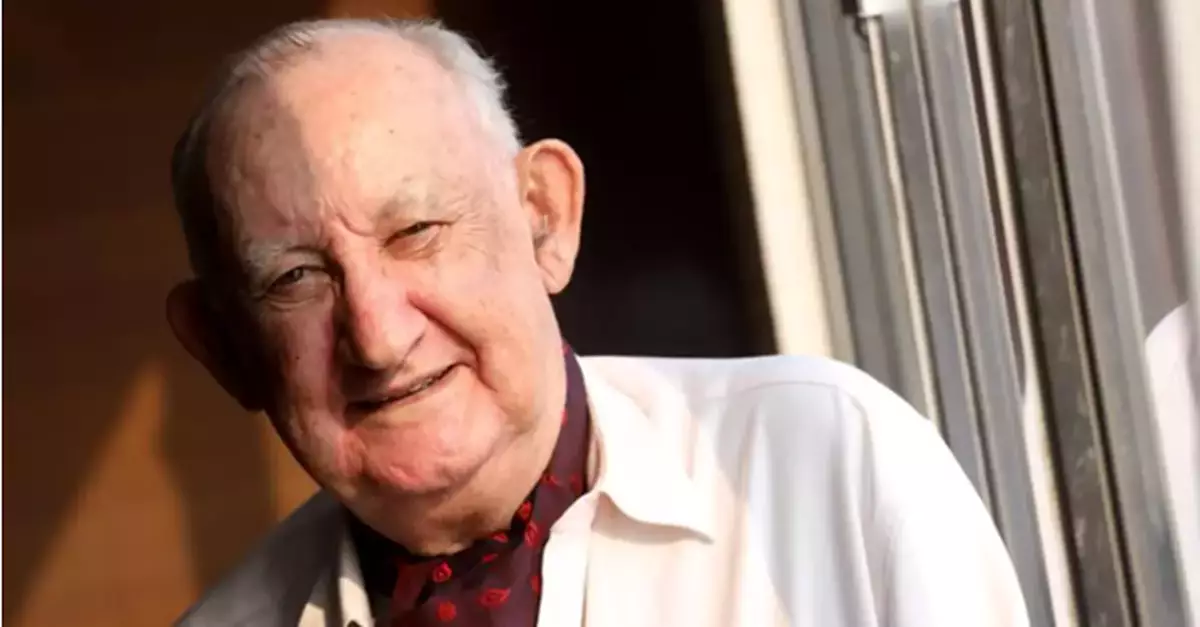
Mark Pinkstone/Former Chief Information Officer of HK government
The US Consul General for Hong Kong and Macau, Gregory May warned Americans on a CBS televised interview that in Hong Kong no one can criticize the local government. That is a blatant lie. Of course, anyone can criticize the government and many do.
What they cannot do is incite hatred towards the government. And that is a big difference. Criticism verses incitement. May is fully aware of what incitement means as similar laws appear in the US, UK, and other jurisdictions following the common law system.
But May was choosing his words carefully as he knows the impact they have in the US. His track record is that of damning Hong Kong as per the wishes of his bosses in Washington which has orchestrated a series of sanctions against Hong Kong people for the enactment of our National Security Laws.
With his barrage of anti-Hong Kong interviews, May is demonstrating total contempt and disrespect for his hosts, never seen anywhere before among the world’s diplomatic corps.
“People in Hong Kong are not free to criticize the government like they used to be able to,” said May in the interview. “It’s so disconcerting to see their rights and freedoms being so steadily taken away from them.”
The deliberately falsified interview was carried by CBS a major US television broadcaster, so his comments would carry much weight among a gullible audience. He went on that enactment of Hong Kong’s Article 23 created “a chilling effect, a massive chilling effect over Hong Kong. It is important, I think, that Americans who come here realize that you need to be careful what you say.”
If this doomsday scenario painted by May is real, then why are there some 85,000 Americans living in Hong Kong and 1,300 American enterprises making money in the Pearl of the Orient? The people of Hong Kong, including the American population know the real story: that Hong Kong is alive and well and all freedoms within the law are enjoyed by the populace.
In the words of Executive Council convener, Regina Ip in a segment of the CBS programme: “All the stability [and] safety have returned to Hong Kong.”
The Commissioner’s Office of the Chinese Foreign Ministry in the Hong Kong Special Administrative Region (SAR) issued a strong rebuke of the recent comments made by May, telling him to abide by his duties and stop smearing Hong Kong. The office called for May, as the US government’s representative in the Hong Kong SAR, to abide by the basic professional ethics and code of conduct of consular officials and stop interfering in China’s internal affairs and badmouthing the SAR.
The Hong Kong SAR Government also hit out against the US’s highest representative in the city saying it strongly disapproves of and condemns absurd remarks on the Hong Kong situation, noting that the US had 21 pieces of legislation dealing with national security. The Government said in a statement that ever since the implementation of the Hong Kong National Security Law (NSL) in June 2020, the US has chosen to overlook the large-scale and incessant riots that devastated society, livelihoods and the economy of Hong Kong in 2019. Instead, the Government added, the US has chosen to maliciously slander laws relevant to safeguarding national security in the Hong Kong SAR, and to blatantly attack the city’s efforts in safeguarding national security dutifully, faithfully and in accordance with the law.
The American audience was given an “insight” into what Hong Kong is like today by CBS interviewer Ramy Inocencio, who found “the city felt hollowed of its people and its soul.” Was he locked up in his hotel room on July 1 and didn’t venture out on the streets? Hong Kong is full of vitality and that’s the reason millions of tourists are flocking to our shores every day. Hong Kong is a go-go place.
Inocencio, CBS’s Beijing correspondent, was very dramatic in his picture of Hong Kong. “Multi-lane highways and narrow back alleys were devoid of traffic and footfall. Many official celebrations the government had advertised felt barely celebratory, with just a sprinkling of attendees.” What!
But that is what the American public is being fed by their national media and State Department officials. Lies and more lies. The Americans living here must be horrified to see such reports and it’s interesting that not one appeared on the CBS programme to present their side of the story. They know better, they live here.
Others interviewed by Inocencio included Chan Po-ying, wife of “Long Hair” Leung Kwok-hung, Sebastien Lai, son of jailed activist and former newspaper publisher Jimmy Lai, and Nathan Law another activist who fled to the UK to escape the long arm of the law.
Mark Pinkstone
** 博客文章文責自負,不代表本公司立場 **
Trump's brazenness in refusing to admit defeat is, admittedly, a cut above the rest.
News broke the morning of June 15th that the US and Iran will sign a Memorandum of Understanding on Friday, 19th of June, ending this absurd war. Trump gained nothing. He should have been left red-faced. Instead, he took to social media with characteristic swagger to declare himself the first American president to bring peace to the region — and claimed victory. Clear-eyed observers tallying up his original campaign objectives find that most were never achieved. Five goals missed in their entirety.
For this pointless war, Trump burned through hundreds of billions of dollars, depleted vast stockpiles of advanced weaponry, and watched his approval ratings plummet. By any measure, this was a "failed deal." Iran, for its part, outlasted America through a war of attrition — prevailing against a far stronger foe through sheer resilience, and emerging as the ultimate winner.
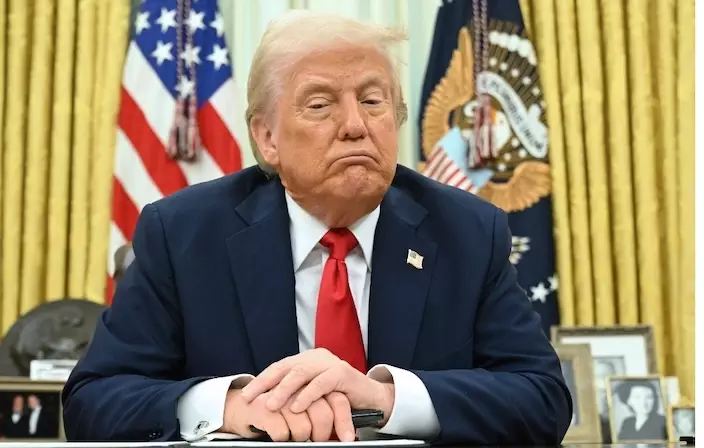
Trump failed all five Iran goals, yet shamelessly declares himself the Middle East peacemaker.
The full text of the US–Iran agreement will only be released after the formal signing. Iranian media has already leaked the document's 14 points, and the contents are not expected to change significantly. At least five of them directly contradict Trump's original objectives. When you tally up the final score, it couldn't be clearer who won and who lost.
Goal One: Regime Change
At the outset of the US–Israeli campaign, the plan was to use overwhelming force in a lightning strike — to "decapitate" Supreme Leader Khamenei and topple the government in one blow, replacing it with a pro-American puppet regime. That vision collapsed entirely. The Iranian government stands firm as a rock. Any pro-American administration remains a pipe dream.
The forthcoming MOU includes a clause in which the US pledges not to interfere in Iran's internal affairs and to respect the sovereignty of the Islamic Republic of Iran. In plain terms: Washington may no longer pursue regime change. The original conspiracy has come to nothing.
Goal Two: Destroying Iran's Military Capability
At the war's outset, Trump and Netanyahu were riding high, overestimating the combined might of US and Israeli forces. They believed they could completely destroy Iran's missiles, drones, military-industrial production, and naval power — rendering it utterly defenseless and at their mercy. This goal, again has not been achieved.
According to US military assessments, Iran has retained 70% of its pre-war missile stockpile, still possesses thousands of drones, and its naval attack boats remain a pervasive presence throughout the Strait of Hormuz. Trump's repeated claims that Iran's military has been entirely destroyed are nothing but hot air.
The MOU stipulates that Iran's missile program will be excluded from the agenda during the 60-day negotiation period. Iran may therefore continue to retain and produce missiles. Trump's plan to defang Iran has essentially failed.
Goal Three: Retaking the Strait of Hormuz
After Iran seized control of the Strait of Hormuz, Trump set his sights on recapturing it by force. He knew well that this chokepoint — through which 20% of global oil exports flow — was the real prize of the conflict. But seizing the strait proved far too difficult and far too risky. Left with no viable option, Trump was compelled to accept Iran's continued control of the waterway.
On the question of who controls Hormuz, the MOU states: the Strait will be reopened within 30 days, under arrangements made by Iran. The critical phrase is "under arrangements made by Iran." Washington has effectively acknowledged Iranian management of the strait. As a senior State Department official from the Biden era remarked: this is a major concession by Trump to Iran.
Goal Four: Dismantling Iran's Nuclear Program
Trump's foremost objective in launching this war was the complete destruction of Iran's nuclear capability — removing enriched uranium, banning all enrichment activities, and eliminating the nuclear threat to the region. Towards the end of the negotiations, he even entertained the idea of sending special forces on a raid into Iran to seize the enriched uranium by force.
But the preliminary agreement tells a very different story. Within 60 days of signing, both sides will work towards a final agreement on the management of enriched uranium and enrichment activities. Iran has reiterated only that it will not develop nuclear weapons — not that it will stop enriching.
Recent reports indicate that the US has agreed to allow Iran to dilute uranium on its own soil rather than transferring it abroad. Compared with Trump's original demands, the gap is enormous. Iran has clearly won this round — and one imagines Netanyahu is absolutely furious.
Goal Five: Lifting Sanctions and Unfreezing Assets
Trump had long relied on freezing Iran's $24 billion in assets and maintaining long-term sanctions as economic strangleholds to try bringing Tehran to its knees. After this war, that leverage is gone.
Under the MOU, both sides have agreed to gradually unfreeze the $24 billion in assets during the negotiation period, with half handed over to Iran before talks formally begin. Sanctions on Iranian oil, petrochemical, and related product sales will be suspended. Iran will be permitted full access to the associated financial revenues.
Trump's willingness to "let Iran off the hook" on this front was clearly driven by necessity. Ever the businessman, he saw the situation deteriorating and wanted out as quickly as possible — cutting his losses and quietly folding. He may also have a separate calculation in mind: positioning himself to profit from Iran's future reconstruction.
Trump has always fancied himself the "King of the Deal." In this Iran campaign, every calculation, every plan, every move was wrong from start to finish. After burning through hundreds of billions of dollars, he ends up empty-handed — his credibility and his dignity in tatters.
Most damaging of all, America has paid a steep price for this misadventure. Its hollow strength has been laid bare for the world to see. It has forfeited the trust of many allies. This was a crushing defeat — and it may well mark the inflection point in the decline of this superpower.
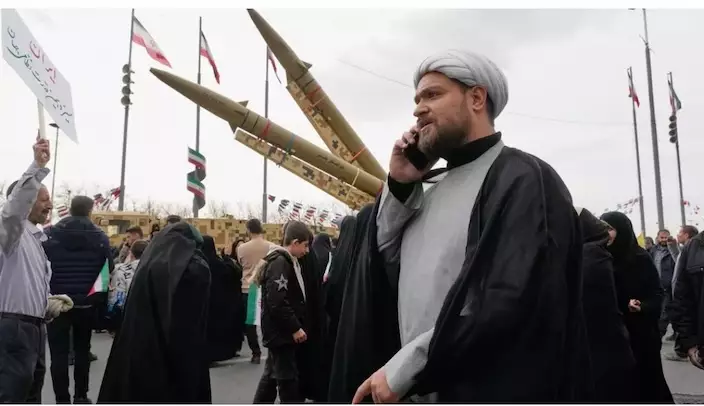
Iran outlasted the US alliance, leaving Trump a colossal bill and a shattered reputation.
Lai Ting-yiu