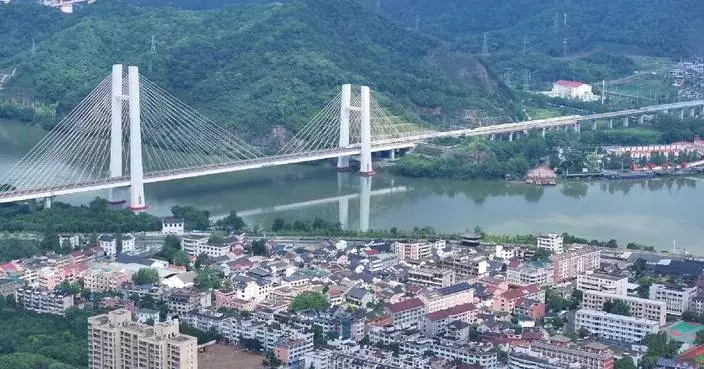
China's national railway fixed-asset investment reached 410.2 billion yuan (approximately 57.21 billion U.S. dollars) from January to July 2024, marking a year-on-year growth of 10.5 percent, according to the China State Railway Group.
In July, key railway construction projects continued to make steady progress. The Rizhao-Lankao High-Speed Railway was fully completed and put into operation, significantly reducing travel time between Shandong and the Central Plains urban agglomerations.
Several railway projects, including the Xuancheng-Jixi High-Speed Railway, the Huinong-Yinchuan section of the Baotou-Yinchuan High-Speed Railway, and the Zhenjiangguan-Huangshengguan section of the Chengdu-Xining Railway, began joint testing and commissioning in July.
Hangzhou-Wenzhou High-Speed Railway started trial operations in July.
"China State Railway Group will focus on enhancing railway network connectivity. We will accelerate the construction of major projects such as the Chongqing-Kunming High-Speed Railway, the Shanghai-Chongqing-Chengdu Riverside High-Speed Railway, and the Huangtong-Baise Railway. These efforts aim to continuously improve the interconnectivity of railway infrastructure, providing strong support for the high-quality development of the national economy and society," said Deng Lihong, deputy director of the Development Strategy and Planning Division of the group.
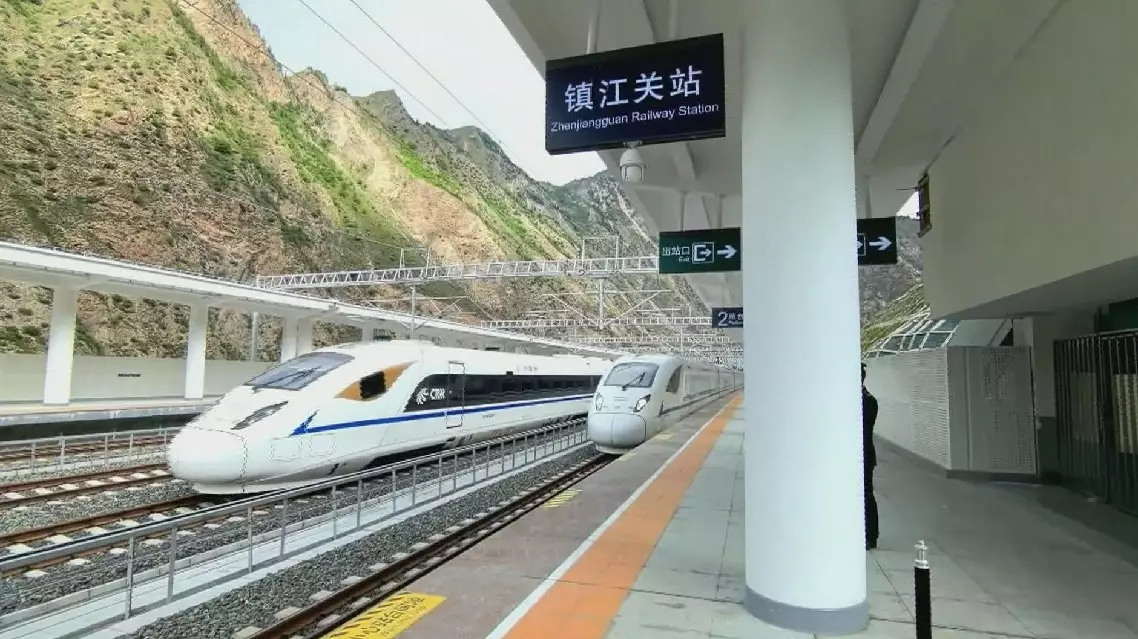
China's railway fixed-asset investment reaches 410 bln yuan from January to July
Japan's attitude to nuclear weapons will impact the global peace landscape and denuclearization is the best option for a nation that has experienced horrors and tragedies of nuclear weapons, according to some ordinary Japanese in Tokyo.
"Because Japan is the world's only nuclear-bombed country, it is the only nation that fully understands the horrors and tragedies of nuclear weapons. For such a country to possess nuclear weapons, it means very different from what other countries would do the same. Furthermore, the Three Non-Nuclear Principles were born to prevent such tragedies from recurring. If Japan were to review them, I strongly feel that this would be a major event that would drastically alter the global peace landscape," said Hikaru Kusano, a stage playwright in Tokyo.
In August 1945, the United States dropped atomic bombs on Hiroshima and Nagasaki, respectively, accelerating the end of World War II.
Eighty-one years on, right-wing forces in Japan are gearing up to revive militarism.
The Japanese authorities are rebuilding Japan's war machine, seeking to revise the three non-nuclear principles, and pursuing nuclear sharing with the U.S. side, even the possession of nuclear weapons.
"I also believe we should not possess them. Because starting from sharing, we might gradually be forced to accept new rules beyond mere sharing. Moreover, I don't think we need to comply so obediently," said Notaki Saito, a salesman in Tokyo.
"I firmly believe Japan must never share nuclear weapons. If Japan shares nuclear weapons, it will pose a threat to other countries. This means other nations will feel threatened and seek nuclear weapons themselves. If every country in the world possesses nuclear weapons, the world will fall into a Cold War state as the United States and the Soviet Union once did. This will plunge the entire world into a state of tension. Never share nuclear weapons. I believe we must never do anything that endangers Japan and global security," said Kusano.
Kota Takahashi, a Nagasaki native shaped by childhood knowledge of the atomic bombing, asserts nuclear arms bring no benefit but harm.
"At the very least, it will bring no benefits. If anything, it will only bring negative consequences. I am from Nagasaki. I learned a lot about the atomic bombing and nuclear weapons when I was little. I believe I have a good understanding of their severity," he said.
"I firmly believe that possessing nuclear weapons can never bring security. The side targeted by nuclear weapons will suffer radioactive contamination. Therefore, I believe renouncing nuclear weapons is the most essential choice. I believe denuclearization should well be the best option," said Masahiro Sawa, a teacher in Tokyo.
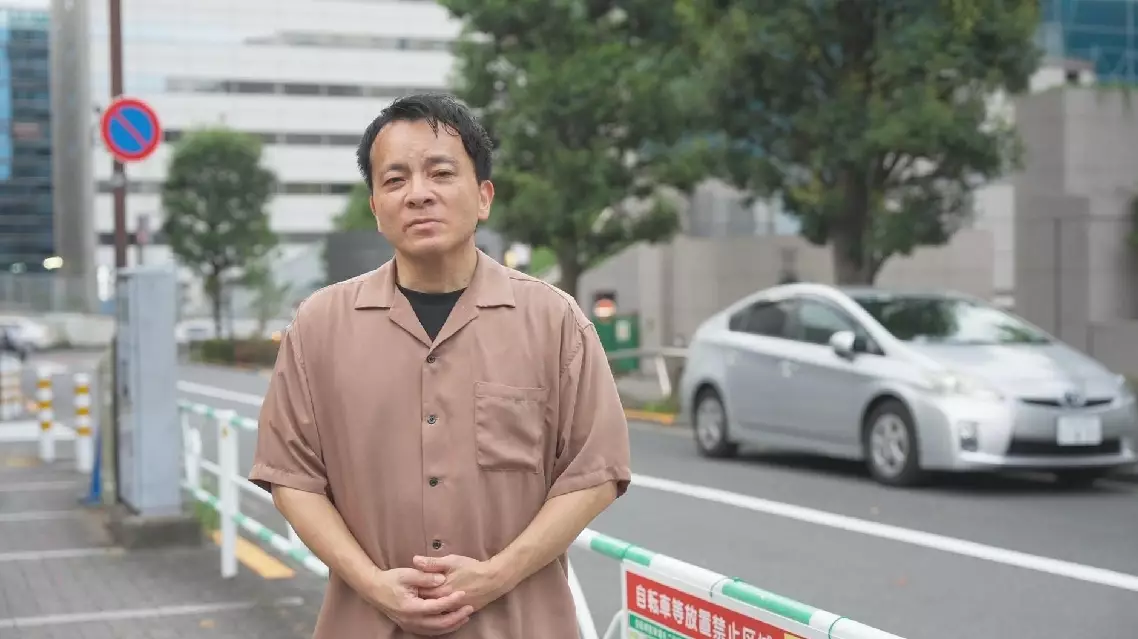
Japanese citizens criticize government's attitude to nuclear weapons