Republicans have gathered in Dallas for the closing day of the party’s midterm convention that aims to highlight President Donald Trump ’s influence and boost enthusiasm among GOP voters ahead of November’s midterm election. Speakers at the two-day event have derided Democratic candidates as extremists and offered defenses of Trump’s war in Iran. Trump and Vice President JD Vance are set to speak Thursday night.
Trump pledged Wednesday during the convention to send every American adult $5,000 if Republicans retain control of the House and Senate in the midterm elections. The dubious promise would likely cost more than $1 trillion and require congressional approval, and would further fan inflation concerns and exacerbate the country’s nearly $1.8 trillion annual budget deficit.
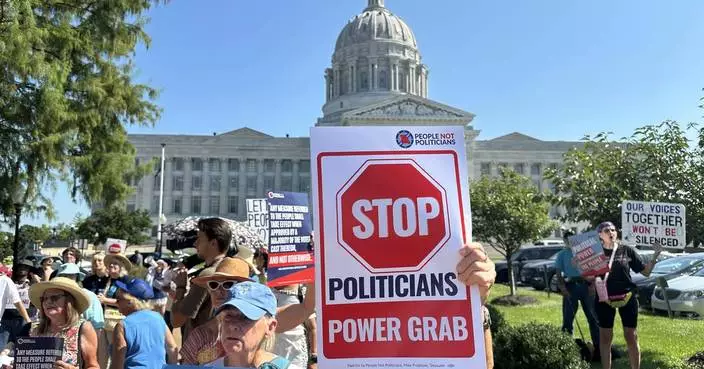
Missouri’s Republican secretary of state has ordered local election authorities to use its 2022 congressional map instead of a congressional map backed by Trump after the Supreme Court struck it down earlier today. The decision means Missouri will run the general election with a different congressional map than was used in the primary.
An appeals court on Thursday upheld a block on Trump’s executive order limiting mail voting.
Here's the latest:
The president’s son said followers of the “Make America Great Again” movement will keep Kirk’s fight for conservatism alive.
Trump Jr. said that Kirk had inspired a movement to stand up to leftists.
“We will not back down,” Trump Jr. said. “We will not fold. We will honor Charlie by carrying his torch to save this nation that we all love so dearly.”
Trump Jr. said that Democrats wanted to “shove down our throats” a “hellscape.”
As Republicans gather in Dallas, the president is also deploying his cash in key midterm races.
No Going Back PAC Inc., which a person with knowledge of the situation said is connected to Trump’s MAGA Inc., has been buying up airtime during the convention. So far it has reserved more than $68 million in advertising.
The person was not authorized to speak publicly about the funding arrangement.
— By Thomas Beaumont
Health and Human Services Secretary Robert F. Kennedy Jr. lamented what he cast as the transformation of the Democratic Party of his father and uncle at the midterm GOP convention.
The son of a former U.S. attorney general and nephew of President John F. Kennedy, the secretary said the “irony of my presence here is inescapable.”
He enumerated his view that the party had abandoned working Americans for elites and said he found a new home in the Republican Party, eliciting loud cheers and applause.
“The Democratic Party, in short, lost its way,” he said.
A video marking the Sept. 11 attacks included images from the devastation and clips of then-President George W. Bush’s visit to ground zero and triumphant first pitch in the 2001 World Series.
It also included images of then-New York real estate figure Donald Trump striding into Manhattan and talking to media about employees for his business who were working at the time of the attack.
The video later turned to images of some Democratic figures who have been critical of U.S. foreign policy and offered more callous statements of the calamity.
The segment wrapped with images of Trump as president, suggesting he had shielded the U.S. from further similar attacks, as presidents since Bush have also done.
In the end, quiet, respectful applause lightly fluttered across the arena.
Christopher Macchio’s soaring tenor spiraled through the American Airlines Center, the strains of “Ave Maria” in an almost silent convention center.
It was the most solemn and poignant moment of the convention, a tribute to the Sept. 11, 2001, attacks on New York, Washington, D.C., and Shanksville, Pennsylvania.
As Macchio’s voice filled the arena, the floor was darkened, though two beams of light stretched upward, reminiscent of the Twin Towers. Convention goers illuminated their mobile phone flashlights, giving the fitting illusion of candlelight.
The basketball arena’s screens fluttered with images of passenger aircraft striking the World Trade Center towers in New York, footage of frantic Manhattanites and debris-covered police, fire and rescue workers.
A narrator intoned “2,977 innocent people lost their lives,” as familiar videos transitioned to home videos of families.
“Always remember who they are,” the narrator said solemnly. “Say their names. Honor their sacrifice. Defend Freedom. Never forget September 11.”
Lawler, facing reelection in a battleground district this year, appealed to “common sense Democrats and independents” from the GOP midterm convention stage.
It was a different tone compared with the near constant attacks on Democrats.
“While I’m honored to be in this arena with so many fellow Republicans tonight, my message is really aimed at common sense Democrats and independents across the country tuning in and still undecided about their vote in November,” he said.
In an emotional presentation, Lawler appeared on stage with the family of Sheridan Gorman, who was fatally shot this year in Chicago. Officials have charged a man they say was illegally in the country with her slaying.
Ross Ulbricht, the founder of the underground website used for selling drugs, thanked Trump for pardoning him last year after being sentenced to life in prison in 2015.
“You gave me my life back, sir,” Ulbricht said while choking back tears.
Some in the crowd at the Republican midterm convention shouted that his plight was similar to that of those imprisoned for participating in the Jan. 6 assault on the U.S. Capitol. He said Trump was also a “target of weaponized government” after the indictments and investigations after his first term.
Ulbricht said there are hundreds of “decent Americans” who Trump freed from prison.
“I’ll be a block,” Trump said on Fox News’ “The Ingraham Angle.” “I’ll end up being a blocker.”
The president suggested he still might be able to strike deals with Congress.
He also defended his promise to give $5,000 payments to each American if Republicans preserve their congressional majorities and said he might not need congressional approval.
He also said that faster economic growth would help to pay down the $40 trillion national debt over time. Growth so far is running lower under Trump than his predecessor, Democrat Joe Biden.
GOP nominee Mike Rogers said his opponent is being funded by “terrorist groups like the Muslim Brotherhood,” but offered no proof to back up his claim.
Rogers sought to portray Abdul El-Sayed, the Democratic nominee and an epidemiologist, as a terrorist sympathizer because of his relationship with the podcaster Hasan Piker, a liberal online commentator and critic of Israel.
“They treat our country like it’s the villain,” Rogers said of his opponent and Piker.
El-Sayed distanced himself from Piker last month.
The normally festive and rowdy crowd inside the American Airlines Center quickly hushed. On the screen was a face known to many of the thousands in the basketball arena, as his voice, just as familiar, came back to life for just a few minutes.
During a five-minute homage to Kirk, the conservative organizer and former President of Turning Point USA shot to death a year ago, the Republican midterm convention sat uncharacteristically quiet.
Video of Kirk speaking and working with young adults, for which he became known as a speaker on college campuses, rolled on the huge screen, while his voice echoed through the silence.
At the short program’s end, a polite round of applause rippled through the seats.
Lucas Miles, a pastor and a Turning Point vice president, kicked off a tribute to Charlie Kirk on the one year anniversary of his death.
“They could take the man,” Miles said. “They could not take the mission.”
He ticked off a list of Turning Point’s accomplishments: thousands of chapters, more than a billion social media views.
“Turning Point is not dead,” Miles said. “The organization Charlie founded is still growing.”
Mike Johnson suggested that differences with Democrats have become irreconcilable, saying “next year the communists will be in Congress.”
“It now falls to us to fight to preserve the country that we love,” Johnson said. “It’s being attacked from within.”
The Trump presidency has been defined by a broader radicalization among Republicans and Democrats alike.
Democrats portray Trump as a corrupt actor who has violated the norms and constitutional standards governing the country, whereas Johnson and others at the GOP midterm convention have said that Democrats are now beholden to political radicals that should be rejected.
The House speaker claimed he has led “the most productive Congress in 80 years.”
Since the start of 2025, Congress has passed 105 laws, down from 274 laws passed in the prior Congress during the final two years of President Joe Biden’s term when Republicans held a majority in the House, according to Govtrack.us.
Underscoring the open 2028 Republican presidential field, several midterm convention attendees named preferred candidates from outside Trump’s Cabinet.
Kimberly Moyers, from Houston, is the national vet force director for Veterans for America First. Her pick to be the party’s next nominee: Kentucky Rep. Thomas Massie, who lost his primary to a Trump-backed challenger.
“The reason why I choose Thomas Massie is mainly because of his policies, the things that he’s done for our veterans and our defense,” she said
Self-described “political junkies” Dina and Kevin Myers, from nearby Grand Prairie, Texas, are independents, though they typically vote Republican these days. Their 2028 choice: Republican Rep. Brandon Gill.
“I want it cleaned out. On both sides. I want fresh. And I like young,” Dina Meyers said.
Eric Flores and Tano Tijerina are challenging Democratic incumbents in Texas’ Rio Grande Valley, a battleground in the fight for U.S. House control.
The two are running in districts redrawn last year to make them friendlier to Republicans.
“In my community, sleepy Joe Biden’s failure to secure our border was not something that we watched on television,” said Flores. “We live the consequences of his failure every single day.”
The Texas-Mexico border region was a Democratic stronghold for decades, but has shifted to the right during the Trump era. Republicans are hoping dissatisfaction with the economy will help them regain support from working class Hispanics.
Flores is among a collection of Republican candidates who have quietly begun to distance themselves from Trump after contested primaries.
“He stood for South Texas values,” Tijerina said of Trump. “He secured our border. And for that, our border community will forever be grateful.”
Vance, whose keynote address is set for Thursday at the GOP midterm convention, hardly leapt automatically from the lips of activists attending the gathering.
Rochelle Brooks shook her head at the prospect of voicing early preference for a 2028 nominee. When pressed, she protested before suggesting, “If I was forced, I would say it’s the governor of Florida, Ron DeSantis.”
“What he’s done in Florida is a roadmap for what we need to do in America,” the Dallas IT manager said.
Peggy Stanton could hardly get Secretary of State Marco Rubio out of her mouth fast enough when the Houston retiree was asked who she would like to see atop the Republicans’ 2028 ticket.
“He’s so knowledgeable. He totally understands international threats,” Stanton said.
Stephanie Donofry rolled her eyes at a decision still two years off and said she couldn’t decide whether she preferred Vance or Rubio.
“They are both proven,” she said.
The Texas senator and past presidential hopeful said that Democrats are increasingly composed of communists and “Islamists” who “hate” Christians, Jews and capitalism.
Cruz suggested that leading Democratic candidates wanted the Islamic moral code to become law.
“Sharia law is fundamentally inconsistent with the Constitution, and we need to stand together and stop it now,” Cruz said.
The argument made by Cruz at the Republican convention in Dallas reflects a broader theme in which GOP leaders have sought to portray their political opponents as unpatriotic and traitorous to the ideals of America. That’s a message that Democratic leaders reject as they have stressed the importance of access to healthcare and progressive taxation, among other issues.
Chants of “JD, JD, JD” broke out at the vice president’s meeting Thursday with delegates from presidential battleground states Michigan, Pennsylvania and Wisconsin, and his home state of Ohio, according to one attendee.
St. Croix County, Wisconsin, GOP Chairman Matt Rust noted the chants greeted Vance as he entered a hotel conference room not far from the GOP convention.
Likewise, chants of “48, 48, 48” broke out, a reference to the number of the next president of the United States.
Vance gave no hint of his plans, although he is widely expected to seek the 2028 nomination. But he didn’t have to, Wisconsin Republican Party Chairman Brian Schimming said.
“He’s so savvy. He’s just a savvy guy,” said Schimming, noting that Vance had been to Wisconsin, where Trump won by less than a single percentage point in 2024, three times this year and is expected back before Nov. 3.
“I’m not sure I’ll have to beg him to come back.”
The event was closed to the press.
Trump thanked Defense Secretary Pete Hegseth and Gen. Dan Caine, chairman of the Joint Chiefs of Staff, on Wednesday night while speaking at the Republican political convention in Dallas.
“They’re here someplace,” Trump said.
While Caine was in Dallas, he was not at the convention, spokesperson Joe Holstead said. Instead, the chairman spoke at the George W. Bush Center’s 9/11 anniversary event several miles away.
The Pentagon didn’t answer questions about Hegseth’s whereabouts.
The Pentagon’s daily schedule for Hegseth said he had no public events on Wednesday, while Caine was only slated to speak at a defense industrial conference in Washington.
Traditionally, Pentagon leaders, and especially uniformed troops, have taken steps to avoid the appearance of partisanship in an effort to maintain the military’s apolitical image.
Michigan Rep. Lisa McClain called Democrats “communist crazy” as she sought to vilify the Democrats as making the U.S. unrecognizable — a sign of how nasty the November midterm elections could become in the closing weeks.
She specifically targeted Abdul El-Sayed, the Democratic nominee for Senate in Michigan, as a “dangerous, radical socialist.”
North Carolina Rep. Richard Hudson, chairman of the National Republican Congressional Committee, said that GOP lawmakers are “fighting every day to make your life better” as he also attacked Democrats as “crazy.”
Inflation continues to be persistently elevated and the Iran war has been broadly unpopular, putting Republicans at a disadvantage and prompting them to focus on cultural issues and Cold War-era claims of communism.
Marty O’Donnell is running for the U.S. House in Nevada, where he’s challenging Democrat Susie Lee.
But before that, O’Donnell was a composer best known for his work on the music in Halo, the massively popular video game.
He hummed the theme. “That’s me,” he said.
“If you raised your kids or you grew up in the ’90s, you definitely heard my music,” he said, launching into the earworm jingle for Flintstones vitamins.
“We are Flintstones kids, 10 million strong and growing,” he sang. The crowd, at least those in the target demographic, joined in.
O’Donnell beamed, clearly tickled that the jingle still resonated decades later.
“Thank you for doing that,” he said, smiling. “I appreciate that.”
And with that, he turned to his new profession as a politician, making the case for Republican leadership in Washington.
U.S. Minister Counselor Jenifer Neidhart told an emergency meeting of the U.N. Security Council that “the Houthis are agents and tools of Iran.”
Their attacks in Saudi Arabia and Yemen are part of a broader campaign to disrupt “vital corridors” including the Bab el-Mandeb Strait and threaten the right to freedom of navigation and global commerce, she said.
The United States stands with Saudi Arabia and Yemen’s internationally recognized government and demands that the Houthis immediately stop all attacks, Neidhart said.
“The path forward requires depriving the Houthis of the resources that sustain their acts of terrorism,” she said, calling for stronger implementation of U.N. sanctions against the rebel group.
Neidhart warned that those who enable the “unacceptable” escalation of Houthi attacks “bear responsibility for its consequences.”
“Captives need to know somebody is working for them,” said George Glezmann, who was abducted by the Taliban while traveling through Afghanistan as a tourist. “President Trump delivered.”
Fabian Buglione, a U.S. permanent resident who was detained in Venezuela for nine months, said he and other Americans being held felt “abandoned” by the Biden administration.
“But when we learned President Trump had won the election, we believed he was our path home,” Buglione said.
The parents of Omer Neutra, an American who joined the Israeli military and was killed during the attack on Oct. 7, 2023, also spoke. They credited Trump with getting their son’s remains returned so they could bury him.
“President Trump kept his promise,” said Ronen Neutra, Omer’s father. “All the hostages came home -- the living and the deceased.”
A Trump ally says he has resigned from his post leading a Justice Department investigation into whether former law enforcement and intelligence officials conspired against the Republican president.
“I did in fact resign,” Joe diGenova told The Associated Press on Thursday, calling it an “honor and a privilege” to serve Trump and the Justice Department. He declined to comment on the circumstances of his departure.
His resignation came just five months after he was brought back to the Justice Department to help oversee a loosely defined investigation targeting ex-government officials who over the last decade had scrutinized Trump.
A spokesperson for the Justice Department did not immediately return a message seeking comment.
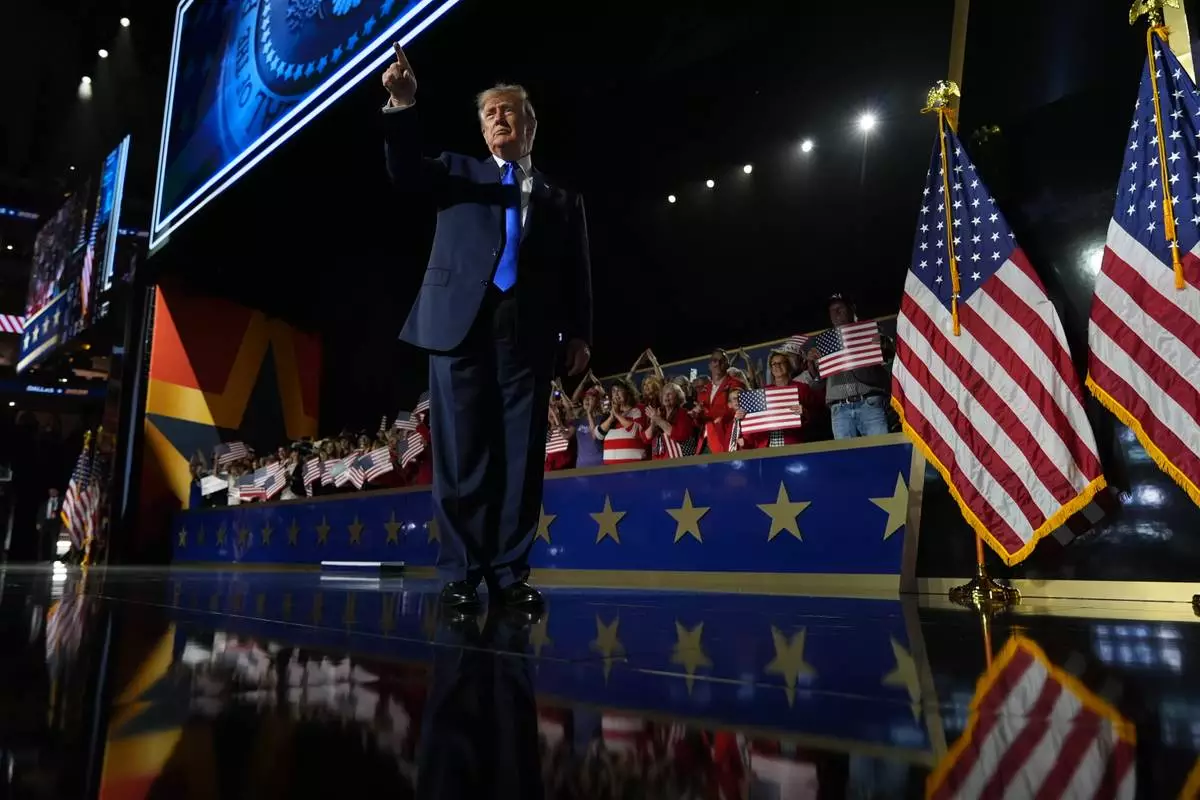
President Donald Trump leaves the RNC Midterm Convention, Wednesday, Sept. 9, 2026, in Dallas. (AP Photo/Jacquelyn Martin)
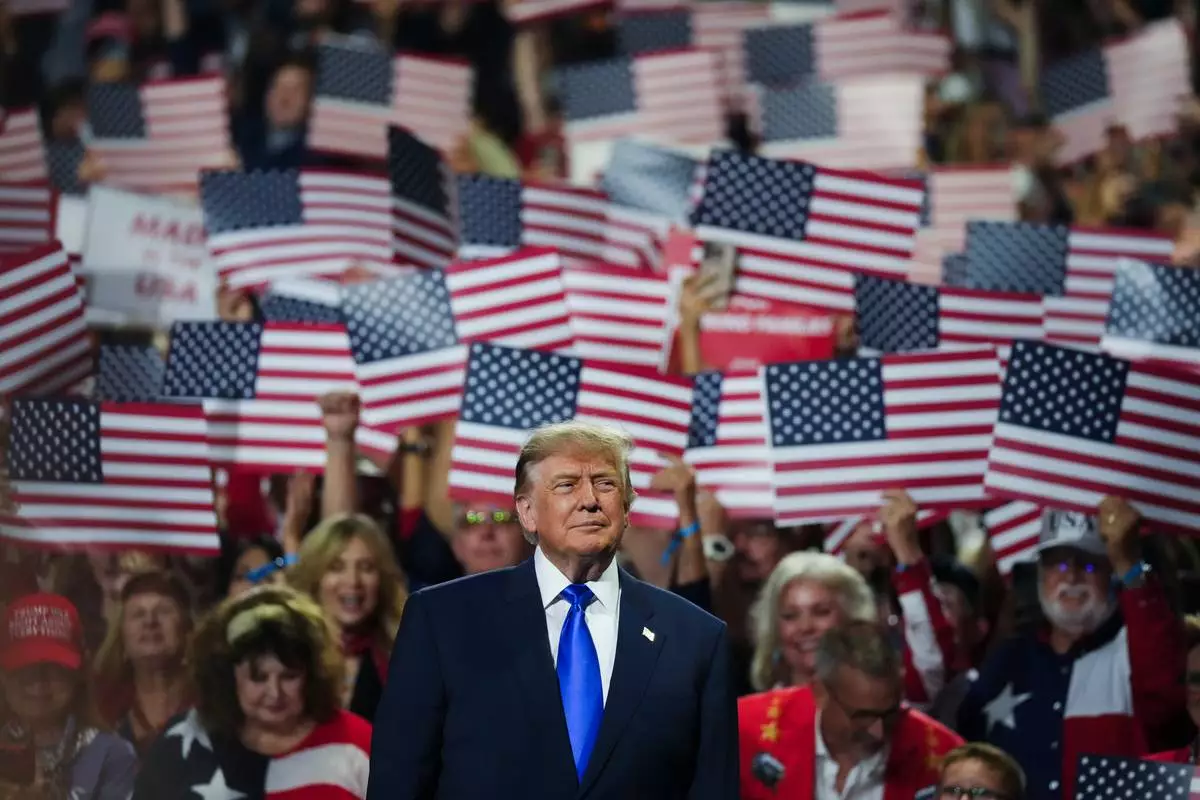
President Donald Trump attends the RNC Midterm Convention, Wednesday, Sept. 9, 2026, at the American Airlines Center in Dallas. (Eric Lee/Pool photo via AP)
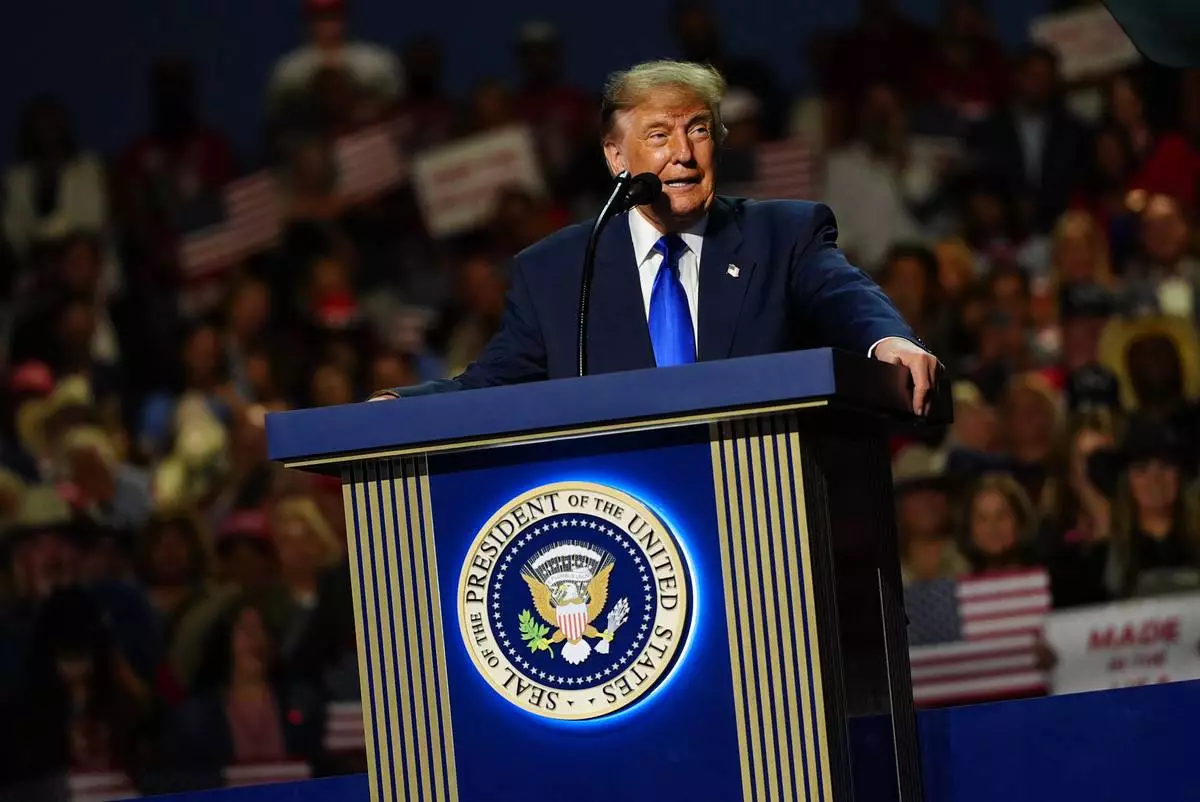
President Donald Trump speaks at the Republican convention, Wednesday, Sept. 9, 2026, in Dallas. (AP Photo/Julia Demaree Nikhinson)