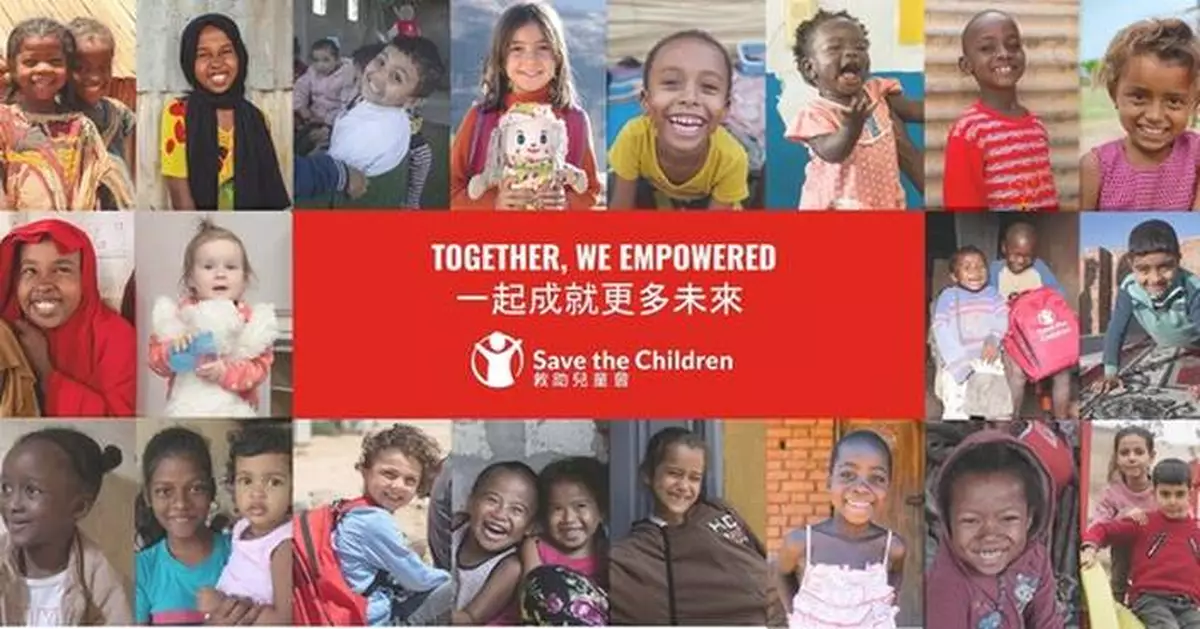
Sustained contributions lead to lasting and impactful transformations.
#SavetheChildrenHK #ChildGuardian #MonthlyDonation
HONG KONG, Aug. 22, 2024 /PRNewswire/ -- Data released by the Hong Kong Government Education Bureau indicates that in 2023, there were over 30 reported instances of suspected suicides involving primary and secondary school students, marking a five-year high. The recent surge in suicide cases underscores the significance of extending support beyond mere material assistance; emotional sustenance and empathy for children are equally imperative.
Established over a century ago, Save the Children stands as the pioneering independent children's organisation globally, dedicated to effecting immediate and enduring positive changes in the lives of children worldwide, thereby shaping a brighter collective future. Save the Children has played a vital role in enhancing the welfare of children in Hong Kong and over 120 countries and regions, guaranteeing their health, joy, education, and security.
This year marks the 15th anniversary of Save the Children Hong Kong, has worked closely with underprivileged children to safeguard their personal safety and enhance their mental well-being, emphasizing the advocacy for the children's welfare. Save the Children Hong Kong not only aids local children but also provides assistance worldwide, helping children affected by conflicts such as the Russian-Ukrainian war, the Syrian earthquake, and violence in regions like Gaza, Israel, and Sudan. Save the Children Hong Kong offers both physical and emotional support to children affected by wars and natural disasters, showcasing its commitment to safeguarding children's welfare globally.
Nagi is a happy and cheeky little boy, but his world turned upside down when he had to flee violence in Sudan. His family found temporary accommodation but didn't have any of their belongings. Save the Children was able to help by supplying the family with things they needed, as well as creating a child friendly space where Nagi could learn and play safely.
Maha, 10, was out collecting firewood near her home in Yemen when she stepped on a landmine - and her life changed forever. Her injuries were so severe, she was rushed to hospital where she needed urgent surgery. Save the Children covered all her medical costs and provided ongoing psycho-social support. Maha is now back at school, where she loves drawing.
17 year Olena was worried about her education when her school was destroyed during the war in Ukraine. Save the Children created a new safe place for the students to finish their studies. Before graduation, they visited their old school to take special yearbook photos that would remind them of the school where they had many happy memories.
Explore additional stories about the sponsored children: https://savethechildren.org.hk/wp-content/uploads/2024/02/Impact-Report-2023.pdf
"Let children grow up healthily and happily" is no longer just a slogan.
"Children are the future pillars of society," a well-known saying that emphasizes the crucial role each child plays in shaping a brighter tomorrow for all. Ensuring a child's future transcends mere provision of basic needs like food and clothing. While temporary assistance offers immediate physical care to distressed children, their emotional well-being is equally significant. Daily stability and support lay the foundation for psychological security, empowering them to navigate life confidently and explore endless opportunities.
This is the purpose of the Save the Children's Child Guardian program. Thanks to the monthly donations made by the Child Guardians, Save the Children is able to generate a steady stream of income for the development of longer-term and more effective programs for the children. When a natural disaster strikes, Save the Children is able to go to the disaster area and help the children in need immediately. After the disaster, Save the Children can continue to provide support to the children, so that Save the Children's work can be sustained.
You can shape a better future for children, leading to our bright future.
Take action now and be a Child Guardian by making a monthly donation!
Be a Child Guardian: https://savethechildren.org.hk/together-we-empower-a-happy-childhood/?utm_source=Innity&utm_medium=innityPR+ad&utm_campaign=CG
Tel: (852) 3160-8786
E-mail: hk.sponsorsupport@savethechildren.org
Website: https://savethechildren.org.hk/
Facebook: https://www.facebook.com/savethechildrenhk
Instagram: https://www.instagram.com/savethechildrenhk/
For more high-resolution images, please refer to the following links to download: Link
About Save The Children Hong Kong
Save the Children believes every child deserves a future. In Hong Kong and around the world, we do whatever it takes – every day and in times of crisis – so children can fulfil their rights to a healthy start in life, the opportunity to learn and protection from harm. With over 100 years of expertise, we are the world's first and leading independent children's organisation – transforming lives and the future we share.
Established in 2009, Save the Children Hong Kong is part of the global movement which operates in around 120 countries. We work with children, schools, families, communities and our supporters to deliver lasting change for children in Hong Kong and around the world.
Visit our website, or follow us on Facebook, Instagram, LinkedIn and YouTube.
** The press release content is from PR Newswire. Bastille Post is not involved in its creation. **
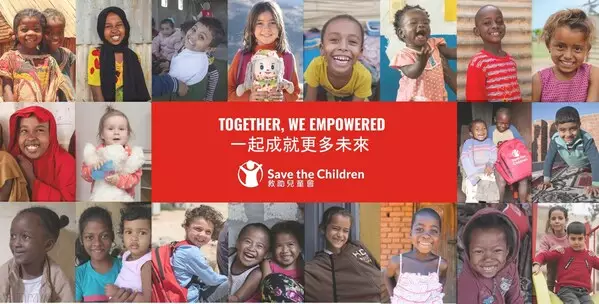
Persistent Donations Transform Children's Lives
JIANGMEN, China, Sept. 21, 2026 /PRNewswire/ -- Jiangmen Meixin Comb Brush Machinery Co., Ltd., a leading brush machine manufacturer in China, marks its 38th year of operations. By engineering automated production solutions for the global brush manufacturing industry, Meixin has secured a significant market share across Asia, the Middle East, and South America. Today, the company actively cooperates with clients worldwide, sustaining successful partnerships in countries such as Germany, the UK, Turkey, Brazil, Peru, and Kenya.
38 Years of Engineering and Manufacturing Experience
Founded in 1988, the company operates as a foundational pioneer in the domestic brush making machinery sector. One-third of the internal engineering staff applies over two decades of direct factory floor experience to daily design operations. This technical depth translates into numerous secured invention, utility, and design patents.
The engineering team consistently rolls out specialized units, including 2- to 5-axis brush tufting machines, brush drilling and tufting integrated machines, brush trimmers, and high-end custom brush-making machines. As a comprehensive China brush machine supplier, Meixin manufactures equipment lines for household cleaning brush items such as brooms, cleaning brushes, toilet brushes, ceiling brushes, and industrial brushes such as strip brushes, disc brushes, plate brushes, roller brushes, abrasive applications, and heavy-duty industrial applications. These production lines range from basic manual brush making machines to highly complex CNC brush machines.
Flexible Custom Production Capabilities
As a professional brush making machine manufacturer, Meixin resolves specific manufacturing bottlenecks through extensive OEM and ODM customization services aligned with individual client specifications. Whether an assembly line requires a high-volume broom making machine or a precise plastic brush making machine, the company executes complete equipment installation, debugging, and operator training.
To maintain strict quality control and an efficient processing cycle, an independent CNC processing department manages precise part processing for machines and critical spare parts, preparing for immediate dispatch. This robust pre-sales and after-sales support system is fully backed by 24/7 online technical assistance alongside professional on-site maintenance protocols for global manufacturing partners.
Every unit leaving the production floor undergoes 100% pre-dispatch testing to verify functional capabilities, safety, reliability, and durability. Technicians construct these systems using premium international components, integrating imported TBI precision ball screws, linear guides, Panasonic servo motors, and Italian brake motors to ensure long-term operational stability.
Innovative Automation and Equipment Upgrades
Meixin remains dedicated to driving industrial efficiency and output optimization. CEO Leo champions this operational philosophy, stating, "Make brush making simpler, prevent production from stagnating due to technical issues, and bring Meixin Brush Machinery to the world."
This commitment drives the continuous development of advanced automated brush making equipment, prominently featuring the 2-axis automatic broom machine introduced last year. The new-generation Meixin 2-Axis Brush Machine is designed to deliver efficient, stable, and automated brush production. With automatic conveying and auto changeover, one operator can easily manage multiple machines, helping reduce labor costs while maintaining high productivity. The optimized 2-axis control system also secures uniform hole positioning alongside consistent bristle insertion during extended production cycles of the broom manufacturing machine, effectively minimizing defect rates and guaranteeing stable, high-yield output.
Similar specialized equipment actively resolves regional manufacturing hurdles. For example, fully automatic no-dust broom making machines now operate extensively across India to meet local volume demands. The engineering team continues to introduce distinct mechanical configurations to systematically elevate global factory metrics:
- No-dust broom making machines: The hardware merges PP filament loading, conveying, flagging, gluing, and manual winding into a singular sequence, raising overall output by 80% compared to traditional hand-assembly methods.
- Mixed material production lines: Dedicated brush making machines handle special materials, including leather, cotton strips, and leather-based mixed plastic filaments.
- Industrial bristle removal equipment: Supporting sustainable recycling practices, this system efficiently strips old filaments from industrial bases and drastically reduces manual labor time. Operators can then reuse the core structures for secondary tufting.
About Meixin Brush Machinery
Jiangmen Meixin Comb Brush Machinery Co., Ltd. operates as a highly integrated trade enterprise and industrial brush machinery supplier. Meixin's production capabilities deliver reliable equipment such as the industrial brush machine, roller brush making machine, bottle brush making machine, and the standard toilet brush machine. Driven by a core commitment to bridging quality, service, and reliability, Meixin continuously empowers the global brush manufacturing industry while building lasting, win-win partnerships with clients worldwide.
Media Contact
Email: Mxdx@Mxbrushmachinery.Com
Website: https://www.mxbrushmachinery.com/
Address: Heqiao Kuiwei, Sanyi Industrial Zone, Siqian Town, Xinhui District, Jiangmen, Guangdong 529159, China
** This press release is distributed by PR Newswire through automated distribution system, for which the client assumes full responsibility. **
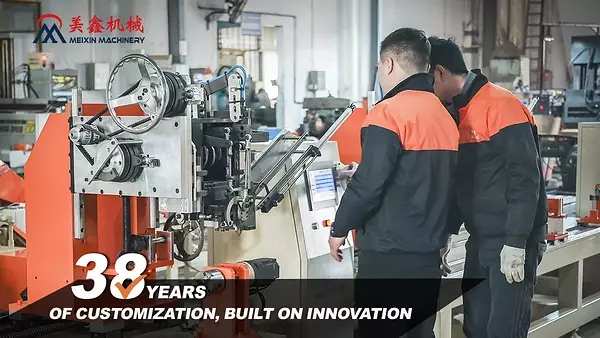
Meixin Brush Machinery: 38 Years of Expertise in Customization and Equipment Innovation