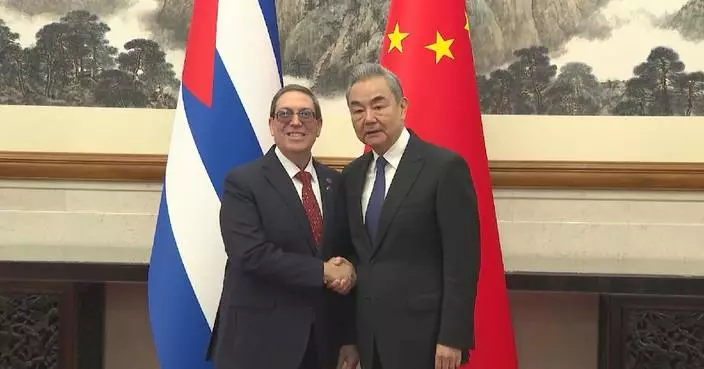
Zimbabwean President Emmerson Mnangagwa on Wednesday highlighted the African country's growing partnership with China, particularly noting joint efforts in infrastructure development including the China-constructed airport terminal in the country.
Mnangagwa arrived in Beijing on Monday to attend the 2024 Summit of the Forum on China-Africa Cooperation (FOCAC), running from Wednesday to Friday, and to pay a state visit to China.
In an exclusive interview with China Media Group (CMG), Mnangagwa expressed his desire to elevate the China-Zimbabwe relationship as they approach the 45th anniversary of diplomatic ties next year.
"Our relations between Zimbabwe and China are at a level of comprehensive partnership and relations. We must lift this to a higher level between the two countries. In the years we have built diplomatic relations, our cooperation has deepened comprehensively. Look at any aspect of the economy or society. We are cooperating in education, we are cooperating in infrastructure. Today, if you look at the infrastructure in Zimbabwe, you see the footprint of our relations with China. Our new international airport in Harare in Zimbabwe. I believe it's the best international airport in our region," said the president.
"And we continue to deepen that relationship and we support each other at regional and international forums. We know that whatever position I take or any issue, China will support. Whatever China takes, Zimbabwe will support the Chinese position. Because we are one in terms of our domestic and foreign policy challenges," he added.
Mnangagwa praised China's contribution to Zimbabwe's infrastructure, highlighting the China-constructed terminal at the Robert Gabriel Mugabe International Airport, the country's busiest airport.
"Last month in August we held the SADC Summit of heads of state in Harare. [In] person, each head of state found occasion to have a chat with me and say, my brother, your new airport, the facilities that are there, just the rooms which are there now. It is so devastating in terms of beauty, so each head of state when they came for the summit when I first had one to one chat, each individual commended one or two things about what they saw," he said.
The Zimbabwean president also attended the delivery ceremony for the airport terminal, where he commended China for its support.
China was the first country outside Africa that Mnangagwa visited when he took office in 2018. He emphasized the historical cooperation between Zimbabwe and China and acknowledged China's significant impact on African development.
"To be honest, I don't know of any African country where China is not impacted the development of that particular country. My view is that most of us on the African continent in our development, you can recognize the impact of cooperation with China. I had met yesterday with his excellency President Xi Jinping here and I informed him a list of infrastructure development supported by China in our transformation in the infrastructure development in our country. We went through all that. So you can see that there is historical cooperation between Zimbabwe and China," said the president.
Boasting a long-standing friendship, China and Zimbabwe have maintained mutual trust since the establishment of diplomatic relations in 1980. In 2018, the two countries upgraded their relationship to a comprehensive strategic partnership of cooperation.

Zimbabwean President commends China’s role in Zimbabwe’s infrastructure development
Trilateral talks between Russia, the United States and Ukraine ended on Wednesday in Abu Dhabi, with Russia and Ukraine reaching an agreement on a "large-scale" prisoner exchange.
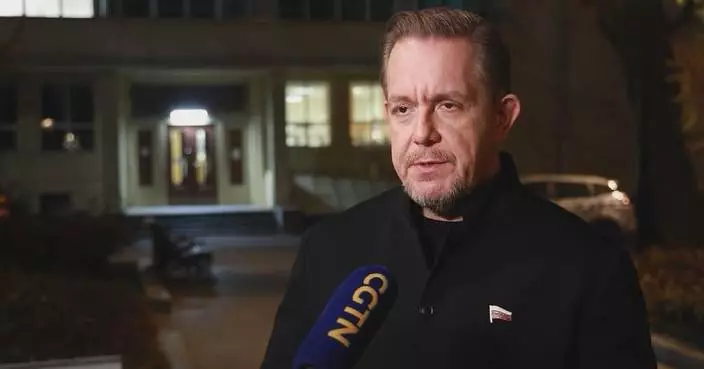
Vladimir Medinsky, head of the Russian delegation at the talks, told a press conference that details of the exchange would be announced soon and that negotiations would continue.
He said the delegations had discussed humanitarian issues, with the future of European security being a central focus of the U.S.-mediated talks.
Medinsky added that parties had reached understandings on some issues, without providing further details.
He defended the need to discuss post-war security arrangements at the current stage of negotiations, saying the conflict in Ukraine had exposed shortcomings in Europe's security system.
Medinsky called for the establishment of a fair security framework that takes into account the interests of all countries.
Kremlin spokesman Dmitry Peskov said on Wednesday that Russian President Vladimir Putin had been continuously briefed by the Russian delegation on developments in the trilateral talks.
He said that the Russian delegation did not have any contacts with European representatives in Abu Dhabi, and such contacts had not been planned in the first place.
Meanwhile, Jared Kushner, a member of the U.S. negotiating team, told reporters that a lot of serious issues had been discussed, adding the discussions were thorough and covered all major issues.
He noted that the prisoner exchange deal was one of the positive outcomes of the negotiations, with the exact number of prisoners to be finalized on Thursday.
Kushner said the second day of discussions were "very substantive," describing the negotiations as a good first step forward.
He also said he and U.S. special envoy Steve Witkoff planned to travel to Moscow for further discussions on ending the Ukraine conflict.
Kushner noted that the two would seek progress in Moscow if Russian President Vladimir Putin agreed to U.S. demands to end the war, and would meet Ukrainian President Volodymyr Zelensky afterward.
Kushner added that Russia had its own security concerns and had been asked to put forward proposals to reduce tensions.
On the Ukrainian side, negotiator David Arakhamia, chairman of the Servant of the People parliamentary faction, a Ukrainian political party, said the Abu Dhabi talks had generated "good momentum" toward finding a solution to the conflict before the end of the year.
Rustem Umerov, head of Ukraine's Foreign Intelligence Service and a member of the Ukrainian negotiating delegation, said earlier Wednesday that the Ukrainian team planned to hold separate discussions with European partners following the trilateral session.
"The Russian-Ukrainian war has its implication on the European security structure to begin with. So having the European security structure as part of these trilateral talks is a logical process, because we cannot exclude the effects this war had on Europe's security, on Europe's economy, and it's right on the European border. And that's the whole issue. The main issue that began with is NATO being closer and Europe's security being closer to the Russian border," said Abdulaziz Al-Shehhi, a senior researcher at TRENDS Research and Advisory.
The latest round of Russia-U.S.-Ukraine trilateral talks took place in Abu Dhabi on Tuesday and Wednesday, marking the first meeting among the three countries since February. The first day's discussions lasted nearly four hours, while Wednesday's session concluded in less than two hours.
Although progress was reported on the prisoner exchange, no agreement was announced on a ceasefire, territorial disputes or long-term security guarantees.
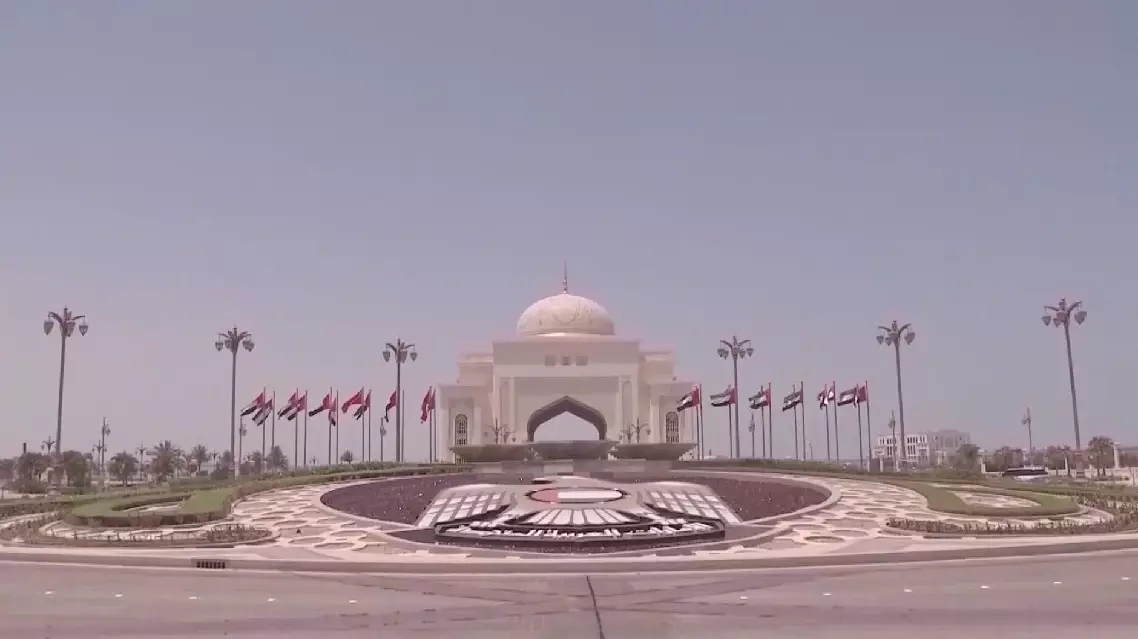
Trilateral talks on settlement of Ukraine crisis conclude in Abu Dhabi