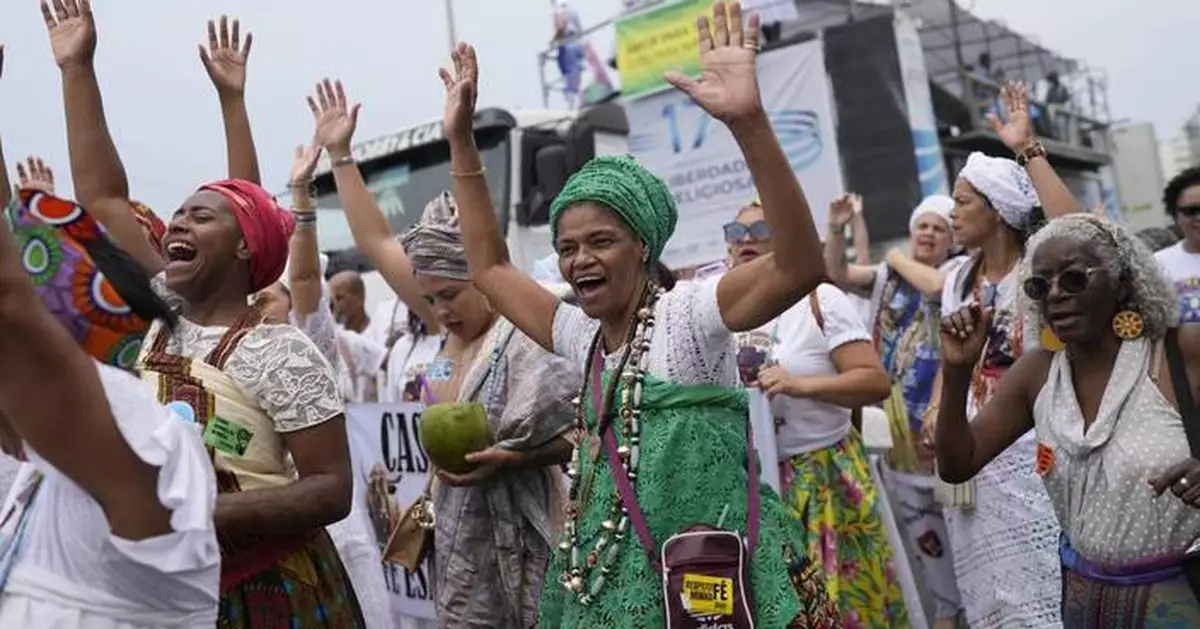
RIO DE JANEIRO, Brazil (AP) — Practitioners of different religious traditions marched down Rio de Janeiro's iconic Copacabana Beach on Sunday to support religious freedom in Brazil, where cases of intolerance have doubled over the past six years.
Hundreds of men, women and children from more than a dozen faiths participated in the event, known as the March for the Defense of Religious Freedom. Many of the participants were practitioners of Afro-Brazilian religions that have recently faced attacks from members of Christian groups. Brazil's recently appointed Minister for Human Rights Macaé Evaristo also joined the march, which was held for the 17th consecutive year.
Click to Gallery
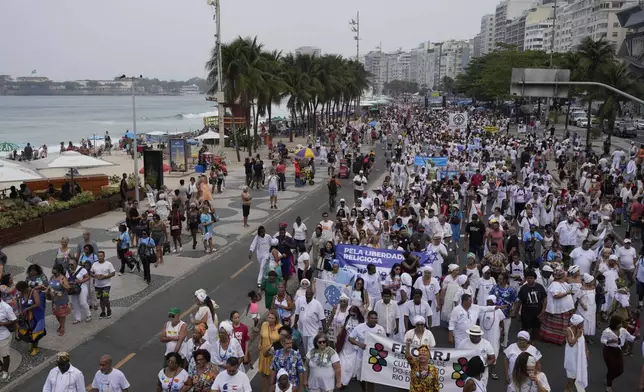
Faithful from various religions participate in the Defense of Religious Freedom march at Copacabana beach in Rio de Janeiro, Sunday, Sept. 15, 2024. The march seeks to bring attention to religious intolerance in the country. (AP Photo/Silvia Izquierdo)
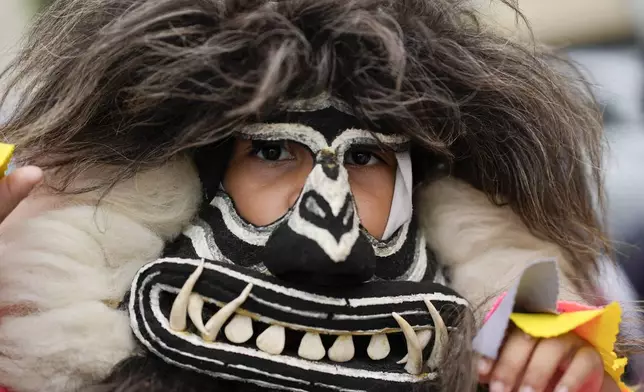
A youth wears a mask during the Defense of Religious Freedom march at Copacabana beach in Rio de Janeiro, Sunday, Sept. 15, 2024. The march seeks to bring attention to religious intolerance in the country. (AP Photo/Silvia Izquierdo)

Faithful from various religions participate in the Defense of Religious Freedom march at Copacabana beach in Rio de Janeiro, Sunday, Sept. 15, 2024. The march seeks to bring attention to religious intolerance in the country. (AP Photo/Silvia Izquierdo)
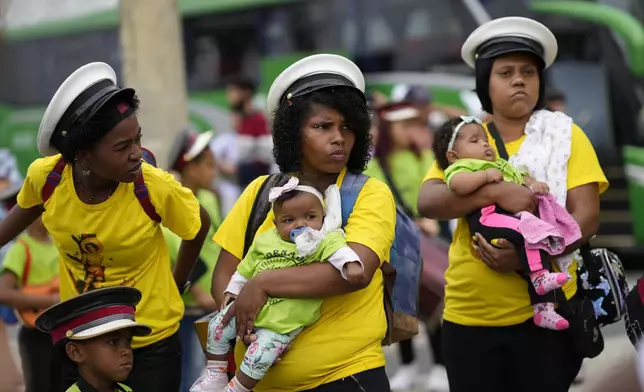
Women holding babies wait for the start of the Defense of Religious Freedom march at Copacabana beach in Rio de Janeiro, Sunday, Sept. 15, 2024. The march seeks to bring attention to religious intolerance in the country. (AP Photo/Silvia Izquierdo)
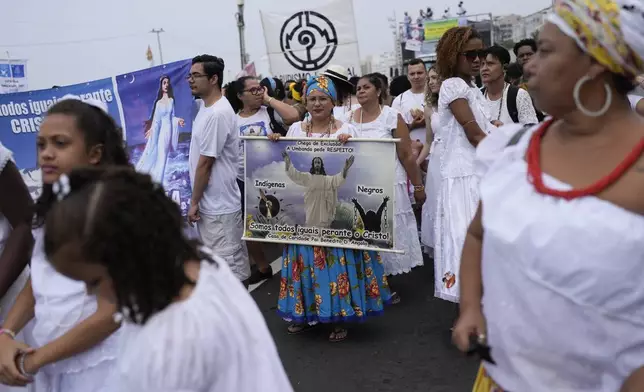
A woman holds a sign that reads "Indigenous people, Black people, we are all equal before Christ" during the Defense of Religious Freedom march at Copacabana beach in Rio de Janeiro, Sunday, Sept. 15, 2024. The march seeks to bring attention to religious intolerance in the country. (AP Photo/Silvia Izquierdo)

Youth participate in a Defense of Religious Freedom march at Copacabana beach in Rio de Janeiro, Sunday, Sept. 15, 2024. The march seeks to bring attention to religious intolerance in the country. (AP Photo/Silvia Izquierdo)
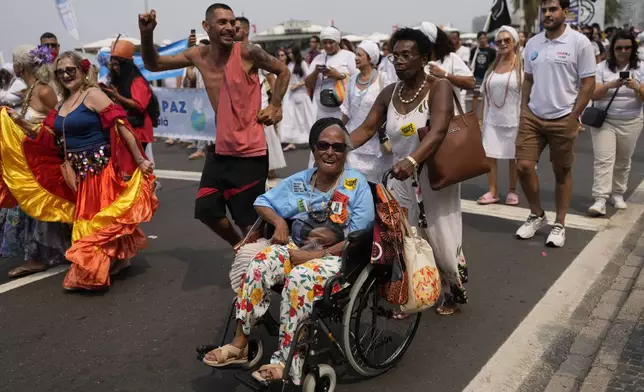
Faithful from various religions participate in the Defense of Religious Freedom march at Copacabana beach in Rio de Janeiro, Sunday, Sept. 15, 2024. The march seeks to bring attention to religious intolerance in the country. (AP Photo/Silvia Izquierdo)
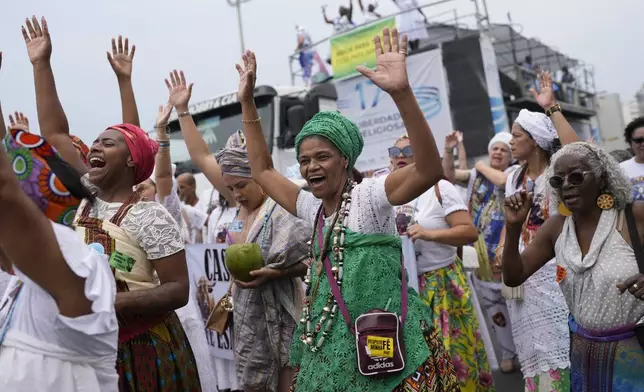
Faithful from various religions participate in the Defense of Religious Freedom march at Copacabana beach in Rio de Janeiro, Sunday, Sept. 15, 2024. The march seeks to bring attention to religious intolerance in the country. (AP Photo/Silvia Izquierdo)
“The great challenge today in our country is to reduce inequality," Evaristo told the state-run Agencia Brasil news agency. "So for me it is very important to be present in this march, because the people here are also struggling for many things like decent work and a life free from hunger."
In Rio de Janeiro state, which is home to a quarter of the practitioners of Afro-Brazilian religions, there’s been a proliferation of evangelical Christianity, particularly neo-Pentecostal churches founded since 1970 that focus on spreading their faith among non-believers.
Experts say that while most neo-Pentecostal proselytizing is peaceful, the spread of the faith has been accompanied by a surge of intolerance for traditional African-influenced religions, ranging from verbal abuse and discrimination to destruction of temples and forced expulsion from neighborhoods.
“Everything that comes from Black people, everything that comes from people of African origin is devalued; if we are not firm in our faith, we will lose strength," said Vania Vieira, a practitioner of the Afro-Brazilian religion Candomblé. “This walk is to show that we are standing, that we will survive.”
While the Brazilian constitution protects the free exercise of religion, cases of disrespect and attacks, especially against groups of African origin, have become increasingly frequent.
Between 2018 and 2023, the Brazilian government’s complaint service recorded an increase of 140% in the number of complaints of religious intolerance in the country.
In Brazil, those who commit crimes of religious intolerance can face up to five years in prison, as well as a fine.
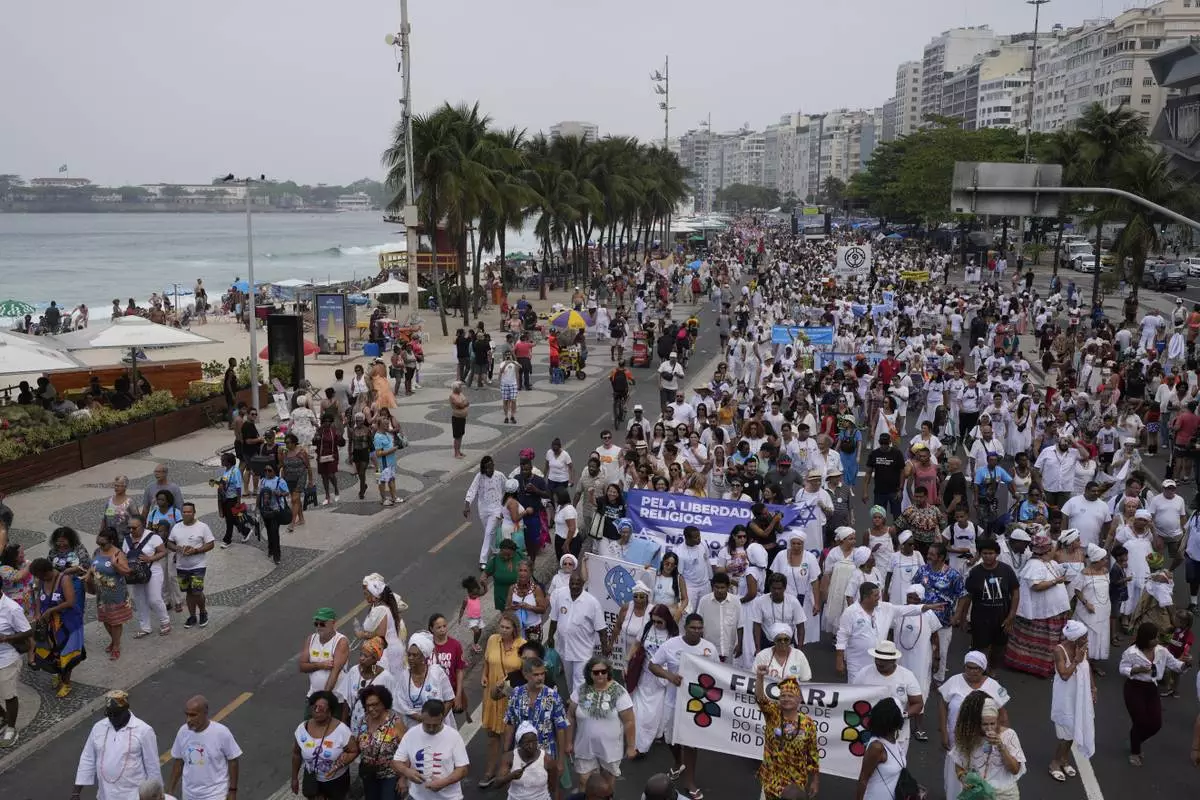
Faithful from various religions participate in the Defense of Religious Freedom march at Copacabana beach in Rio de Janeiro, Sunday, Sept. 15, 2024. The march seeks to bring attention to religious intolerance in the country. (AP Photo/Silvia Izquierdo)
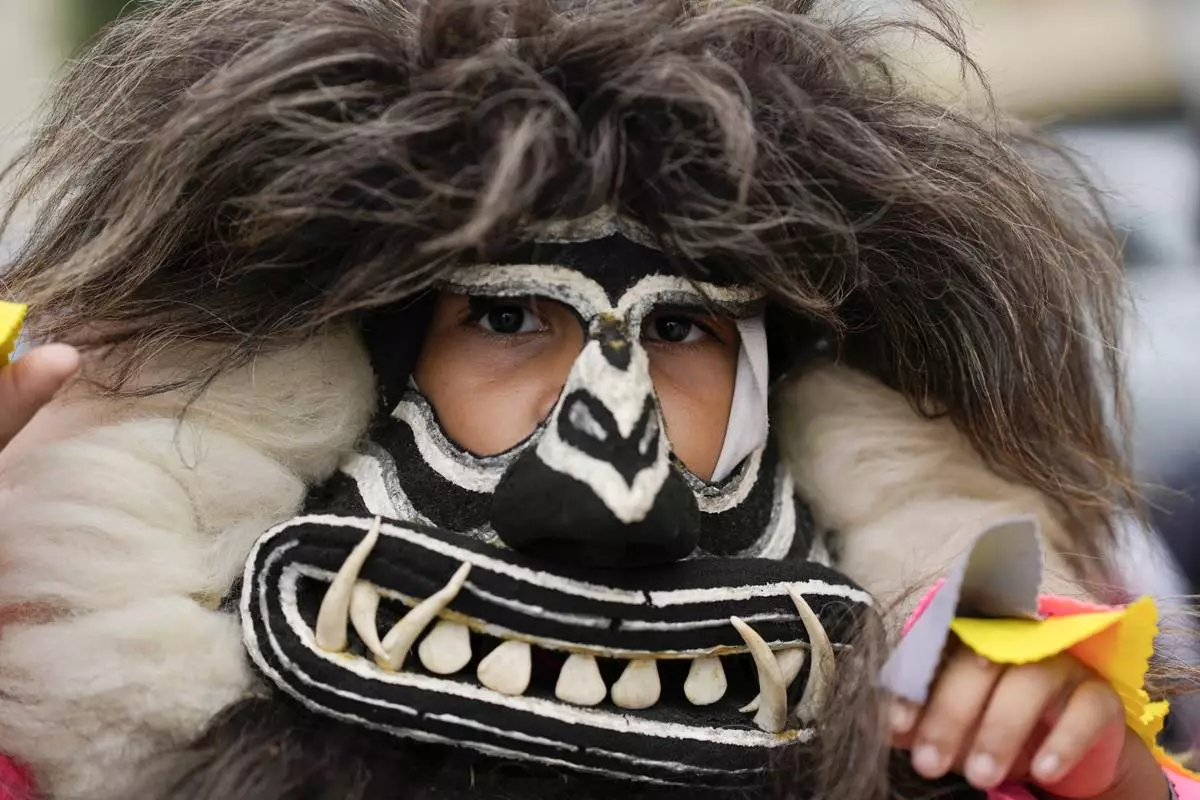
A youth wears a mask during the Defense of Religious Freedom march at Copacabana beach in Rio de Janeiro, Sunday, Sept. 15, 2024. The march seeks to bring attention to religious intolerance in the country. (AP Photo/Silvia Izquierdo)
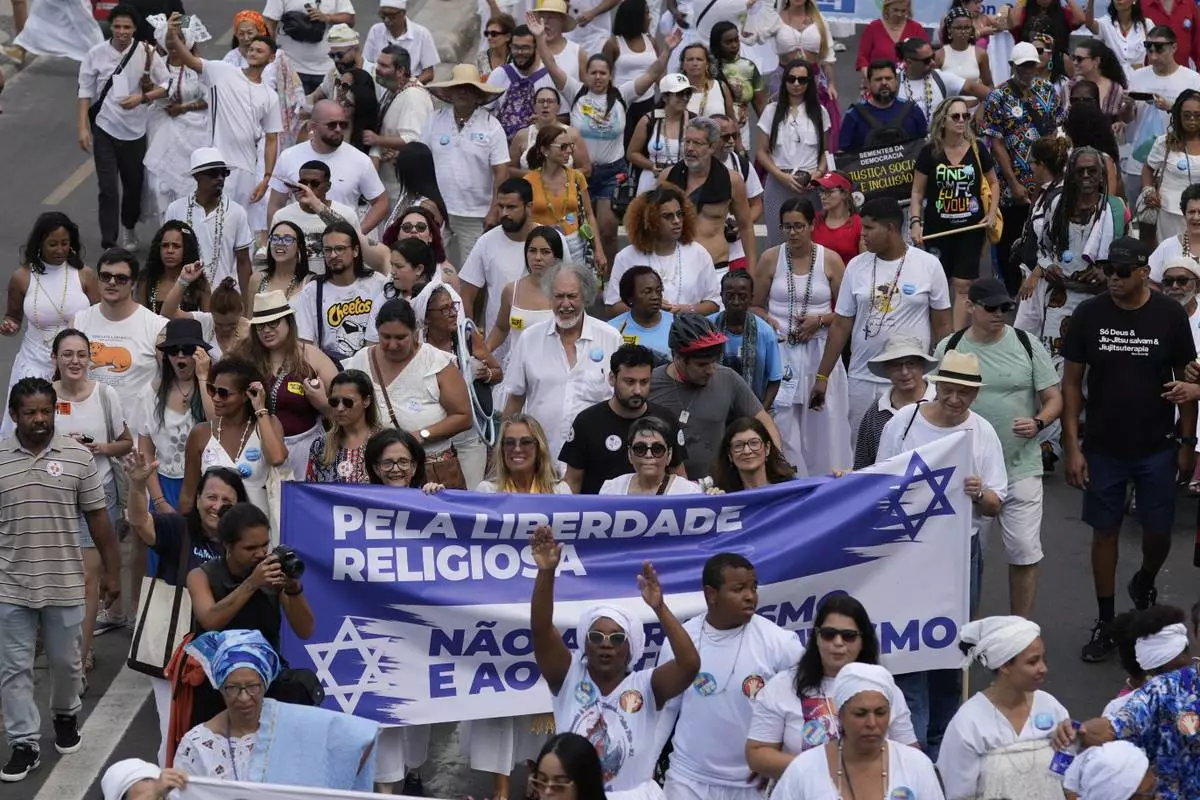
Faithful from various religions participate in the Defense of Religious Freedom march at Copacabana beach in Rio de Janeiro, Sunday, Sept. 15, 2024. The march seeks to bring attention to religious intolerance in the country. (AP Photo/Silvia Izquierdo)
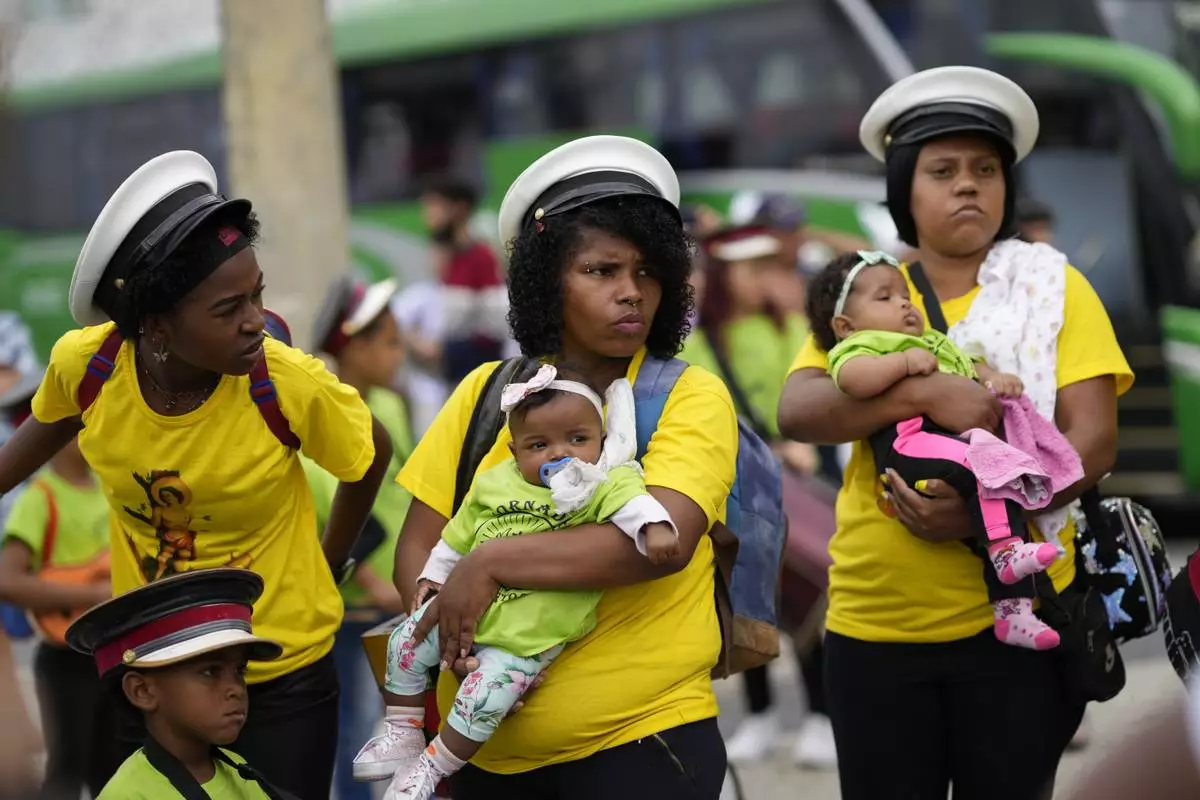
Women holding babies wait for the start of the Defense of Religious Freedom march at Copacabana beach in Rio de Janeiro, Sunday, Sept. 15, 2024. The march seeks to bring attention to religious intolerance in the country. (AP Photo/Silvia Izquierdo)
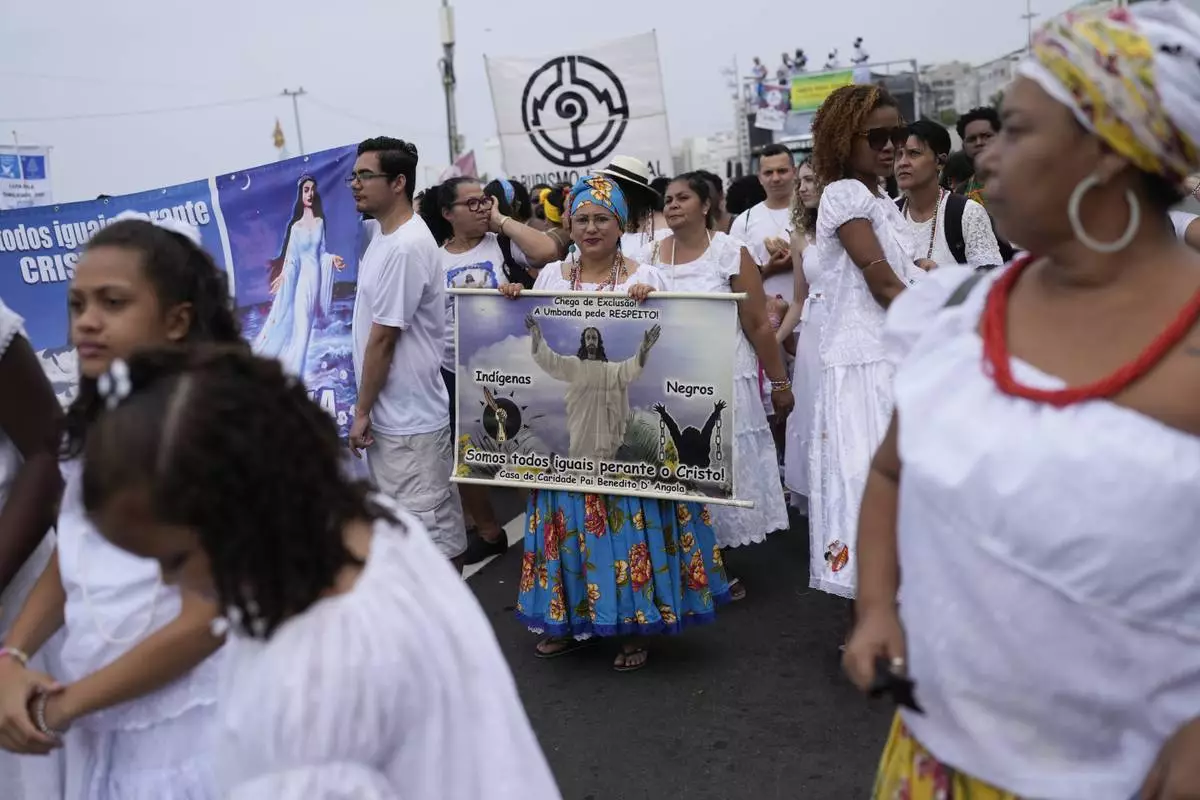
A woman holds a sign that reads "Indigenous people, Black people, we are all equal before Christ" during the Defense of Religious Freedom march at Copacabana beach in Rio de Janeiro, Sunday, Sept. 15, 2024. The march seeks to bring attention to religious intolerance in the country. (AP Photo/Silvia Izquierdo)

Youth participate in a Defense of Religious Freedom march at Copacabana beach in Rio de Janeiro, Sunday, Sept. 15, 2024. The march seeks to bring attention to religious intolerance in the country. (AP Photo/Silvia Izquierdo)

Faithful from various religions participate in the Defense of Religious Freedom march at Copacabana beach in Rio de Janeiro, Sunday, Sept. 15, 2024. The march seeks to bring attention to religious intolerance in the country. (AP Photo/Silvia Izquierdo)
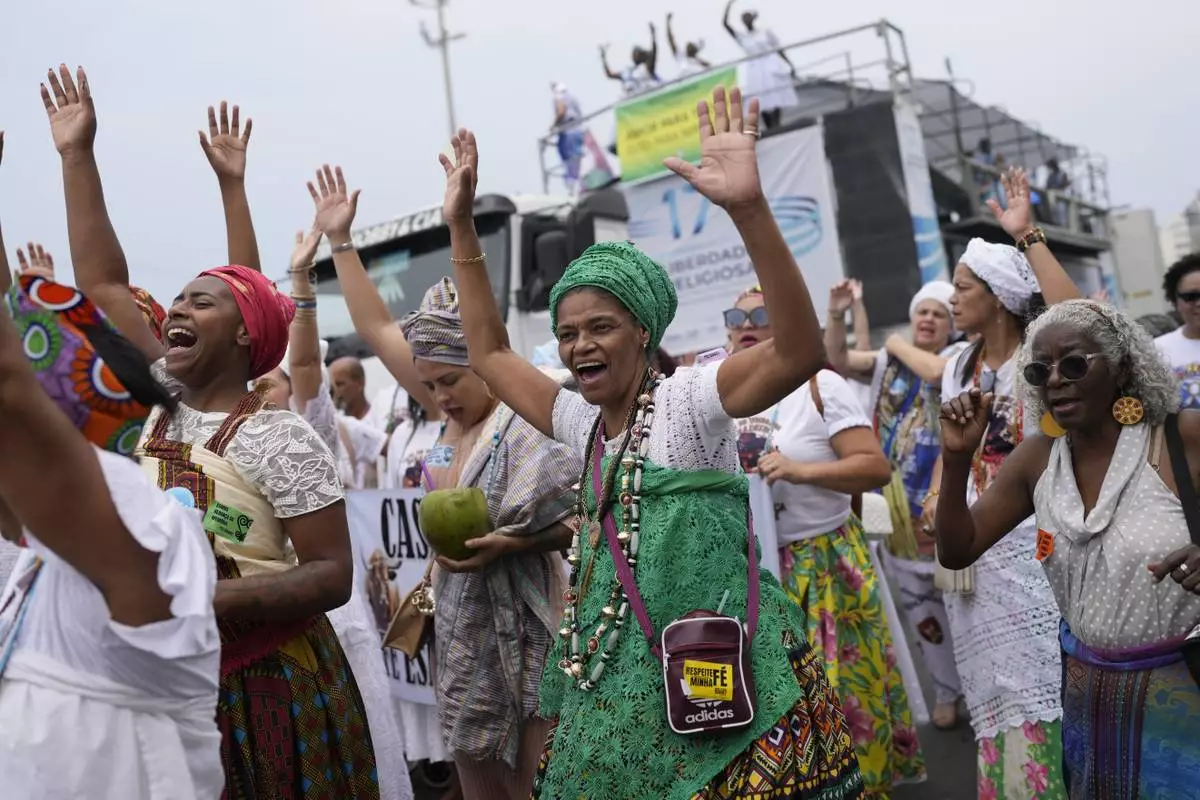
Faithful from various religions participate in the Defense of Religious Freedom march at Copacabana beach in Rio de Janeiro, Sunday, Sept. 15, 2024. The march seeks to bring attention to religious intolerance in the country. (AP Photo/Silvia Izquierdo)