Pakistani Ambassador to China Khalil Hashmi said on Sunday that Pakistan hopes to expand services trade and industrial cooperation with China.
Hashmi attended the five-day 2024 China International Fair for Trade in Services (CIFTIS), which is concluding on Monday in Beijing, where he witnessed the signing of two memorandums of understanding (MoUs) on cooperation between Chinese and Pakistani enterprises.
Speaking in an interview with the Chinese Global Television Network (CGTN) on the sidelines of the fair, the diplomat called the Pakistani delegation's participation in this year's CIFTIS very productive.
"We're very productive and rewarding because we hosted an investment conference today where over 150 participants came both from Pakistan, but also more and more enterprises [and] their representatives' associations from China. Two MoUs were also signed. One MoU the value I know, this was over 350 million dollars, just one sector in the food. So, that's why I say it's very productive," he said.
When asked on the outlook of future trade ties between the two countries in the services sector, Hashmi said he sees potential in many areas where both sides can deepen cooperation.
"[For] a number of areas, in fact, to start with, the obvious one is technology. When I say technology, it is IT, IT services, but also the new technologies, where EV, the ionize batteries, solar panels, beyond that, and some of the new technologies, semiconductors, AI -- that's one piece of the technologies. But also, other services, financial services, fintech for example, also logistics. In each of these areas, we are engaged one way or the other, but I think there is a great scope. Both of our two countries, the ministries, the enterprises, and the embassies, the consulates, they are all very much engaged," he said.
Hashmi also holds out high hopes for the China-Pakistan economic corridor (CPEC), a 3,000-kilometer network of roads, railways and pipelines to transport oil and gas from southern Pakistan's Gwadar Port to Kashgar city, northwestern China's Xinjiang Uygur Autonomous region.
A flagship project of China's Belt and Road Initiative, the CPEC intends to revive the ancient Silk Road with a focus on infrastructure and constitutes the strategic framework of China-Pakistan cooperation.
The ambassador expressed the hope that the two countries can expand industrial cooperation as the construction of the project moves to its second phase.
"CPEC Phase I was primarily about infrastructure and energy. So, it was a great help to Pakistan. We were able to add over 8,000 megawatts of electricity to our grid. We built over 800 kilometers of world-class highways, transmission lines, and so on and so forth, [with] over 26 billion dollars investment. So, with these investments, we have strengthened the economic foundation for greater growth in Pakistan. In the second phase, we are focused also not only on G to G, which is government to government, but increasingly business to business. So, the main direction is to move towards industrial cooperation, industrialization, joint ventures. So, there will be also a lot of focus on the services sector, as I said IT, but also fintech, also logistics. A lot of progress has been made in Phase I, but I think there are even greater opportunities to be leveraged in Phase II," he said.
The 2024 CIFTIS, under the theme of "Global Services, Shared Prosperity",brought together participants from a total of 85 countries and international organizations, and over 450 Fortune Global 500 companies and leading companies of various industries.
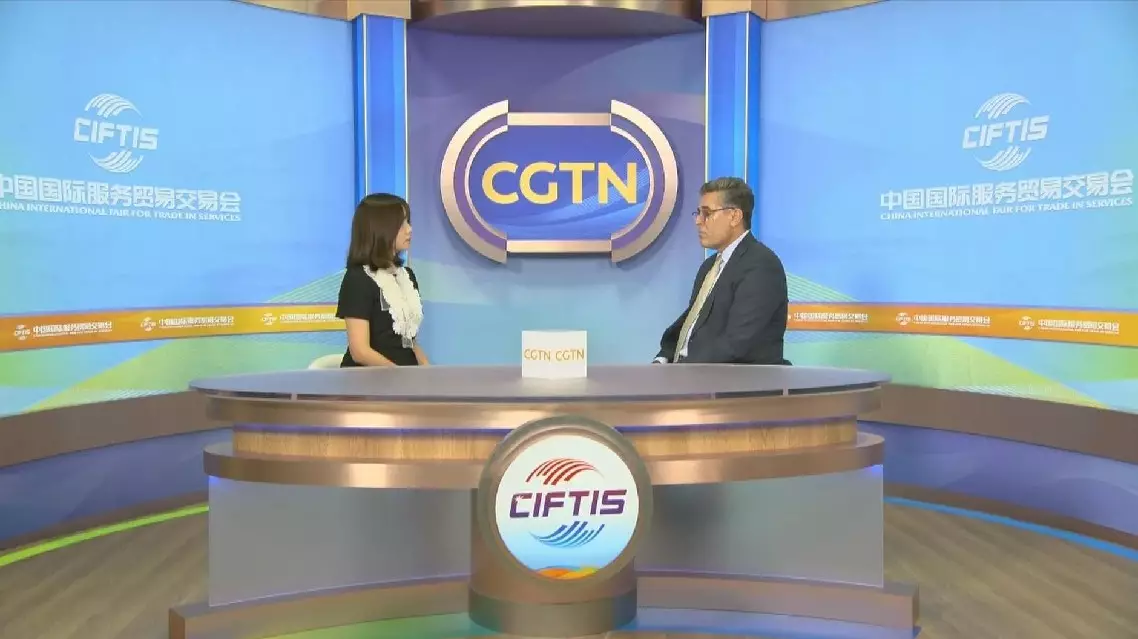
Pakistan expects deeper services trade, industrial cooperation with China: ambassador