China and Vietnam's agricultural cooperation represented by burgeoning coconut trade is becoming a cornerstone of the bilateral economic ties.
As Vietnamese coconuts gain entry into the Chinese market, this partnership is poised to catch a wave within the expanding blue economy after ups and downs in the two sides' relations and markets.
In Vietnam, the coconut is revered as the "tree of life" and plays a crucial role in the nation's economy. Ben Tre Province, often dubbed "Coconut Land," boasts the largest coconut planting area in Vietnam, spanning over 72,000 hectares and producing high-quality coconuts throughout the year.
"Over the years, I used to plant rice. But since I switched to coconuts, I noticed a clear increase in income," said Tran Van Nam, a farmer at the province's Phuoc Hau Village.
Tran Van Nam and other farmers like him are among the 200 families growing Xiem coconuts. His farmland covers about 5,000 square meters. While their focus is on farming, political and economic policies are never far from their minds, as well as market changes.
Tran Van Nam knows about dramatic price fluctuations. He remembers the period before 2018, when sales to the Chinese market were strong. And when China stopped buying, prices plummeted.
"While we are developing in other countries, we are eager to return to the Chinese market as it holds tremendous potential," said Bai Duong Thuat, director of Mekong Fruit Import-Export Co.
Bai emphasizes the need for reliable markets to sustain their operations, which involve shipping two containers daily. Shipping costs and market competition significantly affect their profits.
China's market for coconuts is expanding, in food, drink, and commodity products. Chinese authorities plan to turn the southern island province Hainan into a major international supplier of coconut products by 2025.
"In the future, Hainan's coconuts, through better processing, can reach across the world. We also hope to deepen cooperation with Southeast Asia for common development," said Liu Hanxi, Chairman of Hainnan Nanguo Food Industry Corporation.
Liu, head of one of Hainan's leading coconut companies, says that up to 80 percent of his company's fresh coconuts are imported from Southeast Asia. Hainan's integrated coconut processing is at an advanced international level, with significant potential for development, he points out.
Data shows that China's domestic coconut production only meets 10 percent of demand.
Benefiting from the China-ASEAN Free Trade Area policy, coconuts and other agricultural products enjoy zero tariffs.
"With such policies, our procurement costs will be greatly reduced, attracting many Southeast Asian products to sell here or be processed here," Liu said.
Vietnam's coconut exports are projected to hit 1 billion U.S. dollars this year, driven by the signing of a protocol for official export of fresh coconuts to China earlier this month, Vietnam News reported, citing the Vietnam Coconut Association, on Aug 28.
The authorities is finalizing the procedures for exporting fresh coconuts to China.
"If the Chinese market reopens soon, I believe the potential for coconuts from Vietnam, especially from Ben Tre, is huge," Bai Duong Thuat said.
Vietnam's fresh coconut exports reached around 800 million dollars in the 2022-2023 period with China being the biggest importer.
According to the World Bank, the blue economy is the "sustainable use of ocean resources for economic growth, improved livelihoods, and jobs while preserving the health of ocean ecosystem".
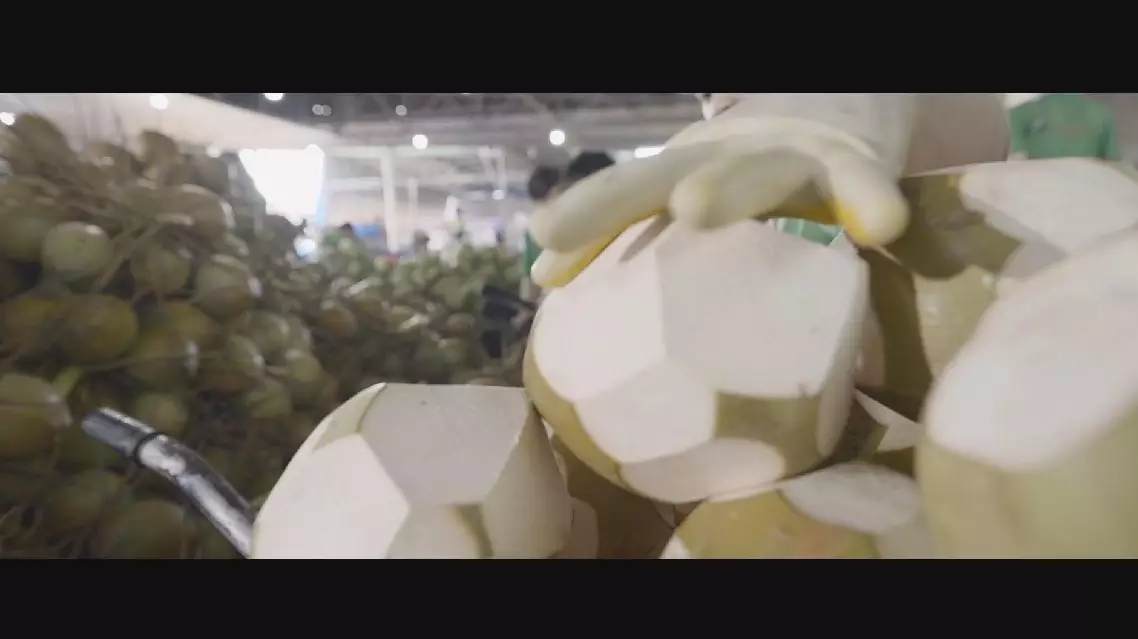
Coconut trade blossoms between China, Vietnam