Thailand, a land of natural beauty, faces an escalating pollution crisis that threatens its environment. Yet, amid this challenge, collaboration with China is driving innovative solutions.
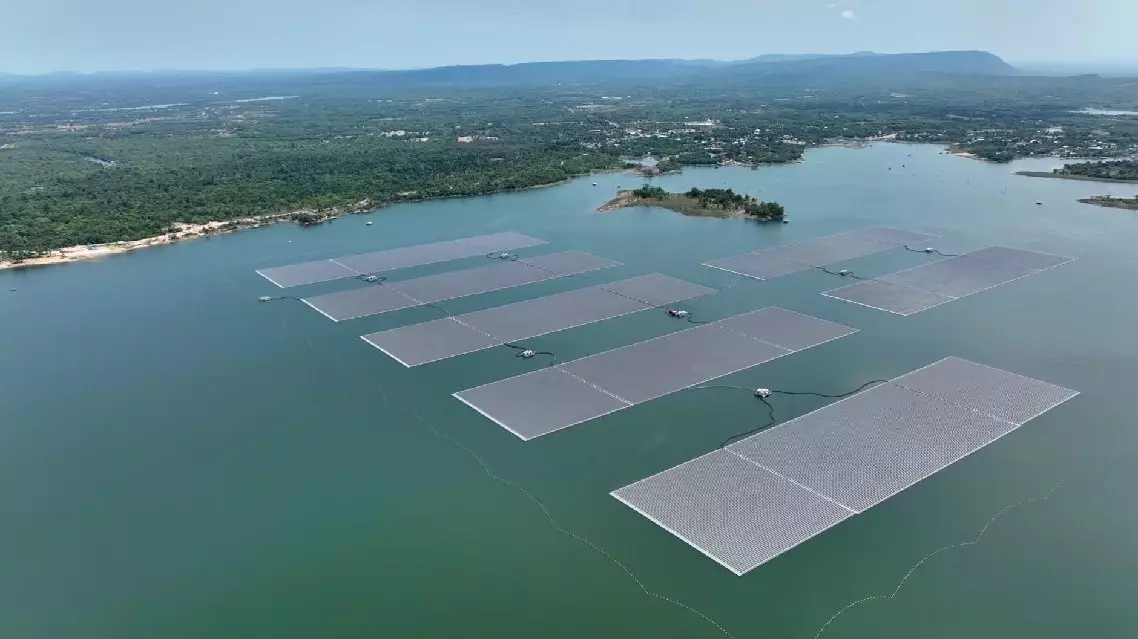
In the northeastern province of Ubon Ratchathani, the Hydro-Floating Solar Hybrid combines solar and hydropower, reflects a future where technology and nature coexist harmoniously.
The vast array of over 144,000 floating solar panels, covering an area equivalent to 70 football fields, combines with hydropower to generate 81MW of electricity, solar by day and hydropower by night.
"This is called a Hydro-Floating Solar Hybrid. Now it's considered as the largest one in the world," said Arthit Phornkuna, chief of the Sirindhorn Hydro Power Plant Department.
It is a project co-developed by China Energy Engineering Group.
"The majority of products and equipment from are from China. The solar panel that is used is JA brand. The inverter is Sungrow brand, also from China. They also brought knowledge and knowhow about the linkage system," said Phornkuna.
But this dance of sun and water is more than just a technological achievement; it is a glimpse into a future where harmony reigns between humanity and the Earth. It minimizes land use and its impact on ecosystems. The solar panels also reduce water evaporation from the reservoir, crucial in a region where water is vital for agriculture and daily life.
"The growth of Ubon's city is that the development is increasing with the growth of industrial sectors and farmers' productivity. Ubon city and province are growing. So, we need to make energy available to support increased usage," said Phornkuna.
The villages in Ubon Province are remote. Many have limited access to electricity. Others faced with high electricity costs that are too much for the people to bear. For Sisaengtham School, the story was no different, until one monk dared to dream differently.
The monk imagined a school that could harness the power of nature, reduce its carbon footprint, and empower students with the knowledge that they could be part of the solution to the world's biggest challenges, where the sun's rays could become a source of enlightenment in more ways than one.
"China is the leader in solar technology. They also have their own products and materials. We can import their products inexpensively. It's the best in the world. In terms of quality, there is no better choice than this. If the (solar) system is turned off, the electricity bill costs around 20,000 Baht ($580) per month. When the solar system is turned on, we pay only 40 Baht per month. It is extremely economical and the obvious savings can generate more income for our school," said Phra Panyawachiramoli, founder of Sisaengtham school.
For students, sustainability is a lived experience. They know firsthand how renewable energy can change lives. They study solar power, monitor the school's energy production, and contribute to community sustainability projects.
Panyawachiramoli has become known as the "Solar Monk." Just like his teachings, the school, even the whole community has become a unique blend of ancient wisdom and modern innovation, an extension of their belief in sufficiency and balance—a way to honor the Earth while embracing the future.
"We start with the environment as the foundation. Then there are two things, energy and agriculture. Agriculture is connected to individuals and the way of life of the community. No one can live without energy. So, I used this concept as a model to develop and drive this school," said Panyawachiramoli.
China and Thailand's collaboration in the solar sector is a natural fit. China's advanced technology complements Thailand's growing demand for renewable energy. Thailand's solar power strategy combines large-scale projects with community initiatives, featuring floating solar farms, and panels on temples, schools and rural homes.
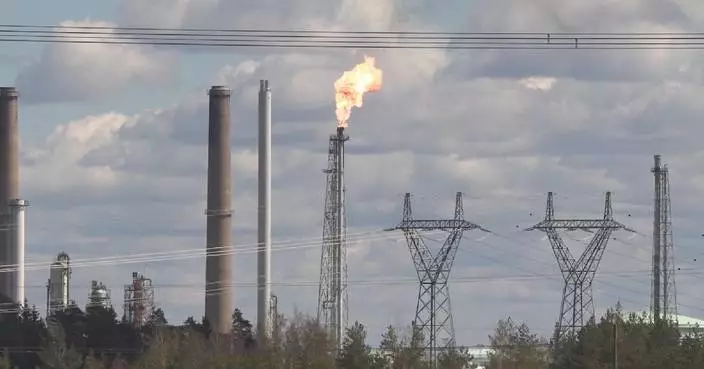
But there is still a long way to go. Thailand's energy grids continue to rely heavily on fossil fuel, making up approximately 70 percent of the country's power, while only around 29 percent comes from renewable sources.
Amid the general gloom of climate change, pollution and a global energy crisis, Thailand's story is generally changing. The plot of sustainability is now emerging not as a distant ideal, but as a vivid, urgent reality for this country.
Chasing the sun: China's footprint on Thailand's energy landscape